
Reviewed · WALKING TOURS
Birmingham Walking Tour: Canals, Victorians & Today (1:30pm)
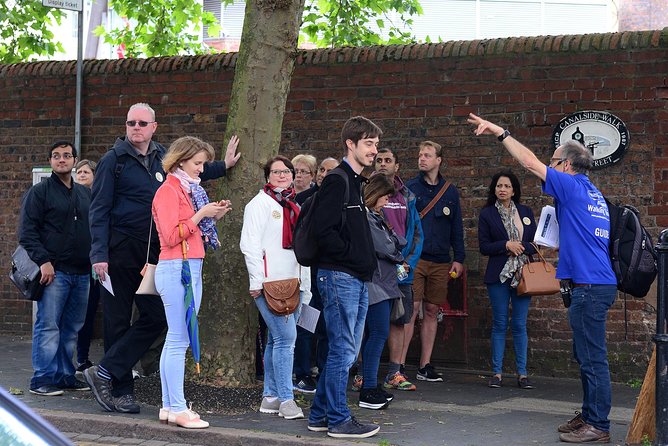
Birmingham’s story is easiest to grasp on foot, where old canals, Victorian civic buildings, postwar concrete, and glossy new developments sit within a short walk of one another. This tour gives you that useful contrast, from Gas Street Basin to Victoria Square and the Library of Birmingham.
I like the way the route mixes major sights with smaller details, and I like the live audio system when it is used, since you can hear the guide without crowding around him. Guides Jonathan and Michael are especially strong at turning dates and buildings into a lively local story.
The main drawback is the title’s promise of canals. You see Gas Street Basin and several canal-side places, but much of the two hours covers Birmingham’s civic centre, modern developments, and Victorian streets rather than following the water for a long stretch.
Key points at a glance
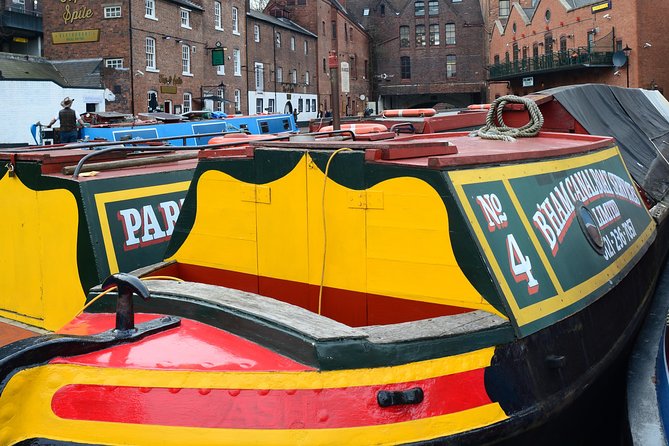
- Gas Street Basin in context: See the atmospheric meeting point of Birmingham’s canal network and learn why waterways mattered to the city’s growth.
- Guides with personality: Jonathan brings energy, local research, and the occasional dad joke, while Michael is known for a calm, witty approach and years explaining Birmingham to students.
- A useful first look: The route links the Library, ICC, Brindleyplace, Victoria Square, the Mailbox, and other central sights in about two hours.
- Old beside new: Compare Victorian public buildings, Art Deco memorials, former industrial sites, and modern mixed-use projects.
- Comfortable listening: When the audio system is operating, you receive a radio receiver and can use your own 3.5mm earphones or a supplied pair.
- Good value for a city introduction: At $20.80 per person, the tour costs less than many paid attractions and gives you a practical map of central Birmingham.
Why this two-hour route works
Birmingham can feel confusing on a first visit. Its centre has been rebuilt several times, canals cut through areas that once handled industry, and modern buildings often sit directly beside Victorian landmarks. A guide helps you connect those pieces instead of simply photographing them one at a time.
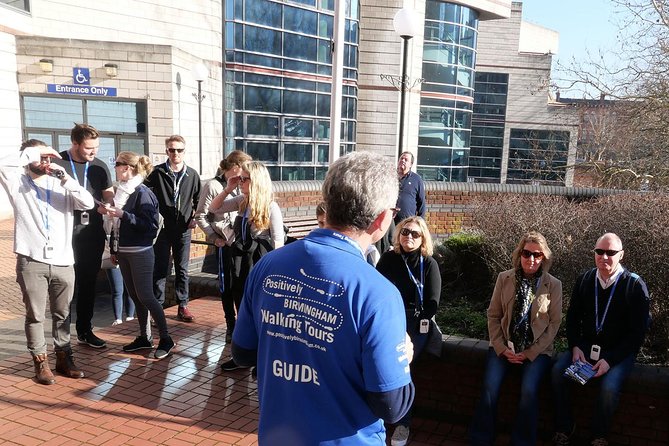
The route begins at the Library of Birmingham in Centenary Square at 1:30pm. That makes sense geographically and practically. The library is one of the city’s major attractions, and the square gives the group room to gather before setting off. You return here at the end, so you do not need to arrange transport from a distant finish point.
You should expect a walking tour rather than an attraction-hopping tour. Admission is free at most stops because the value lies in the guide’s explanation, the route, and the chance to see how Birmingham fits together. The group can reach up to 35 people, though some departures may feel much smaller. One group of six, for example, had the feel of a private walk.
More Walking Tours in Birmingham
- Discovering Birmingham 2 hour Walking Tour to the Jewellery Quarter
★ 5.0 · 333 reviews - Birmingham Slogging Gangs Walking Tour with Edward Shelby
★ 4.5 · 306 reviews - Birmingham City Centre Daily Walking Tour (10:30am & 2pm)
★ 5.0 · 265 reviews
Starting at the Library of Birmingham
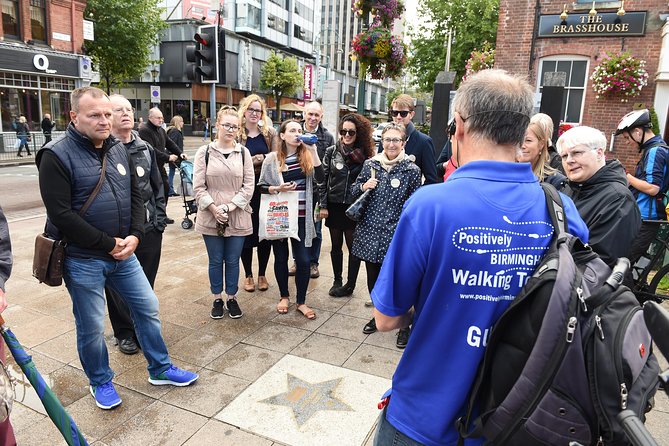
The Library of Birmingham is more than a meeting point. It gives the tour an immediate lesson in the city’s modern identity. The building is a major attraction in its own right, and you begin by considering its place in today’s Birmingham before moving into the older parts of the centre.
You spend about 10 minutes here. That is enough for an introduction, though not enough for a full visit inside the library. If you want to explore its interiors or upper levels, plan another visit outside the tour.
The stop also sets up one of the tour’s recurring ideas: Birmingham keeps changing. The route does not treat the city as a preserved Victorian museum. Instead, it asks you to look at how new buildings and public spaces fit around older ones.
Symphony Hall, the ICC, and Brindleyplace
The next section moves toward the International Convention Centre and Symphony Hall. You spend about 10 minutes considering their role in Birmingham’s present-day civic and cultural life. This is useful if you want to understand why the area around Centenary Square and the canals feels so different from the historic core.
At Brindleyplace, the guide explains both the site’s earlier story and its current use. The stop lasts about 10 minutes, giving you a quick reading of the area rather than a detailed architectural survey. I find this kind of explanation valuable because a polished modern district can otherwise seem to have appeared overnight.
You will also notice the tour’s pace here. It keeps moving, with short stops and frequent changes of scene. That suits you if you want to see a lot in one afternoon, but it may feel brisk if you prefer long periods to study one building or take photographs.
Gas Street Basin and Birmingham’s canal story
Gas Street Basin is the clearest match for the tour’s canal theme. It is an atmospheric centre of the country’s canal network, and the guide uses it to explain the arrival and importance of Birmingham’s waterways.
This is a 15-minute stop, the longest single pause on the route. That extra time matters. You can look around, take in the water and surrounding buildings, and hear why canals shaped the city’s working life and later redevelopment.
Still, keep your expectations precise. This is not a two-hour canal walk. You visit Gas Street Basin, see the canal-side route near the ICC, and consider the waterways as part of Birmingham’s growth, but the tour soon heads back toward civic squares and central streets. If canals are your main reason for booking, you may want to pair this walk with extra time by the water.
The canal section is one of the places where the guide’s storytelling makes the biggest difference. Jonathan is good at linking the physical scene to the city’s wider development, while Michael brings a more measured, witty style. Both have been praised for making Birmingham’s past easier to follow without turning the walk into a lecture.
Same trip, a completely different kind of day:
- Entry ticket to Hoo Zoo and Dinosaur World in Telford
★ 5.0 · 591 reviews - Cadbury World Entry Ticket
★ 3.0 · 524 reviews - Birmingham: Cadbury World Entry Ticket
★ 4.4 · 230 reviews - SEA LIFE Birmingham Admission Ticket
★ 3.0 · 218 reviews
Victoria Square and the Victorian city
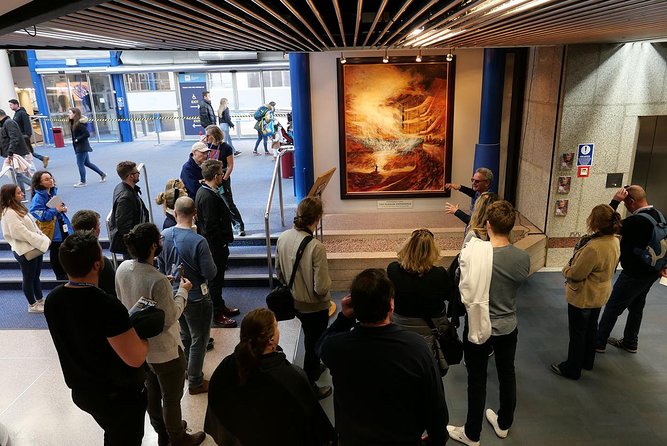
Victoria Square shifts the focus from waterways to public life. Here, the guide discusses public art and Birmingham’s development during the Victorian period, then connects that past to the city you see today.
You spend about 10 minutes in the square. The stop is short, but it gives you a useful framework for reading Birmingham’s civic centre. Buildings, statues, open space, and traffic patterns all say something about how the city presented itself and how that presentation has changed.
Birmingham Town Hall gets its own five-minute stop. Dating from 1834, it is the oldest building in Victoria Square. You will not go inside as part of the listed route, but the exterior gives the guide a firm reference point for the city’s nineteenth-century growth.
This is also a good moment to ask questions. The guides are described as friendly and willing to explain details, and Jonathan in particular has a habit of adding current facts to older history. That mix helps the square feel connected to modern Birmingham rather than sealed off in the past.
Chamberlain Square and the city ahead
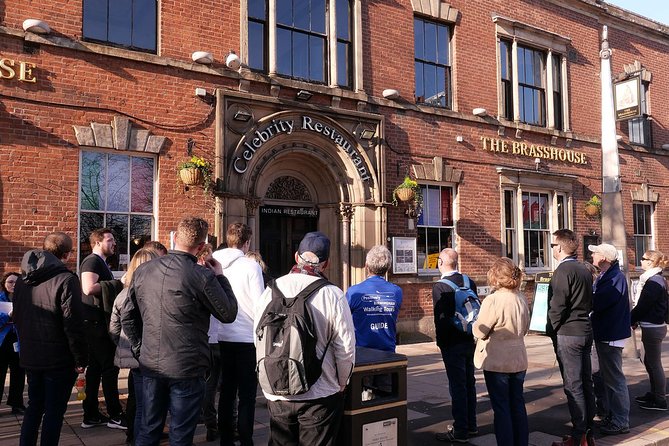
Chamberlain Square is used to discuss Birmingham’s future. You spend around 10 minutes here, looking at how the city is reshaping its public spaces and presenting itself to residents and visitors.
This stop balances the Victorian material earlier in the route. Instead of suggesting that the best Birmingham is behind it, the guide asks you to compare periods and consider what the city is trying to become. That is one of the strongest ideas running through the walk.
The route then passes Birmingham Museum & Art Gallery, where you pause briefly to see the impressive 1880s double portico. The stop takes only about two minutes, so treat it as an exterior orientation rather than a museum visit. If you want the collections, you will need to return on your own.
The short timing is typical of this tour. You get a broad introduction to many places, not an in-depth visit to each one. That is a good trade if you have limited time in Birmingham and want help deciding which buildings deserve a longer look later.
The Mailbox and The Cube
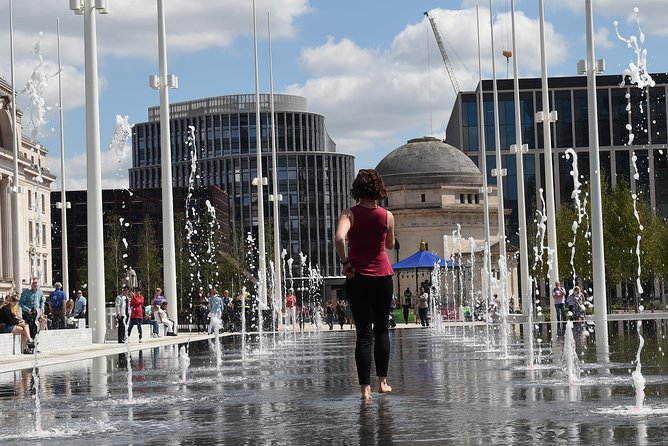
The walk continues to The Mailbox, a former post office sorting office converted into a mixed-use development. The site now includes the Birmingham headquarters of the BBC, making it a clear example of how older industrial and administrative buildings have been given new roles.
You spend about five minutes here. That is enough to understand the basic conversion and see how the building fits into the city’s modern commercial centre. It is also a reminder that Birmingham’s regeneration often works by reusing substantial older structures rather than clearing every trace of the past.
The Cube sits at the back of the Mailbox development. The stop itself takes about a minute, but the building is mentioned because its upper floors provide some of the best views in the city. The walking tour does not promise an extended visit or access to those views, so consider that detail a tip for a separate stop.
The Mailbox and The Cube are useful contrasts with Gas Street Basin. You see the canals as places of industry and movement, then see nearby waterside areas adapted for offices, food, retail, media, and newer city life.
The Ikon Gallery and the Hall of Memory
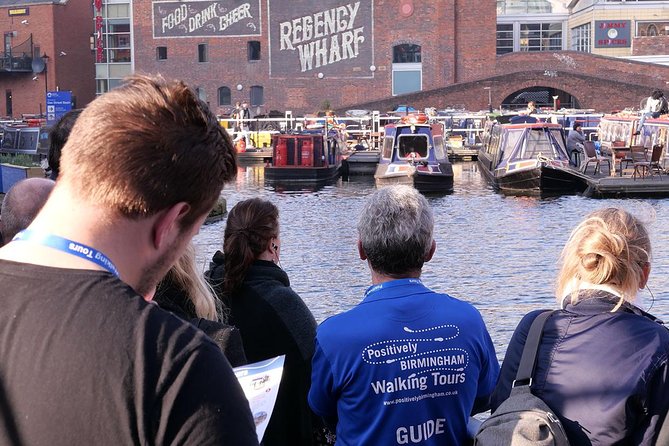
The route also takes in the Ikon Gallery, originally built as a school and one of more than 40 schools designed by architects Martin and Chamberlain. This is a small but telling detail. It encourages you to look beyond famous landmarks and notice how Birmingham’s architecture served ordinary civic needs.
The Hall of Memory provides a different kind of pause. Built in the Art Deco style in 1925, it first commemorated those killed in the First World War and now includes later conflicts. The guide points out features such as the William Bloye tablets.
You spend about five minutes here. The stop adds seriousness to a route otherwise filled with buildings, redevelopment, and urban design. It also shows that Birmingham’s public spaces carry personal and national memory, not just commercial or civic ambition.
The guide’s use of small details is important at places like this. A quick look at a memorial can be easy to miss when you are walking through a busy centre. With explanation, the design and purpose become part of the city’s story.
The ICC Mall and the route back
The ICC Mall is described as the main route from Centenary Square to the canalside. You spend about 10 minutes here, which gives the guide room to explain how the public route connects the square, conference centre, and water.
This section helps you understand the physical shape of the tour. You are not simply zigzagging between unrelated sights. The walk follows the way Birmingham’s central areas link together, moving from the library and convention district toward the canal and then through the civic centre.
The tour ends back at the Library of Birmingham. That is convenient if you plan to continue sightseeing in Centenary Square, visit the library, or make your way to nearby transport. The precise route may feel fast for anyone with limited mobility, so a moderate level of physical fitness is expected.
The guide makes the difference
The strongest part of this experience is the human delivery. Jonathan is energetic, quick with facts, and comfortable mixing history with current events and humor. His own research gives the walk a personal quality, and he has been described as fast talking and fast walking, so stay close and do not hesitate to ask him to repeat a detail.
Michael offers a slightly different style. He has spent his working life explaining Birmingham to students at Birmingham City University and brings a clear, witty approach to the route. Both guides have a real affection for the city, but the best reason to book is not a single personality. It is the chance to hear Birmingham explained by someone who pays attention to its changes.
The live audio system is a practical bonus when in use. Each person receives a receiver, and you can bring earphones with a 3.5mm socket or use a new pair provided by the operator. The system is not always used, so do not assume it will be part of every departure, but it can make a real difference on a busy street.
The tour is offered in English. One useful detail for people who are not native English speakers is that a guide has adjusted his pace and spoken clearly for Japanese visitors on a small departure. Still, the tour is built around spoken explanation, so a reasonable command of English will help you get the most from it.
Is $20.80 good value?
At $20.80 per person, I consider this a fair price for a two-hour introduction to central Birmingham. You are paying for a guide who links many separate sights, not for entry to a museum or a special viewing platform.
The value is strongest if this is your first time in the city. You get a basic map of the centre, learn where the canals sit, see the key civic squares, and pick up ideas for places to revisit. The walk can save you time later because you will know which areas interest you.
It is less useful if you want extended access to buildings. The route passes Birmingham Museum & Art Gallery, the Ikon Gallery, the Library of Birmingham, The Cube, and other sites, but the tour does not function as an interior visit to all of them.
The 98 percent recommendation rate and 4.9 rating from 346 ratings point to a consistently strong experience, especially for guide quality and city interpretation. I would still balance that with the canal limitation and the possibility of a group of up to 35 people.
Practical details before you book
The tour starts at 1:30pm at the Library of Birmingham, Centenary Square, Birmingham B1 2ND. It lasts about two hours and returns to the same meeting point.
You receive confirmation at booking. The meeting point is near public transport, and service animals are allowed. Plan for ordinary city walking and wear comfortable shoes, since the tour is conducted on foot and requires moderate physical fitness.
Free cancellation is available up to 24 hours before the start time for a full refund. Cancellations or changes within 24 hours are not accepted for a refund. The experience requires good weather, and if poor weather causes cancellation, you are offered another date or a full refund.
Who should book this Birmingham walk?
I would choose this tour for a first visit, a weekend break, or an arrival afternoon when you want to get your bearings without spending half the day inside a museum. It also suits people who like architecture, public art, urban planning, and local stories more than a long list of formal admissions.
You will get the most from it if you enjoy a brisk, information-filled walk. The route covers a lot, and guides such as Jonathan and Michael add humor and personal insight. It is a good choice for adults, older children who can keep pace, and anyone curious about how Birmingham moved from an industrial city to a modern centre.
I would hesitate only if you want a detailed canal tour, extensive time inside attractions, or a slow photography walk. In those cases, use this tour as an introduction and add separate time for the canals, museum, library, or views from The Cube.
Should you book it?
Yes, if you want a friendly, well-paced introduction to Birmingham’s central sights at a modest price. The mix of Gas Street Basin, Victorian squares, memorial architecture, the ICC, the Mailbox, and modern public spaces gives you a useful sense of the city’s changes.
Book with the right expectations. This is a city overview with a canal stop, not a canal-only walk. For most first-time visitors, that wider view is the better deal, especially when the guide brings the buildings and local stories to life.
FAQ
Where does the Birmingham walking tour start?
The tour starts at the Library of Birmingham in Centenary Square, Birmingham B1 2ND, UK.
What time does the tour begin?
The scheduled start time is 1:30pm.
How long does the walking tour last?
The tour lasts approximately two hours.
Where does the tour end?
The activity ends back at the Library of Birmingham meeting point.
Is the tour offered in English?
Yes, the tour is offered in English.
Is an audio system provided?
A live audio system may be used. When it is operating, each person receives a receiver and can use personal earphones with a 3.5mm socket, or receive a new pair from the operator. The system is not used on every departure.
What is the cancellation policy?
You can cancel at least 24 hours before the start time for a full refund. Cancellations or changes made within 24 hours are not refunded. If poor weather cancels the tour, you are offered another date or a full refund.
Just added in Birmingham
- Birmingham: Legoland Discovery Centre Entry Ticket★ 4.1 · 74 reviews
- Birmingham: Victorian Canals and Modern-Day Birmingham Tour★ 4.7 · 92 reviews
- Birmingham: Slogging Gangs Guided Walking Tour★ 4.2 · 216 reviews
- Birmingham: Winterbourne House and Garden Admission Ticket★ 4.7 · 199 reviews
- Birmingham: National Sea Life Centre Entrance Ticket★ 4.4 · 150 reviews
- Fun, Flexible Treasure Hunt Around Birmingham with Cryptic Clues & Hidden Gems★ 5.0 · 167 reviews
- Birmingham: Guided City Center Walking Tour (10:30am & 2pm)★ 4.8 · 147 reviews
- Cadbury World Entry Ticket★ 3.0 · 524 reviews
Walking Tours, compared.
Underground Vaults Walking Tour in Edinburgh Old Town
Read our review →
Oxford University Walking Tour With University Alumni Guide
Read our review →
Edinburgh Castle: Guided Walking Tour with Entry Ticket
Read our review →
Edinburgh Castle Guided Walking Tour in English
Read our review →
Tour for Muggles The Ultimate Harry Potter Walking Tour in London
Read our review →
University and City Walking Tour with Alumni Guide
Read our review →
Edinburgh Darkside Walking Tour: Mysteries, Murder and Legends
Read our review →
Browse the lists this tour appears in