
Reviewed · WALKING TOURS
Birmingham City Centre Daily Walking Tour (10:30am & 2pm)
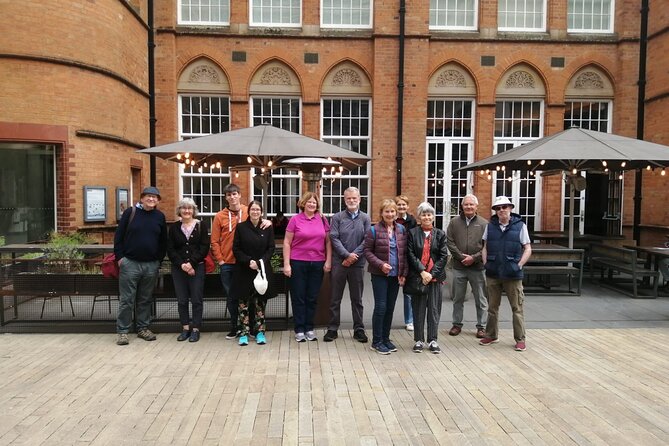
Birmingham’s story is easiest to grasp on foot, and this tour links its grand civic buildings, industrial past, music connections, and canals in one tidy route. You begin beneath St Philip’s Cathedral and finish at Ikon Gallery, with local guides such as Dee, Phil, Peter, and Carlos bringing the streets to life.
I like the relaxed pace and the useful route from Cathedral Square to Brindleyplace. I also like that the walk mixes famous sights with details you could easily miss, including John Baskerville, the Black Sabbath bridge, and Birmingham’s canal quarter.
The main limitation is time. Ninety minutes gives you a strong introduction, but you will usually see buildings from outside rather than go in. On a cold or wet day, the open-air stops can also feel long if the guide chooses a windy corner.
Key points to know before you go
- A compact city-centre route: See 12 notable stops in about 90 minutes without having to plan the way yourself.
- A story-led introduction: Learn how Birmingham grew during the Industrial Revolution, shaped the World Wars, and developed into the modern city.
- A useful starting point: Begin at Birmingham Cathedral and finish near canals, Broad Street, and Brindleyplace.
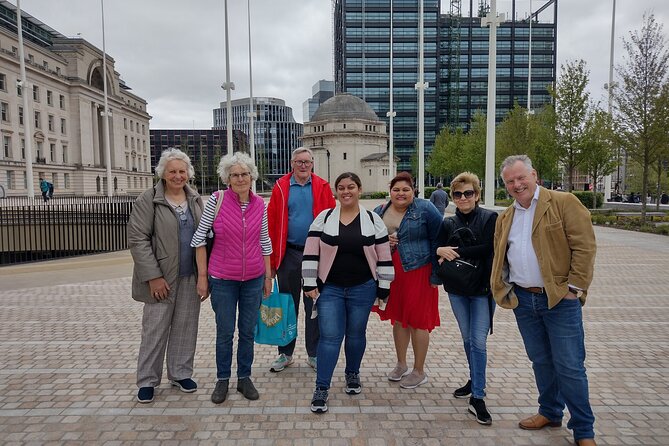
- Local guides make the difference: Dee, Phil, Peter, Richard, and Carlos are among the guides praised for friendly, clear, and engaging presentations.
- Small groups help: The maximum group size is 20, and some departures may be much smaller.
- Good value, with limits: At $19.41, the tour is an inexpensive orientation, but admission to buildings is not included and most stops are brief.
Why this walk works as a first look at Birmingham
Birmingham is a city that rewards context. A grand square can look like just another paved space until someone explains how it reflects Victorian ambition, wartime sacrifice, industrial wealth, or the city’s later reinvention.
That is the useful role of this tour. It does not try to cover every corner of Birmingham. Instead, it gives you a connected route through the central sights, so you can return later to the places that catch your interest.
The route is also practical. You begin in Cathedral Square and end at Ikon Gallery, close to the canal quarter and Brindleyplace. That makes the walk more than a list of monuments. It helps you understand how the older civic centre connects with Birmingham’s modern entertainment, arts, and canal-side districts.
The tour is offered at 10:30am and 2pm. At either time, allow about an hour and a half. The advertised stop times are short, often around five minutes each, but the walk between them and the guide’s explanations bring the total duration to a useful 90 minutes.
More Walking Tours in Birmingham
- Birmingham Walking Tour: Canals, Victorians & Today (1:30pm)
★ 5.0 · 346 reviews - Discovering Birmingham 2 hour Walking Tour to the Jewellery Quarter
★ 5.0 · 333 reviews - Birmingham Slogging Gangs Walking Tour with Edward Shelby
★ 4.5 · 306 reviews
Cathedral Square and St Philip’s Cathedral
The meeting point is Birmingham Cathedral, also called St Philip’s Cathedral, at Cathedral Square on Colmore Row. This is a sensible place to begin because the cathedral gives the guide an immediate way to introduce Birmingham’s growth and changing role.
A practical warning: the old flagpole used as a meeting landmark is no longer there. Look for the wheel in Cathedral Square instead. One guide was described as wearing a bright orange jacket, but you should rely on your booking details as well as the square itself.
St Philip’s Cathedral was built during the Industrial Revolution. The tour uses the building and its garden as a starting point for explaining the city’s rise. The cathedral is described as one of Britain’s smallest, which makes it an interesting contrast to the large civic buildings later on the route.
You should expect an exterior introduction rather than a full cathedral visit. The first two stops are short, so this is a chance to get your bearings and listen for the larger themes of the walk.
Victorian ambition at Victoria Square
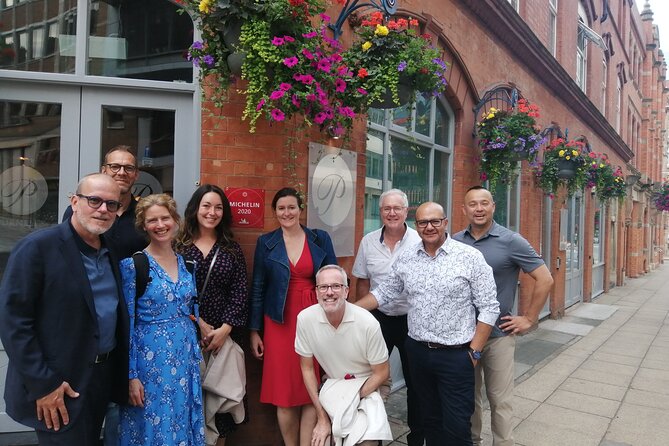
From the cathedral, the walk continues to Victoria Square, where the focus shifts to nineteenth-century Birmingham. The square offers a clear look at the city’s Victorian civic confidence.
This is one of the places where a guide adds real value. Without explanation, you may simply notice statues, public buildings, and open paving. With some background, the square becomes evidence of a city determined to present itself as a serious centre of commerce, industry, and public life.
The tour keeps moving, which suits visitors who want an overview rather than a long lecture. You will not be given time to study every building in detail, but you will leave with a reason to return.
Town Hall and the city’s public stage
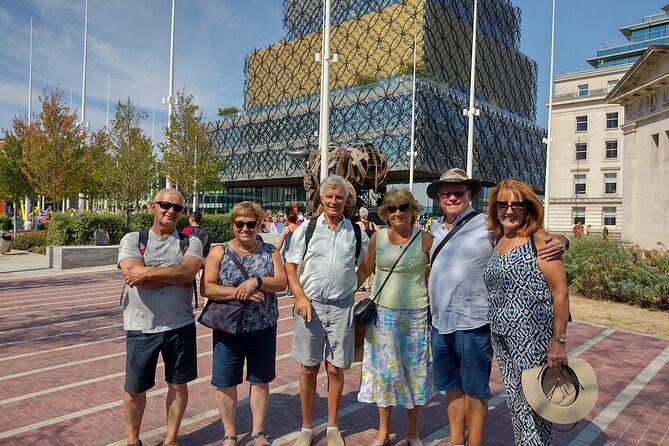
Birmingham Town Hall is one of the route’s key architectural stops. It was built to symbolise the city’s growing status, and its doors have welcomed an impressive mix of public figures and performers.
The guide connects the Town Hall with Charles Dickens and Emmeline Pankhurst, as well as Bob Dylan, the Rolling Stones, and the Beatles. Those links help bridge the gap between Victorian Birmingham and the city’s later cultural life.
Admission to the Town Hall is not included, and this stop is mainly an exterior explanation. That is not a serious drawback for a short orientation walk, but you should not book this experience expecting a concert hall or civic building tour from the inside.
Same trip, a completely different kind of day:
- Entry ticket to Hoo Zoo and Dinosaur World in Telford
★ 5.0 · 591 reviews - Cadbury World Entry Ticket
★ 3.0 · 524 reviews - Birmingham: Cadbury World Entry Ticket
★ 4.4 · 230 reviews - SEA LIFE Birmingham Admission Ticket
★ 3.0 · 218 reviews
Birmingham Museum and Art Gallery
The Birmingham Museum and Art Gallery is another important building on the route. Here, the guide points out the architecture and discusses artists associated with Birmingham.
Again, the value is in the introduction. The five-minute stop cannot cover the museum’s collections in depth, and entry is not part of the walk. Still, it gives you a useful choice for later in your visit, especially if you want to add an indoor cultural stop after seeing the building from the outside.
I like this pattern throughout the tour: the guide gives you enough information to decide what deserves more of your own time. The walk is not trying to replace Birmingham’s museums. It helps you choose among them.
War stories at Chamberlain Square and the Hall of Memory
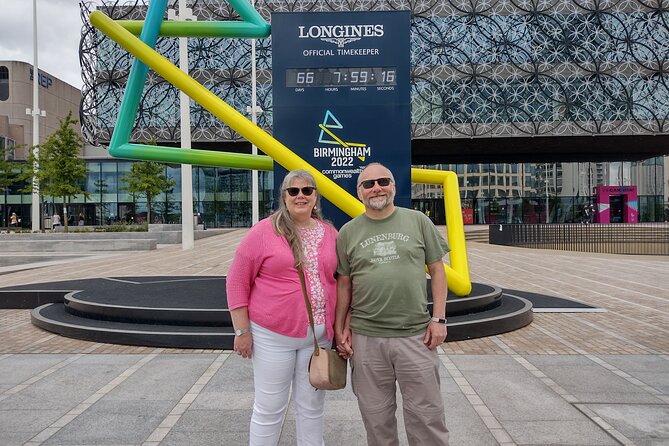
At Chamberlain Square, the subject turns to Birmingham’s role in both World Wars and the sacrifices made by local people. This adds a more serious note to a route that also includes music, art, and architecture.
The Hall of Memory continues that theme. Its purpose is to remember those who gave their lives for Birmingham and Britain. The building is treated as part of the city’s public memory, not just as another stop on a sightseeing checklist.
The route does not provide a long indoor memorial visit, and admission is not included. You will get the setting and the explanation, then move on. That pacing works for a first walk, though anyone seeking a detailed military history tour will need a separate visit.
Centenary Square and modern Birmingham
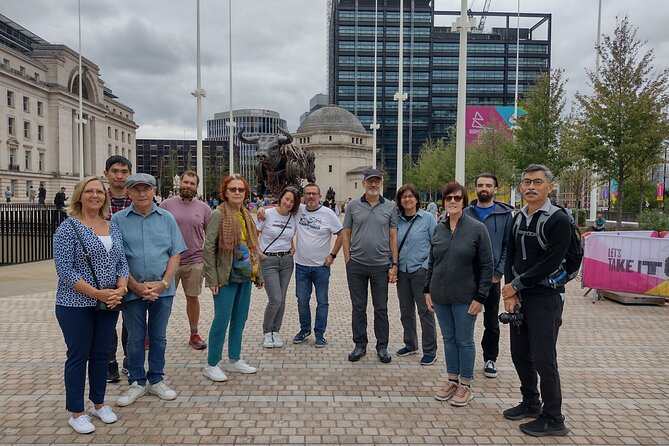
Centenary Square provides a change of mood. The guide uses it to show how Birmingham has moved from its industrial and Victorian past into a modern city of new architecture and changing public life.
This is where the tour’s old-to-new structure becomes clear. Earlier stops focus on civic ambition and wartime memory. Centenary Square helps you see the city as a place still being reshaped.
The guide may also point out details that are easy to overlook when you are walking alone. Several people who know Birmingham already found the commentary useful because it gave names and stories to buildings they had passed for years.
Baskerville House and Birmingham’s written word
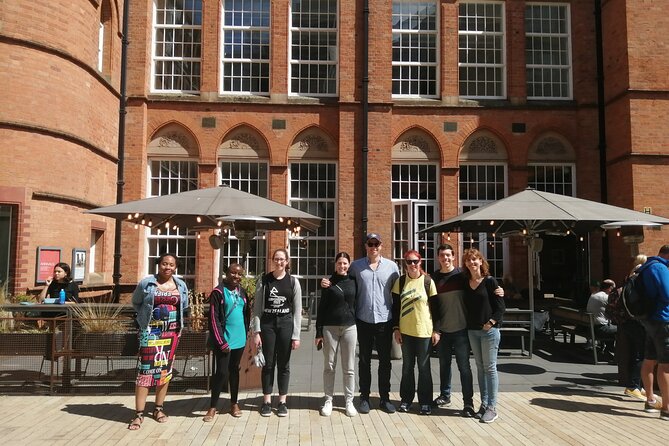
Baskerville House brings the tour back to an individual figure: John Baskerville. The stop introduces his role and gives the route a different angle on Birmingham’s past.
This is a good reminder that the city’s importance was not only about factories and machinery. Printing, design, public buildings, music, and political life all form part of the story being told.
The stop is brief and the building is viewed from outside. If Baskerville interests you, treat this as a prompt for further reading rather than a full presentation on his work.
Broad Street, music, and the canal route
Broad Street is described as Birmingham’s own walk of fame. This part of the route brings popular culture into the picture and helps explain why the city feels larger than its civic squares.
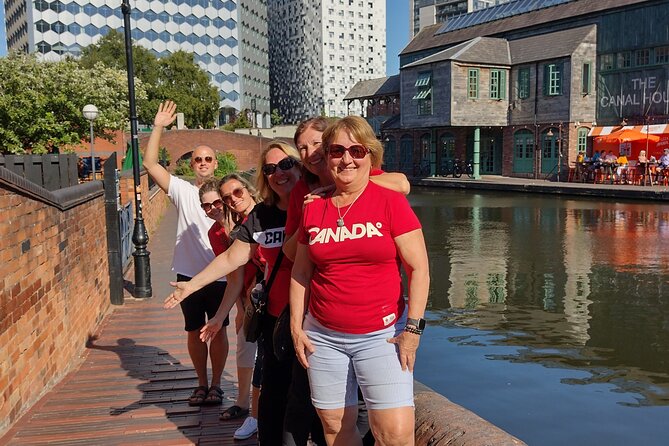
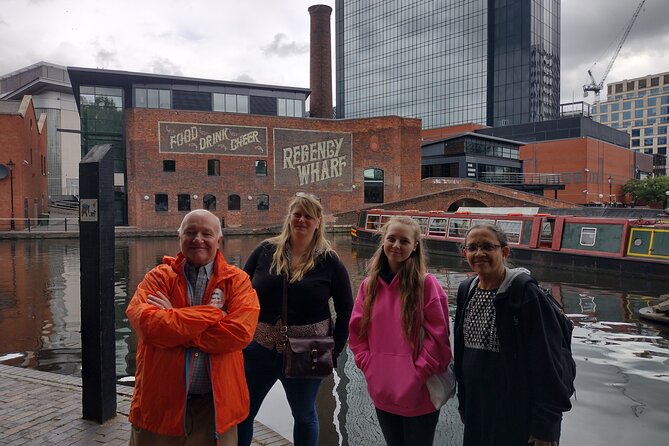
The walk then reaches Symphony Hall and the canals. Here, you get a more relaxed stretch beside Birmingham’s industrial waterways. The canal section is one of the most appealing parts of the route because it connects the city’s working past with its present-day restaurants, arts venues, and evening life.
A particularly memorable detail is the Black Sabbath bridge, which adds a local music reference to the walk. It is the sort of small feature you might miss without someone pointing it out.
The canal path also gives you a change from formal squares and monumental buildings. You can slow down, take photographs, and see how Birmingham has reused parts of its industrial infrastructure.
Finishing at Ikon Gallery
The final stop is Ikon Gallery at 1 Brindley Place, in Oozells Square. Its Neo-Gothic exterior makes an interesting finish because the gallery combines an older-looking shell with contemporary art inside.
The tour ends here rather than returning to the cathedral, so think about your plans before you start. This is convenient if you want to continue around Brindleyplace, the canals, or Broad Street. It is less convenient if you need to collect belongings or return to the starting area immediately.
As with the museum and Town Hall, entry is not included. The gallery is best treated as a possible next stop, not part of the walking tour itself.
Guides, group size, and the feel of the walk
The guide is the biggest variable in an experience like this. Dee is praised for her local knowledge, warm manner, and ability to keep the walk interesting. Phil is noted for adding a favourite city viewpoint and sharing plenty of useful detail. Peter, Richard, and Carlos are also singled out for clear, friendly presentations.
That does not mean every departure will feel identical. One guide was criticised for a flat delivery on a very cold day, and another group found the English too fast for French speakers. Those points matter. The content may be strong, but enjoyment depends on voice, pace, weather, and how well the guide reads the group.
The maximum is 20 people, which is a reasonable size for a city walk. Some departures can be much smaller. A group of four, or even only two people, can feel almost private and makes it easier to ask questions.
The pace is generally easy. One guide made a point of checking on older members of the group, and the route is suitable for most people who can manage a 90-minute urban walk. Service animals are allowed, and the meeting point is near public transport.
Price, weather, and what you get for $19.41
At $19.41 per person, this is good value if you want orientation, local stories, and a clear route through central Birmingham. You are paying for the guide’s interpretation, not for entry to attractions.
The price works particularly well at the start of a trip. In 90 minutes, you can identify areas to revisit and avoid wasting the first day wandering between disconnected sights. It is also useful for people who know Birmingham a little but want a better sense of how its buildings and districts fit together.
The limitations are clear. The walk is outdoors, the stops are short, and no museum, cathedral, Town Hall, or gallery admission is included. Winter weather can make the experience less pleasant, especially at exposed corners. The cancellation terms allow a full refund if you cancel at least 24 hours ahead, and poor weather may lead to a new date or refund.
Who should book this Birmingham walk?
I would choose this tour for a first visit, a short stay, or a return visit when you want more context for familiar streets. It suits families, couples, solo visitors, and anyone who prefers a gentle introduction before choosing which buildings to explore inside.
It is also a good fit if you like local anecdotes rather than a formal academic lecture. The strongest guides add humour, personal observations, and small details about Birmingham’s culture.
I would look elsewhere if you want extensive interior visits, a specialist industrial archaeology tour, or a long stop at each landmark. The tour is an overview, not a full study of the city.
Should you book it?
Book it if you want a low-cost, guided introduction that links Birmingham Cathedral, Victorian civic buildings, wartime memorials, music sites, and the canals in one route. The excellent rating, 97 percent recommendation rate, and many positive comments about the guides support its role as a strong first activity.
Choose the 10:30am departure if you want the walk to shape your day, or the 2pm departure if you prefer a later start. Wear comfortable shoes, check the meeting point carefully, and dress for the weather. Most of all, use the tour as a map for the rest of your visit. It gives you the city’s main threads, then lets you follow the ones that interest you most.
FAQ
How long is the Birmingham City Centre Daily Walking Tour?
The tour lasts approximately 1 hour and 30 minutes.
What time does the tour start?
You can choose a 10:30am or 2pm departure.
Where does the walking tour begin?
The meeting point is Birmingham Cathedral, Cathedral Square, Colmore Row, Birmingham B3 2QB, UK.
Where does the tour finish?
The walk ends at Ikon Gallery, 1 Brindley Place, Oozells Square, Birmingham B1 2HS, UK.
What sights are included?
The route includes Birmingham Cathedral, Victoria Square, Birmingham Town Hall, Birmingham Museum and Art Gallery, Chamberlain Square, Centenary Square, the Hall of Memory, Baskerville House, Broad Street, Symphony Hall, the canals, and Ikon Gallery.
Is admission to the buildings included?
No. Admission is not included for stops such as Birmingham Town Hall, Birmingham Museum and Art Gallery, the Hall of Memory, Baskerville House, Symphony Hall, and Ikon Gallery. Several other stops are free.
How many people can join the tour?
The maximum group size is 20 people.
Is the tour offered in English?
Yes. The tour is offered in English.
Can I cancel for a full refund?
Yes, if you cancel at least 24 hours before the experience start time. Changes or cancellations made less than 24 hours ahead are not accepted for a refund. If poor weather or an insufficient number of participants causes cancellation, you will be offered another date or a full refund.
Just added in Birmingham
- Birmingham: Legoland Discovery Centre Entry Ticket★ 4.1 · 74 reviews
- Birmingham: Victorian Canals and Modern-Day Birmingham Tour★ 4.7 · 92 reviews
- Birmingham: Guided City Center Walking Tour (10:30am & 2pm)★ 4.8 · 147 reviews
- Birmingham: Slogging Gangs Guided Walking Tour★ 4.2 · 216 reviews
- Birmingham: Winterbourne House and Garden Admission Ticket★ 4.7 · 199 reviews
- Birmingham: National Sea Life Centre Entrance Ticket★ 4.4 · 150 reviews
- Fun, Flexible Treasure Hunt Around Birmingham with Cryptic Clues & Hidden Gems★ 5.0 · 167 reviews
- Birmingham: Cadbury World Entry Ticket★ 4.4 · 230 reviews
Walking Tours, compared.
Underground Vaults Walking Tour in Edinburgh Old Town
Read our review →
Oxford University Walking Tour With University Alumni Guide
Read our review →
Edinburgh Castle: Guided Walking Tour with Entry Ticket
Read our review →
Edinburgh Castle Guided Walking Tour in English
Read our review →
Tour for Muggles The Ultimate Harry Potter Walking Tour in London
Read our review →
University and City Walking Tour with Alumni Guide
Read our review →
Edinburgh Darkside Walking Tour: Mysteries, Murder and Legends
Read our review →
Browse the lists this tour appears in