
Reviewed · BIRMINGHAM TOURS
Birmingham: Victorian Canals and Modern-Day Birmingham Tour
Birmingham’s story makes the most sense beside its canals. This two-hour walk links the city’s Industrial Revolution, Victorian civic reforms, concert halls, public art, and bold new buildings in one compact route. I like the way it joins old waterways with modern city life, and I like the loaned audio receiver, which helps you hear the guide above traffic and city noise.
The tour also gives you a useful first look at Birmingham without trapping you indoors. The possible drawback is simple: you walk about 3 kilometers in two hours, and much of the route is outside. Cold wind and changeable weather have made the outing less comfortable for some people, so bring a coat and suitable shoes.
Key points
- Canal-led city story: See why James Brindley’s canal connection in the 1770s helped Birmingham grow.
- Four central squares: Visit Centenary, Oozells, Victoria, and Chamberlain Squares while comparing their different styles.
- Strong live commentary: Guides such as Jonathan and Michael Harrison explain architecture, civic reform, art, and local history.
- Helpful audio equipment: A loaned receiver keeps the guide audible while the group walks through busy streets.
- Good introduction for first-time visitors: The route covers major central sights without taking the whole day.
- $20 for two hours: The price is reasonable if you want context rather than a quick, silent walk past the buildings.
Starting at the Library of Birmingham
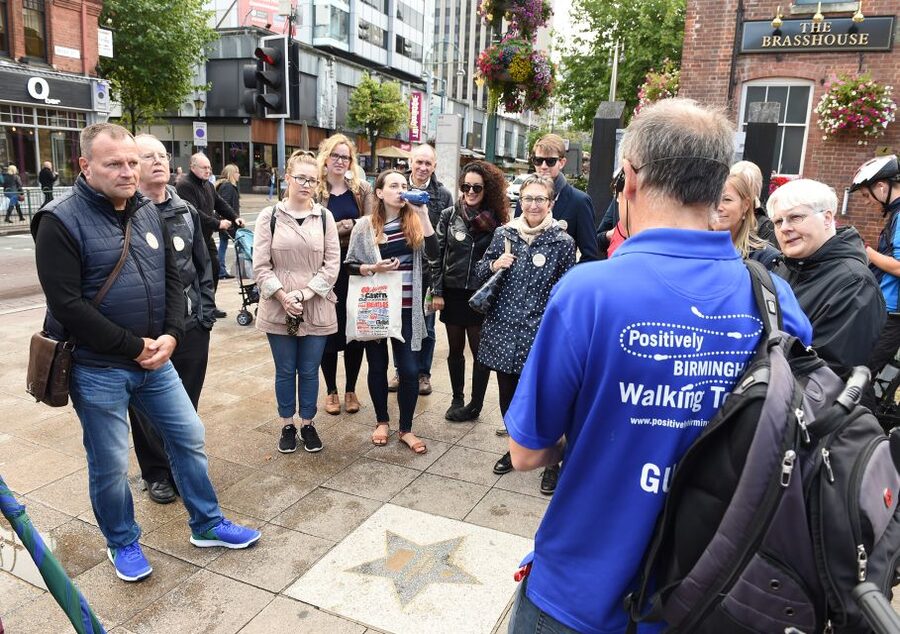
The tour begins outside the front entrance of the Library of Birmingham in Centenary Square. Look for the small pop-up stand marking the meeting point. This is a practical starting place because the square immediately puts Birmingham’s old and new identities side by side.
The library is a modern landmark, and the public art around the square gives the opening section more purpose than a simple meeting point. You begin thinking about how Birmingham presents itself today, then move into the forces that helped create the city in the first place.
I like this opening because it does not begin with a long list of dates. The buildings and art provide something to look at while the guide explains the city’s growth. You also get an early sense of the tour’s main idea: Birmingham is not only an industrial city preserved in old photographs. It is a place that keeps rebuilding itself.
The route returns to the same library after about two hours. That makes the walk easy to fit into a day of sightseeing, especially if you want to continue exploring central Birmingham afterward.
A few more half-days in Birmingham worth comparing
- Entry ticket to Hoo Zoo and Dinosaur World in Telford
★ 5.0 · 591 reviews - Cadbury World Entry Ticket
★ 3.0 · 524 reviews - Birmingham Walking Tour: Canals, Victorians & Today (1:30pm)
★ 5.0 · 346 reviews
Centenary Square and Birmingham’s public face
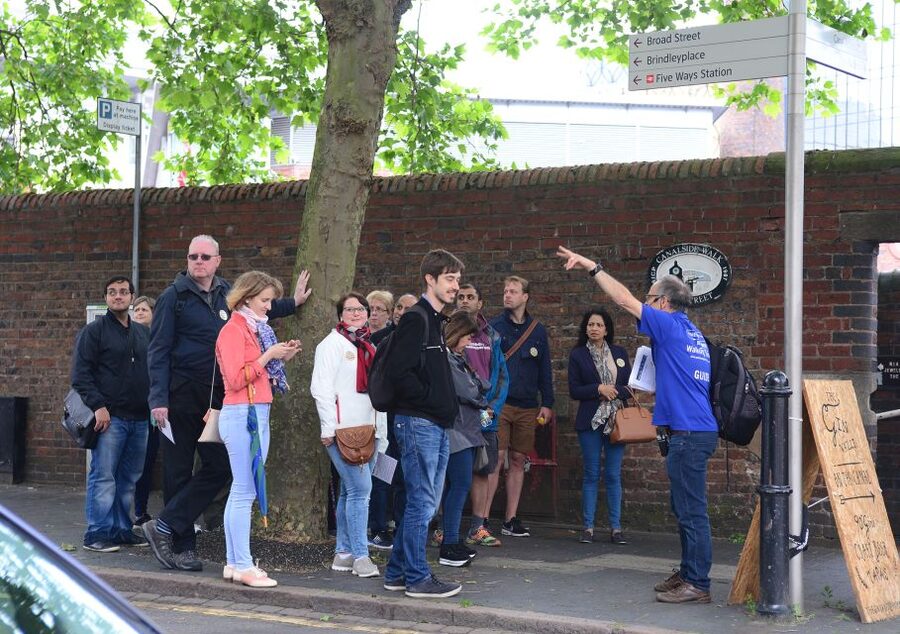
Centenary Square is a useful introduction to the city’s modern civic center. The square contains public art and is surrounded by major cultural buildings, so the guide can explain Birmingham through architecture as well as history.
You will hear about the city’s role in the Industrial Revolution, but the emphasis is not limited to factories and canals. The surrounding buildings show the importance of education, music, the arts, business, and public space in present-day Birmingham.
That balance is one of the tour’s best features. You are not simply taken from one old building to another. Instead, the guide uses each stop to explain how different periods of Birmingham’s growth have been placed next to one another.
This section also suits anyone who has already seen Birmingham in passing but never stopped to understand it. One participant had driven through the city, changed trains, and attended conferences there without really visiting. The walk is designed to turn that familiar transport hub into a place with a clear story.
The International Convention Centre and Symphony Hall
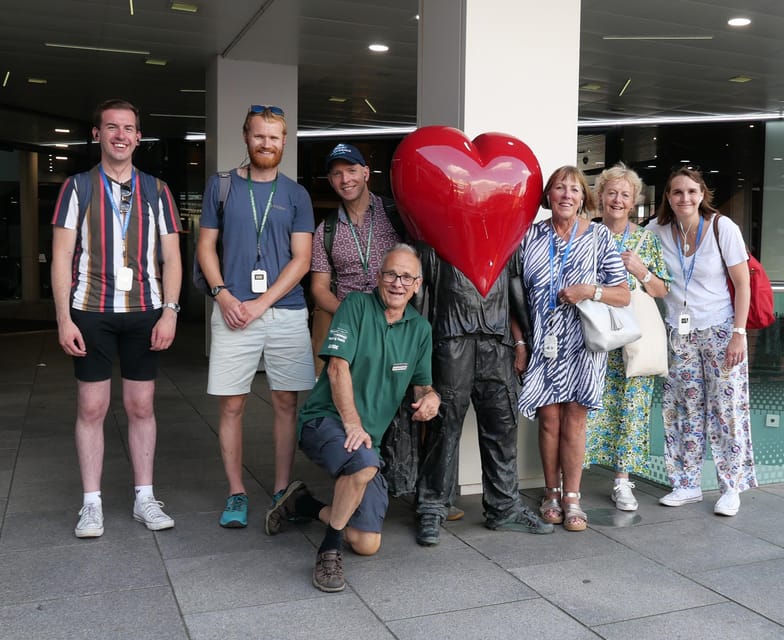
From Centenary Square, the route passes through the International Convention Centre and toward Symphony Hall. This part shows Birmingham’s investment in large public buildings and cultural life.
Symphony Hall is known for its fine concert-hall acoustics. The tour does not turn into a full music-history visit, but the building helps explain how the modern city uses architecture to support concerts, conventions, and public events.
I find this stop useful because it expands the usual picture of Birmingham. If you expect only canals, brick warehouses, and Victorian buildings, the contemporary cultural center may surprise you. It also gives the guide a chance to discuss how design affects the way people use a city.
The route is mostly about looking and listening rather than entering every building. If you want detailed interior visits, this is not that kind of tour. Its strength is the connection between the buildings, the squares, and the wider story.
The canal connection that changed Birmingham
The central historical turning point comes with James Brindley’s canal into Birmingham in the 1770s. The guide explains why this waterway mattered so much to the town’s development.
Canals offered a practical way to move goods, raw materials, and finished products. Their arrival helped connect Birmingham to wider trade routes and supported the industrial growth that made the town increasingly important.
You do not need a specialist background to follow this section. The canal itself becomes the visual aid. Instead of hearing an abstract explanation about transport and industry, you are standing beside the water and seeing how the route passes through the modern center.
The canal has since gained new uses. Its edges have been rejuvenated, with restaurants, offices, public spaces, and leisure activity replacing much of the old working role. That contrast is worth noticing. The waterway is not presented as a museum piece. It remains part of city life, even though the work done along it has changed.
This is also where the tour earns much of its $20 price. You can walk beside the canal alone, of course, but the guide gives you the reason it is there and explains why its arrival mattered. That extra context turns a pleasant waterside stroll into a lesson in urban development.
Same trip, a completely different kind of day:
- Discovering Birmingham 2 hour Walking Tour to the Jewellery Quarter
★ 5.0 · 333 reviews - Birmingham Slogging Gangs Walking Tour with Edward Shelby
★ 4.5 · 306 reviews - Birmingham City Centre Daily Walking Tour (10:30am & 2pm)
★ 5.0 · 265 reviews - Birmingham: Cadbury World Entry Ticket
★ 4.4 · 230 reviews
Brindleyplace and the Victorian civic project
Brindleyplace shows another layer of Birmingham’s change. The area brings together canal-side redevelopment and the memory of the Victorian city that grew around commerce and industry.
The tour uses this part of the route to explain the Civic Gospel and the Municipal Revolution. These ideas focused on improving everyday life through education, clean water, better public services, and the removal of poor-quality housing.
That material is important because it makes Victorian Birmingham more complicated than a simple story of factories and wealthy industrialists. The city’s leaders faced serious problems created by rapid growth. Reformers tried to make the town healthier, better educated, and more orderly.
You will not receive a university lecture, but the guide connects the civic ambitions to the streets and buildings around you. The result is a more useful picture of the period. Birmingham was not only producing goods. It was also experimenting with how a growing city should be run.
The canal setting helps the explanation. You can see the commercial side of the city beside the civic effort to improve it. That mixture of trade, public health, education, and housing gives the walk more substance than a list of attractive buildings.
Oozells Square and the changing canal district
Oozells Square is one of the named stops on the route and helps show how former industrial areas have been adapted for new city uses. The walk through this district combines waterside views with modern development.
The key point here is not that every building belongs to one neat period. You will see different architectural styles close together, and the guide helps you read those contrasts. Older industrial forms sit near offices, restaurants, public spaces, and newer construction.
That variety may appeal to you if architecture interests you more than formal museum displays. The tour encourages you to look up, compare materials, notice public art, and consider how a building fits its surroundings.
It is also a useful reminder that redevelopment can change a canal without erasing its purpose. Birmingham’s waterways once supported industry. Today, they help connect cultural, commercial, and public areas in the center.
Victoria Square and the civic center
Victoria Square brings the walk back toward Birmingham’s formal civic heart. Along with Chamberlain Square, it helps you understand how the city has used grand public spaces to express its ambitions.
The guide points out architectural styles and explains how old and new buildings now work beside one another. The point is not to declare one period better than another. Instead, you learn to recognize the choices made as Birmingham expanded, modernized, and rebuilt.
This is where a live guide adds real value. A printed map can show you where Victoria Square is, but it cannot easily explain why its buildings look so different or how the square fits into the city’s development. Jonathan is especially noted for mixing humor with clear explanations and for inviting questions during the walk.
The group does not have to wait until the end to ask something. That makes the experience feel more like a guided conversation than a speech delivered at fixed stops. If you have a particular interest in architecture, public art, or local history, this is a good place to ask.
Chamberlain Square and the blend of old and new
Chamberlain Square completes the main sequence of public spaces. It gives you another chance to compare civic architecture, cultural buildings, public art, and the newer parts of central Birmingham.
The tour’s theme becomes clear here. Birmingham is not being presented as a perfectly preserved historic center. It is a working city shaped by demolition, rebuilding, new cultural projects, and changing ideas about public space.
That may be the most useful lesson of the walk. Birmingham can be hard to read if you expect a single historic style. Its character comes from the mixture: canals beside offices, Victorian civic ideas beside modern buildings, and public art beside older streets.
You will also come away with a better sense of where to return later. The guide points out other landmarks and places to eat, making the tour a practical orientation walk as well as a history lesson.
The guides and the audio receiver
The guide can make or break a walking tour, and this experience has received especially strong praise for its live commentary. Jonathan is described as friendly, funny, energetic, and well informed about Birmingham. He encourages questions and adapts his approach to the group.
Michael Harrison brings a different strength. He is a former history of architecture lecturer, so his explanations suit anyone who wants more detail about buildings and city planning.
The guides do not appear to follow only one narrow script. They can discuss industrial development, Victorian reform, public art, concert-hall design, and modern architecture. That range is useful because the route itself covers several subjects.
A loaned audio receiver is provided so you can hear the commentary while walking. This matters more than it may sound. Central Birmingham has traffic, groups spread out along the pavement, and the general noise of a busy city. The receiver helps you keep listening without crowding close to the guide.
Bring your own headphones. The equipment is praised for being easy to use, but headphones are listed as something you should bring. If the weather turns cold or wet, the receiver will not make the walk warmer, so dress for two hours outside.
How much walking and how the timing feels
The total distance is about 3 kilometers, completed in two hours. That is a modest distance, but the pace includes stops for explanations, so you should expect to spend much of the time on your feet.
The tour has been completed in just under two hours on occasion, but you should plan around the stated two-hour duration. The route is designed to keep moving while stopping often enough to explain the important places.
I like this format for a first visit. You get a broad introduction without spending half a day on one subject. You also have time afterward to return to the canal, visit a building, or follow up on a restaurant or landmark mentioned by the guide.
The main practical concern is weather. A cold wind has affected comfort on some outings, and changeable weather may require the guide to adjust the route or pace. Wear comfortable shoes and bring headphones, a coat, and perhaps an umbrella.
Is $20 good value?
At $20 per person, this is fair value for a two-hour guided walk with a live English-speaking guide, loaned audio equipment, and a tourist guide book. You are paying for interpretation, not for entry to a major attraction.
The value is strongest if you are new to Birmingham or want to understand how its central districts fit together. The canal story, Victorian civic reforms, public art, and modern architecture would take time to assemble on your own.
It is less essential if you only want a short canal stroll with no historical explanation. You can walk through many of these areas independently. The tour earns its fee through the connections between places.
Free cancellation up to 24 hours before the start gives you some flexibility, and you can reserve now and pay later. Starting times vary, so check availability when you book.
Who should book this Birmingham walk?
I would recommend it to first-time visitors, architecture fans, local residents who want a fresh look at the city, and anyone curious about Birmingham beyond its railway station or shopping center.
It also suits people who enjoy a guide with personality. Jonathan’s humor and energy are a major part of the experience, while Michael Harrison’s background in architectural history may appeal to anyone who prefers a more detailed reading of buildings.
Families and mixed-age groups can benefit from the variety. The route shifts from canals to art, civic buildings, concert halls, and modern architecture, so it does not rely on one long block of dates.
You should think twice if you dislike outdoor walking, need frequent indoor stops, or want to enter every building along the route. This is a city orientation walk, not a museum tour or a private architectural survey.
Should you book it?
Book this tour if you want Birmingham explained through the places you can see around you. The canal, squares, public art, and changing architecture give the walk plenty of visual interest, while the guides add the links that are easy to miss on your own.
The best reason to go is the range packed into two hours. You learn how a canal helped power industrial growth, how Victorian reformers addressed urban problems, and how modern Birmingham has reused its waterways and public spaces.
For $20, it is a sensible first activity in the city. Just bring headphones, wear shoes for 3 kilometers, and prepare for the possibility of wind or rain.
FAQ
Where does the tour start?
The tour starts at the front entrance of the Library of Birmingham in Centenary Square. A pop-up stand usually marks the meeting point.
Where does the tour finish?
The walk returns to the Library of Birmingham.
How long is the tour?
The guided walk lasts two hours.
How far do you walk?
The total walking distance is about 3 kilometers.
What language is the tour in?
The live tour guide commentary is in English.
What is included in the price?
The price includes the tour guide, a loaned audio receiver for the live commentary, and a tourist guide book.
Should I bring headphones?
Yes. Headphones are listed as something to bring for use with the audio receiver.
How much does the tour cost?
The price is $20 per person.
Can I cancel or pay later?
You can cancel up to 24 hours in advance for a full refund. You can also reserve your place and pay later.
Just added in Birmingham
- Birmingham: Legoland Discovery Centre Entry Ticket★ 4.1 · 74 reviews
- Birmingham: National Sea Life Centre Entrance Ticket★ 4.4 · 150 reviews
- Fun, Flexible Treasure Hunt Around Birmingham with Cryptic Clues & Hidden Gems★ 5.0 · 167 reviews
- Birmingham: Guided City Center Walking Tour (10:30am & 2pm)★ 4.8 · 147 reviews
- Birmingham: Slogging Gangs Guided Walking Tour★ 4.2 · 216 reviews
- Birmingham: Winterbourne House and Garden Admission Ticket★ 4.7 · 199 reviews
- Cadbury World Entry Ticket★ 3.0 · 524 reviews
- Birmingham City Centre Daily Walking Tour (10:30am & 2pm)★ 5.0 · 265 reviews
Birmingham Tours, compared.

Entry ticket to Hoo Zoo and Dinosaur World in Telford
Read our review →
Birmingham Walking Tour: Canals, Victorians & Today (1:30pm)
Read our review →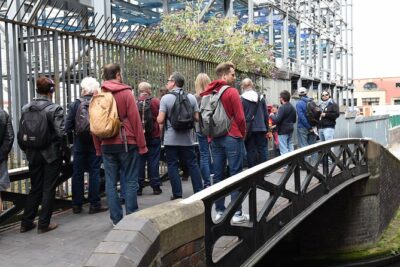
Discovering Birmingham 2 hour Walking Tour to the Jewellery Quarter
Read our review →
Birmingham Slogging Gangs Walking Tour with Edward Shelby
Read our review →
Birmingham City Centre Daily Walking Tour (10:30am & 2pm)
Read our review →

Browse the lists this tour appears in