
Reviewed · WALKING TOURS
Best of Bath Walking Tours – Georgian Tour
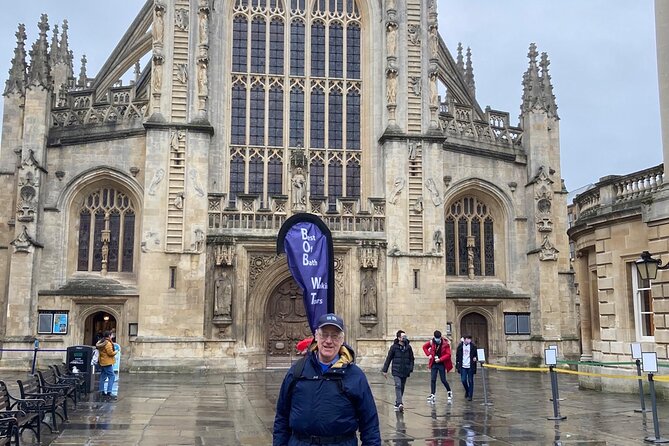
Bath’s grand Georgian buildings are easy to admire and surprisingly hard to understand on your own. This walking tour connects the streets, squares, architects, fashionable visitors, mineral springs, and local characters that turned Bath into one of England’s most distinctive cities. Guide Bob leads the walk with stories, wit, and plenty of time for questions.
I like the gentle pace, which lets you look up at the architecture instead of rushing from one photo stop to the next. I also like the way the tour brings Bath’s buildings back to the people who designed, lived in, and used them. The main consideration is that most attractions are viewed from outside, and the walk needs decent weather and a moderate level of fitness.
Key points before you book
- Bob is the guide: Expect a friendly, humorous, well-informed host who welcomes questions and explains Bath in plain language.
- The route covers Bath’s Georgian core: Queen Square, the Circus, Royal Crescent, the Assembly Rooms, Pulteney Bridge, Guildhall Market, and more are included.
- The tour begins and ends at Bath Abbey: Meet at 1:00 pm in Abbey Churchyard, then return there at the end.
- The group is limited to 15 people: This makes it easier to hear the guide and ask questions than on a large coach tour.
- Plan for about two hours: The advertised duration is two to three hours, and the walk can run longer when the group has plenty to discuss.
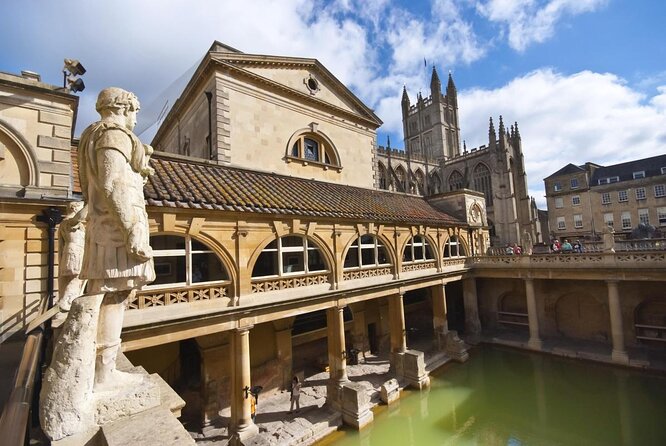
- Admission fees are separate: The route passes the Roman Baths, Assembly Rooms, Royal Mineral Water Hospital, and No. 1 Royal Crescent, but entry is not included.
Why Georgian Bath makes a good walking tour
Bath is compact enough to explore on foot, yet its grand streets can feel like a set of disconnected scenes. One minute you are beside the medieval Abbey, and a few minutes later you are facing a perfect curve of honey-colored townhouses. A guide helps you see how those pieces fit together.
This is not only an architecture walk. The focus is Georgian Bath, but the route also touches Roman, medieval, religious, medical, and literary history. You will hear about the hot springs, the old city wall, the people who shaped Bath, and the social life that made the city fashionable.
I particularly like the human scale of the experience. The buildings matter, but so do the people who paid for them, designed them, lived in them, and gathered inside them. That approach helps you remember why Bath looks the way it does instead of leaving you with a list of dates and building names.
The group limit of 15 is useful here. In a small group, you can usually hear explanations in busy areas and ask Bob about details that catch your eye. Several parts of the walk can become interactive, especially if you want to understand why one façade looks different from another.
More Walking Tours in Bath
- Walking Tour of Bath with Blue Badge Tourist Guide
★ 5.0 · 1,877 reviews - Bath: City Walking Tour with Optional Roman Baths Entry
★ 4.7 · 1,401 reviews - Bath: Guided Walking Tour
★ 4.9 · 1,198 reviews
Starting beside Bath Abbey at 1:00 pm
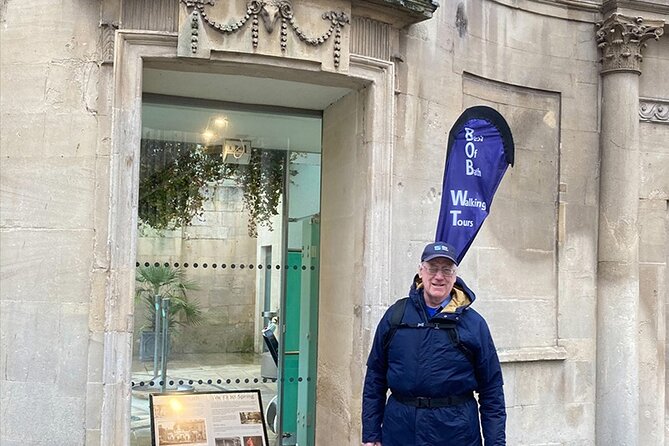
The meeting point is Abbey Churchyard, in front of Bath Abbey. This is a practical place to begin because it puts you in the middle of Bath’s story from the first minute.
Bath Abbey was founded in the seventh century, reorganized in the tenth century, and rebuilt in the twelfth and sixteenth centuries. Its long life gives Bob a useful starting point for explaining how the city changed from a religious and Roman center into a Georgian spa town.
From here, the route also brings you near the Roman Baths and the old city wall. The opening section provides context rather than a full interior visit, so you should not book this walk expecting admission to the Abbey or Roman Baths to be part of the price.
The end point is the same churchyard. That makes the tour convenient if you are catching a train, meeting someone afterward, or using the walk as your first orientation to Bath. Bob also allows time at the end to discuss points of interest and answer follow-up questions.
Roman Baths and the mineral-water story
The Roman Baths receive only a short stop on this walking route, but their importance is much larger than the time suggests. A temple was built here between AD 60 and 70, during the first decades of Roman Britain. The natural springs helped make this spot important long before Georgian society arrived.
If you want to tour the Roman Baths museum and bathing complex inside, you will need a separate admission ticket. This walking tour gives you the setting and historical connection, but it does not replace the full museum visit.
The same is true of the Royal Mineral Water Hospital, where construction began in 1737. The hospital reflects Bath’s later faith in the healing power of mineral water and the period’s growing interest in scientific explanations. It is a useful reminder that Bath’s appeal was not only social. People also came hoping the springs would improve their health.
These brief stops work well for visitors who want a city overview before deciding which interiors deserve more of their time. If the Roman Baths are your main reason for coming to Bath, allow extra time before or after the walk and buy a separate ticket.
Queen Square, the first Georgian statement
Queen Square is one of the clearest introductions to Georgian Bath. Its buildings are Grade I listed, and the square forms the first part of an architectural sequence that continues through the Circus to the Royal Crescent.
That sequence is one reason this tour is more useful than simply walking between famous addresses. You can see how Bath’s designers planned grand spaces as connected statements. The square is not just a collection of elegant façades. It helps explain the ambitions behind the new parts of the city.
Bob’s explanations are especially useful here because Georgian architecture can look repetitive at first glance. Details such as symmetry, proportions, columns, and the relationship between buildings become easier to spot when someone points them out. You may start noticing features that you would have walked past without a guide.
Queen Square is also a good place to appreciate the scale of the development. Bath was being reshaped for residents and fashionable visitors, not just repaired one building at a time.
Same trip, a completely different kind of day:
- Bath: Guided Ghost Tour
★ 4.8 · 1,036 reviews - Roman Baths and Bath City Walking Tour
★ 4.5 · 762 reviews - Bath: The Jane Austen Centre Ticket
★ 4.4 · 678 reviews - Fully Guided Bath Ghost Tours
★ 5.0 · 539 reviews
The Assembly Rooms and Bath’s social scene
The Assembly Rooms help explain why Georgian Bath became fashionable. The upper rooms opened with a grand ball in 1771 and hosted dancing, concerts, gambling, and social gatherings. Jane Austen and Charles Dickens were among the people associated with Bath’s fashionable world, along with members of the nobility.
The tour stops here, but admission is not included. That distinction matters because the exterior gives you the setting, while the interior offers a better sense of the rooms built for public social life.
I like this part of the route because it adds people and behavior to the architecture. A grand façade is easier to understand when you know what happened behind it. Bath was not simply a place to admire buildings. It was a place to be seen, make connections, follow social rules, and spend money.
Expect the discussion to remain part of the outdoor walking tour rather than a full museum visit. If balls, fashion, or Jane Austen’s Bath interest you most, plan a separate visit to the Assembly Rooms when arranging your day.
The Circus and the logic of Georgian design
The Circus is one of Bath’s great architectural set pieces. John Wood the Elder designed the ring of townhouses, built between 1754 and 1768. Three entrances lead into the circular space, and each segment is arranged so that a classical façade faces you as you approach.
This is a place where a guide adds real value. From ground level, you can admire the curve without immediately understanding the planning. Bob can direct your attention to the repeated details and the way the entrances shape your view.
The Circus also helps you compare different forms of Georgian planning. Queen Square is open and formal, while the Circus creates a more enclosed, theatrical space. The Royal Crescent then stretches the idea into a sweeping curve with a broad outlook.
The stop is free and viewed from outside. Give yourself time to look carefully rather than treating it as a quick photo pause. The best part is not just taking a picture. It is seeing how the architects controlled what you see as you enter.
Royal Crescent and No. 1 Royal Crescent
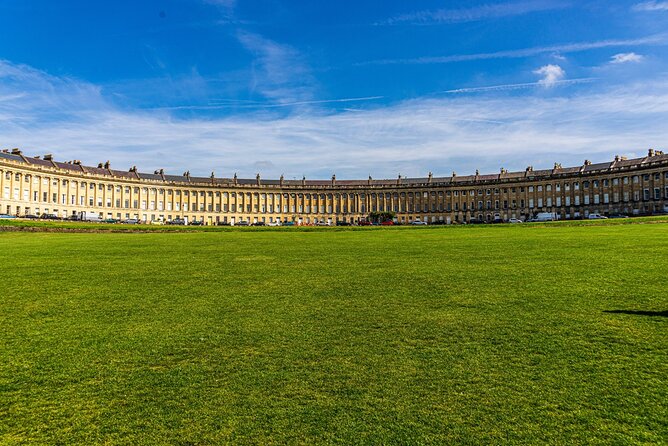
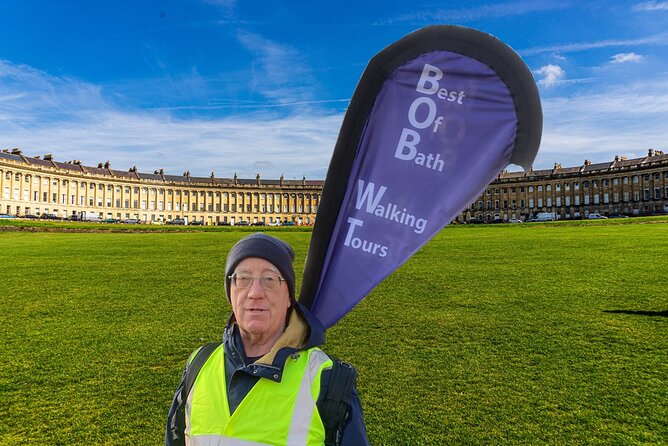
The Royal Crescent is a row of 30 terraced houses designed by John Wood the Younger and built between 1767 and 1774. Its long curve is among the most recognizable sights in Bath and one of the strongest reasons to choose this particular route.
The walk includes No. 1 Royal Crescent, but admission is not included. The house offers an interior look at Georgian life, while the tour itself explains the crescent’s place in the wider design of Bath.
From the outside, the crescent looks like one grand palace. In fact, it is a row of individual townhouses. That contrast is worth noticing. The unified front creates a powerful public image, while separate homes operated behind it.
The nearby Gravel Walk adds another change of pace. It is a quieter pedestrian route and helps connect the grand architecture with the practical act of walking through the city. The exact experience can vary with weather and crowds, but it is a useful part of the route because it moves you away from a simple sequence of façades.
Pulteney Bridge and the River Avon
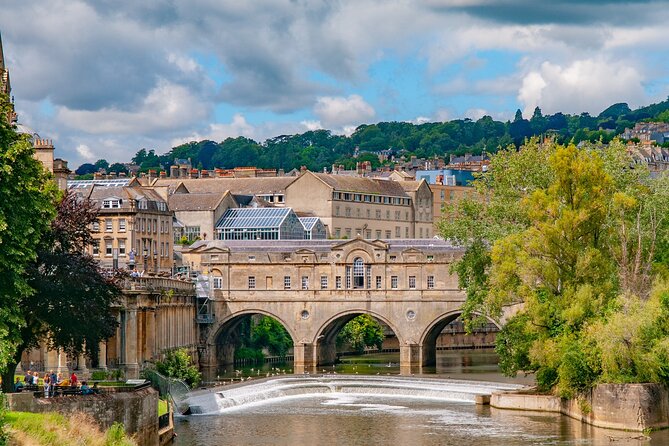
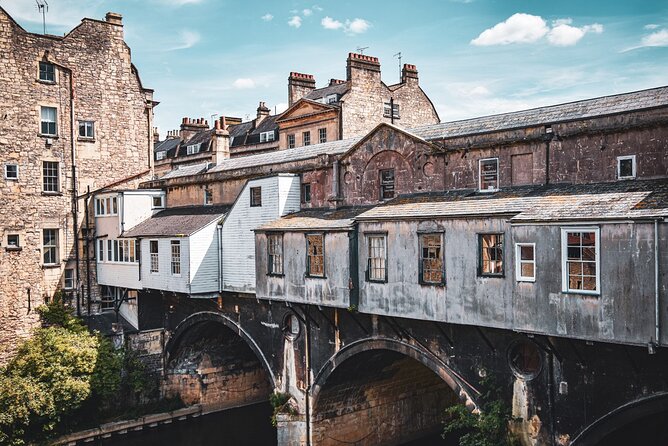
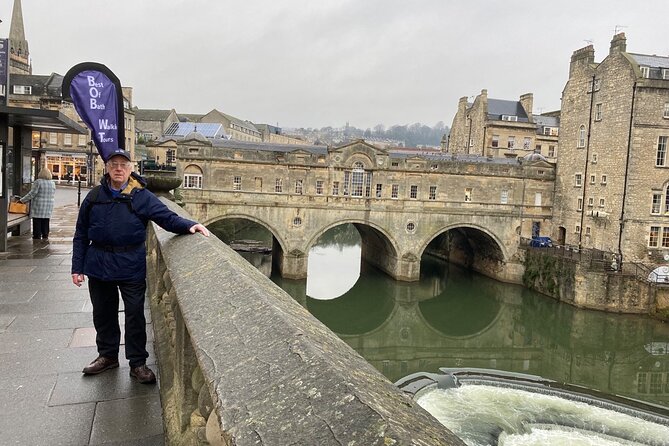
Pulteney Bridge brings the walk toward the River Avon and a different kind of Georgian design. Completed by 1774, the bridge was built to connect Bath with land owned by the Pulteney family, which they hoped to develop.
Its most unusual feature is the line of shops built across the full span on both sides. Designed by Robert Adam in a Palladian style, it is more than a crossing. It is also a commercial street suspended over the river.
This stop gives the tour a welcome change from large squares and terraces. You can look at the bridge as architecture, but you can also see how development, transport, commerce, and family ambition worked together.
The stop itself is short, so use your time well. Look along the bridge, down toward the river, and at the shopfronts. You might want to return later for a slower look, especially if you are interested in how Bath’s grand plans served ordinary business.
Guildhall Market and the walk back
Bath Guildhall Market provides a final contrast. The indoor market has existed since 1284 and occupies a handsome building with various stalls. The tour allows a brief wander, giving you a glimpse of Bath as a working city rather than only a place of monuments.
This stop is not a major museum visit, and the short time means you should not expect to browse every stall. Its value is in the change of mood. After the formal architecture of the Circus and Royal Crescent, the market shows the continuing everyday side of the city.
The route then returns to Abbey Churchyard. The walk is scheduled for about two hours, though the stated duration can reach three hours. If you ask many questions, the ending may stretch. That is useful if you want a conversation, but keep it in mind if you have a tight onward booking.
Bob’s guiding style and the pace of the walk
Bob is the central reason this tour works. His style combines detailed explanations with a dry sense of humor, and he is comfortable discussing both major landmarks and small details. He also makes a point of answering questions rather than forcing everyone through a fixed speech.
The most useful aspect is the pace. People who prefer a gentle walk should find the format manageable, provided they can handle moderate physical activity. You will be standing and walking for much of the experience, with no promise of indoor seating or regular rest stops.
Bob has also been praised for checking in with the group and keeping the talk from becoming too heavy. That balance matters in Bath, where it would be easy to bury a short walk under centuries of dates and architectural terms.
The walk can feel personal even when the group is not private. Bob has sometimes taken time to answer individual questions, point out filming locations connected with Bridgerton, and show details that are easy to miss, such as an old medieval path near the river and city walls. These additions depend on the route, conditions, and group interest, so treat them as possible extras rather than guaranteed stops.
Price, timing, and who gets the best value
At $27.73 per person, this is reasonably priced for a two to three-hour guided walk with a maximum of 15 people. The value comes less from paid entry and more from having someone explain the relationship between Bath’s buildings, streets, and social history.
The price is especially fair if this is your first time in Bath or if you have already walked around but feel you are missing the story behind the façades. It can save you from wandering without context and help you decide which attractions deserve separate admission.
You should budget extra for the Roman Baths, Assembly Rooms, No. 1 Royal Crescent, and Royal Mineral Water Hospital if you want to go inside. The walk does not include those tickets.
The tour starts at 1:00 pm, making it useful as an afternoon activity. It is also booked, on average, 28 days ahead, so reserve early if your Bath dates are fixed. The experience is offered in English and uses a mobile ticket.
Free cancellation is available up to 24 hours before the start time. Changes or cancellations inside that window are not accepted for a refund. The tour needs good weather and a minimum number of participants. If poor weather or low enrollment cancels it, you are offered another date or a full refund.
Should you book the Georgian Tour?
Book this walk if you want Bath to make sense, not just look pretty. It suits first-time visitors, architecture fans, Jane Austen enthusiasts, and anyone who prefers stories about people and city life to a nonstop list of dates.
It is also a good choice if you have only an afternoon and want a broad introduction before choosing which museums to visit. Bob’s humor, patience, and willingness to answer questions give the experience more warmth than a standard scripted walk.
Skip it if your main goal is extended interior visits to the Roman Baths or No. 1 Royal Crescent. You will need separate tickets and time for those attractions. Also think twice if rain is forecast or if a two-hour walk at a moderate pace would be difficult.
For most visitors who want an affordable, personal introduction to Bath’s grandest Georgian sights, this is a smart booking. Meet Bob at the Abbey, keep your eyes on the details, and let the city’s buildings tell a much bigger story.
FAQ
Where does the Georgian Tour begin?
It begins in Abbey Churchyard, Bath BA1, in front of Bath Abbey.
What time does the tour start?
The tour starts at 1:00 pm.
Where does the tour finish?
It returns to Abbey Churchyard, the same place where it begins.
How long does the walking tour last?
The tour lasts approximately two to three hours. The main walk is described as about two hours, but questions and discussion can extend the time.
Who guides the tour?
The guide is Bob, who leads the walk through Georgian Bath.
How many people can join the tour?
The maximum group size is 15 travelers.
Is the tour offered in English?
Yes. The experience is offered in English.
Are attraction admission fees included?
No. Admission is not included for the Roman Baths, Royal Mineral Water Hospital, Assembly Rooms, or No. 1 Royal Crescent. Several outdoor stops are free to view.
What level of fitness is needed?
A moderate level of physical fitness is recommended because this is a walking tour.
Can I cancel for a full refund?
Yes, if you cancel at least 24 hours before the experience starts. Cancellations made less than 24 hours before the start time are not refunded.
Just added in Bath
- Bath: Walking Tour of Bath and Guided Tour of Bath Abbey★ 5.0 · 27 reviews
- Bath: Guided Relaxation and Sound Bath★ 4.8 · 108 reviews
- Bath: The Bad of Bath Walking Tour★ 5.0 · 202 reviews
- Bath: Guided Tour of Iconic Bridgerton Filming Locations★ 4.6 · 137 reviews
- Discover Bath and Bridgerton with Music★ 4.6 · 64 reviews
- Bath: Mary Shelley’s House of Frankenstein Entrance Ticket★ 4.5 · 126 reviews
- Bath: Bath Abbey and Discovery Centre Entry★ 4.7 · 132 reviews
- Afternoon Tea at The Regency Tea Room★ 4.4 · 136 reviews
Walking Tours, compared.
Underground Vaults Walking Tour in Edinburgh Old Town
Read our review →
Oxford University Walking Tour With University Alumni Guide
Read our review →
Edinburgh Castle: Guided Walking Tour with Entry Ticket
Read our review →
Edinburgh Castle Guided Walking Tour in English
Read our review →
Tour for Muggles The Ultimate Harry Potter Walking Tour in London
Read our review →
University and City Walking Tour with Alumni Guide
Read our review →
Edinburgh Darkside Walking Tour: Mysteries, Murder and Legends
Read our review →
Browse the lists this tour appears in