
Reviewed · ROMAN BRITAIN TOURS
Bath: Roman Baths Entry Ticket with Audio Guide
The Roman Baths are more than a pool surrounded by old stone. They are a complete ancient religious and bathing complex, built around Bath’s natural hot springs. I like the way the route moves from museum displays to exposed ruins, so you first understand the people and beliefs behind the site. I also like the excellent audio guide, which gives you a clear path without forcing you to keep pace with a group.
The main drawback is crowding. The site can fill quickly, especially in the museum, and a prebooked ticket does not always mean you walk straight through the entrance queue. The handheld audio device is useful, but holding it for the whole visit may tire your arm, particularly if you are also managing children.
Key points to know before you go

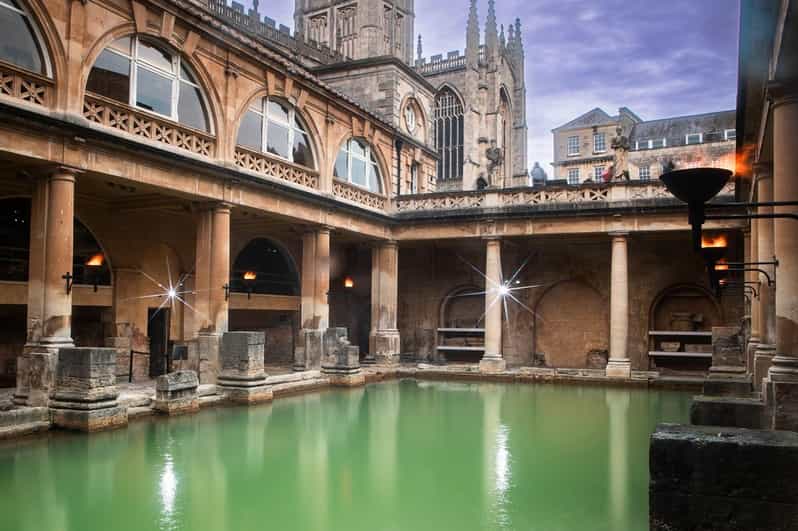
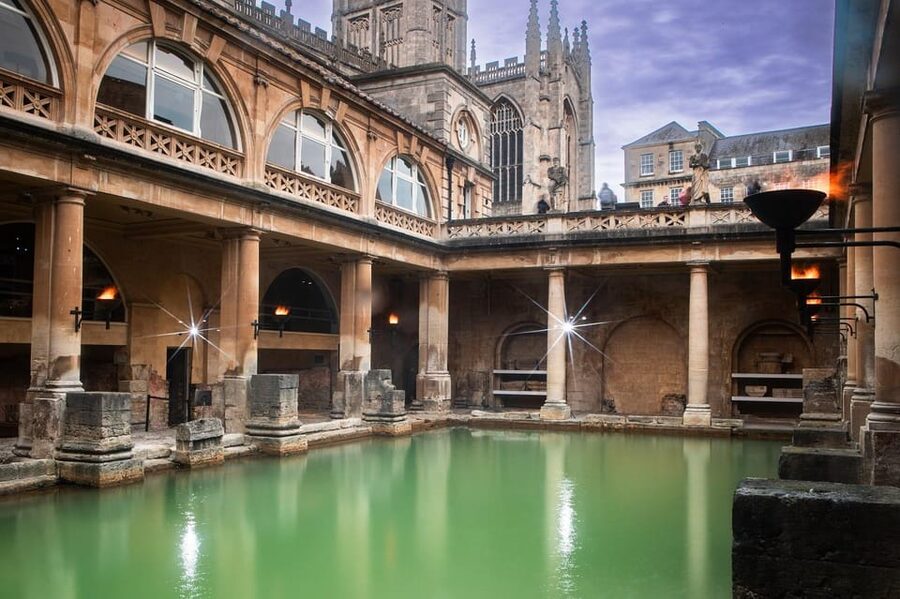
- See the Great Bath from the stone walkway: Look down into the warm spring water while Bath’s rooftops rise around the ancient pool.
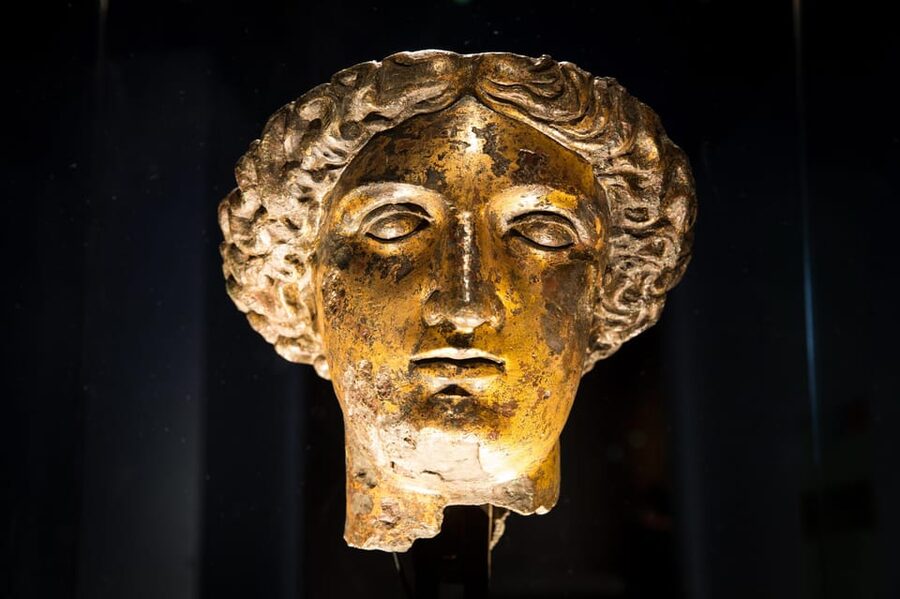
- Follow the story of Sulis Minerva: The gilt bronze head of the goddess and the temple’s Gorgon decoration give the site a strong religious focus.
- Use the audio guide: Choose from 12 languages, or use the handheld BSL video guide, and move at your own speed.
- Allow plenty of time: The route includes the museum, Great Bath, heated rooms, massage areas, plunge pools, sauna, and Circular Bath.
- Start early if you can: The museum becomes crowded quickly, and early entry makes it easier to view the displays.
- Finish with the spring water: A dedicated tap lets you taste water containing more than 43 minerals.
Why the Roman Baths are worth your time
Bath’s thermal springs explain why this city exists. The hot water drew people here nearly 2,000 years ago, when Roman Britain’s visitors came not just to bathe but also to worship Sulis Minerva, a goddess linked with the spring.
That combination gives the site its character. You are not walking through a simple public bathhouse. You are seeing a place where health, religion, social life, engineering, and political power met in one complex.
At about $30.31 per person, this is not a cheap quick stop. The value depends on how much time you give it. If you rush through in 45 minutes, the price may feel high. If you follow the audio guide, stop for the displays, and explore the entire bathing complex, you can spend around two hours or more here and get a fuller experience.
The ticket is valid for one day, with entry times dependent on availability. You redeem your voucher at the Roman Baths in central Bath, then follow the route at your own pace. There is no live guided tour included, but the self-guided format works well because you can pause, skip sections, or linger at objects that catch your eye.
More Roman and medieval sites within reach of Bath:
- Bath: City Walking Tour with Optional Roman Baths Entry
★ 4.7 · 1,401 reviews - Roman Baths and Bath City Walking Tour
★ 4.5 · 762 reviews - Bath: Guided City Walking Tour with Entry To The Roman Baths
★ 4.8 · 343 reviews
Start in the museum, where the story becomes personal
The first part of the visit takes you through the museum. This is where the site shifts from impressive architecture to human stories.
You see objects left behind by people in Roman Britain, giving you clues about worship, daily life, and the importance of the spring. The museum helps answer a useful question: why did people travel to this place in the first place?
The audio guide is particularly helpful here. It explains the displays without making you read every information panel, and clear route markers show you where to go next. Subtle video projections also help you picture how the Romans used the complex. They add movement to rooms that otherwise might look like scattered stone foundations.
One of the major objects is the Gorgon’s head, which once decorated the temple pediment. It looked down from about 15 metres above those approaching the temple. The interpretation leaves room for a question: is it the mythological Gorgon, or could it represent a water god?
That uncertainty is part of the fun. You are not simply handed a list of dates and facts. You get a chance to think about how ancient images were understood and how much can remain unclear after two millennia.
The gilt bronze head of Sulis Minerva is another major highlight. This was part of the cult statue inside the temple and would have gazed over the sacred space. Its workmanship gives you a direct sense of the skill and resources invested in the goddess’s home.
I would spend more time with these two pieces than you might expect. They connect the ruins to the beliefs that made this spring important. Without them, the Great Bath could look like an impressive engineering project. With them, the place becomes a sanctuary as well as a bathing centre.
Step onto the Great Bath walkway
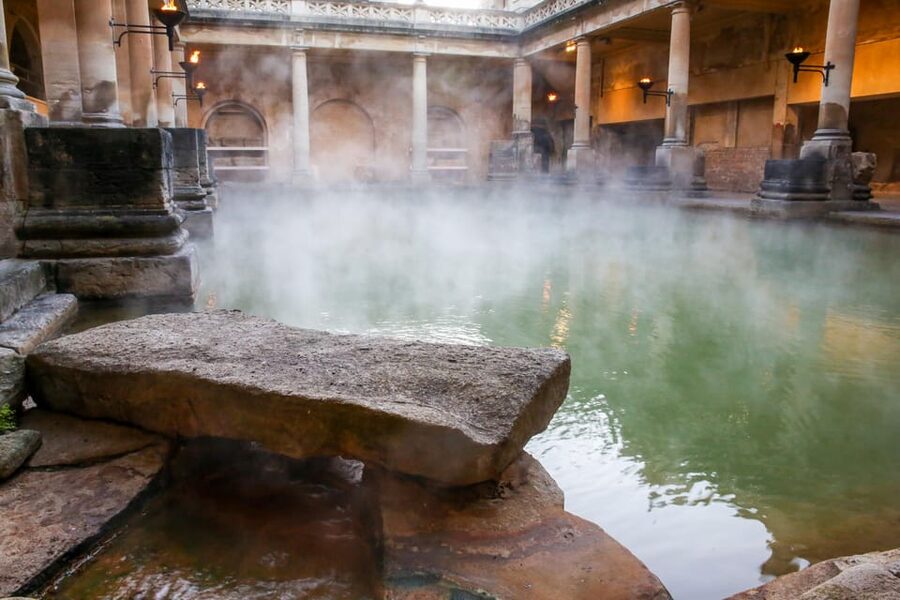
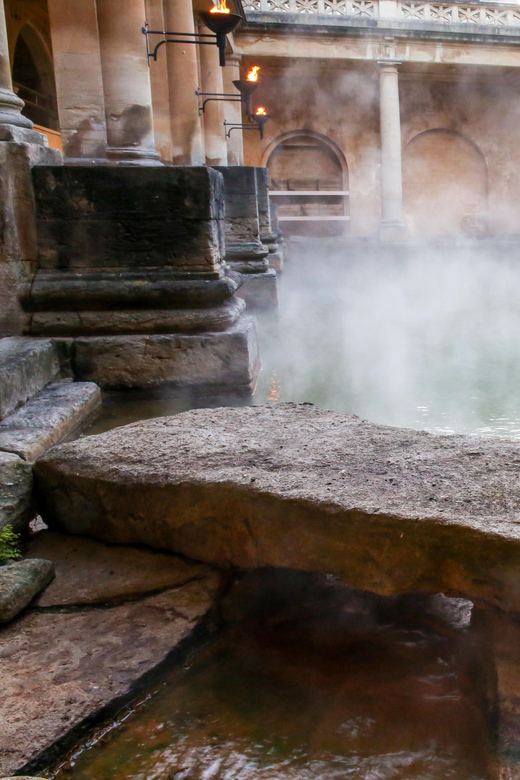
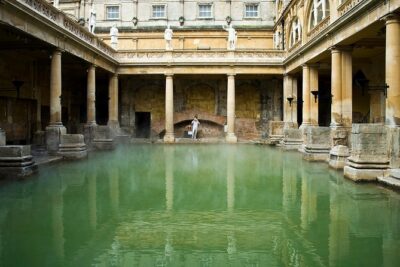
The Great Bath is the image most people associate with Bath, and it earns that attention. Once you leave the museum, you reach the stone walkway around the large pool, with the tops of modern Bath’s buildings and the sky visible above.
On a cold morning, steam may rise from the water. That changes the feel of the scene, making it easier to picture the pool in use, even though the modern setting remains close around you.
You walk on pavements used by the Romans, looking down at the warm water that still comes from the natural spring. The pool itself is not a place for modern bathing, but the physical closeness matters. You are not viewing a distant reconstruction behind glass. You are standing beside the same ancient water source that gave the site its purpose.
The Great Bath can become crowded. People stop for photos, and the walkway is not a place where you can always move quickly. Give yourself time, but be prepared to wait for a clear view if you want an unobstructed photograph.
The audio guide lets you take this section slowly. You can listen beside the pool, then pause the device while you look around. That freedom is one of the main advantages of a self-guided visit.
Explore heated rooms, massage areas, and plunge pools

Do not leave after seeing the Great Bath. Much of the value is in the rooms around it.
The East Baths include heated rooms and areas connected with massage. These spaces show that Roman bathing was not just a quick wash. It could involve moving through different temperatures, spending time with other people, and taking care of the body in a social setting.
You also see the Roman Gym and the ancient sauna, known as a laconicum. The names and functions can blur together if you rush, so this is a good place to use the audio guide rather than relying only on the signs.
The West Baths add plunge pools, giving you a contrast with the hot spring water. The Circular Bath completes the route with another distinctive part of the bathing complex.
The ruins are spread across different levels, and the route can involve steady walking and standing. Several places offer seating, which helps if you have a leg problem or simply want to take a break. One practical limitation is that there is no dedicated rest room where you can sit for a long time with refreshments while still inside the visit.
Plan on roughly two hours if you want to listen carefully and stop often. You can move faster, but the audio commentary contains enough detail to reward a slower pace.
More Self-Guided Tours in Bath:
- London: Emirates Stadium Entry Ticket and Audio Guide
★ 4.7 · 5,513 reviews - Westminster Abbey Entrance Ticket Including Audio Guide
★ 4.0 · 661 reviews - London: British Museum Audio Tour & Priority Entrance Ticket
★ 4.5 · 631 reviews - Canterbury Cathedral: Entry Ticket with Audio Guide
★ 4.6 · 266 reviews
Let the audio guide set your pace
The audio guide is the backbone of this experience. It is available in English, Dutch, French, German, Italian, Japanese, Chinese, Korean, Polish, Russian, Portuguese, and Spanish. A handheld BSL video guide is also available.
The content is arranged around numbered points, and arrows help you follow the route. That makes the visit easy to negotiate, even if you are not used to self-guided museum sites.
The strongest part is the amount of context. Instead of merely identifying a room, the commentary explains how it fitted into the wider bathing complex and what it may have meant to Roman visitors. The guide also covers social details, which help make the ancient site feel less abstract.
Families can use the children’s version of the guide. It gives younger visitors a more approachable way into the story, and children from about eight years old are likely to get the most from the displays and commentary. If you have extra time, you can listen to sections of both versions, since they present different details.
There is one comfort issue. The device is held in your hand, and some people may find that tiring after a long circuit. It does not give you the same hands-free ease as headphones. If you are visiting with children, you may need to share the device or help them manage it while keeping an eye on the route.
Still, the guide is far more than a token extra. It lets you see the site at your speed and cuts down the amount of reading required at each stop.
Meet Roman characters along the route
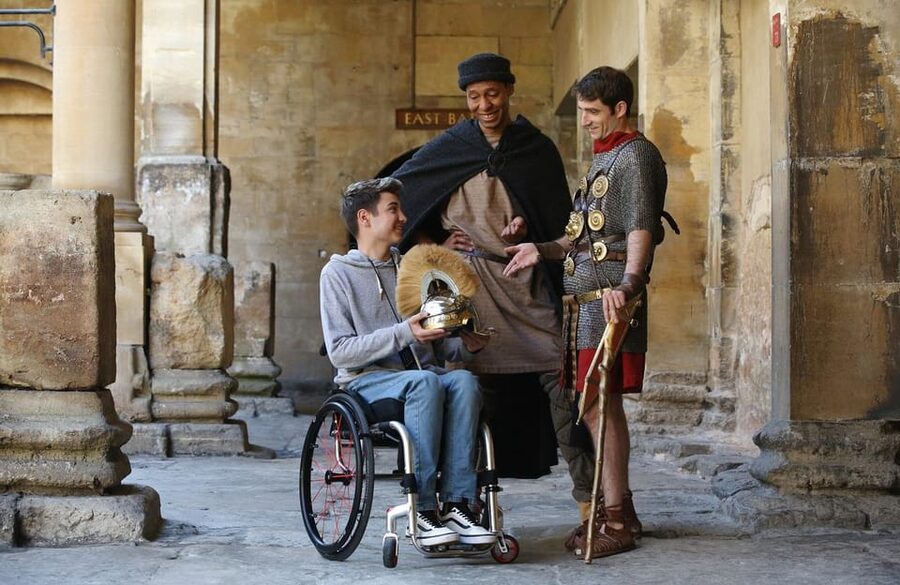
At times, costumed Roman characters appear in the baths. You can ask questions about life in Roman Britain and pose for a photograph.
This is a small part of the visit, not a guaranteed live performance at every moment. Still, it gives children and curious adults a chance to ask questions in a more direct way. A museum label can explain a room, but a character can help you think about how people used it.
The costumed encounters also break up the audio commentary. If you are visiting with family, they can provide a welcome change from looking at objects and listening to a device.
Finish with a taste of the thermal spring

Near the end of the visit, you can sample the spa water from a dedicated drinking tap. The water contains more than 43 minerals and has drawn people to Bath for centuries because of its supposed healing properties.
The tasting is included with the entry ticket. It is a brief experience, but it gives you a physical connection to the spring rather than leaving it as something you only see through a barrier.
The flavour may be unfamiliar. This is mineral-rich thermal water, not a refreshing bottle of still water. Think of it as a historical curiosity and part of the site’s story, rather than a drink you will necessarily want to refill.
A comfortable seating area for a longer tasting break is not guaranteed, so anyone needing regular rest should use the benches along the route and pace the visit.
Timing, access, and practical details

The Roman Baths are best visited early in the day. The museum can become busy soon after opening, and an early time gives you more room around the objects and a clearer view of the Great Bath.
Last entry is one hour before closing. Check the available starting times when booking, since the ticket is valid for one day but entry still depends on the selected availability.
The site is about 90 percent accessible to wheelchair users, with elevators available between levels. Because the ruins occupy an old, multi-level building, full access is not possible in every part, but the available lifts make a substantial difference.
Pets, baby strollers, luggage, and large bags are not allowed. That matters if you are arriving with children or arriving in Bath before checking into a hotel. Keep your belongings small and make another plan for a stroller.
The booking is non-refundable, so choose your time carefully. Also allow for the possibility of an entrance queue, even with a ticket purchased ahead. Buying in advance is still useful for securing a time, but it does not guarantee a completely separate fast lane.
The experience is described as a small group limited to six participants, though the main visit itself is self-guided and you move through the site independently.
Who will enjoy this visit most?
This suits anyone who wants a major Bath sight with plenty of explanation but does not want to join a fixed guided tour. You can stop when you like, listen in your preferred language, and spend extra time with the Gorgon’s head, Sulis Minerva, or the Great Bath.
It is a strong choice for families with older children. The children’s audio option, projections, costumed characters, and unusual water tasting give younger visitors more than rows of display cases to think about.
It also works well in poor weather because much of the route is indoors or sheltered. The open Great Bath area is the part where weather matters most, but the museum and covered ruins provide plenty to see.
You may want to reconsider if you dislike handheld audio devices, have very limited standing ability, or want a live guide who can answer questions throughout the entire visit. The site has seats, lifts, and a clear route, but you should still allow time and avoid rushing.
The museum shop is worth a quick look
The shop continues the themes of the visit with jewellery, prints, books, homeware, games, and bathing products inspired by the museum collection.
It also carries goods from local independent makers, including honey, botanical gin, and handmade soaps. This gives you a more useful souvenir choice than a simple logo item. If you want something connected to Bath’s spring culture without buying a bulky object, the bathing products and small craft items are practical options.
Should you book the Roman Baths ticket?
Book it if you want to understand Bath through its most important ancient site, and if you are willing to spend close to two hours following the audio guide. The Great Bath is the visual star, but the museum, temple objects, heated rooms, plunge pools, and spring water tasting make the ticket more substantial than a quick photo stop.
I would choose an early entry time, especially during a busy visit to Bath. Keep your bag small, leave the stroller behind, and expect to share the space with other visitors. At $30.31, the ticket offers fair value when you use the full route and commentary, but less so if you only want to glance at the pool.
FAQ
How long is the Roman Baths ticket valid?
The ticket is valid for one day. Check the available starting times when booking.
Is a live guided tour included?
No. The ticket includes entry and an audio guide, but not a live guided tour.
What languages are available on the audio guide?
The audio guide is available in English, Dutch, French, German, Italian, Japanese, Chinese, Korean, Polish, Russian, Portuguese, and Spanish. A handheld BSL video guide is also available.
Can I taste the spa water?
Yes. Spa water tasting from a dedicated drinking tap is included with the ticket. The water contains more than 43 minerals.
Is the Roman Baths wheelchair accessible?
The site is 90 percent accessible to wheelchair users, and elevators are available to help reach different levels.
Can I bring a stroller, pet, or large bag?
No. Pets, baby strollers, luggage, and large bags are not allowed inside.
More Audio Tours in Bath
- London: Churchill War Rooms Ticket & Political London Audio
★ 4.6 · 224 reviews - Windsor Castle Tour from London with Transportation & Audio Guide
★ 3.5 · 222 reviews - Bristol: Self-Guided Sightseeing Audio Tour
★ 4.4 · 151 reviews
Just added in Bath
- Bath: Walking Tour of Bath and Guided Tour of Bath Abbey★ 5.0 · 27 reviews
- Bath: Guided Relaxation and Sound Bath★ 4.8 · 108 reviews
- Bath: The Bad of Bath Walking Tour★ 5.0 · 202 reviews
- Bath: Guided Tour of Iconic Bridgerton Filming Locations★ 4.6 · 137 reviews
- Discover Bath and Bridgerton with Music★ 4.6 · 64 reviews
- Bath: Mary Shelley’s House of Frankenstein Entrance Ticket★ 4.5 · 126 reviews
- Bath: Bath Abbey and Discovery Centre Entry★ 4.7 · 132 reviews
- Afternoon Tea at The Regency Tea Room★ 4.4 · 136 reviews
Roman Britain Tours, compared.

Windsor, Stonehenge, Bath, and Roman Baths Day Trip
Read our review →

Stonehenge and Bath Day Trip from London with Optional Roman Baths Visit
Read our review →
City Walking Tour with Optional Roman Baths Entry
Read our review →

Fascinating Walking Tours Of Roman Chester With An Authentic Roman Soldier
Read our review →
Browse the lists this tour appears in