
Reviewed · FILM & TV LOCATION TOURS
BATH: 2-Hour Bath Walking Tour of Bridgerton Filming Locations
Bath is one of Bridgerton’s most convincing stars. This two-hour walk links more than 70 filming scenes with the city’s grand Georgian streets, from Bath Abbey to Lady Danbury’s home at the Holburne Museum. I like the mix of screen trivia and real Bath history, especially the way guides such as Jim, Fred, Andy, and Phil explain how familiar buildings were dressed for the series.
I also like that the tour goes beyond a simple photo hunt. You’ll hear about Regency society, filming methods, local buildings, and other productions made in Bath. The main drawback is the walking: cobbles, slopes, grass, gravel, and a fairly brisk route can be hard for anyone with limited mobility.
Key points before you book
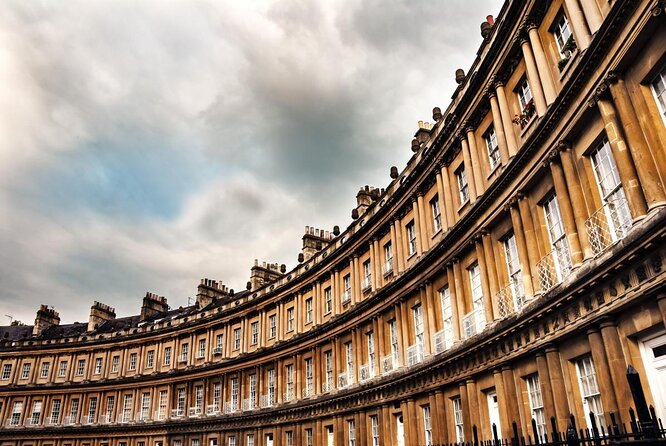
- See the city through Bridgerton’s camera lens: Abbeygate Street, Bath Street, Royal Crescent, Assembly Rooms, Guildhall, and the Holburne Museum all play important roles.
- Expect real Bath history too: Guides explain Georgian society, architecture, and why Bath could double for fashionable London.
- The route is outdoors: No attractions are entered, and admission fees are not included.
- Plan for uneven ground: The walk includes cobblestones, inclines, grass, and gravel paths.
- The guide shapes the experience: Jim, Fred, Andy, and Phil have been praised for clear explanations, humor, filming details, and good local suggestions.
- Best value for a group: The price is $312.51 for a group of up to 15, so the per-person cost drops sharply when several people share it.
Why Bath works so well as Bridgerton’s London
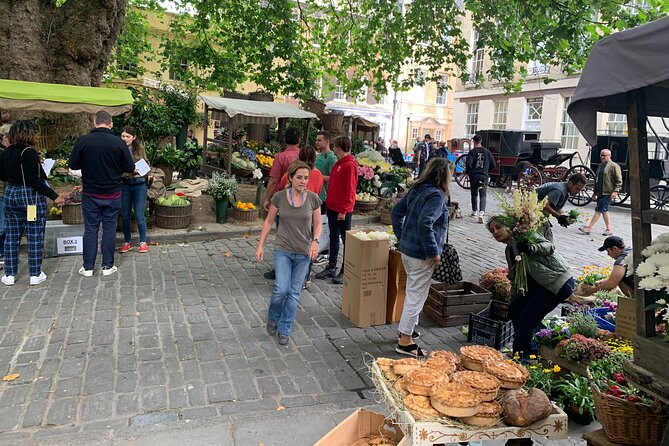
The series may be set mainly in London, but Bath supplies the polished Georgian setting with far less effort. Broad crescents, formal squares, colonnaded streets, grand public rooms, and elegant stone buildings give the city the right look at every turn.
That is the central pleasure of this walk. You are not only hunting for a doorway from a favorite scene. You are seeing how an entire city can provide streets, homes, ballrooms, and public spaces for a story about rank, courtship, money, and gossip.
Your Blue Badge guide helps connect the pieces. The best guides on this tour do not simply point and name a building. They explain what happened in a scene, which characters were involved, and how filmmakers used the location. Some guides carry photographs from the production, allowing you to compare the real building with its appearance on screen.
Even if someone in your group has never watched Bridgerton, the tour can still work. The Georgian architecture and social background give the walk a second subject. I would consider it a Bath sightseeing tour with a strong Bridgerton theme, rather than a fan event with a little local information added on.
More Film Location Tours in Bath
- Bath: Bridgerton Filming Locations Walking Tour with Music
★ 4.7 · 416 reviews - Bath: Private Bridgerton Walking Tour for upto 20 people
★ 4.9 · 189 reviews - Bridgerton Walking Tour of Filming Locations & Storylines – Bath
★ 4.5 · 178 reviews
Starting beside Bath Abbey
The tour begins in Abbey Churchyard, beside Bath Abbey, the Roman Baths, and the Pump Room. This is a sensible meeting point because it is central and easy to place on a map, though the surrounding area can be busy.
You get a short introduction to Bath and an outline of the walk. The opening stop lasts about five minutes, so do not expect a full explanation of the Roman Baths or an interior visit to the Abbey. Those attractions are nearby, but they are not part of the tour admission.
This first pause is useful for orientation. You learn how the walk will move from the old center toward the Royal Crescent and then on to the Holburne Museum. Wear shoes that can handle two hours of city walking, and arrive ready to start rather than expecting time to buy tickets or visit the nearby sights.
Abbeygate Street and a key Bridgerton scene
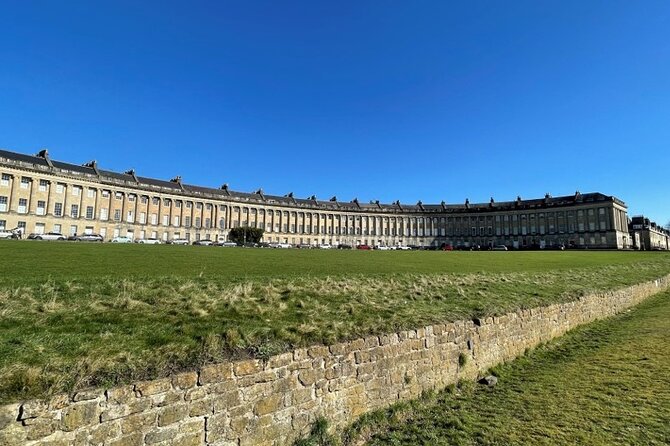
Abbeygate Street gets more attention than several other stops, with about 15 minutes devoted to its role in the first series. The guide sets the scene, explains its effect on the main characters, and helps you see the street as part of the story rather than just another attractive Bath lane.
This is where the tour’s storytelling matters. A filming location can look ordinary until you understand what the camera used, what was changed, and why the moment mattered. With a guide such as Jim or Fred, you can expect behind-the-scenes trivia and production photographs to help make the comparison clear.
It is also a good place to test your Bridgerton knowledge. You do not need to memorize every character, but fans who remember the first series will get more from the explanation of the scene and its consequences.
Bath Street and the city’s most theatrical approach
Bath Street is described as the only colonnaded street in Bath. Its covered columns and formal design make it a natural setting for street scenes and carriages.
The stop itself is short, around five minutes, so this is more of a focused explanation than a long visit. Listen for the link between the street’s design and the show’s polished Regency look. The colonnade gives the camera a strong frame, and the street has the sort of ordered appearance that makes a period production feel believable.
You will also begin to notice a useful theme: Bath does not need much decoration to look like the world of Bridgerton. Its architecture does much of the work.
More Walking Tours in Bath
- Walking Tour of Bath with Blue Badge Tourist Guide
★ 5.0 · 1,877 reviews - Bath: City Walking Tour with Optional Roman Baths Entry
★ 4.7 · 1,401 reviews - Bath: Guided Walking Tour
★ 4.9 · 1,198 reviews - Roman Baths and Bath City Walking Tour
★ 4.5 · 762 reviews
Saw Close and Beaufort Square
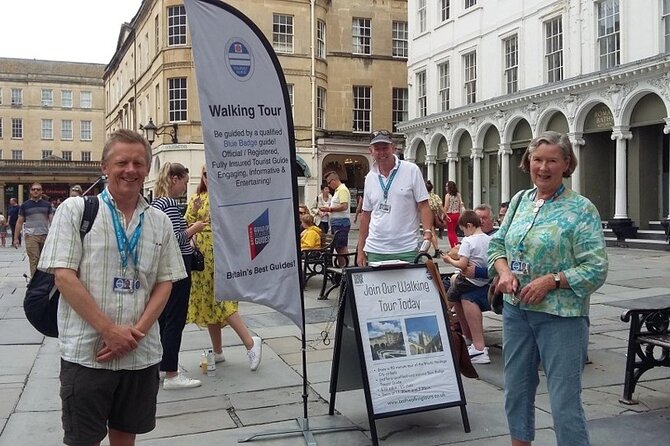
The walk continues into the theatre area at Saw Close and Beaufort Square. These locations appear in several scenes, and the guide discusses the characters connected with them.
This part of the route adds variety. Instead of seeing only grand houses and ceremonial spaces, you get streets linked with the social life of the city. The stop lasts about five minutes, so the experience keeps moving rather than settling into long talks at each location.
If you enjoy production trivia, pay attention to how the guide explains the relationship between the real street and the finished scene. The show often uses a location as a starting point, then changes the sense of place through costumes, extras, camera angles, and editing.
The Royal Crescent and the Featherington home
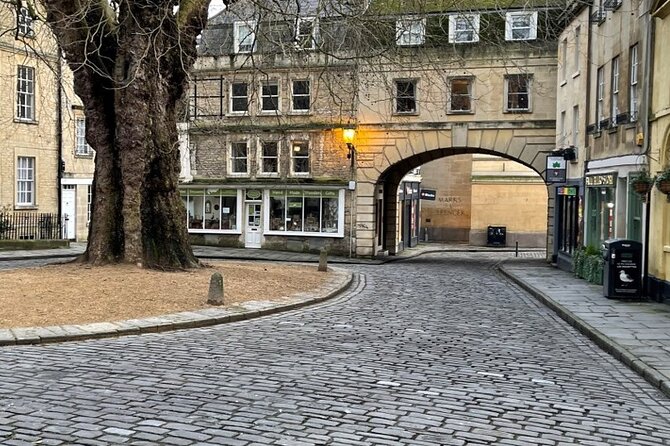
The Royal Crescent is the visual high point for many people on the walk. Its sweeping curve of Georgian houses is one of Bath’s best-known sights and has appeared in many films and television productions.
The guide spends about 15 minutes explaining its place in Bridgerton. You hear about how the crescent works in the series and why this particular stretch of Bath fits the show’s image of wealth and status.
This is a good place for photographs, but keep your expectations realistic. You are viewing the exterior and public surroundings, not taking a set tour. The grand facade is real, while the story attached to it is carefully created for the screen.
The next stop is No. 1 Royal Crescent, a museum devoted to the Georgian period. The building helps explain how the Featherington family home was created on screen. The guide discusses the architecture and the filming techniques used to turn the property into a fictional residence.
The two Royal Crescent stops work well together. First, you see the famous curve as a complete architectural statement. Then you consider how one house can be dressed and framed to serve a particular family in the show.
Assembly Rooms and Georgian social life
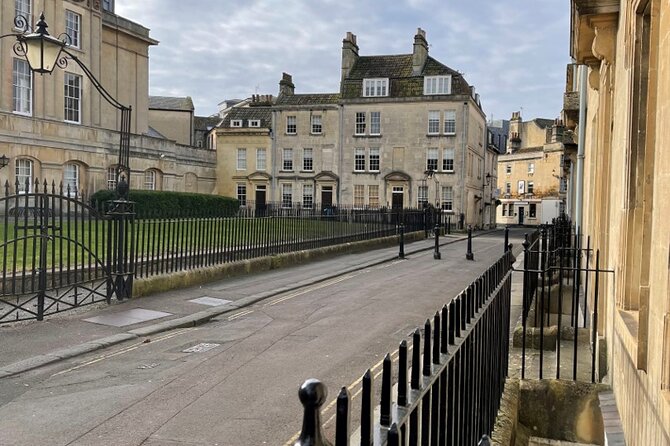
The Assembly Rooms were central to public balls and polite society in Georgian Bath. In Bridgerton, they provide the setting for one of the major balls.
This stop takes about five minutes, but its importance is larger than the time suggests. The Assembly Rooms help you understand the social machinery behind the series. Balls were not merely decorative backdrops. They were places where people met, watched one another, arranged introductions, and judged social position.
There is one practical catch: the tour does not include admission, and no attractions are entered. You see the location from outside as part of the walking route. If you want to visit the interior, you will need to make that a separate plan and pay any required entry fee.
One guide, Jim, has also been praised for detouring toward the Fashion Museum and its ballroom. That is not presented as a guaranteed part of every departure, so treat it as a possible guide-led addition, not something to count on.
Guildhall and the grandeur of a Bath ball
The Guildhall is still used for city administration, but it appears in the series as the site of a lavish ball. Its Georgian character makes it another useful example of how Bath supplies the right setting for a story about the upper classes.
The stop lasts around five minutes. You will hear how the building functions in the show and why its formal design suits scenes of public display.
This is one of the places where the guide’s wider knowledge of Bath adds value. A quick look at a facade becomes a lesson in how the city’s civic buildings supported the social world depicted in the series. The show is full of private homes and grand parties, but public buildings such as the Guildhall help complete the picture.
Finishing at Lady Danbury’s Holburne Museum home
The final stop is the Holburne Museum, about 15 minutes from the end of the tour. In Bridgerton, its classical facade serves as the on-screen home of Lady Danbury.
For many fans, this is the most satisfying finish. Lady Danbury’s house has a strong visual presence, and the museum’s formal design suits the character’s position and confidence. The guide explains how the building works as a high-class residence on screen.
The tour ends here, but your Bath visit does not have to. You can choose to enter the Holburne Museum, visit its collection, stop for cakes in the café, or walk through Sydney Gardens. The gardens are noted as the only remaining Georgian Vauxhall, giving you a useful next step if you want to continue exploring the period setting.
Museum admission is not included, so decide in advance if you want to stay. Ending at a place with a café and another attraction nearby is practical, especially after two hours on foot.
What the guide adds to the walk
The guide is the biggest variable in any walking tour, and this experience has several names associated with it. Jim has been praised for his deep knowledge of the filming, helpful photographs, clear communication, and useful suggestions for the rest of a Bath visit. He has also recommended places such as the Bath Spa to people looking for a relaxing follow-up.
Fred is described as friendly, entertaining, and especially good at keeping mixed groups involved. That matters if part of your group has not watched Bridgerton. His tours have included behind-the-scenes facts, other television filming sites, and a steady pace.
Andy has been praised for combining the series with Bath’s past, while Phil has explained the filming process and the way production affected local businesses and street performers. The provider uses more than one guide, so you cannot assume one particular person will lead your departure.
The common thread is that the experience depends on more than pointing at buildings. A good guide makes the connections clear, answers questions, takes group photos when possible, and offers suggestions for what to do afterward.
Price, group size, and what you actually receive
The price is $312.51 per group of up to 15. That can look high for a two-hour walk, but the calculation changes if you are traveling with family or friends. At 10 people, the cost is about $31 per person. At 15, it is about $21 per person.
For one or two people, the value is less obvious. You are paying for a private group rate rather than an inexpensive shared walk, and the price does not cover entry to the Assembly Rooms, Holburne Museum, or any other attraction.
The package includes a Blue Badge guide and the outdoor route. It does not include attraction tickets, food, or transport. The group limit is listed as up to 15 for the price, with a maximum of 16 participants noted elsewhere, so I would confirm the exact group arrangement before booking if that detail matters to you.
The tour is often reserved well ahead, with bookings averaging about 67 days in advance. If your dates are fixed, especially during a popular Bath visit, early planning makes sense.
Walking conditions and accessibility
This is not a flat, easy stroll through smooth pedestrian streets. The route can include cobbles, inclines, grass, gravel, and uneven surfaces. Most people who can walk around a city for two hours should find it manageable, but the physical demands vary with weather, pace, and the group.
The accessibility information needs careful attention. The tour is described as not wheelchair accessible, while the general information says most people can participate. A past experience raised a more serious concern about disability access and keeping up.
The provider has stated that routes can normally be modified to help all participants, but you should contact them before booking and explain your exact needs. Do not rely on a simple accessibility label. Ask about the route, slopes, surfaces, rest points, and whether the guide can adjust the pace.
Dogs and service animals are allowed, and the route is near public transport. Still, a dog should be comfortable with city pavement, crowds, and uneven ground.
Weather, timing, and practical preparation
The experience requires good weather. If poor weather forces cancellation, you are offered another date or a full refund. You can also cancel for a full refund up to 24 hours before the start time. Changes or cancellations inside that period are not accepted for a refund.
Wear comfortable shoes and bring weather protection. Bath’s streets can be slick in wet conditions, and the outdoor nature of the walk means you should be prepared to remain outside for the full two hours.
The mobile ticket is useful, but save the meeting details on your phone before arriving. One person once went to the wrong stated meeting point and was redirected by phone, so double-check that you are heading to Abbey Churchyard, beside Bath Abbey, rather than assuming another central Bath address.
Who will get the most from this experience
I would choose this walk for:
- Bridgerton fans who want real locations rather than a screen-only presentation
- Couples and families who enjoy costumes, architecture, and social drama
- Groups sharing the cost of a private booking
- Visitors who want a guided introduction to Bath before exploring alone
- People who like film trivia but also want local history and Georgian context
I would hesitate if you want interior visits, a short route, or a fully step-free experience. The tour also offers less value if you have already visited Bath several times and know the Royal Crescent, Assembly Rooms, and Holburne Museum well.
Should you book the Bridgerton Bath walk?
Book it if you want a fan-friendly way to see Bath’s grandest Georgian sights and you value a guide who can explain both the series and the city. The strongest parts are the Royal Crescent, Abbeygate Street, Assembly Rooms, Guildhall, and the final stop at Lady Danbury’s home.
For a group, the price can be fair. For two people, compare it with a standard shared city walk and decide how much the Bridgerton focus matters to you. Confirm accessibility before booking, wear proper walking shoes, and remember that this is an outdoor location tour, not an attraction-entry package.
FAQ
How long does the Bridgerton walking tour last?
The tour lasts approximately two hours.
Where does the tour begin?
It begins at Abbey Churchyard, Abbey Street, Bath BA1 1LY, beside Bath Abbey.
Where does the tour finish?
It finishes at the Holburne Museum in Bathwick, Bath BA2 4BZ.
Are entry tickets included?
No. The tour does not enter attractions, and admission fees are not included. The Assembly Rooms and Holburne Museum both list admission as not included.
How many people can join the tour?
The price covers a group of up to 15 people. The activity information also gives a maximum of 16 participants, so confirm the exact arrangement when booking.
Is the tour wheelchair accessible?
The tour is described as not wheelchair accessible. The route can include cobblestones, inclines, grass, gravel, and uneven ground. Contact the provider before booking if you need route or pace adjustments.
Can I cancel for a refund?
Yes. You can cancel at least 24 hours before the local start time for a full refund. If poor weather cancels the experience, you are offered another date or a full refund.
More 2-Hour Experiences in Bath
- BATH: Private Walking Tour | Blue Badge Guide, 2h, £225 per group
★ 5.0 · 66 reviews - Dochgarroch: Loch Ness and Caledonian Canal 2-Hour Cruise
★ 4.7 · 1,959 reviews - Loch Lomond: Island Discovery 2-Hour Cruise
★ 4.6 · 1,576 reviews - Loch Ness and Caledonian Canal 2-Hour Cruise from Dochgarroch
★ 4.5 · 1,158 reviews
Just added in Bath
- Bath, Avebury and Lacock Village Small-Group Day Tour from London★ 4.5 · 121 reviews
- Bath Tootbus Hop-on Hop-off Sightseeing Bus Tour★ 4.5 · 247 reviews
- Fun, Flexible Treasure Hunt Around Bath with Cryptic Clues & Hidden Gems★ 5.0 · 208 reviews
- Jane Austen’s Bath And History Trail★ 5.0 · 77 reviews
- Lacock and Castle Combe – Afternoon Private Tour★ 5.0 · 55 reviews
- Exceptional Bath tour guide making your visit splendidly memorable.★ 4.5 · 69 reviews
- Guided relaxation and sound bath★ 5.0 · 172 reviews
- Glastonbury Tour – Private Tour from Bath★ 5.0 · 31 reviews
Film & TV Location Tours, compared.

Loch Ness Cruise, Outlander & Urquhart Castle Tour from Inverness
Read our review →
Downton Abbey Village, Blenheim Palace and Cotswolds Day Trip from London
Read our review →Outlander Locations Tour Including Admissions from Edinburgh
Read our review →
Downton Abbey & Highclere Castle Tour from London, with Oxford
Read our review →
Browse the lists this tour appears in