
Reviewed · WWII & CHURCHILL TOURS
Portsmouth: The D-Day Story Entry Ticket
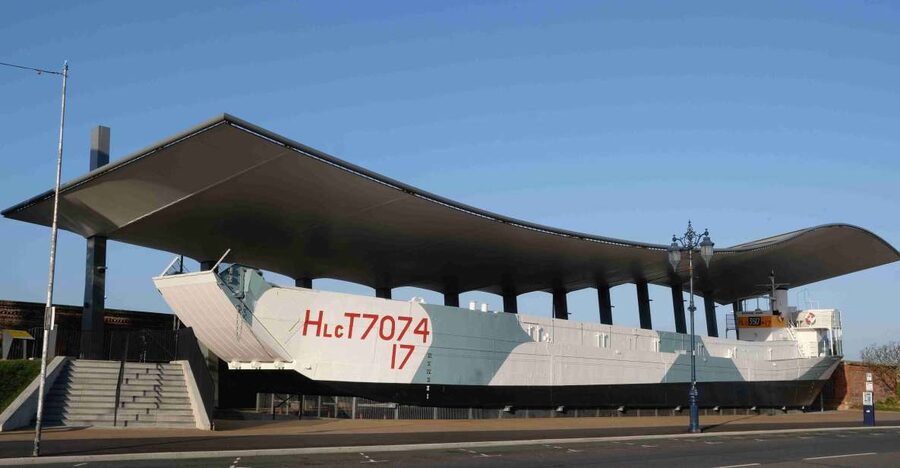
The most striking part of Portsmouth’s D-Day Story is the chance to step aboard LCT 7074, the last surviving landing craft tank used to carry vehicles toward Normandy. With a Sherman and Churchill tank on board, the cramped steel vessel gives you a far clearer sense of the invasion than photographs alone.
I especially like the way the museum joins military planning with ordinary human stories. You move from secret decisions and deception to the voices of servicemen, women, children, and French civilians, then finish with the Overlord Embroidery, told in 34 detailed hand-stitched panels. Allow at least two to three hours, and longer if you read everything. Two hours can feel rushed.
Key points before you go
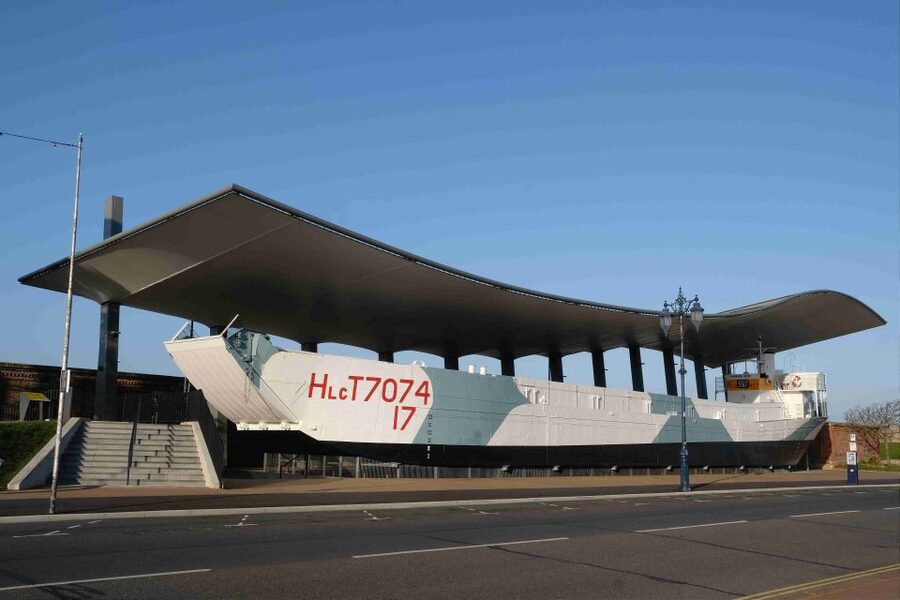
- Board LCT 7074: See the last surviving landing craft tank and the Sherman and Churchill tanks carried aboard.
- Follow the invasion plan: Learn how commanders chose the crossing point, timing, and methods of secrecy.
- Hear firsthand accounts: Film clips and personal stories show how D-Day affected military and civilian life.
- See 34 embroidery panels: The Overlord Embroidery recounts D-Day and the Battle of Normandy through carefully worked scenes.
- Plan for a longer visit: The museum is easy to underestimate, with enough detail for two to three hours or more.
- Use the setting well: The museum is on Clarence Esplanade in Southsea, with parking directly outside and a café on site.
Why Portsmouth’s D-Day Story matters
D-Day is often reduced to a few familiar images: landing craft, beaches, tanks, and soldiers moving inland. This museum gives you the wider picture. It explains how much depended on planning, secrecy, weather, transport, equipment, and timing before the first troops reached Normandy on 6 June 1944.
That wider view is the museum’s greatest strength. You are not shown only the action. You are also shown the decisions behind it and the effect on people who had no part in drawing up the military plan.
Portsmouth is a fitting place for this story. The museum sits in Southsea, at The D-Day Story, Clarence Esplanade, Portsmouth PO5 3NT. The location keeps the subject tied to the English Channel and to the coastal world from which the invasion fleet departed.
The museum is the only one in the United Kingdom dedicated specifically to the Allied Invasion of June 1944. That narrow focus helps it avoid becoming a general Second World War museum. The displays stay fixed on D-Day, the preparation that made it possible, and the Battle of Normandy that followed.
More wartime London tours and war rooms tickets:
- Milton Keynes: Bletchley Park Entry Ticket
★ 4.7 · 163 reviews - Westminster 3 Hour Walking Tour and Visit of Churchill War Rooms
★ 5.0 · 967 reviews - WW2 London Walking Tour & Churchill War Rooms Entrance Ticket
★ 4.5 · 933 reviews
Starting with LCT 7074 and the tanks
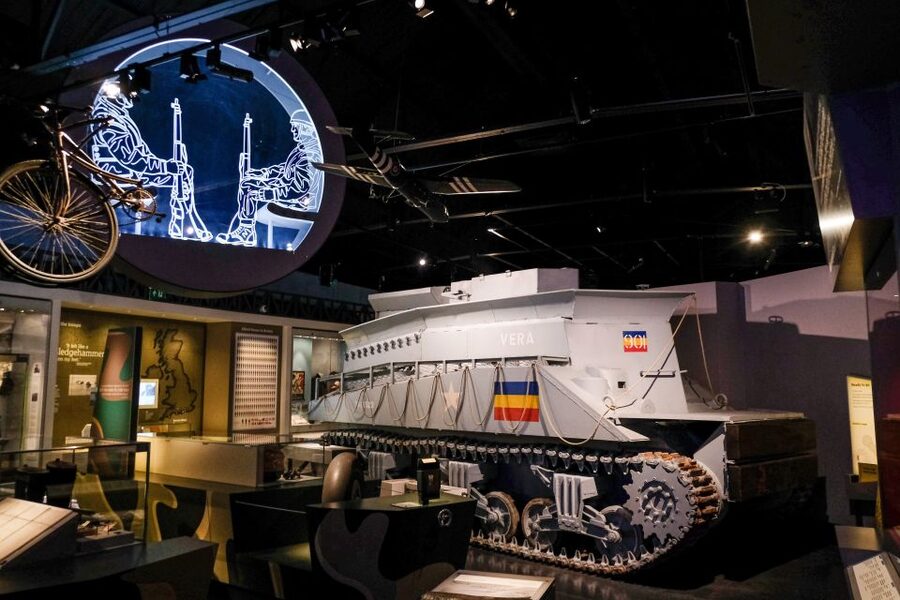
Set aside time for the landing craft rather than treating it as a quick extra. LCT 7074 is the most physical part of the experience. You can go aboard the last surviving landing craft tank and see how a vessel of this type carried ten tanks toward Normandy.
The Sherman and Churchill tanks aboard give the ship real scale. They help you picture what the craft looked like when packed with heavy vehicles, rather than imagining an empty deck from a distance. The open space becomes crowded in your mind once you consider the machinery, crews, equipment, and pressure of an operation that could not simply be paused.
This section is particularly useful if you find military displays easier to understand through objects than through text. The landing craft turns an abstract logistical problem into something you can see: tanks had to be loaded, transported, landed, and moved into action under dangerous conditions.
Allow extra time to look at the construction and arrangement of the vessel. The craft is not a polished theatrical set. Its value comes from its size, age, and direct connection with the equipment used in the invasion.
Volunteer guides are often available on the landing craft, and they can add useful context. Their help is especially valuable if you want to understand what life was like for the sailors and soldiers aboard. Staff throughout the site are described as friendly and willing to answer questions, so do not rush past an explanation if you have one.
The LCT has its own practical timing limits. From April through September, last entry aboard is at 4pm. From October through March, last entry is at 3:30pm. If the landing craft is your main reason for coming, visit it early rather than leaving it until the end.
The museum galleries and the human side of D-Day
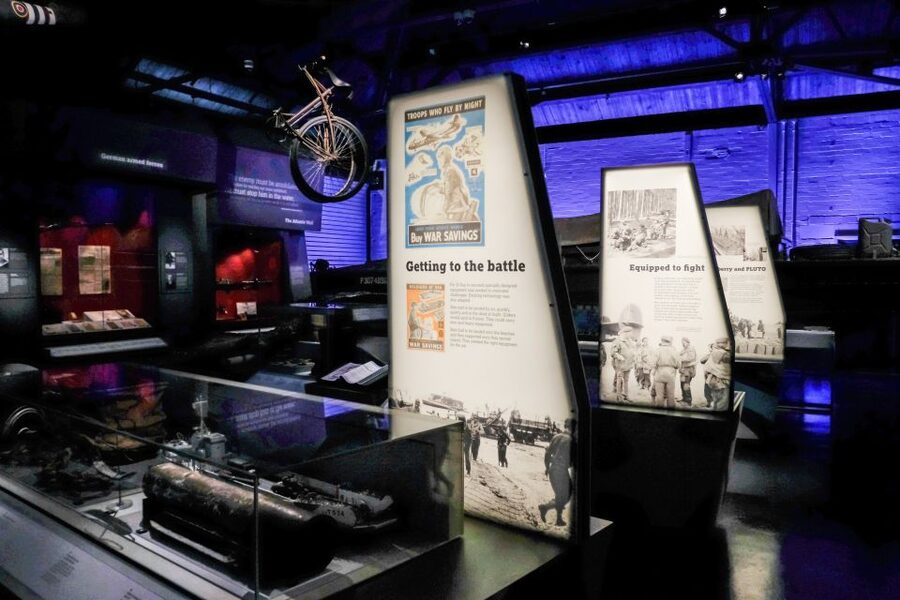
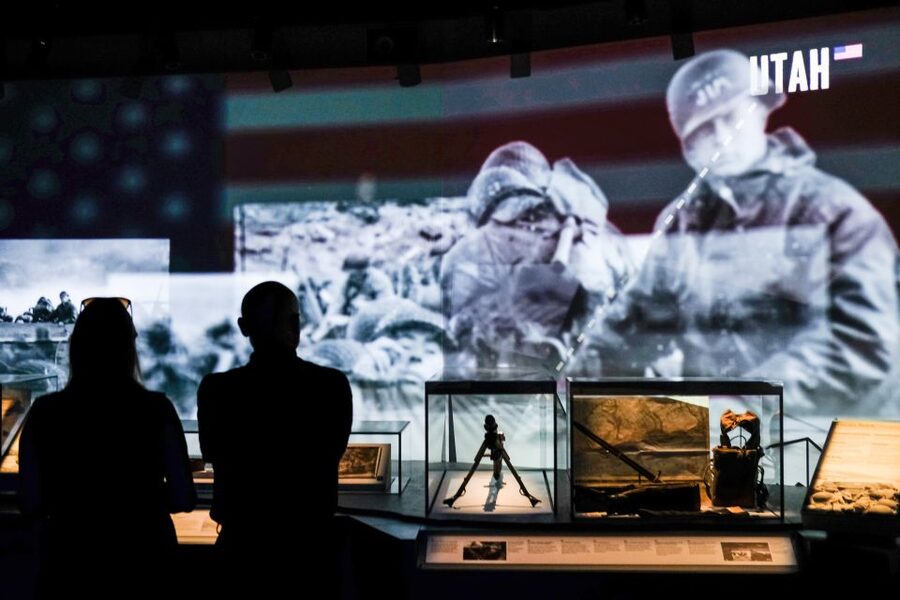
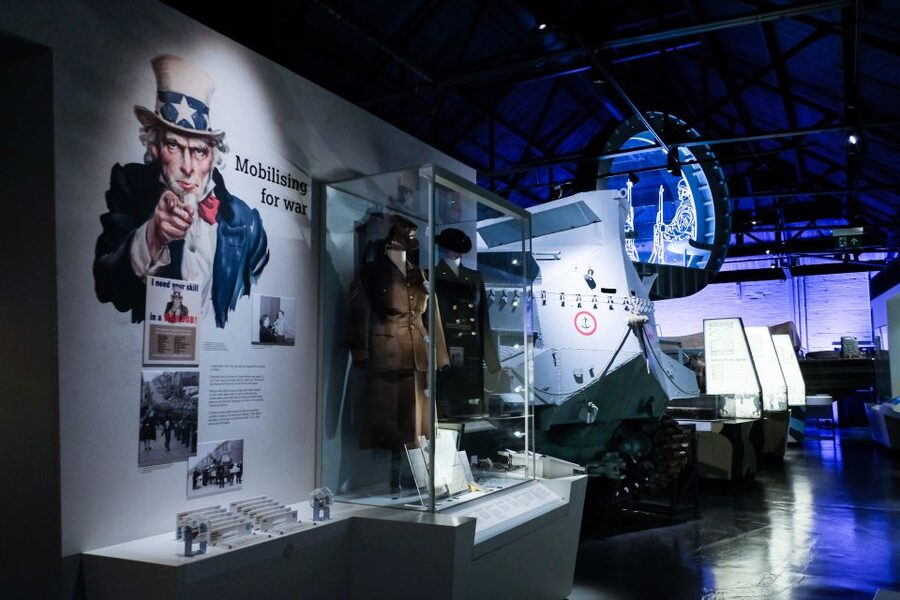
Inside the main museum, the story is told through more than 10,000 objects, artifacts, and personal possessions. This is not just a display of weapons and uniforms. Personal items bring the scale of the invasion down to an individual level.
You will encounter accounts from men, women, and children who experienced D-Day firsthand. That matters because the invasion was not only a military event. It changed daily life in Britain and France, placed families under great strain, and left lasting memories for people far from the front line.
Film clips of veterans speaking about their experiences are among the most affecting parts of the museum. A written label can give you dates and facts. A person describing what happened gives those facts a human voice.
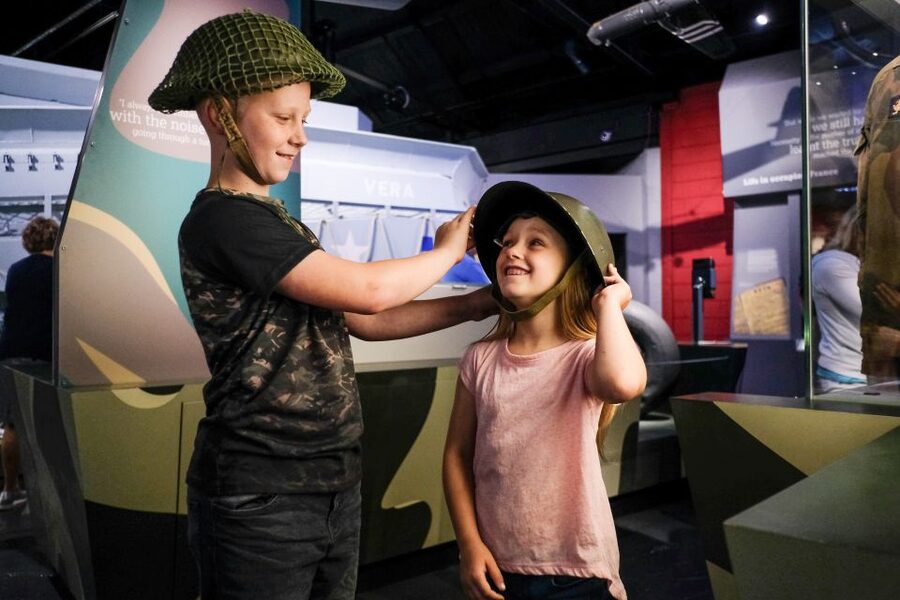
The museum also uses interactive displays and film footage to help explain the landings. These features are useful for younger visitors and for anyone who does not already know the sequence of events. They also break up the display cases, though the amount of written material can feel heavy if you try to read every panel.
One practical tip: use the free audio guide if it is available during your visit. It adds information that can be easy to miss while moving through the galleries, and it helps turn a large collection into a more orderly story.
The galleries are generally well laid out, but the amount of material requires patience. One visitor found the repeated display cases tiring after the first several groups, while another felt two hours was not enough. Both points are useful. You can make a quick pass in around two hours, but you will need more time for a careful visit.
The indoor temperature may also be worth considering. One recent visit found the museum rather cold, even with a coat. Conditions can vary, but carrying an extra layer is sensible, especially outside the warmer months.
The plan behind the invasion
A key section is devoted to The Plan, the decisions that determined when and where the Allies would cross the Channel. This is where the museum moves beyond the familiar scenes of troops landing and explains the difficult work that came before.
You learn about the choice of timing and location, along with the secrecy and deception needed to protect the operation. The displays show that success depended on misleading German forces as well as moving an enormous military force across the water.
I like this part because it gives context to every later object. A landing craft, a tank, a map, or a personal account means more once you understand the wider operation it supported.
The planning displays are also a good reason to visit even if you have seen other D-Day exhibitions. The focus here is not only on bravery during the landings. It is on the careful preparation, complex decisions, and risks taken before anyone reached the beaches.
This section can be demanding for children who are very young or not interested in military history. Families with older children should find the interactive elements and personal stories easier to follow. For very young children, the subject matter and amount of reading may be more than they want.
A few more half-days in England worth comparing
- Thorpe Park Admission Ticket
★ 4.0 · 5,915 reviews - Alton Towers Resort 1 Day Admission Ticket
★ 3.5 · 5,501 reviews - Warwick Castle Admission Ticket
★ 4.0 · 2,096 reviews - The Great British Rock and Roll Walking Tour
★ 5.0 · 1,371 reviews
The Overlord Embroidery at the end
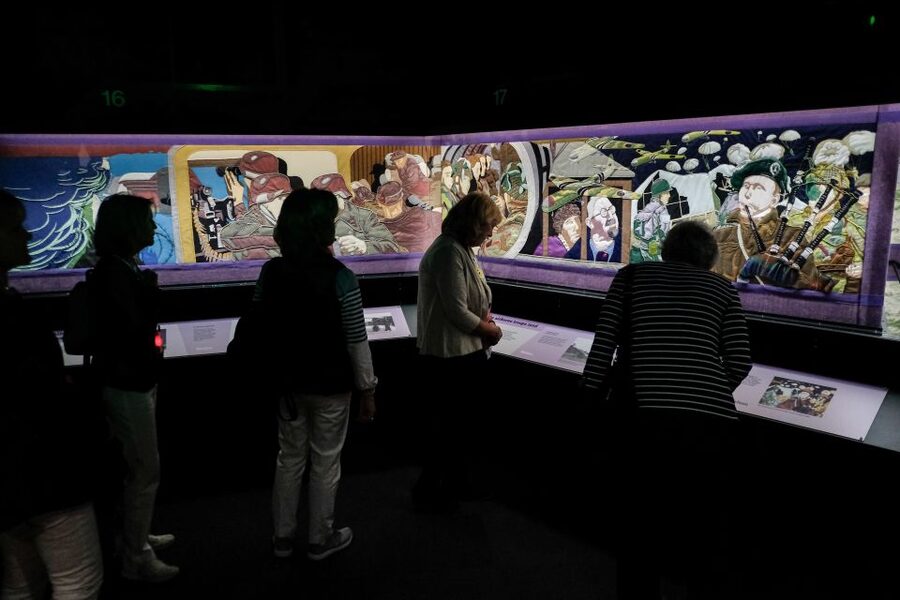
Save time for the Overlord Embroidery. It tells the story of D-Day and the Battle of Normandy in 34 hand-stitched panels, commissioned to remember the people who took part.
The panels are not a small decorative finish. They form a major part of the museum’s story and reward slow looking. Scenes of planning, preparation, fighting, and the human cost of the campaign are presented in a different way from the military objects in the earlier galleries.
Technically, this is an appliqué work rather than a traditional woven tapestry, but the distinction matters less than the effect. The scale and detail make it one of the museum’s most memorable displays.
Lighting is kept low, which protects the work but can make some details harder to see. Bring patience, and take your time moving from panel to panel. You may want to return to parts you could not make out clearly at first.
I would not treat the embroidery as a quick final room. It provides a quiet change of pace after the machinery, documents, and film footage. It also brings the story back to remembrance, rather than ending with equipment alone.
How long to allow and when to arrive
The ticket is valid for one day, so you do not need to race through the site. The museum opens at 10am and closes at 5:30pm from 1 April to 30 September. From 1 October to 31 March, it opens from 10am to 5pm.
Main gallery last entry is 4:30pm in the April to September period and 4pm from October to March. The landing craft closes earlier, so the safest plan is to arrive before mid-afternoon.
For a basic visit, allow two hours. For a better visit, plan on two to three hours. If you read the information panels, listen to the audio material, watch the films, ask questions aboard LCT 7074, and study all 34 embroidery panels, you might spend much of the day.
The café gives you an easy break, and there is a gift shop with books and other material connected to the Second World War. Parking is available directly outside and has been described as inexpensive, which is useful if you are driving to Southsea.
The museum is wheelchair accessible. Since the landing craft is part of the admission experience, check current access details before you go if you need specific assistance aboard the vessel.
Is the $19 ticket good value?
At about $19 per person, the admission is good value if you have a real interest in D-Day or twentieth-century military history. You get access to the main museum, the landing craft, the tanks, the personal accounts, the planning displays, and the Overlord Embroidery.
The value also comes from the time you can spend inside. This is not a short photo stop. Even a fairly brisk visit can take two hours, while a careful visit can last three hours or more.
The ticket is less useful if you want a broad overview of British history or a general military museum. The focus is deliberately narrow. You will see plenty of equipment and wartime material, but nearly everything is tied to the Allied Invasion and its consequences.
The strongest value comes from combining the physical and emotional sides of the museum. The landing craft explains the machinery and logistics. The galleries explain the plan. The film clips and personal possessions show the human cost. The embroidery gives the story a reflective ending.
Free cancellation up to 24 hours before the visit and the option to reserve now and pay later add flexibility, especially if your Portsmouth plans may change. These booking terms do not alter the museum itself, but they can make it easier to fit into a wider South Coast itinerary.
Who will get the most from this visit?
I would recommend The D-Day Story to anyone with a strong interest in the Second World War, military planning, or family history connected with D-Day. It is also a good choice for older children and teenagers who learn better from objects, film, and personal accounts than from a textbook.
It suits visitors who like to take their time. The number of objects and written explanations means you can skim the displays, but the museum rewards a slower pace.
The experience may be less suitable for very young children. The subject is serious, the galleries contain a lot of information, and the personal accounts can be moving. A café and interactive displays help, but this is not designed as a children’s play attraction.
It also works well for visitors who have already seen D-Day material elsewhere. The museum’s focus on planning, personal stories, and the landing craft gives you several ways into the subject.
Practical tips for a better visit
- Arrive early enough for the landing craft. Its final admission is earlier than the main galleries.
- Allow at least two hours. Three hours is better if you want to read and watch the films.
- Do not skip the Overlord Embroidery. It is one of the most distinctive parts of the museum.
- Use the free audio guide. It adds useful detail and helps structure your route.
- Bring a layer. The museum may feel cool, especially outside summer.
- Take a break at the café. You can make the visit easier on yourself without leaving the site.
- Ask staff questions. The team is friendly, and volunteer guides aboard LCT 7074 can explain what the vessel meant in practical terms.
- Allow extra time for parking and arrival. Parking directly outside is convenient, but the museum itself deserves more time than a quick stop.
Should you book The D-Day Story?
Book it if you want a focused, thoughtful account of D-Day rather than a general war museum. The landing craft and tanks give you a strong physical sense of the operation, while the planning displays, veteran film clips, personal possessions, and Overlord Embroidery add the human and strategic detail.
Skip it only if your schedule allows no more than an hour, or if you are looking for a broad family attraction with little reading. For most history-minded visitors, the $19 admission buys several worthwhile hours and a clear explanation of what made 6 June 1944 such a dangerous and carefully planned operation.
FAQ
Where is The D-Day Story located?
The museum is at Clarence Esplanade, Southsea, Portsmouth PO5 3NT, in South East England.
What does the admission ticket include?
The ticket includes admission to The D-Day Story, including the museum galleries and access aboard LCT 7074, the last surviving landing craft tank.
How long should I allow for the visit?
Allow at least two hours for a brisk visit. Two to three hours is more comfortable, and you might spend longer if you read the displays, watch the films, and study the Overlord Embroidery.
Can I see tanks at the museum?
Yes. LCT 7074 contains a Sherman tank and a Churchill tank, giving you an impression of how the landing craft looked when loaded with vehicles.
What are the opening and last-entry times?
From 1 April to 30 September, the museum is open from 10am to 5:30pm. Last entry to the galleries is 4:30pm, and last entry aboard LCT 7074 is 4pm. From 1 October to 31 March, opening hours are 10am to 5pm, with last gallery entry at 4pm and last landing craft entry at 3:30pm.
Is the museum wheelchair accessible?
Yes, The D-Day Story is wheelchair accessible. If you need specific information about access aboard LCT 7074, check the museum’s current visiting information before arrival.
Just added in England
- British Museum Highlights Private Guided Tour★ 5.0 · 29 reviews
- Heathrow Airport to Southampton Port or Hotel Private Airport Arrival Transfer★ 5.0 · 45 reviews
- Heathrow To Southampton Cruise Port Transfers★ 4.5 · 110 reviews
- Private Guided Tour of the British Museum★ 5.0 · 50 reviews
- British Royal 3 Hour Walking Tour!★ 4.5 · 53 reviews
- British Museum Guided Tour with Priority Timeslots(Small Group)★ 5.0 · 192 reviews
- British Museum In-Depth Private Guided Tour★ 5.0 · 40 reviews
- Explore Biblical Artifacts at the British Museum★ 5.0 · 120 reviews
WWII & Churchill Tours, compared.
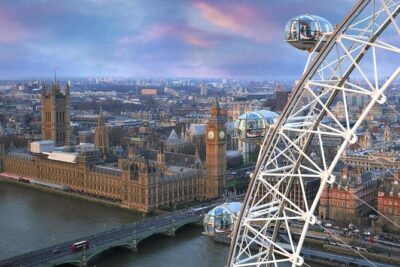
Westminster 3 Hour Walking Tour and Visit of Churchill War Rooms
Read our review →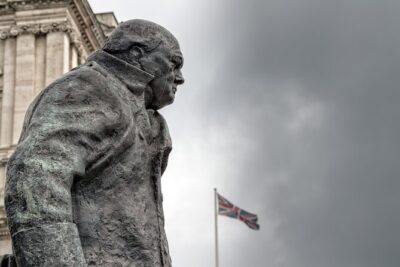
WW2 London Walking Tour & Churchill War Rooms Entrance Ticket
Read our review →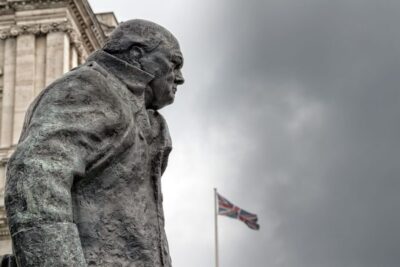
Westminster WW2 Tour & Churchill’s War Rooms Ticket
Read our review →
London in WW2 Walking Tour with Churchill War Rooms Visit
Read our review →
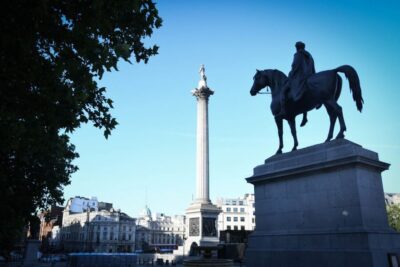
Westminster Tour and Churchill War Rooms Visit
Read our review →
Churchill War Rooms “Behind The Glass” and Private Car Tour
Read our review →
Churchill War Rooms Ticket & Political London Audio
Read our review →Browse the lists this tour appears in