
Reviewed · WALKING TOURS
Manchester: Morning or Afternoon City Walking Tour
Manchester’s story changes block by block. On this 90-minute city walk, you move from Roman foundations and the industrial boom to suffragette campaigns, football culture, street art, music, and the Gay Village. It is a brisk introduction to a city that has never been content to sit still.
I like the local guide format, especially because guides such as David and Rebecca have been praised for mixing broad context with small details and personal suggestions. I also like the compact route: you see several central districts without giving up half a day. The main consideration is that 1.5 hours goes quickly, and Castlefield’s Roman connections are not part of the listed route.
Key points
- A fast city orientation: Cover St Peter’s Square, the Royal Exchange Theatre, the Medieval Quarter, Street Art, the Gay Village, and the Northern Quarter in 90 minutes.
- Local voices: Guides including David, Rebecca, and Sam bring personal recommendations and an easygoing style to the walk.
- Manchester in several eras: Hear about Roman beginnings, industry, women’s rights, football, music, and LGBTQ+ life.
- Good first-day activity: Use the tour to decide which neighborhoods and sights deserve a longer visit.
- Easy meeting point: Begin outside the main entrance of Manchester Central Library, then finish at the same place.
- Weather matters: The tour runs rain or shine, so comfortable shoes and suitable clothing are essential.
Why this short Manchester walk works
A good walking tour should help you read a city, not just point at buildings. This one gives you a quick framework for Manchester: how its old center, commercial power, political movements, creative districts, and social scenes fit together.
I would book it near the start of a Manchester visit. After 90 minutes, you should have a better sense of where the Medieval Quarter ends, where the Northern Quarter begins, and which parts of central Manchester deserve a second look. You also get a chance to ask about food, culture, libraries, music, or neighborhoods that interest you.
The pace is one of the tour’s strengths. You are not spending a long stretch inside one attraction. Instead, you keep moving through central streets and districts, with the guide explaining why each area matters. That makes the walk useful for a first orientation, though it also means you will not have time for extended stops or detailed visits inside buildings.
More Walking Tours in Manchester
- Manchester Afternoon Walking Tour
★ 5.0 · 1,033 reviews - Rock and Goal Manchester Walking Tour
★ 5.0 · 587 reviews - Manchester: Media City & The Quays Guided Walking Tour
★ 5.0 · 165 reviews
Starting outside Manchester Central Library
Your guide meets you outside the main entrance of Manchester Central Library. Look for a bright orange jacket or lanyard, which should make the meeting point easier to identify in a busy central area.
Starting here places you in St Peter’s Square, one of the city’s major civic spaces. It is a sensible launch point because you can begin with Manchester’s public face before moving into older streets and more modern districts. The tour ends back at the library, so you do not need to arrange transport from a distant neighborhood.
That return point also helps with planning. You can continue sightseeing nearby, stop for lunch, or use the city center transport network after the walk. Since the start time changes according to availability, check the current schedule before booking your day around it.
St Peter’s Square and the city’s public story
St Peter’s Square provides a natural opening for Manchester’s political and civic history. The wider story includes industrial growth, women’s rights, and the social changes that shaped the modern city.
This is where a local guide can add value beyond a map. A guide such as David has been praised for explaining both the main sights and the less obvious details, while Rebecca has been appreciated for her warmth and strong sense of connection to the city. Those personal touches matter during a short walk because they help you see the city as a lived-in place, not just a collection of landmarks.
You should expect a standing introduction and a little city orientation here, not a long formal lecture. The group then moves on, so listen closely at the beginning if you want the full timeline.
The Royal Exchange Theatre and Manchester’s commercial center
The Royal Exchange Theatre represents the city’s commercial and cultural sides in one stop. Manchester grew through trade and industry, but its grand urban buildings also found new uses as the city changed.
The route uses places like this to show how Manchester keeps reworking its past. The point is not simply to admire a facade. It is to understand how commerce, performance, work, and public life overlap in the city center.
This part should appeal to you if you like architecture with a social explanation attached. You may not have enough time to explore the theatre itself, so treat the stop as an introduction and make a note if you want to return independently.
Same trip, a completely different kind of day:
- The Manchester City Stadium Tour
★ 5.0 · 4,176 reviews - Manchester: Canal & River Cruise
★ 4.4 · 3,761 reviews - Etihad Stadium: The Manchester City Stadium Tour
★ 4.8 · 3,096 reviews - Manchester: National Football Museum Admission Ticket
★ 4.4 · 1,243 reviews
The Medieval Quarter and Manchester’s older layers
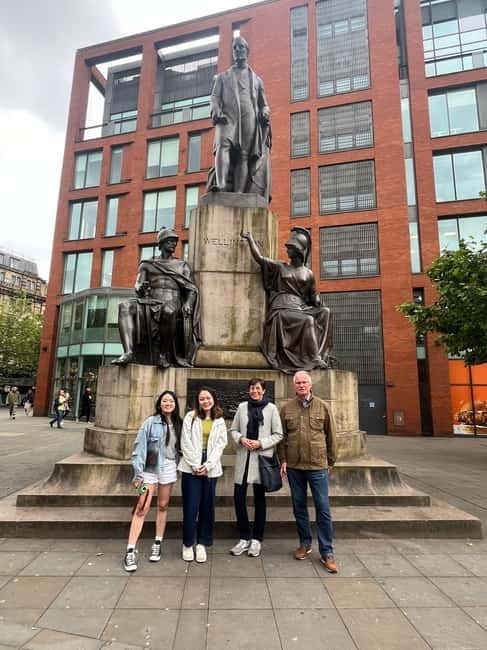
The Medieval Quarter gives the walk a change of tone. Manchester is often associated with factories and warehouses, but its older center helps explain that the city existed long before the industrial boom.
Here you walk through an area where the past is not always presented in a single grand monument. Small street details and the layout of the district can help you picture earlier Manchester. A local guide is particularly useful in this setting because the significance of older buildings may not be obvious when you pass them alone.
The tour also connects this older city with Roman foundations and the people who came before modern Manchester. If Roman history is your main reason for booking, keep your expectations measured. One point raised about the route was that Castlefield and its Roman connections were not included, so this walk is better for a broad introduction than for a focused Roman tour.
Street art and the modern city
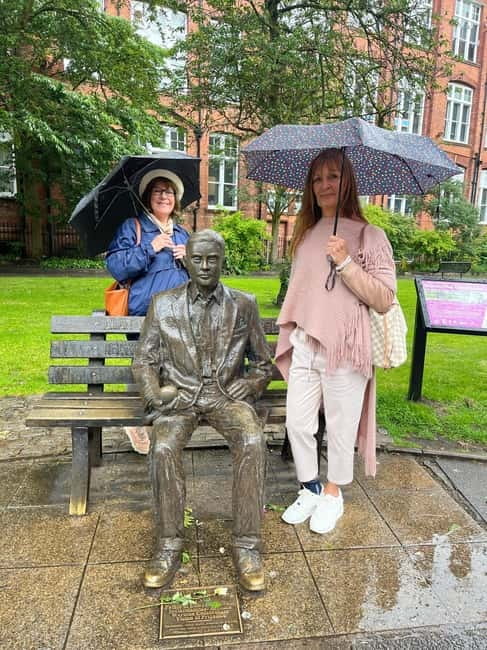
The Street Art portion shows Manchester in its newer, more visual form. It also helps break up the older architectural material with a look at how artists use walls, lanes, and changing urban spaces.
This is one of the more useful parts for visitors who want to understand present-day Manchester. The city’s identity is not only found in monuments and old commercial buildings. It also appears in public art, local creative life, and the way different districts develop their own feel.
Exact artworks can change, and no fixed list of pieces is provided. Think of this as a guided look at the city’s creative side rather than a specialist street-art tour. Your guide may also point out places worth revisiting after the walk.
The Gay Village and Manchester’s social history
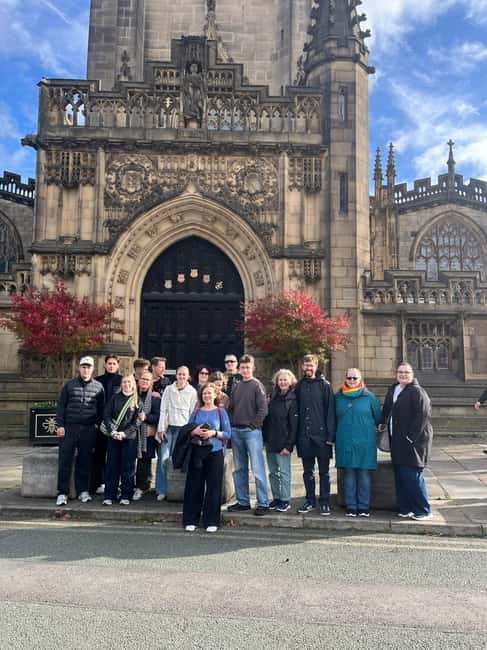
The Gay Village adds an important part of Manchester’s modern story. The tour treats LGBTQ+ life as part of the city’s identity, not as an afterthought.
That matters because the route is not limited to kings, merchants, and industrialists. It also looks at communities and movements that helped shape modern Manchester. Along with the women’s rights story and the suffragettes, this section gives the walk a wider social range.
You should expect an outdoor neighborhood visit and historical context rather than entry into a specific venue. The Gay Village is also a useful area to note for a later evening visit, though the tour itself does not promise nightlife or a stop inside any particular business.
The Northern Quarter and Manchester’s creative edge
The Northern Quarter brings the walk into one of central Manchester’s best-known creative districts. Here the focus shifts toward music, street culture, independent character, and the city’s changing urban life.
This stop can help you decide how much time to give the area later. In only 90 minutes, you will not explore every lane or business, but you can get a feel for why the district belongs on a first visit. The guide may also connect it to Manchester’s music scene and to the city’s reputation for producing strong local identities.
I would pay attention to practical suggestions here. Several guides, especially David, have been praised for recommending places to explore independently. Those suggestions can make the tour more useful than a simple succession of landmarks.
Roman roots, industry, football, and local character
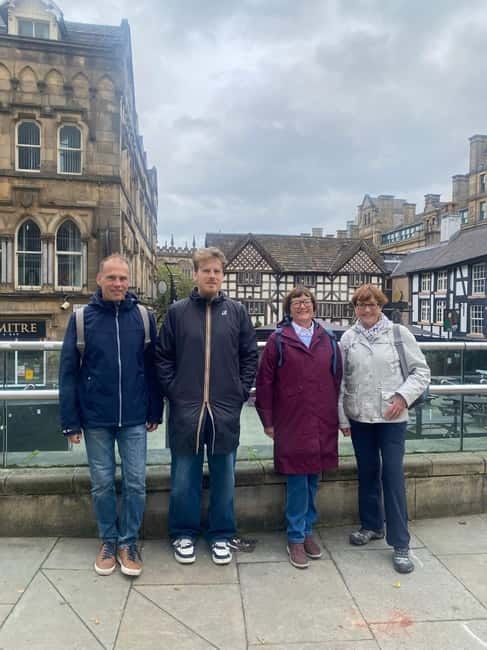
The most appealing feature of this walk is its range. You hear about Romans, the industrial boom, suffragettes, merchants, street artists, football icons, music, and LGBTQ+ life within a single route.
That does not mean each subject receives a full history lesson. Instead, the guide builds a short chain of connections. Manchester’s past explains its buildings, its buildings help explain its neighborhoods, and its neighborhoods show how the city continues to change.
The best guides appear to handle this balance well. David is described as approachable, humorous, and good at combining an overview with unusual details. Rebecca is described as enthusiastic, friendly, and careful with the pace. Sam has been appreciated for personal recommendations and an upbeat style. Your guide may be different, but the activity is designed around an English-speaking local host.
Football receives a place in the wider story, but this is not a stadium tour. If you are booking mainly for Manchester United or Manchester City, you will need a separate activity. The same applies if you want a detailed tour of music venues or a specialist LGBTQ+ history walk.
How much value do you get for $18.86?
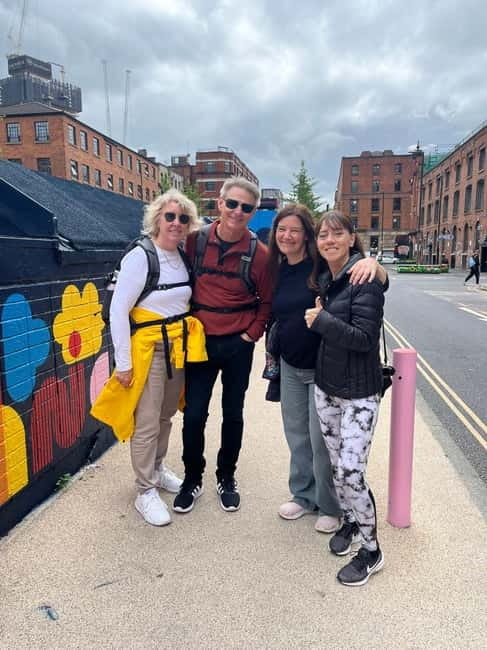
At $18.86 per person, this is reasonably priced for a local introduction lasting 1.5 hours. You are paying for orientation, storytelling, and the chance to ask questions while walking between several central areas.
The value is strongest if you are new to Manchester and plan to keep exploring after the tour. A single useful restaurant suggestion, library recommendation, or neighborhood tip can help justify the cost, especially when it saves you time later. One guide even pointed participants toward John Rylands Library, which became a worthwhile follow-up visit.
The value is lower if you already know central Manchester well or want long stops at major sights. This is an overview, not a full-day historical study. One comment also felt the price was a little high and suggested a discount for groups, so larger parties may want to compare the total cost before booking.
The reserve-now-and-pay-later option gives you some flexibility, and cancellation is free up to 24 hours before the activity for a full refund. That is useful when Manchester weather or your wider schedule is uncertain.
Pace, weather, and accessibility
Wear comfortable shoes. The activity is entirely outdoors and takes place rain or shine, so bring weather-appropriate clothing. Manchester can change from dry to wet quickly, and a short walk can feel long if your footwear is poor.
The tour is listed as wheelchair accessible. Since the route covers public streets and several central districts, you should still check the current arrangements if you have specific mobility needs. The guide’s job also includes keeping the group together and crossing busy streets safely. This came through as a strength in the feedback, with attention paid to people who might otherwise fall behind.
The walk is conducted in English. If you need a tour in another language, this activity will not meet that need.
Who should book this Manchester walking tour?
I would choose this tour for a first visit, a short stay, or a free morning before visiting museums and paid attractions. It suits you if you want a broad sense of Manchester and prefer stories, streets, and local context to a long indoor presentation.
It is also a good choice for people who enjoy asking questions. Small groups have allowed participants to speak directly with guides such as David, which can turn a standard city walk into a more personal exchange.
Families and older visitors can benefit from the measured pace, though everyone should be ready for continuous walking and Manchester traffic. The tour also suits people who live nearby but want to notice parts of their home city in a new way.
I would skip it if your main goal is Castlefield and Roman archaeology, a football stadium, or a detailed tour of one specific neighborhood. You may still hear useful background, but the route covers many themes rather than specializing in one.
Should you book it?
Book this Manchester walking tour if you want a short, affordable city primer with a local guide and a useful mix of old and new Manchester. Its strongest points are the range of subjects, the central route, and guides who can add personal recommendations to the basic sightseeing.
Go in knowing that 90 minutes is an introduction. You will see several important areas, but you will not study every building or enter every attraction. For most first-time visitors, that is a fair trade: you get your bearings quickly, learn what makes Manchester distinctive, and leave with a clearer plan for the rest of your stay.
FAQ
How long does the Manchester city walking tour last?
The tour lasts 1.5 hours.
Where does the walking tour begin?
Meet your guide outside the main entrance of Manchester Central Library.
How will I identify the guide?
The guide will be wearing a bright orange jacket and/or lanyard.
Where does the tour finish?
The activity ends back at the meeting point outside Manchester Central Library.
What language is the tour conducted in?
The live tour guide speaks English.
Which Manchester areas are included?
The route includes St Peter’s Square, the Royal Exchange Theatre, the Medieval Quarter, Street Art, the Gay Village, the Northern Quarter, and other places in central Manchester.
Does the tour cover Manchester’s Roman history?
The tour discusses Manchester’s Roman foundations, but Castlefield and its Roman connections are not listed as part of the route.
Is the tour wheelchair accessible?
Yes, the activity is listed as wheelchair accessible.
What should I wear or bring?
Bring comfortable shoes and clothing suited to the weather.
Does the tour run in bad weather?
Yes. The tour takes place rain or shine.
Can I cancel for a refund?
You can cancel up to 24 hours in advance for a full refund.
Can I reserve now and pay later?
Yes. You can reserve your spot and pay nothing today.
More Early Starts in Manchester
- London: Stonehenge Morning or Afternoon Tour Optional Lunch
★ 4.4 · 3,966 reviews - From London: Stonehenge Morning Day Trip with Admission
★ 4.8 · 3,423 reviews - London: Parks and Palaces Guided Morning Bike Tour
★ 4.9 · 317 reviews - London: Warner Bros. Studio Tour and Morning Train Ticket
★ 4.7 · 176 reviews
Just added in Manchester
- Manchester: Silent Disco Adventure Tour★ 5.0 · 72 reviews
- Manchester: LEGOLAND Discovery Centre Entrance Ticket★ 4.2 · 99 reviews
- Manchester: Music-Themed City Walking Tour★ 4.4 · 109 reviews
- Manchester: SEA LIFE Entrance Ticket★ 4.2 · 170 reviews
- Manchester: Junkyard Golf Club Tickets for 9 or 18 Holes★ 4.6 · 133 reviews
- Manchester: Hard Rock Cafe Set Menu for Lunch or Dinner★ 4.4 · 249 reviews
- Manchester: Guided Cheese Crawl with Tastings★ 4.6 · 53 reviews
- Manchester: Food and Drinks Walking Tour★ 4.9 · 70 reviews
Walking Tours, compared.
Underground Vaults Walking Tour in Edinburgh Old Town
Read our review →
Oxford University Walking Tour With University Alumni Guide
Read our review →
Edinburgh Castle: Guided Walking Tour with Entry Ticket
Read our review →
Edinburgh Castle Guided Walking Tour in English
Read our review →
Tour for Muggles The Ultimate Harry Potter Walking Tour in London
Read our review →
University and City Walking Tour with Alumni Guide
Read our review →
Edinburgh Darkside Walking Tour: Mysteries, Murder and Legends
Read our review →
Browse the lists this tour appears in