
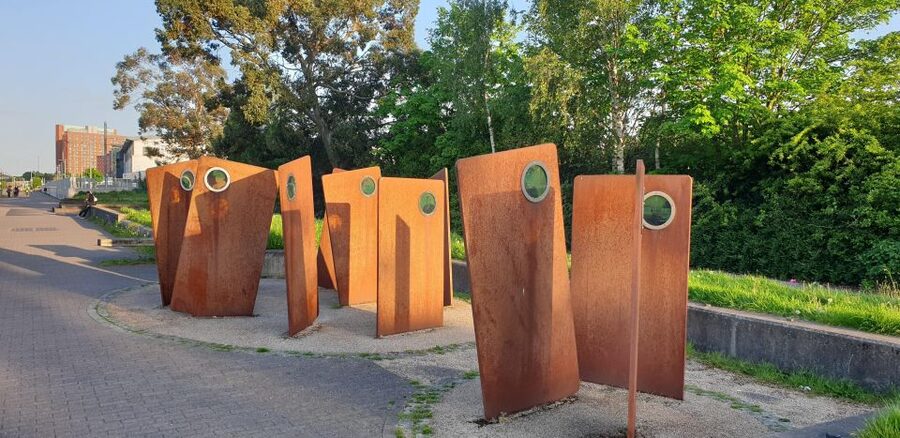
Reviewed · WALKING TOURS
Manchester: Media City & The Quays Guided Walking Tour
Salford Quays is one of Manchester’s best before-and-after stories. This two-hour walk follows the old docks, the Manchester Ship Canal, and the new Media City district, showing you how an industrial port became a centre for television, arts, business, and leisure. I especially like the use of old photographs and the headsets, which make it easier to follow the guide outdoors.
I also like that the tour looks ahead as well as back. You hear about the working docks, the Lowry Arts Centre, the Imperial War Museum North, and current plans for the area. The main consideration is the length: at about 5 kilometres, it is a proper walk, and the Quays can feel cold and exposed in poor weather.
Key points at a glance
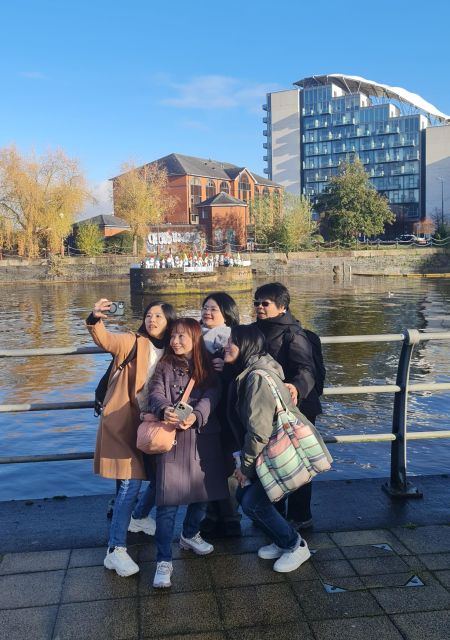
- A 5-kilometre route through change: Follow the Manchester Ship Canal, bridges, public spaces, and modern Media City.
- Frank is a major strength: He is praised for clear storytelling, local detail, old photographs, and an engaging manner. Craig has also led tours.
- History and future plans share equal billing: You learn about the former docks and the area’s continuing development.
- Headsets help outdoors: You can hear the guide while walking, even when the group spreads out.
- Family-friendly and adaptable: The pace can be adjusted, and the route can avoid steps. Dogs on leads are welcome.
- Good value at $18: Two hours with a local guide is a fair price, especially if you want context before exploring the Quays on your own.
Why Salford Quays makes a good walking tour
The Quays is not a traditional old city quarter. You will not spend two hours moving from one preserved medieval building to the next. Instead, the interest comes from seeing a place that has changed almost completely.
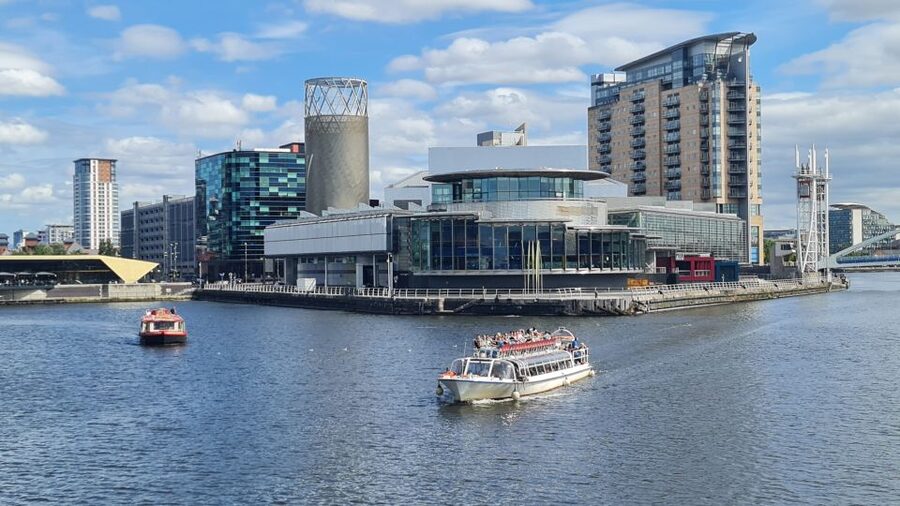
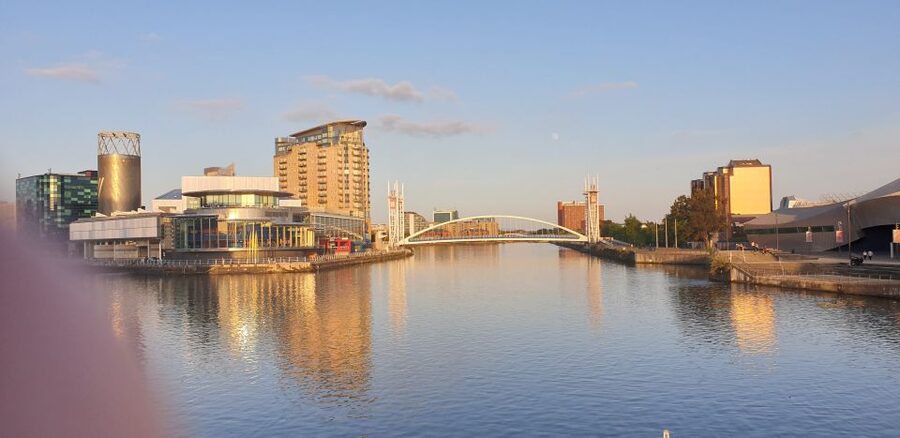
The Manchester Ship Canal made this area important to Manchester’s industrial growth. Later, the docks declined, leaving large stretches in need of a new purpose. Today, Media City, cultural venues, waterside paths, public art, restaurants, shops, and modern buildings occupy the former docklands.
That mix gives the walk a clear storyline. You are not simply being shown attractive buildings. You are being shown why they are there, what came before them, and what may be added next.
I find this kind of tour particularly useful early in a Manchester visit. It gives you a sense of how Salford connects with Manchester and helps you read the area instead of merely photographing it. The Quays can look polished and easy to understand at first glance, but the older dock story is not always obvious from the footpaths.
More Walking Tours in Manchester
- Manchester Afternoon Walking Tour
★ 5.0 · 1,033 reviews - Rock and Goal Manchester Walking Tour
★ 5.0 · 587 reviews - Four hour walking wine tasting tour of Manchester’s best bars
★ 5.0 · 136 reviews
Starting beneath the big screen at Media City Piazza
The meeting point is beneath the large digital screen in Media City Piazza, beside the Media City Metrolink station and opposite BBC Quay House. This is a practical place to begin because the tram provides a direct transport link to the area, and the modern setting immediately introduces the subject of the tour.
Media City is now closely linked with the UK’s digital and creative industries. The opening section explains how this part of Salford became a major base for media and broadcasting. You can expect the guide to connect the buildings around the piazza with the wider story of regeneration.
The piazza is also the end point, so you do not need to remember a complicated return route. That matters after two hours on foot, particularly if the weather turns unpleasant.
The start can feel more corporate than historic. If you are looking for old brick warehouses from the first minute, you may need to be patient. The tour’s strength is the contrast between the modern district around you and the industrial story beneath it.
Following the canals and Manchester Ship Canal
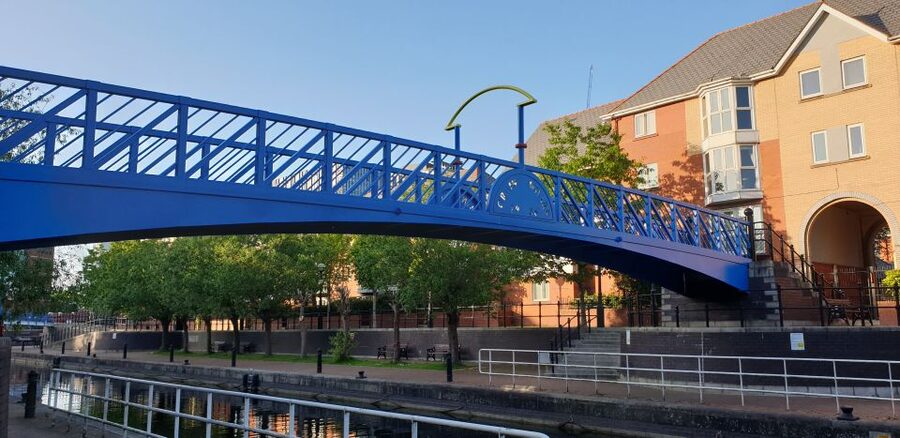
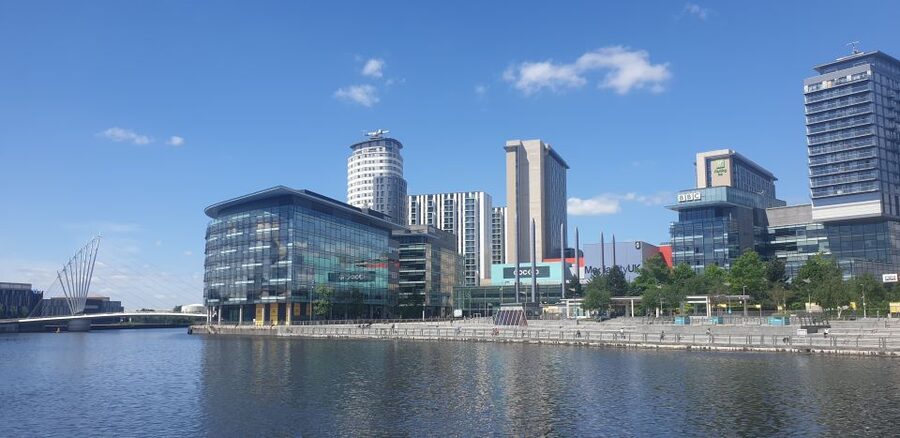
From Media City, the walk heads around Salford Quays and alongside the Manchester Ship Canal. The water is not just a scenic backdrop. It explains why this location mattered and why Manchester developed such a strong industrial identity.
Your guide brings the dock era to life with stories about how the Quays once operated and how the canal shaped trade and employment. Frank, who has led many of the tours, uses photographs to compare the older docklands with the present-day view. That visual comparison is one of the most useful parts of the experience because it lets you connect an apparently new district with its former purpose.
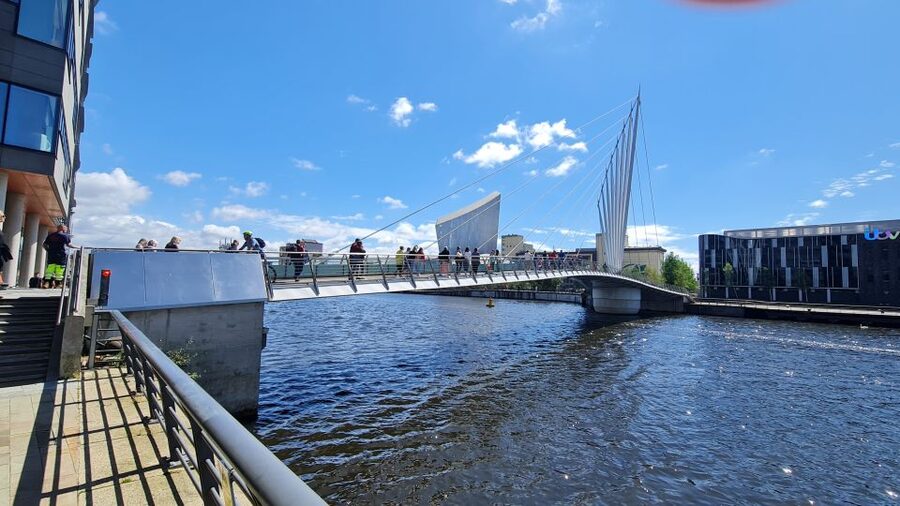
The route includes canals, bridges, and open waterside areas. You will pause at points of interest rather than walk continuously for two hours. Those stops give you time to look around, ask questions, and take photographs.
Headsets are supplied, with an English audio system and a live English-speaking guide. This is a small but important detail. Outdoor tours can become frustrating when the group stretches out or traffic and wind compete with the guide’s voice. The earpiece lets you keep looking at the site without crowding around the speaker.
The walk is advertised at around 5 kilometres. That distance is manageable for most people who are comfortable with a two-hour city walk, but it is not a quick stroll around one square. Wear supportive shoes, and bring a coat even if the forecast looks reasonable. The waterside can feel chilly, especially outside summer.
The Lowry Arts Centre and the Quays as a cultural district
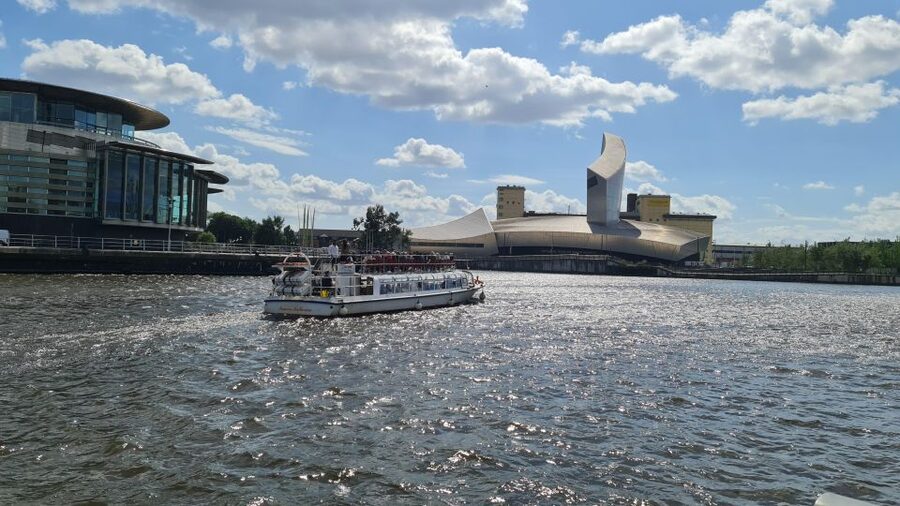
The Lowry Arts Centre is one of the principal landmarks on the route. Its presence shows how the former docklands have been given a cultural role as well as a commercial one.
The tour does not replace a visit inside the arts centre, and admission to exhibitions or performances is not included. Instead, the guide places the building within the wider story of The Quays and points out how arts and public spaces form part of the area’s new identity.
This is helpful if you plan to spend more time here after the walk. You can return to The Lowry with a better sense of its setting and combine the tour with your own visit. The surrounding area also offers places to eat and shop, making the Quays easy to explore before or after the guided walk.
The cultural stops prevent the tour from becoming only a transport or industrial history lesson. You see how the area has moved from docks and warehouses toward theatre, art, media, and leisure. At the same time, the guide keeps the older story in view, so the modern buildings do not appear in isolation.
Same trip, a completely different kind of day:
- The Manchester City Stadium Tour
★ 5.0 · 4,176 reviews - Manchester: Canal & River Cruise
★ 4.4 · 3,761 reviews - Etihad Stadium: The Manchester City Stadium Tour
★ 4.8 · 3,096 reviews - Manchester: National Football Museum Admission Ticket
★ 4.4 · 1,243 reviews
Imperial War Museum North and the wider story
The route also passes the Imperial War Museum North. Its striking architecture and position beside the water make it an important stop, even for people who do not plan to go inside.
The guide explains the significance of the area and its landmarks, helping you understand how museums and public buildings fit into the redevelopment of the Quays. As with The Lowry, entry is not part of the walking tour, so you can decide later if you want to return for a longer visit.
I like this arrangement. A guided walk gives you orientation and context without forcing you to spend the whole day indoors or follow a fixed museum schedule. If you have limited time in Greater Manchester, you can see the main external landmarks first and choose the one that deserves a separate visit.
The route is also useful for returning visitors. One person who had known the Quays for many years still learned new facts, which tells you that the tour is not aimed only at first-time visitors. The guide’s local stories add detail that is easy to miss when you walk around independently.
Frank’s storytelling and the value of a local guide
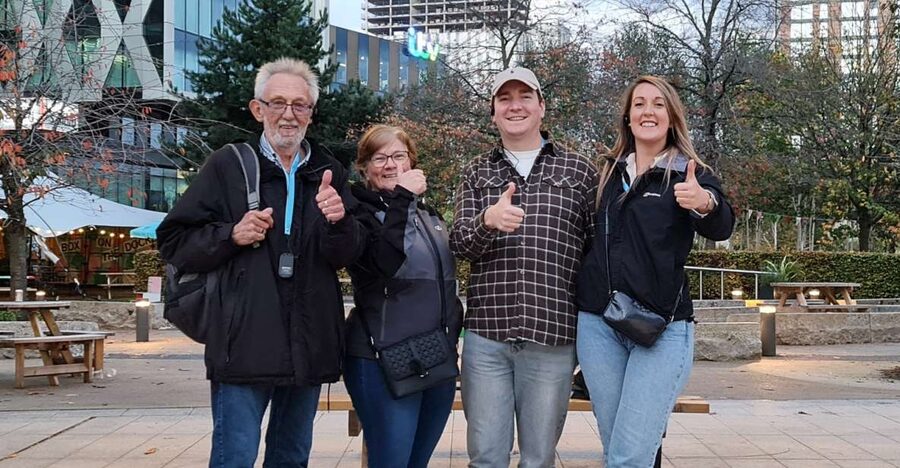
Frank receives especially strong praise for his delivery, local knowledge, and enthusiasm. He has led tours for groups of different sizes, including private-feeling walks with only one or a few people. His approach combines the history of the docks with present developments and future plans.
That balance matters. A guide who speaks only about the past can make the Quays feel like a museum. A guide who focuses only on new buildings may leave you wondering why the area matters. Frank’s method, based on the available tour information, links the two.
He also uses a folder of old photographs. This is more than a nice extra. The Quays have changed so much that photographs give you a clear way to compare former dock scenes with the same areas today.
The style is conversational, with time for questions. You should feel free to ask about the buildings, the canal, the regeneration scheme, or the future of Media City. Several tour experiences have been described as especially personal when attendance was small, while the headsets help even when the group is larger.
One practical note: a past participant found the guide’s natural walking pace quick because of his long stride. The pace can be adjusted, but ask early if you need a slower walk. There is no prize for reaching the next bridge first.
What the future of Media City adds to the tour
Many city walks stop once the historic facts are covered. This one continues into the future of Media City and The Quays. You hear about ongoing development and the area’s place in one of the UK’s largest urban regeneration projects.
Plans can change, so you should treat future details as a snapshot of the area at the time of your visit. Still, this part is valuable because The Quays is not finished in the way a preserved historic centre is finished. New buildings, businesses, public spaces, and visitor attractions continue to shape it.
The guide’s discussion of future plans also helps explain why certain parts of the area may look different from others. You can see established cultural venues beside newer construction and open spaces awaiting their next stage.
For me, this forward-looking section is one of the main reasons to choose a guided tour instead of using a self-guided map. A map can show you where buildings are. A local guide can explain how the area is intended to develop and why that matters to Manchester and Salford.
Walking conditions, accessibility, and family suitability
The tour takes place rain or shine. That is normal for an outdoor walk, but the waterside setting makes preparation important. Bring weather-appropriate clothing and comfortable shoes. High heels are not allowed, and they would be a poor match for a 5-kilometre route anyway.
The tour is family-friendly and suitable for all ages. Children who enjoy bridges, water, big modern buildings, and stories about how cities change should have plenty to look at. The two-hour length is the main issue for younger children, not the subject matter.
The route can be adjusted to avoid steps, and the pace can be adapted to suit the group. It is described as wheelchair accessible. If you have specific mobility needs, it is still sensible to communicate them when booking so the guide can plan the most suitable route.
Dogs on leads are welcome. That makes this a useful option for local people and visitors travelling with a dog, though you should still expect a full city walk rather than a short outing.
Is $18 good value for two hours?
At $18 per person, this is a reasonably priced guided experience. You get two hours of live commentary, an English audio headset, a route of about 5 kilometres, and access to local stories that would be difficult to assemble from signs alone.
The value is strongest if you want to understand the area. If you only want a quick look at Media City and a few photographs, you can walk around independently at no cost. But self-guided exploration will not provide the same explanation of the docks, the canal, the regeneration process, or the future plans.
The tour can also save time. Rather than stopping at random buildings and trying to work out their importance, you follow a planned route through the main sights. Afterward, you can decide which places deserve a longer visit.
Flexible booking terms add practical value. You can cancel up to 24 hours before the tour for a full refund, and the reserve-now, pay-later option lets you keep plans open. These terms are useful in Manchester, where a wet forecast can change your ideal day outdoors.
Who should book this walking tour?
I would choose this tour if you are interested in urban change, industrial history, architecture, media, or the future of Greater Manchester. It is also a strong first activity if you are staying near Manchester city centre and want to get your bearings in Salford Quays.
It suits local residents, too. The route is not limited to basic facts for first-time visitors. The old photographs, local stories, and discussion of new development can add detail even if you have already visited Media City several times.
Families, solo visitors, and small groups should find it welcoming. One-person tours have still gone ahead with a thorough approach, and the guide makes time for questions. The headsets are useful for anyone who dislikes straining to hear outdoors.
I would think twice if you dislike walking, need frequent indoor breaks, or want a tour focused only on Manchester city centre. This experience is specifically about Media City and The Quays, and much of it takes place outside beside the water.
Should you book the Media City and The Quays walk?
Book it if you want the Quays to make sense, not just look attractive. The strongest parts are the clear local storytelling, the old photographs, the headsets, and the link between the docklands past and Media City’s future.
At $18, it offers a lot for two hours. Wear warm, comfortable clothing, allow the full time, and do not be put off by grey weather. If you want a thoughtful introduction to Salford Quays before exploring The Lowry, the Imperial War Museum North, or the waterside on your own, this is a sensible and good-value choice.
FAQ
Where does the Media City and The Quays walking tour start?
Meet beneath the large digital screen in Media City Piazza, next to the Media City Metrolink station and opposite BBC Quay House.
How long is the walking tour?
The tour lasts two hours, and the route covers about 5 kilometres. Allow the full two hours when planning your day.
Which landmarks does the route visit?
The walk passes the Lowry Arts Centre, the Imperial War Museum North, the Manchester Ship Canal, Media City, canals, bridges, and other locations around The Quays.
Is the tour suitable for wheelchair users?
Yes. The tour is described as wheelchair accessible. The route can be adjusted to avoid steps, and the pace can be adapted for each group.
What language is the tour in?
The live tour guide and audio headset are in English.
Can I bring my dog?
Yes. Dogs are welcome when kept on leads.
Just added in Manchester
- Four hour walking wine tasting tour of Manchester’s best bars★ 5.0 · 136 reviews
- Manchester iFLY Indoor Skydiving Experience – 2 Flights & Certificate★ 4.5 · 387 reviews
- Manchester Cheese Crawl : Guided Food Tour★ 5.0 · 559 reviews
- Rock and Goal Manchester Walking Tour★ 5.0 · 587 reviews
- Manchester: The Coronation Street Experience★ 4.8 · 563 reviews
- SEA LIFE Manchester Admission Ticket★ 4.0 · 1,007 reviews
- LEGOLAND Discovery Centre Manchester★ 4.0 · 1,049 reviews
- Manchester Afternoon Walking Tour★ 5.0 · 1,033 reviews
Walking Tours, compared.
Underground Vaults Walking Tour in Edinburgh Old Town
Read our review →
Oxford University Walking Tour With University Alumni Guide
Read our review →
Edinburgh Castle: Guided Walking Tour with Entry Ticket
Read our review →
Edinburgh Castle Guided Walking Tour in English
Read our review →
Tour for Muggles The Ultimate Harry Potter Walking Tour in London
Read our review →
University and City Walking Tour with Alumni Guide
Read our review →
Edinburgh Darkside Walking Tour: Mysteries, Murder and Legends
Read our review →
Browse the lists this tour appears in