
Reviewed · MUSEUMS
London: Postal Museum Entry Ticket and Underground Rail Ride
London’s most unusual museum ride runs beneath the streets, not above them. At the Postal Museum, you board a small train for a 15-minute journey through the old Mail Rail tunnels, the Post Office railway that carried letters across London for more than a century.
I like two things here: the Penny Black and other real objects give the story weight, while the hands-on exhibits turn postal history into something you can try yourself. Sorting letters on a carriage with a wobbly floor is more memorable than reading a label about it. The main drawback is the short ride, and the low train may feel tight if you are very tall or uncomfortable in enclosed spaces.
Key points
- Ride through the old Mail Rail tunnels: The miniature train provides a brief but unusual look at London’s underground postal railway.
- See the Penny Black: One of the museum’s prized objects is the world’s first postage stamp.
- Try a wobbly mail-sorting carriage: You can test the skill once needed to sort letters on moving trains.
- Meet the rougher side of postal work: Flintlock pistols show how mail was defended against theft.
- Plan for more than 90 minutes: The train lasts about 15 minutes, but the galleries can keep you busy for two or three hours.
- Good family option: Interactive games, dress-up elements, and educational activities give children plenty to do.
Why London’s Postal Museum is more than a stamp collection

The Postal Museum tells the story of communication through more than 500 years of British postal service. That sounds like a dry subject, but the museum keeps it moving with machinery, old vehicles, video, games, and displays about the people who carried and sorted the mail.
You begin with the museum and the Mail Rail experience. The order of the visit can vary, but allow time for both parts. The advertised experience lasts about an hour and a half. If you stop to read the displays, try the interactive stations, and pause for a drink, you may want two to three hours.
This is not a grand museum filled with enormous rooms. It is a focused attraction built around a practical question: how did letters get from one person to another before email, mobile phones, and instant messages? The answer involves stamps, post boxes, coaches, horses, telephones, sorting offices, and an underground railway.
I especially like the way the museum connects old systems to things you still recognize. The development of post boxes and telephone boxes becomes easier to understand when you can see the objects themselves. Children get the games and movement, while adults may find themselves explaining how an old telephone worked or remembering the postal routines of their own childhood.
More Museum Tours in London
- Tower of London and Crown Jewels Exhibition Ticket
★ 4.5 · 6,677 reviews - London: Chelsea Football Club Stadium and Museum Tour
★ 4.8 · 4,576 reviews - Chelsea FC Stadium Tours and Museum
★ 5.0 · 1,908 reviews
Boarding the 100-year-old Mail Rail
The Mail Rail ride is the main reason to come. You board a miniature train and head into the tunnels once used by the Post Office’s underground railway. The railway dates back more than 100 years and was designed to move mail beneath London when surface roads were slow and crowded.
The ride lasts around 15 minutes. That is enough time to get a feel for the tunnels and the small scale of the railway, but not enough for a long railway tour. The presentation adds projected films, audio, and commentary, helping explain how the system worked and why it mattered.
At points, the train stops so video clips can play on the tunnel walls. This makes the ride more than a simple loop through a dark passage. You get a short history lesson as you travel, with the underground setting doing much of the work.
The train is small. If you are tall, you may find the seating and roof height restrictive. If enclosed spaces make you uneasy, think carefully before booking. There is also a blackout section, which can be startling for younger children or anyone who dislikes sudden darkness.
The museum takes practical care of personal belongings during the ride. Bags are placed in separate train lockers, which are locked by a staff member and opened when you return. That arrangement may seem unusual at first, but it keeps the small carriage clear and makes the boarding process easier.
The most common criticism is also the simplest: the ride could be longer. If you are coming mainly for a railway experience, 15 minutes may feel brief, especially after allowing time for queues and boarding. The projected scenes and commentary add value, but they also take up part of the ride itself.
Still, the Mail Rail is a rare experience. You are not looking at a model railway behind glass. You are moving through the real underground setting that once carried London’s letters.
The Penny Black and the objects that changed communication
The museum’s most famous object is the Penny Black, the first postage stamp in the world. It represents a major change in postal history: sending a letter became simpler and more predictable when postage could be paid in advance with a stamp.
The value of seeing the stamp in person is not its size. It is tiny. The value comes from understanding its effect. A small printed rectangle helped create a postal system that ordinary people could use more easily.
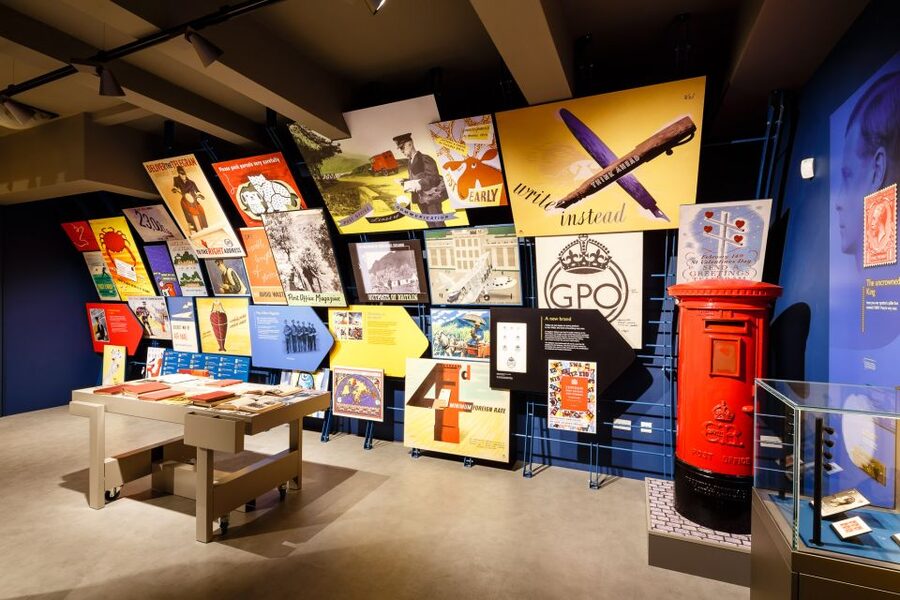
The galleries also cover the development of post boxes, telephone boxes, and other communication tools. These displays help place the postal system in everyday life rather than treating it as a parade of dates and objects.
Look for the stories behind the objects. The museum includes accounts of mail coaches, postal workers, and the risks involved in moving letters across the country. One unusual display concerns a mail stagecoach attacked by a lioness. Details like this keep the historical story from feeling flat.
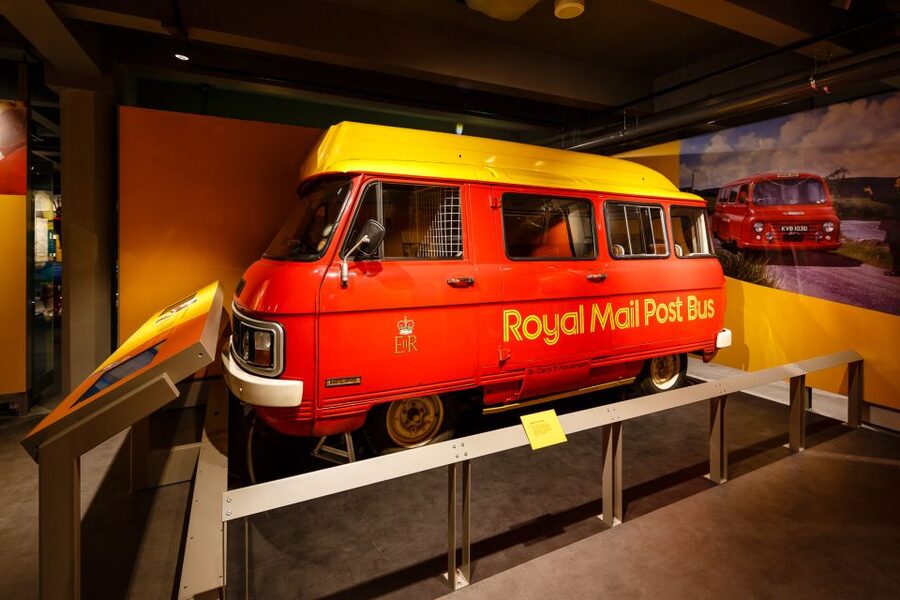
Another striking exhibit is a Victorian miniature rail car that operated on London’s streets. It gives you a sense of how mail transport changed over time, from horse-drawn movement to rail systems and underground delivery.
Flintlock pistols and the dangerous side of delivering mail

Postal work was not always quiet or routine. Mail could be valuable, and stagecoaches carrying letters faced theft and attack. The flintlock pistols used to defend the mail show the risks built into the system.
These weapons are a useful reminder that postal history includes security as well as convenience. A letter might have taken a long route, passed through several hands, and needed protection before reaching its destination.
For children, the pistols may be one of the more memorable displays. For adults, they add context to the old mail coach stories and explain why postal workers and drivers needed more than a bag and a uniform.
The museum does not rely only on rare objects. It pairs them with explanations and interactive material, so you can see how the postal system affected work, travel, communication, and family life.
Same trip, a completely different kind of day:
- London: The London Eye Entry Ticket
★ 4.6 · 35,875 reviews - From London: Harry Potter Warner Bros Studio Tour
★ 4.7 · 26,588 reviews - London: Westminster to Greenwich River Thames Cruise
★ 4.5 · 22,836 reviews - London: Madame Tussauds London
★ 4.6 · 20,915 reviews
Try sorting letters on a moving train
The best hands-on display asks you to sort mail on a mock-up train carriage. The floor wobbles as you work, recreating the unstable conditions faced by postal workers sorting letters in transit.
This is the kind of activity that works across age groups. Children can treat it as a game, while adults quickly discover that sorting mail accurately on an unsteady floor is harder than it looks.
That small physical challenge explains something a text panel cannot. Postal workers needed speed, concentration, and balance. The system depended on thousands of letters being handled correctly, often while trains were moving.
You may also find educational games, research material, old films, dressing-up elements, and activities linked to communication. Children can design their own stamp, and the interactive stations give them a reason to keep exploring instead of simply following an adult from case to case.
The children’s focus is clear in parts of the museum. Some displays are aimed at younger visitors, and busy weekends can make the interactive stations crowded. If you want a quiet, careful look at every label, arrive with patience. If you are visiting with children, the noise and activity are part of the appeal.
For families, this is one of the stronger museum choices in central London because adults and children can use the same displays in different ways. A child can play with a sorting activity while you read about the system behind it.
How long should you allow?
The stated duration is 1.5 hours, but that should be treated as a minimum for the main experience rather than a strict visit length. The train itself takes about 15 minutes. The rest of your time goes into the galleries, interactive stations, and café.
If you move quickly, you can see the main highlights in around 90 minutes. I would allow two hours for a normal visit and closer to three if you are with children, stop for refreshments, or want to read the historical material.
One useful point is that the museum rewards a return visit more than a quick attraction usually does. There is enough material to miss something on a first visit, particularly if children are pulling you toward the next activity. The museum has also been described as a place where admission tickets can remain valid for a year, but check the current terms when booking because policies can change.
The café gives you a place to pause. It is family-friendly and serves snacks and drinks, making it practical for an afternoon outing. At busy times, tables may need attention after spills, so do not expect a polished restaurant experience. Think of it as a convenient museum café rather than a destination meal.
Is $24 a fair price?
At $24 per person, the value depends on how you use the visit. If you arrive for only the 15-minute train ride and leave, the price may feel high. The ride is the headline attraction, but it is short.
The admission makes more sense when you spend time in the museum. You are paying for the underground ride, the galleries, the original objects, the interactive displays, and the staff-run experience around the train. A two or three hour visit gives the ticket much better value.
Families may get especially good use from the price because children have several activities rather than one short ride. Adults who enjoy transport, social history, stamps, or old communication systems should also find enough substance to justify the cost.
The separate Sorted! Postal Play Space is available for children aged 8 and is booked through the Postal Museum website. It is not included in the standard entry, so check the extra cost and age details before you plan around it.
The attraction is wheelchair accessible. Because the train is a small underground carriage, check the current accessibility arrangements when booking if you need specific assistance for the Mail Rail portion.
Who will enjoy this most?
I would recommend the Postal Museum to families with primary-school-age children, grandparents visiting with grandchildren, and adults who enjoy unusual transport experiences. It works particularly well when your group has mixed interests because the visit combines a ride, history, physical activities, and old objects.
Children are likely to enjoy the train, stamp design, sorting game, dressing-up area, and other interactive stations. The blackout section may frighten some younger children, so prepare them for the possibility that the carriage will become dark.
Adults who expect a large national museum may find the galleries modest. This is a specialized museum, not a full-day institution with endless rooms. Its strength is the combination of the Mail Rail ride and the practical displays.
It is also a good choice for a rainy London afternoon. You can stay indoors, take a short underground ride, and learn about a system that helped the city function long before modern digital communication.
Practical advice before you book

Book ahead if the Mail Rail time matters to you, particularly during school holidays and weekends. The train is the limited-capacity part of the visit, and a delay can affect your plans. One reported delay lasted about 40 minutes, while another visitor waited around 20 minutes, so leave room in your schedule.
Arrive ready to use the museum rather than simply look at it. The hands-on displays are central to the experience. If you have children with you, give them time to try the sorting carriage and design activities instead of rushing straight through the historical cases.
Wear something comfortable and consider the train’s size. Very tall visitors may find the carriage cramped, and anyone with claustrophobia should know that the ride enters dark tunnels and includes a blackout moment.
Start early enough to avoid racing through the final gallery. The displays are compact but packed with stories, and it is easy to spend longer than expected reading about old mail routes, workers, and communication technology.
You can reach for a coffee or snack in the family-friendly café, but plan your main meal elsewhere if you want a more substantial lunch. The café is useful for a break, not a major part of the attraction.
Should you book the Postal Museum?
Book it if you want an unusual London museum with a real underground ride and activities that work for children and adults. The Mail Rail experience is short but genuinely distinctive, and the museum gives it context through the Penny Black, old postal vehicles, flintlock pistols, telephone displays, and hands-on sorting challenges.
Skip it if you want a long train journey, a quiet art museum, or a full day of major exhibits. The attraction leans toward families, and busy periods can make the interactive areas noisy.
For most visitors, the best plan is to allow two to three hours, arrive with the train’s tight quarters in mind, and treat the museum as the main event rather than filler around a brief ride. At $24, it is good value when you take your time and use the interactive galleries.
FAQ
How long is the Mail Rail ride?
The underground train ride lasts about 15 minutes.
How long should I spend at the Postal Museum?
The advertised experience lasts 1.5 hours, but you may want two to three hours to explore the galleries, use the interactive displays, and take a café break.
What can I see at the museum?
You can see the Penny Black, a Victorian miniature rail car, flintlock pistols used to defend the mail, and displays about postal and communication history.
Is the train ride suitable for people who dislike enclosed spaces?
The train travels through underground tunnels and includes a blackout section. The carriage may also feel tight for very tall visitors or anyone uncomfortable in enclosed spaces.
Is the Postal Museum wheelchair accessible?
Yes, the activity is listed as wheelchair accessible. Contact the museum before booking if you need details about access to the train itself.
Is the café suitable for families?
Yes. The museum has an accredited family-friendly café serving snacks and refreshments.
Is the children’s Sorted! Postal Play Space included?
No. Sorted! is booked separately through the Postal Museum website and is listed for children aged 8.
Can I cancel the booking?
You can cancel up to 24 hours in advance for a full refund. A reserve-now-and-pay-later option is also available.
Just added in London
- Royal London Guided Sightseeing Tour and Thames River Cruise★ 4.0 · 31 reviews
- Roman Ruins to Blitz Bombings: A Walking Tour of London’s Fiery History★ 5.0 · 190 reviews
- Roman London Private Walking Tour★ 5.0 · 44 reviews
- Westminster Abbey, Big Ben, Buckingham Guided Tour of London★ 5.0 · 451 reviews
- River Thames Evening Cruise with Sparkling wine and Canapés★ 4.0 · 569 reviews
- Rock and Roll Walking Tour of Soho London★ 4.5 · 64 reviews
- London Private Chauffeur Half-Day or Full-Day Vehicle Rental★ 5.0 · 37 reviews
- Rich people behaving badly★ 5.0 · 47 reviews
Museums, compared.

Liverpool Football Club Museum and Stadium Tour
Read our review →
Tower of London and Crown Jewels Exhibition Ticket
Read our review →
Chelsea Football Club Stadium and Museum Tour
Read our review →


Browse the lists this tour appears in