
Reviewed · MUSEUMS
London Transport Museum Entrance Ticket
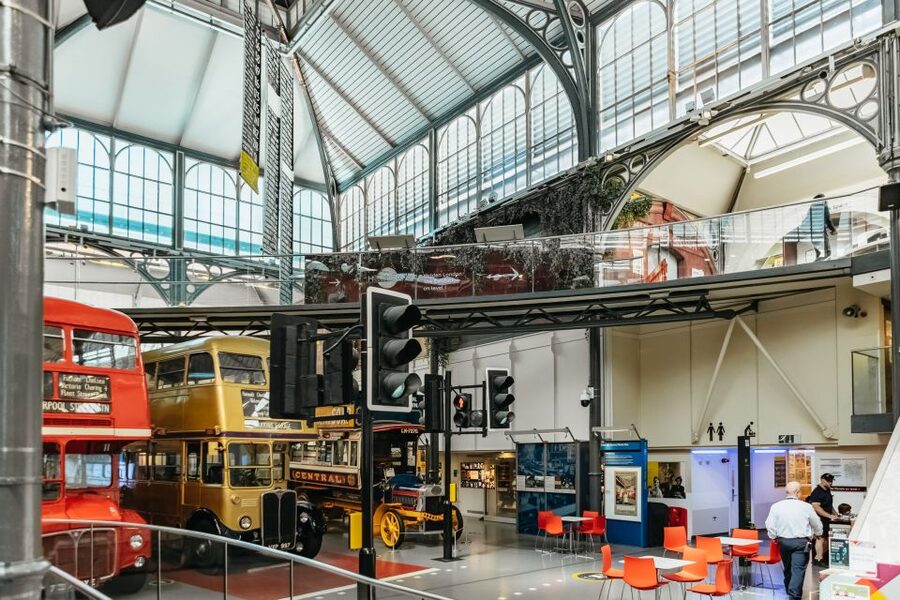
London Transport Museum tells London’s story through the machines that made the city possible. You’ll see the world’s first underground steam train, early electric Tube railway equipment, old buses, trams, posters, maps, and hands-on displays that show how transport changed daily life.
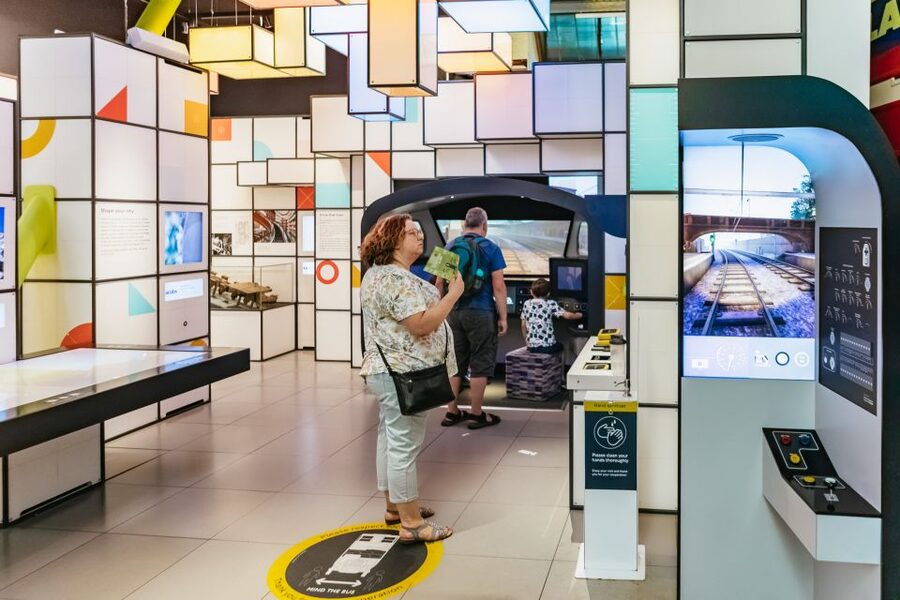
I like the mix of real vehicles and interactive exhibits, especially the chance to drive a simulated Elizabeth line train. I also like the Global Poster Gallery, where more than 100 works explain how London’s famous transport branding grew from commercial art and design.
The main drawback is noise and crowding. Children have plenty to do, which is a real strength for families, but weekends and school holidays can feel loud and busy. At about $33 per person, you’ll want to allow more than a quick hour to make the ticket worthwhile.
Key points at a glance
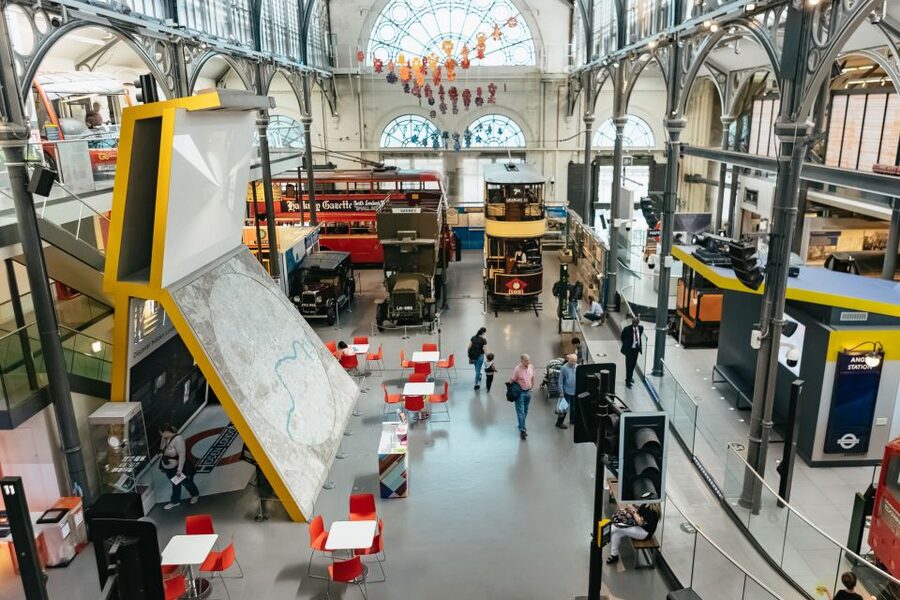
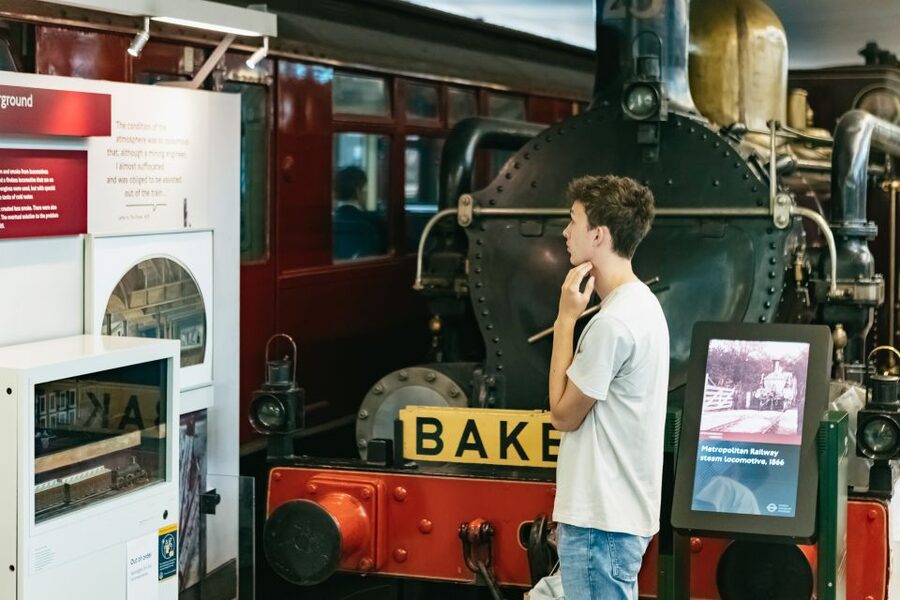
- See the first underground steam train: Follow London’s railway story from the Victorian era into the electric Tube age.
- Try the Elizabeth line simulator: The Future Engineer’s display lets you take the controls of a modern train.
- Explore more than 100 posters: The Global Poster Gallery is included with museum admission.
- Bring children with energy to spare: Play areas, puzzles, drawing, and working transport displays keep younger visitors involved.
- Plan for two to four hours: A quick visit takes about 1 to 1.5 hours, while a detailed look can fill most of the day.
- Visit Covent Garden afterward: The museum sits in one of central London’s most convenient areas for food, markets, and further sightseeing.
Why this museum explains London better than a vehicle collection
You could come here simply to see old buses and trains. That would still be worthwhile, but the museum gives you a bigger idea: London grew because people could move through it.
The displays connect transport with the city’s expansion from the 1800s onward. Horse-drawn buses helped people travel beyond their immediate neighbourhoods. Underground railways made it possible to live farther from work. Electric trains and modern Tube lines changed the pace and reach of the capital again.
That context gives the vehicles a purpose. You are not just looking at a carriage or a bus. You are seeing the answer to a practical problem: how do millions of people move through a crowded, growing city?
The museum also explains how transport became part of London’s identity. The familiar bullseye logo, the diagrammatic Tube map, vehicle colours, station signs, and poster designs all helped create a visual language that people recognise far beyond Britain.
I find this approach more useful than a display made only for transport enthusiasts. You can care deeply about railways, or know almost nothing about them, and still understand why each change mattered.
More Museum Tours in London
- Tower of London and Crown Jewels Exhibition Ticket
★ 4.5 · 6,677 reviews - London: Chelsea Football Club Stadium and Museum Tour
★ 4.8 · 4,576 reviews - Chelsea FC Stadium Tours and Museum
★ 5.0 · 1,908 reviews
Start with the vehicles and the earliest underground railway
The older transport displays give you a clear starting point. London’s transport story begins with horse-drawn buses and early public vehicles, then moves toward the world’s first underground railway.
The standout object is the world’s first underground steam train. It represents an age when engineers were trying to solve a very modern problem with Victorian technology. Underground railways were a bold answer to street congestion, but steam trains also created smoke, heat, and difficult working conditions below ground.
The next stage shows the move to electric Tube railways. This change was not simply a technical upgrade. Electric trains made underground travel cleaner, faster, and more practical for regular passengers.
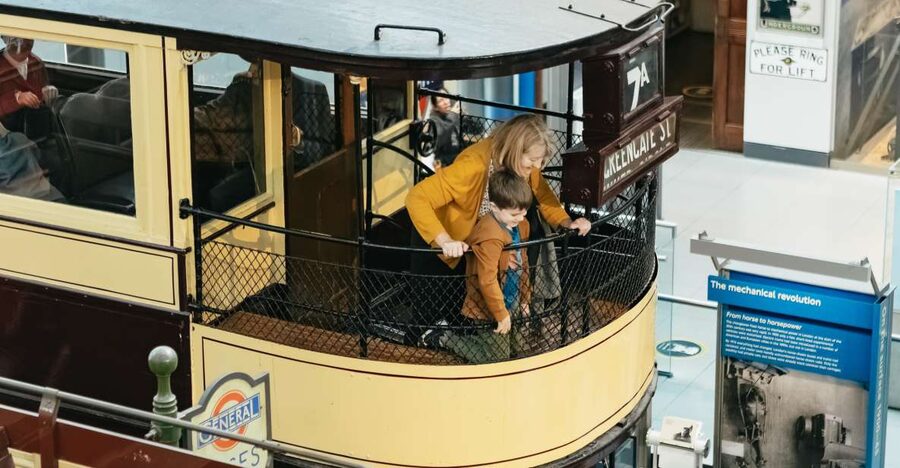
You can also see historic buses and trams from different periods. These large exhibits give the museum its sense of scale, and children often respond to them immediately because they can look inside and imagine a journey in another era.
The museum does not treat old transport as a set of disconnected curiosities. The displays help you follow the chain from horse power to steam, from steam to electricity, and from early underground lines to today’s network.
Allow time to read the labels if you want the full story. A fast walk through the vehicles takes around an hour, but the museum becomes much more rewarding when you stop to consider how each machine changed London.
Follow the map that made the Tube understandable
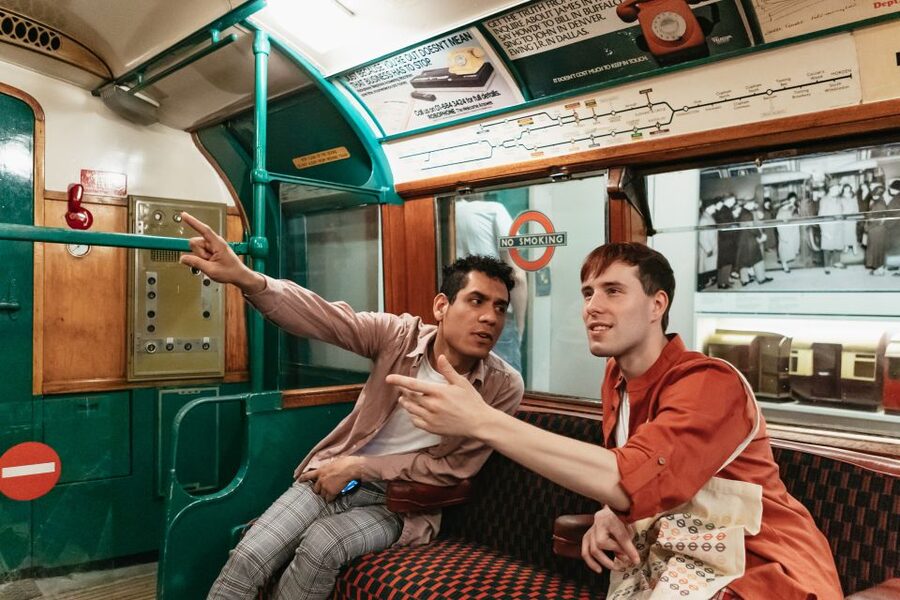
The London Underground map is one of the museum’s most important design stories. It changed the way people thought about the city by showing routes as a clear diagram rather than attempting to reproduce every street and geographical detail.
That idea seems ordinary now, but it was a major shift. A passenger needed to know how to change lines and reach a station, not whether the route followed every curve above ground. The map made a complicated system easier to use.
The museum connects this design choice with the wider identity of London transport. The bullseye logo and the Tube map are not just decoration. Together, they create a system that helps you find your way quickly.
This section works well for adults because it explains why familiar design matters. Children can also enjoy the visual displays, especially when they begin to recognise the lines and symbols they have seen around London.
If you are visiting London for the first time, this part may give you a better sense of how the Underground works. If you already use the Tube every day, it offers a fresh look at the choices behind its familiar signs.
Make time for the Global Poster Gallery
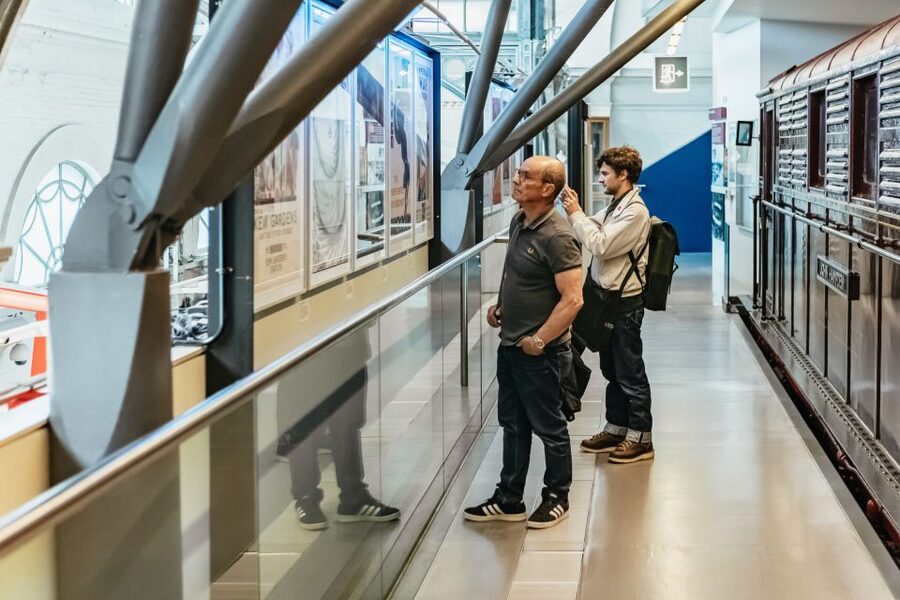
The Global Poster Gallery, opened in October 2023, is included with museum admission. It is dedicated to commercial poster art and design, with more than 100 poster artworks and posters on display.
This is one of the strongest reasons to allow extra time. The gallery moves beyond trains and buses and shows how transport companies used art to persuade people to travel, visit new places, and see London in a different way.
The exhibition How to Make a Poster looks at the process behind poster production from 1900 onward. It focuses on commissioning and creativity in the pre-digital age, when images had to be planned, drawn, printed, and displayed without today’s design software.
You can see how colour, lettering, composition, and a simple visual idea work together. The posters also reveal changing tastes and changing ideas about leisure, shopping, work, and city life.
I would not rush through this gallery. It gives you a quieter change of pace after the large vehicles and children’s activities. It is also a good stop for anyone interested in graphic design, advertising, illustration, or the history of London’s public image.
The gallery makes the museum feel broader. London transport was not only about engineering. It was also about communication, persuasion, and creating a consistent public brand.
Same trip, a completely different kind of day:
- London: The London Eye Entry Ticket
★ 4.6 · 35,875 reviews - From London: Harry Potter Warner Bros Studio Tour
★ 4.7 · 26,588 reviews - London: Westminster to Greenwich River Thames Cruise
★ 4.5 · 22,836 reviews - London: Madame Tussauds London
★ 4.6 · 20,915 reviews
Put your hands on the interactive displays
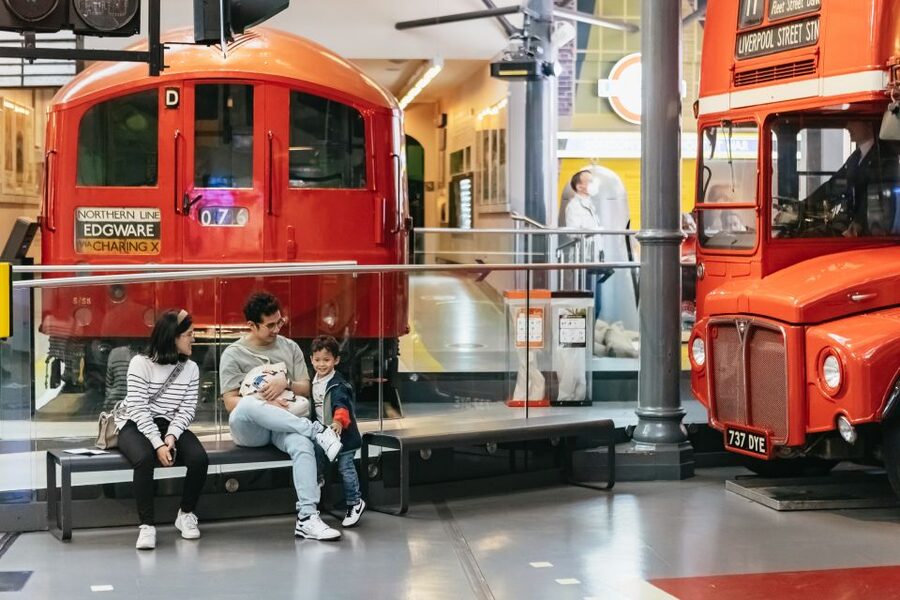
The museum is especially strong when it asks you to do something rather than simply look. The Future Engineer’s simulation lets you drive a modern Elizabeth line train. This gives you a direct connection between the early railway exhibits and the technology used in London today.
Other interactive displays cover practical transport work. Depending on the visit, you may find activities involving brake pad changes, rail track switches, drawing, and train operation. These examples show that a transport network depends on many jobs and systems, not just the driver at the front.
The hands-on design is a major advantage for families. A young child may not read every label, but can still learn by moving a control, solving a puzzle, or stepping into a vehicle. Older children can begin to understand the engineering behind braking, tracks, signals, and train movement.
Some areas are aimed at younger children and include play space. That makes the museum easier to enjoy with toddlers, though it also explains why the main galleries can become noisy.
One older review noted that an interactive London barge activity was missed. Displays can change, so do not plan your visit around one particular activity unless the museum confirms it is operating. The Elizabeth line simulator and other hands-on exhibits are the safer highlights to expect from the information available here.
Why children usually enjoy it, and adults may need a plan
The museum works for a wide age range. Families have found enough to occupy children from toddlers through early teens, while adults can spend time with transport history, design, engineering, and social change.
A group ranging from age two to 67 can find something here, but not everyone will enjoy the same parts. Younger children usually want vehicles, play areas, and controls. Adults may prefer the posters, Underground map, and historical explanation.
That difference is easy to manage if you do not insist on moving through every gallery together. Let children spend time at the interactive displays while adults read nearby. Then regroup around the larger vehicles or the poster gallery.
Avoid weekends and school holidays if your priority is a quiet museum visit. Saturday mornings can be well organised, but busy periods still bring queues, noise, and plenty of children moving through the galleries.
A weekday visit should give you more breathing room, though the museum remains a family attraction. If you are travelling as a couple or alone, go early and make the poster gallery and historical displays your main focus.
The museum is wheelchair accessible. Stroller and buggy parking is available, but large bags and luggage are not allowed. Leave suitcases elsewhere before arriving, since this is not a place to bring airport baggage.
How long should you stay?

The advertised duration is one day, and the ticket allows you to make a proper visit rather than racing through. In practice, your timing depends on how much you read and how long you spend with the interactive displays.
A brisk visit takes about 1 to 1.5 hours. That is enough to see the main vehicles, get a sense of the Underground story, and try a few activities.
For a family, two to three hours is a more realistic target. Children will want time in the play areas and hands-on sections, while adults will need time to read the displays.
If you want to study the poster collection, design material, maps, historic objects, and temporary exhibitions, plan on three to four hours. A full day is possible for transport enthusiasts, but most people will combine the museum with other Covent Garden sights.
The museum closes at 6:00 PM, with last entry at 5:00 PM. Do not arrive late in the afternoon expecting to see everything. The best plan is to enter by early afternoon at the latest, and earlier if you want a relaxed visit.
Is the $33 ticket good value?
At $33 per person, the ticket is not a cheap short attraction. Its value depends on how you use it.
For a one-hour visit, the price may feel high, especially if you are mainly interested in seeing a few old buses. For two to four hours, with the interactive displays, permanent galleries, temporary exhibitions, and Global Poster Gallery included, the cost becomes easier to justify.
Families tend to get good value because several age groups can use the museum differently. You do not need to pay for a separate children’s activity once inside. The play areas and working displays are part of the visit.
The ticket also makes sense on a rainy London day. You get a central indoor attraction, a strong connection to the city you are exploring, and plenty of material beyond a simple vehicle display.
Some past visitors found that a day ticket could be converted to an annual pass for a small extra payment, and one older booking was upgraded for £2. Check the current direct museum terms before assuming this is available. If you are returning to London or live nearby, an annual option could change the value calculation.
Free cancellation up to 24 hours before the visit and reserve now, pay later booking can help if your London plans are still changing. Those terms are useful, but the main value still comes from staying long enough to explore properly.
Getting there and building a Covent Garden day

The meeting point is the London Transport Museum in Covent Garden. That makes it easy to pair with other central London plans, but it also means the surrounding area can be busy.
Give yourself a little time to find the entrance and get settled, especially with children. Large bags are not allowed, and buggy parking is available.
After the museum, you can continue around Covent Garden without needing another major transfer. The location is particularly handy if your group has mixed interests. One person can focus on transport history, while others enjoy the surrounding shops, food, and street activity.
A useful plan is to visit the museum in the morning, stop for lunch nearby, then continue with central London sightseeing. Another option is to come after lunch, but keep the 5:00 PM last entry time firmly in mind.
The museum’s gift shop is worth a look if you like transport design. It carries themed gifts, books, and clothing, though check sizes carefully before buying. One past purchase turned out smaller than its stated size, so trying on clothing is sensible when possible.
Who should book this experience?
I would recommend it most strongly to families with children, transport enthusiasts, and adults who enjoy design or city history. It is also a good choice if you want an indoor London activity that connects directly with the streets and Tube network outside.
You do not need to be a railway expert. The museum gives you enough background to follow the story, while the vehicles and interactive displays keep it accessible.
I would hesitate if you dislike noise, crowds, or family attractions. The collection is serious and educational, but children are central to the experience. A quiet museum atmosphere is not guaranteed.
I would also avoid treating it as a quick stop between major landmarks. You can see the highlights in 90 minutes, but the $33 price makes more sense when you allow at least two hours and include the poster gallery.
FAQ
Where is London Transport Museum?
It is in Covent Garden in central London, South East England.
How long does the ticket last?
The ticket provides access for one day. The museum’s last entry is at 5:00 PM, and it closes at 6:00 PM.
What is included in the admission price?
Admission includes entry to the museum and access to temporary exhibitions. The Global Poster Gallery is also free with museum admission.
Can I see the first underground steam train?
Yes. The museum displays the world’s first underground steam train, along with an electric Tube railway.
Is the museum suitable for children?
Yes. It includes play areas, puzzles, drawing activities, interactive transport displays, and a train driving simulation. It can become noisy and busy during weekends and school holidays.
Is the museum wheelchair accessible?
Yes, the museum is wheelchair accessible. Stroller and buggy parking is available, but luggage and large bags are not allowed.
Should you book London Transport Museum?
Book it if you want more than a collection of old vehicles. The museum explains how London’s transport system shaped the city, then brings that story to life through simulators, historic machines, posters, maps, and play areas.
For the best value, plan two to four hours, arrive well before the 5:00 PM last entry, and give the Global Poster Gallery proper attention. Families will get the most practical value, but adults without children should visit on a quieter weekday and focus on the transport design and engineering displays.
At $33, it is not an automatic bargain for a brief visit. Used as a substantial Covent Garden stop, though, it is a useful and entertaining way to understand the city you are travelling through.
Just added in London
- London Westminster Abbey French Tour with Fast-Track Tickets★ 4.8 · 57 reviews
- Tower of London Tour with Crown Jewels, plus River Cruise★ 4.5 · 54 reviews
- French Language: Original Harry Potter Walking Tour★ 4.6 · 503 reviews
- Changing of the Guard Experience in London★ 4.5 · 113 reviews
- Early Access:Tower of London Opening Ceremony & Royal London★ 4.8 · 49 reviews
- DreamWorks Shrek’s Adventure and London Eye: Combo Ticket★ 4.5 · 150 reviews
- Doctor Who London Walking Tour★ 4.9 · 137 reviews
- Downton Abbey and Village Small Group Tour from London★ 4.8 · 280 reviews
Museums, compared.

Liverpool Football Club Museum and Stadium Tour
Read our review →
Tower of London and Crown Jewels Exhibition Ticket
Read our review →
Chelsea Football Club Stadium and Museum Tour
Read our review →



Official tickets: Moco Modern & Contemporary Art Museum
Read our review →Browse the lists this tour appears in