
Reviewed · MUSEUMS
London: British Museum Tour with Archaeologist Guide
The British Museum can swallow an entire day before you reach half its rooms. This 2.5-hour tour with archaeologist Rossa gives you a clear route through its greatest objects, while adding the stories that labels rarely have room to tell. You may see the Rosetta Stone, Ramses II, the Parthenon Marbles, the Lewis Chessmen, and Sutton Hoo without wandering in circles.
I like two things here. First, Rossa focuses on a manageable number of major pieces instead of rushing past everything. Second, he uses archaeology and storytelling together, explaining who made an object, how it was found, and why it still matters. The main consideration is that detailed explanations can sometimes mean seeing fewer displays, and the museum may be crowded.
Key points to know before booking
- A focused route through a huge museum: You see major exhibits without trying to cover every gallery.
- A guide with archaeological training: Rossa brings context, research, and lively stories to objects that can seem dry on a label.
- Big-name treasures included: Expect the Rosetta Stone, Ramses II, Parthenon Marbles, Lewis Chessmen, and Sutton Hoo.
- Useful for families: Children and teenagers have been kept interested by the storytelling and chance to ask questions.
- Early timing matters: Meet at Russell Square Station before the prompt 9:45 a.m. departure.
- Good value for a first visit: The $58 fee includes museum entry, the guided tour, and access through a separate entrance.
Why a guide helps at the British Museum
The British Museum is free to enter on its own, but that does not make it easy to use. The collection covers ancient Egypt, Greece, Assyria, the Viking Age, Mesoamerica, Easter Island, and much more. Without a plan, you can spend a long time finding the famous pieces and still leave without understanding what you saw.
This tour solves that problem by giving you a route and a point of view. Rossa does not try to recite every label in every room. Instead, he gives selected objects enough time to breathe. That approach suits me because a museum visit is more memorable when you understand a few pieces well rather than collect a blur of names and dates.
The guide’s archaeological background also changes the tone. You are not simply told that an object is old or valuable. You hear about its use, its makers, the world around it, and the questions scholars still debate. Several comments about Rossa praise his ability to connect objects to people and events, which is especially useful in a museum where many displays can feel disconnected.
A good speaking voice matters here, too. Some rooms can be crowded and noisy, and several people specifically valued being able to hear Rossa. He also uses an iPad and historical notes, giving the tour a prepared, classroom-like quality without making it feel like a lecture.
More Museum Tours in London
- Tower of London and Crown Jewels Exhibition Ticket
★ 4.5 · 6,677 reviews - London: Chelsea Football Club Stadium and Museum Tour
★ 4.8 · 4,576 reviews - Chelsea FC Stadium Tours and Museum
★ 5.0 · 1,908 reviews
Meeting at Russell Square Station at 9:45
The tour begins at the entrance to Russell Square Station. Look for a guide holding a tablet with Spirit of Discovery on the screen. From there, the group walks for about five minutes to the British Museum.
This short walk is simple, but the timing is strict. The group must leave promptly at 9:45 a.m. to meet the museum’s entry slot, so do not treat the meeting time as a loose suggestion. If you are delayed, call the tour provider for directions to the group, but late arrival may still create problems.
I would arrive early enough to find the right station entrance without stress. Russell Square is a practical starting point, and the five-minute walk means you do not need a separate taxi or transfer. Wear comfortable shoes, since the tour involves walking and standing inside the museum.
A separate entrance is included, which may make the arrival process easier than joining the general entry flow. You should still allow time for the meeting point and any security checks. Weapons and sharp objects are not allowed, and large bags or luggage should be left elsewhere. Food and drinks are not included, so carry water if you need it, provided it meets the museum’s rules.
The Rosetta Stone and ancient Egypt
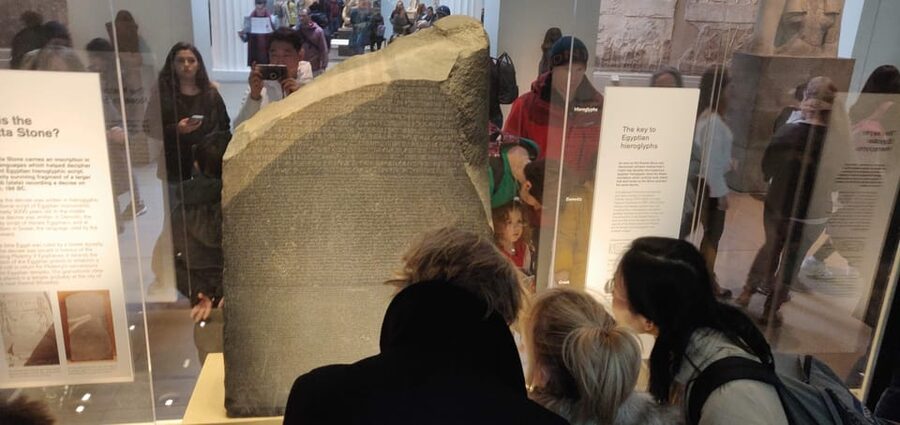
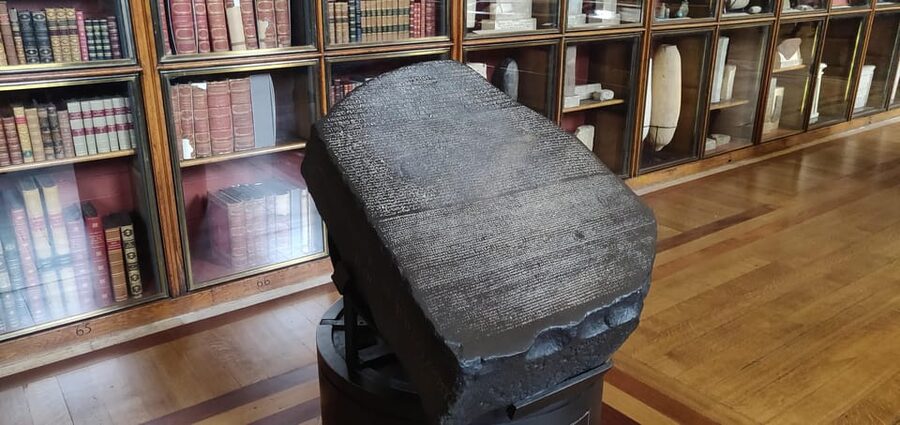
The Rosetta Stone is one of the natural anchors for a first visit. Its importance is not just its appearance. The stone carries the same decree in different scripts, making it central to the study of Egyptian hieroglyphs.
Rossa’s role is to explain the object as part of a larger problem: how scholars worked out a writing system that had once become unreadable to them. That turns the display from a famous slab behind glass into evidence of how archaeology and language studies can work together.
The ancient Egyptian rooms also include the colossal statue of Ramses II. Size does much of the first bit of talking here, but context gives the statue greater weight. You can consider how a ruler wanted to be seen, what a colossal image communicated, and how objects like this survive long after the political world that produced them has changed.
The useful feature of this part of the tour is its scale. You get major Egyptian highlights without attempting to cover the entire department. If Egypt is your main interest, you may want to return after the guided portion and spend extra time with the displays that caught your attention.
Assyrian palaces and the power of images
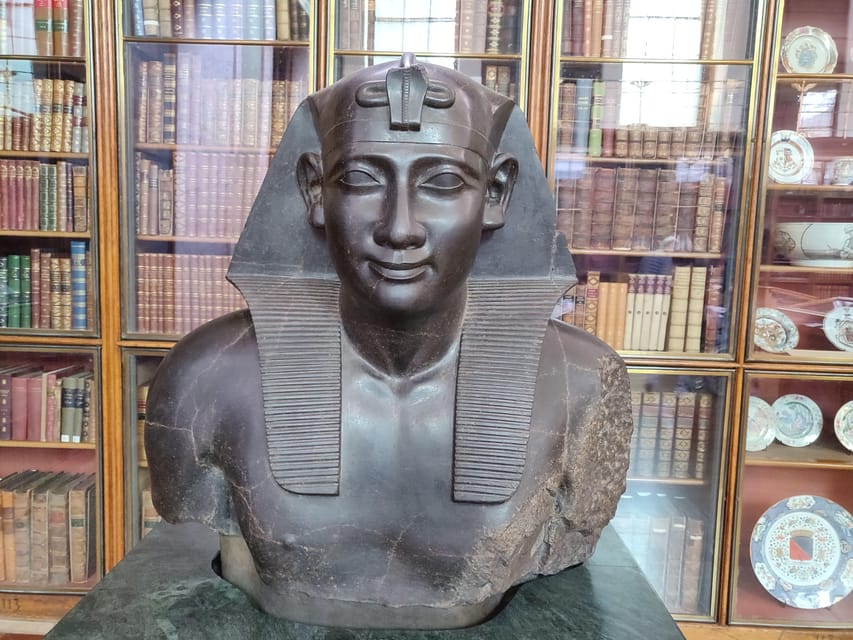
The Assyrian galleries offer a different kind of experience. Instead of focusing on one celebrated object, the tour brings you into the world of an empire through palace remains and large carved scenes.
The towering palace displays can be impressive even before you know the details. With explanation, you can look at how rulers used art, architecture, and storytelling to project power. Rossa’s strength, based on the way the tour is structured, is placing these pieces in a human setting rather than treating them as isolated stonework.
This section also helps break up the tour’s better-known stops. The Rosetta Stone and Parthenon Marbles are obvious names, but the Assyrian rooms show why the museum is so useful for comparing different cultures in one morning. You move from writing and kingship in Egypt to imperial display in Mesopotamia.
Do not expect every gallery to receive equal time. The benefit is focus, but the tradeoff is selectivity. If Assyria is your priority, ask questions while you are there and note the room so you can return later.
Same trip, a completely different kind of day:
- London: The London Eye Entry Ticket
★ 4.6 · 35,875 reviews - From London: Harry Potter Warner Bros Studio Tour
★ 4.7 · 26,588 reviews - London: Westminster to Greenwich River Thames Cruise
★ 4.5 · 22,836 reviews - London: Madame Tussauds London
★ 4.6 · 20,915 reviews
The Parthenon Marbles and ancient Greece
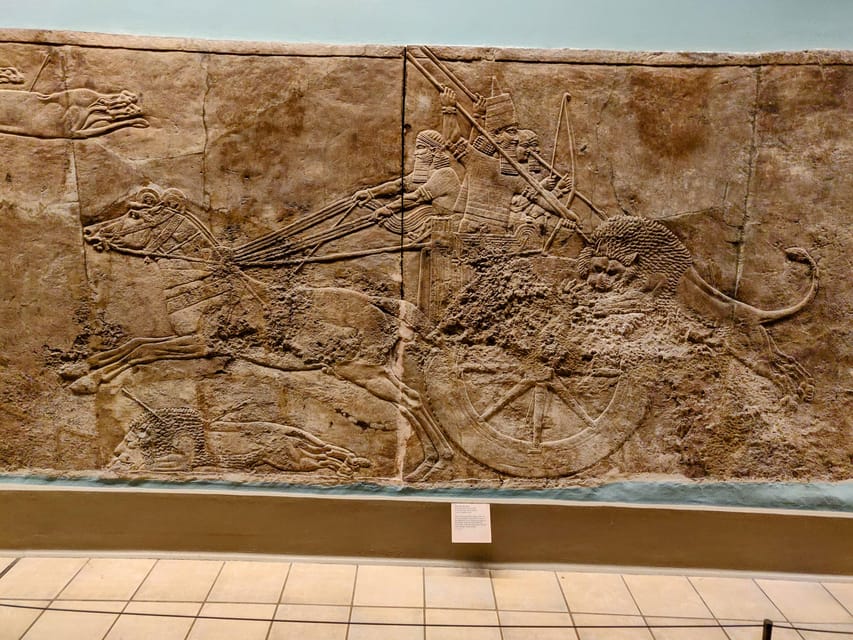
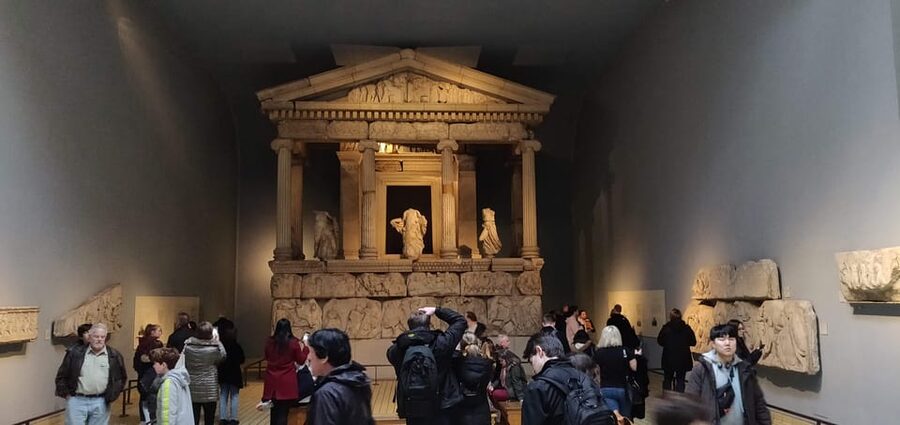
The Parthenon Marbles are among the museum’s most famous holdings. They give you a chance to examine Greek sculpture and architecture while thinking about how pieces from a major monument are presented far from their original setting.
The guide’s job here is not simply to point at carved figures. He can help you notice the design, craftsmanship, and connection between individual pieces and the wider building. That extra context is valuable because the fragments can be difficult to understand when seen as separate objects.
This is also a stop where the museum’s scale can feel most obvious. You may be surrounded by people trying to see the same celebrated displays, and crowded rooms can make it harder to listen or move at your own pace. A guide who keeps the group together and speaks clearly is a real advantage.
The tour does not pretend to provide every detail about ancient Greece. It gives you a strong introduction, then leaves you time to revisit the gallery if you want a closer look.
Viking-age chess and the Lewis Chessmen
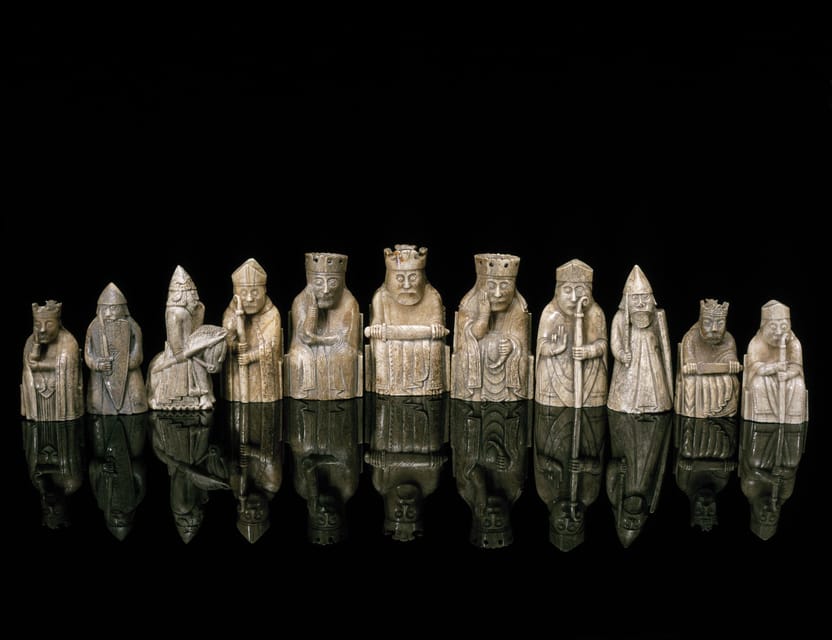
The Lewis Chessmen are one of the most appealing stops for people who like history with a human face. These small carved figures are linked to the Viking Age, but their appeal goes beyond their age. Their expressions and poses make them feel unusually personal.
A skilled guide can use them to discuss games, craft, trade, and daily life rather than only battles and rulers. That makes this stop work well for families. Teenagers may not be eager for a long discussion of dynasties, but distinctive chess pieces with curious faces offer an easier way into the past.
The Lewis Chessmen also give the tour a change of scale. After colossal statues, palace remains, and huge architectural fragments, you are looking closely at objects small enough to hold in your hand. That contrast keeps the route varied.
If you are traveling with children, this is one of the stops where you should encourage questions. The tour has been especially well received by families with children around 12 to 14, and the guide’s storytelling style helps keep the subject moving.
Sutton Hoo and King Raedwald
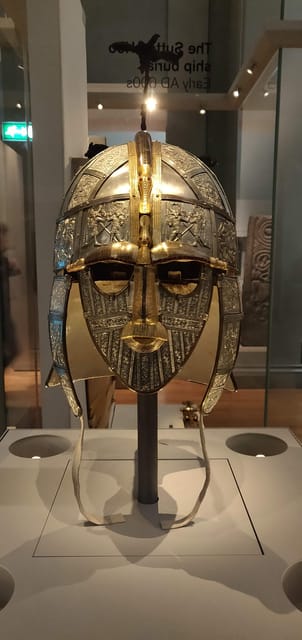
The Sutton Hoo hoard brings the tour into the period often called the Dark Ages, though the objects themselves show a society with remarkable skill, status, and long-distance connections. The burial treasure is associated with the mysterious King Raedwald and offers a rare view of elite life in early medieval England.
This is one of the most rewarding sections because it feels close to home while still carrying plenty of mystery. The objects raise questions about the person buried, the ceremony, the people who made the goods, and the society that gathered them. You are not just looking at gold and armor. You are trying to reconstruct a world from what was left behind.
The story of discovery adds another layer. Several tour comments praise Rossa for explaining not only an object’s age and purpose, but also the people involved in finding and interpreting it. That approach is particularly effective at Sutton Hoo, where the process of recovery is part of the fascination.
If you have watched a film or read about Sutton Hoo, this stop will give you a physical connection to the material. If you know nothing about it, the guide provides a strong starting point without requiring prior study.
Aztec objects and the Moai statues
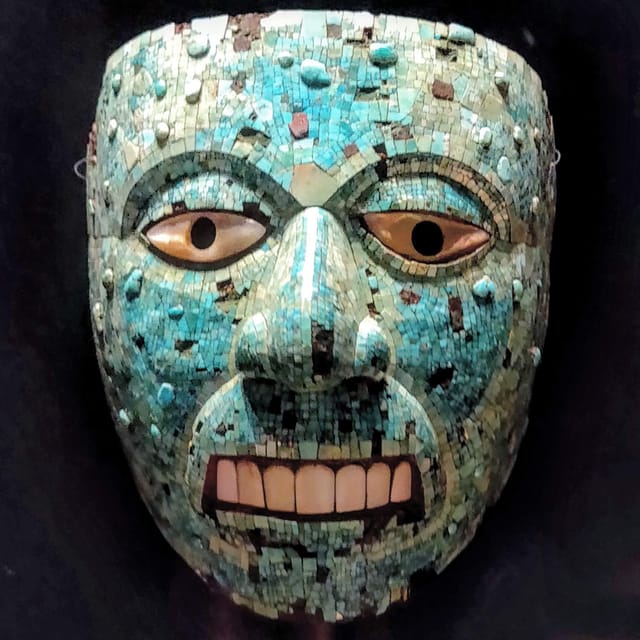
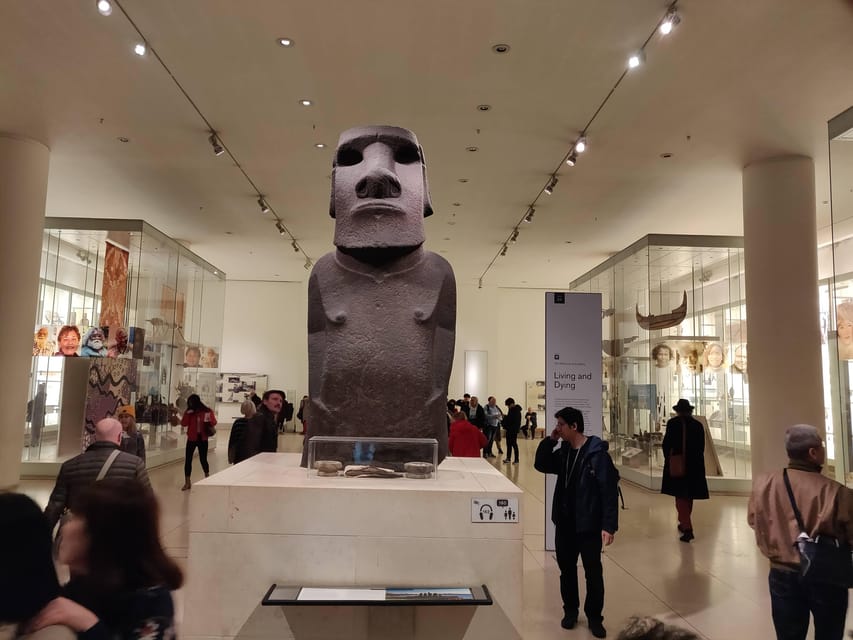
The route also reaches beyond Europe and the Mediterranean. You may see objects associated with the Aztec Empire and the Moai statues of Easter Island.
The Aztec displays add another view of power, religion, and craftsmanship. The Moai offer a different kind of puzzle, with the large stone figures raising questions about community, belief, labor, and movement. These stops help prevent the tour from becoming an Egypt-and-Greece-only visit.
At the same time, the exact amount of time at each section can vary with the group and the pace of the explanations. The supplied route names many cultures, but two and a half hours cannot give each one an equal treatment. Think of the tour as a guided selection that introduces you to the museum’s range, not as a complete survey.
That is why the time after the tour matters. Rossa has been known to suggest ways to continue exploring on your own, so keep a short list of galleries or objects you want to revisit.
Is $58 a fair price?
The price is $58 per person. Since British Museum entry itself is generally free, the value rests almost entirely on the guide, the planned route, the separate entrance, and the time saved.
For a first visit, I think the price can make sense. Two and a half hours of expert direction helps you avoid aimless wandering, and the museum is large enough that poor planning can cost you more than time. The tour is also useful if your London schedule is tight and you want the major objects explained rather than simply photographed.
The value is less clear if you already know exactly which galleries you want and prefer to read at your own speed. You may also want more time with individual pieces than a group tour allows. In that case, the best plan could be to take the tour first, then return to your favorite rooms afterward.
The guide’s individual contribution is the deciding factor. The strongest comments consistently focus on Rossa’s stories, clear voice, archaeological knowledge, friendly answers, and ability to make the material feel alive. That is what you are paying for.
Who will enjoy this British Museum tour?
I would recommend it most strongly to first-time visitors, families, and anyone who feels overwhelmed by huge museums. It also suits people who want a broad look at several civilizations without spending an entire day inside.
Families should find the mix of large statues, treasure, chess pieces, and mysteries easier to handle than a room-by-room march through ancient history. The tour also leaves room for questions, which makes it more flexible than a recorded audio route.
History teachers, archaeology fans, and returning visitors may enjoy the added context, though they should be ready for a selection of highlights rather than an exhaustive examination. If you have a specialist interest in one culture, treat the tour as an orientation and plan independent time afterward.
The tour is in English, led live by the guide, and wheelchair accessible. Bring comfortable shoes and water. Do not bring large bags or luggage, and remember that food and drinks are not included.
Should you book it?
Book this tour if you want the British Museum’s famous objects to make sense within a wider story. Rossa’s approach is especially useful when you want depth without spending all day in the building, and the route works well for adults traveling with teenagers.
Skip it if you prefer complete independence, already know the museum well, or want to spend a long time in one specialist gallery. Also keep the early meeting time in mind, since the group cannot wait for late arrivals.
For most first-time visitors, $58 is a reasonable price for a focused route, museum entry, and an archaeologist who can turn a crowded collection into a readable morning. Plan to return to the museum’s rooms that interest you most, and you will get more from the visit than either a rushed self-guided walk or a day spent trying to see everything.
FAQ
Where does the British Museum tour meet?
Your guide meets you at the entrance of Russell Square Station. Look for a tablet displaying Spirit of Discovery.
What time does the group leave?
The group leaves promptly at 9:45 a.m. to meet its museum entry slot. If you are running late, call to receive directions to the group.
How long does the tour last?
The guided visit lasts 2.5 hours. The walking route from Russell Square Station to the British Museum takes about five minutes.
Is British Museum entry included?
Yes. Museum entry, the British Museum tour, the archaeologist guide, and access through a separate entrance are included.
What language is the tour in?
The live tour is conducted in English.
Is the tour wheelchair accessible?
Yes, the activity is wheelchair accessible. You should also wear comfortable shoes, bring water, and avoid bringing luggage or large bags.
Just added in London
- Royal London Guided Sightseeing Tour and Thames River Cruise★ 4.0 · 31 reviews
- Roman Ruins to Blitz Bombings: A Walking Tour of London’s Fiery History★ 5.0 · 190 reviews
- Roman London Private Walking Tour★ 5.0 · 44 reviews
- Westminster Abbey, Big Ben, Buckingham Guided Tour of London★ 5.0 · 451 reviews
- River Thames Evening Cruise with Sparkling wine and Canapés★ 4.0 · 569 reviews
- Rock and Roll Walking Tour of Soho London★ 4.5 · 64 reviews
- London Private Chauffeur Half-Day or Full-Day Vehicle Rental★ 5.0 · 37 reviews
- Rich people behaving badly★ 5.0 · 47 reviews
Museums, compared.

Liverpool Football Club Museum and Stadium Tour
Read our review →
Tower of London and Crown Jewels Exhibition Ticket
Read our review →
Chelsea Football Club Stadium and Museum Tour
Read our review →



Browse the lists this tour appears in