
Reviewed · GHOST TOURS
Liverpool: Haunted History Guided City Tour
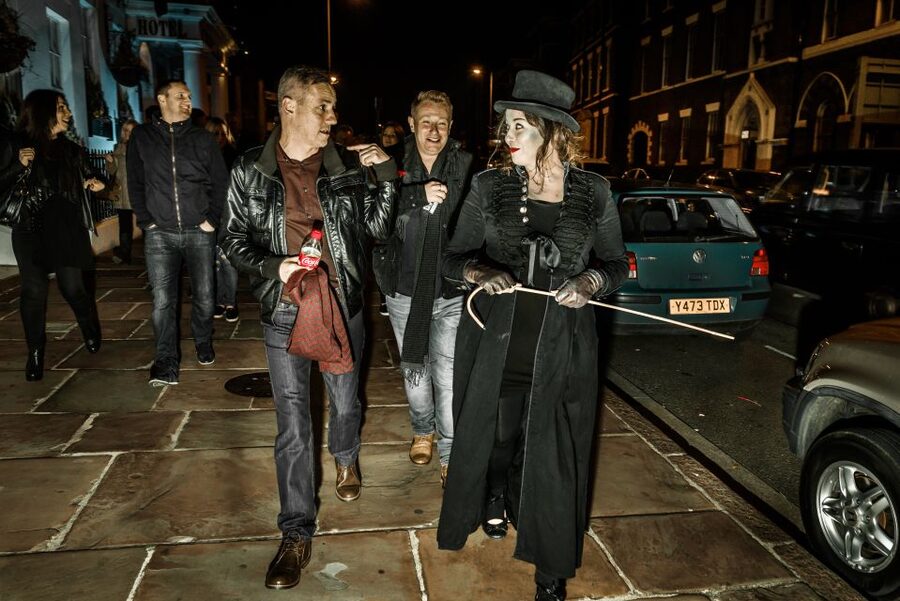
Liverpool’s dark side comes alive on this theatrical walk along Hope Street, where ghost stories mix with cathedral views, plague tales, and odd local characters. The route ends at St James’ Gardens, a former cemetery with 58,000 people buried beneath the Gothic shadow of Liverpool Cathedral.
I like the strong storytelling and acting, which turns a standard city walk into a live street performance. I also like the route itself: you see both of Liverpool’s major cathedrals, the grand Rodney Street area, and places linked to John Lennon and Hitler’s brother.
The main drawback is that this is more funny and theatrical than truly frightening. It is also an outdoor walk in all weather, and the route is not suitable for wheelchair users.
Key points to know before you book
- The tour begins at the Philharmonic Dining Rooms, one of Liverpool’s best-known ale houses, on Hope Street.
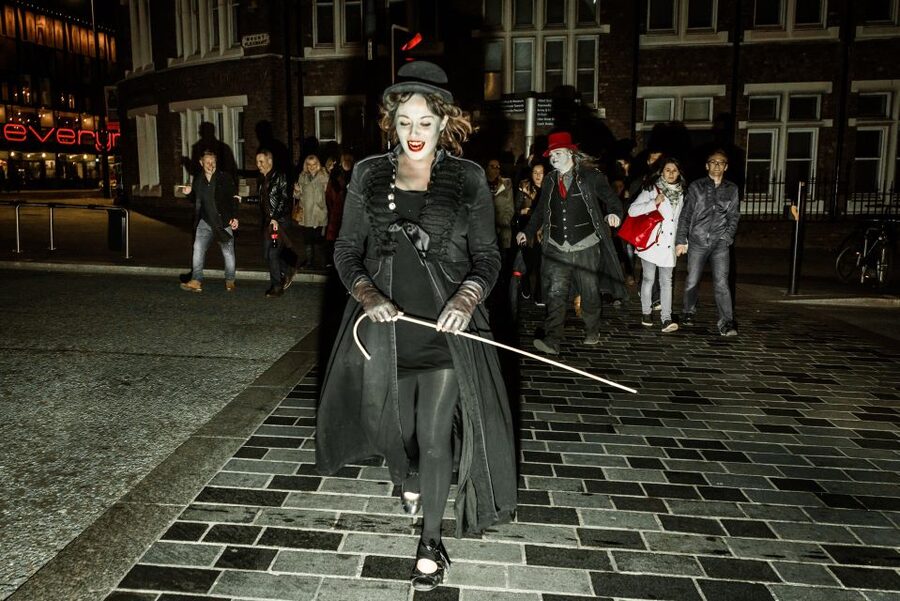
- The guides stay in character, using names such as Chilla Black, Meryl Creep, Indiana Bones, and Chiller Black.
- The route links both cathedrals, then continues through Wellington Rooms, Rodney Street, and Hope Street.
- The final stop is St James’ Gardens, where 58,000 people are buried beside Liverpool Cathedral.
- The tone is comic, interactive, and theatrical, with sound effects, audience banter, and occasional scares.
- You pay about $26 per person for 90 minutes, which is good value if you want entertainment as well as local history.
A ghost walk with a full theatrical cast
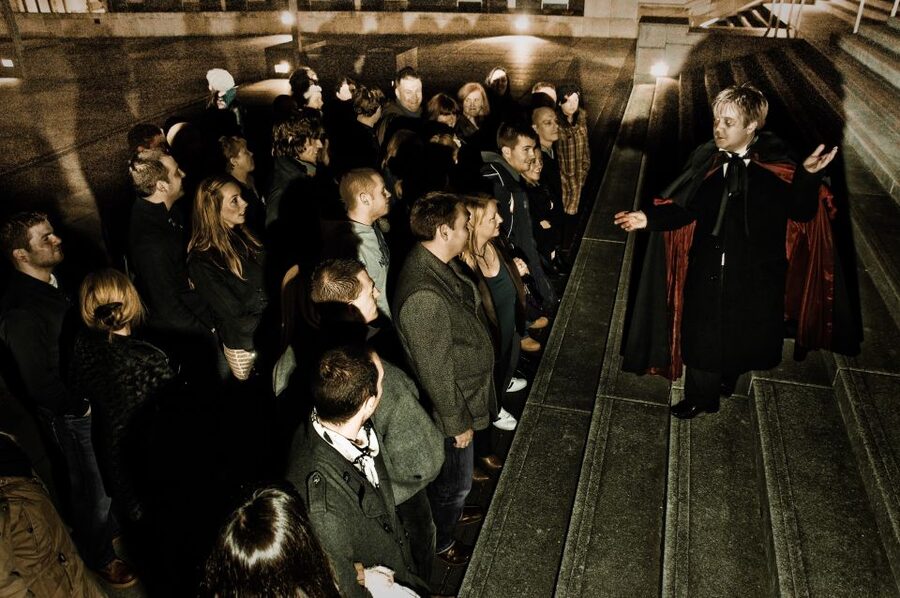
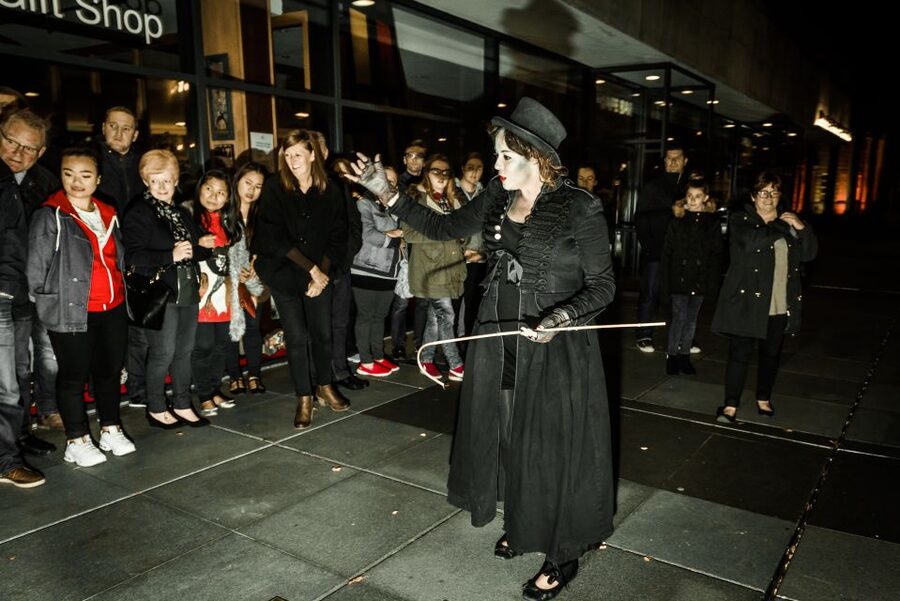
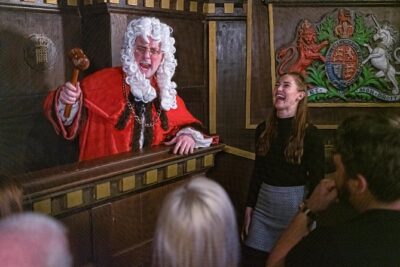
This is not a quiet stroll with a guide reading dates from a folder. Shiverpool’s Haunted History tour uses performance as its main tool. The guides tell stories, play characters, use sound effects, and involve the group as they move through Liverpool after dark.
Names used by the performers include Chilla Black, Meryl Creep, Indiana Bones, and Chiller Black. The exact pairing may vary, but the format stays the same: two energetic guides lead the group and keep the mood moving between eerie, funny, and informative.
I would describe the experience as a walking theatre show with a strong local-history thread. The acting is deliberately broad, but it is not simply a string of cheap scares. The stories connect to real streets and buildings, so you learn where Liverpool’s darker tales took place rather than hearing disconnected ghost stories.
The guides also work with the passing public. They may exchange lines with people outside pubs, students, diners, or pedestrians. That makes the streets feel like part of the show, though it also means the pace can pause briefly while the performers handle the setting around them.
More Ghost Tours in Liverpool:
- Liverpool Ghost Walking Tour
★ 5.0 · 862 reviews - Tales from the Necropolis – A Ghost Walk Through St. James Cemetery
★ 5.0 · 263 reviews - Liverpool: St James’ Cemetery Historical Ghost Tour
★ 4.9 · 169 reviews
Starting at the Philharmonic Dining Rooms
Meet outside the Philharmonic Dining Rooms on Hope Street. This famous pub gives the tour an atmospheric starting point, with its ornate appearance and long connection to Liverpool’s social life.
The meeting point is easy to identify, but you should arrive ready to walk. This is a 1.5-hour route with several outdoor stops. There is no coach, no indoor shelter built into the tour, and no sitting section described along the way.
The opening usually sets the tone quickly. You are introduced to the characters and the darker side of the city, with humor helping the group relax. This matters because theatrical participation can feel awkward for the first few minutes. The guides use banter to bring people in, rather than expecting you to perform on command.
I would choose an evening when you can give the walk your full attention. The stories work best when you are not rushing to dinner or trying to follow a tight theatre booking afterward.
Liverpool Metropolitan Cathedral: a striking first stop
The first major sight is Liverpool Metropolitan Cathedral. Its modern design provides a sharp contrast to the Gothic Anglican Cathedral later in the walk.
That contrast gives the route more depth. You are not simply visiting old buildings and attaching ghost stories to them. You see two very different statements of Liverpool’s religious and architectural character in a short distance.
The cathedral stop also helps establish the tour’s wider theme. Liverpool’s history includes faith, illness, poverty, death, and social change, all layered into the same central streets. The guides use the surroundings to move from the familiar city you see by day to the less comfortable stories usually left out of a standard sightseeing route.
You should not expect a long interior visit or a formal cathedral tour. The experience is a walking performance, so the focus remains on the exterior setting, the stories, and the group’s movement through the city.
Wellington Rooms and the darker side of Hope Street
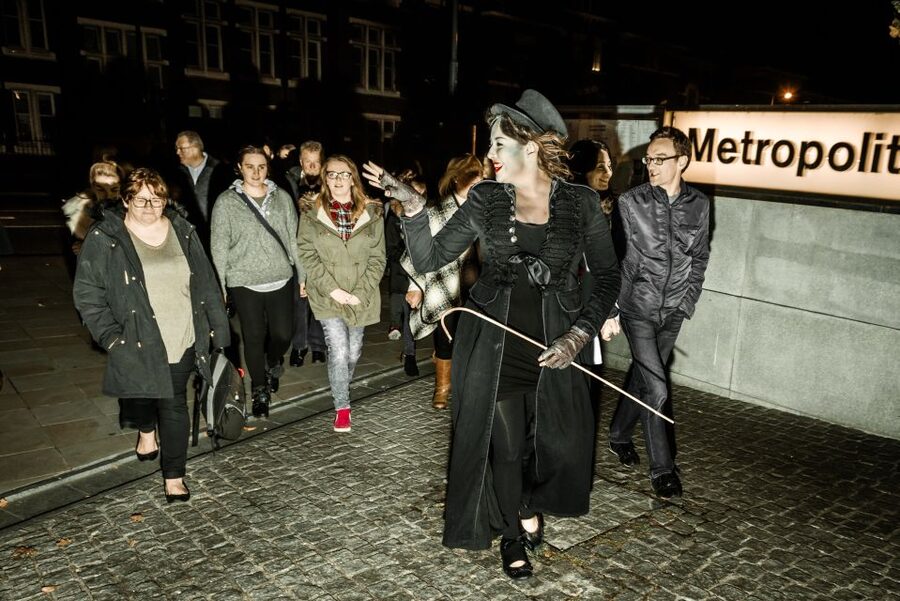
From the Metropolitan Cathedral, the route continues on foot toward the Wellington Rooms. Along the way, the guides build the story through short stops and theatrical exchanges.
The Wellington Rooms are part of the route because Hope Street is more than a link between two cathedrals. It is a street with grand buildings, changing uses, and plenty of atmosphere after dark. The tour turns these surroundings into a stage.
You may hear stories that connect the street to Liverpool’s uneasy past, including tales of illness, death, and strange happenings. Some moments are played for laughs, while others use silence, sound, or a sudden change in character to create tension.
This mixture is important when deciding if the walk suits you. If you want a serious paranormal investigation, this may feel too playful. If you enjoy history delivered with jokes, audience interaction, and costume-style character work, the approach is much more appealing.
More history walks in Liverpool:
- A Walk Through Time: History of Liverpool Walking Tour
★ 5.0 · 911 reviews - Best Of Liverpool Heritage, History & Culture Guided Walking Tour
★ 5.0 · 539 reviews - History Guided Tour of Liverpool and the Beatles
★ 5.0 · 408 reviews - Liverpool Hidden History and Dead House Evening Walking Tour
★ 5.0 · 200 reviews
Rodney Street, John Lennon, and an unusual wartime connection
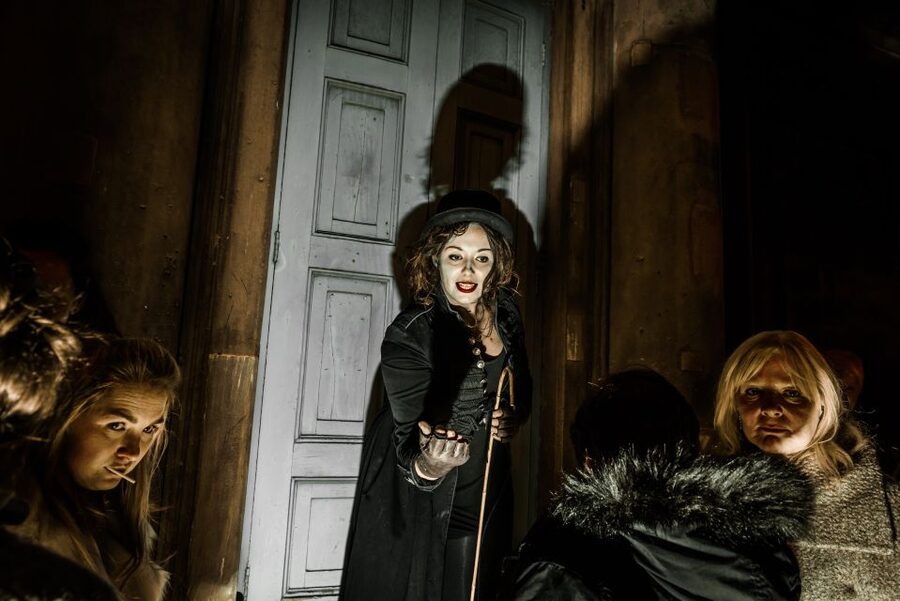
The walk then reaches the Rodney Street Conservation Area. This part of Liverpool offers a change from the cathedral surroundings, with historic buildings and a more residential feel.
One of the useful details along the route is the building where John Lennon lived for three years. That gives the tour a cultural connection beyond ghosts and cemeteries. You are reminded that Liverpool’s streets hold layers of music, architecture, religion, and personal stories at once.
The guides also point out the place where Hitler’s brother hid to avoid conscription. It is an unusual detail, and exactly the sort of story you might miss if you explored Hope Street without a guide.
I like this wider scope. The tour does not treat haunted history as only supernatural material. It adds social and personal history, which helps the walk appeal to people who are curious about Liverpool but do not usually book ghost tours.
The Rodney Street section may also be one of the quieter parts of the route. That gives the performers room to tell stories without the constant noise of the central shopping streets. You still need to listen carefully, since an outdoor group can be spread out and passing traffic or pedestrians may interrupt a line.
Hope Street and Liverpool’s most famous ghost story
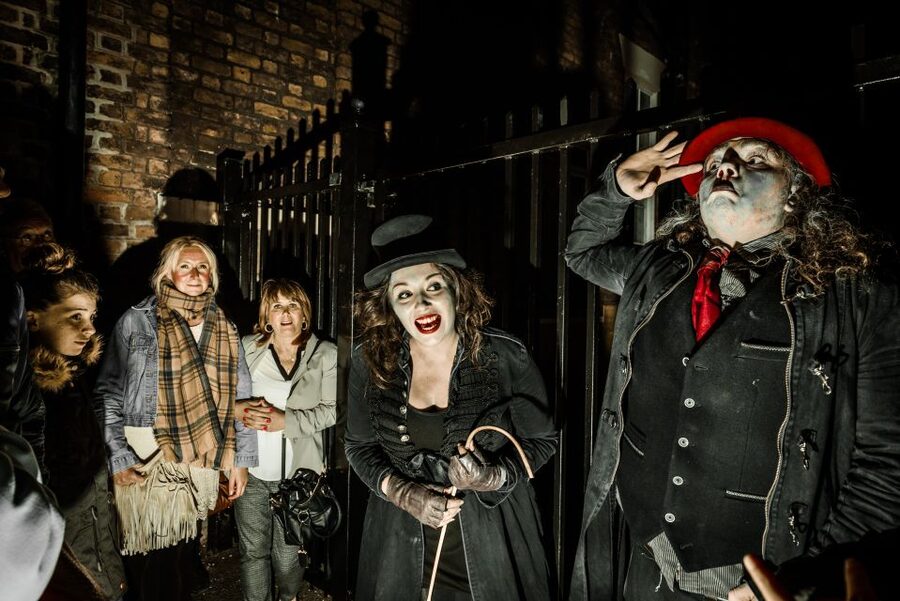
As the walk returns to Hope Street, the guides build toward Liverpool’s most famous ghost story. This is presented as one of the main rewards of the tour, rather than a minor tale squeezed into the final minutes.
The exact effect depends on your guide and your mood. Some performances lean harder into comedy, while others may create more suspense. The most successful moments come from the contrast between the ordinary street around you and the unsettling story being told there.
The walk also brings in tales of the Black Death. These stories provide historical weight and explain why cemeteries, churches, and old streets carry such strong associations with death. You get a sense of how disease shaped city life, not just a collection of supernatural anecdotes.
I would not book this expecting constant terror. The atmosphere is creepy, but the most praised part of the experience is the performance: quick improvisation, warm audience interaction, and guides who can switch from a joke to a serious historical point.
Liverpool Cathedral and the final approach
The Gothic Anglican Cathedral is the route’s biggest architectural moment. Its scale gives the final part of the walk a suitably dramatic setting.
The tour passes toward the cathedral cemetery, where the stories turn more firmly toward burial, plague, and Liverpool’s older past. The cathedral’s Gothic appearance does much of the atmospheric work, especially after dark, though you should remember that the tour remains outside.
This is also where the route becomes physically more practical to judge. You will be walking on city streets and through outdoor spaces for the full 90 minutes. Wear comfortable shoes with good grip, and bring clothing suited to the forecast.
The guides have been praised for checking that the whole group is present and safe. That is useful on a dark walking tour, particularly when the group stretches out between stops. Still, you should stay attentive at crossings and keep close enough to hear.
St James’ Gardens and the 58,000 buried here
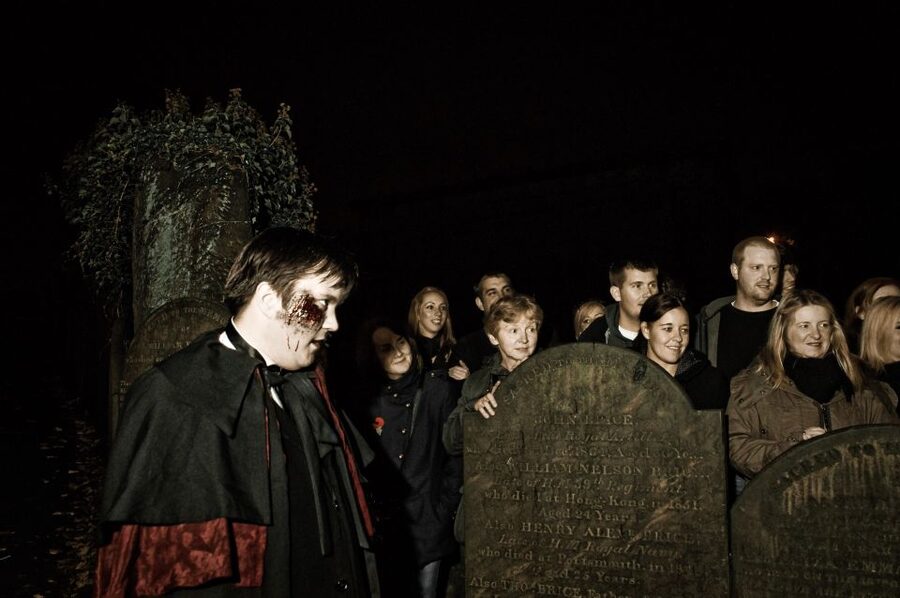
The final destination is St James’ Gardens, beside Liverpool Cathedral. Around 58,000 people are buried here, making it a powerful end point for a tour built around death, memory, and local legend.
This is not a polished attraction with a staged set. The cemetery gives the tour a real sense of place. You are standing among old graves and mature grounds, listening to stories tied to Liverpool’s past.
The setting also shifts the mood. The earlier sections can feel like comic theatre in the open city. At St James’ Gardens, the large number of burials brings a more reflective note, even when the guides keep their characters and jokes in play.
The official finish is given as Liverpool Cathedral. Since the final cemetery is beside the cathedral, you should have a clear sense of where the walk ends, but this is not a loop back to the Philharmonic Dining Rooms. Plan your evening from the cathedral area rather than assuming you will finish at the starting pub.
How scary, funny, and family-friendly is it?
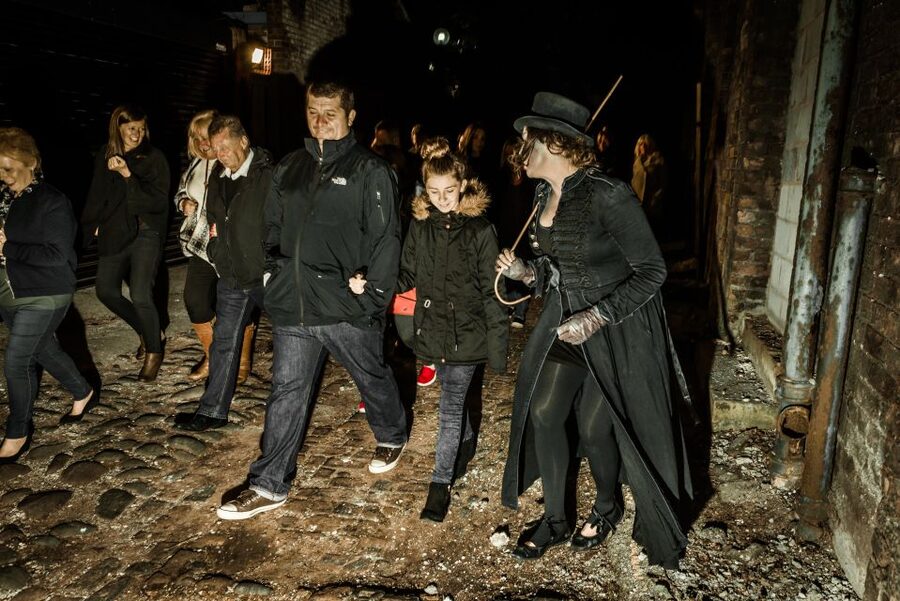
The best way to think about the tone is spooky comedy. You may get jumps, sound effects, creepy stories, and moments designed to catch you off guard. But the guides also use warmth, banter, and theatrical exaggeration.
Several audience members have brought children, including children aged 10 to 12, and found the performance suitable and engaging. That does not mean it is aimed only at families. Adults, couples, solo participants, and local residents can all fit into the group.
The show also appears to work well for people who already know Liverpool. The route reveals less obvious stories about familiar streets, and the theatrical approach gives even local residents a new reason to look closely at Hope Street and Rodney Street.
I would be cautious about bringing a very young child who dislikes dark stories, sudden noises, or talk of death. The tour is not presented as a children’s attraction, and the frightening moments are part of the appeal.
Value at about $26 per person
At roughly $26 per person, the price is reasonable for a 90-minute guided city walk with live performance. You are paying for two things at once: a route through several important Liverpool locations and a small outdoor theatre show.
The value is strongest if you would otherwise pay for a short evening activity. The tour gives you local history, architecture, ghost stories, and entertainment without needing separate transport between stops.
It is less compelling if you only want a formal architectural tour or a serious history lecture. The acting takes up a fair share of the experience, and some of the humor may matter as much as the facts.
The booking terms are also useful for flexible plans. You can reserve now and pay later, and cancellation is free up to 24 hours before the start time. Check the available departure time when booking, since the activity lasts 1.5 hours and times can vary.
Practical advice for the walk
Wear comfortable shoes. High heels are not allowed, and they would be a poor choice for a walking route that includes streets, cathedral grounds, and a cemetery.
Bring a waterproof layer and dress for the forecast. Rain does not stop the experience, and wet weather may even add to the atmosphere, but you will be outdoors for the entire route.
The tour is conducted in English with a live guide. If you need another language, this is not the right choice.
The experience is not suitable for wheelchair users. Assistance dogs are allowed, but other pets are not. Alcohol and drugs are not permitted.
If you are visiting alone, I would still consider booking. The guides make an effort to involve people across the group, and the performance format gives you a natural way to join in without needing to know anyone beforehand.
Should you book the Haunted History Guided City Tour?
Book it if you want Liverpool’s darker stories delivered with jokes, character acting, and a real city route. The combination of both cathedrals, Rodney Street, John Lennon’s former home, the Hitler connection, plague tales, and St James’ Gardens gives you plenty to think about after the scares fade.
Skip it if you want a quiet walk, a scholarly lecture, or a genuinely frightening paranormal investigation. This tour is playful first, spooky second.
For most people who enjoy live performance, the $26 price is fair. I would choose it for an evening when you want something more memorable than a pub visit, and I would wear sturdy shoes, bring a raincoat, and leave room for the guides to make Liverpool’s streets part of the show.
FAQ
Where does the Haunted History Guided City Tour start?
The tour starts outside the Philharmonic Dining Rooms on Hope Street in Liverpool.
Where does the tour finish?
The tour finishes at Liverpool Cathedral, after visiting St James’ Memorial Cemetery.
How long does the tour last?
The guided walking tour lasts 1.5 hours.
What language is the tour conducted in?
The tour is conducted in English by a live English-speaking guide.
What places does the route visit?
The route includes Liverpool Metropolitan Cathedral, Wellington Rooms, Rodney Street, Hope Street, Liverpool Cathedral, and St James’ Memorial Cemetery.
What is special about St James’ Gardens?
St James’ Gardens is the final cemetery setting, with about 58,000 people buried there.
How much does the tour cost?
The listed price is $26 per person.
What should I wear?
Wear comfortable shoes and clothing suitable for the weather. High-heeled shoes are not allowed.
Is the tour suitable for wheelchair users?
No. The tour is not suitable for wheelchair users. Assistance dogs are allowed, but other pets are not.
Just added in Liverpool
- Private Beatles Taxi Tour of London★ 5.0 · 53 reviews
- London Beatles Walks and Tours★ 4.5 · 65 reviews
- London Beatles Tour★ 5.0 · 50 reviews
- Beatles Magical Mystery Tour★ 5.0 · 69 reviews
- Liverpool and The Beatles Day Tour from London★ 4.5 · 303 reviews
- Beatles Evening Tour of Central London★ 4.5 · 119 reviews
- Beatles Ticket To Ride Half Day Tour Small Groups★ 5.0 · 60 reviews
- Fun, Flexible Treasure Hunt Around Liverpool with Cryptic Clues & Hidden Gems★ 5.0 · 141 reviews
Ghost Tours, compared.
Ghost, Ghouls and Gallows Tour : Guided Tour with Boat Ride
Read our review →
Browse the lists this tour appears in