
Reviewed · WALKING TOURS
A Walk Through Time: History of Liverpool Walking Tour
Liverpool’s story is written along its waterfront. This history walk links medieval Liverpool, Atlantic trade, the docks, and modern Liverpool ONE in a single route, so you can see how a small port grew into one of the world’s great commercial cities.
I like the strong sense of place, especially the stops at the Old Dock and Royal Albert Dock. I also like the value: $27.74 buys nearly two hours with a local history guide, often including John or Julio, both praised for clear explanations and a warm style. The main drawback is pace. There is a lot to absorb, and one guide spoke too quickly for some people. Wind, rain, and traffic noise can also make listening harder.
Key things to know before you book
- The tour connects ten major city sights: You see the Three Graces, medieval church grounds, Town Hall, Castle Street, Liverpool ONE, the Old Dock, and Royal Albert Dock.
- The focus is commerce and the sea: Expect strong coverage of docks, cotton, global trade, shipping, and Liverpool’s role in the Atlantic world.
- The Old Dock is a key stop: Built in 1715, it is presented as the first commercial wet dock of its kind and the turning point in Liverpool’s rise.
- The guide makes the difference: John is known for detailed storytelling and local pride, while Julio is described as engaging and clear.
- It is a fast outdoor walk: Wear comfortable shoes and bring a warm layer, especially when the wind comes off the Mersey.
- The group can reach 40 people: Ask questions early and stay close if you want to catch every detail.
Liverpool’s rise begins at the Three Graces
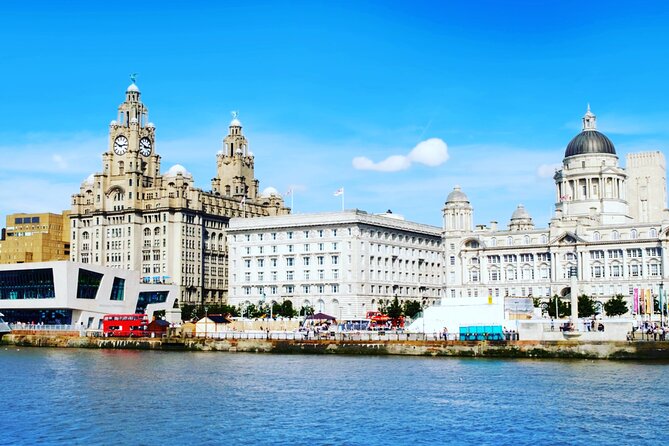
The walk begins at the Royal Liver Building on Pier Head, part of Liverpool’s famous Three Graces. This is a smart starting point because the waterfront gives you an immediate view of the city’s public face: grand buildings, the river, and the port that shaped Liverpool’s fortunes.
The opening ten minutes introduce the Three Graces and set up the main idea of the walk. Liverpool is not just a Beatles city, and this tour makes that clear from the start. Its older story is about ships, trade, warehouses, cotton, migration, war, and the hard work of a port.
You do not enter the Royal Liver Building on this tour, and the admission ticket is not included. The building is used as an outdoor landmark and a way into the wider story. If you want an interior visit, you will need to arrange that separately.
The waterfront can be noisy. Cars, buses, river wind, and other walking groups may compete with the guide’s voice. A guide with a strong speaking voice helps, but you should stay near the group if you want to catch the details.
More Walking Tours in Liverpool
- Liverpool Ghost Walking Tour
★ 5.0 · 862 reviews - Beatles Famous Walking Tour Of Liverpool- Fully Guided
★ 5.0 · 751 reviews - Downtown Liverpool Walking Tour – In Spanish
★ 5.0 · 591 reviews
Medieval Liverpool at the parish church gardens
From the Pier Head, the walk crosses the Strand toward Liverpool Parish Church Gardens. This stop focuses on the city’s medieval beginnings and the site once known as St. Nicholas’ Church, named for the patron saint of sailors.
The tour places Liverpool’s creation in the 13th century, with 1207 as the key date. The church site gives that story a physical setting. Instead of hearing only about dates in a museum room, you are looking at one of the places tied to the early town and its connection with the sea.
This is one of the best stops for putting later Liverpool into context. The huge docks and grand commercial buildings came much later. Here, you get a sense of the modest medieval settlement that began the story.
The gardens are free to visit, and the stop lasts about 15 minutes. You will not spend long exploring the church grounds, so think of this as a focused explanation rather than a full church visit.
Old Hall Street and the difficult side of trade
Old Hall Street takes you into the city’s commercial past. The route passes Grade I listed buildings and the former Cotton Exchange, where goods from around the world were bought and sold.
This is where the tour turns toward Liverpool’s economic power. By the late 18th century, Liverpool had overtaken London in the cotton trade, and the guide explains how the port handled goods and money on a global scale.
The subject includes Liverpool’s involvement in Atlantic trade and the transatlantic slave trade. That is important. A city tour about Liverpool’s prosperity should not present the docks as a simple success story. The wealth created through shipping and commerce came with human costs, and the walk addresses that darker part of the city’s past.
Expect about ten minutes here. The time is short for such a large subject, but the stop gives you useful background for later visits to the docks and waterfront museums.
Liverpool Town Hall and Georgian power
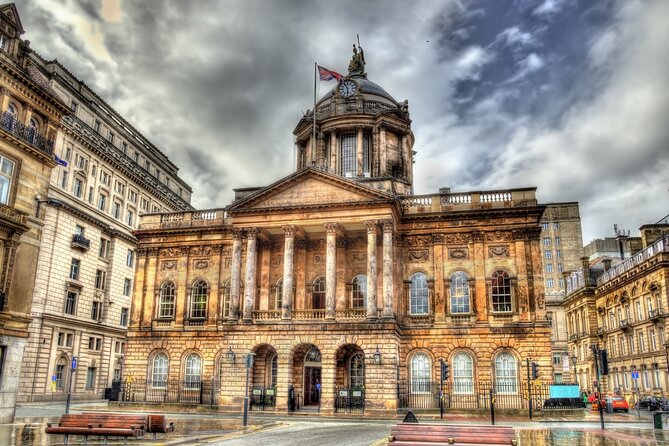
Liverpool Town Hall dates from 1749 and is described as the finest surviving Georgian building in the United Kingdom. The tour examines the building’s architecture and its role in the city’s growth as a port and commercial center.
This stop helps explain how trade changed the city beyond the quaysides. As Liverpool grew wealthy, it needed civic buildings that reflected its power. The Town Hall represents that public confidence, with a formal setting for the people who managed the city’s expanding business interests.
You do not receive admission to the Town Hall as part of the walk. The guide discusses it from outside, so you can appreciate the building’s position and appearance without spending extra time on an interior tour.
For visitors who prefer architecture to shipping statistics, this is a useful change of pace. For those mainly interested in medieval remains, it may feel less intimate than the parish church stop.
More history walks in Liverpool:
- London Small Group Tour of Historical Pubs
★ 5.0 · 10,422 reviews - A History of Terror – Belfast City Centre Walking Tour
★ 5.0 · 2,883 reviews - Old Town Walking Tour History and Tales in Edinburgh
★ 5.0 · 2,168 reviews - Soho Music & Historic Pubs Tour
★ 5.0 · 1,993 reviews
Castle Street and the lost castle
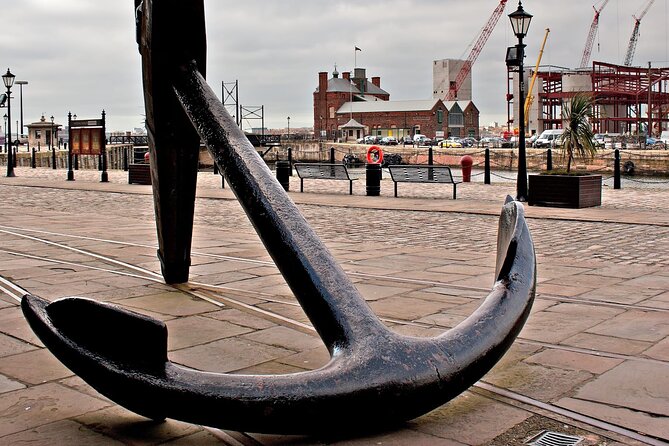
Castle Street offers one of the clearest examples of Liverpool’s changing appearance. Its buildings show different stages of the city’s growth, and the route uses the street to explain the importance of Liverpool Castle and the surrounding area.
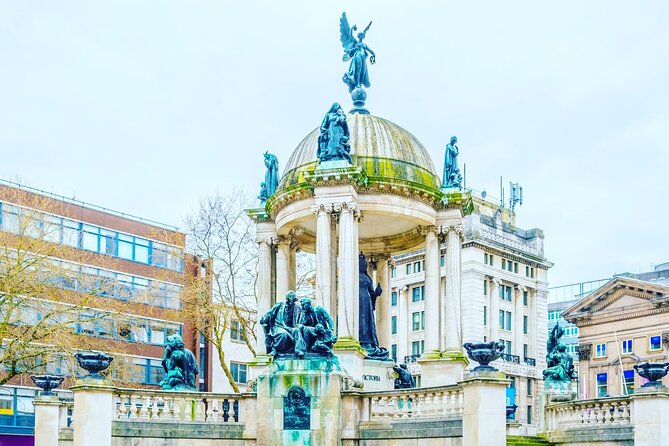
The walk then reaches the Queen Victoria Monument, where the guide continues the story of the castle site and Liverpool’s rise toward global port status. By around 1800, Liverpool had become one of the largest ports in the world for international trade.
These two stops together take about 25 minutes. That gives the guide time to connect the medieval town, the 18th-century commercial city, and the civic buildings that followed.
Castle Street is also a useful place to pause and look around. You are not simply being taken from one landmark to another. You can see how the street plan, buildings, and public monuments reflect different periods of Liverpool’s development.
The tour information gives the Queen Victoria Monument as the end point in the meeting details, while the route description also describes a final return to the Three Graces. Confirm the precise finish point when you book or meet the guide. Either way, both locations are central and useful for continuing your sightseeing.
Liverpool ONE and the city of today
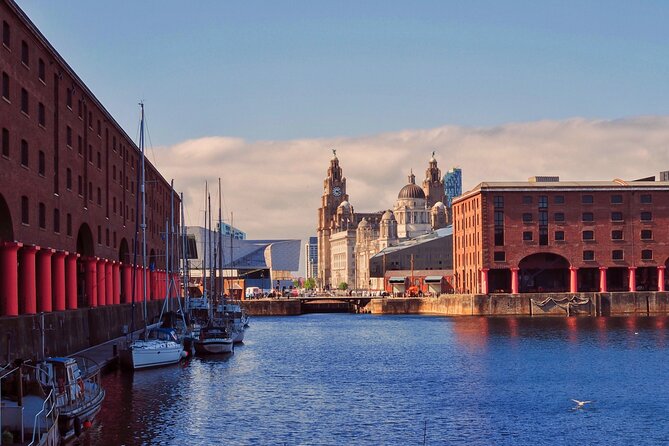
Liverpool ONE introduces the modern city. The walking tour passes through this major shopping and leisure district, covering its shops and attractions in about ten minutes.
This section is less about old stone and more about urban change. Liverpool ONE shows how part of the city center has been reshaped for modern shopping, dining, and entertainment. It gives you a quick look at the city beyond its port-era buildings.
Do not expect a shopping tour or time inside individual stores. The stop is brief and works mainly as a bridge between the old commercial center and the historic docks.
I find this useful because the tour does not treat Liverpool as a frozen museum. You see the city’s medieval roots, industrial age, wartime role, and present-day center in one continuous walk.
The Old Dock explains Liverpool’s commercial breakthrough
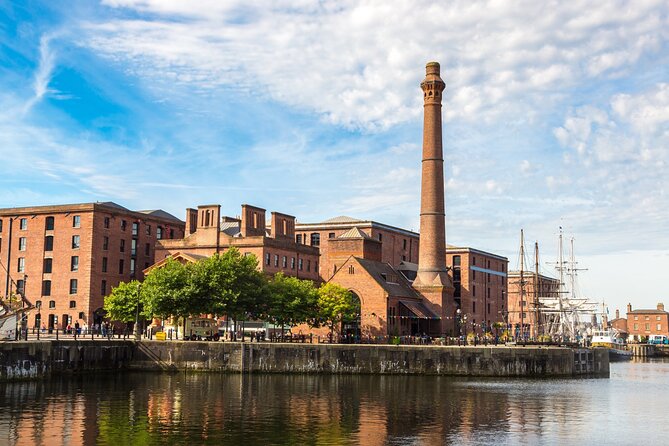
The Old Dock is one of the most important stops on the route. Built in 1715, it is described as the first commercial wet dock on the planet. The guide explains how this dock helped Liverpool handle ships and goods more efficiently.
This is where the city’s geography and business ambitions come together. A wet dock allowed ships to load and unload with greater control than an open river anchorage. That practical change helped Liverpool compete as an international port.
The stop lasts about ten minutes and is free. Much of the dock is experienced through the site and the guide’s explanation, so do not expect a large, fully visible dock basin. The value comes from understanding what happened here and why it mattered.
If you only have time to remember one idea from the tour, remember the connection between dock design and Liverpool’s growth. The city did not become powerful by accident. It built systems that made trade faster and more reliable.
Royal Albert Dock and Liverpool’s 19th-century center
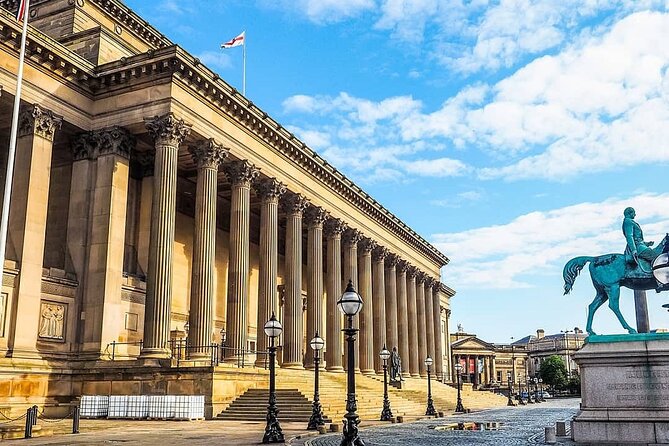
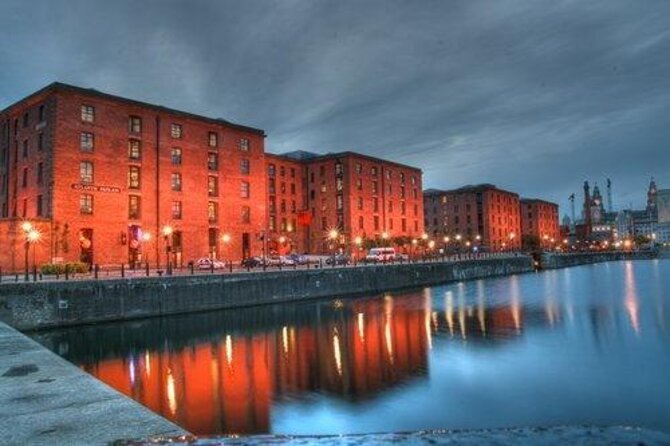
The route continues to Royal Albert Dock, built in 1846. This is one of Liverpool’s most recognizable areas, with converted dock buildings, waterfront paths, museums, restaurants, and cultural sites nearby.
The guide explains how the dock served as a center of 19th-century commerce. You also hear about Liverpool’s involvement in the First and Second World Wars, adding a military and human dimension to the port story.
The stop is scheduled for about ten minutes, which is enough for an overview but not enough for a museum visit. Plan extra time here if you want to explore the International Slavery Museum, Maritime Museum, Tate Liverpool area, or other nearby attractions. Those visits are separate from the walking tour.
Royal Albert Dock is also where you can see why Liverpool’s waterfront remains so effective as a visitor area. Industrial buildings, open water, and public spaces sit close together. The tour gives you the background; you can return later for a slower look.
What the guides add to the walk
The strongest part of this experience is the guide’s ability to connect separate places. John is repeatedly praised for his command of Liverpool’s past, his local pride, and his ability to keep the talk lively even in cold weather. He also appears to welcome questions, although the amount of material may mean you already have plenty to think about.
Julio is described as engaging and clear, with a good way of setting up the rest of a visit to Liverpool. The exact guide depends on the date, but you should expect a talk-heavy experience rather than a silent sightseeing stroll.
The guide’s role matters because many of the stops are better understood than seen. The Old Dock, the castle site, and the trading buildings do not always announce their importance. A good explanation supplies the missing links.
There is one practical caution. One person found the guide’s delivery too fast. If you need more time to process information, tell the guide early and stay close to the front. With a maximum group size of 40, you may need to make a little effort to be heard.
Price, timing, and physical demands
At $27.74 per person, this is good value if you want a broad introduction to Liverpool. A private tour would cost much more, while a self-guided walk would lack the connections between the landmarks. You are paying mainly for interpretation, not admissions, since the route uses free outdoor sites and does not include entry to the Royal Liver Building or Town Hall.
The listed duration is about 1 hour 50 minutes. That is long enough to cover a large area without taking up half a day. You will walk between the waterfront, the city center, Castle Street, Liverpool ONE, and the docks, so comfortable shoes matter.
The walk is offered in English with a mobile ticket. It is near public transportation, service animals are allowed, and most people can participate. The experience requires good weather, and poor conditions can lead to a different date or a full refund.
Liverpool’s waterfront can feel cold and windy, even when the rest of the city seems comfortable. Bring a warm coat or jacket, and keep your phone charged if you plan to use the mobile ticket.
Free cancellation is available until 24 hours before the start time. A cancellation inside that window is not refundable, so do not book this as a flexible last-minute plan unless your schedule is firm.
Who should book this Liverpool walk
I would choose this tour at the start of a Liverpool visit. It gives you a working map of the city and shows why the waterfront, Old Hall Street, Town Hall, Castle Street, and Royal Albert Dock belong in the same story.
It is especially suitable for you if:
- You want history beyond the Beatles.
- You like maritime, architectural, and commercial history.
- You prefer a guide to explain what you are seeing.
- You want a short introduction before exploring museums on your own.
- You are comfortable walking outdoors in changeable weather.
- You enjoy detailed talks and do not mind a brisk pace.
It may not suit you if you want long interior visits, lots of free time for photographs, or a quiet walk with only a few facts. The tour covers many subjects quickly, and the full group can reach 40 people.
Should you book A Walk Through Time?
Book it if you want to understand how Liverpool became a world port, not just see its best-known buildings. The Old Dock, Castle Street, and Royal Albert Dock give the walk real substance, while the coverage of Atlantic trade and slavery keeps the story honest.
The main question is pace. If you can follow a fast, information-heavy talk and prepare for wind and traffic noise, $27.74 is a sensible price for nearly two hours of orientation. Wear good shoes, arrive ready to listen, and keep extra time after the tour for Royal Albert Dock and the waterfront.
FAQ
How long does the Liverpool history walking tour last?
The tour lasts approximately 1 hour and 50 minutes.
How much does the tour cost?
The listed price is $27.74 per person.
Where does the tour begin?
It begins at the Liver Building, Pier Head, Liverpool L3 1HU, United Kingdom.
Where does the tour finish?
The meeting information gives the Queen Victoria Monument at One Derby Square, at the bottom of Castle Street, as the end point. The route description also refers to a final stop at the Three Graces, so confirm the exact finish point with the provider.
Is admission to the Royal Liver Building included?
No. The Royal Liver Building is used as an outdoor stop, and admission is not included.
Is the tour offered in English?
Yes. The tour is offered in English and includes a mobile ticket.
How many people can join the tour?
The maximum group size is 40 people.
What happens if bad weather cancels the tour?
If poor weather causes a cancellation, you will be offered a different date or a full refund. You can also cancel for a full refund up to 24 hours before the start time.
Just added in Liverpool
- London: Beatles In My Life Walking Tour with Richard Porter★ 4.7 · 215 reviews
- London: Beatles Tour by Black Taxi★ 4.8 · 39 reviews
- A Ticket to Ride: Beatles in London Tour★ 4.6 · 272 reviews
- Downtown Liverpool Walking Tour – In Spanish★ 5.0 · 591 reviews
- Liverpool Football Club: Museum Ticket★ 4.6 · 230 reviews
- Skip the Line: Liverpool Beatles Museum – The perfect tribute to the Beatles★ 4.5 · 321 reviews
- Liverpool: Beatles-Themed Private Taxi Tour with Transfers★ 5.0 · 113 reviews
- London Rock N Roll Beatles Private Black Cab Tour★ 5.0 · 57 reviews
Walking Tours, compared.
Underground Vaults Walking Tour in Edinburgh Old Town
Read our review →
Oxford University Walking Tour With University Alumni Guide
Read our review →
Edinburgh Castle: Guided Walking Tour with Entry Ticket
Read our review →
Edinburgh Castle Guided Walking Tour in English
Read our review →
Tour for Muggles The Ultimate Harry Potter Walking Tour in London
Read our review →
University and City Walking Tour with Alumni Guide
Read our review →
Edinburgh Darkside Walking Tour: Mysteries, Murder and Legends
Read our review →
Browse the lists this tour appears in