
Reviewed · MUSEUMS
London: British Museum with Expert Guide.
The Rosetta Stone, Egyptian mummies, Parthenon sculptures, and Assyrian lion hunt reliefs are a lot to take in on your own. This 80-minute guided visit gives you a clear route through some of the British Museum’s biggest attractions, with a live English-speaking guide to explain why each object matters.
I like the focus on famous highlights, especially for a first visit, and I like that the guides keep the talk lively rather than burying you in dates. Guides such as Strabo have been praised for answering questions, using humor, and keeping younger visitors involved. The trade-off is simple: 80 minutes is enough for a brisk introduction, not enough for the whole museum.
Key points to know before you go
- Rosetta Stone first: See the object that helped scholars read ancient Egyptian hieroglyphs.
- A focused route: The tour covers Egypt, Greece, Assyria, and medieval Scotland without trying to explain every gallery.
- Strabo may lead your visit: This experience is provided by Strabo, with certified English-speaking guides.
- Useful for first-time visitors: A guide helps you find major works in a very large museum.
- Stay afterward: The guided portion ends at the meeting point, but you can continue exploring the collection at your own pace.
- Good value at $20.20: The price is modest for a guided introduction to one of London’s major museums.
Why a guide helps at the British Museum
The British Museum is free to enter, but free admission does not make it easy to understand. The collection covers thousands of years and many regions, so an unplanned visit can become a long walk between objects with little sense of how they fit together.
This tour gives you a beginning, middle, and end. You meet outside the Montague Place entrance, follow a planned route inside, and finish back at the same meeting point. That structure matters when you have limited time in London or want a useful introduction before exploring alone.
I especially like the way the tour concentrates on objects with a clear story. The Rosetta Stone is not just an old slab. The Egyptian displays are not simply rows of coffins. The Parthenon sculptures raise questions about art, ownership, and cultural heritage. A good guide connects the object in front of you with the larger world that produced it.
The guides are certified and speak English. The strongest parts of the experience depend on the individual guide, but the supplied guide information points to a friendly, clear style. Strabo is named as the experience provider, and the tour is designed to answer questions rather than deliver a speech with no room for conversation.
More Museum Tours in London
- Tower of London and Crown Jewels Exhibition Ticket
★ 4.5 · 6,677 reviews - London: Chelsea Football Club Stadium and Museum Tour
★ 4.8 · 4,576 reviews - Chelsea FC Stadium Tours and Museum
★ 5.0 · 1,908 reviews
Meeting the guide by the Montague Place lions
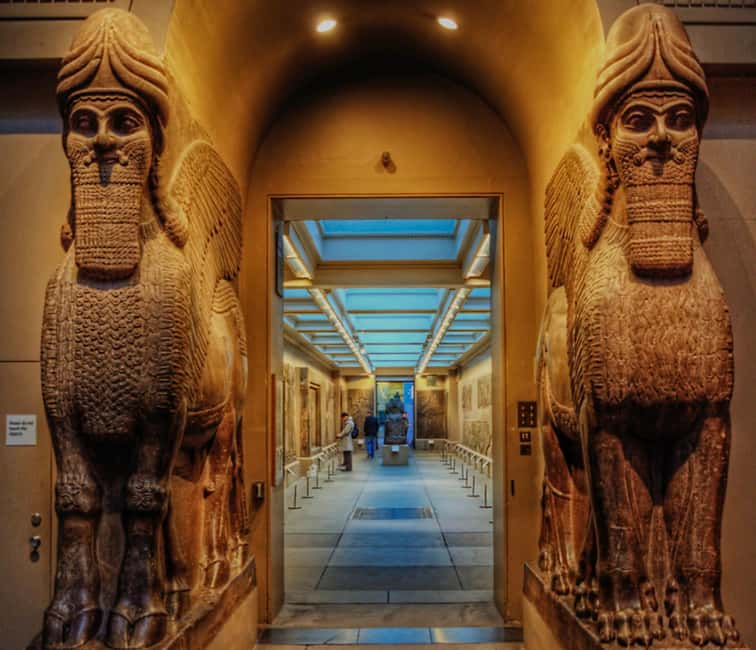
There are two entrances to the museum, so the meeting point deserves attention. You meet outside the Montague Place entrance by the two stone lions. Do not simply head for whichever entrance you first see. Check the starting time and allow enough time to reach Montague Place.
The activity begins and ends at this same general meeting point. That makes the arrangement easy to understand, though the museum’s size means you should take the meeting instructions seriously. The guide may need to gather the group before entering, so arriving at the correct entrance is more useful than trying to catch up inside.
The tour lasts 80 minutes. That is a compact length for a museum visit. You get a guided overview without giving up half a day, and you can still return to favorite galleries afterward.
The Rosetta Stone and the key to Egyptian writing
The Rosetta Stone is the natural opening point for a tour of the British Museum. It is one of the museum’s most famous objects, and its importance is easy to explain: the same message appears in different scripts, allowing scholars to compare them and make progress with ancient Egyptian hieroglyphs.
Your guide can turn this into more than a quick photo stop. The object shows how language, scholarship, and careful comparison changed what people could understand about ancient Egypt. It also gives you a useful way to think about the rest of the museum. Many objects here are not just beautiful pieces. They are evidence.
This stop is a good reason to book a guide rather than walk straight to the display, take a picture, and move on. The stone’s meaning is not obvious from its surface. A short explanation gives you the basic tools to appreciate why it changed the study of Egypt.
The gallery can be busy, and you should not expect a quiet private viewing. The guide’s role is to help you focus on the object and explain its importance while keeping the group moving.
Egyptian mummies, coffins, and life after death
The Egyptian section adds a more personal side to the tour. Mummies and coffins can seem familiar from films and schoolbooks, but the displays show how carefully ancient Egyptians prepared for death and the next life.
You learn about beliefs, burial practices, and the techniques used in mummification. The subject is practical as well as spiritual. These objects reveal how people thought about the body, identity, family, and the passage into another existence.
I like this part for families and younger teenagers because the objects invite questions. The material can be striking, but the guide helps place it in its cultural setting. That balance is important. You are not just looking at preserved bodies as curiosities. You are considering the beliefs and rituals that gave them meaning.
The Egyptian collection is extensive, so an 80-minute visit cannot cover everything. You will see selected highlights rather than receive a full account of ancient Egypt. If Egypt is your main reason for visiting, plan to stay after the tour and return to the galleries that interest you most.
Same trip, a completely different kind of day:
- London: The London Eye Entry Ticket
★ 4.6 · 35,875 reviews - From London: Harry Potter Warner Bros Studio Tour
★ 4.7 · 26,588 reviews - London: Westminster to Greenwich River Thames Cruise
★ 4.5 · 22,836 reviews - London: Madame Tussauds London
★ 4.6 · 20,915 reviews
The Parthenon sculptures and ancient Greece
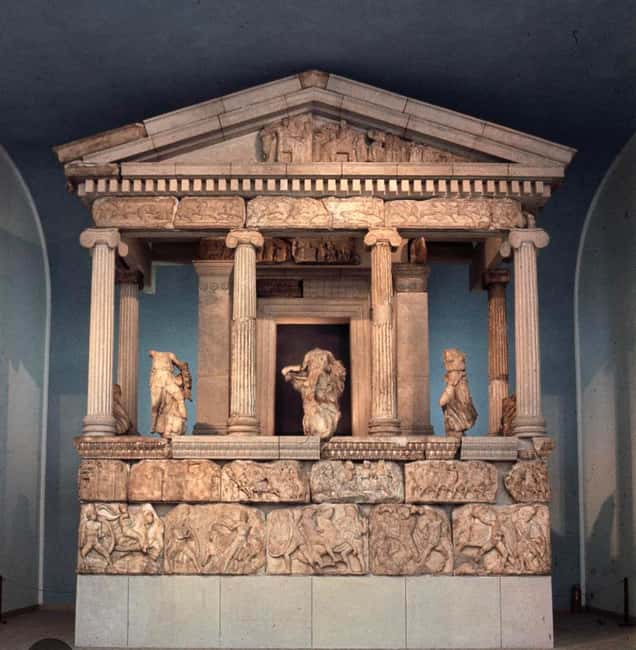
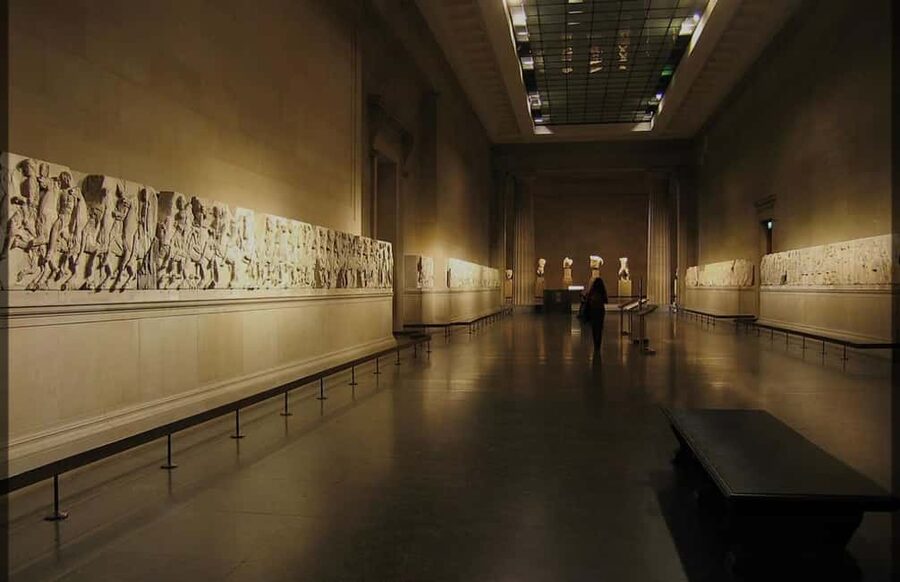
The Parthenon sculptures, often called the Elgin Marbles, bring ancient Greece into the route. Dating from the fifth century BCE, the sculptures show scenes connected with Greek mythology and the decoration of the Parthenon in Athens.
The scale and detail make this a powerful stop. You can study figures, clothing, movement, and the way the sculptors arranged a larger architectural program. Your guide can help you see that these are not isolated statues. They formed part of a major building and reflected the artistic ambitions of ancient Athens.
This section also offers an important point for a balanced tour. The sculptures are admired for their artistic quality, but their presence in London is tied to continuing questions about cultural ownership and their removal from Greece. The supplied tour information identifies them as a central highlight, but it does not promise a detailed debate on their modern history. You can ask your guide if the subject matters to you.
The gallery can reward extra time. During the guided portion, you will likely get the main context and key examples. Afterward, returning on your own lets you look more slowly at details that are easy to miss when the group is moving.
Assyrian lion hunt reliefs and royal power
The Assyrian lion hunt reliefs offer a sharp change in mood and style. These carved scenes show royal hunts and the power of the Assyrian court. The animals, especially the lions, are rendered with force and close attention to movement.
This is one of the tour’s most useful stops because the reliefs communicate political power without needing a long explanation. The hunt was not merely sport. It presented the ruler as strong, brave, and able to control danger.
Look closely at the carving when your guide pauses here. The details in the animals and human figures tell you how much skill went into making a public statement from stone. The reliefs also help place Assyria alongside Egypt and Greece, showing that the museum’s galleries are not one single story of civilization. They are several stories unfolding across time and place.
The Assyrian section is one area you might otherwise pass through quickly. A guide gives it a clear purpose in the overall route.
The Lewis Chessmen and medieval Scotland
The Lewis Chessmen bring the tour closer to medieval Europe. These small carved pieces were discovered on the Isle of Lewis in Scotland and are linked with Viking culture.
They are memorable because they feel personal. The pieces show people with distinct faces and expressions, giving you a glimpse of medieval craftsmanship that is easier to relate to than a monumental ruin. They also raise questions about travel, trade, games, and the movement of objects across regions.
This stop broadens the experience beyond the usual Egypt and Greece highlights. If you have seen the Rosetta Stone and Parthenon sculptures in photographs, the chess pieces may feel like a more unexpected discovery.
The time available here will be limited, since the tour also visits several major collections. Still, the Lewis Chessmen make a useful final example of how the museum connects large imperial stories with small objects made for everyday use.
What the 80-minute route does well
The tour’s greatest strength is its selection. It takes you to objects that represent different civilisations and different types of evidence:
- Writing and scholarship with the Rosetta Stone
- Religious belief and burial with Egyptian mummies and coffins
- Architecture and sculpture with the Parthenon pieces
- Royal authority with the Assyrian reliefs
- Medieval art and play with the Lewis Chessmen
That range gives you a firm first impression of the museum. You are not spending 80 minutes on one collection, and you are not wandering without direction.
The limit is equally clear. The British Museum cannot be fully explained in one short visit. You should book this as an introduction, not as a complete museum experience. If you want to spend serious time with Egypt, Assyria, Greece, or medieval Scotland, use the guided route to find your bearings, then stay afterward.
The tour ends back at the meeting point, and you are free to continue looking around at your leisure. That extra time is a major part of the value. The guide provides context, then you can slow down and follow your own interests.
How much value do you get for $20.20?
At $20.20 per person, this is a reasonably priced way to add expert explanation to a museum visit that otherwise costs nothing for admission. The price makes the most sense if you are visiting London for a short stay, seeing the British Museum for the first time, or prefer not to plan your own route.
You are paying for direction and interpretation rather than entry. That distinction matters. The museum itself has a huge amount to offer without a ticket, but the cost of making sense of it on your own is time and preparation.
The value is strongest when the guide is engaging and responsive. The supplied experience information highlights guides who explain objects clearly, answer questions, and use humor. One guide, Strabo, is specifically associated with the tour. The best fit is someone who wants a human explanation but does not want a long, formal lecture.
The value is weaker if you already know exactly which galleries you want to see and prefer to move at your own pace from the beginning. In that case, you may want to enter independently and spend the $20.20 elsewhere. Still, you can also use the tour as a short introduction and then continue alone.
Who should book this museum tour?
I would recommend it to a first-time visitor who wants the major objects without spending hours preparing a museum plan. It also suits families with older children and teenagers, since the route changes subject often and the guides can keep the discussion light.
It works well for anyone who enjoys asking questions. The guide can explain a detail that is not obvious from the display, then adjust the conversation to the interests of the group. The experience is less useful for someone who wants a silent, slow examination of one collection.
Wheelchair users can book this activity. The museum is wheelchair accessible, although some areas may be challenging to navigate. Since the tour moves through several galleries, it is sensible to be prepared for possible changes in pace or route.
Photography is allowed, but flash photography is not. Food and drinks are not allowed inside the exhibition rooms, so plan to eat before or after the tour.
Should you book the British Museum with an Expert Guide?
Book it if you want a short, focused introduction to the British Museum and its most famous objects. The Rosetta Stone, Egyptian displays, Parthenon sculptures, Assyrian reliefs, and Lewis Chessmen make a strong selection, and the guide adds the context that labels alone cannot provide.
The main caution is the limited time. Eighty minutes will not satisfy someone who wants to explore every gallery, and the quality of the experience depends partly on the individual guide. For most first-time visitors, though, the low price, clear route, question-friendly format, and chance to remain afterward make this a practical choice.
FAQ
How long does the British Museum guided tour last?
The guided tour lasts 80 minutes.
What language is the tour in?
The tour is conducted in English by a live English-speaking guide.
Where does the tour meet?
Meet outside the Montague Place entrance by the two stone lions.
Where does the activity end?
The activity ends back at the meeting point.
What objects are included on the tour?
The route includes major highlights such as the Rosetta Stone, Egyptian mummies and coffins, the Parthenon sculptures, Assyrian lion hunt reliefs, and the Lewis Chessmen.
Is museum entry included?
The provided activity information includes a guided tour of the British Museum but does not separately state an admission charge. Check the booking details for the current entry arrangements.
Can I stay in the museum after the guided tour?
Yes. After the guided portion, you can continue exploring the collection at your own leisure.
Is the tour wheelchair accessible?
Yes, the activity is listed as wheelchair accessible. Some areas of the museum may be challenging to navigate.
Can I take photographs inside?
Photography is allowed, but flash photography is prohibited.
Can I bring food or drinks into the galleries?
No. Food and drinks are not allowed inside the exhibition rooms.
Can I cancel for a full refund?
You can cancel up to 24 hours in advance for a full refund.
Do I have to pay when I book?
The activity offers reserve now and pay later, so you can hold your place without paying immediately.
Just added in London
- Royal London Guided Sightseeing Tour and Thames River Cruise★ 4.0 · 31 reviews
- Roman Ruins to Blitz Bombings: A Walking Tour of London’s Fiery History★ 5.0 · 190 reviews
- Roman London Private Walking Tour★ 5.0 · 44 reviews
- Westminster Abbey, Big Ben, Buckingham Guided Tour of London★ 5.0 · 451 reviews
- River Thames Evening Cruise with Sparkling wine and Canapés★ 4.0 · 569 reviews
- Rock and Roll Walking Tour of Soho London★ 4.5 · 64 reviews
- London Private Chauffeur Half-Day or Full-Day Vehicle Rental★ 5.0 · 37 reviews
- Rich people behaving badly★ 5.0 · 47 reviews
Museums, compared.

Liverpool Football Club Museum and Stadium Tour
Read our review →
Tower of London and Crown Jewels Exhibition Ticket
Read our review →
Chelsea Football Club Stadium and Museum Tour
Read our review →



Browse the lists this tour appears in