
Reviewed · MUSEUMS
London: British Museum Guided Tour with Priority Entrance
The British Museum can swallow an entire day before you’ve found the Rosetta Stone. This two-hour highlights tour gives you a sensible first look at its biggest treasures, from Egyptian mummies and the Parthenon Sculptures to Sutton Hoo’s Anglo-Saxon finds. It is less about checking every room and more about learning how the museum fits together.
I like the priority entry and the supplied headsets, especially in crowded galleries. I also like the human touch: guides such as Antonio, Mira, Alex, Tony, Tara, and James are noted for lively explanations, useful museum orientation, and making time for questions.
The limitation is simple: two hours cannot do justice to a museum with more than 8 million objects across over 70 galleries. This is a strong introduction, not a complete visit, and the route may not suit wheelchair users, people with mobility impairments, babies under one, or people with hearing impairments.
Key points to know before you book
- The route covers major civilizations: Expect Egypt, Greece, Anglo-Saxon England, China, Southeast Asia, and the Enlightenment Room.
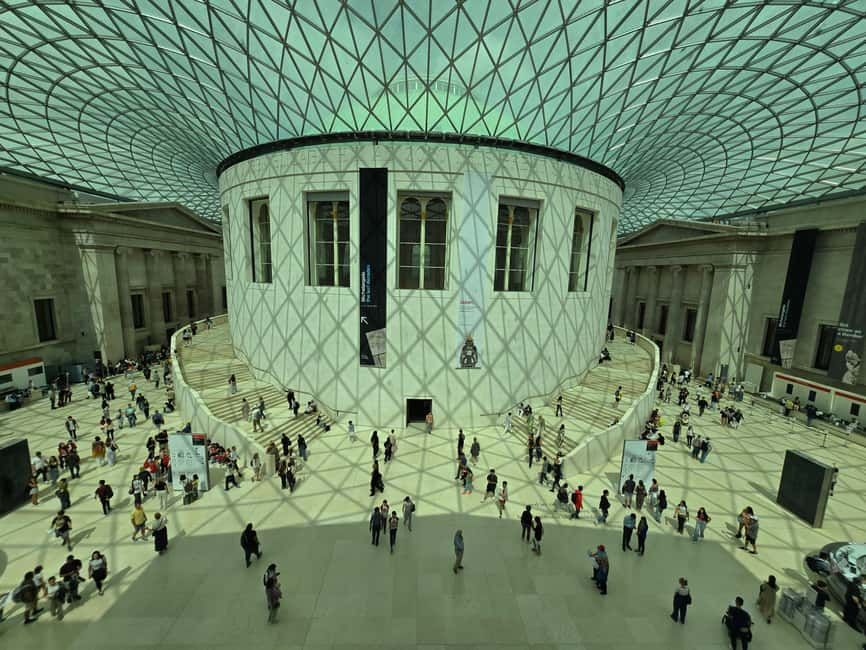
- The Great Court is part of the experience: Its glass roof gives you an impressive first view before the collection tour begins.
- Priority entrance saves time: Your ticket uses an allocated timeslot and a separate entrance arrangement.
- Headsets help in crowded rooms: You can hear the guide without standing shoulder to shoulder.
- The tour ends where it begins: Meet the guide inside beside the information desk at 52 Great Russell Street.
- The best value comes from staying longer: Use the two-hour tour to get oriented, then revisit the galleries that catch your interest.
Why a two-hour British Museum tour makes sense
The British Museum is free to enter in general, but that does not make it easy to visit. You still need to find your way through a large building, locate the famous objects, and work out why they matter. At $53.87 per person, this experience charges for the guide, the organized route, priority access, and the time saved.
I see the price as reasonable if this is your first visit and you want a strong overview without spending eight hours in the museum. It is less convincing if you already know the building well or prefer to wander alone with an audio guide.
The tour is also useful for short London stays. In two hours, you can see objects from several civilizations instead of spending your entire museum visit in one Egyptian gallery. The guide creates a clear thread through the collection, then points out areas worth returning to later.
More Museum Tours in London
- Tower of London and Crown Jewels Exhibition Ticket
★ 4.5 · 6,677 reviews - London: Chelsea Football Club Stadium and Museum Tour
★ 4.8 · 4,576 reviews - Chelsea FC Stadium Tours and Museum
★ 5.0 · 1,908 reviews
Meeting the guide at 52 Great Russell Street
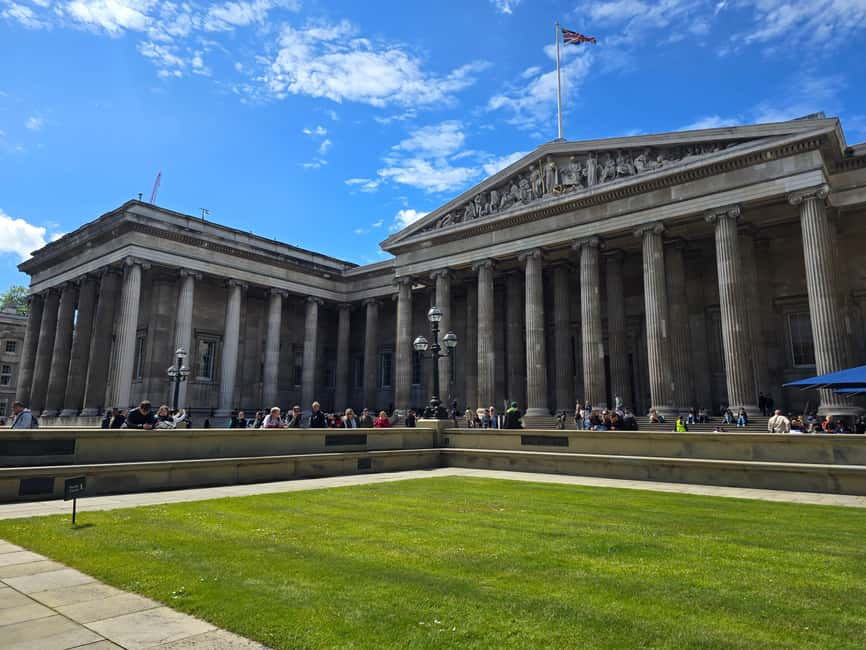
The advertised starting point is 52 Great Russell Street, but the guide waits inside the museum beside the information desk. That detail matters. You should allow enough time to reach the museum, pass through the correct entrance and security arrangements, and get inside before the meeting time.
Your ticket includes priority access through a separate entrance with an allocated timeslot. Priority entry does not mean you can arrive at any time, so treat the booked start as fixed. Keep the meeting instructions handy on your phone, since the guide does not meet you at a London transport stop or escort you from a hotel.
Transportation, food, and drinks are not included. The activity begins and ends at the museum, making it easy to continue sightseeing in Bloomsbury afterward.
Once the group is assembled, the route remains in the museum for about two hours. The experience is available as a small group, and the guide uses headsets when provided. That is a real advantage in busy galleries, where a guide speaking at normal volume can quickly disappear into the general museum noise.
The Great Court gives you instant perspective
The Great Court is likely to be your first big visual moment. The glass roof stretches across the central space and turns the museum’s interior courtyard into a bright architectural centerpiece. It is not just a passageway between galleries. It helps you understand the scale of the building before the tour moves into the collections.
I like beginning here because the court provides a calm reset from London’s streets. You can look up, get your bearings, and see how the museum’s rooms connect. The guide may also use this area to explain the route and settle the group before the more crowded galleries.
The court itself is easy to admire, but do not mistake it for the main event. The real value comes from the transition into the galleries, where the guide gives the objects a setting and a story instead of leaving you to read labels one by one.
The Parthenon Sculptures and ancient Greek stories
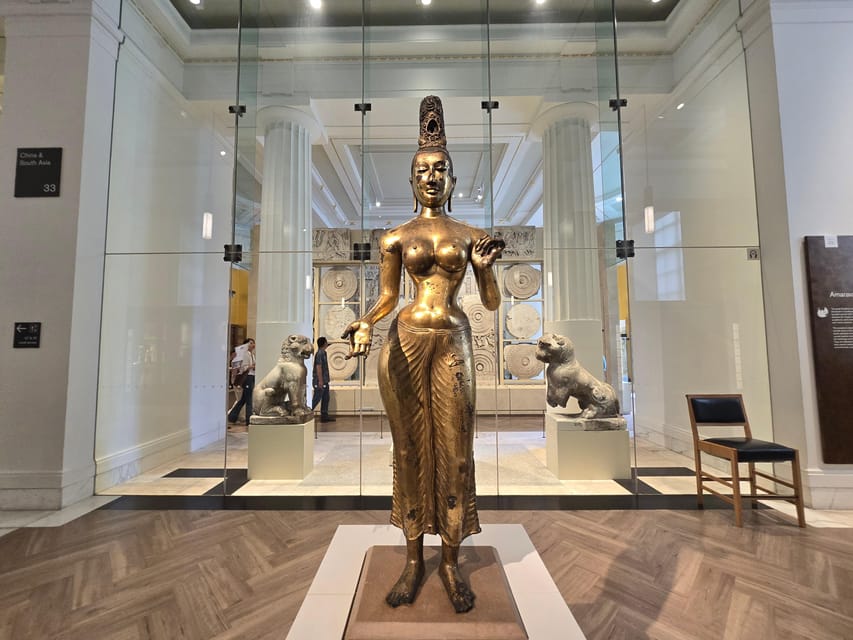
The Parthenon Sculptures, also widely called the Elgin Marbles, are among the museum’s best-known displays. Here, the tour moves from architecture to mythology, artistic style, and the way ancient Greek stories appear in carved stone.
A guide can help you notice details that are easy to miss when you are simply looking at large fragments. The sculptures are not presented as isolated decorations. They relate to the Parthenon, religious life, and the myths and figures of classical Greece.
This is also one area where a guided visit adds context beyond the object label. You can ask questions as you go, and the guide can explain what you are seeing in plain language. The tour information uses the name Parthenon Sculptures while noting the common name Elgin Marbles, a useful distinction when you are checking museum signs or planning a later return.
The drawback is crowding. Famous objects attract attention, and a two-hour route may give you only a short viewing period. If this is the section that interests you most, note its location and come back after the tour for a slower look.
Same trip, a completely different kind of day:
- London: The London Eye Entry Ticket
★ 4.6 · 35,875 reviews - From London: Harry Potter Warner Bros Studio Tour
★ 4.7 · 26,588 reviews - London: Westminster to Greenwich River Thames Cruise
★ 4.5 · 22,836 reviews - London: Madame Tussauds London
★ 4.6 · 20,915 reviews
Egyptian mummies, the Rosetta Stone, and the pharaohs
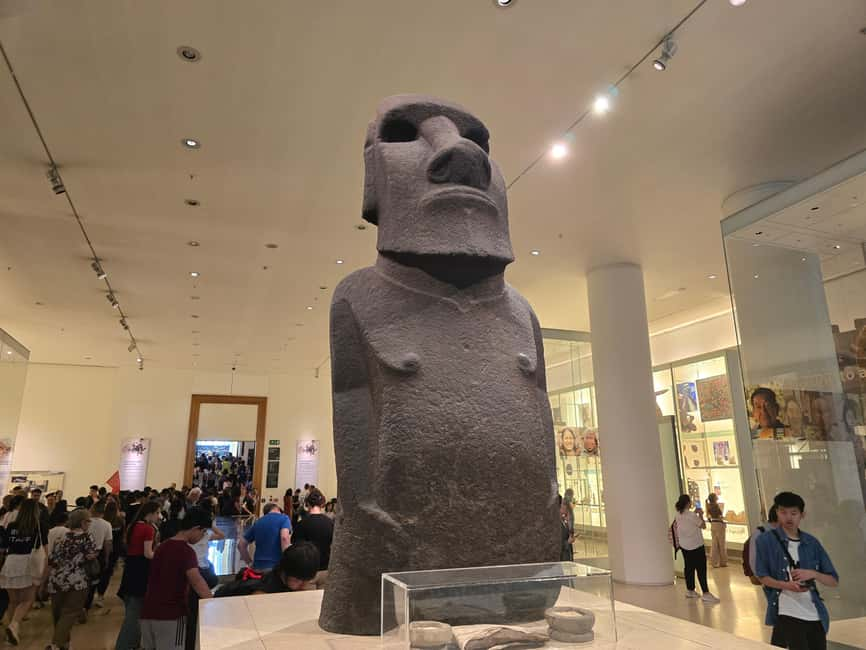
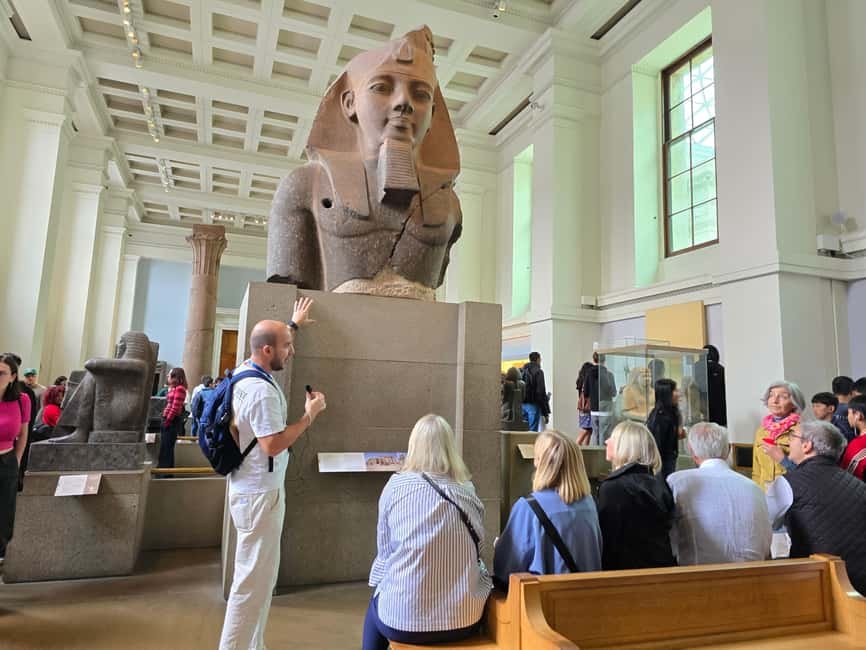
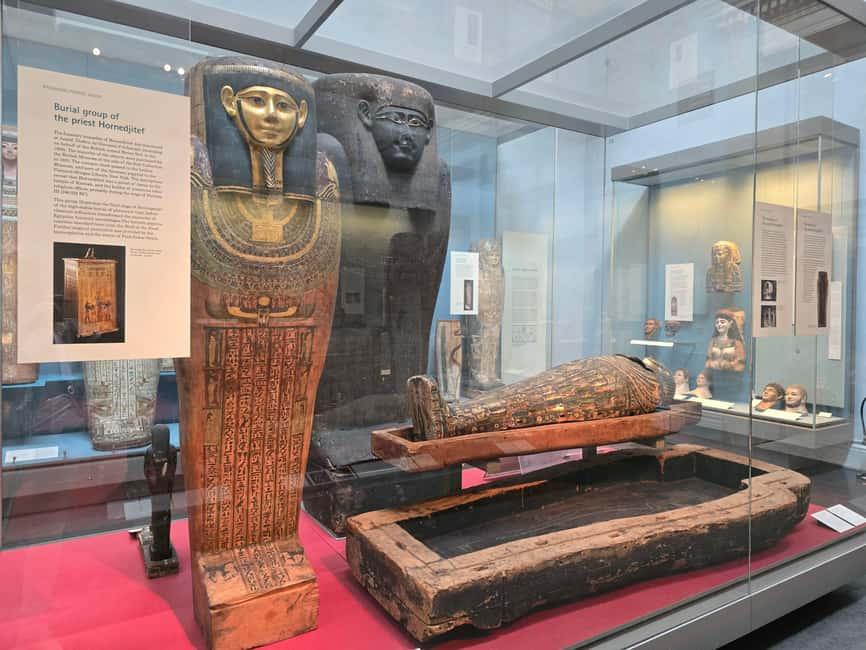
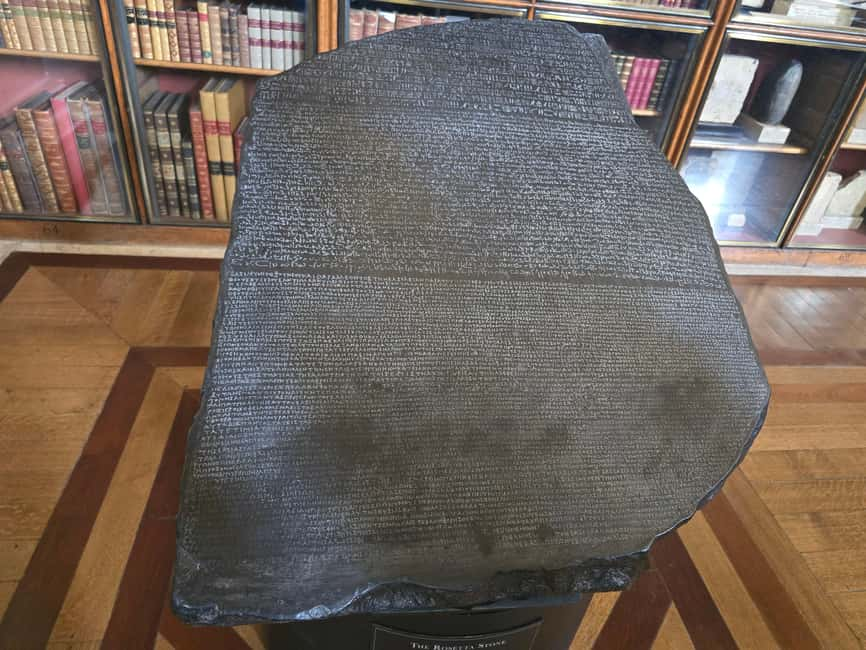
The Egyptian rooms provide several of the tour’s most memorable stops. You can expect to see mummies, the Book of the Dead, the bust of Ramesses II, and the Rosetta Stone.
The guide connects these objects to burial customs, religious beliefs, writing, and royal power. That connection is important. A mummy is not simply an ancient body behind glass, and the Book of the Dead is not just an old manuscript. Together, they show how ancient Egyptians thought about death, the afterlife, and the journey beyond it.
The Rosetta Stone is the famous anchor of the Egyptian section. It is easy to arrive with only a vague sense that the stone helped decode hieroglyphics. A live explanation can make its importance clearer and place it within the museum’s wider story of language and discovery.
The bust of Ramesses II adds a human face to the pharaohs section. It is a useful pause after the smaller, more delicate objects in the galleries. Guides named in the tour’s feedback, including Antonio, Mira, and Alex, have been especially praised for explaining hieroglyphics and placing individual pieces in a wider world history.
One practical point: the Egyptian rooms can feel busy, and the most famous displays may draw a crowd. Headsets make it easier to stay with the guide without blocking other people. If you lose sight of the group, pause rather than wandering off, since the guide is using a planned route through several galleries.
The Enlightenment Room links science and collecting
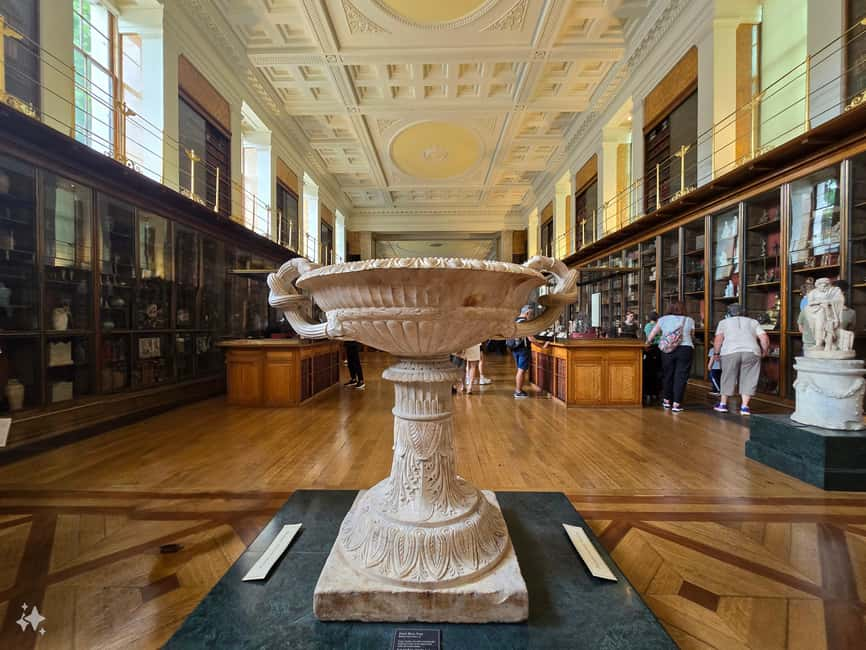
The Enlightenment Room shifts the mood. Instead of focusing on one ancient civilization, it presents the 18th century as a period of curiosity, collecting, scientific study, and expanding knowledge.
This room helps explain why a museum like the British Museum has such a wide range of objects. Its contents reflect the period’s desire to classify the world and bring art, archaeology, science, and culture into one intellectual setting.
I find this stop useful because it prevents the tour from becoming a parade of famous ancient objects. You get a glimpse of the ideas that shaped modern museums and the way people in the 18th century tried to understand the world.
The room may appeal most to visitors who enjoy connections between science, culture, and collecting. If you mainly want famous sculptures and mummies, it may feel less immediate than the Egyptian or Greek galleries, but it gives the route a broader purpose.
Chinese and Southeast Asian collections
The Asian collections widen the geographic range again. You can expect to see Chinese objects and crafted pieces from Southeast Asia, with explanations of artistic traditions and regional cultures.
This portion matters because the museum’s famous highlights can otherwise make the collection feel centered on Egypt and Greece. A good guide moves you across continents and shows that the British Museum holds major material from many different places.
The short time means you will not get a full tour of Asian art. Instead, the guide selects objects that work well within the larger route. Look for explanations of how the pieces were made, what they were used for, and how they reflect local traditions.
The benefit of this quick survey is variety. In one morning or afternoon, you can move from ancient Mediterranean sculpture to Asian craftsmanship and then on to medieval England. The cost is depth, so return later if this collection becomes your priority.
Sutton Hoo brings Anglo-Saxon England to life
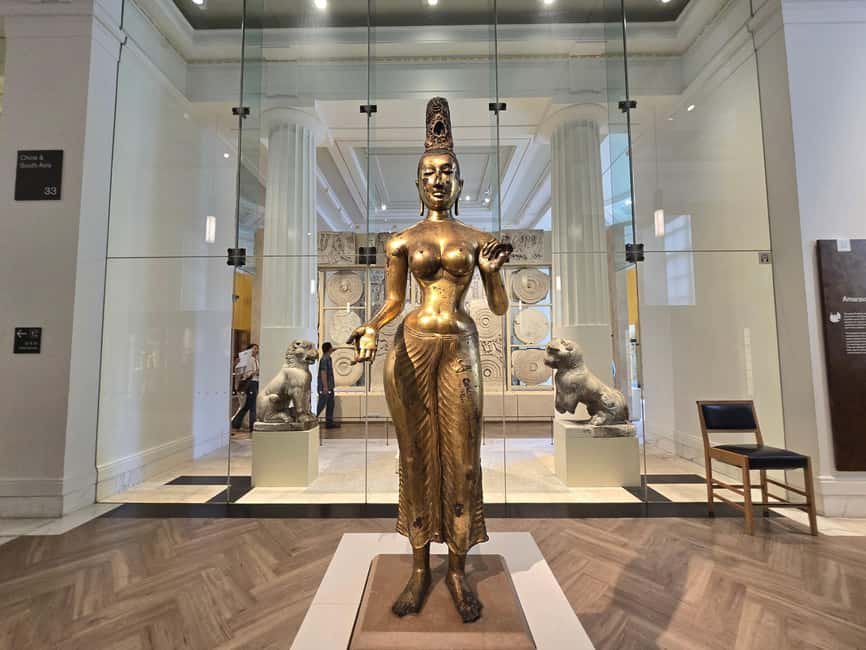
The Sutton Hoo ship burial is the tour’s major stop for early medieval England. The display includes the famous helmet, shield, and other finely made objects connected with the burial.
These pieces make the Anglo-Saxon period feel tangible. The helmet and shield are not just military equipment. They reveal skill, status, belief, and the connections between rulers and their communities.
Sutton Hoo also gives the tour a strong British focus after its journey through Egypt, Greece, Asia, and the Enlightenment. You see that the museum is not only a collection of objects from faraway civilizations. It also tells stories about the people and cultures of Britain.
The helmet is likely to attract the most attention, but listen for the links between the objects. The burial was not a random pile of belongings. The arrangement and quality of the finds help explain the importance of the person buried there and the society that created the objects.
Guides, headsets, and the feel of the group
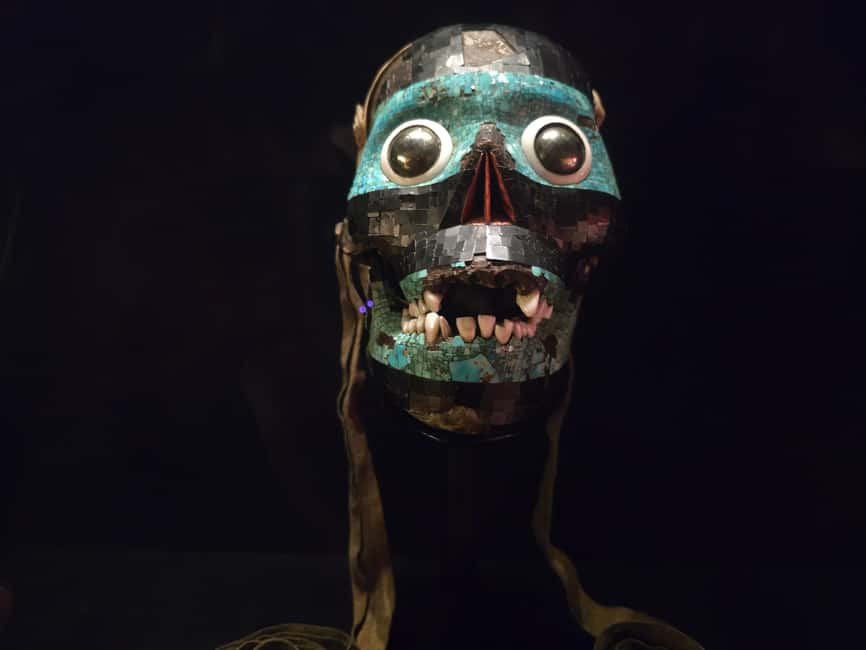
The strongest part of this experience is the guide. Names associated with particularly well-received tours include Antonio, Mira, Alex, Tony, Tara, and James. Their approaches may differ, but the useful qualities are consistent: clear explanations, friendly interaction, good pacing, and the ability to answer questions.
Mira and Alex are especially associated with careful group management, lively anecdotes, and a well-timed route. Antonio is praised for linking individual objects to wider world history. Tony is described as good at giving first-time visitors an overview and showing where to return for more. Tara is noted for being both engaging and well informed, while James is praised for helping people move around the museum efficiently.
That does not mean every departure will feel identical. The guide assigned to your time may differ, and the group size can affect how much conversation is possible. A small group gives you a better chance to ask questions and stay close to the guide.
Headsets are another practical plus. They let you hear commentary while standing a little apart from the guide or looking at an object. This is particularly helpful in large rooms and during busy periods.
The tour is offered with live commentary in English, Italian, or Chinese according to the activity information. Check the available language when you select your time.
Who will get the most from this experience
I would choose this tour for a first visit, a short London break, or a family group that needs a clear route through a huge museum. It also suits anyone who wants stories and context rather than a silent walk from display to display.
It is a good fit if you want to see the major highlights but do not want to plan a museum route yourself. The guide does the sorting, keeps the group moving, and identifies the rooms worth revisiting.
Independent museum regulars may find the route too selective. The same is true if you want to spend an hour studying one collection in detail. In that case, the tour can still work as an introduction, but you should plan extra time after it.
The activity is not suitable for wheelchair users or people with mobility impairments, according to the provided information. It is also not suitable for babies under one or people with hearing impairments. Flash photography is not allowed.
How to make the two hours count
Arrive ready to listen, but do not expect a complete museum visit. The route is designed to show you important objects across several galleries, so the pace will be purposeful.
Use the guide as your map. When a room catches your interest, note its name or location and return after the tour. The museum is too large to absorb every detail in one pass, but a short list of follow-up galleries turns the guided visit into a useful plan for the rest of your day.
Ask questions when the guide pauses. The strongest feature of a small-group format is the chance to make the tour more personal. You can ask about an object, a civilization, or the museum’s approach to collecting.
Remember that food and drinks are not included, and there is no transportation element. You arrange your own journey to and from the museum, then continue independently when the tour ends at the information desk.
Cancellation is free up to 24 hours before the activity for a full refund. You can also reserve now and pay later, which helps if your London schedule is still shifting.
Should you book this British Museum tour?
Book it if you want a well-planned first look at the British Museum and value a live guide who can connect objects across continents. The priority entrance, headsets, small-group option, and two-hour route make the experience especially useful for a short visit.
Do not book it expecting to see everything or study each collection at length. The museum is simply too large. The smart plan is to treat the tour as your orientation, then spend extra time with the Rosetta Stone, Egyptian rooms, Parthenon Sculptures, or Sutton Hoo if one of them catches your attention.
At $53.87, I think the value is strongest for first-time visitors who want history explained clearly and a route that avoids aimless wandering. If you prefer complete freedom, skip the guide and explore at your own pace. For most people facing the British Museum for the first time, two focused hours with a good guide is a practical way to begin.
FAQ
How long does the British Museum guided tour last?
The guided tour lasts two hours.
Where does the tour begin?
The guide waits inside the British Museum beside the information desk. The meeting address is 52 Great Russell Street.
Where does the tour end?
The activity ends back at the meeting point beside the information desk.
Is priority entrance included?
Yes. The activity includes priority tickets for the main entrance with allocated timeslots and access through a separate entrance.
Which languages are available?
Live guiding is available in English, Italian, and Chinese. The included tour commentary is listed as English or Italian, so check the language offered for your selected departure.
Are headsets provided?
Headsets are available for the tour. They help you hear the guide’s commentary in crowded galleries.
What will I see during the tour?
The route includes the Great Court, Parthenon Sculptures, Egyptian mummies, the Book of the Dead, the bust of Ramesses II, the Rosetta Stone, the Enlightenment Room, Chinese and Southeast Asian collections, and Sutton Hoo objects.
Are food and drinks included?
No. Food and drinks are not included.
Is transportation included?
No. You make your own way to the British Museum, and the activity ends at the museum.
Can I cancel for a refund?
Yes. You can cancel up to 24 hours in advance for a full refund. Reserve now and pay later is also available.
Is the tour suitable for wheelchair users?
No. The activity is listed as unsuitable for wheelchair users and people with mobility impairments.
Is flash photography allowed?
No. Flash photography is not allowed.
Just added in London
- Royal London Guided Sightseeing Tour and Thames River Cruise★ 4.0 · 31 reviews
- Westminster Abbey, Big Ben, Buckingham Guided Tour of London★ 5.0 · 451 reviews
- Roman Ruins to Blitz Bombings: A Walking Tour of London’s Fiery History★ 5.0 · 190 reviews
- Roman London Private Walking Tour★ 5.0 · 44 reviews
- River Thames Evening Cruise with Sparkling wine and Canapés★ 4.0 · 569 reviews
- Rock and Roll Walking Tour of Soho London★ 4.5 · 64 reviews
- London Private Chauffeur Half-Day or Full-Day Vehicle Rental★ 5.0 · 37 reviews
- Rich people behaving badly★ 5.0 · 47 reviews
Museums, compared.

Liverpool Football Club Museum and Stadium Tour
Read our review →
Tower of London and Crown Jewels Exhibition Ticket
Read our review →
Chelsea Football Club Stadium and Museum Tour
Read our review →


Browse the lists this tour appears in