
Reviewed · MUSEUMS
London: British Museum Guided Tour
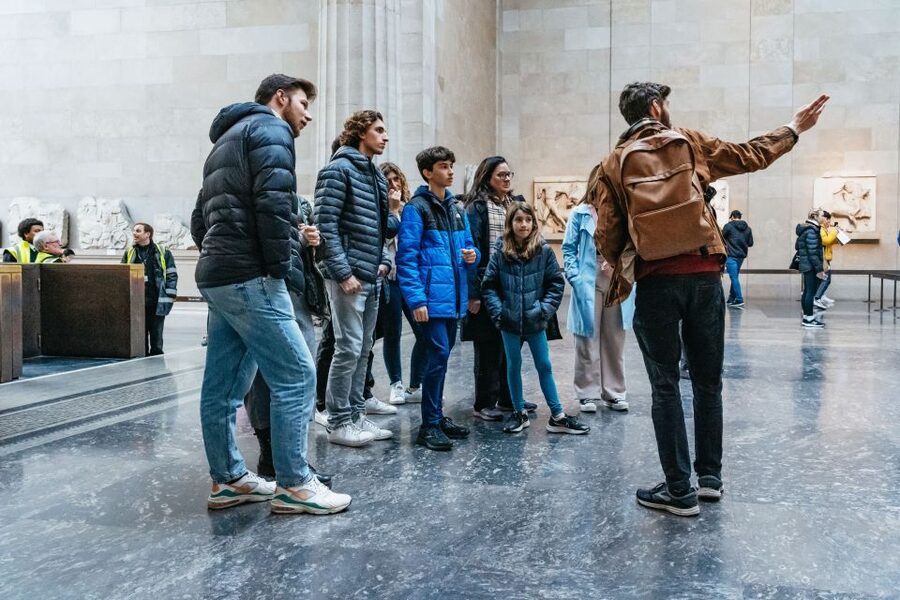
The British Museum can feel like several museums stitched together, and that is both its thrill and its problem. This two-hour tour gives you a firm route through its biggest stories, from the Rosetta Stone and Egyptian mummies to Parthenon sculpture, Roman art, Sutton Hoo, and an Easter Island moai.
I like the sharp focus and the chance to ask a real guide why an object matters, rather than trying to read every label in the building. I also like the price: at $39, it is a sensible add-on when you want to get your bearings fast. The main drawback is noise. In crowded galleries, a soft-spoken guide can be hard to hear, and the tour may run in two languages at once.
Key points at a glance
- The Rosetta Stone begins the story: See the object that helped scholars read Egyptian hieroglyphics.
- Major Greek and Roman works follow: The route includes Parthenon sculptures, marble inscriptions, mosaics, statues, and objects linked to ancient philosophy and engineering.
- You get more than the usual headline pieces: Sutton Hoo and Hoa Hakananai’a bring early English culture and Easter Island into the route.
- Guides make a huge museum manageable: Filomena, Stuart, Tara, Lucia, Rebekka, and Maya have all led tours, with special praise for clear explanations and friendly delivery.
- The price buys direction, not just entry: You are paying to see important objects in a useful order and understand their place in human history.
- Sound can affect the experience: Crowded rooms and a quiet guide may make some explanations difficult to follow.
Why two hours helps at the British Museum
The British Museum is not a place you casually finish. Its galleries cover an enormous span of human history, and the most famous objects are spread across a large building. If you enter without a plan, it is easy to spend too long on the first room and miss works you came to see.
This tour solves that problem by selecting major stops and linking them into a story. You move from ancient Egypt to Greece and Rome, then on to Anglo-Saxon England, Easter Island, and other parts of the world. The route gives you a working map of the museum, which is often more useful than trying to cover every room.
Two hours is enough for an energetic introduction, not enough for close study of every exhibit. You will see highlights and receive context, but you should not expect long stretches in front of each object. If you enjoy reading every label or sketching sculptures, you may prefer to continue on your own afterward.
That is one of the tour’s best features. You can use the guided visit to identify what matters to you, then return to selected galleries at your own pace. The museum becomes less confusing once you know where its main objects fit.
More Museum Tours in London
- Tower of London and Crown Jewels Exhibition Ticket
★ 4.5 · 6,677 reviews - London: Chelsea Football Club Stadium and Museum Tour
★ 4.8 · 4,576 reviews - Chelsea FC Stadium Tours and Museum
★ 5.0 · 1,908 reviews
Meeting inside the museum
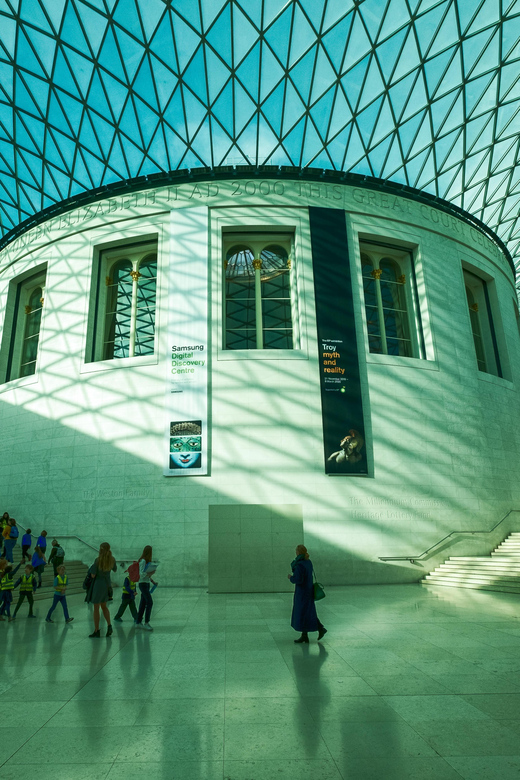
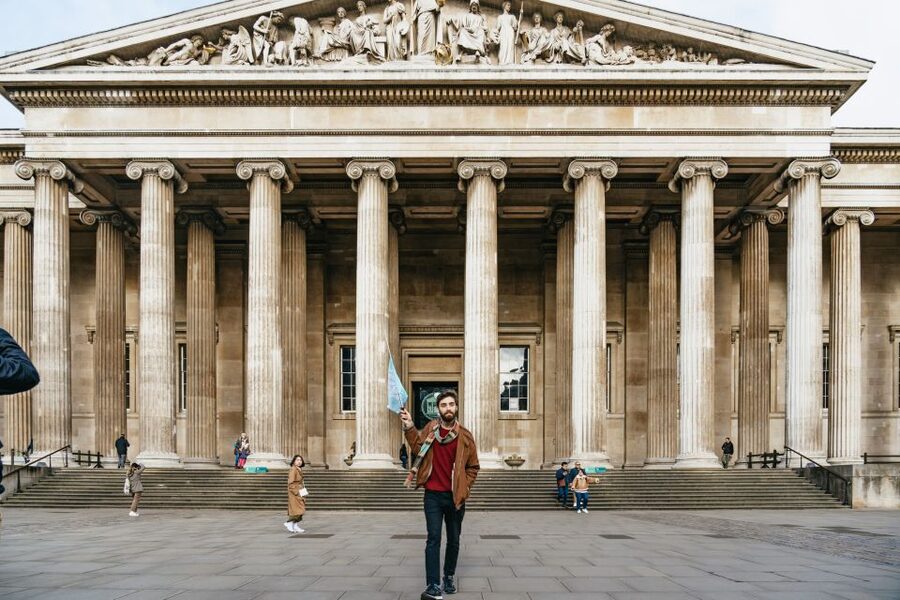
Your meeting point is on the stairs near the pillars in front of the British Museum portals, after you pass security. This detail matters. You are not meant to wait outside the gates, so follow the instructions carefully and allow time for the security check before looking for your guide.
Entry tickets are supplied one to two hours before the tour, usually through WhatsApp. If you do not use WhatsApp, you can contact the provider by email for the tickets. Keep an eye on your phone before leaving for the museum, since the ticket timing is relatively close to the start.
Transportation is not included, but the central location makes this easy to fit into a London sightseeing day. Wear comfortable shoes and clothing suited to the weather, especially if you expect to walk around London before or after the visit.
The museum is wheelchair accessible. The tour is offered in English, French, and Italian. Depending on demand, two languages may be used during the same tour, so check the language arrangement when booking if that is important to you.
Egypt and the Rosetta Stone
The tour begins with ancient Egypt, a strong choice because the collection offers a clear way into the museum’s wider purpose. You start among relics connected with pharaohs and Egyptian religious life, then come to the Rosetta Stone.
The stone is famous for a practical reason. Its inscriptions in different scripts gave scholars the comparison they needed to work out Egyptian hieroglyphics. Your guide can turn what might look like a dark slab covered in writing into a story about language, scholarship, and the effort needed to understand a vanished system of communication.
This stop is especially useful if you are visiting with children or with someone who does not usually enjoy museums. There is a simple question at its center: how did people learn to read these signs? A guide can provide that link quickly, while a label alone may leave you with only the object’s name and date.
Expect this part of the tour to be popular and potentially crowded. The Rosetta Stone is one of the museum’s best-known objects, so you may need to listen while standing slightly back. The guide’s voice and position matter here.
Greek sculpture and the Parthenon debate
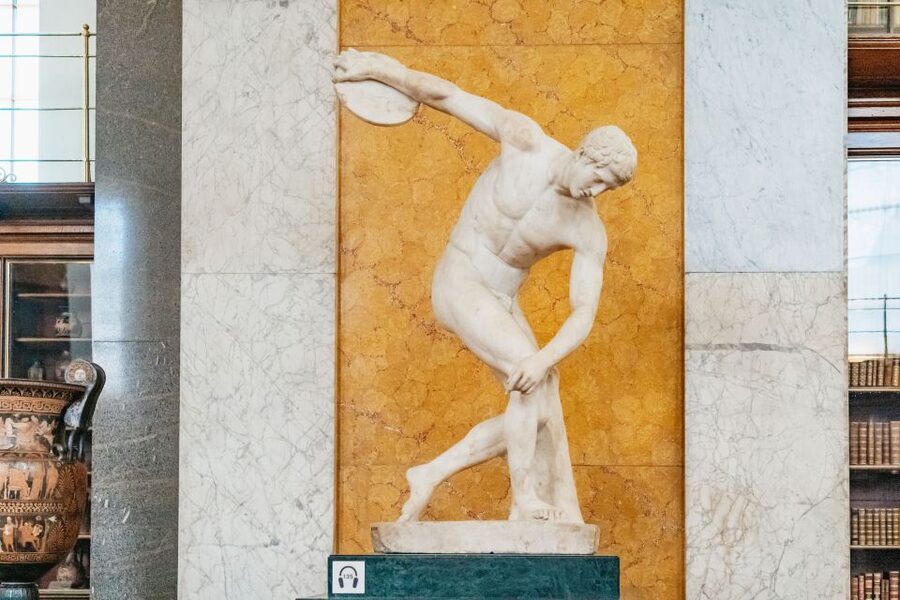
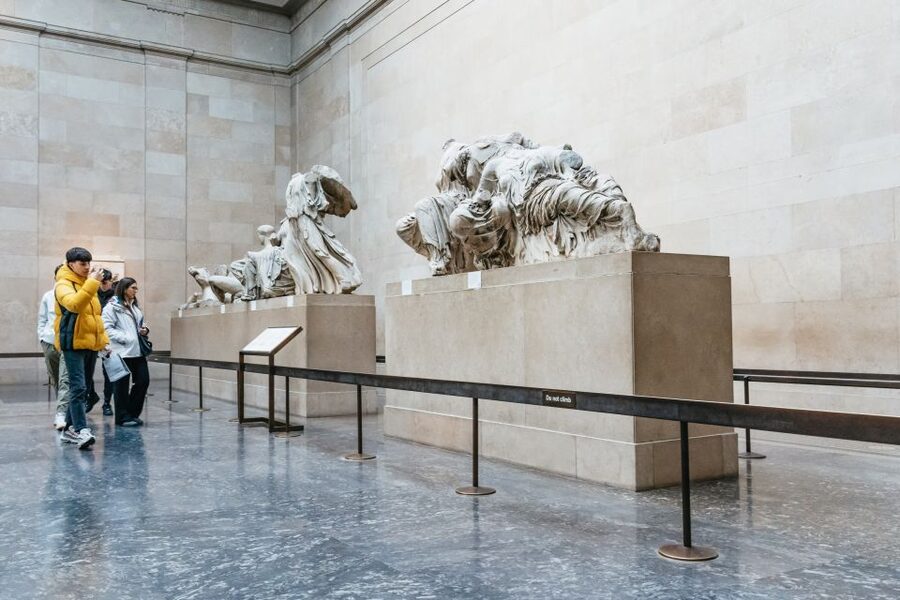
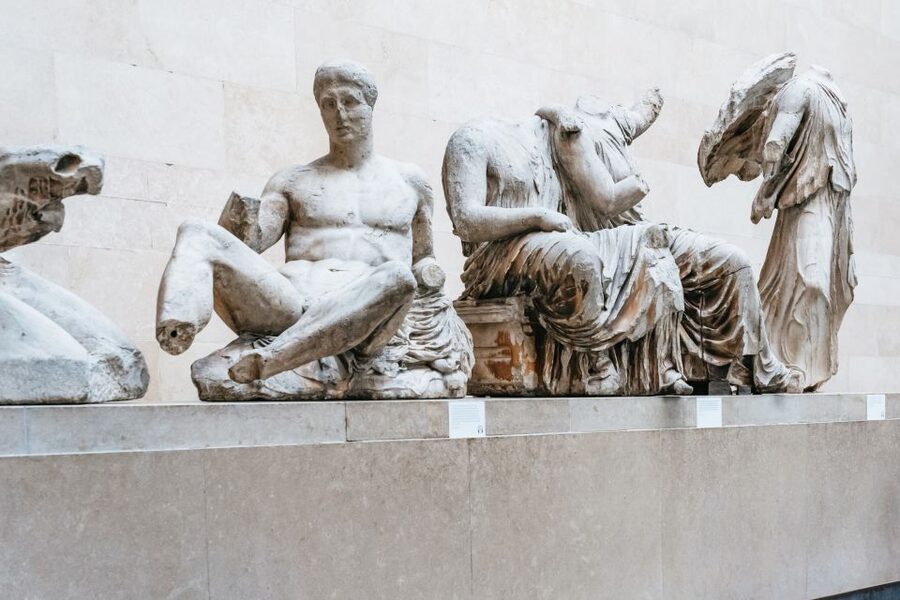
From Egypt, the route moves to ancient Greece, where sculpture, architecture, and philosophy take center stage. The Parthenon sculptures are the major draw. They are admired for their design and workmanship, but they also raise difficult questions about ownership and removal from Greece.
A good guide does not treat the marbles as decoration alone. The tour presents their artistic value while giving you room to think about how they reached London and why they remain controversial. That balance is important. The museum visit is not just a parade of beautiful objects. It also opens questions about empire, collecting, and who has the right to keep cultural property.
The Greek galleries may also include marble inscriptions and objects linked to public life, religion, and thought. You get a sense of how art and ideas worked together in the ancient world. The stop is useful for anyone who wants more than a quick photograph of famous sculpture.
The drawback is time. The Parthenon material deserves a long visit, and two hours leaves only a short window for it. You may hear the main points and see the best-known works, then want to return later for a slower look.
Same trip, a completely different kind of day:
- London: The London Eye Entry Ticket
★ 4.6 · 35,875 reviews - From London: Harry Potter Warner Bros Studio Tour
★ 4.7 · 26,588 reviews - London: Westminster to Greenwich River Thames Cruise
★ 4.5 · 22,836 reviews - London: Madame Tussauds London
★ 4.6 · 20,915 reviews
Roman mosaics, gods, and engineering
The Roman section changes the mood. Here the focus turns to empire, technology, religion, and daily life. You can expect mosaics, statues of gods and heroes, and objects that show how Roman art spread across a large territory.
The value of this stop is comparison. After seeing Greek sculpture, you can consider how Roman artists borrowed, adapted, and reused Greek ideas. Roman engineering also gives the guide another way to explain the period, moving beyond emperors and battles toward the practical systems that supported urban life.
Mosaics reward a guide’s attention because details can be easy to overlook. A small figure, pattern, or mythological scene may carry more meaning than you would notice while walking past. The tour helps you pause at selected works instead of treating the room as one large display.
As with the Greek galleries, you will not have time to inspect every Roman object. The route is designed to give you a useful sample. If Rome is your main interest, treat this tour as an introduction and keep time afterward for more study.
Sutton Hoo and early English life
Sutton Hoo adds a local chapter to a route that otherwise crosses several ancient civilizations. The Anglo-Saxon treasures offer clues about early English society, craftsmanship, status, and burial practices.
This is one of the most useful stops for people who think the museum is mainly about Egypt, Greece, and Rome. It shows that the story continues closer to home. Objects connected with a burial can reveal trade links, artistic skill, belief, and the power of a person or family.
A guide can also help you place Sutton Hoo in the long story of Britain without reducing it to a simple tale of kings and treasure. The display offers a glimpse into a society that left fewer written records than the civilizations featured in the earlier galleries.
The stop may be brief, but it gives the tour a better balance. You are not only looking at distant cultures. You are also considering the early communities of England and the evidence they left behind.
Hoa Hakananai’a and a wider world
The tour then reaches Hoa Hakananai’a, a moai from Easter Island. Its carved form is immediately striking, but the important part is understanding that it represents more than a large stone figure. It carries spiritual meaning connected with a distant society and gives the route a Pacific dimension.
This object also reinforces one of the British Museum’s central challenges. A collection of this size brings together works from across the world, but the presence of an object in London does not erase the culture and community from which it came. A thoughtful guide can help you look at the moai with attention to both its artistic power and its cultural setting.
The wider route includes artifacts from many regions, although the exact order and stops can vary. The promise is not that you will study every continent in two hours. Instead, you get a selection that helps you see how different societies expressed belief, power, identity, and technical skill.
That broad view is useful if you are new to the museum. It prevents the visit from becoming a list of famous European and Egyptian objects. You leave with a clearer sense of the collection’s global reach.
The guides make the difference
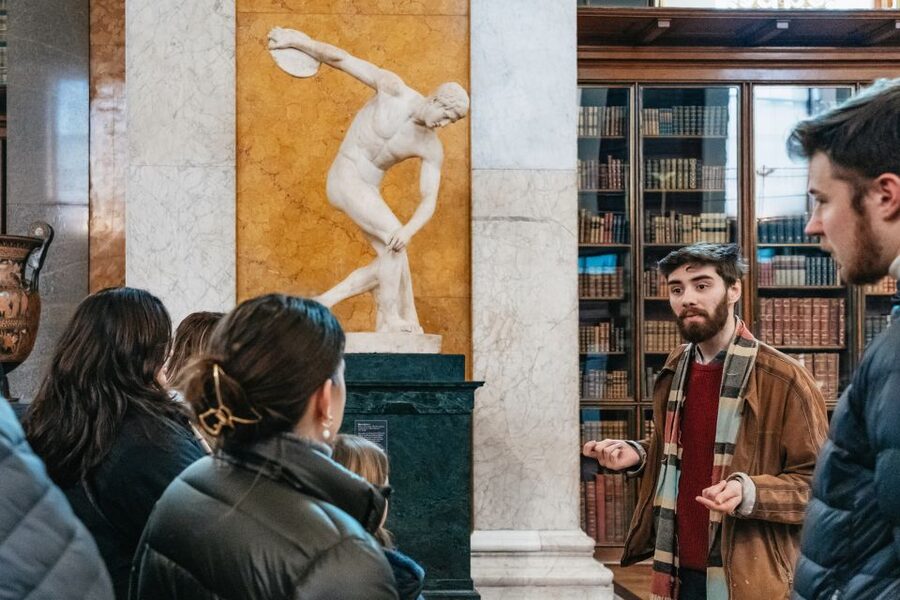
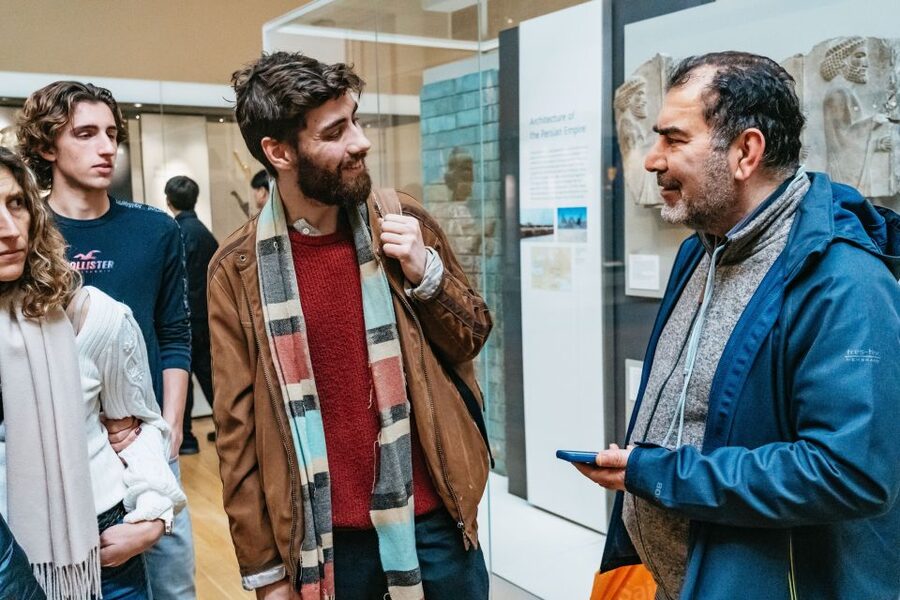
The strongest part of this experience is the human element. Filomena receives repeated praise for her energy, care, detailed explanations, and ability to make people comfortable. She has also been described as patient with visitors whose English is not strong, which can make a fast museum tour much easier to follow.
Stuart is another frequently praised guide. He is described as warm, informed, passionate, and good at adding less-visited objects to the route. His dry British humor has also helped make the serious material feel more relaxed. On quieter dates, small bookings have sometimes turned into almost private tours, giving couples extra time for questions.
Other guides include Tara, Lucia, Rebekka, and Maya. Tara is noted for covering a great deal of material and pointing out what to see next. Rebekka helped one group navigate the museum’s size, while Maya was especially effective with both children and adults.
You cannot choose a particular guide unless the booking allows it, so regard the names as examples of the style you may encounter rather than a promise. The quality of a museum tour depends partly on delivery, and the available evidence points to guides who know the building well and care about the objects.
One practical warning deserves attention. A guide can be excellent and still be difficult to hear in a crowded gallery. One visit was affected by building noise, nearby visitors, and a guide who did not speak loudly enough. Ask to move closer when possible, and stay near the guide during busy sections. A microphone or earbuds would improve this experience, but they are not listed as included.
Is $39 good value?
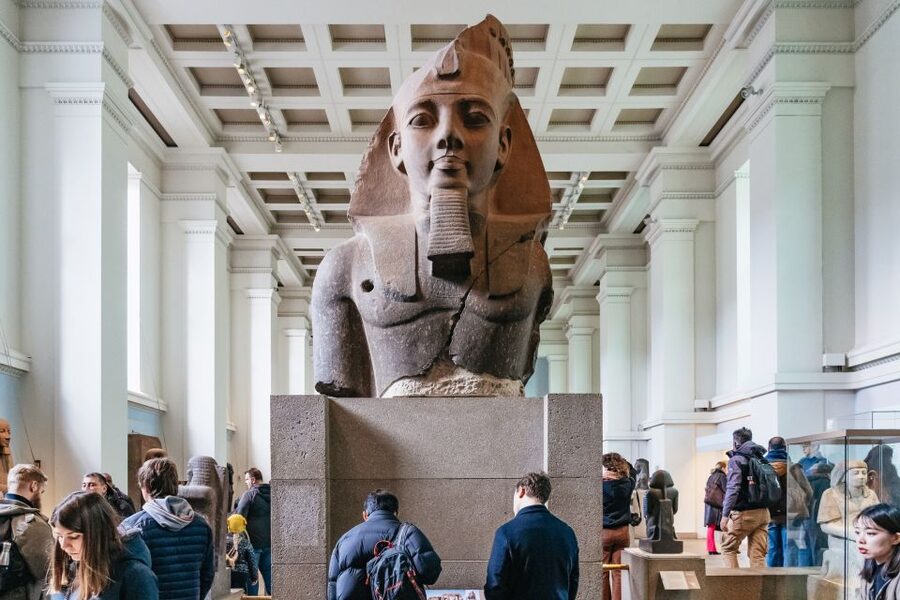
The museum is a public institution, so the $39 price is not mainly paying for the building or a basic visit. It pays for a planned route, a live guide, and the time saved by not having to decide what matters among thousands of objects.
I think that is fair value if you have only a short stay in London, are visiting the museum for the first time, or feel overwhelmed by large collections. The cost is modest compared with many guided sightseeing activities, and a small group can sometimes receive very personal attention.
The value is weaker if you enjoy wandering without a plan. One guide put the choice well in practical terms: this tour suits someone who wants the important objects in limited time, while independent visitors may prefer the slow process of discovering a huge museum for themselves.
A good compromise is to book the tour early in your museum visit, then stay on afterward. Use the guide to identify the galleries that deserve another hour or two. You get structure without giving up freedom.
Timing, group size, and comfort
The advertised duration is two hours, with starting times depending on availability. Off-peak periods may be more comfortable because the museum can be quieter, and one January visit benefited from lower crowd levels. You cannot count on having a private tour, but smaller groups clearly make questions and conversation easier.
The tour may be conducted in two languages at the same time when demand requires it. That can slow the pace and split your attention, particularly in rooms where sound already carries poorly. If you need one language only, confirm the arrangement before booking.
Comfortable shoes are essential. The route covers a large museum and involves standing and walking. Dress for the weather as well, since you may have time outside before entry or after the tour.
Free cancellation is available up to 24 hours before the experience for a full refund, and you can reserve now and pay later. Those terms are useful when your London schedule is still shifting, though you should still check your booking confirmation for the exact start time and ticket instructions.
Who should book this tour?
I would recommend it to first-time British Museum visitors, families who want a clear route, couples with only a morning or afternoon to spare, and anyone who finds major museums tiring to plan alone. It also suits people who want cultural context rather than a quick list of object names.
It is a good choice for visitors who like asking questions and hearing stories about how objects were made, used, collected, and debated. The stops at the Parthenon sculptures, Benin-related material if included in the guide’s route, and other contested objects can add a useful ethical layer to the visit.
I would hesitate if you strongly prefer silence, slow independent looking, or reading every label. You may also find the pace quick if you want detailed time with one period. In that case, enter on your own and choose a single area to study.
Should you book it?
Book this British Museum tour if you want the major objects explained in a sensible order and do not want to lose half your visit finding your way around. The Rosetta Stone, Parthenon sculptures, Roman works, Sutton Hoo, and Hoa Hakananai’a give you a strong first look at the collection.
The main caution is sound. Stay close to the guide, and be ready for a bilingual format or noisy galleries. At $39, the tour offers good value for a focused introduction, especially on a quieter date or in a small group. If you prefer to wander and make your own discoveries, save the money and use the tour’s highlighted route as a self-guided plan instead.
FAQ
How long is the British Museum guided tour?
The tour lasts two hours. Starting times depend on availability.
What languages are available?
Live guides are available in English, French, and Italian. Depending on demand, the tour may use two languages at the same time.
Where do I meet the guide?
Meet on the stairs near the pillars in front of the British Museum portals after passing the security check. The meeting point is inside the gates, not outside.
How do I receive my admission ticket?
Tickets are supplied one to two hours before the tour, usually through WhatsApp. If you do not have WhatsApp, contact the provider by email so the tickets can be sent there.
Is the tour wheelchair accessible?
Yes, the activity is wheelchair accessible.
Can I cancel the booking?
Yes. You can cancel up to 24 hours in advance for a full refund. You can also reserve now and pay later.
Just added in London
- Royal London Guided Sightseeing Tour and Thames River Cruise★ 4.0 · 31 reviews
- Roman Ruins to Blitz Bombings: A Walking Tour of London’s Fiery History★ 5.0 · 190 reviews
- Roman London Private Walking Tour★ 5.0 · 44 reviews
- Westminster Abbey, Big Ben, Buckingham Guided Tour of London★ 5.0 · 451 reviews
- River Thames Evening Cruise with Sparkling wine and Canapés★ 4.0 · 569 reviews
- Rock and Roll Walking Tour of Soho London★ 4.5 · 64 reviews
- London Private Chauffeur Half-Day or Full-Day Vehicle Rental★ 5.0 · 37 reviews
- Rich people behaving badly★ 5.0 · 47 reviews
Museums, compared.

Liverpool Football Club Museum and Stadium Tour
Read our review →
Tower of London and Crown Jewels Exhibition Ticket
Read our review →
Chelsea Football Club Stadium and Museum Tour
Read our review →



Browse the lists this tour appears in