
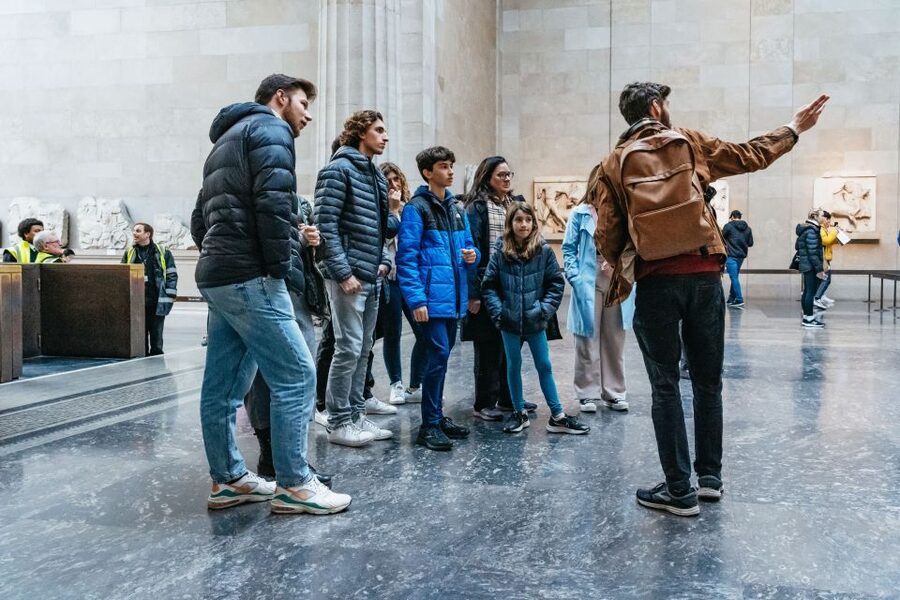
Reviewed · MUSEUMS
London: British Museum Guided Tour
The British Museum can feel like a city built inside one enormous building. This two-hour guided tour gives you a sensible route through its famous collections, from Mesopotamia and Egypt to Greece, instead of leaving you to wander past thousands of objects without a clue why they matter.
I like the small group size, capped at 10, and the chance to ask questions as you go. I also like the guide-led focus on famous pieces such as the Rosetta Stone and Elgin Marbles. The main catch is that galleries may be closed on the day, so your route can change.
Key points
- Small groups of up to 10: A manageable size for questions and conversation.
- English-speaking expert guides: Guides such as Diana, Wesley, and Vincent have been praised for clear explanations and flexible planning.
- Major ancient artifacts: See highlights connected with Mesopotamia, Egypt, and Greece.
- Two-hour format: Long enough for context, short enough to fit into a busy London day.
- Museum entry included: You do not need to arrange a separate admission ticket.
- Possible gallery closures: Some displays may be unavailable, so the exact route cannot be guaranteed.
Why the British Museum Needs a Guide
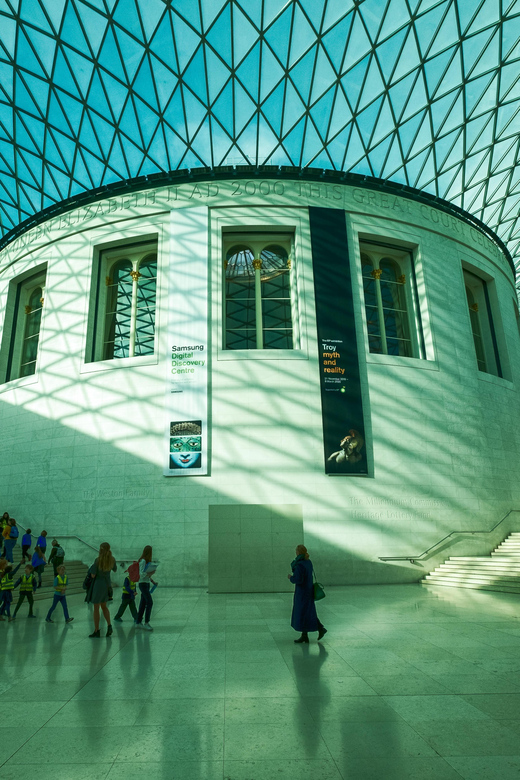
The British Museum is not a place you simply stroll through in an hour. Its collection covers civilizations separated by thousands of miles and years. Without a plan, you can spend ten minutes admiring a carved figure and still have no idea what it represents, who made it, or why it changed the way we understand the past.
A good guide supplies that missing frame. Instead of treating each object as an isolated display, the tour connects writing, religion, power, trade, burial customs, and art across different societies. You are encouraged to ask questions, not just listen to a speech.
That matters most in a museum where the grandest objects are not always the easiest to understand. A broken stone, a small clay tablet, or a fragment of sculpture can be more important than a dramatic statue, but only if someone explains its place in the story.
The two-hour limit is useful here. It forces the visit to stay focused. You will not see everything, and you should not expect to. You will get a guided introduction to selected parts of the collection, with time to grasp the main ideas before moving on.
More Museum Tours in London
- Tower of London and Crown Jewels Exhibition Ticket
★ 4.5 · 6,677 reviews - London: Chelsea Football Club Stadium and Museum Tour
★ 4.8 · 4,576 reviews - Chelsea FC Stadium Tours and Museum
★ 5.0 · 1,908 reviews
Meeting at Starbucks Across From the Museum
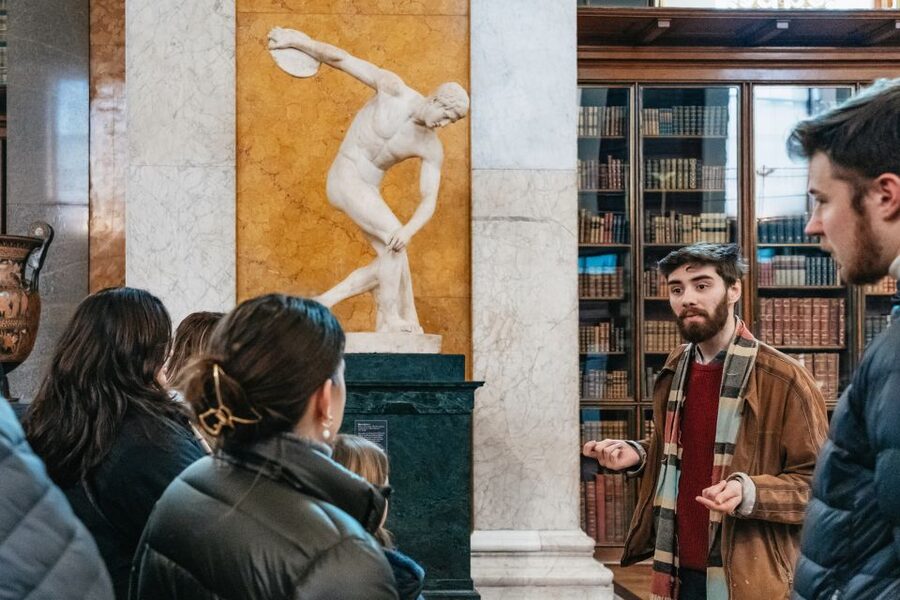
The meeting point is in front of Starbucks, directly across from the museum entrance. That is simple enough, but allow time to find the guide in the crowd and arrive before the stated start time.
The tour includes museum admission and a guide. You do not need to buy a separate entry ticket, and there is no hotel pickup or drop-off. Plan your route to the museum on your own and treat the meeting point as the start of the experience.
The guide speaks English, and the group is limited to 10 people. That number is small enough for the guide to hear your questions and adjust the pace, though the experience will still depend on the mix of people in your group.
The meeting location also gives you a useful visual landmark. You are not trying to identify a guide somewhere inside a huge museum. You meet outside, then enter together.
First Stops: Mesopotamia and the Birth of Writing
One of the strongest parts of the tour is its attention to Mesopotamia, the area often described as the cradle of civilization. Here, the guide can explain how early cities, government, religion, trade, and writing developed in close connection.
This section is valuable because Mesopotamian objects can look modest compared with the museum’s grand sculpture. A small tablet or seal may not stop you in your tracks, but it can reveal how people recorded business, law, ownership, and daily life.
I appreciate tours that give these objects proper attention. They show that civilization is not only about palaces and kings. It also depends on clerks, merchants, builders, farmers, and systems for keeping records.
Your guide may also connect Mesopotamia with later cultures in the museum. The point is not to claim that every civilization followed one straight path. It is to show how ideas moved, changed, and gained new meaning over time.
This is where an informed guide earns the cost of the tour. Labels can tell you the date and origin of an object. A live explanation can show why the object matters and how it fits with what you have just seen.
Ancient Egypt and the Rosetta Stone
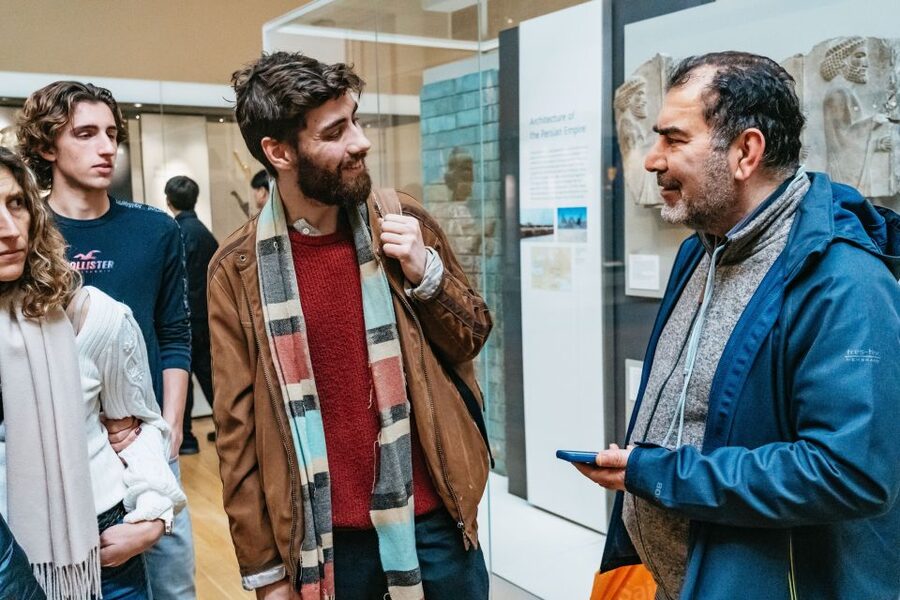
Ancient Egypt is one of the museum’s biggest draws, and the Rosetta Stone is its best-known object. The stone helped scholars compare the same decree written in three scripts, leading to the decipherment of Egyptian hieroglyphs.
You may already know that basic fact. The guide’s job is to make the object more than a famous name on a checklist. Look for the connection between language, political authority, and modern archaeology. The stone is not simply an Egyptian monument. It is also a record of how scholars pieced together a lost writing system.
The Egyptian displays offer a chance to discuss religious beliefs, royal power, and burial practices. The guide can help you read visual details that might otherwise pass unnoticed, from poses and symbols to the way figures are arranged.
You should expect the Rosetta Stone area to attract attention. A small group is helpful because you can stay near your guide rather than trying to hear a speech from the edge of a crowd. Still, the tour cannot promise a quiet viewing or unlimited time at any one object.
The best approach is to listen for the main explanation, ask your question, and then take a moment to look for the details the guide has pointed out. That turns a famous object into an active part of the visit.
Same trip, a completely different kind of day:
- London: The London Eye Entry Ticket
★ 4.6 · 35,875 reviews - From London: Harry Potter Warner Bros Studio Tour
★ 4.7 · 26,588 reviews - London: Westminster to Greenwich River Thames Cruise
★ 4.5 · 22,836 reviews - London: Madame Tussauds London
★ 4.6 · 20,915 reviews
Greek Sculpture and the Elgin Marbles
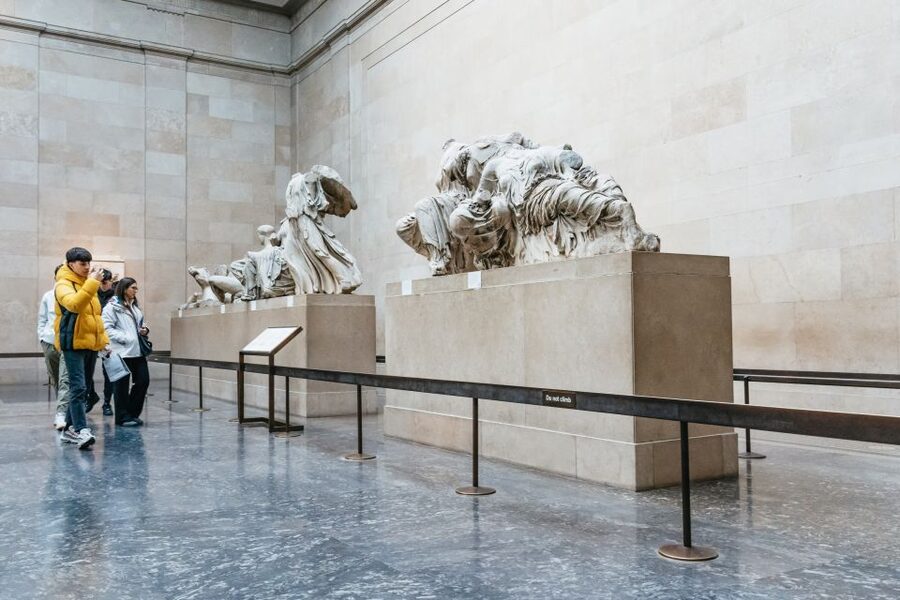
The Greek galleries bring a different set of questions. The Elgin Marbles, also called the Parthenon Sculptures, are celebrated for their artistic quality and historical importance. They also raise serious questions about ownership, removal, and the role of major museums.
The supplied tour details specifically place these sculptures among the highlights. A strong guide can explain what the figures once formed, how they related to the Parthenon, and why the collection remains the subject of debate.
This is an important part of the experience because it moves beyond admiration. You are not asked only to look at beautiful marble. You are invited to consider how objects leave their original settings, how museums acquire them, and how different countries understand cultural heritage.
Do not expect a full academic debate in a two-hour tour. Time is limited, and the guide must serve the whole group. Still, even a concise explanation adds useful context that you will not get from simply taking a photograph.
If Greek art is your main reason for booking, tell the guide at the beginning. The small group format may allow some flexibility, and previous guide Diana was praised for shaping the route around personal interests. That does not guarantee a private itinerary, but it is a good reason to speak up early.
A Glimpse Beyond the Most Famous Objects
The tour is not limited to the three headline attractions. The stated highlights also include the Rosalila Temple’s intricate details, along with objects from cultures beyond Mesopotamia, Egypt, and Greece.
That broader range matters. The British Museum’s collection is about connections between societies, not only the most photographed pieces. You may find that a less familiar object provides the clearest explanation of a particular ritual, technology, or artistic tradition.
The guide’s role is to decide what can be covered well in the available time. The route may change based on gallery access, crowd levels, and the interests of the group. One important practical warning is that parts of the museum may be closed. A January visit received a lower rating because large areas were unavailable, even though the guide was described as excellent.
That is not necessarily a flaw in the tour itself, but it affects expectations. Book this as a focused introduction, not a guarantee that every major room will be open.
What the Guides Add
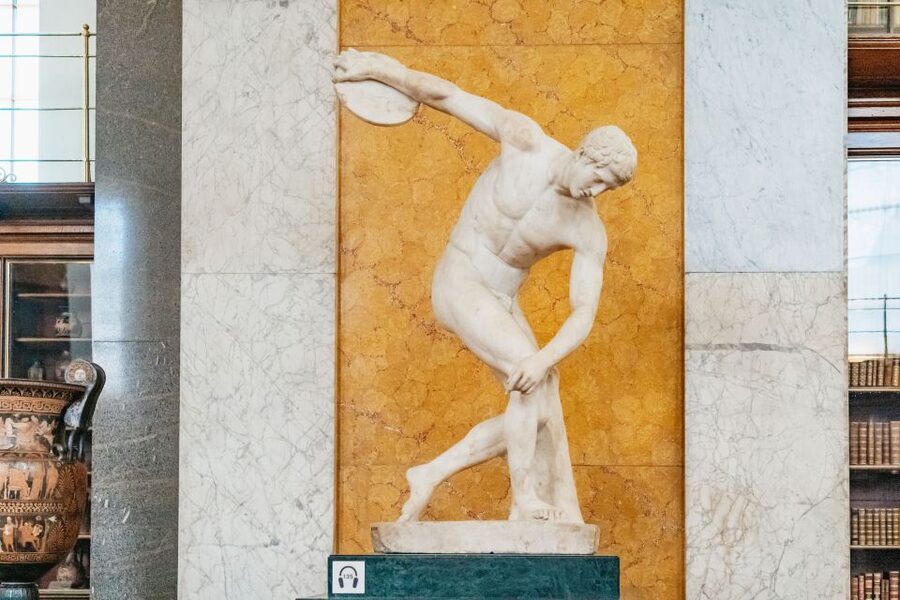
The guide is the heart of this experience. Several guides are named in the feedback, including Wesley, Vincent, and Diana. Their strengths are slightly different in the comments: Wesley was praised for adjusting the visit to personal interests, Diana for her specialist knowledge and flexibility, and Vincent for his strong command of the subject.
The consistent theme is clear explanation. You are paying for interpretation, not just a person who walks you from room to room.
A good guide should help you notice links between objects, explain unfamiliar terms, and make space for questions. This tour is designed for that kind of exchange. The description promises lively discussion, and the group size gives you a better chance to take part than you would on a large coach-style visit.
Diana also communicated with a couple before the tour and adjusted the plan for them. That suggests it is worth contacting the provider if you have a particular interest, though the available information does not promise a fully private or custom route.
The language is English only. If you are comfortable following an English-speaking discussion about archaeology, art, and ancient cultures, the format should suit you. If you need another language, this is not the right booking.
Is Two Hours Enough?
Two hours is enough for orientation and major highlights. It is not enough for a full survey of the British Museum.
I see that as a fair trade. A first visit can become tiring when every gallery competes for your attention. A shorter guided route helps you leave with a few clear ideas instead of a blur of names and dates.
You should expect to walk between galleries and remain standing for much of the visit. The information provided does not describe a detailed accessibility plan, so contact the provider directly if you have mobility needs or require a particular arrangement.
After the tour, you can decide which section deserves more of your own time. If you want to return to a favorite gallery, check the museum’s arrangements for continuing independently. The tour itself lasts two hours, and it does not include food, drinks, or transport.
Is the $90 Price Fair?
At $90 per person, this is not a budget museum visit. The value depends on how much help you want making sense of the collection.
For a first-time visitor who feels overwhelmed by the museum’s size, the price can be reasonable. Entry is included, the group is limited to 10, and you receive two hours with a live guide rather than relying only on labels or a downloadable audio track.
The cost is harder to justify if you already know the museum well and prefer to explore alone. It may also feel high if several galleries are closed or if your group has very different interests.
The strongest value comes from the guide’s ability to focus the visit. Wesley’s flexibility and Diana’s specialist approach suggest that you may get more from the tour by stating what interests you before the walk begins. Ask about Mesopotamia, Egyptian writing, Greek sculpture, or another specific collection rather than waiting for the guide to guess.
The reserve-now-and-pay-later option also helps if your London schedule is still changing. You can hold a place without paying at the time of booking. Cancellation is free up to 24 hours before the tour for a full refund.
Who Should Book This Tour?
I would recommend it to a first-time British Museum visitor who wants structure and explanation. It also suits anyone who enjoys asking questions and prefers a small group over a large, fixed lecture.
Families with older children may find the stories and objects easier to follow with a guide, though the activity information does not give a specific minimum age. History students, art lovers, and visitors with a special interest in Mesopotamia, Egypt, or Greece should also consider it.
You may want to skip it if you have already studied the museum extensively, need a language other than English, or want to spend an entire day moving at your own pace.
Pets are not allowed. Food and drinks are not included, and hotel transfers are not provided.
Should You Book the British Museum Guided Tour?
Book this tour if the British Museum’s size worries you, or if you want famous objects explained rather than merely photographed. The maximum group of 10 and the record of flexible guides such as Diana and Wesley make it more personal than a basic orientation walk.
Go in knowing that two hours covers highlights, not the whole museum. Gallery closures can affect the route, and $90 is a serious price for a short activity.
For a first visit, I think the structure and expert conversation can justify the cost. Tell the guide what you care about, arrive at the Starbucks meeting point with time to spare, and treat the tour as your introduction to the museum, not your final word on it.
FAQ
Where does the British Museum tour meet?
The guide meets you in front of Starbucks, directly across from the museum entrance.
How long does the guided tour last?
The tour lasts two hours.
Is museum entry included?
Yes. Museum entry and a tour guide are included in the price.
What is the price per person?
The listed price is $90 per person.
What language is the tour conducted in?
The live tour guide speaks English, and English is the stated tour language.
How large is the group?
The activity is a small-group tour limited to 10 participants.
Which museum highlights may be included?
The stated highlights include Mesopotamian artifacts, ancient Egyptian objects, the Rosetta Stone, the Elgin Marbles, and details from the Rosalila Temple.
Are food and drinks included?
No. Food and drinks are not included.
Is hotel pickup and drop-off provided?
No. Hotel pickup and drop-off are not included.
Can I cancel for a refund?
Yes. You can cancel up to 24 hours in advance for a full refund.
Can I reserve now and pay later?
Yes. The booking option allows you to reserve your place and pay later.
Are pets allowed?
No. Pets are not allowed on the activity.
Just added in London
- Royal London Guided Sightseeing Tour and Thames River Cruise★ 4.0 · 31 reviews
- Roman Ruins to Blitz Bombings: A Walking Tour of London’s Fiery History★ 5.0 · 190 reviews
- Roman London Private Walking Tour★ 5.0 · 44 reviews
- Westminster Abbey, Big Ben, Buckingham Guided Tour of London★ 5.0 · 451 reviews
- River Thames Evening Cruise with Sparkling wine and Canapés★ 4.0 · 569 reviews
- Rock and Roll Walking Tour of Soho London★ 4.5 · 64 reviews
- Rich people behaving badly★ 5.0 · 47 reviews
- Speedboat Sightseeing: Embankment OR Westminster Pier -45 Minutes★ 5.0 · 288 reviews
Museums, compared.

Liverpool Football Club Museum and Stadium Tour
Read our review →
Tower of London and Crown Jewels Exhibition Ticket
Read our review →
Chelsea Football Club Stadium and Museum Tour
Read our review →



Browse the lists this tour appears in