
Reviewed · MUSEUMS
London: British Museum Archaeology Course and Guided Tour
The British Museum can feel like an entire world packed under one roof. This 5.5-hour course gives that world a clear route, moving from early human tools to the first cities, ancient empires, and later cultures. Instead of simply pointing out famous objects, archaeologist Rossa explains how archaeologists read them and how scholars reconstructed lost languages.
I like the human story running through the tour, and I like the practical archaeology lessons, especially the explanations of Egyptian hieroglyphs, Sumerian cuneiform, and dating ancient objects. The chance to play the Royal Game of Ur adds a welcome bit of fun to a long day indoors.
The main consideration is the length. Five and a half hours is a serious museum session, with plenty of standing and a lot of information. Planned breaks help, and folding stools are available at the entrance, but this is best for people who genuinely enjoy history rather than anyone seeking a quick highlights walk.
Key points at a glance
- A chronological route through human civilization: Move from early African origins and Neanderthal tools to Mesopotamia, Egypt, Assyria, Greece, Rome, the Vikings, and the Aztecs.
- A working archaeologist as your guide: Rossa combines object-based teaching with stories about discovery, excavation, interpretation, and the people who first decoded ancient writing.
- Famous objects with useful context: See the Rosetta Stone, Parthenon Marbles, Sutton Hoo Helmet, and Lewis Chessmen as part of a larger story.
- Ancient games bring the past to life: Try the Royal Game of Ur, a Mesopotamian board game whose rules were reconstructed by British Museum scholars.
- A strong family option for older children: The clear storytelling and hands-on game held the attention of children around age 13.
- Good practical planning matters: Meet outside Russell Square Station, bring comfortable shoes and water, pack lunch, and leave large luggage behind.
Why this British Museum course feels different
The British Museum is free to enter, but free entry does not make it easy to understand. Its galleries cover thousands of years and many parts of the world. You can walk past a display of cuneiform tablets, Egyptian statues, or Viking objects without seeing how they fit into the larger story.
This experience gives you that structure. Rossa guides you through the development of human societies in time order, connecting tools, writing, religion, trade, cities, and empire. That approach is especially useful if this is your first visit, since you get a framework for exploring the museum on your own afterward.
The emphasis is not only on beautiful or famous objects. You learn how archaeologists ask questions. What was an object used for? How did it reach the place where it was found? How can its age be estimated? What can writing tell us, and what does it leave out?
That makes the tour more useful than a standard list of museum highlights. You are not just shown an artifact. You are shown how to think about it.
More Museum Tours in London
- Tower of London and Crown Jewels Exhibition Ticket
★ 4.5 · 6,677 reviews - London: Chelsea Football Club Stadium and Museum Tour
★ 4.8 · 4,576 reviews - Chelsea FC Stadium Tours and Museum
★ 5.0 · 1,908 reviews
Meeting at Russell Square Station
The day starts outside Russell Square Station. Your guide holds an iPad displaying the name of the local partner, so arrive about 10 minutes early and look for that sign.
From the station, it is roughly a five-minute walk to the British Museum. This short start is helpful because you do not need to find the correct museum entrance alone, though you should still allow time for city traffic, station exits, and the large crowds that can gather around the museum.
The activity is in English and is wheelchair accessible. If you have particular mobility needs, contact the provider before booking. The tour is suitable for people with limited mobility, but five and a half hours in a museum can still be tiring.
Do not bring large luggage. A day pack is allowed according to the practical guidance, but pack lightly. Comfortable shoes are essential, and water is a good idea.
From early humans to the first cities
The teaching begins with the origins of humankind and early tool use. You look at how archaeologists use physical remains to build a picture of life before written records. This section sets up an important point: the story of humanity is much older than the civilizations that usually get the most attention.
The route then moves toward Mesopotamia, where early cities and writing changed how people organized society. This is where the course explains Sumerian cuneiform, often described as the world’s earliest written language.
Cuneiform can look like a collection of small marks pressed into clay. The lesson is in seeing those marks as a system created for real needs such as administration, trade, law, and record keeping. You also hear about how scholars worked out what the signs meant. That process helps make ancient writing feel less remote.
For families, this part can be especially effective because it turns a display case into a puzzle. You are not merely looking at old tablets. You are asking why someone made them and how a modern scholar could read them thousands of years later.
Egypt, the Rosetta Stone, and the work of translation
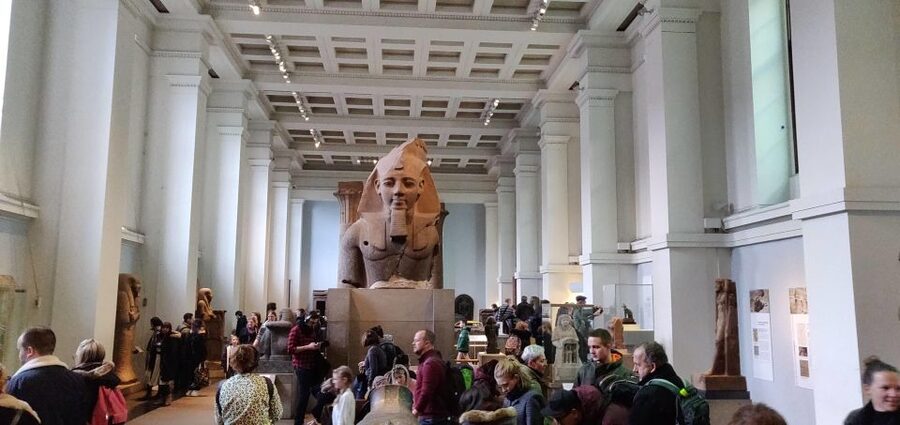
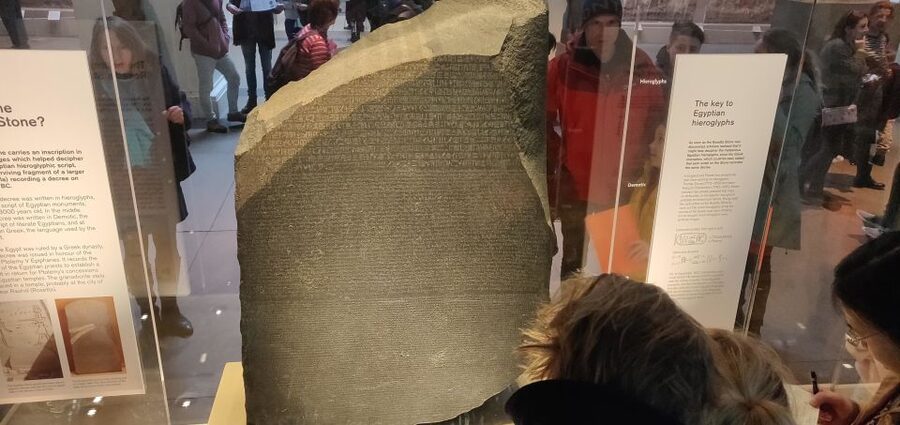
The Ancient Egypt galleries bring some of the museum’s most recognizable objects into the story. The Rosetta Stone is the key example, not just because it is famous, but because it helped scholars compare the same text written in different scripts.
The course explains how Egyptian hieroglyphs were deciphered and why the process took serious study. That background gives the stone a purpose beyond its fame. You begin to see it as a tool in the recovery of a lost written language.
The Egyptian galleries can be crowded, and the museum has more objects than any single half-day can cover. That is both the strength and the limitation of this experience. You get a carefully chosen selection, but you will not see every important room or display.
If you want to study Egyptian sculpture, mummies, or smaller objects at your own pace, plan to return after the tour. The guided course gives you the framework. A second visit lets you linger.
Same trip, a completely different kind of day:
- London: The London Eye Entry Ticket
★ 4.6 · 35,875 reviews - From London: Harry Potter Warner Bros Studio Tour
★ 4.7 · 26,588 reviews - London: Westminster to Greenwich River Thames Cruise
★ 4.5 · 22,836 reviews - London: Madame Tussauds London
★ 4.6 · 20,915 reviews
Assyria and the power of an empire
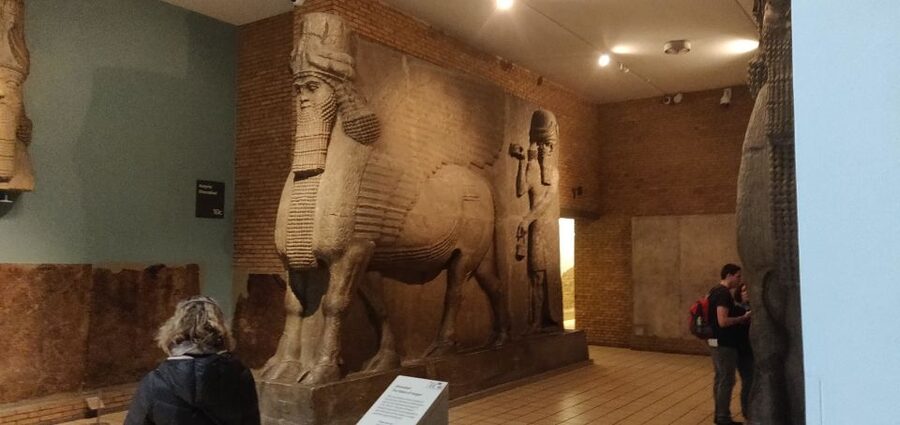
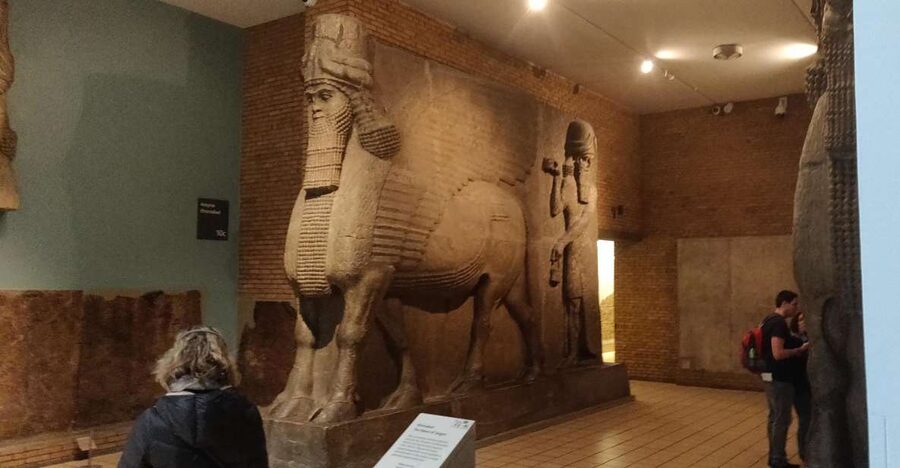
The Assyrian galleries show a different side of ancient civilization. Here the focus shifts toward kingship, military power, palace decoration, and the way rulers presented themselves.
The reliefs are visually striking, but their real value becomes clearer when you know what they were meant to communicate. Images of rulers, animals, battles, and ceremonies were not random decoration. They helped tell an official story about authority and control.
This is one of the benefits of having an archaeologist guide you. Rossa can connect the object in front of you with its original setting and purpose, while also explaining the limits of what scholars can know. A carved scene may tell us a great deal about royal ideals, but it may not give a neutral account of everyday life.
The Assyrian section also fits nicely with the earlier discussion of writing. Monumental images and inscriptions worked together. One showed power, while the other named people, places, victories, and claims.
Greece and Rome, with the Parthenon Marbles
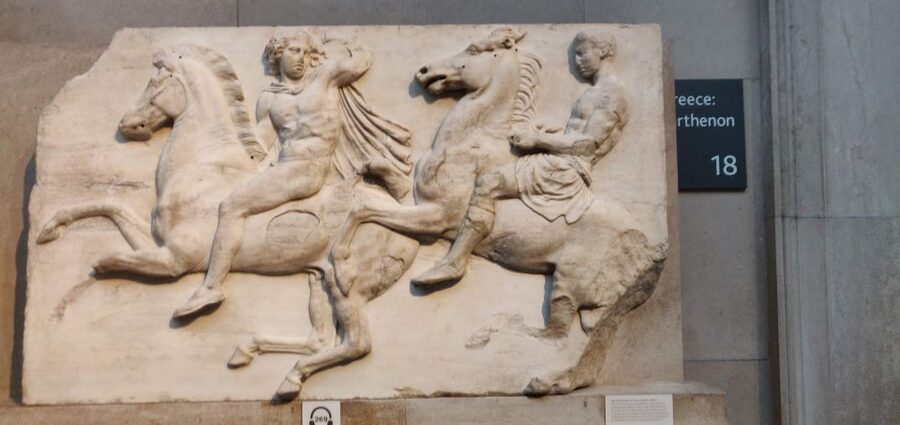
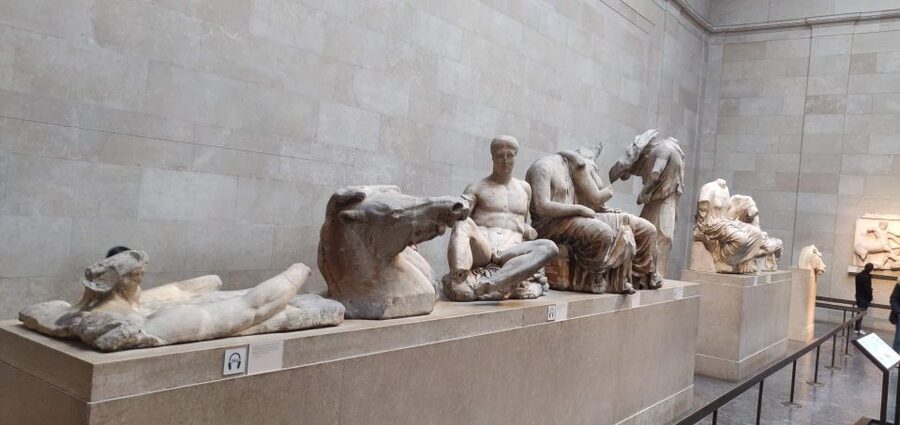
The Ancient Greece and Rome galleries bring a new set of questions about art, politics, citizenship, religion, and empire. The Parthenon Marbles are among the best-known objects here, and they offer a chance to discuss both ancient Greek culture and the modern history of collecting.
You see the sculptures in a museum setting far from the building they once decorated. That makes them useful for thinking about how objects move, who acquires them, and how museums explain their collections.
The experience follows the museum’s major ancient civilizations rather than treating each gallery as an isolated stop. Greece leads into Rome, and Rome leads into questions about expansion, administration, and what happens when major empires weaken or collapse.
That chronological approach keeps the day from becoming a string of disconnected facts. It also gives you a better sense of change over time. Civilizations borrow from one another, reshape earlier ideas, and leave behind evidence that later societies interpret in new ways.
Vikings, Aztecs, and the wider human story
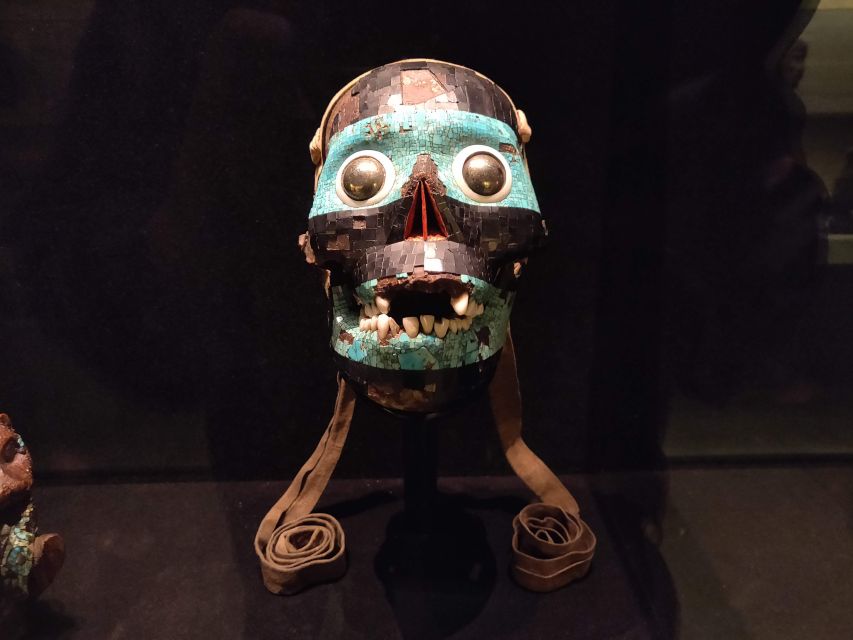
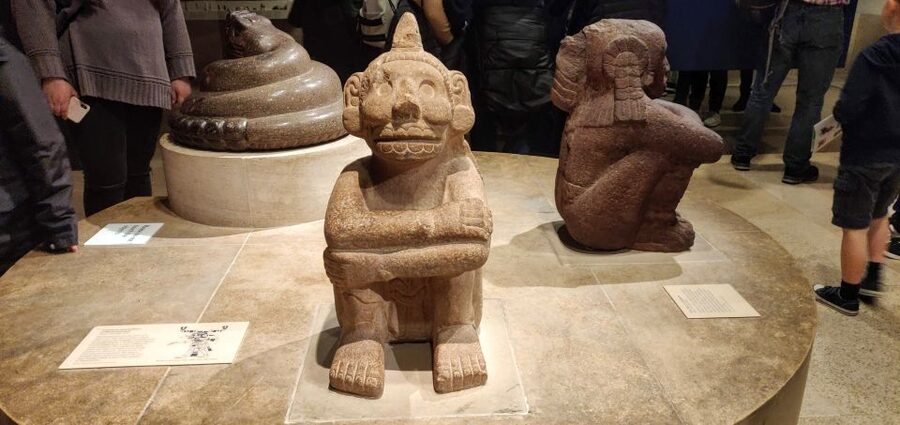
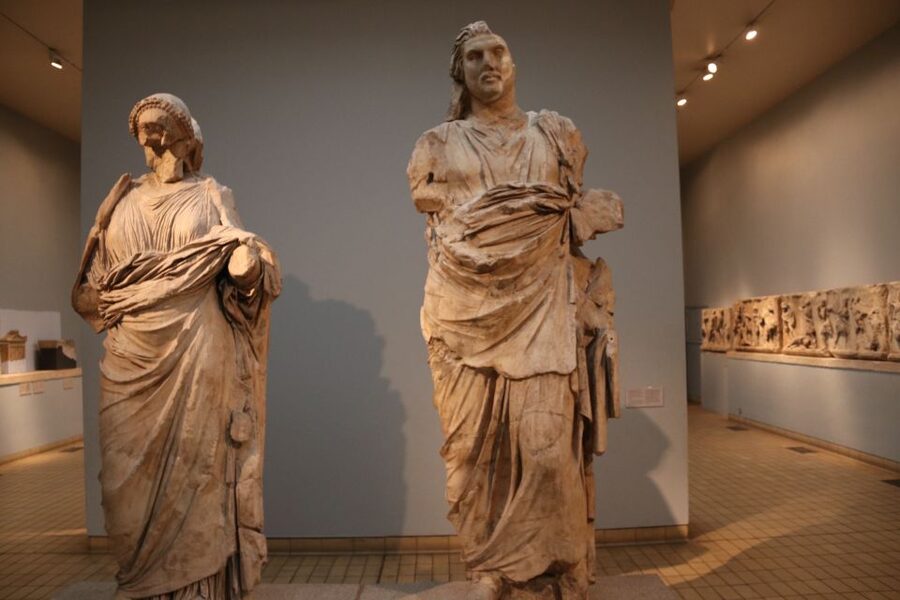
The tour also reaches beyond the most familiar Mediterranean and Near Eastern civilizations. The Viking displays and Aztec material widen the picture, reminding you that human history did not unfold in one straight line centered on Egypt, Greece, and Rome.
The Sutton Hoo Helmet is a major highlight. It connects archaeology with burial practice, status, craftsmanship, and the discovery of a richly furnished Anglo-Saxon ship burial. The object is easy to admire, but the archaeological setting is what gives it meaning.
The Lewis Chessmen offer a more intimate view of the medieval past. Unlike monumental sculpture or imperial reliefs, chess pieces suggest play, status, travel, and everyday intellectual life. They are also memorable because you can imagine people handling them.
The Aztec galleries add another cultural and geographic point of comparison. By placing these objects alongside those from Europe, Africa, and Asia, the course resists reducing world history to a single regional sequence.
You should not expect a full treatment of every culture represented in the museum. The aim is to choose objects that help tell the story of human development. If you want a specialist session on Viking archaeology or Aztec religion, this is not that. If you want a broad introduction with memorable examples, it works well.
The Royal Game of Ur gives the day a lift
Long museum tours need a change of pace. At some point, even an enthusiastic history fan appreciates sitting down and doing something rather than listening and looking.
The Royal Game of Ur provides that break. This ancient Mesopotamian board game is one of the oldest known games of its kind, and British Museum scholars reconstructed its rules. You get to play it rather than only hearing about it.
That small activity makes the past feel more immediate. A game gives you a direct connection with ordinary human behavior: people made rules, competed, took chances, and spent leisure time together.
It also helps younger participants stay engaged. Several families found that the clear explanations and interactive moments worked well for children around 13. I would still think carefully before booking for very young children, since the course is long and information-heavy.
How archaeologists date objects and read the past
The final part focuses on archaeological method. You learn how sites become buried, how objects are found, and how scientists estimate age.
This is important because museum displays can make the past seem certain. In reality, archaeologists often work with incomplete evidence. A burial may be disturbed, an inscription may be damaged, and an object may have been moved far from where it was made.
Dating methods help establish a timeline, but the course also shows that interpretation matters. An artifact can be old without telling you exactly how it was used. A written record can be detailed while reflecting only the viewpoint of a ruler or administrator.
That mix of evidence and uncertainty is one of the most useful lessons of the day. You leave with more respect for the work behind a museum label, not just the object on display.
Five and a half hours inside the museum
The stated duration is about 5.5 hours, with breaks built into the day. One break is around 40 minutes, and that is enough for a quick lunch but not a leisurely restaurant meal.
Pack a lunch if you want to keep the break simple. Food outlets are available in the museum, but time can pass quickly when you are ordering, finding a seat, and returning to the group. Bring water as well.
Standing is another practical concern. The museum provides folding stools near the entrance, and taking one can make a real difference. This tip is especially useful for older people, anyone with limited stamina, or anyone who finds long gallery talks tiring.
The tour may run longer than the planned time if the group has many questions. That can be a benefit for curious people, but it makes the day harder to fit around a fixed dinner reservation or another timed attraction.
Is $81 good value?
At $81 per person, the price is not simply paying for museum admission. General entry to the British Museum is free. You are paying for a qualified archaeologist, a five-and-a-half-hour teaching session, a planned route, and the time saved by not having to build your own explanation from wall labels and guidebooks.
For someone who wants only to see the Rosetta Stone and leave, this is poor value. You can enter the museum free and walk through selected galleries yourself.
For someone who wants the museum to make sense, the price is more reasonable. A long private lesson in archaeology, paired with access to major collections, can justify the cost if you are interested in ancient civilizations. The strongest value comes when you listen actively, ask questions, and continue exploring on your own after the tour.
The free entrance also means you can return to the museum later without paying another admission fee. That makes the guided day a useful first pass, especially if you are in London long enough for a second visit.
Who should book this experience?
I would choose this tour for:
- First-time British Museum visitors who want a clear route
- Families with older children or teenagers who enjoy history
- Adults interested in archaeology, ancient writing, and museum interpretation
- People who prefer a live guide to an audio guide
- Anyone who wants context for major objects rather than a rapid list of names
I would hesitate if you dislike long indoor tours, need lots of independent time, or want to focus on one narrow culture. The pace is intensive, and the amount of information is high.
The guide’s style matters here. Rossa is described as energetic, clear, and able to keep a group engaged across the full session. He also handled a small booking rather than cancelling it, which is useful if you are planning around a tight London schedule. His storytelling is a major part of the value, so the experience is likely to be strongest when he is leading your date.
Booking details worth knowing
You meet outside Russell Square Station 10 minutes before the start time. The museum is about a five-minute walk away, and the tour finishes at the British Museum.
The activity is English-language only. It includes the guided tour and museum entrance, but not lunch. Large bags and luggage are not allowed, so use a small day pack if needed.
You can cancel up to 24 hours before the start for a full refund. You can also reserve now and pay later, which helps if your London schedule is still shifting.
Should you book the British Museum archaeology course?
Book it if you want the British Museum to become a connected story rather than a collection of impressive rooms. The strongest parts are Rossa’s archaeology-based explanations, the lessons on deciphering hieroglyphs and cuneiform, and the way famous objects are tied to wider human development.
Skip it if you only have an hour, want a relaxed self-guided visit, or prefer to spend most of your time sitting quietly with one collection. For everyone else, especially families with history-loving teenagers, this is a serious but rewarding way to meet the museum.
Bring water, wear good shoes, take a folding stool, and pack lunch. Then give yourself permission to return another day for the objects you could only pass by during the guided route.
FAQ
How long does the British Museum archaeology course last?
The experience lasts about 5.5 hours, including guided teaching and breaks.
Where does the tour begin?
Meet your guide outside Russell Square Station. The guide will hold an iPad displaying the name of the local partner.
Where does the tour finish?
The experience finishes at the British Museum.
Is entrance to the British Museum included?
Yes. Museum entrance and the guided tour are included in the price.
Is lunch included?
No. Lunch is not included. You have a break during the day, so bring a packed lunch or use one of the museum food outlets.
What languages is the tour offered in?
The live tour is offered in English.
Is the experience wheelchair accessible?
Yes. The activity is wheelchair accessible and suitable for people with limited mobility. Contact the provider in advance if you have special requirements.
Can I bring luggage?
No. Large bags and luggage are not allowed. A small day pack is permitted according to the practical guidance.
Just added in London
- Royal London Guided Sightseeing Tour and Thames River Cruise★ 4.0 · 31 reviews
- Roman Ruins to Blitz Bombings: A Walking Tour of London’s Fiery History★ 5.0 · 190 reviews
- Roman London Private Walking Tour★ 5.0 · 44 reviews
- Westminster Abbey, Big Ben, Buckingham Guided Tour of London★ 5.0 · 451 reviews
- River Thames Evening Cruise with Sparkling wine and Canapés★ 4.0 · 569 reviews
- Rock and Roll Walking Tour of Soho London★ 4.5 · 64 reviews
- London Private Chauffeur Half-Day or Full-Day Vehicle Rental★ 5.0 · 37 reviews
- Rich people behaving badly★ 5.0 · 47 reviews
Museums, compared.

Liverpool Football Club Museum and Stadium Tour
Read our review →
Tower of London and Crown Jewels Exhibition Ticket
Read our review →
Chelsea Football Club Stadium and Museum Tour
Read our review →

Browse the lists this tour appears in