
Reviewed · HISTORICAL TOURS
Liverpool: Theatrical History Tour and The Dead House
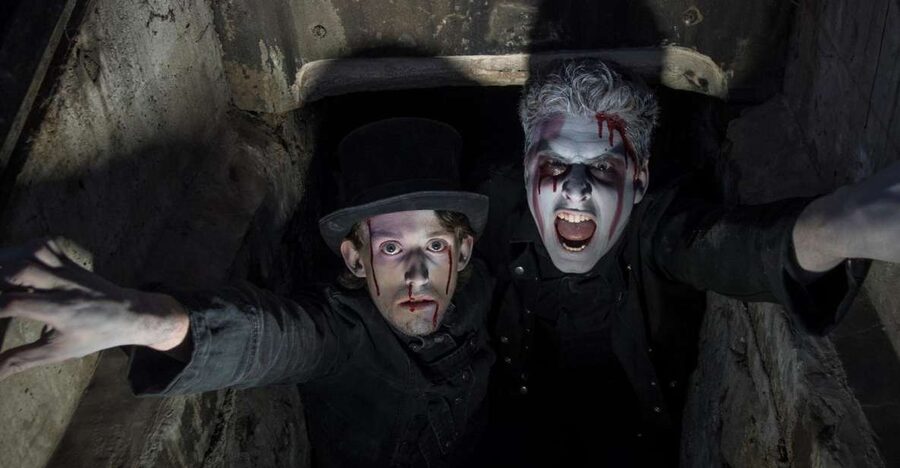
Liverpool’s Dead House is the main event here: an underground morgue reached through a trapdoor beneath the Church of Our Lady and St. Nicholas. The theatrical guides build toward it with jokes, grisly stories, audience participation, and a touch of fright. I like the way the tour turns old streets into a stage, and I like that the finale takes you somewhere normally closed to the public. Bring a torch, though, and think twice if you dislike tight, dark, uneven places.
I also like the route’s mix of grand Liverpool and grim Liverpool: Castle Street’s lofty banking halls, the Town Hall’s civic splendor, crooked lanes, and the old churchyard. The main drawback is practical rather than historical: this is not wheelchair accessible, not suited to people with limited mobility or visual impairments, and the underground entry is made at your own risk.
Key points to know before you book
- The Dead House is the finale: Enter a morgue that has been closed to the public for more than a century.
- The route covers Liverpool’s first seven streets: Expect central landmarks, back lanes, churchyard corners, and old commercial streets.
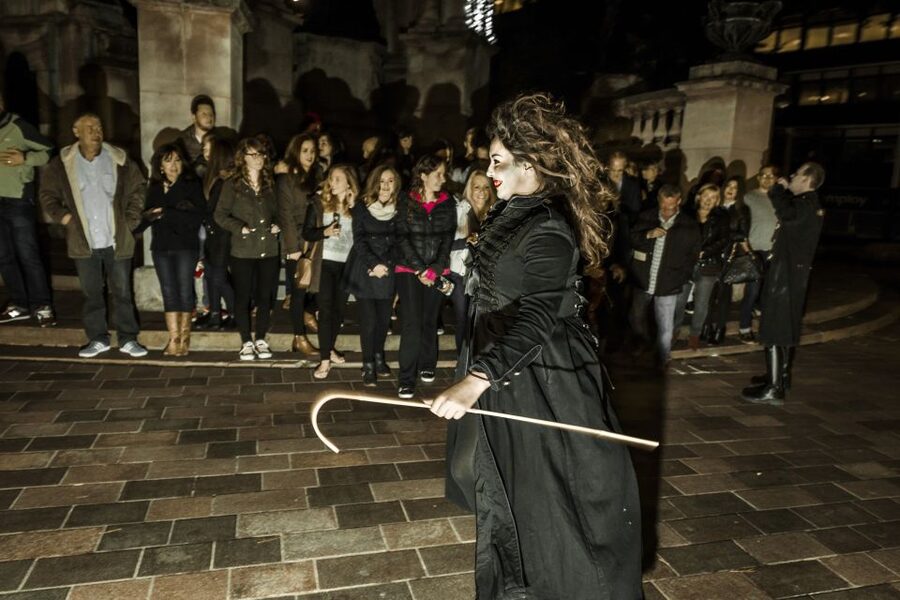
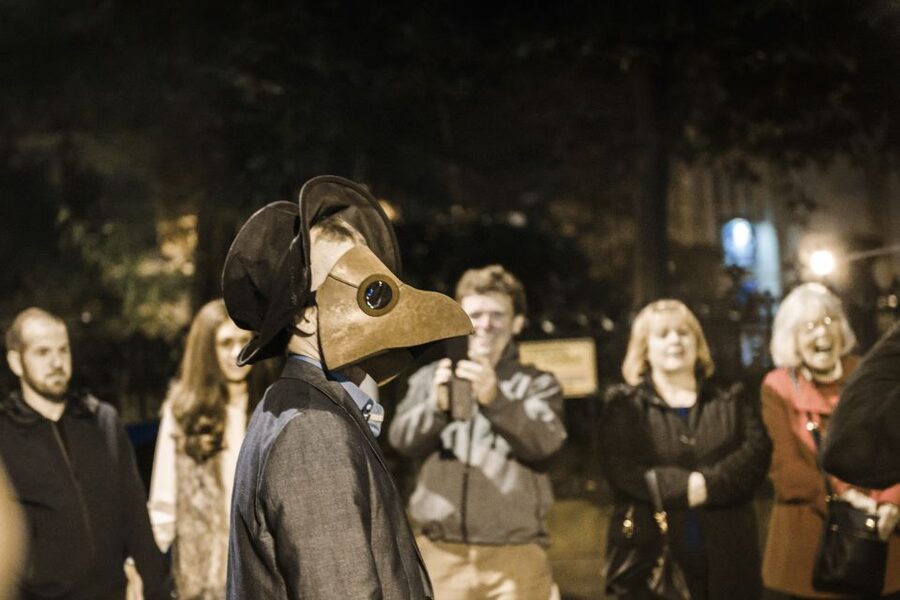
- The guides perform rather than lecture: Humor, character work, audience participation, and staged scares shape the experience.
- Bring your own torch: Torches are not supplied, and the underground section is dark.
- The setting is historic, not a polished attraction: The Dead House is an unusual, restricted space entered at your own risk.
- The tour costs $26 and lasts 1.5 hours: That is fair value if you want both a city walk and live entertainment.
Why the Dead House makes this Liverpool tour different
Many city walks finish at a famous building or a viewpoint. This one finishes below ground, inside a former morgue with iron grates that once allowed local people to look at the faces of the dead.
That detail gives the tour its unusual edge. The Dead House was not designed as a spooky attraction. Its grim reputation came from its real use, and the theatrical performance plays with that fact rather than simply adding made-up ghost stories. The American writer Herman Melville gave the place its memorable name, Liverpool Dead House, because of its gruesome character.
You also hear about the building’s later history. During the Second World War, the space served as a temporary police station. That change of use makes the site more than a haunted finale. It is a small record of how Liverpool’s old buildings were adapted over time.
The underground room is in the quiet grounds of the Church of Our Lady and St. Nicholas. You enter through a trapdoor, then make your way down into a space that has been closed to the public for over 100 years. The supplied information does not give exact measurements or a detailed description of the stairs, so you should treat the access as a potentially awkward part of the tour, especially if you have mobility concerns.
More history walks in Liverpool:
- A Walk Through Time: History of Liverpool Walking Tour
★ 5.0 · 911 reviews - Best Of Liverpool Heritage, History & Culture Guided Walking Tour
★ 5.0 · 539 reviews - History Guided Tour of Liverpool and the Beatles
★ 5.0 · 408 reviews
Starting at Queen Victoria Monument in Derby Square
The tour begins at the Queen Victoria Monument in Derby Square. This is a practical meeting point in central Liverpool, and the monument gives you a clear landmark rather than an anonymous street address.
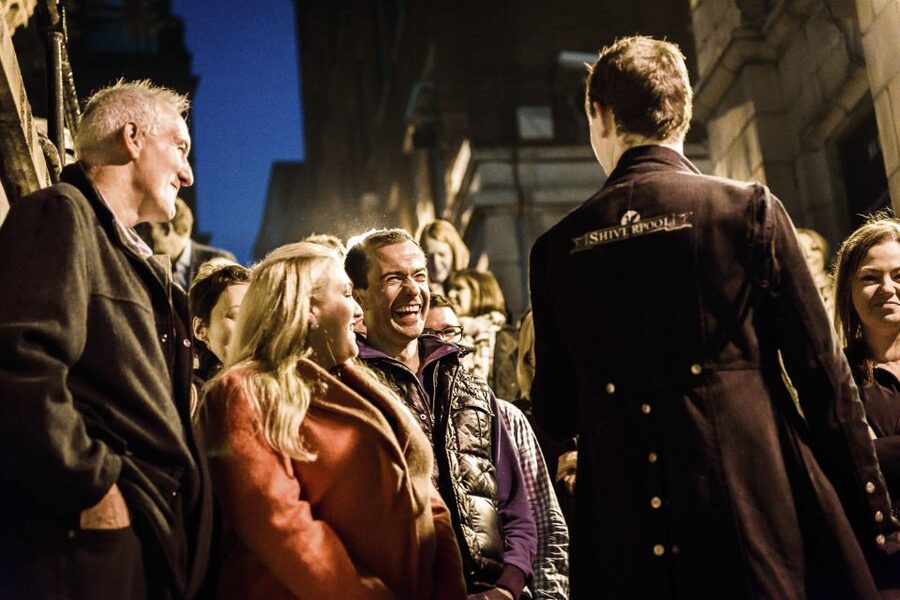
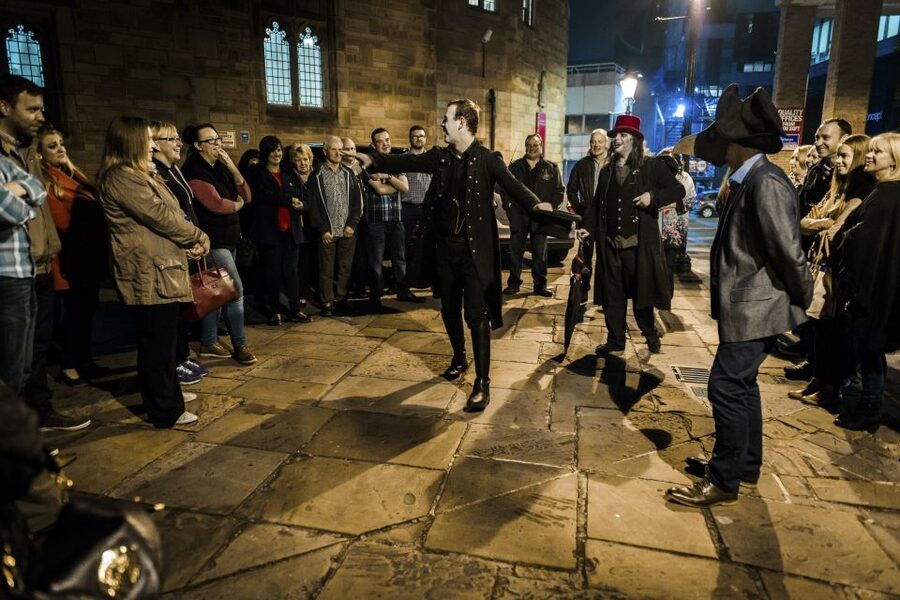
From here, your guide sets the tone. This is not a quiet historical walk led by someone reading dates from a folder. The guides use street theater, costumes, character work, and humor to turn the city’s past into a live performance. You may be asked to join in, respond to the guides, or play along with the story.
That style is central to the experience. If you like a guide who keeps a group laughing and involved, you should enjoy the opening. If you prefer long, detailed explanations with no performance, this may feel too theatrical.
The guides have been praised for their comic timing, friendly manner, and ability to keep both the tour group and curious passersby entertained. The act works as a double act, with the characters shifting between funny, dramatic, and deathly serious moods.
Walking Liverpool’s original seven streets
The first part of the route looks at Liverpool’s original seven streets. The walk takes about 15 minutes at one stage, followed by longer sections of roughly 25 minutes and 15 minutes. These timings suggest a steady city walk broken up by stops and performances rather than a nonstop march.
The value here is the contrast between the Liverpool you see today and the older street pattern beneath it. The route takes you through the central commercial district, but the guides focus on the less familiar corners: crooked back alleys, narrow lanes, and older passages that are easy to ignore when you are hurrying between major sights.
I like this part because it gives the city a sense of layers. You are not only being shown a famous facade. You are being directed toward the spaces between the big buildings, where the theatrical storytelling can make an ordinary lane feel strange and unfamiliar.
The history comes through stories rather than a formal lecture. Expect odd facts, grim incidents, and comic interruptions. One of the strongest features of the experience is the way the guides bring past events into the street itself, using gestures, voices, and short scenes.
Castle Street’s banking halls and Liverpool Town Hall
Castle Street provides one of the grander stops. Its lofty banking halls show Liverpool’s commercial ambition, a useful counterpoint to the narrow alleys and macabre tales elsewhere on the route.
The tour does not treat the city as only spooky. You see evidence of wealth, civic pride, trade, and public power. That range matters because the Dead House has more impact when you have first seen the polished side of the city.
Liverpool Town Hall is another major stop, with about 15 minutes set aside for the guided visit. Its regal opulence gives the theatrical guides a large, formal backdrop for their performance. You can expect the guide to use the building’s appearance and civic role as part of the story rather than simply point out its exterior and move on.
The exact level of interior access is not specified, so do not book this expecting a full Town Hall tour. Think of it as a guided stop along the walking route, with the guide supplying the historical and dramatic context.
A few more half-days in Liverpool worth comparing
- Liverpool: Liverpool Football Club Museum and Stadium Tour
★ 4.8 · 10,764 reviews - Beatles Magical Mystery Tour
★ 5.0 · 9,266 reviews - Liverpool: “Blue Route” – City & Beatles Tour
★ 5.0 · 8,562 reviews - Liverpool: City & Beatles Tour with Live Guide & Live Music
★ 4.8 · 5,249 reviews
Nelson Monument and the final streets
The route continues to the Nelson Monument, followed by shorter walking sections of about 10 and five minutes. These brief stages help keep the pace moving as the story shifts toward its final setting.
The Nelson Monument adds another public memorial to the route. After the grand civic buildings and commercial streets, the walk gradually moves toward the churchyard and the darker material that gives the tour its name.
This build-up is one of the better reasons to choose the tour over a standard ghost walk. The Dead House does not appear at the beginning. You first pass through Liverpool’s old street plan, hear about the city’s people and institutions, and then arrive at a real place connected to death, policing, wartime use, and public curiosity.
The theatrical approach also means the mood can change quickly. You may be laughing at a guide’s comic exchange one moment and listening to a more solemn story the next. The guides are praised for balancing humor with a few genuinely scary moments, rather than keeping the entire performance at one volume.
Entering the underground Liverpool Dead House
The finish is at 5 Old Churchyard, within the grounds of the Church of Our Lady and St. Nicholas. Here, beneath a Gothic spire and inside the boundary of a medieval garden, you reach the trapdoor leading to the Dead House.
The location is the real payoff. This is not a replica room set up for tourists. It is an old underground site that has stayed closed for more than a century. The guide explains how people in the 18th and 19th centuries came to peer through grim iron grates at the faces of the deceased.
That practice is unsettling because it is so specific. It gives you a sense of how death was handled in earlier Liverpool, when a public morgue could also become a place of morbid curiosity.
Bring a small torch. It is a required item, not a minor suggestion, and the tour provider does not supply one. You should also wear shoes that feel secure for a walking tour and be ready for an old underground space rather than a modern museum room. The supplied details do not promise polished flooring, broad access, or controlled lighting.
The underground location is entered at your own risk. It is not open to the public outside this experience, which adds to its character but also means you should take the safety warnings seriously. The space is not wheelchair accessible, and the tour is not recommended for people with limited mobility, visual impairments, or a delicate disposition.
The finale can include a dramatic scare. The actors build tension on the way down, and the last moments are designed as theater, not as a quiet historical inspection. If you want only factual interpretation, the performance may be more forceful than you prefer. If you enjoy a staged fright with your history, this is where the $26 begins to look especially good.
How the theatrical style affects the experience
The strongest praise for this tour centers on the guides. Their humor, character work, friendliness, and ability to involve the group shape the whole evening.
You are not simply following a guide from one plaque to another. The performers use audience participation, comic exchanges, dramatic pauses, and changes in mood. Passersby may even become part of the accidental audience as the group moves through central Liverpool.
That format makes the tour accessible to people who find conventional history walks dry. It also helps a group stay engaged during the walking sections. The route is only 1.5 hours, so the pace does not have time to drag.
The trade-off is that the performance comes before exhaustive historical detail. You get unusual stories and a strong sense of place, but the tour is not presented as a full academic survey of Liverpool’s past. A few people may also want more ghost stories. The focus is broader: theatrical history, dark local stories, and the Dead House itself.
Is $26 good value for 90 minutes?
At $26 per person, I consider this good value if you would otherwise pay for a city walk and a theatrical show separately. You get a 1.5-hour guided route, live performance, central landmarks, and exclusive access to a restricted underground site.
The value depends on what you want. The price is less attractive if you are mainly looking for a long, detailed tour of Liverpool’s architecture or a serious study of the city’s social history. It is much stronger if you want a compact evening activity with a distinctive final stop.
The free cancellation option up to 24 hours before the start and the reserve-now, pay-later choice make booking less risky. Starting times vary, so check availability for the date you want.
The activity is in English, and unaccompanied minors are not allowed. Children can attend when accompanied by an adult, but the dark setting and theatrical scares may not suit every child. Strict guide dogs only are permitted, and smoking, vaping, and e-cigarettes are not allowed.
Who should book this tour?
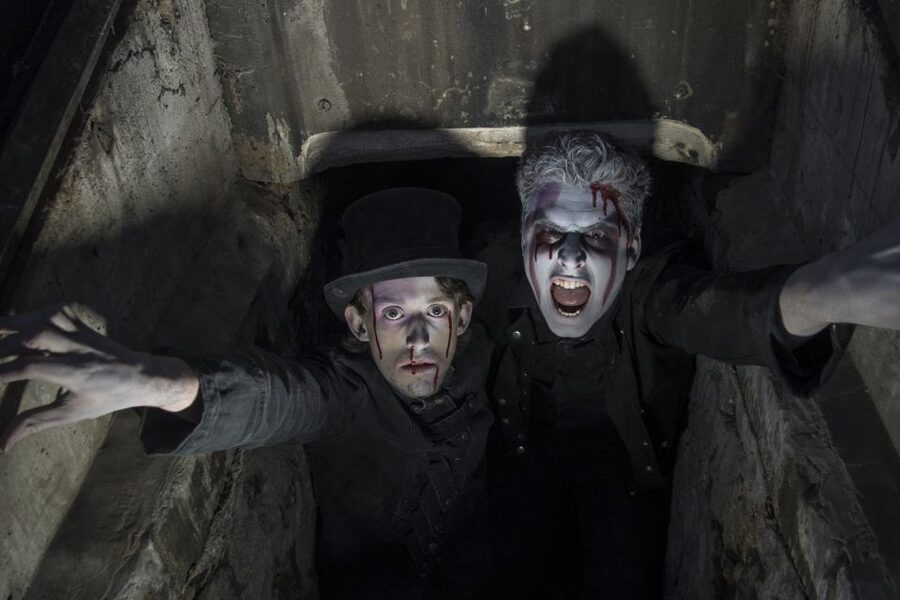
I would choose this tour for adults, older children with an interest in spooky history, groups of friends, and anyone who wants to see a less familiar side of central Liverpool. It also fits well into an evening when you want something more active than a pub or a standard stage show.
It suits you especially well if you enjoy:
- Live guides who use humor and audience participation
- Local history told through stories and characters
- Dark or macabre subjects
- Old buildings and unusual access
- A few scares without committing to a full horror attraction
I would not choose it if you use a wheelchair, have limited mobility, have significant visual impairment, or dislike dark underground spaces. The tour is also a poor match if you want a quiet, highly detailed lecture with no audience involvement.
FAQ
Where does the tour begin?
It begins at the Queen Victoria Monument in Derby Square, Liverpool.
Where does the tour finish?
The tour finishes at 5 Old Churchyard, Liverpool L2 8GW, within the grounds of the Church of Our Lady and St. Nicholas.
How long does the experience last?
The tour lasts 1.5 hours.
Do I need to bring a torch?
Yes. You must bring your own torch because torches are not provided.
Is the tour wheelchair accessible?
No. The tour is not wheelchair accessible, and it is not recommended for people with limited mobility or visual impairments.
Can children attend?
Yes, but children must be accompanied by an adult. Unaccompanied minors are not allowed.
Should you book the Liverpool Dead House tour?
Book it if you want a lively, funny, slightly frightening way to see Liverpool’s oldest streets and enter a place most people cannot visit. The strongest reasons are the theatrical guides, the route through lesser-known corners, and the genuinely unusual Dead House finale.
Skip it if underground access, darkness, audience participation, or staged scares would make you uncomfortable. For the right audience, $26 buys more than a walking tour. It buys a compact piece of live theater in the streets, followed by a real and unsettling chapter of Liverpool’s past.
Just added in Liverpool
- Private Beatles Taxi Tour of London★ 5.0 · 53 reviews
- London Beatles Walks and Tours★ 4.5 · 65 reviews
- London Beatles Tour★ 5.0 · 50 reviews
- Beatles Magical Mystery Tour★ 5.0 · 69 reviews
- Liverpool and The Beatles Day Tour from London★ 4.5 · 303 reviews
- Beatles Evening Tour of Central London★ 4.5 · 119 reviews
- Beatles Ticket To Ride Half Day Tour Small Groups★ 5.0 · 60 reviews
- Fun, Flexible Treasure Hunt Around Liverpool with Cryptic Clues & Hidden Gems★ 5.0 · 141 reviews
Historical Tours, compared.
A History of Terror – Belfast City Centre Walking Tour
Read our review →
Old Town Walking Tour History and Tales in Edinburgh
Read our review →
Shadows of York: Ghost Walk and Horrible History.
Read our review →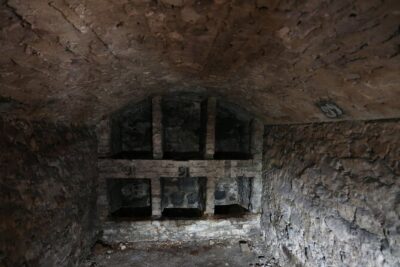
Multi-Sensory Small-Group Historic Vaults Tour in Edinburgh
Read our review →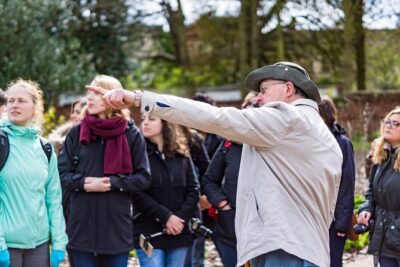
Browse the lists this tour appears in