
Reviewed · MUSEUMS
British Museum London Guided Tour Semi-Private 8ppl Max
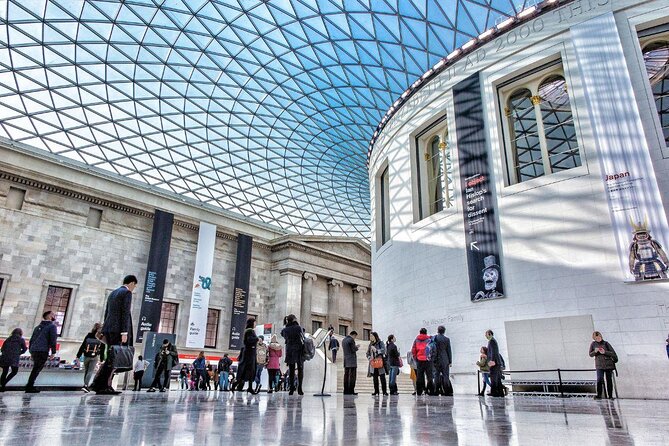
The British Museum can swallow an entire day, then leave you wondering what you actually saw. This 2.5-hour small-group tour fixes that problem by leading you to a sharp selection of major objects, from the Rosetta Stone and the Mummy of Katebet to the Lewis Chessmen and Assyrian lion-hunt reliefs.
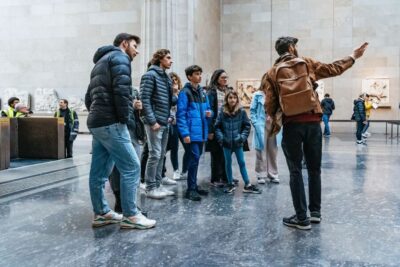
I like the eight-person maximum, which makes it easier to hear, ask questions, and move through crowded galleries. I also like the guides’ range of approach: James and Guy bring wit, Laurence and Ivo offer strong historical explanations, and guides such as Eleisha and Jake address the museum’s difficult collecting past rather than skipping over it.
The main catch is pace. You will see important highlights, but not everything, and temporary exhibitions are excluded. The tour also requires a moderate level of walking and is not suitable for wheelchair users or people with walking disabilities.
Key points at a glance
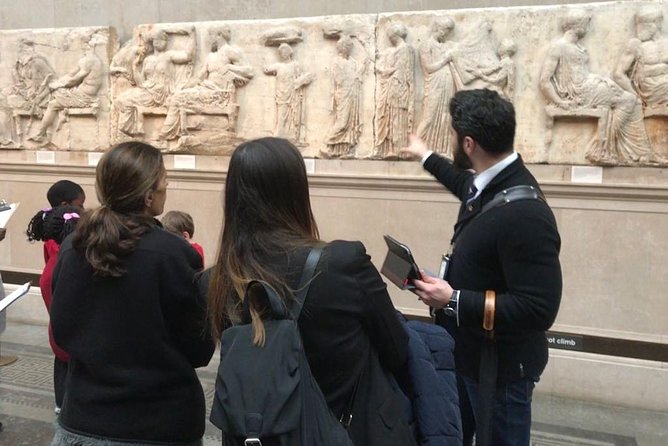
- The group never exceeds eight people, unless you choose the private option, so the guide can keep the visit personal.
- The Rosetta Stone anchors the route, with stops that may include Egyptian, Assyrian, Greek, and medieval treasures.
- Guides such as Ivo, Jake, James, Steph, Laurence, and Guy are praised for clear explanations, humor, and thoughtful answers.
- The route is built for a short visit, helping you avoid wandering through six million years of objects without a plan.
- The museum’s contested history is part of the conversation, including questions about how objects reached London.
- Small bags and comfortable shoes matter, since security applies and the tour involves steady walking.
Why a guide helps inside the British Museum
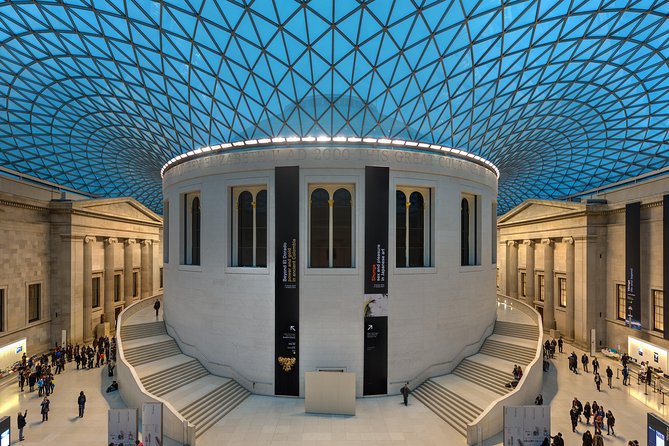
The British Museum holds roughly eight million objects covering about 6,000 years of human history. That figure is impressive, but it also explains the problem: you cannot simply arrive, stroll around, and expect the collection to arrange itself into a clear story.
A guide gives you a route and a reason to stop. Instead of reading every label, you spend time with selected objects that show how people built states, practiced religion, fought wars, traded ideas, and recorded language. I find that useful even if you already know a little about ancient Egypt or Greece. The museum is full of famous names, but fame alone does not explain why an object matters.
The best guides also make room for questions. Jake is praised for addressing both the objects and the museum itself, including the difficult question of how many pieces came to be in Britain. Eleisha is described as open to side conversations and honest answers, while Steph offers a contemporary angle alongside the historical material.
That kind of conversation is important here. The tour is not just a parade of beautiful things. It can also help you think about power, empire, archaeology, ownership, and the way museums frame the past.
More Museum Tours in London
- Tower of London and Crown Jewels Exhibition Ticket
★ 4.5 · 6,677 reviews - London: Chelsea Football Club Stadium and Museum Tour
★ 4.8 · 4,576 reviews - Chelsea FC Stadium Tours and Museum
★ 5.0 · 1,908 reviews
Meeting at Great Russell Street
The tour begins at the British Museum, Great Russell Street, London WC1B 3DG. You choose a start time when booking, with several departures offered to fit around other plans.
The museum is near public transportation, but hotel pickup and drop-off are not included. Plan to make your own way there by public transit, taxi, or Uber. I would allow extra time for London traffic and for finding the entrance, especially if this is your first visit.
Arrive promptly. One direct tip from the experience is simple: do not be late. A small group cannot wait indefinitely without disrupting the route, and the guide has a fixed amount of time to cover a large building.
You should also bring only what you need. Large bags and suitcases are not allowed inside. Handbags and small, thin backpacks can pass through security, but even a modest bag may slow you down at the entrance. An umbrella is sensible in London, though it must be handled according to museum security rules.
The first stop: the Rosetta Stone
The Rosetta Stone is one of the natural starting points for a British Museum visit. It is not merely a famous rock. Its inscriptions in three scripts helped scholars understand Egyptian hieroglyphs, making it a key object in the study of ancient Egypt.
A guide can turn the object from a crowded photo stop into a short lesson in language, power, and decoding. You will learn why the same message appearing in different scripts mattered and how one stone helped open access to a much larger body of Egyptian writing.
The Rosetta Stone can draw a crowd, so the small group is useful. A guide such as Andy can help the group move through busy areas while still making sure everyone sees the key displays. You should expect some congestion around popular objects, particularly during busy holiday periods.
Egyptian stories, including the Mummy of Katebet
The Mummy of Katebet gives the tour a more personal focus. Large monuments can make ancient Egypt feel distant and abstract. A named person, with a burial object connected to her identity and beliefs, brings the subject closer to everyday life and death.
Your guide will place the mummy within Egyptian ideas about the afterlife, ritual, status, and care for the dead. The value here is not simply seeing a preserved body. It is understanding why mummification mattered and what burial equipment was meant to do.
This is also a good point to ask questions. A guide may explain how museum displays shape your understanding of the person in front of you, rather than treating the object as a curiosity. The strongest tours give you facts without turning the stop into a dry lecture.
Same trip, a completely different kind of day:
- London: The London Eye Entry Ticket
★ 4.6 · 35,875 reviews - From London: Harry Potter Warner Bros Studio Tour
★ 4.7 · 26,588 reviews - London: Westminster to Greenwich River Thames Cruise
★ 4.5 · 22,836 reviews - London: Madame Tussauds London
★ 4.6 · 20,915 reviews
Assyrian reliefs and the drama of the lion hunt
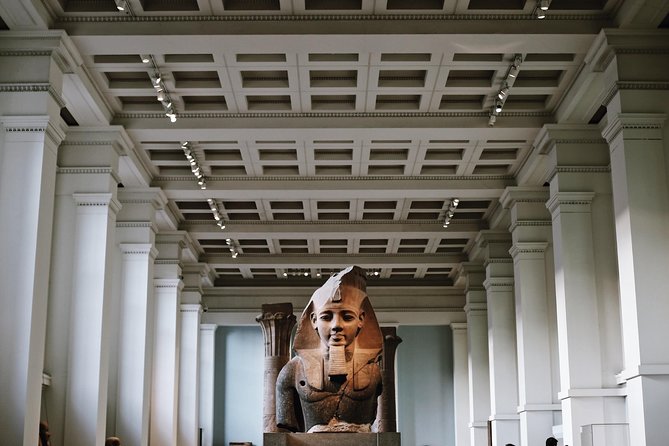
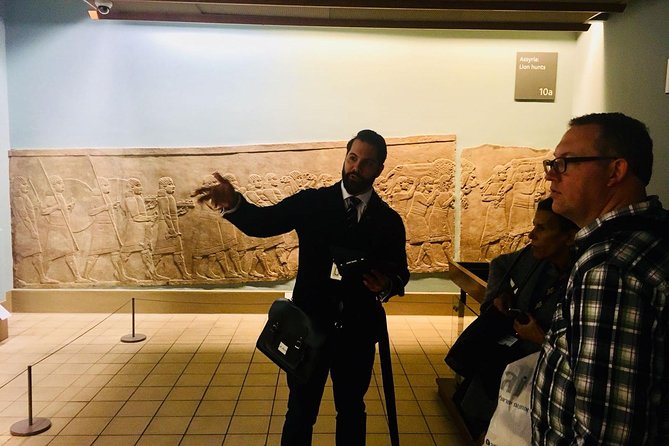
The Assyrian galleries offer a change of mood. The reliefs show royal power, warfare, animals, and ceremony with striking detail. The lion-hunt scenes are especially memorable because they combine political messaging with close observation of movement, muscle, fear, and injury.
James is praised for including the Assyrian section alongside better-known sights. That is a smart choice. Many first-time visitors head straight for the Rosetta Stone and Parthenon sculptures, then miss some of the museum’s most powerful storytelling.
A guide can explain that these reliefs were not casual decorations. They presented the ruler as strong, controlled, and favored by the gods. You may also notice how the scenes balance imperial propaganda with unusually vivid depictions of the animals themselves.
The Assyrian rooms are one reason I would choose this tour over a simple checklist visit. You get the famous objects, but you also get help spotting the less obvious sections that reward attention.
Greek sculpture and the Parthenon connection
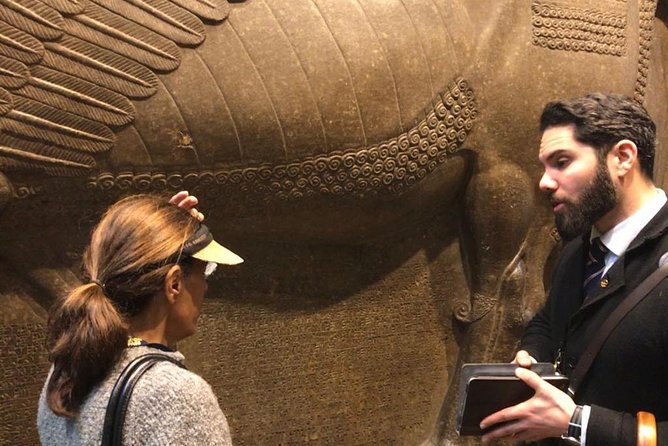
The tour may also include the Parthenon sculptures, among the museum’s best-known holdings. These pieces connect London to ancient Athens, but they also raise questions about removal, ownership, and the role of museums far from the places where objects were first made.
The guide’s job is not only to point out the carved figures. You should receive enough background to understand their original setting, their artistic purpose, and why their presence in London remains controversial.
That broader explanation is one of the tour’s strongest features. The museum becomes easier to understand when objects are linked to the buildings, rituals, and societies that produced them. It also helps you see why a single gallery can carry both artistic value and political weight.
The Lewis Chessmen and medieval life
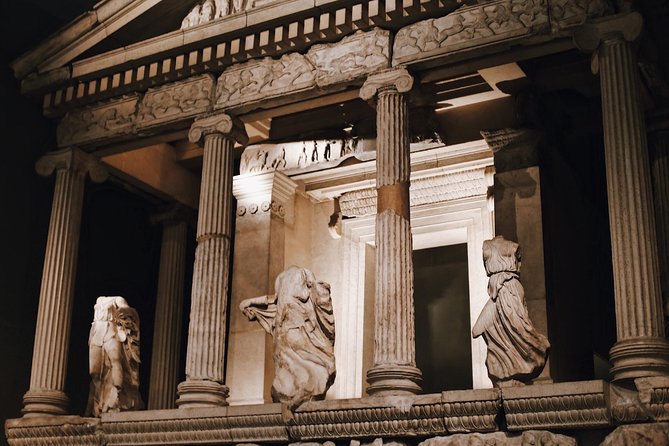
The 12th-century Lewis Chessmen provide a lighter, more approachable stop. These small carved figures are easy to enjoy at first glance, but they also open a window onto medieval gaming, craftsmanship, trade, status, and storytelling.
You may find that this is where younger people in your group reconnect with the tour. Guy is praised for keeping teenagers interested through humor and clear explanations, a useful skill in a museum where some displays can feel remote.
The chess pieces also show the range of the British Museum. In one visit, you can move from Egyptian burial practices to Assyrian royal imagery, Greek sculpture, and medieval objects made for play. The route gives you a sense of how varied the collection is without pretending you have seen it all.
A route shaped by crowds and questions
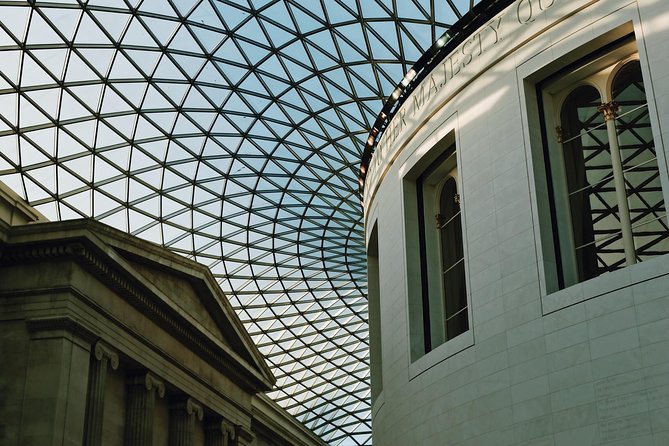
The museum can become crowded, especially around its most famous objects. A small group helps, but it does not create an empty gallery. You may still need to wait for a clear view or listen while standing close to other people.
Andy is praised for moving a group through busy areas with calm efficiency. That matters because a poor route can waste half the tour in bottlenecks. A good guide adjusts the order, keeps the group together, and knows when to pause.
Some rooms require very quiet voices or limit speaking. Your guide will explain those rules before you enter. This is a minor practical point, but it can prevent confusion when the explanation suddenly stops in a particular gallery.
Collections and room access can change during the year. Museum closures can also happen without much warning. If opening is delayed by more than an hour, an alternative may be offered, but refunds or discounts are not provided for every unexpected closure. Keep that policy in mind when planning a tightly packed London day.
What the guide quality means for you
The guide is the main reason to book this experience rather than walk through the museum alone. The named guides associated with the tour include Ivo, Jake, James, Andy, Eleisha, Stephanie, Steph, Laurence, Darcy, Guy, Matilda, Becky, Sacha, and Napoleone.
The most praised qualities are consistent: clear explanations, humor, strong command of the subject, and the ability to answer questions. Ivo is described as engaging and good at bringing objects to life. Laurence is valued for fitting the museum’s best sights into the available time. Darcy combines entertainment with useful information, while Matilda is praised for making the visit enjoyable enough that people wanted to keep listening.
Guide quality can vary from one departure to another, as it does with any guided activity. Still, the repeated strengths point to a tour style that is serious without being stiff. If you want a specialist lecture on one narrow period, this may not be the right format. If you want a lively overview with room for questions, it fits better.
Is $108.44 a fair price?
At $108.44 per person, this is not the cheapest way to enter the British Museum. The museum itself offers free admission to its permanent collection, so you are paying for the guide, the planning, the small group, and the time saved.
That price makes more sense if you have only a morning or afternoon in London. A guide can help you see major highlights in two and a half hours, then leave you free for Covent Garden, Bloomsbury, the National Gallery, or another part of the city.
The value is weaker if you enjoy wandering slowly, reading every label, or returning to the same museum for several visits. Independent visitors can spend less money and more time. You will also need to pay separately for any special or temporary exhibition you want to see.
For families and first-time visitors, the price can be easier to justify. The small group keeps the experience more manageable, and the route prevents the museum from becoming an exhausting hunt for famous objects.
Who should book this tour?
I would choose this tour if you have never been to the British Museum, have limited time, or want help sorting the essential objects from the huge number of displays. It also suits families with older children and teenagers, especially if the guide uses humor and adapts explanations to the group.
It is a good match for anyone interested in how objects were made, used, collected, and displayed. The discussion of contested ownership adds value if you want more than a polished list of dates and names.
You should think twice if you use a wheelchair or have a walking disability, since the experience is not available for those needs. It is also not ideal if you dislike fixed routes or want to focus on one specific gallery for a long time.
Wear comfortable shoes. Bring reading glasses if you need them for labels, keep your bag small, and leave room in your schedule after the tour if you want to explore more on your own. The gift shop is also worth a look if you enjoy museum books and souvenirs.
Should you book it?
Book it if the British Museum feels too large to tackle alone, especially on a first London visit. The small group and focused route give you a clear introduction, while guides such as Ivo, Jake, James, Steph, and Laurence add stories and difficult questions that labels cannot always handle.
Skip it if your priority is saving money, visiting a temporary exhibition, or spending an entire day with one collection. For everyone else, $108.44 buys structure, conversation, and a much better chance of leaving with a real sense of what you saw.
FAQ
How long does the British Museum tour last?
The tour lasts approximately 2 hours and 30 minutes.
How many people are in the group?
The semi-private group has no more than eight people. A private option is also available.
What objects are included on the tour?
The route includes selected highlights such as the Rosetta Stone, Mummy of Katebet, Lewis Chessmen, Assyrian lion-hunt reliefs, and Parthenon sculptures. Collections may vary during the year.
Are temporary exhibitions included?
No. Temporary exhibitions are not included in the tour price.
Is hotel pickup or drop-off provided?
No. You meet at the British Museum on Great Russell Street and return to the meeting point when the activity ends.
Can I cancel for a full refund?
Yes. You can cancel for a full refund up to 24 hours before the experience start time. Cancellations or changes made less than 24 hours before the start are not refunded or accepted.
Just added in London
- London Westminster Abbey French Tour with Fast-Track Tickets★ 4.8 · 57 reviews
- Tower of London Tour with Crown Jewels, plus River Cruise★ 4.5 · 54 reviews
- French Language: Original Harry Potter Walking Tour★ 4.6 · 503 reviews
- Changing of the Guard Experience in London★ 4.5 · 113 reviews
- Early Access:Tower of London Opening Ceremony & Royal London★ 4.8 · 49 reviews
- DreamWorks Shrek’s Adventure and London Eye: Combo Ticket★ 4.5 · 150 reviews
- Doctor Who London Walking Tour★ 4.9 · 137 reviews
- Downton Abbey and Village Small Group Tour from London★ 4.8 · 280 reviews
Museums, compared.

Liverpool Football Club Museum and Stadium Tour
Read our review →
Tower of London and Crown Jewels Exhibition Ticket
Read our review →
Chelsea Football Club Stadium and Museum Tour
Read our review →

Browse the lists this tour appears in