
Reviewed · ROMAN BRITAIN TOURS
Roman London Private Walking Tour
Roman London is not laid out like Rome, with grand ruins gathered in one open site. Its remains are scattered under offices, beside churches, in parking areas, and below modern streets. This private tour connects those fragments into a story, from the Roman temple site near St. Paul’s to the Temple of Mithras.
I like the personal pace and the way guides such as Kevin and Stephen Liddell add medieval, Victorian, wartime, and modern London details along the way. I also like the unusual access: the amphitheatre, Roman baths, wall sections, and underground temple are far easier to appreciate with someone who knows exactly where to look.
The main consideration is the walking. Although the tour is listed at about three to four hours, one account describes more than seven miles, and there are few long breaks. At $254.93 per person, this is best value for a private group that cares deeply about history rather than for someone seeking a quick sightseeing stroll.
Key points to know before booking
- Roman ruins in unexpected places: Look for ancient walls beneath modern buildings, inside churches, and down narrow City of London lanes.
- A private guide from start to finish: Your group travels with one guide, with Kevin and Stephen Liddell named as regular guides.
- The route links major underground sites: The Roman amphitheatre and London Mithraeum are the strongest indoor stops.
- Hotel pickup is available: The guide can meet you at a Central London hotel before taking public transport to the starting point.
- Expect a serious walk: The pace is reasonable, but you need moderate fitness and comfortable shoes.
- Temple access needs planning: Guaranteed entry to the Temple of Mithras requires advance booking during busy periods.
Why Roman Londinium is easy to miss
The best thing about this tour is not a single monument. It is the act of learning how to read modern London. A section of wall beside an office block, a street line in a small square, or a stone displayed beneath a church can suddenly reveal the shape of the Roman city.
The route focuses on the old City of London, the historic core that once held Londinium. You will not simply walk from one famous sight to another. You will cross the Roman city in pieces, often stopping where the remains are easy to miss without a guide.
That matters because Roman London can feel disappointing if you expect a large, intact archaeological park. Much of it was built over, altered, or buried. The reward comes from making connections: the wall marked the edge of the city, the gates controlled movement, the amphitheatre served public life, and the temples and baths show how people worshipped and spent their leisure time.
Kevin and Stephen Liddell are both named as guides for this experience. The strongest descriptions of their guiding style point to long conversations, plenty of questions, and stories that continue beyond the Roman period. You may hear about the Blitz, Dickens, medieval London, Shakespeare, or modern architecture when those subjects help explain the street in front of you.
More Walking Tours in London
- London: The Original Jack the Ripper Walking Tour
★ 4.7 · 7,833 reviews - Tour for Muggles The Ultimate Harry Potter Walking Tour in London
★ 5.0 · 4,684 reviews - London Jack The Ripper Guided Walking Tour
★ 5.0 · 3,131 reviews
From St. Paul’s to the first Roman traces
The morning begins at 9:30 am near Panyer Alley, close to St. Paul’s Cathedral. Hotel pickup is available from Central London, but the guide then uses public transport to reach the starting point, so transportation costs to and from attractions are not included.
St. Paul’s is a smart place to begin. The cathedral occupies a site with a long religious past, and the tour explains the Roman connection to a temple associated with the goddess Diana. You spend only about five minutes here, and entry to the cathedral is not included, so this is an outside orientation rather than a cathedral visit.
A few steps away, the Church of St Vedast Alias Foster provides the first quiet surprise. Roman remains are tucked away near the church, along with something older. This is the kind of stop that gives the tour its purpose: you might pass the area without noticing anything unusual, while a guide can point out why the spot matters.
The early route then reaches Noble Street, where a stretch of Roman wall was exposed after wartime bombing. The story links archaeology with the destruction of the Luftwaffe raids in the Second World War. At Cripplegate Street, you see another former Roman gate and better-preserved wall sections nearby.
Following the Roman wall through the City
The wall appears at several points, sometimes in obvious fragments and sometimes in places that seem completely unrelated to ancient London. The tour uses these pieces to show how the Roman boundary once wrapped around the city.
At Guildhall, the grand hall of the City of London Corporation takes over the square. Your attention then shifts from the building itself to its Roman connections. This is typical of the route: major civic architecture provides the setting, but the Roman layer is the subject.
The London Roman Amphitheatre is one of the most important stops. It lies below the original Roman streets, and the visit places you near the arena where gladiatorial contests took place. Entry is included, and the stop lasts about 25 minutes, giving you more time than the brief outdoor wall stops.
This is likely to be one of the clearest archaeological experiences on the walk. You can see why London’s Roman past is easy to overlook: the remains are physically below the present city. The drawback is that the tour covers a lot of ground, so you may need to keep your attention fresh even at the sites that deserve a slower look.
The route also passes the former official residence of the Lord Mayor of London. This stop is not given a separate time in the itinerary, but it adds another layer to the connection between Roman civic life and the later City of London.
Bank, Leadenhall, and the eastern edge of Londinium
At the Bank of England, the scale changes. Heavy stone buildings and financial institutions now occupy what was once the heart of Roman London. The stop lasts about five minutes, with no admission included.
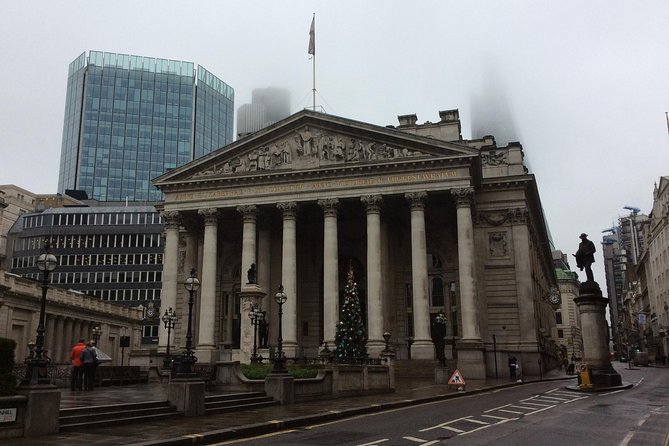
The Royal Exchange follows. Its grand setting can suggest ancient Rome, even though the building itself belongs to a much later period. Entry is included, and the stop gives your guide a chance to explain how the area continued to function as a commercial center.
Leadenhall Market is one of the route’s most attractive modern settings. The Victorian market was built over an earlier Roman predecessor, and the tour may reveal a surviving section in an unexpected place. The stop lasts about 15 minutes, which is enough for a look around and a short explanation.
Near 30 St Mary Axe, better known as the Gherkin, the Roman connection becomes especially striking. A famous modern skyscraper rises above an unexpected Roman memorial. Nearby, the Tomb of the Unknown Roman Girl offers a more personal reminder of Londinium, commemorating one of the city’s early residents.
At Aldgate Square, the Roman gate itself is buried beneath the redesigned park. You will follow the route of the old wall and consider how much of the original city survives only through lines, foundations, and archaeological evidence.
More Roman and medieval sites within reach of London:
- London: Medieval History Walking Tour from The Tower
★ 4.9 · 318 reviews - Roman Ruins to Blitz Bombings: A Walking Tour of London’s Fiery History
★ 5.0 · 190 reviews - Medieval History Walking Tour from The Tower of London
★ 5.0 · 156 reviews - London: Windsor, Stonehenge, Bath, and Roman Baths Day Trip
★ 4.5 · 5,131 reviews
Vine Street and the walk toward the Tower
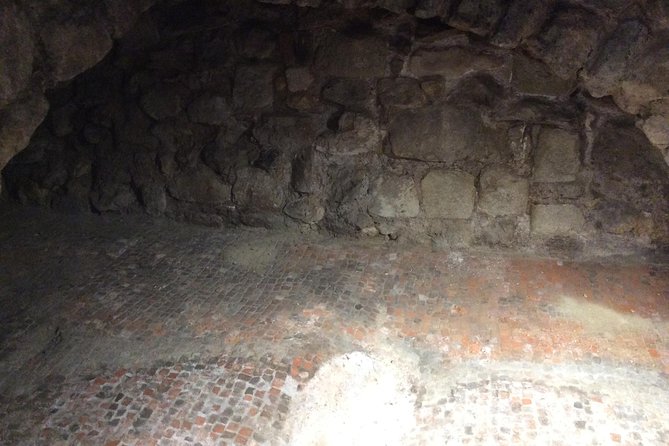
Vine Street contains newer museum displays, Roman wall remains, and artefacts. The listed stop is about ten minutes and is free, making it a useful place to see objects rather than only foundations.
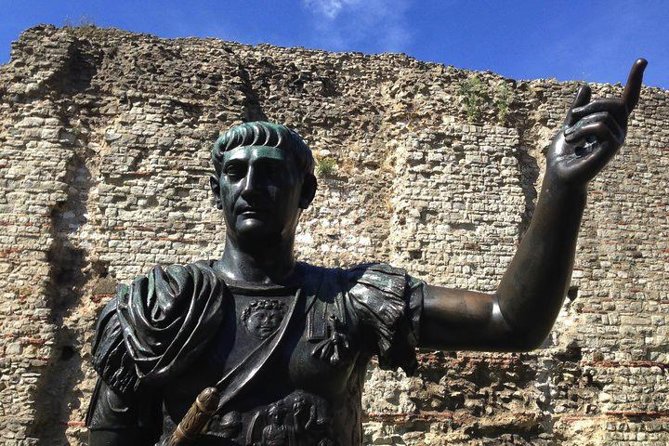
Outside the Tower of London, the statue of Emperor Trajan provides a clear visual link to the Roman world. The Tower is not the main subject here, and the tour does not include a Tower visit, but its position helps you understand how modern London grew around the old city.
Another section of London Wall follows. By this point, you have seen the wall in several forms: open fragments, buried lines, rebuilt sections, and remains incorporated into later structures. The included visit lasts about 15 minutes.
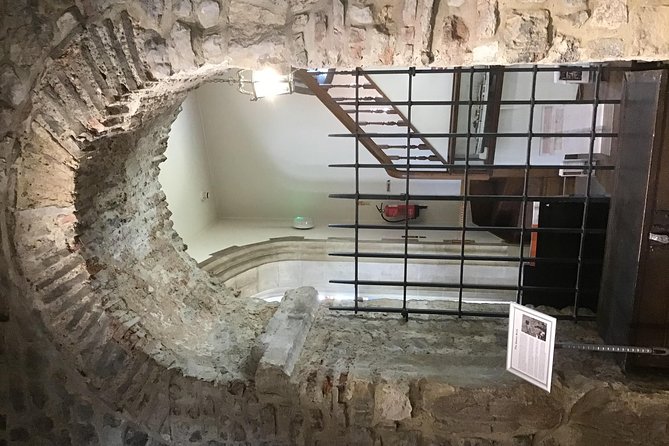
All Hallows by the Tower is a particularly layered stop. Inside and around this old church, you can see an ancient archway and remains associated with a Roman house. Entry is included, and the visit lasts about 15 minutes.
St. Dunstan in the East is not strictly Roman, but it may be the most peaceful pause on the route. The church ruins provide a quiet contrast to the busy streets nearby. The stop takes about ten minutes and is included. It also gives your legs a short change of rhythm before the final group of Roman sites.
Baths, the old bridge, and the Great Fire
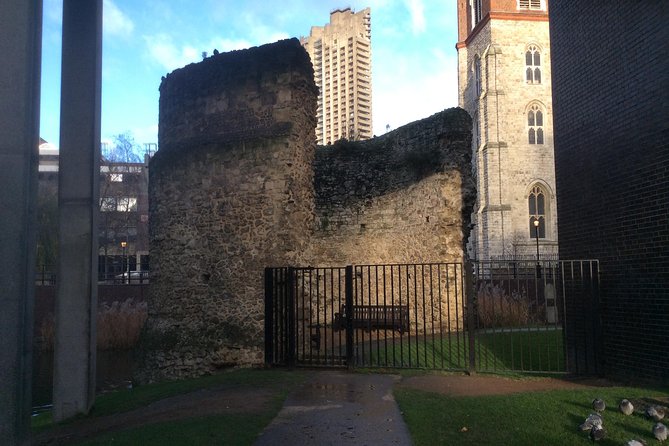
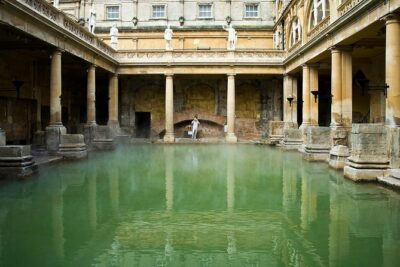
The Billingsgate Roman Bath House marks the location of Roman baths in London. The stop is brief, about five minutes, and admission is not included. Do not expect a long museum visit here. Its value is in understanding where the baths stood and how the Roman city used this part of the waterfront area.
At St. Magnus the Martyr, you find what may be the only surviving part of the original Roman London Bridge. The church visit is included and takes about five minutes. This is another example of the tour’s method: Roman London is revealed through a small surviving piece inside a later building.
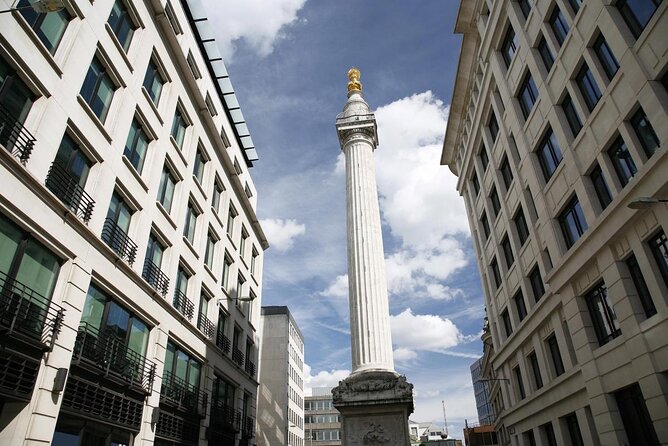
The Monument to the Great Fire of London adds a later historical episode. You stand near the place where the fire began and see visual material showing how Roman Londinium may have looked 2,000 years ago. Admission to the Monument itself is not included, so this is an exterior stop rather than a climb.
These detours help keep the tour from becoming a narrow archaeology lecture. I like that approach. Roman London makes more sense when you see how its streets were reused, forgotten, damaged, and built over by later generations.
The Temple of Mithras and the final Roman layer
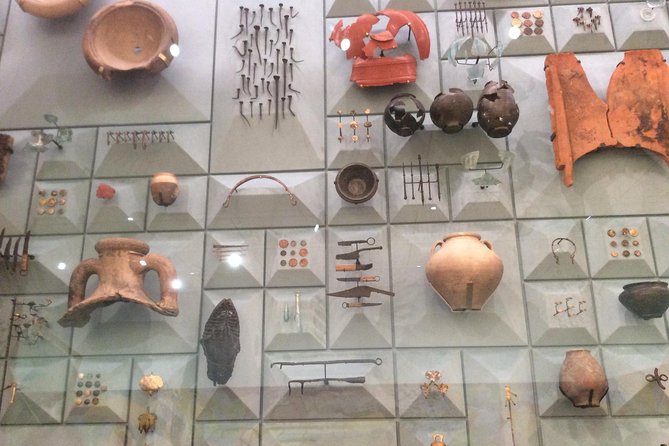
The London Mithraeum Bloomberg SPACE is the grand finish. First, you see hundreds of Roman artefacts, then go underground to the reconstructed remains of the Temple of Mithras. Entry is included, and the planned visit lasts about 20 minutes.
The temple is a strong final stop because it brings together many themes from the morning. It is underground, tied to Roman religion, and surrounded by the modern financial district. The contrast between ancient worship and today’s glass-and-stone offices is exactly what makes this part of London so compelling.
Guaranteed access to the temple requires advance booking at busy times. That point matters. Ask about this when booking, especially if the temple is the main reason you want the tour. Without confirmed access, the route would still contain plenty of Roman material, but the Mithraeum is too important to treat as an afterthought.
The tour ends at the Mithraeum, at 12 Walbrook, close to Bank Underground Station. It is also only a few minutes from the starting area near St. Paul’s, making it simple to continue sightseeing or return to your hotel.
Before finishing, the route includes the London Stone. This legendary stone is described as being as old as London itself. The stop lasts about five minutes and is free. It is a fitting final note: after walls, gates, temples, baths, and civic buildings, you finish with a single stone whose meaning has grown through centuries of stories.
How much walking should you expect?
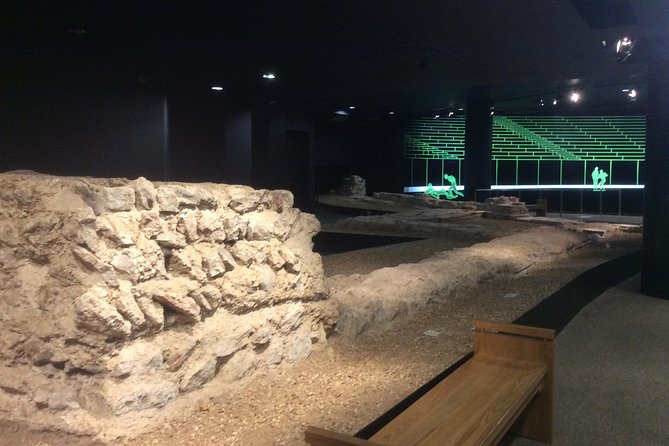
You should prepare for a continuous city walk. The stated duration is approximately three to four hours, but one detailed account describes walking more than seven miles. The route includes narrow lanes, uneven historic areas, stairs or changes in level at some underground sites, and long periods on your feet.
Wear your best walking shoes and carry water. The tour operates in all weather, so bring suitable clothing for London rain or a cool morning. Smart casual dress is requested.
The guide can adjust the conversation and pace for a private group, but do not mistake private for effortless. There is no promise of regular café stops or extended rest periods. If you have limited mobility or dislike long walks, ask for route details before committing.
Is the $254.93 price fair?
At $254.93 per person, this is an expensive walking tour for one person. It becomes easier to justify when shared by a private group, especially because only your party participates and the guide can focus on your interests.
The price includes a local professional guide and the private format. Some admissions are included, such as the Roman Amphitheatre, Royal Exchange, London Wall sections where applicable, All Hallows by the Tower, St. Dunstan in the East, and the London Mithraeum. Other sites are exterior stops or have admission not included, including St. Paul’s Cathedral, Guildhall, the Bank of England area, Billingsgate Roman Bath House, and the Monument.
You also need to account for transportation to and from attractions. Hotel pickup is offered, but the guide takes you by public transport to the starting point, so the tour price does not cover every transport cost.
I see the value in the guide’s route planning. You could spend hours trying to locate fragments on your own and still miss the remains inside churches, beneath buildings, or along tucked-away lanes. The price is less convincing if you only want a general introduction to London or prefer a relaxed walk with frequent stops.
Who should book this Roman London walk?
I would choose this experience if you care about archaeology, ancient history, urban development, or the way old cities survive inside modern ones. It also suits repeat visitors who have already seen the usual London sights and want a different morning in the City.
Families with interested teenagers can enjoy it, as long as everyone can manage the walking. A private guide also helps if your group wants to ask questions about Roman religion, engineering, medieval streets, wartime damage, or later London history.
I would skip it if you mainly want the Tower of London, St. Paul’s interior, or a broad tour of central London. Those sights may appear around the route, but they are not included visits. This tour asks you to care about foundations, fragments, and clues.
Free cancellation is available up to 24 hours before the start time. Confirmation is sent within 48 hours, subject to availability, so do not leave a time-sensitive booking until the last moment.
Should you book the Roman London Private Walking Tour?
Book it if you want London’s oldest layer explained by a guide who can find what most people walk past. Kevin and Stephen Liddell are associated with an engaging, question-friendly style, and the route offers rare sights such as the amphitheatre, Temple of Mithras, Roman baths, wall sections, and the Tomb of the Unknown Roman Girl.
The best reason to go is the combination of access and interpretation. The ruins are scattered, modest, and often easy to miss. The guide turns them into a connected story.
The clearest warning is the workload. This is a serious walking morning, not a gentle hop between famous landmarks. If you have the energy, the interest, and a group willing to share the cost, it can be one of the most rewarding ways to see the City of London beneath its modern surface.
FAQ
How long does the Roman London Private Walking Tour last?
The tour lasts approximately three to four hours. The route involves substantial walking, and one account describes more than seven miles, so allow enough time and energy for a full morning on foot.
Where does the tour begin?
The listed starting point is Panyer Alley, London EC2V 6AA, near St. Paul’s Cathedral. Pickup can also be arranged at a Central London hotel before traveling by public transport to the start.
Where does the tour end?
The tour ends at London Mithraeum Bloomberg SPACE, 12 Walbrook, London EC4N 8AA. Bank Underground Station is nearby, and the finish is also a short distance from the starting area near St. Paul’s.
Is the tour private?
Yes. Only your group participates, and a local professional guide leads the experience.
Is entry to the Temple of Mithras guaranteed?
Guaranteed access requires advance booking during peak times. Confirm this when arranging the tour if the temple is a priority for you.
Are transportation costs included?
No. Transportation to and from attractions is not included. The guide can meet you at a Central London hotel and then travel with you by public transport to the starting point.
What happens if the weather is bad?
The tour operates in all weather conditions. Dress appropriately for London weather and wear comfortable walking shoes.
Just added in London
- Royal London Guided Sightseeing Tour and Thames River Cruise★ 4.0 · 31 reviews
- Roman Ruins to Blitz Bombings: A Walking Tour of London’s Fiery History★ 5.0 · 190 reviews
- Westminster Abbey, Big Ben, Buckingham Guided Tour of London★ 5.0 · 451 reviews
- River Thames Evening Cruise with Sparkling wine and Canapés★ 4.0 · 569 reviews
- Rock and Roll Walking Tour of Soho London★ 4.5 · 64 reviews
- London Private Chauffeur Half-Day or Full-Day Vehicle Rental★ 5.0 · 37 reviews
- Rich people behaving badly★ 5.0 · 47 reviews
- Speedboat Sightseeing: Embankment OR Westminster Pier -45 Minutes★ 5.0 · 288 reviews
Roman Britain Tours, compared.
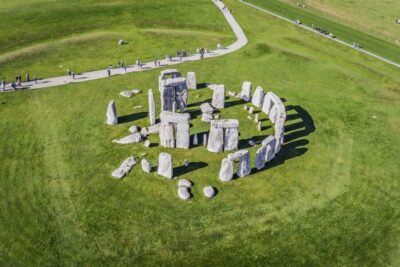
Windsor, Stonehenge, Bath, and Roman Baths Day Trip
Read our review →
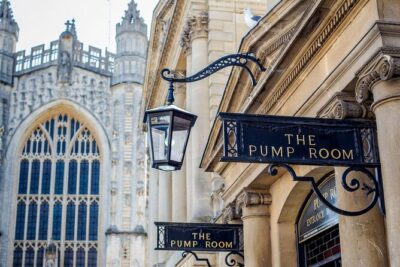
Stonehenge and Bath Day Trip from London with Optional Roman Baths Visit
Read our review →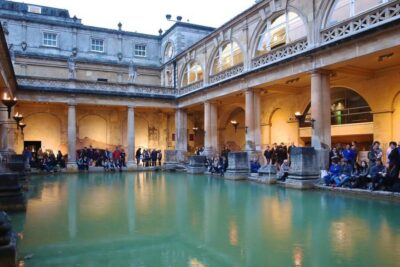
City Walking Tour with Optional Roman Baths Entry
Read our review →
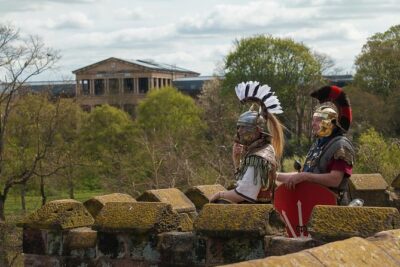
Fascinating Walking Tours Of Roman Chester With An Authentic Roman Soldier
Read our review →
Browse the lists this tour appears in