
Reviewed · ROMAN BRITAIN TOURS
Roman Ruins to Blitz Bombings: A Walking Tour of London’s Fiery History
London’s story is easiest to grasp when you walk through its layers. This tour links the Tower of London, a ruined medieval church, the Great Fire of 1666, Roman traces, and Blitz damage into one compact route through the City.
I like the small group of no more than 15, which gives you a fair chance to hear and question your guide. I also like the way the route mixes famous sights with easy-to-miss places such as London Stone and St. Dunstan in the East. The main caution is physical: one description calls it an extremely long walking tour, and it may not suit anyone with mobility problems.
Key points to know before you book
- Tom brings the history to life: His clear explanations, passion, and willingness to answer questions are central to the experience.
- The route crosses several centuries: You move from Roman London and medieval power to the Great Fire, industrial finance, and wartime destruction.
- It is a walking tour, not an attraction-entry tour: Admission to the Tower, Monument, Bank of England Museum, Guildhall, and St. Paul’s Cathedral is not included.
- The group stays small: A maximum of 15 people should make the commentary easier to follow than on a large city tour.
- The route ends near Blackfriars Station: Ye Olde Cheshire Cheese on Fleet Street is a useful finish for continuing your London day.
- The price is modest for a guided history walk: At $27.78 per person, the value depends mainly on how much you enjoy detailed storytelling and walking.
A city history lesson told one street at a time
This is not a tour built around one grand interior. Its appeal comes from the connections between places. You start beside the Tower of London and finish on Fleet Street, passing sites that reveal how London was shaped by royal power, fire, banking, religion, and war.
I like this format because the City of London can feel confusing when you explore it alone. A stone, a church ruin, or a formal monument may seem like a small curiosity. With a good guide, each becomes part of a larger story.
Tom is the guide named in the supplied tour information. His strengths are clear: he explains without overwhelming you, welcomes questions, and points out side attractions and free museums with Roman ruins and artifacts. He also gives suggestions for places to visit and local spots to enjoy after the walk.
The experience is offered in English and uses a mobile ticket. It lasts about two hours, though you should be ready for steady walking and frequent stops. The listed stops are timed at about five minutes each, but the real pace will depend on Tom’s explanations and the group’s questions.
More Walking Tours in London
- London: The Original Jack the Ripper Walking Tour
★ 4.7 · 7,833 reviews - Tour for Muggles The Ultimate Harry Potter Walking Tour in London
★ 5.0 · 4,684 reviews - London Jack The Ripper Guided Walking Tour
★ 5.0 · 3,131 reviews
Starting at the Tower of London
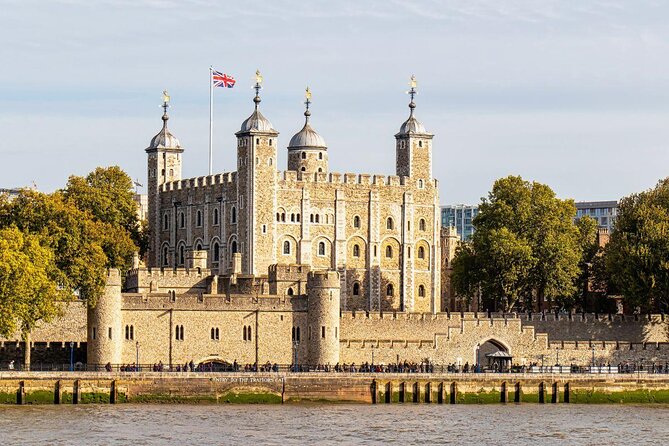
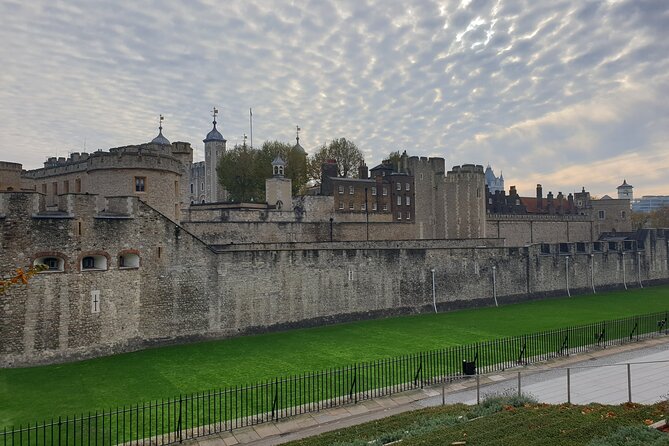
The meeting point is 38 Trinity Square, near the Tower of London. This is a strong place to begin because the Tower gathers so many parts of London’s past in one spot: monarchy, imprisonment, ceremony, and defense.
You do not receive admission to the Tower as part of the tour, so the walk uses it as an outdoor starting point rather than a full visit inside. If you want to tour the palace and its grounds, plan that separately and allow much more time.
The Tower is described as Europe’s oldest surviving royal palace. Even without entering, its setting gives the opening talk weight. You are starting beside one of London’s clearest reminders that this was once a fortified seat of royal power, not simply a historic attraction.
The meeting area is near public transportation, which helps if you are arriving from another part of London. I would arrive with enough time to find 38 Trinity Square without rushing. A late arrival could be awkward in a walking tour, especially once the group has moved on.
St. Dunstan in the East and the beauty of wartime damage
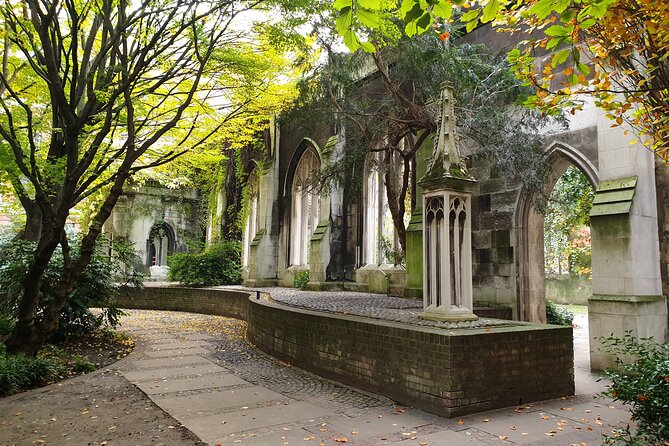
St. Dunstan in the East offers one of the route’s most memorable contrasts. This was a medieval church, but much of it was destroyed during the Second World War. What remains has become a garden, with plants growing through the old church structure.
The stop is free, and that matters. You get a strong sense of London’s wartime damage without paying another admission fee. The site also gives the tour a quieter pause after the imposing Tower.
I find places like this more revealing than a polished monument. The broken walls show destruction, but the garden shows how the city adapted rather than simply erasing the damage. Tom’s focus on places people might otherwise pass should help you notice details that are easy to miss.
The stop is listed as about five minutes, so do not expect a long garden visit. If you want time for photographs or a slower look, you may need to return on your own.
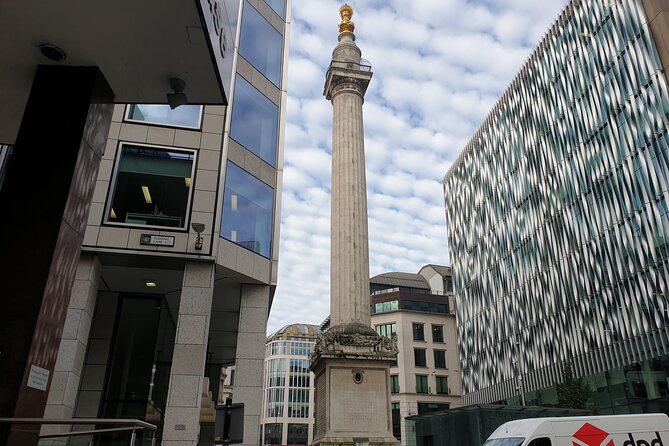
The Monument and the fire that changed London
The Monument to the Great Fire of London marks the disaster of 1666, when a huge part of the city was destroyed. It is one of the route’s clearest links between a specific event and the way London was rebuilt.
Admission to the Monument is not included. The tour therefore gives you the story and the exterior setting, but not an included climb or interior visit. That is a useful distinction when you compare this walk with sightseeing passes or attraction-focused tours.
The Monument matters because it turns an old date into a physical point on the street. You can stand beside it and consider how fire reshaped the City. This is also where a guide adds real value. A short explanation can connect the monument with nearby streets, churches, and later rebuilding.
The visit is listed as five minutes, so treat it as a focused stop rather than a full attraction visit. If you are keen on the Monument itself, you will need to arrange entry separately.
More Roman and medieval sites within reach of London:
- London: Medieval History Walking Tour from The Tower
★ 4.9 · 318 reviews - Medieval History Walking Tour from The Tower of London
★ 5.0 · 156 reviews - Roman London Private Walking Tour
★ 5.0 · 44 reviews - London: Windsor, Stonehenge, Bath, and Roman Baths Day Trip
★ 4.5 · 5,131 reviews
London Stone and the legends beneath the pavement
London Stone is a small object with large legends attached to it. The tour presents it as a stone with remarkable stories, giving you a different kind of historical stop from the Tower or Monument.
This is the sort of point that benefits from a guide. On your own, you could walk past without knowing why it matters. Tom’s role is to explain the legends and place the stone in the story of London.
The stop is free and listed at five minutes. I would keep expectations sensible. This is not a major building or a long museum visit. Its value lies in the story, the questions it raises, and the reminder that London’s past is often marked by ordinary-looking objects.
The Bank of England and London’s financial power
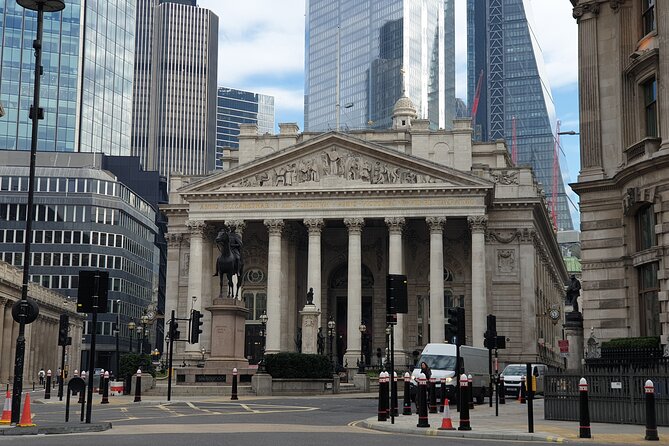
The route then moves toward the Bank of England Museum, introducing the financial side of the City. The Bank of England is the United Kingdom’s central bank, so this stop shifts the subject from kings and fires to money, institutions, and national power.
Admission to the museum is not included. You will see it as part of the walking route, but a museum visit would require a separate plan. That can be useful if you want to extend the day, though the tour itself does not promise time inside.
I like this change of subject. A good London history walk should explain more than battles and royal buildings. The Bank of England helps show why the City became such an important center of finance.
The short stop means you will get an introduction rather than a full museum session. If financial history is a main interest, note the museum for another visit.
Guildhall and the City’s medieval civic life
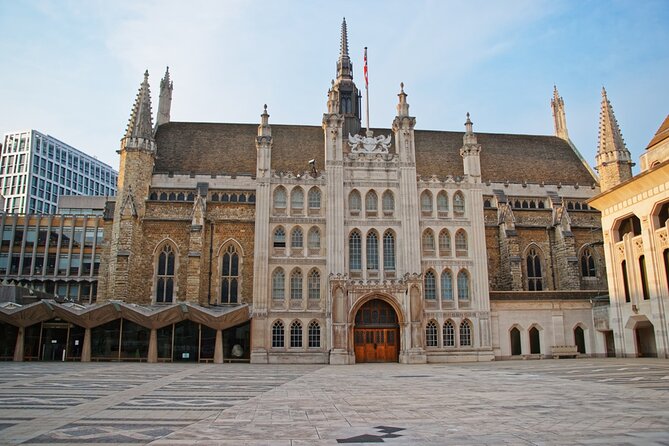
Guildhall brings you into the story of London’s civic government. The building is a 15th-century hall and home to the Corporation of London. It gives the route another angle on power, this time through local administration and the City itself.
Admission is not included. You should not assume that the tour allows a full interior visit. The point is to understand the building’s place in London’s civic story and to see how the historic City still functions as a center of public and financial life.
This stop works well after the Bank of England. Together, the two locations show different kinds of authority: one financial and national, the other civic and municipal. Tom’s explanations are especially useful here because the buildings can otherwise blur together during a walk.
St. Paul’s Cathedral and Christopher Wren’s London
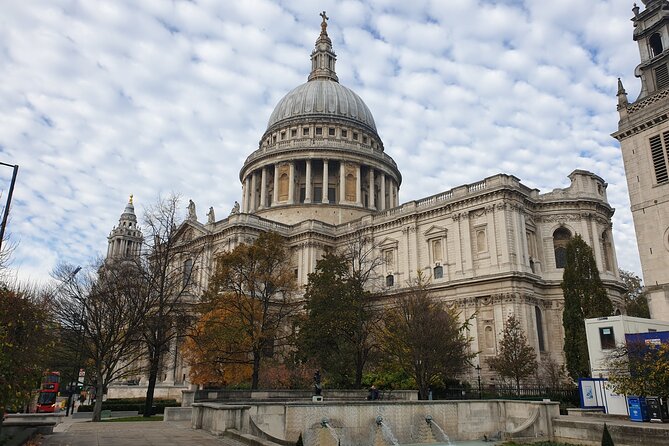
St. Paul’s Cathedral is the route’s grandest architectural stop. Christopher Wren designed the cathedral in the 17th century, after the Great Fire had transformed London.
The cathedral links several threads from earlier in the walk. You have already seen the Monument to the fire and heard about rebuilding. At St. Paul’s, that rebuilding becomes a major landmark.
Admission is not included, so the tour does not provide an interior cathedral visit. You can still appreciate the exterior and its place in the City. If you want to see the inside, make that a separate visit and allow extra time beyond the two-hour walk.
The stop also helps the tour move from destruction to renewal. St. Paul’s is not just a famous church. In this context, it shows how London used rebuilding to create a new civic and religious center.
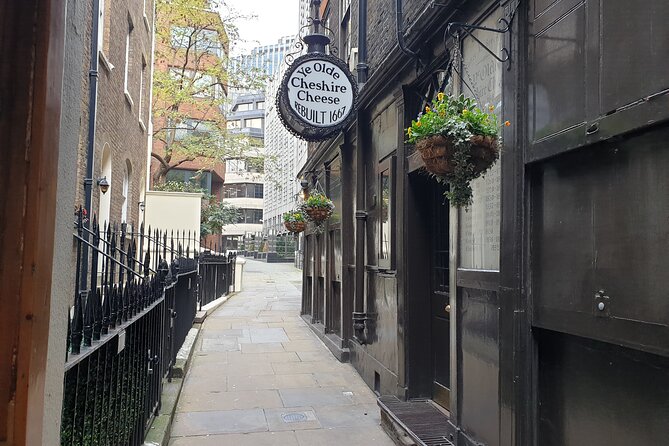
Finishing at Fleet Street
The tour ends outside Ye Olde Cheshire Cheese at 145 Fleet Street, not far from Blackfriars Station. This is a practical finish because you can continue by public transportation or stop for food and a drink nearby.
The end point also suits the tour’s theme. Fleet Street is one of London’s historic streets, and finishing here leaves you in a part of the city with plenty of directions for the rest of the day. Tom may also suggest other places to visit or local spots to enjoy after the tour.
Because the route does not return to the starting point, plan your day around that one-way movement. This is not a problem, but it is worth knowing before you book. You finish west of the Tower, near the river and Blackfriars, rather than back at Trinity Square.
What the $27.78 price really buys you
At $27.78 per person, this is a reasonably priced guided walk. You are paying for about two hours of explanation, route planning, and access to a small group rather than for attraction admissions.
That distinction is important. The Tower of London, Monument, Bank of England Museum, Guildhall, and St. Paul’s Cathedral all list admission as not included. If you want to go inside several of them, your total day’s spending will rise.
For me, the price works best if you want a framework for exploring the City. Tom’s comments can help you identify places to revisit, including free museums with Roman ruins and artifacts. You also avoid spending time wandering between landmarks without knowing how they connect.
The value is weaker if you prefer to move quickly, spend most of your time indoors, or want a tour with included entry to major attractions. This is a storytelling walk first.
Group size, pace, and practical comfort
The maximum group size is 15. That is small enough for a more personal feel, and it should make questions easier than on a large coach or crowded street tour.
The tour is described as suitable for most people, with service animals allowed. It is also near public transportation. Still, one account describes it as an extremely long walking tour and advises against it for anyone with mobility issues. Take that warning seriously, since the experience involves moving between several City locations.
Wear comfortable shoes and expect to be outdoors. The supplied details do not specify the exact distance, rest arrangements, or indoor time, so you should not book it assuming frequent seating or shelter.
The experience is offered in English. If you need another language, this tour is not presented as an option for that.
Who will enjoy this London walking tour?
I would choose this tour for a first or second visit to London if you want a strong introduction to the City’s past without spending the whole day inside museums.
It suits you especially well if you:
- Like history explained through streets and buildings
- Enjoy connecting Roman, medieval, wartime, and modern stories
- Prefer a small group
- Want a guide who welcomes questions
- Are comfortable walking for about two hours
- Plan to visit some attractions separately
It may not suit you if you have mobility limitations, dislike outdoor walking, or want every admission included. It is also not the best choice if your main goal is a long, detailed visit inside the Tower or St. Paul’s Cathedral.
The strongest praise centers on Tom’s clear storytelling, passion, and practical suggestions. He is described as engaging without overloading the group with too much information. That balance matters: London history can become a flood of dates, but the best explanations help you remember why a place matters.
Should you book Roman Ruins to Blitz Bombings?
Book it if you want London’s City district explained as one connected story. The route covers an impressive range in about two hours, from the Tower and medieval civic life to the Great Fire, the Bank of England, St. Paul’s, and wartime ruins.
The price is fair for a small-group walking tour, but remember that it includes guiding rather than attraction entry. I would pair it with separate visits to one or two sites that interest you most, not try to see every interior on the same day.
If you want a history-focused walk led by Tom, can manage a steady pace, and like noticing places that are easy to miss, this is a strong choice. If mobility is a concern, choose a less demanding experience instead.
FAQ
How long does the walking tour last?
The tour lasts approximately two hours.
Where does the tour start?
It starts at 38 Trinity Square, London EC3N 4DJ, near the Tower of London.
Where does the tour finish?
It finishes outside Ye Olde Cheshire Cheese at 145 Fleet Street, London EC4A 2BP, not far from Blackfriars Station.
How much does the tour cost?
The listed price is $27.78 per person.
Is admission to the Tower of London included?
No. Admission to the Tower of London is not included.
Are attraction entry fees included at the other stops?
No. Admission is not included for the Monument to the Great Fire, Bank of England Museum, Guildhall, or St. Paul’s Cathedral. St. Dunstan in the East and London Stone are listed as free stops.
How many people can join the tour?
The tour has a maximum of 15 people.
Is the tour offered in English?
Yes. The tour is offered in English.
Are service animals allowed?
Yes. Service animals are allowed.
Can I cancel for a full refund?
Yes, if you cancel at least 24 hours before the experience’s start time. Cancellations made less than 24 hours before the start time are not refunded, and changes made within that period are not accepted.
More History Walks in London
- London Small Group Tour of Historical Pubs
★ 5.0 · 10,422 reviews - Soho Music & Historic Pubs Tour
★ 5.0 · 1,993 reviews - London: Historic Pubs of Central London Walking Tour
★ 4.9 · 1,065 reviews - London: Soho Music and Historic Pubs Walking Tour
★ 4.9 · 836 reviews
More Wartime London Tours
- Westminster 3 Hour Walking Tour and Visit of Churchill War Rooms
★ 5.0 · 967 reviews - WW2 London Walking Tour & Churchill War Rooms Entrance Ticket
★ 4.5 · 933 reviews - London: Westminster WW2 Tour & Churchill’s War Rooms Ticket
★ 4.5 · 925 reviews - London in WW2 Walking Tour with Churchill War Rooms Visit
★ 5.0 · 721 reviews
Just added in London
- Royal London Guided Sightseeing Tour and Thames River Cruise★ 4.0 · 31 reviews
- Roman London Private Walking Tour★ 5.0 · 44 reviews
- Westminster Abbey, Big Ben, Buckingham Guided Tour of London★ 5.0 · 451 reviews
- River Thames Evening Cruise with Sparkling wine and Canapés★ 4.0 · 569 reviews
- Rock and Roll Walking Tour of Soho London★ 4.5 · 64 reviews
- London Private Chauffeur Half-Day or Full-Day Vehicle Rental★ 5.0 · 37 reviews
- Rich people behaving badly★ 5.0 · 47 reviews
- Speedboat Sightseeing: Embankment OR Westminster Pier -45 Minutes★ 5.0 · 288 reviews
Roman Britain Tours, compared.
Windsor, Stonehenge, Bath, and Roman Baths Day Trip
Read our review →
Stonehenge and Bath Day Trip from London with Optional Roman Baths Visit
Read our review →
City Walking Tour with Optional Roman Baths Entry
Read our review →

Fascinating Walking Tours Of Roman Chester With An Authentic Roman Soldier
Read our review →
Browse the lists this tour appears in