
Reviewed · MUSEUMS
British Museum Highlights Private Tour in London including the Rosetta Stone
The Rosetta Stone is only the beginning. This private British Museum tour leads you through a few of the building’s most important rooms, linking Egyptian mummies, Greek sculpture, Assyrian reliefs, and Anglo-Saxon treasure into one readable story. I like the focused route and the chance to ask a guide questions instead of trying to decode 70 galleries on your own.
I also like that the tour ends with you back at the museum, free to continue exploring. Guides including Rob Smith, Norma, Guy, and Trudy have been singled out for lively, clear explanations. The main caution is time: the experience is advertised at about 2 hours 30 minutes, while the itinerary describes 1 hour 30 minutes, and that is a short visit for a museum this huge.
Key points to know before you book
- The Rosetta Stone is a central stop: See the real stone that helped scholars read Egyptian hieroglyphs.
- The route covers major civilizations: Expect Egyptian mummies, the Parthenon Frieze, Athenian marbles, Assyrian or Syrian reliefs, and Sutton Hoo objects.
- A private format keeps questions easy: Your group has its own English-speaking guide and can ask to focus on particular interests.
- Montague Place is the meeting point: Look for the north entrance with stone lions by the doorway.
- The museum itself is free: The $141.56 price pays for the guided experience, not general museum admission.
- Plan extra time afterward: The tour gives you an orientation, but no short route can cover anything close to all eight million objects.
Why the British Museum needs a plan
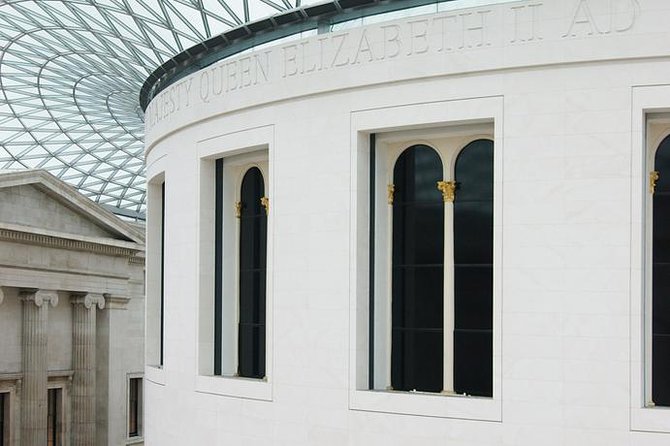
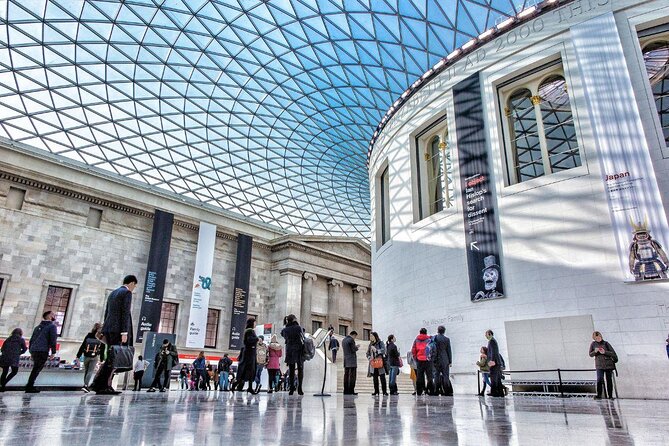
The British Museum is not a simple building with one obvious path. Its collection includes more than eight million objects, spread across roughly 70 galleries and nearly one million square feet. You can spend an hour there and still feel as if you have barely crossed the threshold.
That scale is the reason this tour makes sense. A guide can take you directly to major works rather than leaving you to study a map, follow signs, and wonder which rooms deserve your limited time. I like museums that reward wandering, but the British Museum can be hard to read on a first visit. A clear route gives you a framework.
The tour is especially useful if London is one stop on a packed trip. You get a compact introduction to objects from Egypt, Greece, the Middle East, and the British Isles. Afterward, you can return to the rooms that caught your attention instead of spending your entire visit searching for them.
Do not expect a full museum survey. Even the longer advertised time only allows a brisk look at selected pieces. The tour is an introduction and orientation, not a substitute for a full day inside the museum.
More Museum Tours in London
- Tower of London and Crown Jewels Exhibition Ticket
★ 4.5 · 6,677 reviews - London: Chelsea Football Club Stadium and Museum Tour
★ 4.8 · 4,576 reviews - Chelsea FC Stadium Tours and Museum
★ 5.0 · 1,908 reviews
Meeting your guide at Montague Place
The meeting point is Montague Place, beside the museum’s north entrance. The doorway is marked by stone lions, a useful visual clue in a busy part of central London. Your guide is supposed to hold a sign, and the instructions identify this entrance clearly.
Give yourself time to find the exact spot. Two separate pieces of feedback describe trouble locating the guide, including one case where there was no visible sign and another where the address caused confusion. The practical lesson is simple: arrive early, keep the tour company’s contact details handy, and do not assume every entrance leads to the same meeting area.
This is a mobile-ticket experience, and confirmation is provided when you book. The tour is offered in English. The published format is private, meaning only your group should participate, although some past bookings appear to have operated in a small-group style. If having a fully private visit is essential, confirm the format before paying.
The Rosetta Stone and the Egyptian galleries
The Rosetta Stone is the obvious opening prize. It is not connected to the language-learning software with a similar name. This is the actual ancient stone whose inscriptions helped scholars decipher Egyptian hieroglyphs.
Your guide can give the object its proper setting: the importance lies not only in the stone itself, but in the way its different scripts allowed researchers to compare known writing with hieroglyphs that could no longer be read. Seeing it in person turns a familiar textbook reference into a physical object with a clear role in the study of ancient Egypt.
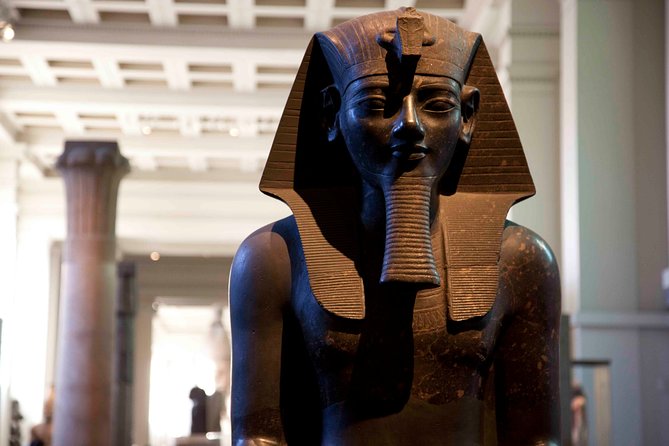
The Egyptian rooms then move from writing to belief, art, and death. You will see mummies and learn why the afterlife mattered so deeply in ancient Egyptian culture. The best part of this section is the context. A mummy can seem like an isolated curiosity when viewed alone, but the surrounding objects show how burial, status, religion, and daily life were connected.
This part of the route has been a favorite for many people, but keep your expectations measured. You are seeing selected highlights, not every Egyptian room or every mummy. If Egypt is your main interest, tell the guide early. The private format is meant to let you shape some of the visit around your priorities.
The Parthenon Frieze and Athenian sculpture
The Parthenon Frieze gives the tour a dramatic change of scale. The sculpture once belonged to the Acropolis in Athens and stretches more than 500 feet in its original length, with a height of just over three feet. In the museum, you can study the procession and figures at close range.
The guide’s explanation matters here because the work is easy to view as a long band of carved marble without understanding its place in the Parthenon. A good explanation helps you notice movement, clothing, horses, and the way the figures were arranged.
The route also includes Athenian marbles and other Greek material. This is one of the points where the British Museum’s collection raises larger questions about ownership and removal. The supplied tour details do not promise a formal discussion of museum ethics, so you should ask if that subject matters to you. A private guide gives you a better chance of starting that conversation than an audio guide does.
The drawback is crowding. Feedback describes packed galleries and warm conditions on some days, particularly when school groups were present. Your guide may help you get from room to room, but the tour cannot control how many people are in front of a famous sculpture.
Same trip, a completely different kind of day:
- London: The London Eye Entry Ticket
★ 4.6 · 35,875 reviews - From London: Harry Potter Warner Bros Studio Tour
★ 4.7 · 26,588 reviews - London: Westminster to Greenwich River Thames Cruise
★ 4.5 · 22,836 reviews - London: Madame Tussauds London
★ 4.6 · 20,915 reviews
Reliefs, empires, and difficult stories
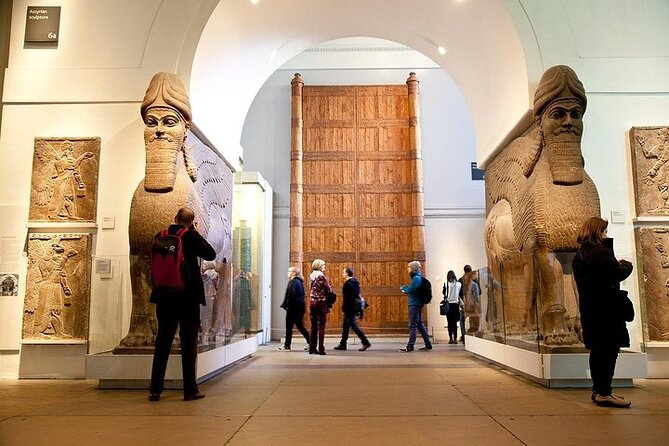
The route can also include Assyrian or Syrian reliefs, depending on the guide and the day’s movement through the museum. These works add something different from the famous Greek and Egyptian rooms. They show how rulers, armies, animals, ceremonies, and religious ideas were recorded in carved stone.
This is one place where a personal guide is useful. A label may identify a king or scene, but it rarely explains how the relief fit into a palace or political system. The strongest guides on this tour have been described as enthusiastic and willing to explain objects beyond the stated route.
The material can also be troubling. Some reliefs connect to warfare, power, and the destruction of communities. You may find these rooms more moving when the guide explains both the artistic skill and the human cost represented by the objects.
The quality of the explanation can vary. One poor experience included unclear speech, incorrect information, and behavior that ignored a museum instruction about using a flashlight in a low-light gallery. That is not the expected standard, but it is a reminder to pay attention to how your guide treats the collection and museum rules. A guide should add meaning without distracting from the objects or putting them at risk.
Sutton Hoo and the British Isles
The Sutton Hoo objects give the tour a strong British connection. The burial site produced Anglo-Saxon treasures, including objects linked to a ship burial. Their survival is remarkable, particularly given the threat of grave robbing and the passage of centuries.
This section helps correct the idea that the British Museum is only about Egypt, Greece, and Rome. The collection also tells stories from the British Isles, including the people and cultures that existed in England long before the modern nation took shape.
I like this stop because it broadens the route. You move from large imperial collections to a discovery tied to Britain itself. The guide can explain how the objects were found and why the burial was such an unlikely survival.
Again, you will see only a sample. If Sutton Hoo is your reason for booking, say so at the beginning. The tour is designed to cover the major highlights, but the precise balance can depend on your guide, the crowds, and your questions.
The value of a private guide at $141.56
The listed cost is $141.56 per person. The British Museum has free general admission, so you are paying for direction, interpretation, and time saved rather than entry. That makes the price harder to justify for someone who enjoys reading labels and has a full day available.
For a first visit with only a few hours, the calculation changes. You are paying to avoid wandering through a massive collection without a plan. You also get a person who can answer questions, adjust the route, and point out nearby highlights you can revisit later.
I would consider the price reasonable for a group that values structure and has limited time, especially if several people are sharing the private guide cost. It is less attractive for a solo visitor on a tight budget, since the museum itself costs nothing to enter.
The tour includes the professional English-speaking guide and all fees and taxes. Food, drinks, and hotel pickup are not included. You meet at the museum and finish there, so you must arrange your own transport before and after the visit.
How long the tour really takes
The headline duration is approximately 2 hours 30 minutes. The detailed itinerary gives the museum visit as 1 hour 30 minutes, so you should clarify the exact schedule before booking if your day is tightly arranged.
Either way, the visit is compact. You will walk between galleries, pause at important objects, and listen to explanations. One person described the pace as a useful way to see the essentials, while another felt the tour did not allow enough time to see enough exhibits. Both reactions are fair.
I would plan the rest of your day around at least some extra museum time. The tour ends back at the meeting point, and you can continue exploring on your own. That follow-up is not an afterthought. It is the best way to get value from the orientation.
The museum can be tiring. Expect a fair amount of walking, and possibly stairs depending on the route. Strollers are not permitted on the tour. Most people can participate, but the published information raises accessibility questions for wheelchair users, even though one past group included a person using a wheelchair. Ask the operator about the current route before booking if mobility is a concern.
Which guides have made the biggest difference
The strongest feedback centers on the guides, not simply the objects. Rob Smith was praised for arriving early, explaining the museum’s must-see pieces clearly, and helping a group understand where to continue afterward. Norma was described as enthusiastic and well prepared.
Guy has been praised for making the highlights interesting, while Trudy received especially warm comments for her energy, background information, and ability to navigate school groups. ZoZo was also described as well informed about the artifacts. These names show the level of guiding you should hope for, but you cannot assume a particular guide will be assigned to your booking.
A good guide does more than repeat display labels. They should explain why the Rosetta Stone mattered, connect Egyptian beliefs to the mummies, show what to notice in Greek sculpture, and help you understand why Sutton Hoo is important. They should also be open about uncertainty rather than inventing an answer.
The experience is guide dependent. Most of the positive feedback praises clear storytelling and the freedom to ask questions. One poor experience reports a guide who seemed to read labels, gave information that appeared wrong, and was hard to understand. That range is worth keeping in mind when you decide how much you want to pay for a guided visit.
Who should book this tour
I would choose this tour if you have half a day or less, feel overwhelmed by giant museums, or want a human explanation of objects you already recognize. Families and mixed-interest groups may also benefit because a guide can keep the route moving and adjust the emphasis.
It is a good fit for a first British Museum visit. You get a map in your head, see the famous pieces, and can then return to Egypt, Greece, Sutton Hoo, or another gallery on your own.
I would skip it if you have a full day, enjoy slow museum wandering, or are watching every dollar. Since entry is free, you can use the museum’s own materials and explore at your own speed. You may also prefer a private specialist tour focused only on Egypt, Greece, or the British Isles if one subject matters most.
Book with the 24-hour cancellation rule in mind. You can cancel for a full refund up to 24 hours before the start time, but changes or cancellations inside that window are not accepted.
Should you book the British Museum private tour?
Book it if your London schedule is short and you want the Rosetta Stone, Parthenon Frieze, Egyptian mummies, and Sutton Hoo placed into a clear story. The guide can save you time and make the museum less intimidating.
Do not book it expecting to see the whole collection. You will cover a small selection of an enormous museum, and the value depends heavily on the guide you receive. Confirm the actual duration, arrive early at Montague Place, and plan to stay afterward if you want more than a quick introduction.
FAQ
Where does the tour meet?
The meeting point is Montague Place by the British Museum’s north entrance. Look for the doorway with stone lions.
Where does the tour end?
The activity ends back at the meeting point.
How long does the experience last?
The tour is listed as approximately 2 hours 30 minutes, while the detailed itinerary describes 1 hour 30 minutes inside the museum. Confirm the exact timing before booking.
Is museum admission included?
The tour includes all fees and taxes, but the British Museum itself is free to enter. The price primarily covers the guided experience.
Is the tour private?
It is described as a private activity, with only your group participating. Some past experiences have operated in a small-group format, so confirm the arrangement if this distinction matters to you.
What language is the tour offered in?
The tour is offered in English and includes a professional English-speaking guide.
Is hotel pickup included?
No. Hotel pickup and drop-off are not included. You must make your own way to Montague Place.
Are food and drinks included?
No. Food and drinks are not included in the tour price.
Can I bring a baby stroller?
No. Baby strollers are not permitted on the tour.
What is the cancellation policy?
You can cancel at least 24 hours before the start time for a full refund. Cancellations or changes made less than 24 hours before the start time are not accepted.
Just added in London
- Royal London Guided Sightseeing Tour and Thames River Cruise★ 4.0 · 31 reviews
- Roman Ruins to Blitz Bombings: A Walking Tour of London’s Fiery History★ 5.0 · 190 reviews
- Roman London Private Walking Tour★ 5.0 · 44 reviews
- Westminster Abbey, Big Ben, Buckingham Guided Tour of London★ 5.0 · 451 reviews
- Rock and Roll Walking Tour of Soho London★ 4.5 · 64 reviews
- River Thames Evening Cruise with Sparkling wine and Canapés★ 4.0 · 569 reviews
- London Private Chauffeur Half-Day or Full-Day Vehicle Rental★ 5.0 · 37 reviews
- Rich people behaving badly★ 5.0 · 47 reviews
Museums, compared.

Liverpool Football Club Museum and Stadium Tour
Read our review →
Tower of London and Crown Jewels Exhibition Ticket
Read our review →
Chelsea Football Club Stadium and Museum Tour
Read our review →



Browse the lists this tour appears in