
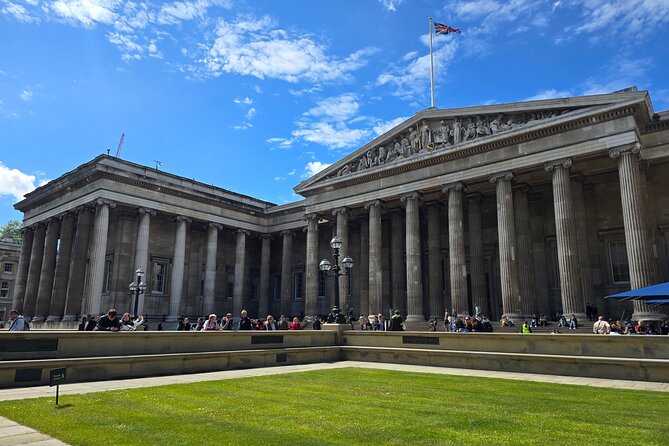
Reviewed · MUSEUMS
British Museum Guided Tour with Priority Timeslots(Small Group)
The best thing about this British Museum tour is its clear purpose: in two hours, you get a guided route through the museum’s biggest sights instead of wandering through 70-plus galleries with no plan. Daniel, James, Joey, Tara, Tony, Antonio, and Rebekka are among the guides who lead this experience, with the exact guide depending on your departure.
I like the small group of no more than 15 people, which makes it easier to hear questions and keep a reasonable pace. I also like the headset option, especially near popular objects where several groups may gather at once. The main consideration is simple: two hours can only introduce this enormous museum, and the $48.60 price pays for the guide and priority timed entry even though general museum admission is free.
Key points to know before booking
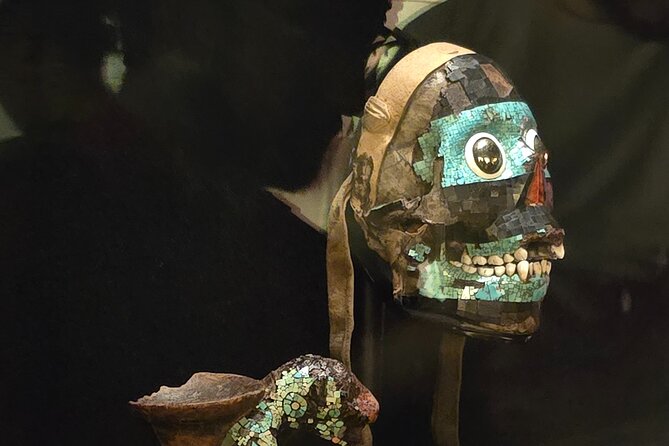
- Two hours, many major objects: Expect Egyptian statues and mummies, the Rosetta Stone, Parthenon sculptures, an Assyrian winged bull, the Easter Island Moai, Sutton Hoo, and the Lewis Chessmen.
- A route through an overwhelming museum: Your guide selects the main sights, so you spend less time figuring out where to go.
- Small-group format: The maximum group size is 15, a useful middle ground between a private tour and a large crowd.
- Headsets help in busy galleries: You can hear live commentary without standing shoulder to shoulder with the guide.
- Free time follows the tour: The guided portion ends back at the museum meeting point, leaving you free to revisit displays or continue independently.
- Best for a first visit or short stay: This is an introduction, not a complete survey of the British Museum.
Why a guided route helps at the British Museum
The British Museum is not difficult to enter, but it is easy to mishandle once inside. More than 8 million objects are held in its collection, with displays spread across more than 70 galleries. Even a full day would leave major sections unseen.
That scale is the reason I see value in this tour. You are not paying for a longer museum opening period. You are paying for a person who chooses a sensible path, puts major objects in context, and keeps the visit moving.
The tour is particularly useful if you have only one short window in London. One guide can point you toward the objects most people hope to see, while explaining why they matter. You also get a basic map of the museum in your head, which makes your later independent wandering much easier.
An audio guide can tell you facts, but a live guide can adjust the route and answer questions. The published experience specifically emphasizes stories and explanations beyond what appears on gallery signs. That difference matters at a museum where labels can be brief and the surrounding collection can be hard to place.
More Museum Tours in England
- Afternoon Tea at the British Museum
★ 4.2 · 511 reviews - British Museum Guided Tour
★ 4.0 · 470 reviews - British Motor Museum Entry Ticket in Gaydon
★ 5.0 · 288 reviews
Starting at Great Russell Street
The meeting point is the British Museum on Great Russell Street, London WC1B 3DG. The activity begins and ends at the museum, and the location is near public transportation, so it fits neatly into a central London sightseeing day.
The included entry arrangement is for the main entrance with a priority timeslot. This does not mean you get the entire museum to yourself. The British Museum remains a major London attraction, and popular galleries can be crowded. It does mean your visit has a scheduled starting point rather than leaving your entrance timing entirely uncertain.
You should arrive ready to find the guide at the stated meeting point. Confirmation is provided at booking, and the tour starts at its scheduled time. The exact guide can vary. Daniel appears frequently in the guide team, while James, Joey, Tara, Tony, Antonio, and Rebekka have also led departures.
That variation is worth understanding. The quality of a museum tour depends greatly on how the guide tells the story. The strongest descriptions of this experience point to guides who combine a broad overview with humor, clear directions, and room for questions. The route may also shift slightly based on the group’s interests.
Egyptian mummies and the Rosetta Stone
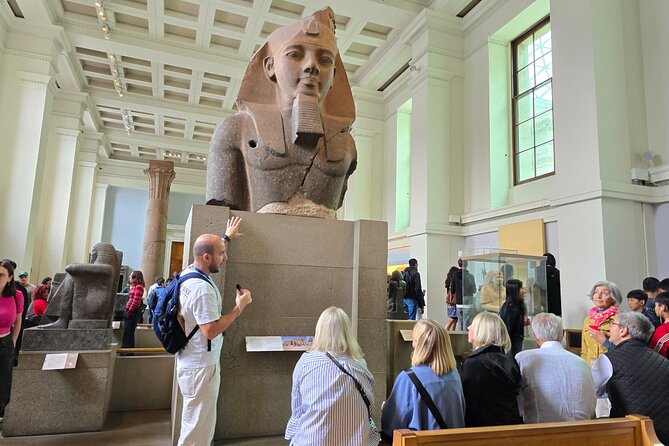
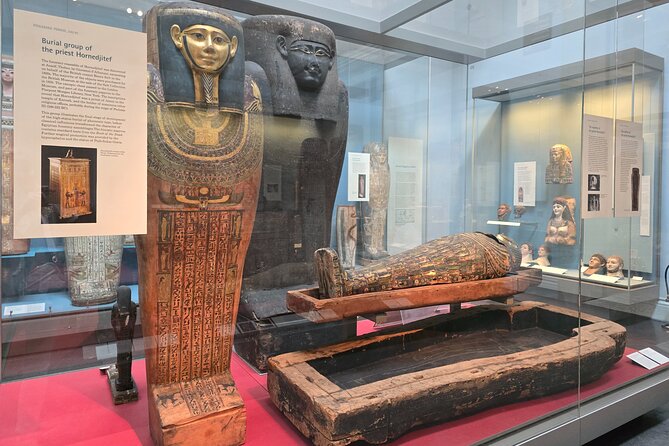
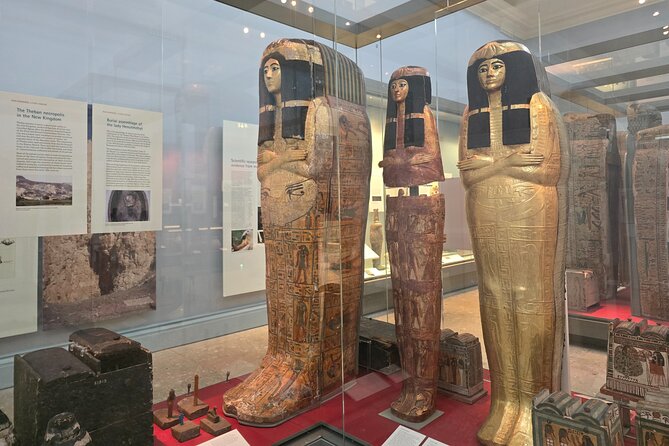
Egyptian material is one of the natural anchors of a first visit. You can expect to see statues and mummies, with the guide explaining how these objects fit into ancient Egyptian beliefs, art, and daily life.
The Rosetta Stone is another essential stop. It is famous not simply because it is old, but because its inscriptions helped scholars read Egyptian hieroglyphs. A guide can make that connection quickly, then move you on before one object consumes the whole morning.
This is where the two-hour structure helps. The museum contains enough Egyptian material to fill an entire visit. The guide’s job is to give you a useful sample, not to turn the tour into a specialist course.
You may find the Egyptian galleries crowded, especially around the best-known objects. This is one place where the optional headset earns its keep. You can step back far enough to see the display and still follow the explanation clearly.
Parthenon sculptures and the questions around them
The Parthenon sculptures, sometimes called the Elgin Marbles, are among the museum’s most discussed displays. They are visually impressive, but their presence also raises important questions about ownership, removal, and the relationship between museums and the countries where objects were made.
A good guide can give you more than the basic date and name. The supplied guide descriptions emphasize explanations that are not simply repeated from the wall labels, and that is especially useful here. You can ask for context and hear how the sculptures fit into the wider story of ancient Greek art and modern museum collections.
This stop can also show why a live tour is more useful than simply checking objects off a list. The Parthenon sculptures are not isolated curiosities. They connect architecture, religion, archaeology, collecting, and current debate.
The drawback is time. The British Museum has many important Greek and Roman objects, but the tour cannot spend long at each one. If Greek art is your main reason for visiting, plan to stay after the two-hour route and return to this area.
Same trip, a completely different kind of day:
- Thorpe Park Admission Ticket
★ 4.0 · 5,915 reviews - Alton Towers Resort 1 Day Admission Ticket
★ 3.5 · 5,501 reviews - Warwick Castle Admission Ticket
★ 4.0 · 2,096 reviews - The Great British Rock and Roll Walking Tour
★ 5.0 · 1,371 reviews
Assyrian bulls and the power of scale
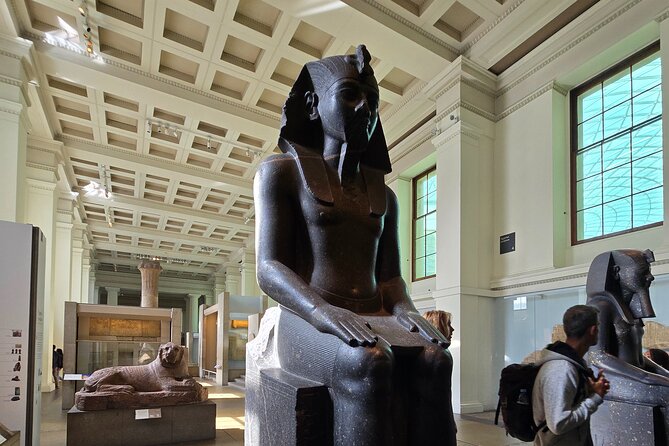
The Assyrian winged bull offers a very different experience from the Rosetta Stone or the smaller Lewis Chessmen. Its size, carved detail, and human-headed winged form make it easy to remember, even if you know little about Assyria before arriving.
This is the sort of object that benefits from a guide’s storytelling. A label can identify the piece and its date. A live explanation can help you notice the symbolism, the protective role of the creature, and the way such a sculpture worked in an ancient palace setting.
The tour includes objects from several cultures rather than staying in one department. That broad spread is one of its strongest features. In a short period, you move from Egypt to Greece to Assyria, then on to other regions and periods.
One small caution: a broad route means the depth will not be equal at every stop. One group may spend longer in Mesopotamia if questions flow that way. A family of four specifically found that section absorbing but wished for more time in other historical areas. If you have a priority object, mention it early.
The Moai, Sutton Hoo, and the Lewis Chessmen
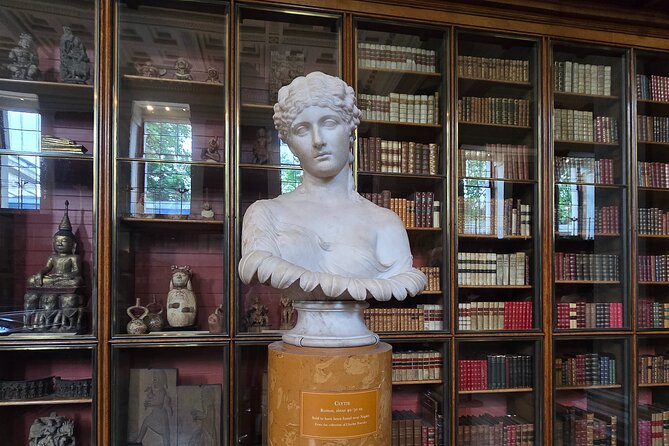
The Easter Island Moai statue adds another dramatic change of subject. Its scale and familiar shape make it an easy museum highlight, but its presence also opens a door to questions about the people and culture that created it.
The Sutton Hoo ship burial takes you into early medieval England. It is a reminder that the British Museum is not only about ancient Egypt, Greece, or Rome. The burial objects connect archaeology, kingship, craft, and the study of Britain’s past.
The Lewis Chessmen offer something smaller and more intimate. These carved figures are easy to recognize, yet they can lead into a wider story about medieval trade, games, status, and craftsmanship.
Together, these stops make the route feel varied. You are not looking at one type of object for two hours. You get monumental sculpture, writing, burial objects, carved figures, and archaeological finds from different parts of the world.
That variety is helpful for families and mixed-interest groups. One person can enjoy mummies, another can prefer medieval objects, and someone else can focus on the museum’s global reach. The guide’s task is to connect these subjects without making the route feel like a string of unrelated facts.
Headsets, crowds, and the pace of the visit
A headset is available, and I would use it. Several parts of the museum can be crowded, with other groups gathered around the same major objects. The headset lets you stand at a sensible viewing distance while still hearing the guide.
The tour is described as fast-moving, but not rushed in the unhelpful sense. It is designed to cover the high points in roughly two hours. You should expect frequent movement between galleries, short explanations at key objects, and enough time to absorb the main idea before moving on.
That pace will suit you if you want a strong first look. It may feel brisk if you prefer to study every object for ten minutes. The museum is simply too large for a leisurely treatment of every stop in this time.
The group limit of 15 is important here. A larger group would be harder to keep together and more difficult to hear. Fifteen is still large enough that you may not receive a private conversation at every stop, but it is small enough for the guide to manage questions and requests.
The guides also appear to handle the museum’s busy conditions as well as possible. You should not expect empty galleries during peak periods. The benefit is that someone else is watching the route and helping you make the most of the time available.
What the $48.60 price really covers
The British Museum does not charge general admission, so the price deserves a close look. At $48.60 per person, this is not a bargain if you only want to walk through the building and look at a few objects on your own.
The value comes from three services: a timed main-entrance arrangement, a live expert guide, and a planned route through the museum’s major pieces. You also receive the benefit of a small group and access to a headset when available.
For a first-time visitor with limited London time, that can be fair value. You avoid spending the first hour working out where the Rosetta Stone is, which galleries matter most, and how to move between them. You also get stories and connections that short display labels may not provide.
For a repeat visitor who already knows the museum, the calculation changes. You may prefer free entry and an independent visit focused on one department. The tour makes more sense if you want an organized overview or if previous visits felt confusing.
I would think of this as an orientation purchase. The two-hour route gives you a framework, and the free time afterward lets you use that framework on your own.
Staying after the two-hour route
The activity ends back at the meeting point, but you are free to continue exploring independently. This is essential because the tour cannot cover everything.
I suggest treating the guided portion as your first pass. Pay attention to the rooms, object names, and directions your guide gives you. After the group ends, return to one or two areas that caught your attention rather than trying to conquer the entire museum.
The guide may also suggest additional sections to visit. That advice can be more useful than a generic list because it follows the route you have just taken. If you want to see a particular object, ask during the tour or note its location for later.
The museum’s size can still feel tiring after two hours. Keep your expectations realistic. You will leave with a strong selection of highlights, not a complete account of world history.
Who will get the most from this tour
I would recommend it most strongly to:
- First-time British Museum visitors who do not know where to begin
- People with only two or three hours for the museum
- Families and mixed-interest groups who want a route everyone can follow
- Visitors who prefer stories and explanations to reading every display label
- Anyone who wants to see famous objects without planning a gallery route in advance
It is less suitable if you want a quiet, slow visit focused on one specialist area. It is also less compelling if you have already visited several times and know exactly which galleries you want.
The tour is offered in English. Most people can participate, and the museum is near public transportation. The group maximum is 15, so this is not a private tour, but it is more personal than a large coach-style visit.
Free cancellation is available up to 24 hours before the start time for a full refund. Changes or cancellations made within 24 hours are not accepted for a refund. The experience also requires a minimum number of participants and may be canceled for poor weather, in which case you are offered another date or a full refund.
Should you book the British Museum guided tour?
Book it if you want a well-planned first look at the British Museum, especially during a short London visit. The guide, priority timeslot, headset option, and small group solve the museum’s main problems: scale, crowds, and uncertainty about what deserves your attention.
The $48.60 cost is harder to justify if you are happy exploring independently. General museum entry is free, and a repeat visitor with a clear plan may get more from choosing one department and taking all the time needed.
For most first-time visitors, I think the tour earns its price as an efficient introduction. You will see the Rosetta Stone, Egyptian material, Parthenon sculptures, the Assyrian winged bull, the Moai, Sutton Hoo, and the Lewis Chessmen, then have the option to continue on your own. Just book it for the right reason: not to see the whole British Museum, but to learn how to begin.
FAQ
How long is the British Museum guided tour?
The guided visit lasts approximately two hours.
What objects are included on the route?
The route includes Egyptian statues and mummies, the Rosetta Stone, Parthenon sculptures, an Assyrian winged bull, an Easter Island Moai statue, the Sutton Hoo ship burial, the Lewis Chessmen, and other major objects.
Is general admission to the British Museum included?
The experience includes entry through the main entrance with a priority timeslot. General admission to the British Museum itself is free, while this price covers the guided experience and related entry arrangement.
How large is the group?
The activity has a maximum of 15 participants.
Is a headset provided?
A headset option is available so you can hear the live commentary clearly, which is useful in crowded galleries.
Can I stay in the museum after the tour?
Yes. After the guided portion, you are free to continue exploring the British Museum at your own pace.
What language is the tour offered in?
The tour is offered in English.
Can I cancel for a full refund?
You can cancel at least 24 hours before the start time for a full refund. Cancellations or changes made less than 24 hours before the start time are not accepted for a refund.
Just added in England
- British Museum Highlights Private Guided Tour★ 5.0 · 29 reviews
- Heathrow Airport to Southampton Port or Hotel Private Airport Arrival Transfer★ 5.0 · 45 reviews
- Heathrow To Southampton Cruise Port Transfers★ 4.5 · 110 reviews
- Private Guided Tour of the British Museum★ 5.0 · 50 reviews
- British Royal 3 Hour Walking Tour!★ 4.5 · 53 reviews
- British Museum In-Depth Private Guided Tour★ 5.0 · 40 reviews
- Explore Biblical Artifacts at the British Museum★ 5.0 · 120 reviews
- Private Guided Tour of Harry Potter Locations – English/ Italian★ 5.0 · 33 reviews
Museums, compared.

Liverpool Football Club Museum and Stadium Tour
Read our review →
Tower of London and Crown Jewels Exhibition Ticket
Read our review →
Chelsea Football Club Stadium and Museum Tour
Read our review →



Browse the lists this tour appears in