
Reviewed · WALKING TOURS
Stratford-Upon-Avon: The Famous Walk Talk Show
Stratford-upon-Avon’s past is packed into a remarkably small area. On this 90-minute walk, you move from the Royal Shakespeare Theatre to Shakespeare’s birthplace, his schoolroom, the church where he was christened and buried, and buildings dating as far back as 1269. Fourteen centuries of history unfold across less than 1.4 kilometres.
I like the way the tour joins Shakespeare’s life to the wider story of Tudor England, rather than treating him as an isolated literary hero. I also like the practical route: it begins and ends at the theatre, includes about a dozen stops, and gives you a useful map of town before you explore on your own. The main drawback is the weather. The walk goes ahead in rain or shine, and there are few chances to shelter during a cold or wet day.
Key points to know before you book
- See Shakespeare’s Stratford in one compact circuit: The route covers his birthplace, New Place, schoolroom, church, and several places linked with his daily life.
- Travel from the seventh century to Tudor England: The guide connects Stratford’s early settlers with the religious and political changes under Henry VIII and Elizabeth I.
- Expect a lively guide-led walk: Kate, Marcus, Dwayne, Chris, and other guides bring the story alive with anecdotes, humour, and plenty of room for questions.
- The route is under 1.4 kilometres: It is wheelchair and mobility scooter-friendly, with a steady walking pace.
- Look for buildings across five centuries: One town corner includes structures from different periods, including the birthplace of John Harvard in 1607.
- Plan for outdoor conditions: Wear comfortable shoes and weather-appropriate clothing because the tour runs unless extreme weather makes it unsafe.
Starting at the Royal Shakespeare Theatre

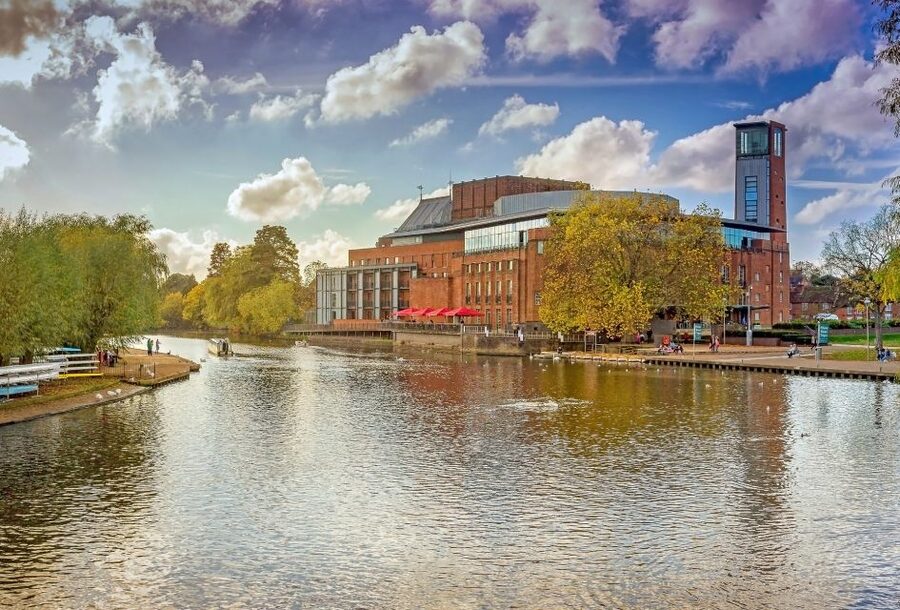
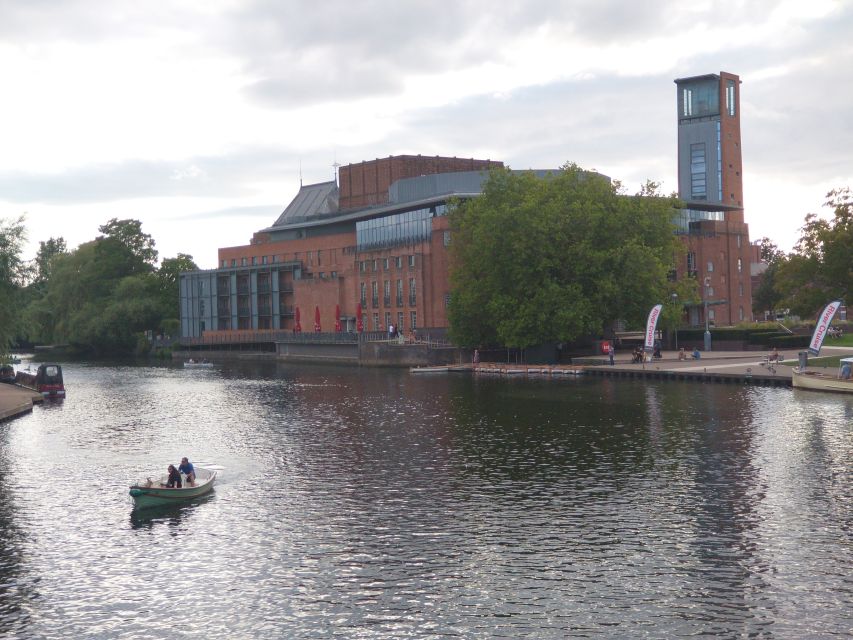
Your walk begins outside the main entrance of the Royal Shakespeare Theatre, at the base of its large viewing tower. This is more than a convenient meeting point. The theatre sets the tone for the whole experience: Stratford is a living town, but Shakespeare remains part of its daily cultural life.
Meet just before the time printed on your ticket. The guide waits outside, wearing a laminated WalkTalkShow.co.uk badge and, at busy times, carrying a red umbrella. Do not go inside the theatre to wait. The group meets outdoors, and heading into the building could mean missing the start.
From here, the guide introduces Stratford’s long story. The tour does not begin with Shakespeare and stop there. You first get a sense of the settlement that existed before him, including the town’s early seventh-century roots, then move toward the Tudor period that shaped his family, education, faith, and work.
That wider frame matters. Shakespeare’s plays did not appear in a vacuum. Religious change, royal power, social pressure, education, and the growth of towns all formed part of the world he knew. I like this approach because it gives the familiar Shakespeare sites a reason to matter.
More Walking Tours in Stratford-upon-Avon
- The Sinister Side of Shakespeare’s Stratford Walking Tour
★ 4.8 · 547 reviews - The Sinister Side of Shakespeare’s Stratford Walking Tour
★ 5.0 · 279 reviews - Stratford-Upon-Avon’s Town Walking Tour (10:30am & 2pm)
★ 4.8 · 143 reviews
Market Hall and the town’s working centre
The first part of the circuit leads toward the Market Hall at Market Cross. This stop helps you picture Stratford as a place of trade and local business, not just a collection of picturesque old buildings.
The market setting also gives the guide a natural opening to explain how the town developed and how people would have encountered one another in earlier centuries. Look up and around as you walk. Stratford’s historic centre has plenty of timber-framed buildings, narrow streets, and old facades, but the value of the stop comes from learning how these places fitted into ordinary town life.
The tour continues through the town centre toward Shakespeare’s Birthplace. This is a busy part of Stratford, with shops and visitors, so you should not expect a quiet museum-style setting. The guide’s job here is to help you read the streets and connect the buildings with the people who used them.
Shakespeare’s Birthplace and Rother Street Market
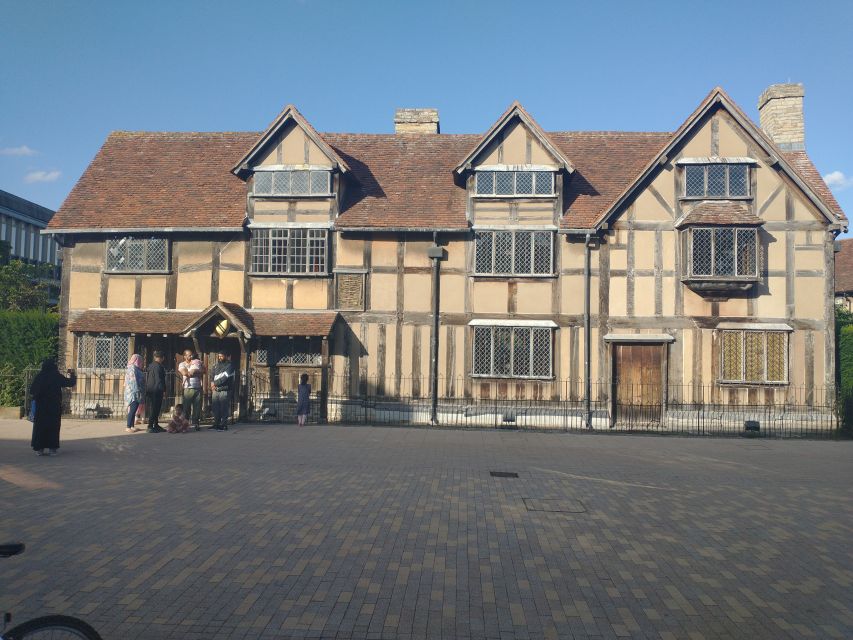
Shakespeare’s Birthplace is one of the obvious highlights, but the walk does not simply point at the building and move on. You learn about Shakespeare’s family, his connection to Stratford, and the town he would have known in the late sixteenth century.
The route then passes through Rother Street Market. This section adds a useful contrast. Instead of focusing only on grand heritage buildings, you see a part of town that still feels tied to everyday commerce. The walk is at street level, and that makes the history easier to picture.
Guides such as Kate and Marcus are especially well suited to this kind of route. Kate is described as enthusiastic about both Stratford and Shakespeare, while Marcus brings historical facts together with humour. Dwayne is also known for a friendly style and the occasional corny joke. The tone is informal, so you get information without feeling as if you are sitting through a lecture.
Bell Court and a corner spanning five centuries
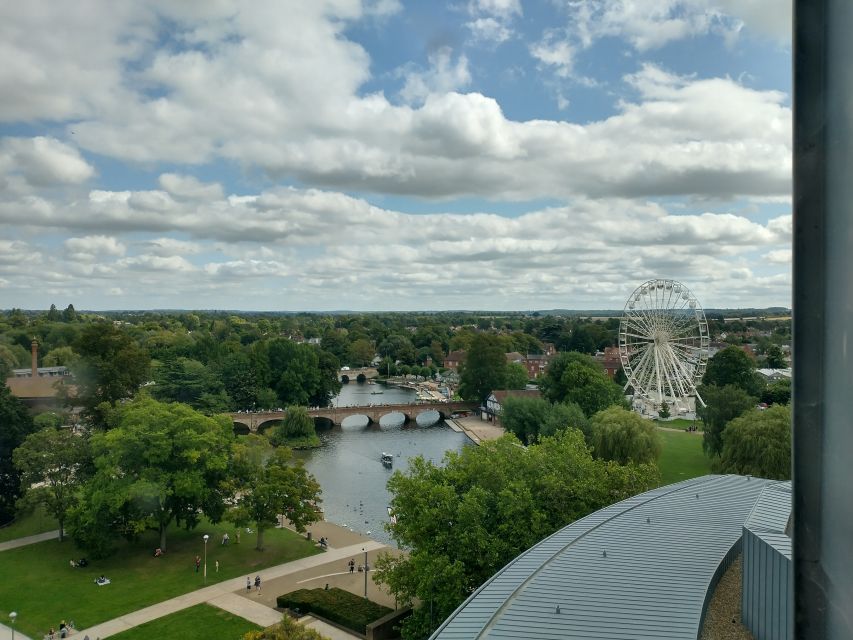
Bell Court is one of the places where the tour shows how old and modern Stratford sit side by side. The guide continues to connect the buildings with the people, institutions, and events that shaped the town.
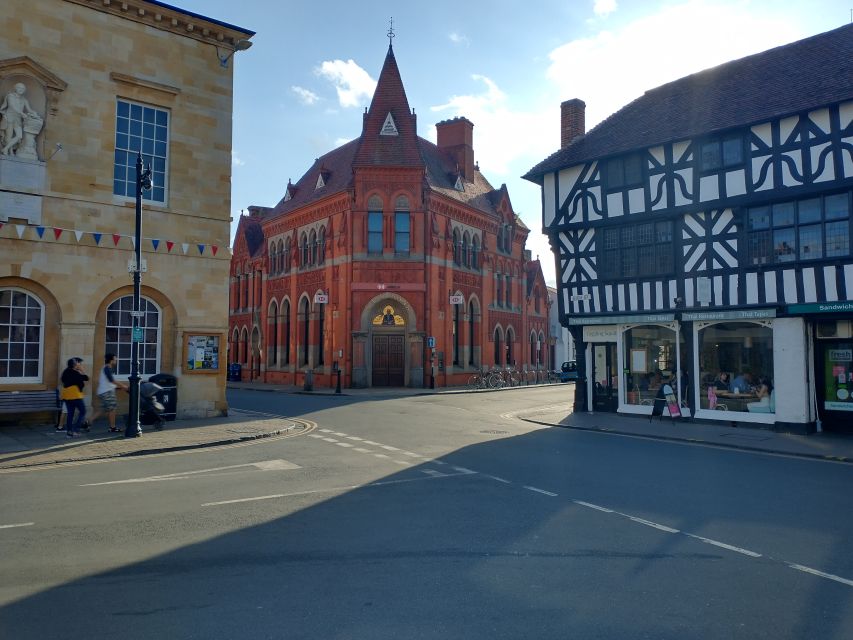
One of the most memorable details comes at History Corner, where you can see buildings from five different centuries from a single spot. The tour points out the house where John Harvard was born in 1607. Harvard later became associated with the university that bears his name, making this a small Stratford detail with a much wider connection.
This is the kind of fact that makes a walking tour useful. You might pass the same corner alone and admire the architecture, but a guide helps you notice the people and dates hidden in plain sight. You can even see how close the buildings are to one another, with several historic periods gathered around the same area.
More Walking Tours in Stratford Upon Avon:
- Underground Vaults Walking Tour in Edinburgh Old Town
★ 4.5 · 8,506 reviews - London: The Original Jack the Ripper Walking Tour
★ 4.7 · 7,833 reviews - Oxford University Walking Tour With University Alumni Guide
★ 5.0 · 6,905 reviews - Edinburgh Castle: Guided Walking Tour with Entry Ticket
★ 5.0 · 5,540 reviews
Town Hall and the Shakespeare family connection
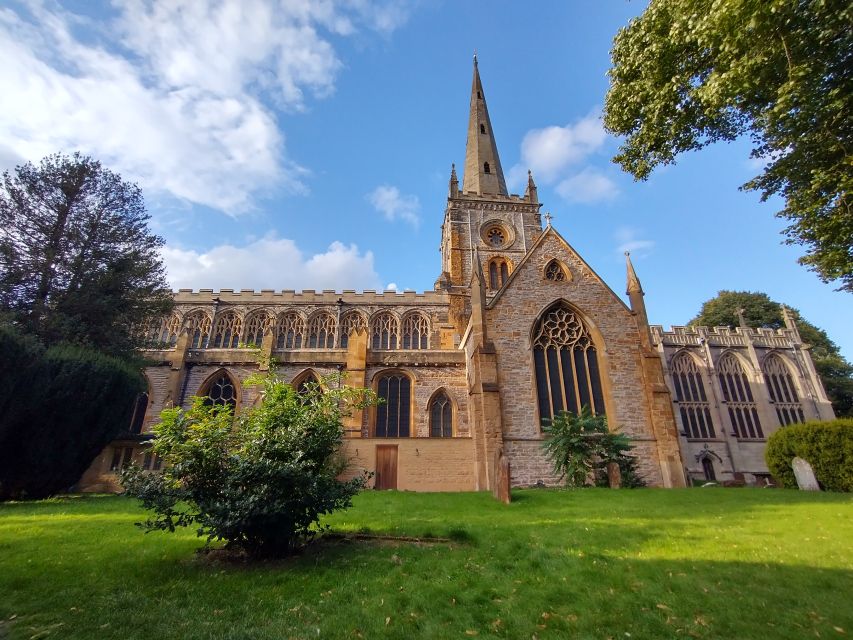
At the Town Hall, the focus returns to civic Stratford. This stop helps explain how power operated locally and how the town’s public buildings related to its residents.
The story of Shakespeare’s family becomes more tangible here. The tour is not only about where he lived or wrote. It explores the town’s institutions, the people who held influence, and the religious and political pressures affecting daily life.
The guide also introduces the forces that changed England during this period. The Reformation, the break with Rome, and the actions of Henry VIII and later rulers had consequences for churches, schools, charities, and local authority. These changes help explain why Stratford’s old religious buildings and guild properties have such complicated stories.
New Place and the Shakespeare you rarely see on stage
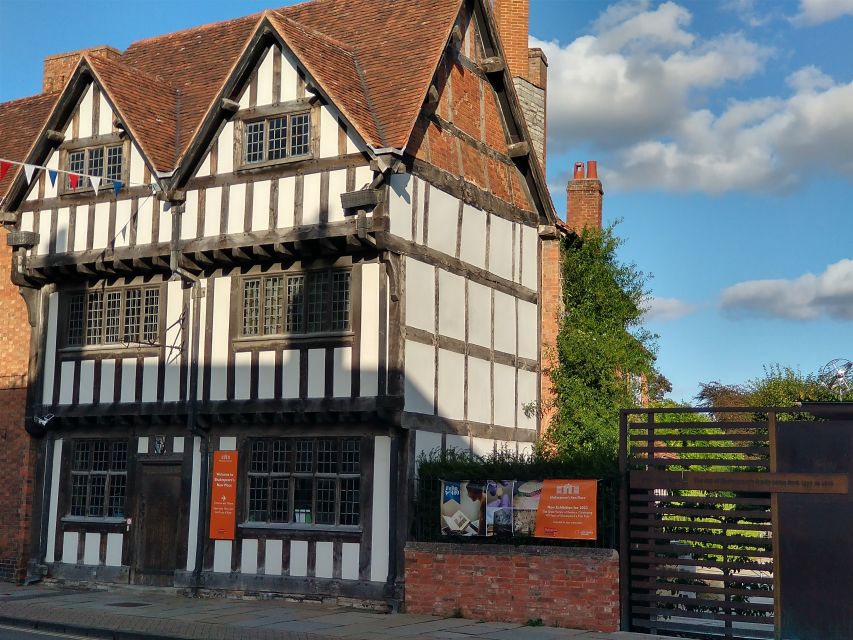
The walk continues to Shakespeare’s New Place, associated with the later part of his life. This is an important stop because it shifts your attention away from Shakespeare the young writer and toward Shakespeare as a successful Stratford resident.
The tour gives you a sense of his connection to the town after his London career had taken shape. It also helps you understand that his local identity mattered. He was not just a distant literary figure. He belonged to a family, a school, a church, a set of neighbourhoods, and a community with its own arguments and ambitions.
You should keep your expectations realistic. This is a walking tour, not an extended indoor visit to every Shakespeare attraction. The guide gives context and points out sites, but food, drinks, entrance tickets, and any hotel transport are not included. If you want to spend time inside the attractions, plan that separately.
The Guild Chapel, founded in 1269
The Guild Chapel is one of the strongest historical stops on the route. Its chapel dates from 1269, and the Guild of the Holy Cross held power in Stratford for centuries.
This site opens a window onto medieval and Tudor town life. The guild was not simply a religious group. Its influence reached into local affairs, and the chapel and almshouses show how religious institutions could shape education, charity, and civic power.
The Guild later fell foul of Henry VIII and his successors. That story gives the tour a clear example of how national decisions reached small towns. When the Crown changed England’s religious structure, local buildings and institutions had to adapt, lose influence, or disappear.
I find this part especially valuable if you already know Shakespeare’s name but not much about the world around him. The chapel puts his lifetime into context. By the time Shakespeare was born, Stratford had already been shaped by several centuries of church, guild, and town politics.
Shakespeare’s Schoolroom and KES as it is now
Next comes Shakespeare’s Schoolroom, followed by KES as it is now. The route connects these places with the education available in Tudor Stratford.
This is a useful reminder that Shakespeare’s talent did not develop in an empty room. Schooling, language, religion, discipline, and classical learning all formed part of the setting. The guide explains the school and its place in town life, helping you picture the young Shakespeare as a student rather than only as the famous playwright known today.
The stop also adds balance to the tour. Shakespeare’s birthplace attracts attention, but the schoolroom helps you think about the skills and habits that may have supported his later writing. You hear about the period, its education, and its social rules, not just a string of famous names.
The pace is generally steady. One guide, Chris, has been praised for making the history feel immersive and entertaining while keeping the walk moving. Other guides have allowed extra time when questions led to useful discussion. That flexibility can make the tour run longer than 90 minutes, although you should treat 1.5 hours as the expected duration.
Historic taverns and the Swan Theatre
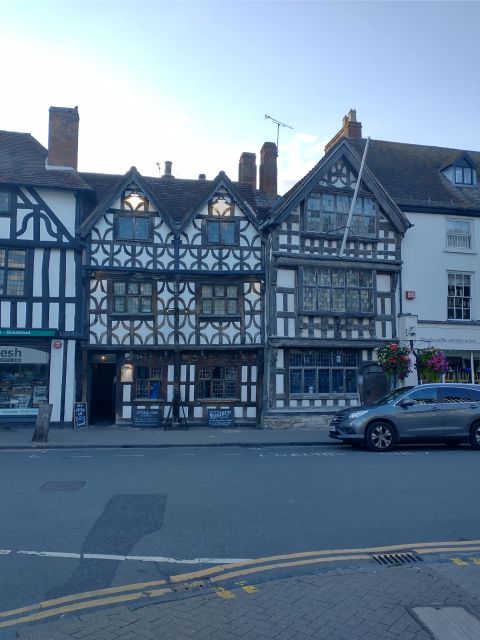
The final part of the route includes historic taverns that served Shakespeare and his friends in the late sixteenth century. Some can still serve you today, giving the past a practical link with the present.
One particularly interesting detail is the inside of the Swan pub, where a mural was found during renovation. The tour can reveal these small discoveries that are easy to miss when you hurry from one major attraction to the next.
The Swan Theatre then brings the story back to performance. Together with the Royal Shakespeare Theatre, it shows how Stratford’s connection with Shakespeare continues today. You are not simply looking at preserved buildings. You are walking through a town where his work remains part of the local cultural life.
This section also provides a good chance to ask the guide for suggestions about the rest of your visit. The walk ends back at the Royal Shakespeare Theatre, so you finish where you began and can continue into the theatre area, return to a site that caught your interest, or explore Stratford independently.
What the guides do best
The strongest part of this experience is the guide’s storytelling. Kate is described as warm, enthusiastic, and full of anecdotes about Shakespeare and the town. Marcus combines historical detail with jokes, while Dwayne brings an easy, friendly manner and answers questions carefully.
That personal style matters on a walking tour. Stratford’s old buildings are attractive, but the details can blur together without a clear story. A good guide tells you why a chapel mattered, how a school fitted into Tudor life, and what made a particular house worth noticing.
You should expect English throughout. The format suits anyone who likes questions and conversation, although the amount of detail can vary slightly by guide and group. Some walks finish close to the advertised time, while others run longer because the guide is explaining a point or responding to questions.
Price, pace, and practical value
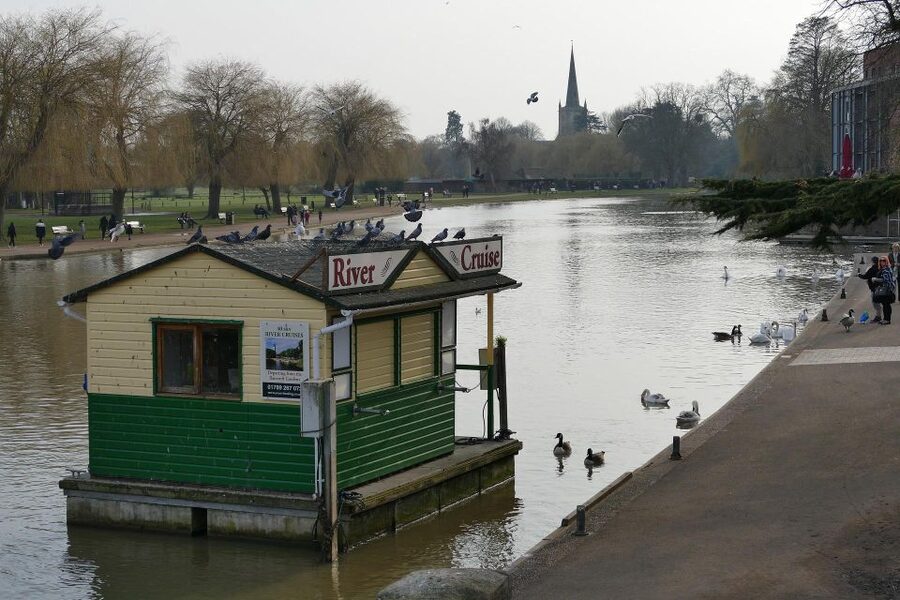
At $16.16 per person, this is a reasonable way to get your bearings in Stratford. The value comes less from admission to a single landmark and more from the number of places covered in a short distance. You see the major Shakespeare connections, several medieval and Tudor sites, civic buildings, old taverns, and the riverside setting around the town.
The walk covers just under 1.4 kilometres, so it is not a demanding hike. It is wheelchair and mobility scooter-friendly, which makes it useful for visitors who want a structured introduction without a long-distance route. You still need comfortable shoes because the tour takes place outdoors and includes regular stops.
Dress for the forecast. The walk runs in rain or shine and is cancelled only when extreme weather makes it unsafe. On a cold day, the lack of sheltered stops can be tiring. One practical improvement would be a short warm-up break, so bring a waterproof layer and do not assume that a pleasant-looking forecast will hold for the full 90 minutes.
The activity includes the guide but not food, drinks, hotel pickup, or drop-off. You meet at the theatre and return there at the end. Free cancellation is available up to 24 hours before the tour, and you can reserve now and pay later, which gives you some flexibility when planning a Stratford day trip.
Who should book the Walk Talk Show
I would choose this tour for a first visit to Stratford, especially if you want the main Shakespeare locations explained before deciding which interiors deserve your time. It also works well as a day trip activity because the route is compact, the duration is manageable, and the meeting point is easy to identify.
Families, first-time visitors, theatre lovers, and anyone interested in Tudor England should find plenty here. The humour and storytelling keep the walk approachable, while the material about the Guild Chapel, religious change, education, and local power gives it more substance than a simple celebrity-house tour.
You might skip it if you prefer to explore entirely on your own, need frequent indoor breaks, or want long visits inside every attraction. The walk points out and explains the sites, but it does not replace separate admission to Shakespeare’s Birthplace, the schoolroom, the chapel, or other buildings.
Should you book it?
Book the Stratford Famous Walk Talk Show if you want a friendly, efficient introduction to the town and its most important Shakespeare connections. The best reason to go is the combination of a short, accessible route and guides who bring the streets to life with stories, questions, and humour.
Pick an afternoon with decent weather if you can, arrive early at the Royal Shakespeare Theatre, and keep time afterward for the places you want to enter. At this price, the tour is a sound first step, particularly for visitors who want to understand Stratford before exploring it on their own.
FAQ
How long does the Stratford Famous Walk Talk Show last?
The tour lasts about 1.5 hours, although some walks may run longer if the guide is answering questions or explaining the sites in extra detail.
Where does the tour start?
Meet outside the main entrance of the Royal Shakespeare Theatre, at the base of the large viewing tower. The guide wears a laminated WalkTalkShow.co.uk badge and may carry a red umbrella at busy times.
Where does the tour end?
The circular walk ends back at the Royal Shakespeare Theatre, where the tour begins.
Is the walking tour wheelchair accessible?
Yes. The route is described as wheelchair and mobility scooter-friendly and covers just under 1.4 kilometres.
What language is the tour in?
The live guided tour is conducted in English.
What should I bring?
Bring comfortable shoes and clothing suited to the weather. The tour operates in rain or shine and cancels only when extreme weather creates a safety issue.
More Show in Stratford Upon Avon
- Comedy Horror Show: York Ghost Bus Tour
★ 4.4 · 2,496 reviews - Show Tickets for Viva Decades Rewind! Music of the 80s, 90s & Now
★ 4.5 · 386 reviews - (9pm) The House Magicians Comedy & Magic Show – Smoke & Mirrors
★ 5.0 · 356 reviews - The House Magicians’ Comedy Magic Show at Smoke & Mirrors in Bristol (Sat 7pm)
★ 5.0 · 296 reviews
Just added in Stratford Upon Avon
- Stratford-upon-Avon: Anne Hathaway’s Cottage Entry ticket★ 4.7 · 41 reviews
- Stratford-Upon-Avon’s Town Walking Tour (10:30am & 2pm)★ 4.8 · 143 reviews
- Stratford-upon-Avon:City Sightseeing Hop-On Hop-Off Bus Tour★ 4.4 · 296 reviews
- London: Shakespeare’s Globe Theatre Guided Tour★ 4.6 · 195 reviews
- Stratford-upon-Avon: Shakespeare’s Story Entry Ticket★ 4.6 · 208 reviews
- The Sinister Side of Shakespeare’s Stratford Walking Tour★ 4.8 · 547 reviews
- Stratford-upon-Avon: Shakespeare’s Birthplace Ticket★ 4.6 · 476 reviews
- Shakespeare’s Globe Guided Tour★ 4.5 · 481 reviews
Walking Tours, compared.
Underground Vaults Walking Tour in Edinburgh Old Town
Read our review →
Oxford University Walking Tour With University Alumni Guide
Read our review →
Edinburgh Castle: Guided Walking Tour with Entry Ticket
Read our review →
Edinburgh Castle Guided Walking Tour in English
Read our review →
Tour for Muggles The Ultimate Harry Potter Walking Tour in London
Read our review →
University and City Walking Tour with Alumni Guide
Read our review →
Edinburgh Darkside Walking Tour: Mysteries, Murder and Legends
Read our review →
Browse the lists this tour appears in