
Reviewed · WALKING TOURS
Walking tour of Lancaster – Execution Slavery Industry
Lancaster’s past is not tidy. It includes public executions, slave-trade money, royal disappearances, witchcraft, and the first murder solved by forensic science. This three-hour walk links those subjects across the city, giving you a useful sense of how Lancaster’s power, wealth, and troubles developed.
I like two things right away: the castle-front meeting point is easy to find, and the route brings together places you might otherwise pass without noticing. Guide Barrie is known for lively delivery, sharp local detail, and plenty of stories. The main consideration is the pace: you will walk and stand for much of the tour, and poor weather can affect the experience.
Key points to know before booking
- Lancaster Castle begins the story, with prisoners, trials, executions, and the building’s wider role in local history.
- St George’s Quay reveals Lancaster’s links to the international slave trade, a key part of the city’s commercial past.
- Barrie’s storytelling style keeps the walk moving, with humour, unusual facts, and room for questions.
- The route covers nine city stops and returns to the castle, making it useful early in a Lancaster visit.
- The group is capped at 20 people, small enough for a more personal walking tour.
- The £20.81 price is strong value if you want several hours of history without paying separate admission fees.
Why Lancaster’s darker past makes a good walking tour
This is not a gentle parade of attractive buildings. The tour uses Lancaster’s darker subjects to explain the city: punishment, forced labour, political ambition, industrial wealth, and social responsibility.
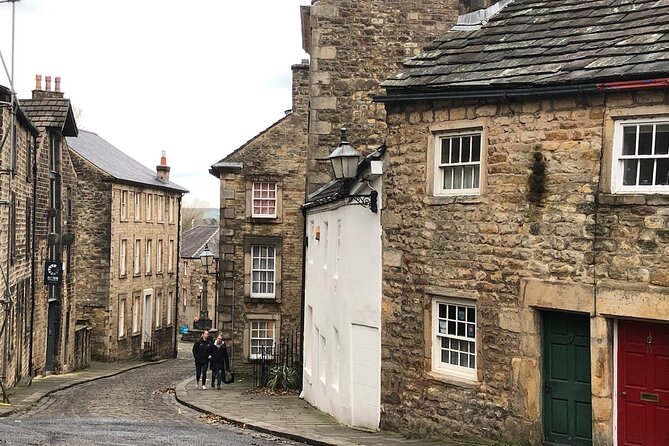
That approach works because Lancaster’s history is spread across ordinary streets. A dockside warehouse, an old house, a market street, and a canal can look disconnected until someone explains what happened there. You get the broad story while standing in the places where it unfolded.
I also like the range of subjects. You are not given three hours of castle history alone. Instead, the route moves from medieval and royal stories to eighteenth-century trade, nineteenth-century industry, crime, education, and charity. That variety helps the afternoon pass quickly, though it also means the tour gives you many short chapters rather than a long treatment of one period.
The title may sound severe, and some of the material is. Execution, slavery, murder, and witchcraft are central themes. Still, the walk is not presented as a grim lecture. Barrie’s style includes humour and amusing anecdotes, which gives the heavier subjects some breathing room.
More Walking Tours in England
- The Great British Rock and Roll Walking Tour
★ 5.0 · 1,371 reviews - Harrogate Walking Food Tour
★ 5.0 · 286 reviews - Guided Walking Tour of Durham & its Infamous Characters
★ 5.0 · 248 reviews
Starting at Lancaster Castle
Meet at Castle Approach, outside Lancaster Castle. This is a practical starting point, especially if you are new to the city. The activity ends back at the same meeting point, so you do not need to plan a complicated pickup or work out where to retrieve a bag or coat.
The first stop lasts about 20 minutes. The castle is introduced as more than an old fortress. You will hear about its prisoners, trials, and executions, along with the role it played in Lancaster’s legal and civic life.
That opening sets the tone. The castle is not treated simply as a photogenic landmark. It becomes the doorway into questions about justice, punishment, and authority. You may also get useful ideas for places to return to after the walk.
The castle stop is free as part of the walking tour, but this activity does not describe a separate interior visit. If you want to explore the castle beyond the outdoor explanation, plan that as a separate decision.
St George’s Quay and the money behind the port
From the castle, the walk heads to St George’s Quay, an eighteenth-century harbour on the River Lune. Allow about 15 minutes here.
This is one of the most important stops because it connects Lancaster’s handsome waterfront to the international slave trade. The tour looks at the people and businesses linked to the area, showing how wealth made through distant trade could shape a local city.
That context matters. It is easy to see a historic quay as scenery. Here, you are asked to think about the source of commercial success and the people who paid the human cost. The subject is serious, but the riverside setting gives you a clear sense of why Lancaster became an important port.
The quay can also be one of the more exposed parts of the route. Bring clothing suited to the forecast. A cold or wet day may not stop the tour, but it can make the standing portions less comfortable.
Judges’ Lodgings and a witchcraft connection
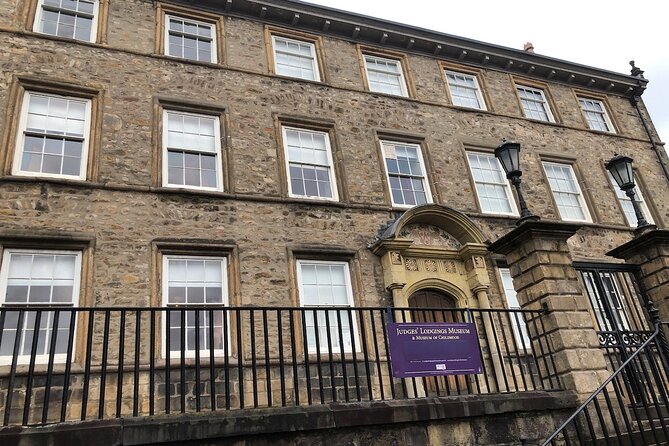
The next stop is Judges’ Lodgings, described as Lancaster’s oldest house. The talk covers its owners and its link to witchcraft, with about 10 minutes at the site.
This is a good example of the tour’s method. A building that might otherwise register as an old house becomes connected to legal power and local belief. The witchcraft story adds another layer to the opening discussion of trials and punishment.
Ten minutes is enough to introduce the story, but not enough for a full architectural visit. Think of this as an outdoor history stop that helps you decide which buildings deserve a longer return visit.
Same trip, a completely different kind of day:
- Thorpe Park Admission Ticket
★ 4.0 · 5,915 reviews - Alton Towers Resort 1 Day Admission Ticket
★ 3.5 · 5,501 reviews - Warwick Castle Admission Ticket
★ 4.0 · 2,096 reviews - Alton Towers Resort 2 Day Admission Ticket
★ 3.5 · 1,198 reviews
Church Street and the missing prince
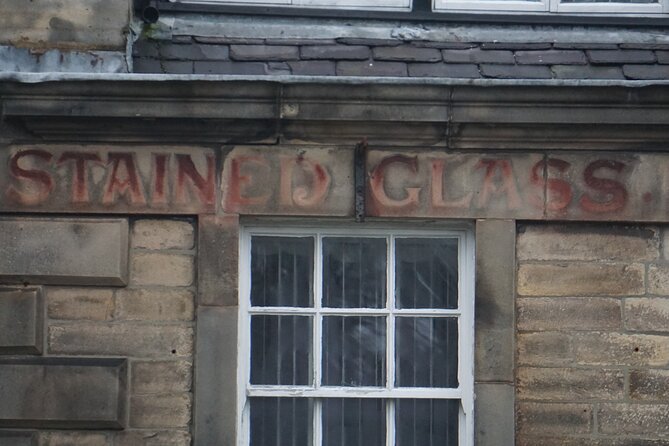
Church Street brings a royal mystery into the walk. The story concerns a prince who goes missing and the possibility that he could have become king of England.
The stop lasts about 10 minutes. It is a change of mood after the port and witchcraft material, shifting the focus to uncertainty, succession, and the stories that grow around missing royal figures.
You are likely to get more from this section if you enjoy historical puzzles rather than only firm, settled facts. The subject adds human drama to the route and shows how national stories can intersect with a local street.
Market Street and two royal stories
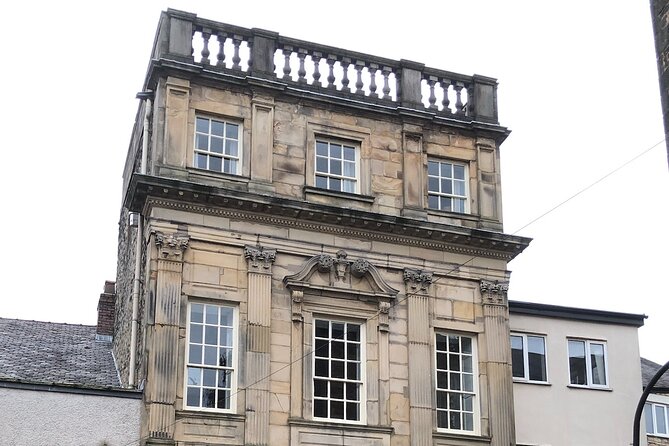
At Market Street, the tour turns to two royal princes separated by about 300 years. One raises a banner, while another loses a shoe.
Those details may sound odd, and that is part of the appeal. The stop uses small, memorable incidents to explain larger political moments. At roughly 10 minutes, it keeps the pace lively and prevents the walk from becoming a string of dates and names.
Market Street also shows why a guide helps. Without explanation, a normal commercial street gives you little reason to connect it with royal history. Barrie’s role is to point out the significance and supply the story that makes the location stick in your mind.
Dalton Square, forensic science, and slave-owner compensation
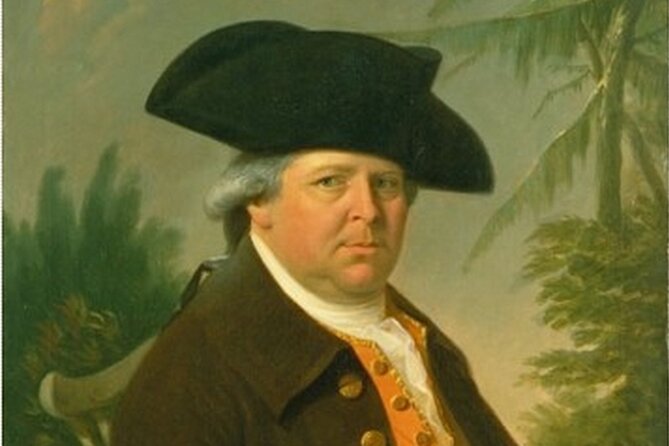
Dalton Square brings together two very different subjects: a murder and a government bonus. You will hear about the first murder solved by forensic science and about compensation paid to slave owners.
This is one of the most striking pairings on the route. The forensic story shows a turning point in criminal investigation. The compensation story returns to slavery, but from the viewpoint of the money paid to owners after abolition rather than the people who had been enslaved.
The stop helps connect local events to larger changes in law, science, government, and morality. It also reinforces the tour’s main idea: Lancaster’s streets reflect both progress and injustice.
The canal, White Cross Mill, and industrial Lancaster
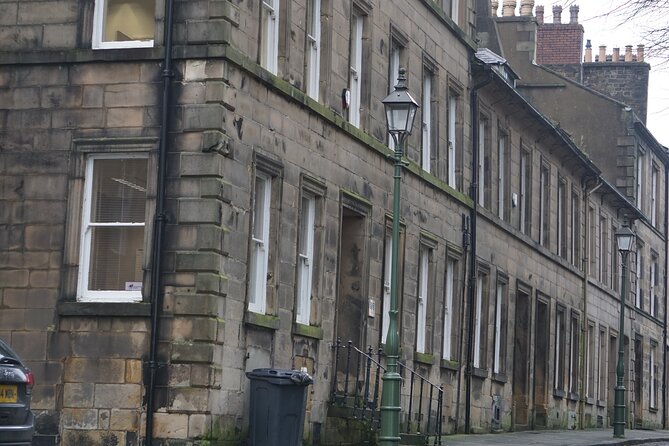
At Lancaster Canal, the focus shifts to industry and transport. The stop includes White Cross Mill and the Storey Brothers, along with the canal’s role during its commercial high point.
Canals can be easy to overlook, especially when you are focused on castles and old churches. Yet this section explains how goods, workers, and money moved through the area. The Storey Brothers’ story gives the industrial chapter a local name and helps show how business shaped Lancaster.
The walk does not present Lancaster as frozen in the past. This stop makes clear that the city changed through trade, manufacturing, transport, and education. It is also a useful reminder that the city’s story continued long after the medieval period.
Penny’s Almshouses and the cost of charity
Penny’s Almshouses offer a look at a charitable institution that still functions today. The guide explains who founded it and how it was financed.
This is a quieter stop, but it adds welcome balance. After prisons, executions, slavery, and murder, you get a chance to consider practical charity and community support. The fact that the almshouse remains functioning gives the story a direct link with the present.
The subject also fits the tour’s interest in money. Wealth could come from trade or industry, but it could also be directed toward housing and support. The walk does not reduce Lancaster to either noble deeds or wrongdoing. It gives you both.
The Storey and Lancaster’s educational tradition
The final stop is The Storey, an educational institute founded through donations. It is presented as an early part of Lancaster’s university tradition.
This provides a fitting close because it moves from punishment and commercial wealth toward learning. The city’s institutions were shaped not only by rulers and merchants, but also by people willing to fund education.
The Storey also gives you another place to note for later. One benefit of taking the tour near the beginning of a visit is that you leave with a better list of buildings and subjects to explore on your own.
How much walking is involved?
The advertised duration is about three hours, although the listed stops add up to roughly two hours of scheduled time. The rest is used moving between locations, hearing explanations along the route, and handling the natural pauses of a walking group.
Expect steady but gentle walking, with repeated periods of standing. The route is not described as strenuous, but one person specifically noted feeling tired by the end. You should wear comfortable shoes and be ready for changing weather.
The tour requires good weather and can be cancelled if conditions are poor. In that case, you are offered another date or a full refund. A minimum number of people is also required, so a cancellation is possible if that number is not reached.
The guide, group size, and atmosphere
Guide Barrie is a major part of the experience. His approach combines local facts, humour, anecdotes, and time for questions. Several parts of the tour rely on storytelling rather than simply pointing at buildings, so a guide who enjoys the subject makes a real difference.
The group can include up to 20 people. That is larger than a private walk but still small enough for the guide to remain audible and for questions to feel manageable. The atmosphere sounds social rather than formal, and you may meet other people interested in Lancaster’s past.
The tour is offered in English and uses a mobile ticket. Service animals are allowed, public transport is nearby, and most people can participate. The supplied information does not promise full step-free access or give a precise accessibility assessment, so contact the provider if you have specific mobility needs.
Is £20.81 good value?
At £20.81 per person, the value is strong if you want a broad introduction to Lancaster. You receive about three hours with a guide and visit nine significant locations without separate admission charges listed for the stops.
The best comparison is not with a quick free walk. It is with the time and research needed to connect these subjects yourself. The tour ties together slavery, royal politics, crime, industry, charity, and education in one route, then returns you to the castle.
The price may feel less worthwhile if you prefer to enter every building or spend a long time at one site. This is a guided overview, not a series of full museum visits. Its strength is the range of stories and the way they connect.
Who should book this Lancaster walk?
I would choose this tour at the start of a Lancaster stay, especially if you have limited time in the city or are visiting the wider Lancashire area. It gives you a working map of the centre and helps you decide where to return later.
It suits people who enjoy local stories, uncomfortable subjects, and unusual details. You should also be comfortable walking outdoors for several hours and listening at multiple stops.
Families with older children may find the royal mysteries, murder case, and castle stories engaging, but the slavery and execution material may not suit young children. The tour is also a good choice for anyone who wants more than a postcard view of Lancaster.
Should you book it?
Book it if you want a serious but entertaining introduction to Lancaster, with the castle, port, canal, royal stories, and social history all in one afternoon. Barrie’s humour and storytelling help the heavier subjects remain approachable, while the small-to-medium group keeps the experience personal.
Skip it if you want a slow architectural tour, extensive time inside attractions, or a walk with little standing. For most visitors who have three hours and sturdy shoes, the £20.81 cost buys a useful sense of how Lancaster became the city you see today.
FAQ
How long does the walking tour last?
The tour lasts approximately three hours.
Where does the tour begin?
It begins at Castle Approach, Lancaster LA1 1YN, near Lancaster Castle.
Where does the tour finish?
The activity ends back at the meeting point by Lancaster Castle.
What language is the tour offered in?
The tour is offered in English.
How many people can join the tour?
The maximum group size is 20 people.
What price should I expect to pay?
The listed price is $20.81 per person.
Which main places are included?
The route includes Lancaster Castle, St George’s Quay, Judges’ Lodgings, Church Street, Market Street, Dalton Square, Lancaster Canal, Penny’s Almshouses, and The Storey.
Does the tour include Lancaster’s links to slavery?
Yes. The tour discusses St George’s Quay and its connections to the international slave trade, as well as compensation paid to slave owners.
Is the tour suitable for most people?
Most people can participate. Service animals are allowed, and the tour is near public transportation. Contact the provider if you need specific accessibility information.
Can I cancel for a full refund?
Yes. You can cancel at least 24 hours before the local start time for a full refund. Cancellations or changes made less than 24 hours before the start are not refunded or accepted.
Just added in England
- British Museum Highlights Private Guided Tour★ 5.0 · 29 reviews
- Heathrow Airport to Southampton Port or Hotel Private Airport Arrival Transfer★ 5.0 · 45 reviews
- Heathrow To Southampton Cruise Port Transfers★ 4.5 · 110 reviews
- Private Guided Tour of the British Museum★ 5.0 · 50 reviews
- British Royal 3 Hour Walking Tour!★ 4.5 · 53 reviews
- British Museum Guided Tour with Priority Timeslots(Small Group)★ 5.0 · 192 reviews
- British Museum In-Depth Private Guided Tour★ 5.0 · 40 reviews
- Explore Biblical Artifacts at the British Museum★ 5.0 · 120 reviews
Walking Tours, compared.
Underground Vaults Walking Tour in Edinburgh Old Town
Read our review →
Oxford University Walking Tour With University Alumni Guide
Read our review →
Edinburgh Castle: Guided Walking Tour with Entry Ticket
Read our review →
Edinburgh Castle Guided Walking Tour in English
Read our review →
Tour for Muggles The Ultimate Harry Potter Walking Tour in London
Read our review →
University and City Walking Tour with Alumni Guide
Read our review →
Edinburgh Darkside Walking Tour: Mysteries, Murder and Legends
Read our review →
Browse the lists this tour appears in