
Reviewed · ENGLAND TOURS
Torquay: The extraordinary life of Agatha Christie tour
Agatha Christie’s Torquay was not just her birthplace. It was her testing ground. This walk links the seaside places she knew with the people, accidents, romances, and wartime work that later fed her crime novels. At about $26, it gives you a useful introduction to both the author and the town.
I especially like the real locations, from the spot where Archie proposed after a concert to the pier where Agatha roller-skated beside well-dressed Victorians. I also like Graham’s theatrical approach, which uses props, quizzes, photographs, and the occasional chance to play Poirot or Miss Marple. The main drawback is simple: this is an outdoor walk of roughly three miles, and no building admissions are included.
Key points to know before you book
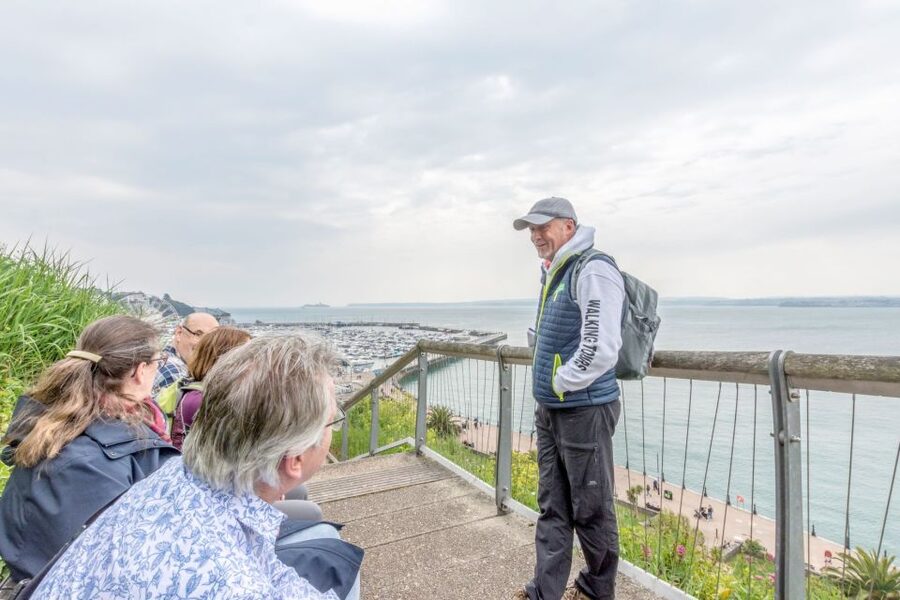
- Agatha’s Torquay years: Follow the first 30 years of her life, from her childhood in a large Georgian villa to the events that pushed her toward writing.
- A seaside route: Walk past the Pavilion, Princess Pier, the Italian Gardens, Torre Abbey, and the Grand Hotel.
- Crime-writing connections: Hear how a Belgian refugee gathering helped inspire Hercule Poirot and how wartime pharmacy work shaped Christie’s use of poison.
- A lively guide: Graham mixes facts with drama, humor, quizzes, photographs, and simple props.
- Flat but fairly long: The route is roughly three miles and takes about two and a half hours, with no steep terrain listed.
- Good value for fans: At $26, the tour costs less than many formal attractions and adds local context you will not get from reading Christie’s biography alone.
Meeting Agatha Christie beside the sea
The best thing about this experience is its sense of place. Agatha Christie spent the first 30 years of her life in Torquay, and the walk uses the town as a kind of open-air biography.
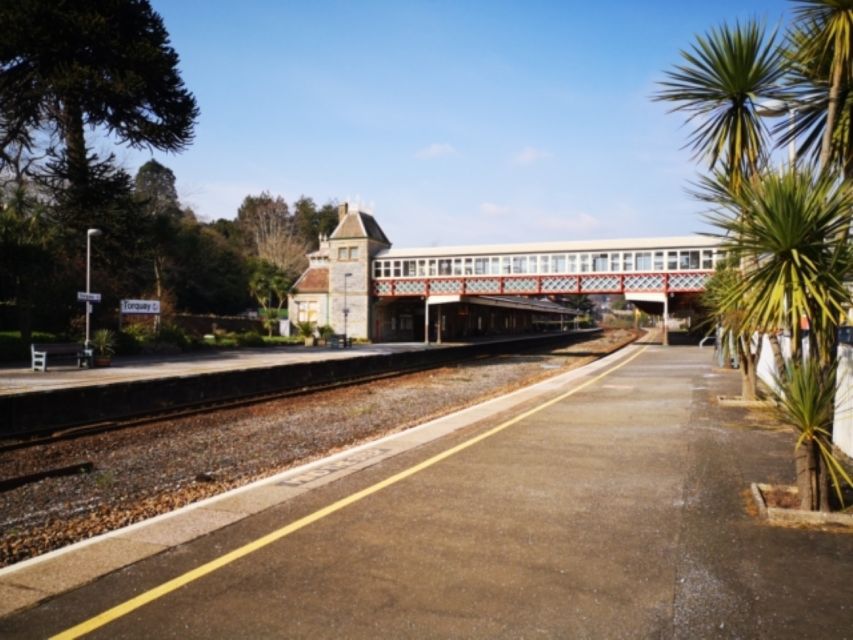
You start at the English Riviera Tourist Information Office, postcode TQ2 5JG. Look for the guide in a yellow fluorescent jacket. That clear meeting point matters in a busy seaside town, especially if you are arriving by train, bus, or from a nearby hotel.
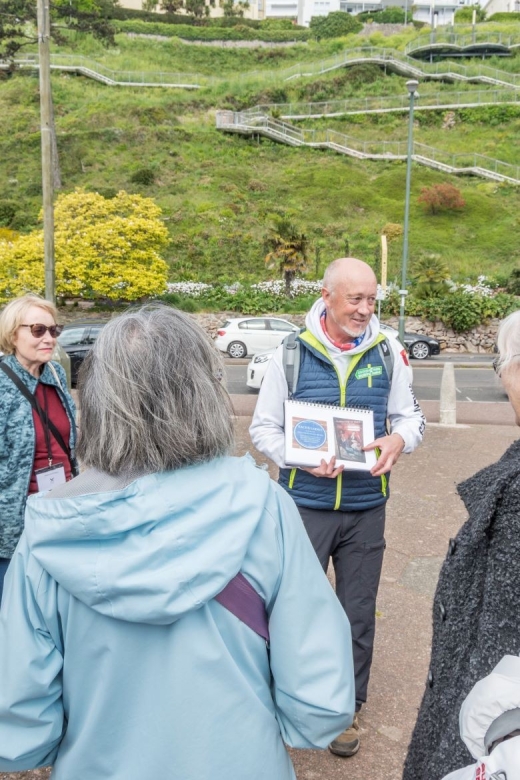
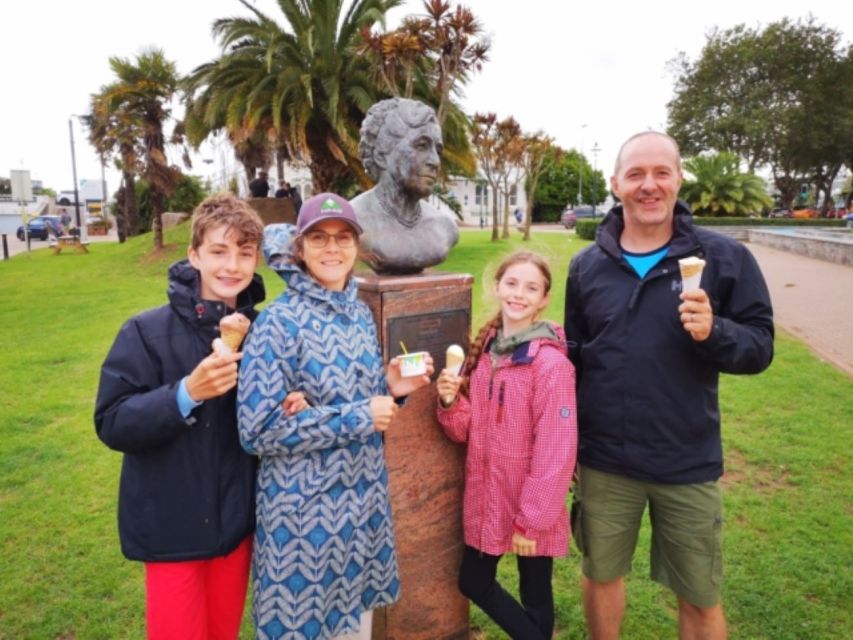
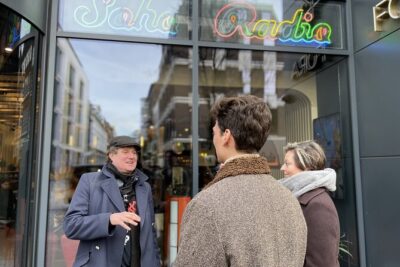
Graham leads the walk in English. His style is friendly and highly interactive rather than formal. He uses photographs to show how places looked in Christie’s time, and he draws people into the stories with questions and small activities. A few props let you pose as Poirot or Miss Marple, and there is even a playful opportunity to commit a murder in front of Agatha’s bust.
That theatrical touch will not suit everyone. If you want a quiet, academic lecture, this may feel too playful. I think it works well for most people because Christie’s life included enough drama already: a romantic proposal, wartime service, an unexplained disappearance, international travel, and two marriages.
A few more half-days in England worth comparing
- Thorpe Park Admission Ticket
★ 4.0 · 5,915 reviews - Alton Towers Resort 1 Day Admission Ticket
★ 3.5 · 5,501 reviews - Warwick Castle Admission Ticket
★ 4.0 · 2,096 reviews
From childhood in Torquay to a writer’s first chance
The opening section explains Christie’s early life in Torquay. You hear about her upbringing in a large Georgian villa with sea views, the local people she met, and the places she knew as a young woman.
This background gives the later stories more weight. Instead of treating Christie as a distant literary figure, the walk shows how an ordinary seaside setting became part of her imagination. Her fictional villages, social gatherings, country houses, and suspicious characters did not come from nowhere.
The tour also explains that writing was not originally Christie’s plan. A bet with her sister encouraged her to try a novel, eventually leading to her first published Poirot book. That detail is worth hearing on foot because it makes her career feel less like a grand destiny and more like a door she pushed open after someone dared her to try.
You will not enter her former home as part of this experience. That is important to understand before booking. The value comes from the guide’s storytelling and the connection between public places and private events, not from viewing preserved rooms or original furniture.
The Pavilion and a seaside proposal
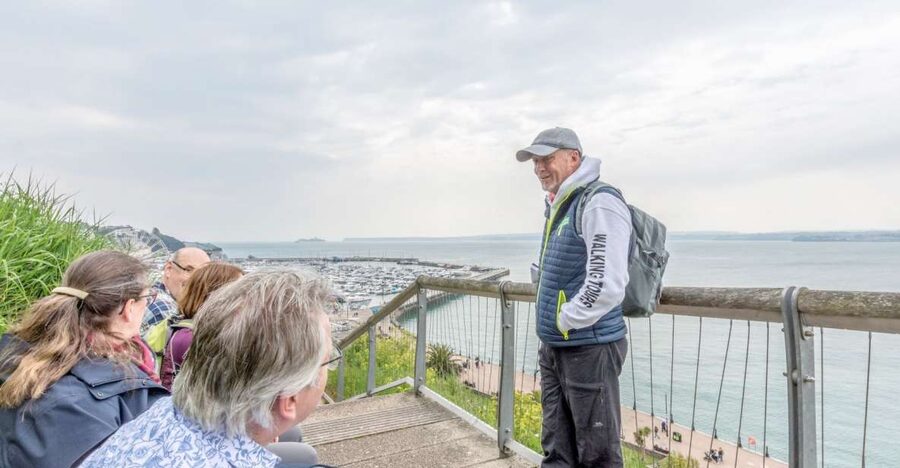
The route follows Torquay’s attractive coast and passes the famous Pavilion. This is one of the most personal stops on the walk.
Agatha and Archibald Christie watched a concert here. Afterward, Archie proposed to her. The story gives the Pavilion a different feel. It is not only a public entertainment venue or a pretty coastal landmark. It becomes part of the early romance between Agatha and her first husband.
You can also use this section to get your bearings in Torquay. The tour combines Christie material with general local history, so it works even if your reading of her books is limited. Several people who knew little about the author’s life found the storytelling approachable, and one non-native English speaker described Graham’s delivery as easy to follow.
The walk is not rushed. That can be a real advantage because you have time to look around, take photographs, and keep up with the group without feeling pushed from one stop to the next. It also means the two-and-a-half-hour schedule is fairly full, so wear shoes you can comfortably use for a long town walk.
Princess Pier and a view from 1910
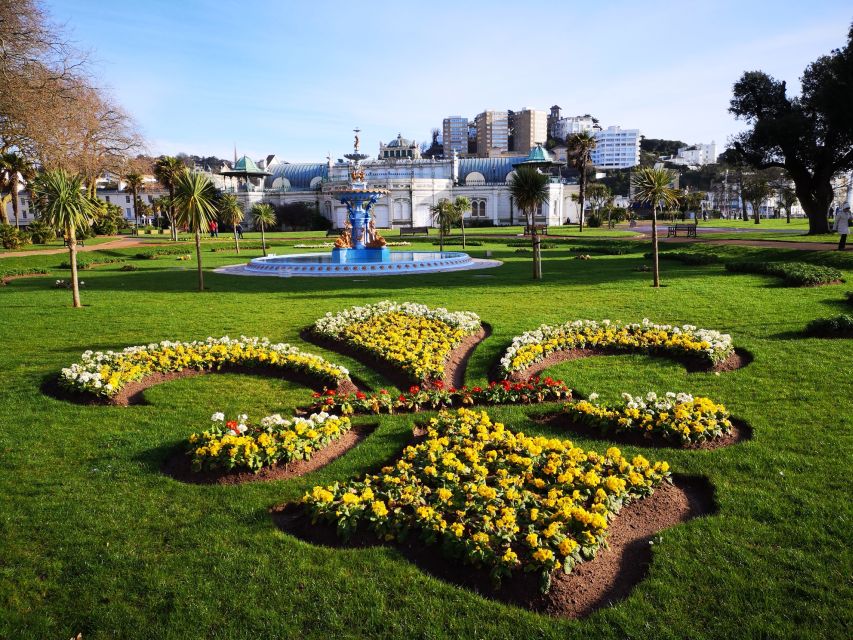
At Princess Pier, Christie’s youth meets Torquay’s grand Edwardian seaside culture. Agatha and her friends roller-skated here while wealthy Victorians promenaded in their finest clothes.
The guide points out the exact spot where Agatha stood in 1910. You do not need to be a serious Christie reader to appreciate that small connection. It turns an ordinary pier visit into a moment of historical imagination: one young woman in a fashionable resort, decades before she became the world’s best-selling crime novelist.
This stop also shows why walking works better than a simple bus tour for this subject. You can pause at the same public spaces Christie knew, rather than seeing Torquay only through a vehicle window. The coast adds visual variety, too, though sea breezes can make the day feel cooler than expected.
Bring comfortable clothing and dress for changing coastal conditions. The route is flat, but the distance adds up. High-heeled shoes are not allowed, and they would be a poor choice anyway. Mobility scooters, bikes, handcarts, and drones are also not permitted on the activity.
Same trip, a completely different kind of day:
- The Great British Rock and Roll Walking Tour
★ 5.0 · 1,371 reviews - Alton Towers Resort 2 Day Admission Ticket
★ 3.5 · 1,198 reviews - Isle of Wight: Osborne Admission Ticket
★ 4.6 · 1,165 reviews - Portsmouth: Historic Dockyard Ultimate Explorer Ticket
★ 4.8 · 1,052 reviews
Torre Abbey, Belgian refugees, and Hercule Poirot

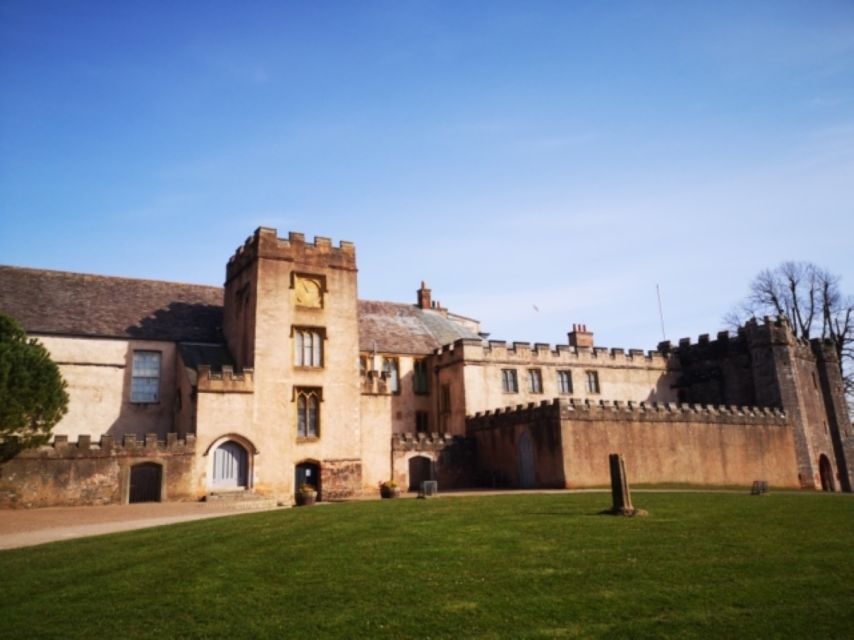
Torre Abbey is Torquay’s oldest building and one of the most interesting stops on the route. The tour passes through its gardens, but admission inside is not included.
Here, Graham explains how a 1916 gathering for Belgian refugees led Agatha to meet the man who helped inspire Hercule Poirot. This is exactly the kind of detail that gives a biography walk its purpose. Poirot’s personality can seem wonderfully artificial on the page, yet the character had a real-world spark behind him.
The discussion also covers Miss Marple and Christie’s preference for writing about her over Poirot. That comparison is useful because the two detectives represent different sides of Christie’s imagination. Poirot is controlled, precise, and theatrical. Miss Marple draws on close observation of people and village life.
The simple props and role-playing fit especially well here. You may be asked to adopt a detective pose, answer a quiz question, or take part in a small scene. It is lighthearted, but it helps families and mixed groups stay involved during a long walking tour.
If you want to explore Torre Abbey itself, plan a separate visit and check its admission details independently. The walking tour gives you the Christie connection, not a full indoor tour.
Wartime nursing and the poison cupboard

One of the strongest sections covers Christie’s work during the First World War. She volunteered as a nurse and worked at Torquay’s Town Hall before moving to a dispensary.
That dispensary experience helped shape her use of poison in later stories. The connection is both practical and unsettling. Christie did not need to invent every medical detail from thin air. Her wartime work gave her a closer look at medicines, substances, and the ways they could be used.
I like this part because it places the famous crime writer in a real working role. It also shows how Christie turned experience into material without reducing her life to a string of literary anecdotes.
The story is delivered with some drama and humor, but the subject still has an edge. If you know Christie mainly from television adaptations, this section helps explain why poison appears so often in her novels and why her plots can feel unusually precise.
The disappearance that changed her life
The tour also recounts Christie’s famous 11-day disappearance, which led to one of the biggest manhunts in British history at the time.
This is a sensitive and fascinating chapter. The walk explains how the incident affected her life and contributed to her decision to leave Britain for the Middle East. Those journeys later helped inspire books including Murder on the Orient Express and Death on the Nile.
The story eventually leads to her meeting Max Mallowan, the archaeologist who became her second husband. That gives the tour a wider reach. It is no longer only about Torquay or detective fiction. You see how personal upheaval, travel, archaeology, and marriage shaped the second half of Christie’s career.
Graham’s presentation is helped by his use of photographs and dramatic storytelling. He does not simply list dates. He connects the events and explains why each turning point mattered. His humor, including deliberately bad jokes, keeps the mood from becoming too heavy.
The Grand Hotel and Christie’s later fame
The walk ends near the Grand Hotel, where Agatha and Archie spent their honeymoon. This is a fitting final stop because it returns the story to romance, Torquay, and the beginning of her adult life.
From here, the discussion moves toward Christie’s wartime writing and the way her books helped keep national morale up during the Second World War. You also hear how her literary career led to a Damehood.
The ending provides a useful sense of scale. Christie’s books have sold on a remarkable level, and she continues to sell millions of novels each year. Yet the tour keeps returning to the young woman in Torquay who was not initially planning to become a writer.
That contrast is the heart of the experience. You get the famous author, but you also get the local woman, the nurse, the wife, the traveler, and the person who had to overcome doubts and difficult events.
How Graham guides the experience
Graham is the main reason this tour feels more personal than a standard history walk. His approach combines solid factual detail with a relaxed manner. He invites participation without forcing it, and he pays attention to the group’s comfort.
On hot days, he looks for shade. On windy days, he uses more sheltered places when possible. He has also been praised for allowing time for seats and a toilet stop, which matters during a three-mile route. If you have any concern about keeping up, tell him at the start.
Small groups appear to be part of the experience at times, and that can improve the conversation. You have more chance to ask about Christie, Torquay, nearby attractions, or other places connected with the author. Graham has also offered local suggestions, including Cockington, which some people visited afterward while thinking of Miss Marple’s village setting.
The tone includes plenty of dad jokes. That is not a secret feature hidden in the fine print. If you enjoy humor mixed with history, it adds warmth. If you prefer a serious literary seminar, prepare for a more playful morning.
Is $26 good value?
At $26 per person, I consider this a strong-value introduction to Agatha Christie and Torquay. The walk lasts about two and a half hours, covers roughly three miles, and includes a live guide rather than an audio track or self-guided map.
You are paying for interpretation. There are no food or drinks, and you do not enter buildings as part of the price. If you want indoor attractions, you will need to budget separately.
Still, the tour connects several places that would be easy to visit without understanding their Christie links. It also saves you the work of assembling the story yourself from biographies, plaques, and scattered local information.
The cost makes the most sense if you are already spending time in Torquay. It is less compelling if you dislike walking, have no interest in Christie, or want a broad general tour of the English Riviera. For fans, families, and curious readers, the combination of local sights and personal stories makes the price reasonable.
Free cancellation is available up to 24 hours before the start time, and you can reserve now and pay later. Check the available starting times when booking.
Who should book this walk?
I would choose this tour if you have read Christie’s novels, watched Poirot or Miss Marple adaptations, or simply want an unusual way to see Torquay.
It suits:
- Agatha Christie fans who want real places rather than only literary discussion
- First-time visitors who want a gentle introduction to Torquay
- Families and mixed-age groups who enjoy quizzes and simple role-play
- Solo visitors who appreciate a guide with local suggestions
- People interested in how personal experiences shape fiction
You should think twice if you need a fully accessible route, since mobility scooters are not allowed and the walk covers about three miles. You should also skip it if you are looking for building interiors, meals, or transport between sights.
Should you book the Agatha Christie tour?
Yes, if you want Christie’s life tied to real streets, gardens, piers, and seaside views. The strongest parts are the personal connections: Archie’s proposal at the Pavilion, Christie’s 1910 spot at Princess Pier, the Belgian refugee gathering linked to Poirot, and the dispensary work that informed her poison plots.
Graham’s storytelling gives the walk its character. His photographs, props, quizzes, humor, and care with the group make the history easy to follow. Just bring sensible shoes, allow two and a half hours, and remember that the route is outdoors.
If you are in Torquay and have even a passing interest in Agatha Christie, this is a smart way to spend part of a day. It gives you a better sense of the author and helps you see the town through her eyes.
FAQ
Where does the Agatha Christie tour start?
The meeting point is the English Riviera Tourist Information Office at postcode TQ2 5JG. The guide wears a yellow fluorescent jacket.
How long does the tour last?
The tour lasts about two and a half hours.
How far do you walk?
The route is roughly three miles and is described as flat.
Which places does the tour visit?
The route includes Princess Pier, the Pavilion, the Italian Gardens, Torre Abbey, and the area near the Grand Hotel.
Is entrance to Torre Abbey included?
No. The tour passes through the gardens at Torre Abbey, but entrance into buildings is not included.
Is food or drink included?
No. Food and drinks are not included in the tour price.
What language is the tour in?
The live guided tour is conducted in English.
Can I cancel the booking?
Yes. You can cancel up to 24 hours in advance for a full refund. You can also reserve now and pay later.
Just added in England
- British Museum Highlights Private Guided Tour★ 5.0 · 29 reviews
- Heathrow Airport to Southampton Port or Hotel Private Airport Arrival Transfer★ 5.0 · 45 reviews
- Heathrow To Southampton Cruise Port Transfers★ 4.5 · 110 reviews
- Private Guided Tour of the British Museum★ 5.0 · 50 reviews
- British Royal 3 Hour Walking Tour!★ 4.5 · 53 reviews
- British Museum Guided Tour with Priority Timeslots(Small Group)★ 5.0 · 192 reviews
- British Museum In-Depth Private Guided Tour★ 5.0 · 40 reviews
- Explore Biblical Artifacts at the British Museum★ 5.0 · 120 reviews
England Tours, compared.





Browse the lists this tour appears in