
Reviewed · WALKING TOURS
Secret Old London Walking Tour
London’s City is full of glass towers, office blocks, and hurried commuters. But under your feet are plague pits, execution grounds, monastery remains, Roman walls, and churches battered by war. This 1.5-hour walk takes you into that older London, where a quiet square can hide a grim past and a narrow street can mark the edge of an ancient arena.
I like the way the tour links medieval churchyards and Tudor-era streets with the Roman and wartime layers beneath them. I also like the guides’ clear enthusiasm. Jess, Rosie, Jeremy, and Pepe are among the guides praised for lively storytelling, humor, and strong local knowledge. The main drawback is pace: there is a lot to absorb in 90 minutes, and a cold day may feel uncomfortable if the guide pauses too long over photographs or explanations.
Key points to know before booking
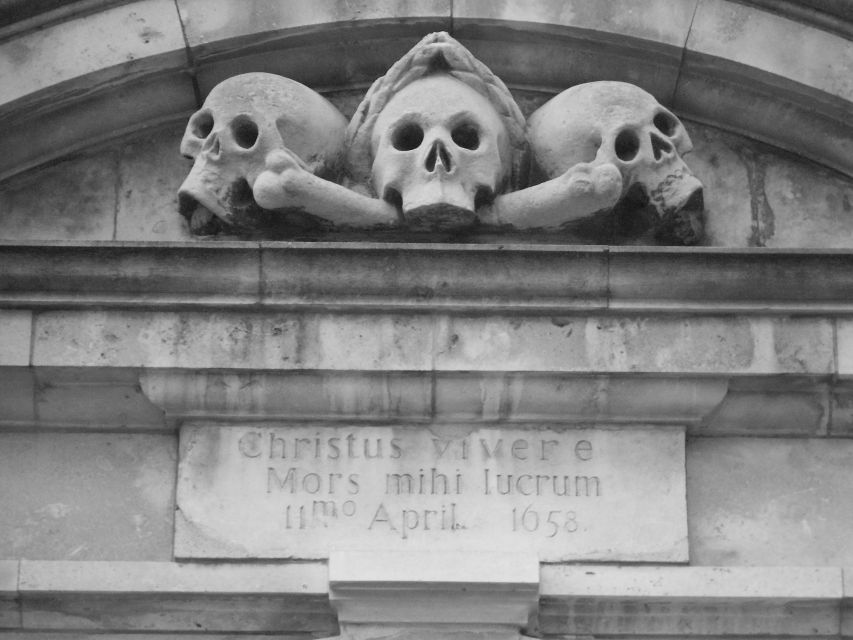
- Charterhouse Square was once a plague dumping ground, despite its calm, leafy feel today.
- Smithfield brings the darker side of London to life, with jousts and public executions linked to figures such as William Wallace.
- St Bartholomew the Great gives the walk a magnificent medieval centerpiece, and its setting has appeared in films including Four Weddings & a Funeral and Sherlock Holmes.
- A bombed-out church shell and a quiet memorial show how London’s past reaches beyond the Middle Ages.
- The Roman amphitheatre site is easy to miss without guidance, making this useful even if you already know the City.
- The tour costs $26 and lasts 90 minutes, with free cancellation up to 24 hours before departure and the option to reserve now and pay later.
Starting at Barbican and finding the older City
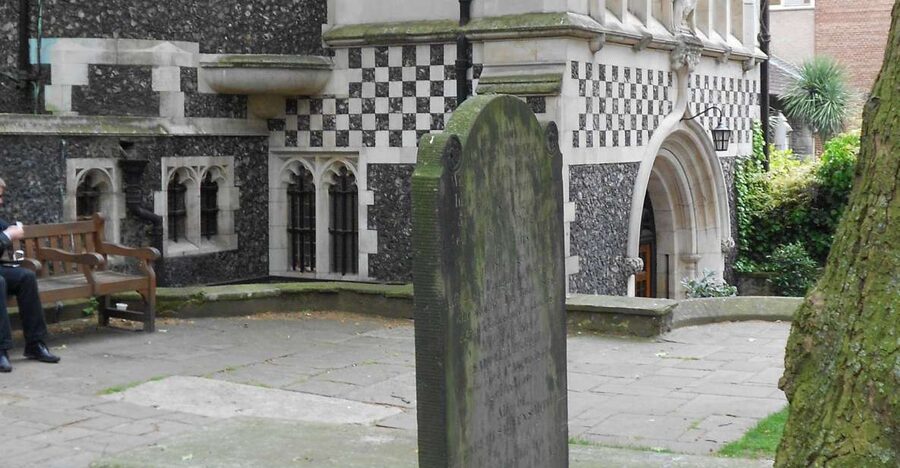
The meeting point is outside Barbican Underground Station. That makes practical sense, since Barbican places you close to one of London’s most layered districts. You begin among modern concrete, offices, and traffic, then move toward streets and spaces connected to a much older city.
You should arrive ready to walk rather than expecting a stop-and-start sightseeing bus experience. Comfortable shoes are specifically advised. Large bags and luggage are not allowed, and video recording is prohibited, so bring only what you need for the walk.
The contrast is part of the pleasure. London does not always preserve its past in grand, obvious monuments. Often, the clue is a church wall, an oddly shaped square, a change in street level, or a name that has survived for centuries. Your guide’s job is to point out those clues and explain why they matter.
The route is conducted in English and is suitable for people over 12. It is listed as wheelchair accessible, though you may still want to ask about the exact route if you have particular mobility needs. The information provided does not give a group size or a detailed surface description.
More Walking Tours in London
- London: The Original Jack the Ripper Walking Tour
★ 4.7 · 7,833 reviews - Tour for Muggles The Ultimate Harry Potter Walking Tour in London
★ 5.0 · 4,684 reviews - London Jack The Ripper Guided Walking Tour
★ 5.0 · 3,131 reviews
Charterhouse Square and the memory of the Black Death
Charterhouse Square is likely to be one of the tour’s most effective stops because its present mood is so far removed from its past. Today, it offers a quiet open space in the middle of the City. Six hundred years ago, it was used as a dumping ground during the Black Death, one of London’s worst plague outbreaks.
That change in atmosphere gives the guide plenty to work with. You can look at a pleasant square while imagining the fear, confusion, and loss that once surrounded it. The point is not to turn suffering into a theatrical horror story. It is to understand how close major disease and mass death were to ordinary urban life.
I particularly like stops such as this because they teach you to read a city rather than simply photograph it. The square may not be the most famous sight on your London list, but the story gives it weight. You also gain a better sense of how crowded medieval London must have been and how quickly a public health crisis could overwhelm the city.
The limitation is that this is primarily an outdoor history stop. You are listening and looking rather than entering a large museum with displays and objects. If you prefer hands-on exhibits, you may want to pair the walk with a separate museum visit.
Smithfield, jousts, and public executions
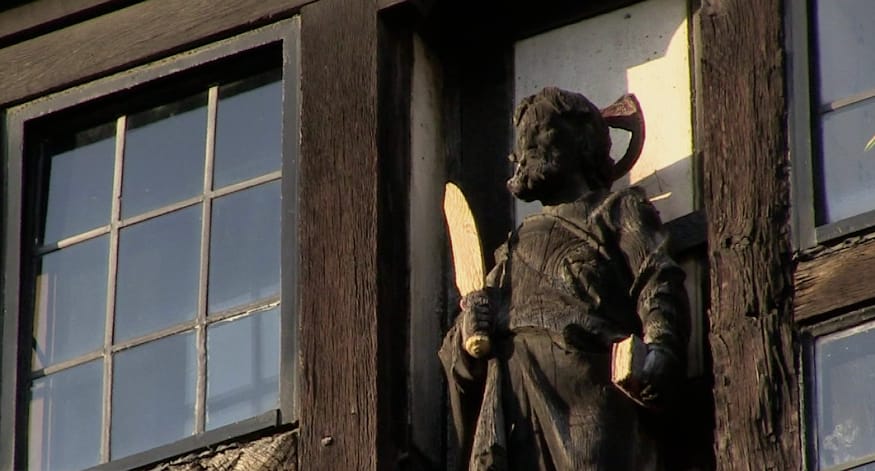
From Charterhouse Square, the route takes you toward Smithfield. This broad open space has witnessed both spectacle and violence. Medieval jousts took place here, but Smithfield also became one of London’s principal execution sites.
The tour places you in the physical setting where condemned people met their end. William Wallace, the Scottish figure associated with Braveheart, is named among those executed here. That detail will appeal to anyone interested in the harsher side of British medieval history, though you should keep expectations flexible: one recent participant specifically felt the William Wallace story was not covered during the walk.
That is a useful caution. The tour description points to the location and its grisly past, but guides may vary in emphasis depending on the group, timing, and questions. You are likely to hear about the site’s role in executions, yet a particular person or episode may not receive much attention.
Smithfield works well because the modern space does not look like a stage set for medieval cruelty. You have to imagine the crowds, ceremonies, and terror. A strong guide helps you make that mental shift without turning the subject into cheap entertainment.
The pace also matters here. One person who took the tour in winter felt the guide spent slightly too long showing pictures and not quite enough time moving. If you visit on a cold day, wear a warm layer and be prepared to stand outside while the story unfolds.
St Bartholomew the Great, a rare medieval survivor
Between the grim sites of Charterhouse Square and Smithfield is St Bartholomew the Great, one of the finest medieval churches in London. This is the architectural high point of the walk, and it offers a welcome change from tales of plague and executions.
The church is also familiar from the screen. Its setting has appeared in Four Weddings & a Funeral and Sherlock Holmes. That may give you an easy visual hook, but the building matters even if you have never seen either film. It helps you picture how much medieval London has survived, often in fragments surrounded by modern streets.
Your guide can connect the church to wider subjects such as religious institutions, architecture, language, and politics. Rosie was praised for moving beyond basic dates and facts into the way London’s monasteries and streets shaped the city. That wider context is one reason this tour suits people who already know the main sights but want a better sense of how the City developed.
Do not expect a long, quiet church visit unless your departure details specifically promise one. The tour lasts only 90 minutes and covers several locations. The church is part of a moving story through the district, not necessarily a full guided examination of every interior detail.
Same trip, a completely different kind of day:
- London: The London Eye Entry Ticket
★ 4.6 · 35,875 reviews - From London: Harry Potter Warner Bros Studio Tour
★ 4.7 · 26,588 reviews - London: Westminster to Greenwich River Thames Cruise
★ 4.5 · 22,836 reviews - London: Madame Tussauds London
★ 4.6 · 20,915 reviews
A Blitz-damaged church and London’s wartime scars
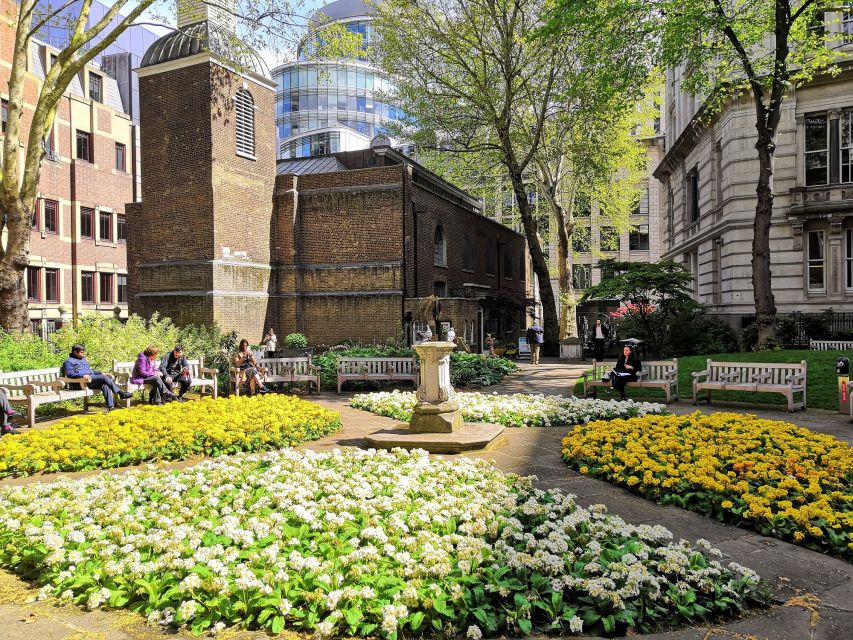
The walk then moves into a very different period of London’s past. You pass through the shell of a church destroyed during the Blitz, the German bombing campaign of the Second World War.
This stop broadens the tour beyond medieval gore. London’s old churches were not only threatened by fire, decay, and redevelopment. Some were damaged or destroyed in the twentieth century, leaving fragments that now sit beside modern buildings.
A ruined church can be more affecting than a restored one. You see the damage directly, and the missing parts become part of the story. The setting also reinforces a theme that runs through the whole walk: London changes constantly, but it rarely erases every trace of what came before.
If you are mainly booking for medieval history, this section may feel like a change of subject. I see it as a strength, since the tour shows several eras within a compact area. You move from Roman London to the Middle Ages, then through religious change, executions, and wartime destruction.
A memorial to self-sacrifice in a quiet park
Another stop brings you to a park containing what is described as one of the city’s most touching memorials, honoring heroic self-sacrifice. The information provided does not identify the memorial, so you should not book expecting a particular famous name or event.
What matters here is the change in tone. After the plague ground and execution site, a quiet memorial offers a more personal way to think about London’s past. It reminds you that the city’s stories are not only about rulers, criminals, battles, and disasters. They also include ordinary people who acted bravely for others.
The walk’s strongest guides appear to use these changes in mood well. Jess was repeatedly described as funny, enthusiastic, and able to make old London feel close. Rosie was praised for her lively delivery and for finding small gardens and religious sites that many people would pass without noticing.
You should expect storytelling rather than a formal memorial ceremony. The value comes from learning why the place exists and seeing how easily it can be overlooked.
Tracing the Roman amphitheatre beneath modern London
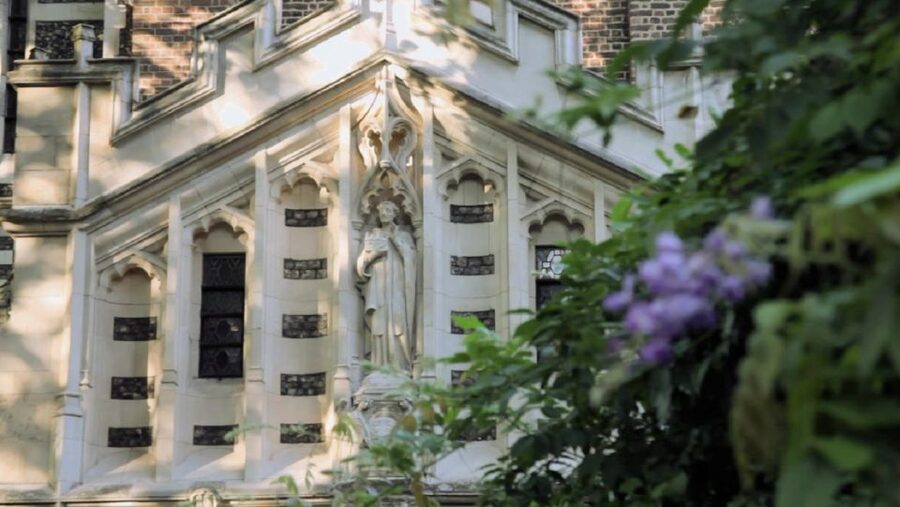
The final major theme is Roman London. The route takes you to the location and perimeter of the city’s long-lost Roman amphitheatre.
You may not see a complete arena rising from the ground. Instead, the guide helps you locate its footprint and understand where it sat within the ancient city. This is exactly the kind of place where a walking tour earns its fee. Without explanation, you could pass through the area and see little more than modern streets and buildings.
The amphitheatre also gives the tour a strong beginning-to-end arc. London’s story did not start with the medieval churches or Tudor streets. Roman foundations came first, and later generations built over, around, and sometimes through them.
I like this type of archaeological stop because it asks you to use your imagination without pretending that missing ruins are still intact. You get the location, the historical setting, and the chance to see how the modern City occupies the same ground.
The guides make the difference
The tour’s rating is 4.8 from 154 reviews, and the strongest pattern is clear: people value the guides’ delivery as much as the route itself. The names that appear in the feedback include Jess, Rosie, Jeremy, and Pepe.
Jess is described as funny, approachable, and full of useful stories. Rosie is praised for bringing together history, politics, architecture, and language. Jeremy receives credit for a relaxed balance between information and entertainment, while Pepe is described as especially strong on London history.
That does not mean every guide will use exactly the same script. A walking tour is shaped by the person leading it, the weather, the group, and the questions asked. The upside is a more human experience than an audio guide. The downside is that one guide may spend more time on stories that interest you less.
The best approach is to arrive curious and ask questions. This is not a tour for someone who wants only a checklist of famous monuments. It works best when you enjoy hearing how a street, church, or square acquired its meaning.
Price, duration, and practical value
At $26 per person, the tour is reasonably priced for 90 minutes in central London. You are paying for a live English-speaking guide and a concentrated route through places that are easy to overlook. There are no refreshments included, so bring water and eat beforehand if needed.
The value is strongest if you have already seen major sights such as the Tower of London, St Paul’s Cathedral, or Westminster and want something less familiar. It also makes sense for London residents who want to look at their own city differently. One local couple described the experience as a refreshing way to become tourists in their home city.
Ninety minutes is enough to fit into a busy day. You could schedule it before another City visit, though you should allow extra time for getting to Barbican Underground Station and for continuing to your next stop. Since the route covers several sites, the pace may feel brisk to anyone who wants long periods for photography.
Free cancellation is available up to 24 hours in advance, and you can reserve now and pay later. That gives you some flexibility when arranging a London weekend.
Who should take this walk?
I would recommend it most strongly to:
- Adults and older children over 12 who enjoy darker historical subjects.
- First-time visitors who want a side of London beyond the headline sights.
- London residents looking for overlooked places and fresh stories.
- Film fans interested in the setting of Four Weddings & a Funeral and Sherlock Holmes.
- People who enjoy architecture, churches, memorials, and archaeology.
- Anyone comfortable walking outdoors for 90 minutes.
It may be less suitable if you want a relaxed café-style outing, a detailed interior tour of every church, or a fully predictable script centered on William Wallace. The tour touches many subjects, so the experience is broad rather than exhaustive.
Bring comfortable shoes, avoid large bags, and remember that pets are not permitted except guide dogs. Video recording is not allowed. The walk is wheelchair accessible, and the tour is conducted in English.
Should you book the Secret Old London Walking Tour?
Book it if you want London’s overlooked stories rather than another pass by Big Ben. The route combines plague, executions, medieval religion, Roman archaeology, wartime destruction, and quiet acts of courage in a compact part of the City.
I especially recommend it for people who think they already know central London. The walk’s appeal is not a single grand sight. It is the steady discovery of places that look ordinary until a good guide explains what happened there.
Skip it if you dislike grim history, outdoor standing, or tours that cover a lot of information in a short time. For everyone else, $26 is a fair price for a lively introduction to the older, stranger London hiding behind the modern office district.
FAQ
Where does the Secret Old London Walking Tour meet?
The meeting point is outside Barbican Underground Station.
How long does the tour last?
The walking tour lasts 1.5 hours.
How much does the tour cost?
The listed price is $26 per person.
What language is the tour conducted in?
The tour is conducted in English with a live guide.
Is the tour wheelchair accessible?
Yes, the activity is listed as wheelchair accessible.
What age group is the tour suitable for?
The tour is suitable for everyone over 12.
Are dogs allowed?
Dogs are not permitted, except for guide dogs.
Can I bring luggage or a large bag?
No. Luggage and large bags are not allowed on the tour.
Can I record the tour on video?
No. Video recording is not permitted.
What should I bring?
Bring comfortable shoes. Refreshments are not included, so arrange your own drinks or snacks.
Can I cancel for a refund?
Yes. You can cancel up to 24 hours before the tour for a full refund.
Can I reserve now and pay later?
Yes. The booking option allows you to reserve your place and pay later.
Just added in London
- Royal London Guided Sightseeing Tour and Thames River Cruise★ 4.0 · 31 reviews
- Roman Ruins to Blitz Bombings: A Walking Tour of London’s Fiery History★ 5.0 · 190 reviews
- Roman London Private Walking Tour★ 5.0 · 44 reviews
- Westminster Abbey, Big Ben, Buckingham Guided Tour of London★ 5.0 · 451 reviews
- River Thames Evening Cruise with Sparkling wine and Canapés★ 4.0 · 569 reviews
- Rock and Roll Walking Tour of Soho London★ 4.5 · 64 reviews
- London Private Chauffeur Half-Day or Full-Day Vehicle Rental★ 5.0 · 37 reviews
- Rich people behaving badly★ 5.0 · 47 reviews
Walking Tours, compared.
Underground Vaults Walking Tour in Edinburgh Old Town
Read our review →
Oxford University Walking Tour With University Alumni Guide
Read our review →
Edinburgh Castle: Guided Walking Tour with Entry Ticket
Read our review →
Edinburgh Castle Guided Walking Tour in English
Read our review →
Tour for Muggles The Ultimate Harry Potter Walking Tour in London
Read our review →
University and City Walking Tour with Alumni Guide
Read our review →
Edinburgh Darkside Walking Tour: Mysteries, Murder and Legends
Read our review →
Browse the lists this tour appears in