
Reviewed · SCOTTISH HIGHLANDS TOURS
SEA LIFE Loch Lomond General Admission Ticket
The most thrilling part of SEA LIFE Loch Lomond is the change in scale as you move from small reef creatures to large sharks and rays. You begin with venomous lionfish and scorpionfish, then meet moray eels, stingrays, bonnethead sharks, and other reef predators in the Ocean Tank and Tropical Ocean Tunnel.
I like the mix of wonder and useful conservation information. You can see how venom helps a fish hunt and defend itself, then learn what you can do to protect marine habitats. I also like the interactive rock pool, where you may touch a starfish rather than simply peer through glass.
The main drawback is that the aquarium may take only 90 minutes to two hours, so the value depends on how much time you give each display. Also, check your ticket format before setting out: mobile entry is advertised, but printed tickets have been requested in practice.
Key points to know before you go
- Shark feeding is scheduled for 13:30 every second day, so check the date if this is important to you.
- Bonnethead sharks are part of the hammerhead family and can be seen around the shipwreck in the Ocean Tunnel.
- The Bay of Rays has Scotland’s only cow-nose rays, a distinctive sight for anyone interested in unusual marine life.
- Predators of the Reef has been refurbished with a £25,000 redesign focused on venomous and fierce reef animals.
- The visit is self-guided, with no named guide or guided tour included.
- The advertised price is $19.22 per person, which is fair for a short, focused family attraction if you use the feeding schedule and hands-on areas.
Starting with lionfish and scorpionfish
SEA LIFE Loch Lomond opens with creatures that are easy to miss in a large aquarium but fascinating once you know what to watch for. Lionfish and scorpionfish use venom as both a hunting tool and protection from larger animals. Their spines and striking shapes make a good first lesson in the practical rules of the reef: beauty can come with danger.
This opening area, called Predators of the Reef, was refurbished at a cost of £25,000. Its purpose is not simply to display attractive fish. It introduces the reef food chain, helping you understand why small predators matter before you reach the larger animals later in the visit.
I like this order. Children get the drama of venomous fish, while adults get a basic explanation of how a reef works. It gives the aquarium more shape than a series of unrelated tanks.
You will still find clownfish in the coral display, despite the redesign of the former clownfish area. If someone in your family has come hoping to find Nemo, this keeps a familiar favorite in the visit without making the whole attraction depend on one famous fish.
A few more half-days in the Scottish Highlands worth comparing
- Edinburgh: Glenfinnan Viaduct, Glencoe & Fort William
★ 5.0 · 4,337 reviews - Edinburgh: Glenfinnan Viaduct, Glencoe & Fort William
★ 4.8 · 3,366 reviews - From Glasgow: Oban, Glencoe, Highland Lochs & Castles Tour
★ 4.9 · 2,123 reviews
Meeting moray eels, rays, and reef hunters
The route then brings you face to face with larger reef predators. Moray eels have a very different appeal from sharks. Their long bodies and watchful faces reward a slower look, especially for children who enjoy spotting animals tucked into rocks or coral.
Stingrays add movement and grace. They glide rather than dart, so you may want to pause beside the tank and watch how they use their broad bodies to move through the water. This is one place where a rushed visit would lose some of its value.
The displays also explain how the aquarium cares for its animals and how you can help protect their habitats. That conservation message matters because the animals are not presented only as exotic attractions. You are encouraged to connect the sight of a shark or ray with the condition of the habitat it needs.
The tone is suitable for families. Younger children can focus on shapes, colors, and movement, while older children can take in the food-chain and habitat information. I would not expect a specialist marine-biology lecture, but you get enough explanation to make the animals more than moving decoration.
The Ocean Tank and Scotland’s shark collection
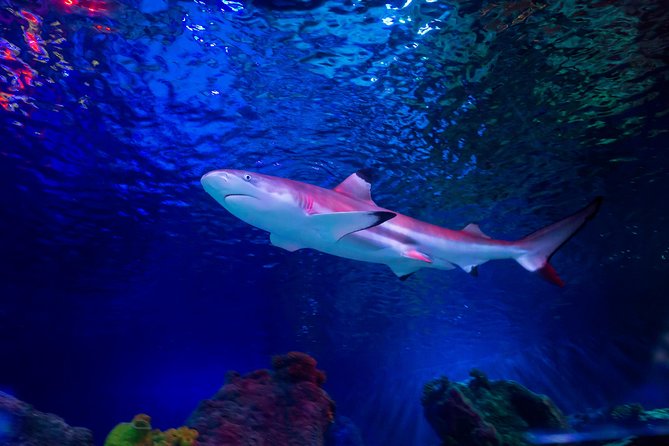
The Ocean Tank is the major payoff for many people. It brings together some of the top predators of the reef, including sharks and rays. The attraction advertises Scotland’s largest collection of shark species, giving the tank more weight than a small shark exhibit with one or two familiar animals.
The best way to plan around it is to check the feeding schedule. Shark feeding takes place at 13:30 every second day. If tropical sharks are not being fed on your date, the Deep Loch Tank, with native sharks and rays, is scheduled for feeding instead.
That detail can change the feel of your visit. Without a feeding time, you can walk through at your own pace. With one, you get a clear event to build your short visit around. I would aim to arrive early enough to see the surrounding displays first, then be in position for the 13:30 feeding if the date matches.
Do not assume the feeding happens every day. This is one of the most important practical points in planning. The schedule is specific, and the alternative tank depends on the day.
Walking through the Tropical Ocean Tunnel
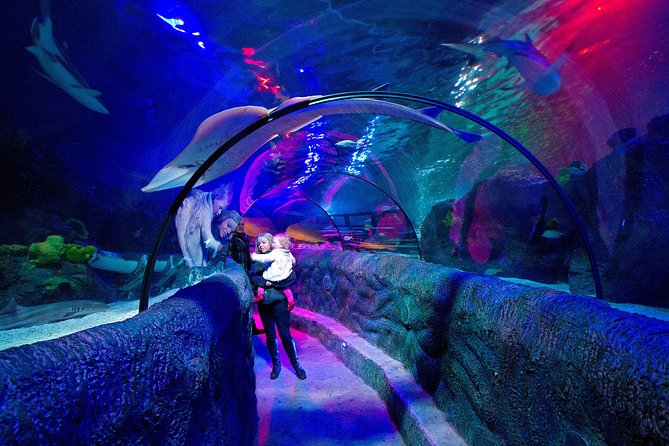
The Tropical Ocean Tunnel gives you a different view of the animals. Instead of looking into a tank from one side, you pass beneath or beside the water while sharks and rays move around you. The abandoned shipwreck is a useful visual marker, especially for children trying to spot the bonnethead sharks.
Bonnetheads belong to the hammerhead family, though their head shape is less dramatic than the large hammerheads many people picture. Finding them in the tunnel turns the walk into a small spotting game. You can ask children to look for the distinctive head shape, then compare the bonnetheads with other sharks in the display.
The tunnel is likely to be one of the most memorable sections for families because it makes the animals feel close. Still, the experience is compact. You will not spend an hour in the tunnel alone, and the attraction does not promise a long guided presentation. The value comes from moving at a thoughtful pace and giving yourself time to watch.
I like tunnel displays best when you resist the urge to snap one quick photo and move on. Look for how the animals share space. A ray may pass low while a shark cruises higher, creating a simple lesson in how different animals use the same water.
Same trip, a completely different kind of day:
- Loch Lomond: Scottish Highlands Sightseeing Cruise
★ 4.6 · 1,953 reviews - From Glasgow: Glenfinnan, Fort William, and Glencoe Day Trip
★ 4.7 · 1,753 reviews - Loch Lomond: Island Discovery 2-Hour Cruise
★ 4.6 · 1,576 reviews - Oban, Glencoe, Highlands Lochs & Castles Small Group Day Tour from Glasgow
★ 5.0 · 1,432 reviews
Rock pools and the Bay of Rays
The interactive rock pool is the most hands-on part of the aquarium. You can touch a starfish, giving children a direct connection with a marine animal that a glass tank cannot provide.
This area needs a gentle approach. The point is not to pick up or handle the animal roughly, but to follow the instructions and make brief contact. For a child, that small moment can be the part remembered long after the larger tanks blur together.
The Bay of Rays adds another unusual feature: the only cow-nose rays in Scotland. That is a strong reason to look beyond the headline sharks. Cow-nose rays have a different shape and swimming style, and their presence gives the visit a local distinction rather than making it feel like the same aquarium display found everywhere.
If your family has limited time, I would not skip the rock pools for the sake of moving faster through every tank. The touch pool is one of the few places where you participate rather than simply observe.
How much time you need, and what the $19.22 price buys
Plan on about 90 minutes to two hours. That is enough time for the main exhibits, the Ocean Tank, the Tropical Ocean Tunnel, the rock pools, and the conservation displays. If you stop for feeding, photos, and questions from children, you may use the full two hours.
At $19.22 per person, the price is reasonable for a family attraction if you want a focused indoor activity. The strongest value comes from the variety: venomous fish, coral displays, large sharks, rays, a tunnel, and a touch pool all appear in one short visit.
The value is weaker if you expect a full-day attraction. This is not a sprawling marine park, and the ticket includes entry only. Souvenir photos cost extra, so keep that in mind if your children want a formal keepsake.
I would compare the price with your planned schedule rather than judging it by duration alone. A two-hour aquarium visit can be useful on a busy sightseeing day, during poor weather, or when children need a change from outdoor touring. If you are seeking a full-day activity, you may find the admission harder to justify on its own.
Ticket details, timing, and small practical snags
The booking information lists a mobile ticket, and confirmation is provided at the time of booking. Yet printed tickets have also been requested at the entrance, with a phone ticket not accepted in at least one reported case. I would print the ticket if you can, even if your confirmation says mobile entry is fine. It is a small precaution that could prevent an awkward start.
The attraction is offered in English. It is near public transportation, service animals are allowed, and most people can take part. The listed booking information also gives a maximum of five travelers, though the aquarium itself is a public attraction rather than a private guided outing.
The location details supplied with the booking identify Inverness, while the attraction is named SEA LIFE Loch Lomond. Check the exact address on your confirmation before you set out, especially if you are arranging transport from another part of Scotland. That simple check matters more than any packing tip.
Free cancellation is available if you cancel at least 24 hours before the start time. If you cancel later, the amount paid is not refunded, and changes made inside that 24-hour window are not accepted. An illness or self-isolation situation may not qualify for a refund, so do not treat the policy as flexible simply because your circumstances are serious.
Who will get the most from this aquarium visit
I would recommend SEA LIFE Loch Lomond most strongly to families with children who enjoy animals and hands-on displays. The starfish pool gives younger children something to do, while the sharks, rays, and tunnel keep older children interested.
It also suits anyone who wants a short marine-life stop rather than a full guided tour. You can take your time, focus on the animals that interest you, and leave after the main route without committing half a day.
The visit may be less satisfying for a dedicated aquarium expert seeking rare species, long talks, or extensive research displays. The information is educational, but the attraction is designed for broad appeal. Its strength is the combination of accessible facts and close-up animal viewing.
If your priority is sharks, check the feeding date before booking. If your priority is a child’s first touch-pool experience, the rock pool and Bay of Rays may matter more than the feeding schedule.
Should you book SEA LIFE Loch Lomond?
Book it if you want a family-friendly aquarium visit lasting about 90 minutes to two hours, especially if you can attend a scheduled feeding. The combination of sharks, rays, venomous reef fish, and a starfish touch pool gives the $19.22 admission a fair balance of spectacle and learning.
Think twice if you need a full-day attraction or cannot manage the ticket requirements. Print your confirmation as a backup, check the exact location, and confirm which tank is being fed at 13:30 on your date.
For most families, I would treat this as a well-placed short stop, not the main event of an entire day. It is at its best when you slow down for the unusual animals, use the interactive areas, and let the feeding schedule shape your visit.
FAQ
How long does SEA LIFE Loch Lomond take?
The visit takes approximately one hour and 30 minutes to two hours.
What is included in the admission ticket?
The ticket includes entry to SEA LIFE Loch Lomond and its aquarium exhibits.
Are souvenir photos included?
No. Souvenir photos are available to purchase separately.
When are the shark feedings?
The Ocean Tank shark feeding takes place every second day at 13:30. If the tropical sharks are not being fed that day, the Deep Loch Tank containing native sharks and rays may be fed instead.
Can I use a mobile ticket?
A mobile ticket is listed, but a printed ticket may be requested. Printing your ticket is a sensible precaution before you arrive.
What is the cancellation policy?
You can cancel for a full refund up to 24 hours before the experience start time. Cancellations or changes made less than 24 hours before the start time are not accepted for a refund.
Just added in the Scottish Highlands
- Private Speyside Whisky Tour including 10+ Single Malt Tastings★ 5.0 · 80 reviews
- 3-Day North Coast 500 Small-Group Tour from Inverness★ 5.0 · 29 reviews
- Speyside Whisky Full Day Private Tour from Inverness★ 5.0 · 50 reviews
- 3-Day Lewis, Harris and the Outer Hebrides Small-Group Tour from Inverness★ 5.0 · 49 reviews
- Speyside Whisky Tour★ 5.0 · 84 reviews
- Inverness Highlands Bucket List Tour★ 5.0 · 111 reviews
- Glenfinnan Viaduct & The Great Glen Private Tour from Inverness★ 5.0 · 196 reviews
- Clan Tour – of Speyside Distilleries★ 4.5 · 91 reviews
Scottish Highlands Tours, compared.



Loch Lomond: Scottish Highlands Sightseeing Cruise
Read our review →
Glenfinnan, Fort William, and Glencoe Day Trip
Read our review →

Oban, Glencoe, Highlands Lochs & Castles Small Group Day Tour from Glasgow
Read our review →
Loch Lomond, Trossachs & Stirling Castle Tour
Read our review →Browse the lists this tour appears in