
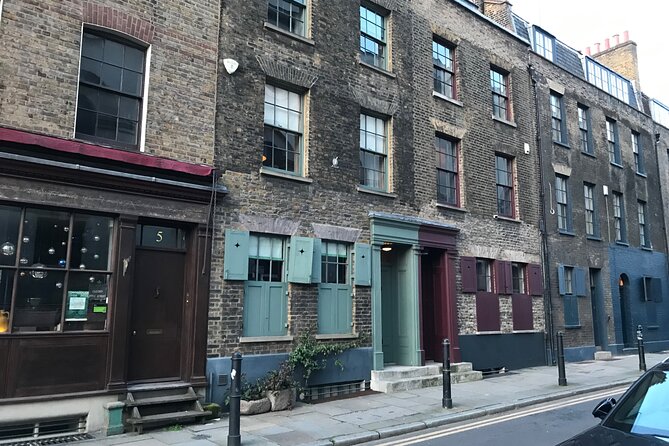
Reviewed · JACK THE RIPPER TOURS
London – Jack the Ripper Small Group Tour
Jack the Ripper’s story is often sold as a spooky night out. This walk takes a more thoughtful route, tracing the crimes through Whitechapel and Spitalfields while giving serious attention to the women who died. Guide Richard Walker uses an iPad, old images, police theories, and a radio headset to keep the story clear on busy streets.
I like the small-group format, capped at 15 people, and the focus on evidence rather than cheap gore. I also like the way the tour connects the murders to poverty, lodging houses, pubs, streets, and Victorian policing. The main drawback is that you spend a fair amount of time standing still while Richard talks, so this suits you best if you enjoy a lecture-style walking tour and can manage about 1.5 miles on foot.
Key points to know before booking
- Victim-focused storytelling: The tour gives substantial attention to Emma Smith, Polly Nichols, Annie Chapman, Mary Kelly, and the other women connected with the Whitechapel murders.
- Richard Walker’s approach: Expect a passionate guide with his own theories, careful discussion of police work, and a willingness to challenge familiar assumptions.
- Useful audio equipment: A radio microphone and earpiece help you hear the guide over London traffic and evening crowds.
- Historic route: The walk moves from Whitechapel Road through Buck’s Row, Brick Lane, Spitalfields, Christ Church, and Old Spitalfields Market.
- Not a horror show: You get crime history and Victorian social history, not a theatrical ghost walk built around jump scares.
- Plan for a brisk walk: The tour lasts about 2 hours 15 minutes, covers roughly 1.5 miles, and includes long periods on your feet.
What this Jack the Ripper walk is really about
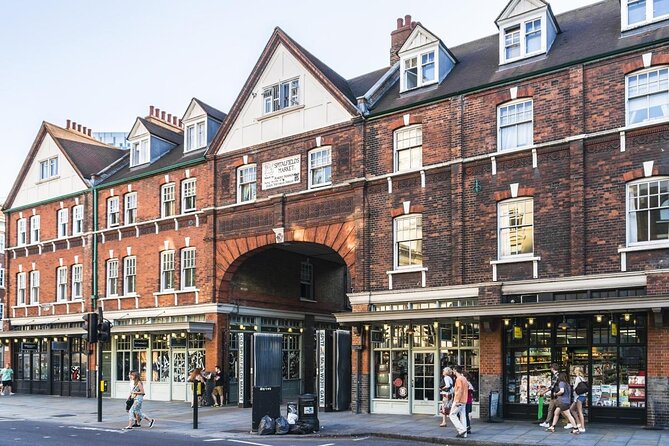
This is a crime-history walk with a strong social-history side. You follow the route from Whitechapel Road toward Liverpool Street, stopping at locations connected with the murders and the lives of the women involved.
Richard Walker presents the case through a mixture of established facts, geographical profiling, witness testimony, and competing suspects. His style is energetic and personal. He clearly enjoys the subject, and he encourages you to think about how much is known, how much is assumed, and how easily later stories can turn real people into cartoon figures.
That distinction matters. If you want a frightening evening full of theatrical effects, this is probably the wrong choice. The tour is not built around horror or gore. It is much closer to a walking seminar, delivered on the streets where the events took place.
The small group helps. A maximum of 15 people gives you a better chance of hearing the guide, asking questions, and seeing the images on his iPad. The radio system is a particularly smart touch. Whitechapel is not silent at night, and a guide without amplification can quickly become difficult to follow.
The tradeoff is that this is not a constantly moving walk. Richard may keep you in one place for a while as he explains a crime scene, a suspect, or a theory. Some people will appreciate the detail. Others may find the pauses long, especially without nearby seating.
More Jack the Ripper walks in London:
- London: The Original Jack the Ripper Walking Tour
★ 4.7 · 7,833 reviews - London Jack the Ripper Guided Tour with Ripper-Vision
★ 4.5 · 4,840 reviews - London: Jack the Ripper Small Group Tour
★ 4.7 · 3,159 reviews
Starting at Whitechapel Road and the London Hospital
The tour begins at 7:00 p.m. at 279 Whitechapel Road, opposite the London Hospital. This opening point introduces Emma Elizabeth Smith, who died after being brutally attacked on April 3, 1888.
Emma is described as the first victim of the Whitechapel Murders. The distinction is useful because the tour later focuses on the five women most commonly associated with Jack the Ripper. Richard does not simply rush to the famous name. He begins with the wider series of violence and the conditions in which it took place.
This first stop is brief, about 10 minutes, but it gives the evening a clear direction. You are not starting with a legend. You are starting with a real woman, a real neighborhood, and a case that quickly became larger than the individual crime.
The location also helps you picture Whitechapel as an active East London district rather than a sealed museum site. You are walking through ordinary modern streets, with traffic, shops, public transport, and people going about their evening. That contrast between the present-day setting and the Victorian story is part of the experience.
Buck’s Row and the first murder scene
The next stop is Buck’s Row in Whitechapel, where the tour examines the murder of Polly Nichols. This section lasts about 20 minutes and works like a street-level crime scene investigation.
Richard explains when, where, and how the murder occurred, then introduces the first suspect. The emphasis is on the practical details of the crime and the questions investigators had to face. How could an attack happen quickly? What could witnesses really have seen? Which parts of the accepted story rest on evidence, and which parts grew through repetition?
This is one of the stronger parts of the walk for anyone who already knows the basic Jack the Ripper story. Instead of repeating the standard list of murders, Richard asks you to test the usual assumptions.
The stop also shows why location matters. The route is not simply a collection of famous names. Streets, lodging houses, and distances help explain how the crimes were connected and why police developed geographical theories about the killer.
You should expect to stand during this explanation. The tour is not designed around benches or indoor stops, and the guide may spend enough time here for you to want a comfortable pair of shoes.
Brick Lane, lodging houses, and a second suspect
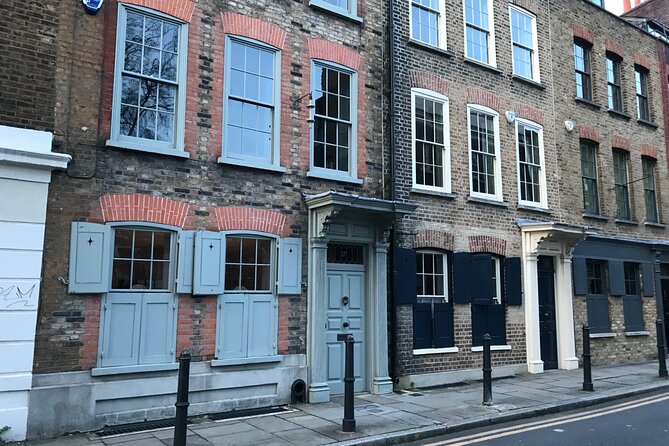
Brick Lane provides one of the evening’s most interesting contrasts. Today it is famous for curry restaurants and East London food culture. During the tour, it becomes a map of the victims’ world.
Richard explains that Brick Lane formed the eastern boundary of the area where all five victims lived when the murders occurred. He points toward Thrawl Street, which ran from Brick Lane to Commercial Street, and discusses Wilmott’s Lodging House, where Polly Nichols stayed.
The route also brings in Flower and Dean Street, connected with the third and fourth victims and with a Scotland Yard theory about where Jack the Ripper may have lived. Nearby, you learn more about Annie Chapman, the second victim, and the place where she was found murdered.
This stop lasts about 20 minutes and introduces a second suspect. The theory is linked to both Scotland Yard’s geographical profile and a profile developed by FBI Special Agent John Douglas. You are not handed a tidy solution. Instead, Richard explains why a suspect might fit certain patterns and where the argument remains uncertain.
That is the tour’s central strength. You get theories, but you also get reminders that theories are not proof. Richard challenges the old image of the killer as a polished gentleman in a top hat and cape, and he questions the easy claim that every female victim was definitively working as a prostitute.
Brick Lane is also one of the places where the modern neighborhood can distract from the subject. Restaurants, traffic, and pedestrians are part of the setting. The atmosphere is authentic, but it is not a preserved crime scene.
A few more half-days in London worth comparing
- London: The London Eye Entry Ticket
★ 4.6 · 35,875 reviews - From London: Harry Potter Warner Bros Studio Tour
★ 4.7 · 26,588 reviews - London: Westminster to Greenwich River Thames Cruise
★ 4.5 · 22,836 reviews - London: Madame Tussauds London
★ 4.6 · 20,915 reviews
Christ Church Spitalfields and the Ten Bells
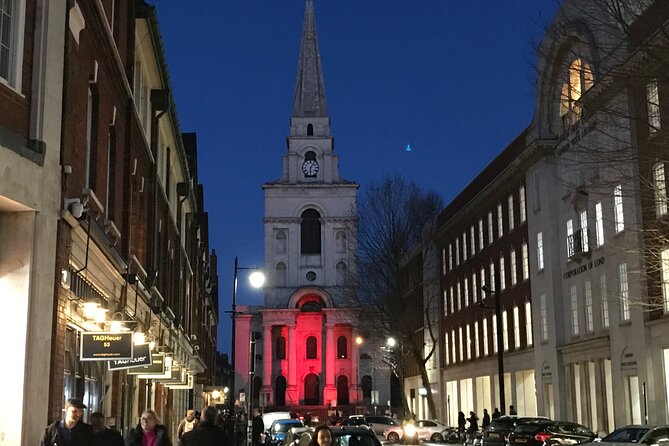
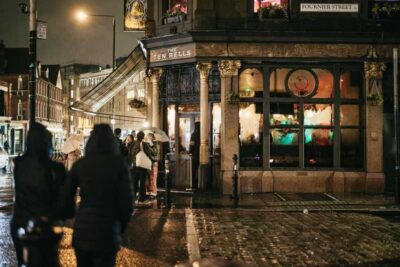
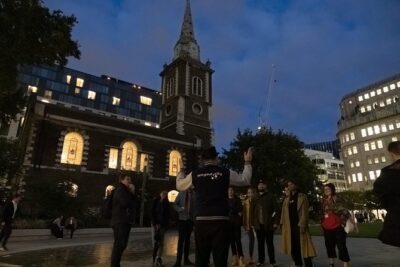
Christ Church Spitalfields is a short stop of about 15 minutes. The church is a striking work by architect Nicholas Hawksmoor, and it faces the Ten Bells pub.
The pub is closely tied to the Jack the Ripper story because the women connected with the case drank there. Richard explains the connection while also placing the pub within the wider street life of Victorian Spitalfields.
The church and pub make a strong visual pairing. One represents grand religious architecture and civic ambition. The other points toward the crowded lodging houses and working streets that shaped the lives of local residents.
There is no admission included for the pub, and the tour does not promise an indoor visit. You should think of this as an exterior stop and an opportunity to understand the area’s social contrasts.
The Ten Bells is also a reminder that a famous association can become stronger than the surviving evidence. Richard’s approach is useful here because he separates what is documented from what later storytelling has added.
Old Spitalfields Market and Victorian poverty
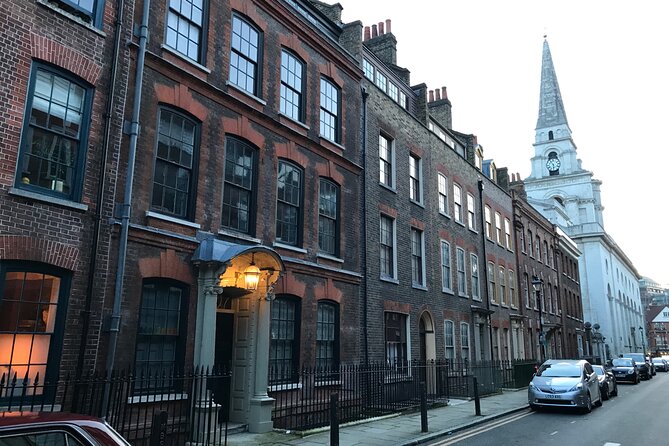
Old Spitalfields Market provides a change of mood. The market has served as a community center for centuries, and the tour connects it with the American writer Jack London, who witnessed severe poverty in Victorian London.
This is an important part of the walk because the murders did not happen in isolation. They took place in a district shaped by overcrowding, unstable work, cheap lodging, and poverty. Understanding that setting does not explain away the crimes, but it does help you see the victims as people living within a difficult social system.
Richard’s use of images on the iPad helps here. Modern streets can be hard to read without visual context, and historic pictures give you a better sense of how different the district once looked.
The market is also a useful point for considering the tour’s tone. It is educational rather than sensational. You are asked to think about class, survival, and the way Victorian society viewed poor women, not simply to wait for the next gruesome detail.
Spitalfields, Dorset Street, and Mary Kelly
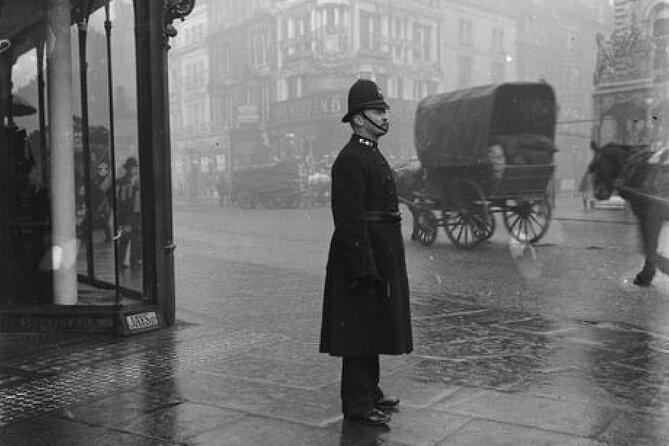
The final section takes you deeper into Spitalfields, including the area where what was described as the worst street in London once stood. Annie Chapman lived here before her murder, and Mary Kelly also lived and died in the district.
Mary Kelly is presented as a different kind of victim from the others, which leads to a third suspect. Her story gives Richard another chance to compare assumptions, police theories, and the evidence available at the time.
This section can feel especially personal because the tour keeps returning to who these women were and how they lived. It does not treat them as names placed beside a date. Richard spends time on their circumstances, their lodging, and the choices they had available.
That focus will please you if you want a more human account of the case. It may disappoint you if you came expecting a long list of suspects and graphic details. One past participant specifically wanted a scarier, more gruesome experience and found the educational approach too restrained. That is a fair warning: the tour’s title may suggest one kind of evening, while its actual content is more analytical.
The walk ends at 126A Middlesex Street, near Liverpool Street Station. This is a practical finish, with access to the Central, Circle, Hammersmith and City, Metropolitan, and Elizabeth lines.
Richard Walker’s guiding style
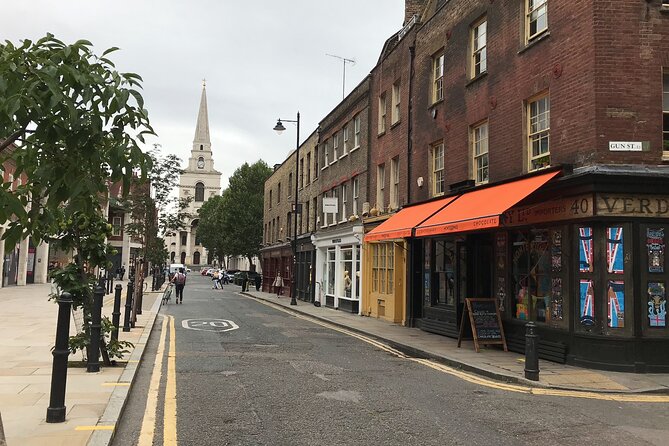
Richard is the main reason this tour feels different from a large group walk. He is an enthusiastic storyteller, and his work is built around research, profiles, and competing explanations.
His use of the iPad is helpful rather than decorative. Historic images can make a vanished street or lodging house easier to understand, especially when modern buildings have replaced the original scene.
The radio microphone and earphones are another real advantage. You do not need to crowd around the guide or strain to hear him over traffic. This matters more than it may sound, especially when the group is near Brick Lane or other busy streets.
Richard’s presentation is not fully interactive in the way a workshop might be. He welcomes questions, but quiet groups may spend much of the walk listening. You may also hear brief references to other suspects, actors, and related cases. For some people, these connections add context. For others, they can feel like a detour from Jack the Ripper.
The best way to approach the tour is to expect a strong point of view, not a neutral audio guide. Richard has a preferred interpretation, but he also makes room for uncertainty and challenges accepted claims.
Price, pace, and practical value
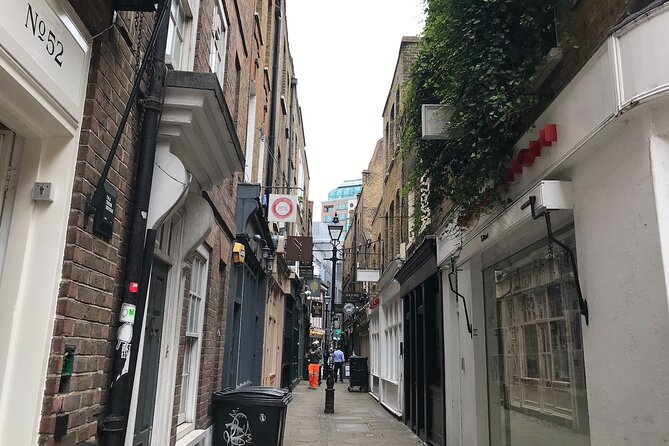
At $41.67 per person, the tour costs more than a basic self-guided walk but less than many private London experiences. You are paying for Richard’s preparation, the small group, the audio equipment, the visual material, and a route that would be harder to follow alone at night.
I think the price is reasonable if you value explanation and personal attention. A large free walk can show you some of the same streets, but it is less likely to offer this level of detail or make it easy to ask questions.
The advertised maximum is 15 people. That is still a group, but it is far more manageable than the 30 or 40-person crowds that gather for some London crime walks. On a quieter date, the group may be much smaller.
The physical demands are modest but real. You cover about 1.5 miles, walk at a brisk pace, and spend time standing in the street. Wear comfortable shoes and bring a coat suitable for a London evening. The tour requires a moderate fitness level and is not suitable if walking is difficult.
Coffee and tea are not included, and there is no admission included at the Ten Bells. The experience is mainly outdoors, so plan around the weather.
This booking is non-refundable and cannot be changed after purchase. I would only reserve it once your evening plans are firm.
Who should book this Whitechapel walk?
You should book it if you like true crime, Victorian London, police theories, and walks that treat victims as people rather than props. It is also a good choice if you have already read about the case and want to question the familiar version.
Families with older children may find the tour suitable because it is not presented as a frightening ghost story. Still, the subject concerns murder and poverty, so parents should decide if that material fits their group.
You may want a different experience if your priority is theatrical suspense, ghost stories, graphic crime details, or constant movement. You may also prefer another option if standing for long stretches is uncomfortable.
Should you book it?
Book this tour for careful storytelling, a small group, and a victim-focused look at Whitechapel. Richard Walker brings energy to the subject, and the headset and iPad make the evening easier to follow than many street walks.
Do not book it expecting a haunted-house performance. The real appeal is the chance to examine the evidence, walk through the neighborhoods connected with the case, and see how poverty, geography, and Victorian assumptions shaped the story. At $41.67, it offers good value for an attentive history and crime walk, provided you are ready to walk, stand, and listen.
FAQ
How long does the Jack the Ripper tour last?
The tour lasts approximately 2 hours and 15 minutes.
Where does the tour begin?
It begins at 279 Whitechapel Road, London E1 1BY, opposite the London Hospital.
Where does the tour end?
The walk ends at 126A Middlesex Street near Liverpool Street Station, with access to several Underground lines and the Elizabeth Line.
What time does the tour start?
The scheduled start time is 7:00 p.m.
How large is the group?
The tour has a maximum of 15 people.
Is the tour suitable for people with walking difficulties?
No. You should have a moderate fitness level, expect about 1.5 miles of walking, and be comfortable standing during explanations.
Just added in London
- Royal London Guided Sightseeing Tour and Thames River Cruise★ 4.0 · 31 reviews
- Roman Ruins to Blitz Bombings: A Walking Tour of London’s Fiery History★ 5.0 · 190 reviews
- Roman London Private Walking Tour★ 5.0 · 44 reviews
- Westminster Abbey, Big Ben, Buckingham Guided Tour of London★ 5.0 · 451 reviews
- River Thames Evening Cruise with Sparkling wine and Canapés★ 4.0 · 569 reviews
- Rock and Roll Walking Tour of Soho London★ 4.5 · 64 reviews
- London Private Chauffeur Half-Day or Full-Day Vehicle Rental★ 5.0 · 37 reviews
- Rich people behaving badly★ 5.0 · 47 reviews
Jack the Ripper Tours, compared.
London Jack the Ripper Guided Tour with Ripper-Vision
Read our review →
German Language : Original Jack the Ripper Tour
Read our review →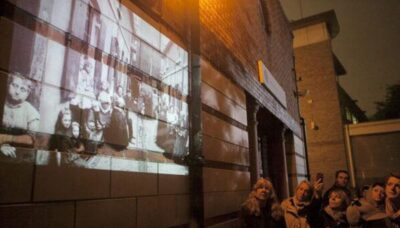
Jack the Ripper Walking Tour – Ripper Vision Tours
Read our review →
Ultimate Jack the Ripper : Guided Tour of London
Read our review →
Browse the lists this tour appears in