
Reviewed · WALKING TOURS
London: Hidden Secrets Of The City Guided Walking Tour
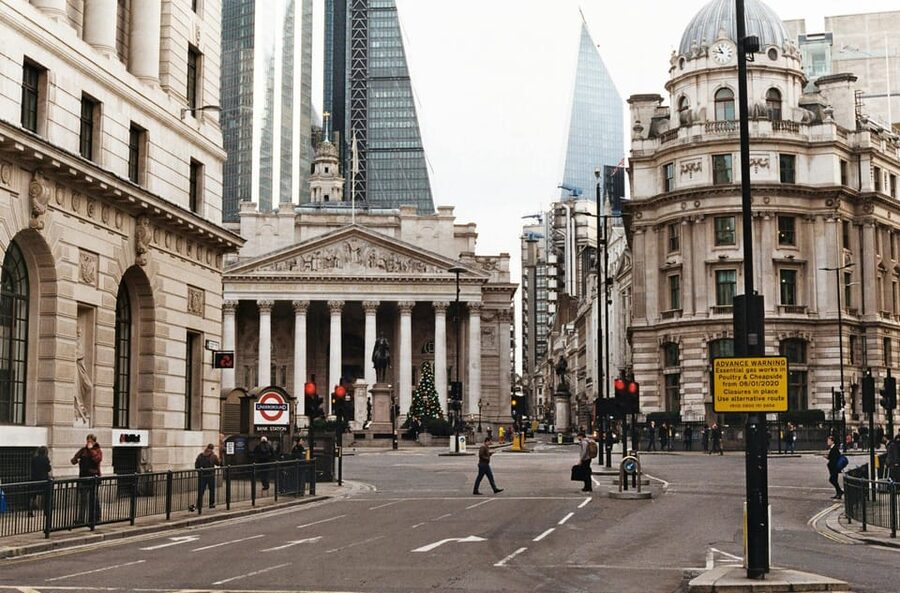
London’s financial center can look all business at first glance. Then your guide slips you into a narrow passage beside the Royal Exchange, and the city’s older face appears: merchants, thieves, fire survivors, market traders, and later, street artists. This tour connects the grand City of London with the rougher, more creative streets of Spitalfields and Brick Lane.
I like the route’s sharp change of mood, from the polished Royal Exchange to shadowy lanes, then on to food stalls and street art. I also like the guide-led details, including small engravings and overlooked features that are easy to miss when you walk London alone. Guides such as Senne have been praised for clear explanations, humor, and engaging children as well as adults.
The main consideration is that this is an outdoor walking tour with no food or drinks included. Public paths can vary underfoot, and the route may feel less comfortable in poor weather or for anyone with limited mobility, even though it has no major stairs or steep inclines.
Key points to know before booking
- A city-to-East End route: Begin at the Royal Exchange and finish on Brick Lane, with no return to the starting point.
- Small details matter: Look for old markings, inscriptions, alleyways, and overlooked street features your guide points out along the way.
- History with a darker edge: The Great Fire of London and Jack the Ripper appear in the story, but this is not solely a Jack the Ripper tour.
- Major sights in a short walk: See the Monument, Saint Dunstan in the East, Leadenhall Market, the Gherkin, Spitalfields, and Brick Lane.
- Good value at $33: You receive 2.5 hours with a live guide, but you pay separately for food and drinks.
- Best for curious walkers: The tour suits first-time visitors, repeat London visitors, and families with children who enjoy stories and visual details.
Why this London walk feels different
Many central London walks move from one famous building to the next. This one is more about the spaces between them. The guide uses narrow lanes and tucked-away corners to explain how London grew, burned, traded, rebuilt, and changed hands over the centuries.
That gives the tour a useful rhythm. You get a few major landmarks, but the real value comes from the connecting streets. A covered market may lead to a story about poultry sellers. A quiet church garden may open a window onto the Great Fire. A postbox or old inscription may suddenly become worth stopping for.
The route also crosses a clear cultural boundary. The City of London is compact, formal, and tied to finance. East London feels more casual and creative, with markets, food stalls, murals, vintage clothing, and street art. Walking between these areas helps you see London as a collection of neighborhoods rather than one polished center.
The tour is led in Dutch or English. The guide quality matters here because much of the appeal comes from explanation rather than admission to an attraction. Senne has received especially strong praise for being funny, clear, attentive, and able to keep an eight-year-old interested. That is a good sign for families, though the tour still asks children to walk and listen for 2.5 hours.
More Walking Tours in London
- London: The Original Jack the Ripper Walking Tour
★ 4.7 · 7,833 reviews - Tour for Muggles The Ultimate Harry Potter Walking Tour in London
★ 5.0 · 4,684 reviews - London Jack The Ripper Guided Walking Tour
★ 5.0 · 3,131 reviews
Starting beside the Royal Exchange
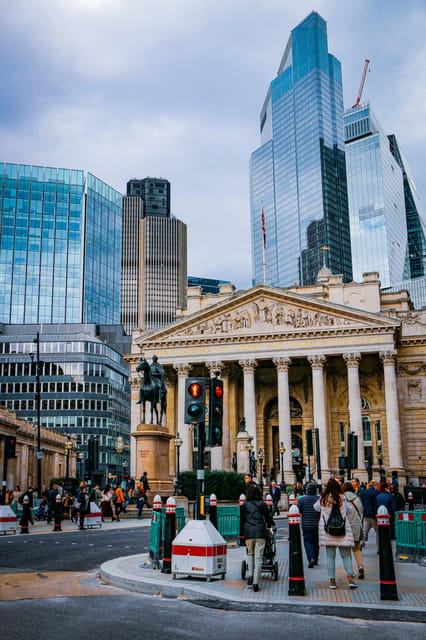
Meet next to the London Troops War Memorial statue, in front of the main entrance to the Royal Exchange. The guide carries a blue flag, and arriving five to ten minutes early should make the start simple.
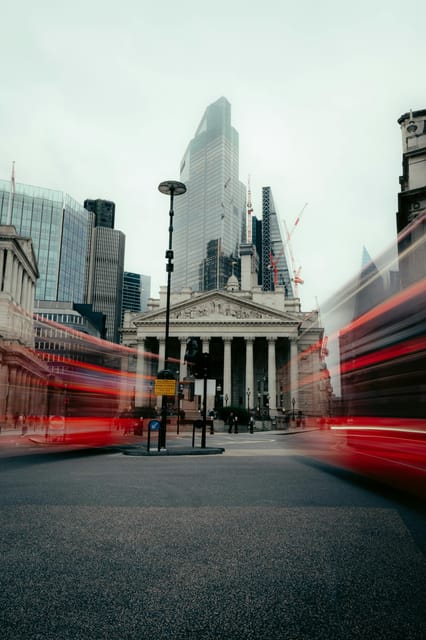
The Royal Exchange gives the tour a grand opening. Its wide setting and impressive facade represent London’s long connection with trade and finance. But the guide does not keep you in the open square for long. The point is to move quickly from the formal front of the City into the lanes that once served a far more practical purpose.
You will hear about merchants, traders, and thieves who once used these passages. The narrow streets make the past easier to picture than a broad modern avenue would. You are not just looking at buildings. You are considering how people moved through the city before cars, wide pavements, and modern street planning changed its shape.
This first section is especially useful if you have already seen the usual London landmarks. You may recognize the Royal Exchange, but the tour asks you to notice its surroundings in a different way.
The Monument and London’s fight with fire
The walk continues toward the Monument to the Great Fire of London. The stop itself is brief, listed at about five minutes, so expect a focused explanation rather than a long visit inside an attraction.
The Monument is a natural point for discussing the disaster that destroyed large parts of London and the rebuilding that followed. The nearby lanes add a more personal scale to that story. Here, the guide can connect a major event with the tight streets and surviving patterns of the city around you.
I like this part because it avoids treating the Great Fire as just a date in a schoolbook. You see the setting where the story unfolded, then continue through the streets shaped by what came afterward. The emphasis is on survival and rebuilding, not just destruction.
The stop is outside, so your experience depends on the weather and on how much room the group has around busy streets. Keep your attention on the guide, since the tour’s most useful information may be delivered while the group is moving between points.
Saint Dunstan in the East, a quiet pause
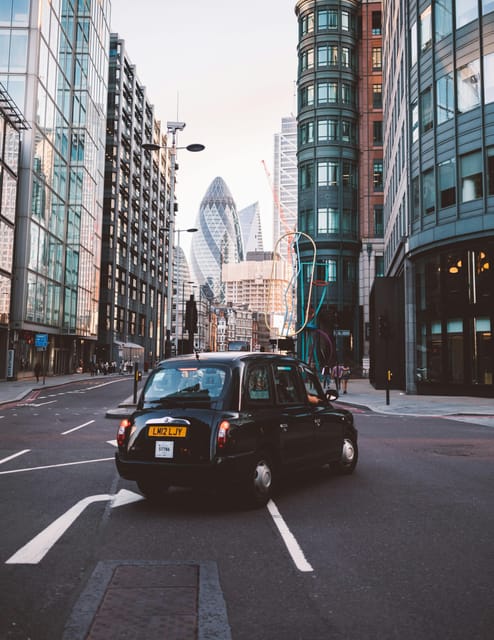
Saint Dunstan in the East Church Garden is one of the route’s more atmospheric stops. The church ruins and garden offer a calm contrast to the traffic and office buildings nearby.
The stop is short, around five minutes, but it gives the route a welcome change of pace. You move from trade, fire, and crowded streets into a place where damaged historic architecture has become part of a public garden.
This is a good example of the tour’s approach. You are not spending a long time at every site. Instead, the guide uses several brief stops to build a larger picture of London. If you prefer lengthy visits inside churches or museums, this walk may feel too quick. If you like variety, the short pauses keep the route moving.
Same trip, a completely different kind of day:
- London: The London Eye Entry Ticket
★ 4.6 · 35,875 reviews - From London: Harry Potter Warner Bros Studio Tour
★ 4.7 · 26,588 reviews - London: Westminster to Greenwich River Thames Cruise
★ 4.5 · 22,836 reviews - London: Madame Tussauds London
★ 4.6 · 20,915 reviews
Leadenhall Market and the Harry Potter connection
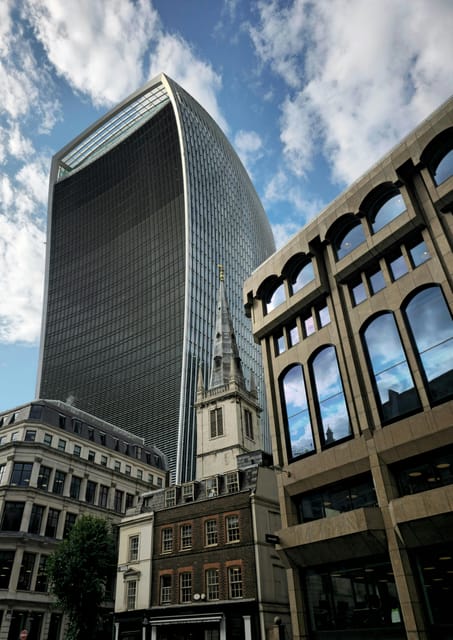
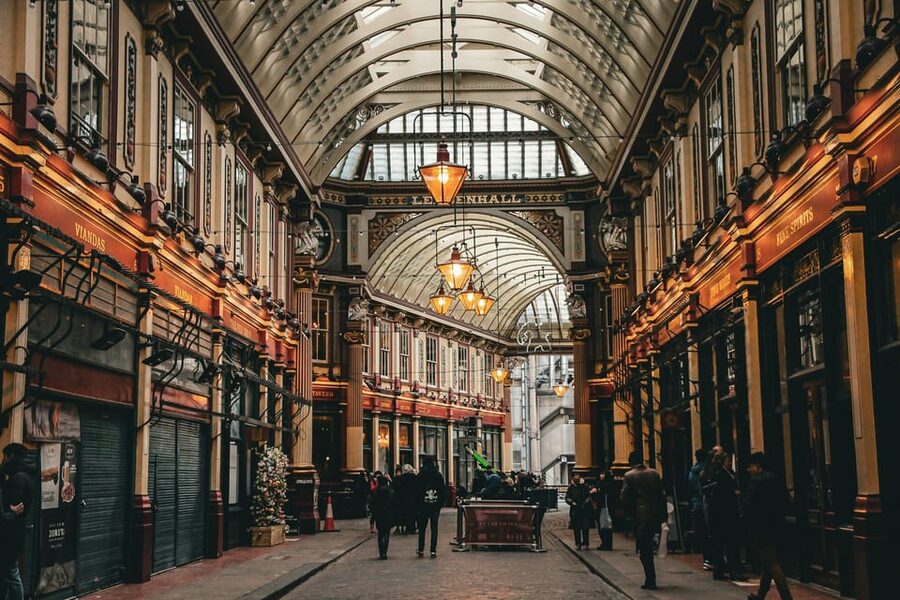
Leadenhall Market receives about ten minutes. Its ornate Victorian roof, covered arcades, and cobbled paths make it one of the most attractive places on the route.
The market once housed London’s poultry trade, so the guide can move the story beyond pretty architecture. This was a working market, not simply a decorative passage. That practical past helps explain why the City’s lanes developed in such a tangled way.
Leadenhall is also familiar to Harry Potter fans. The market’s distinctive appearance makes the film connection easy to understand, even if you are not a serious fan. It is a pleasant stop for photographs, but the tour gives you more than a film location. You also get a sense of how trade shaped this part of London.
The time here is enough to look around and hear the main story, but not enough for a relaxed meal or serious shopping. Save a return visit if you want to explore every passage at your own speed.
The Gherkin and the old city beside it
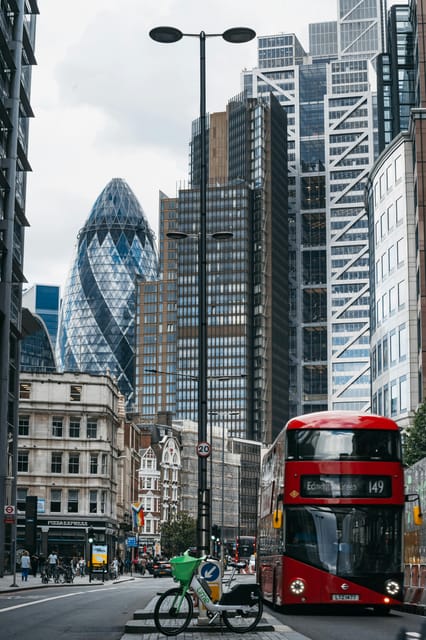
The route includes 30 St Mary Axe, better known as the Gherkin, for about five minutes. The building’s curved glass form is one of the clearest signs of modern London’s financial power.
Placed after older churches, markets, and alleys, it works as a visual comparison. London is not an old city preserved under glass. It keeps adding new buildings beside old ones, often in tight and surprising combinations.
This stop is less about entering the building and more about seeing how the modern City fits into the older street plan. The contrast is useful: the Royal Exchange represents earlier trading power, while the Gherkin signals the City’s current identity.
Do not expect a viewpoint visit or an interior tour. This is an exterior sightseeing stop within a walking route.
Crossing toward Spitalfields
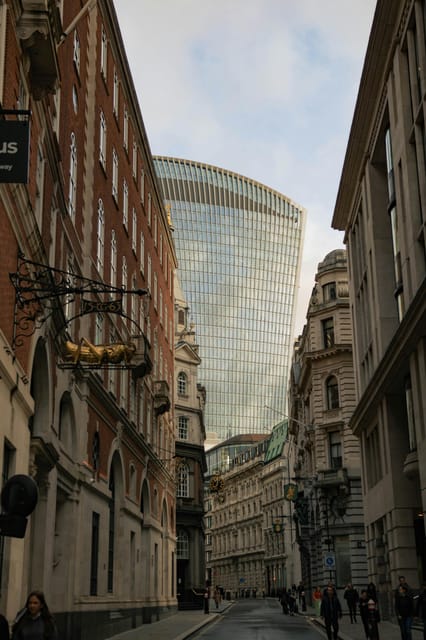
After the City section, the atmosphere begins to change as you head east. The route’s strength is this transition. You leave the formal financial district and move toward Spitalfields and Shoreditch, where markets, food, clothing, and street art shape the streets.
The walk brings together several kinds of London. You see old commerce at the Royal Exchange and Leadenhall Market, modern finance around the Gherkin, and a more street-level culture around Brick Lane. The route does not pretend these areas are the same. Their differences are part of the story.
If you have been to London several times, this eastward section may be the part you value most. One visitor who had made many previous trips to London specifically wanted something different and found this route useful for seeing less familiar corners. That is a fair description of its appeal.
The Ten Bells and the Jack the Ripper story
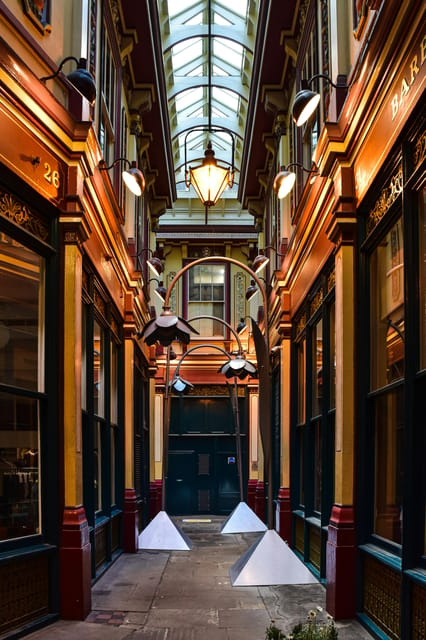
The Ten Bells in Spitalfields is the point where the tour touches London’s darker past. The guide discusses Jack the Ripper and the mystery that gripped the city in the late nineteenth century.
This is not a full Jack the Ripper tour, which is worth knowing before you book. The subject appears as one part of a wider walk, alongside market history, architecture, and street culture. You get a respectful introduction to the setting and the continuing mystery, rather than a route built entirely around crime.
The nearby lanes help set the mood, but the tour does not need to sensationalize the subject. That balance suits you if you are curious about the history but do not want an entire afternoon of grisly detail.
The stop is listed at about five minutes. If you want every known location and every theory examined at length, choose a dedicated Ripper walk instead. Here, the story works as one chapter in the larger tale of East London.
Old Spitalfields Market for food and people watching
Old Spitalfields Market receives about fifteen minutes, making it the longest listed stop on the route. This is where the tour shifts toward food, shopping, and present-day city life.
You can look through market stalls and take in the changing feel of the area. The market offers a useful contrast with the old lanes and dark stories that came earlier. History here is not frozen. It continues through food sellers, clothing, crafts, and the people using the market today.
Food and drinks are not included in the $33 price, so treat this as a chance to see what is available rather than a meal stop provided by the tour. You may find something tempting, but the short scheduled visit means you should not count on a leisurely lunch.
The market is also a practical place to note for later. If you prefer to browse without keeping pace with a group, you can return after the tour or plan extra time in the area.
Brick Lane, street art, and vintage clothing
The final section leads to Brick Lane in Shoreditch, where the tour ends. This is the liveliest part of the route, with street art, food stalls, and shops selling vintage clothing.
The promised Banksy reference is best understood as a chance to see street art in its real setting, not as a guarantee of a private viewing or a guided gallery visit. Street art can change, disappear, or be difficult to identify, so listen closely to the guide’s explanation and look around you rather than expecting a formal display.
Brick Lane is also the place to shop. If you like vintage clothing, leave room in your day and perhaps a little space in your bag. The tour may point you toward the area, but purchases are your own responsibility and are not included.
Ending here makes practical sense. You can keep eating, shopping, or exploring Shoreditch after the guide leaves. You can also use the area as a base for the rest of your day. The tour does not return you to the Royal Exchange, so plan your next stop from Brick Lane.
What $33 buys you
At $33 per person, the tour is reasonably priced for a 2.5-hour walk with a live guide. You are paying for route planning, storytelling, and the ability to notice details you would likely pass without explanation.
The value is strongest if you enjoy history in small pieces. The guide connects the Royal Exchange, the Great Fire, church ruins, a Victorian market, modern finance, Jack the Ripper, Spitalfields, and street art. Seeing these places alone is free, but assembling their stories takes time and preparation.
The price is less attractive if you only want to photograph famous buildings or shop on Brick Lane. You will spend a good part of the experience listening and walking between stops. Food, drinks, shopping, and paid attractions are extra.
Flexible booking helps if your London plans are still moving. You can reserve now and pay later, and cancellation is free up to 24 hours in advance. Starting times vary, so check availability before arranging a meal or another timed visit.
Practical advice for a smoother walk
Wear shoes suited to city pavements. The route has no stairs or many inclines, but public paths can have varying conditions, and you will be outside for the full 2.5 hours.
Dress for the forecast. There is no indoor shelter built into the experience, and London weather can change quickly. Bring water, since drinks are not included, and consider carrying a small bag if you plan to buy vintage clothing or food on Brick Lane.
Arrive five to ten minutes early at the London Troops War Memorial. Look for the blue flag by the Royal Exchange entrance. Since the finish is on Brick Lane, avoid booking a tight connection at the start point afterward.
The tour can work for families. One guide, Senne, was praised for keeping an eight-year-old engaged and drawing attention to small details such as postbox engravings. Still, children need to manage a long outdoor walk and several listening stops.
Who should book this tour?
I would choose this walk if you want London explained through its side streets rather than only its major landmarks. It is especially useful at the start of a London stay, when the route can help you get oriented in the City, Spitalfields, and Brick Lane.
It also suits repeat visitors. You may already know the Tower, Westminster, or the usual royal sights, but still have little sense of how the City’s alleys connect with East London’s markets and street art.
Families with curious older children should find plenty to look at, especially around Leadenhall Market, Saint Dunstan in the East, and Brick Lane. The clear, humorous guiding style associated with Senne is a real plus.
I would choose something else if you want an indoor museum tour, a dedicated food experience, a full Jack the Ripper investigation, or a slow shopping afternoon. This is a moving, story-led walk with many short stops.
Should you book the Hidden Secrets of the City walk?
Book it if you want a lively overview of London’s old lanes and East End culture, and if you value a guide who can point out details you would miss alone. The route is varied, the final stop gives you plenty to do afterward, and $33 is fair for 2.5 hours of guided exploration.
Skip it if wet weather, uneven pavements, or a steady walking pace would make the day uncomfortable. Also remember that food, drinks, and shopping are extra.
For most visitors, the best reason to book is the contrast: the Royal Exchange and Gherkin at one end, Brick Lane’s art and market life at the other. That is a useful slice of London, with enough old mystery and modern character to keep the walk interesting.
FAQ
Where does the tour start?
It starts next to the London Troops War Memorial statue, in front of the main entrance of the Royal Exchange. The guide carries a blue flag.
Where does the tour finish?
The tour finishes on Brick Lane in Shoreditch. It does not return to the Royal Exchange.
How long does the tour last?
The walking tour lasts 2.5 hours.
Which languages are available?
The live guide is available in Dutch and English.
Are food and drinks included?
No. Food and drinks are not included, although the route visits Old Spitalfields Market and ends on Brick Lane, where you can find food and shopping.
Is the tour suitable for people with limited mobility?
The tour has no stairs or many inclines, but it takes place entirely outdoors and public paths have varying conditions. People with limited mobility should consider those conditions before booking.
Just added in London
- Royal London Guided Sightseeing Tour and Thames River Cruise★ 4.0 · 31 reviews
- Roman London Private Walking Tour★ 5.0 · 44 reviews
- Westminster Abbey, Big Ben, Buckingham Guided Tour of London★ 5.0 · 451 reviews
- Roman Ruins to Blitz Bombings: A Walking Tour of London’s Fiery History★ 5.0 · 190 reviews
- River Thames Evening Cruise with Sparkling wine and Canapés★ 4.0 · 569 reviews
- Rock and Roll Walking Tour of Soho London★ 4.5 · 64 reviews
- London Private Chauffeur Half-Day or Full-Day Vehicle Rental★ 5.0 · 37 reviews
- Rich people behaving badly★ 5.0 · 47 reviews
Walking Tours, compared.
Underground Vaults Walking Tour in Edinburgh Old Town
Read our review →
Oxford University Walking Tour With University Alumni Guide
Read our review →
Edinburgh Castle: Guided Walking Tour with Entry Ticket
Read our review →
Edinburgh Castle Guided Walking Tour in English
Read our review →
Tour for Muggles The Ultimate Harry Potter Walking Tour in London
Read our review →
University and City Walking Tour with Alumni Guide
Read our review →
Edinburgh Darkside Walking Tour: Mysteries, Murder and Legends
Read our review →
Browse the lists this tour appears in