
Reviewed · WALKING TOURS
London: Brutalist Architecture & History Walking Tour
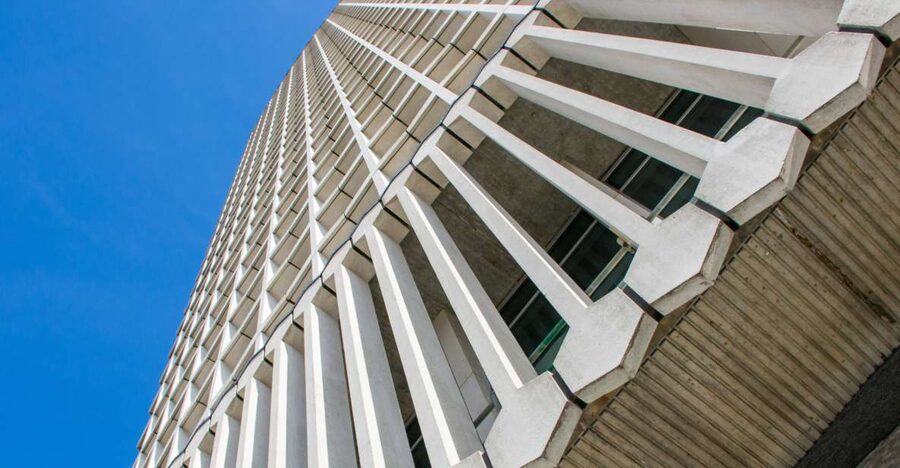
London’s Brutalist buildings are not shy. They rise in concrete blocks, broad terraces, and rugged forms that can look like urban fortresses or bold works of art, depending on your eye. This tour gives you a useful way into that debate, linking the National Theatre and Institute of Education to post-war politics, engineering, and social change. I like the small six-person group and the chance to explore a side of central London that most sightseeing walks skip.
I also like that guide Evan explains more than what a building looks like. He connects concrete design to global events, Modernist thinkers, and the arguments now shaping the future of these buildings. The main drawback is that this is an exterior-only walk, and one reviewer wanted more detail about construction methods and materials. If you want interiors or an easy-paced stroll, this may not be your ideal tour.
Key points for your London architecture day
- See Brutalism up close: Visit major central London examples, including the National Theatre and Institute of Education.
- Follow the post-war story: Learn how global events, public policy, and social needs shaped London’s concrete buildings.
- Travel in a tiny group: The maximum group size is six, allowing Evan to adjust the discussion to your interests.
- Use the Tube once: The route includes one short Zone 1 Tube journey, so bring enough credit for the fare.
- Expect a serious walking tour: The focus is exterior architecture, not building interiors or a general London highlights walk.
- Book for the right audience: This is aimed at people aged 16 and over who can manage a city walk without mobility assistance.
Why these concrete buildings are worth your morning
Brutalism is often treated as a matter of taste. Some people see cold, oversized blocks. Others see honest materials, daring engineering, and public buildings designed for a changing society. I like this tour because it does not ask you to admire every building. It gives you the facts and lets you decide.
The style is linked mainly with the 1960s and 1970s, though its roots reach into earlier Modernist thinking. Concrete became central because it could be formed into strong, unusual shapes and used on a large scale. After the Second World War, London needed new schools, offices, cultural buildings, and public facilities. Concrete offered a practical answer, but the results also reflected political hopes and social ambitions.
That context matters. Without it, a large concrete building can look like a blunt object dropped into the city. With it, you can start to see the decisions behind the shape: the need for public space, the confidence in modern engineering, and the belief that architecture could help build a fairer society.
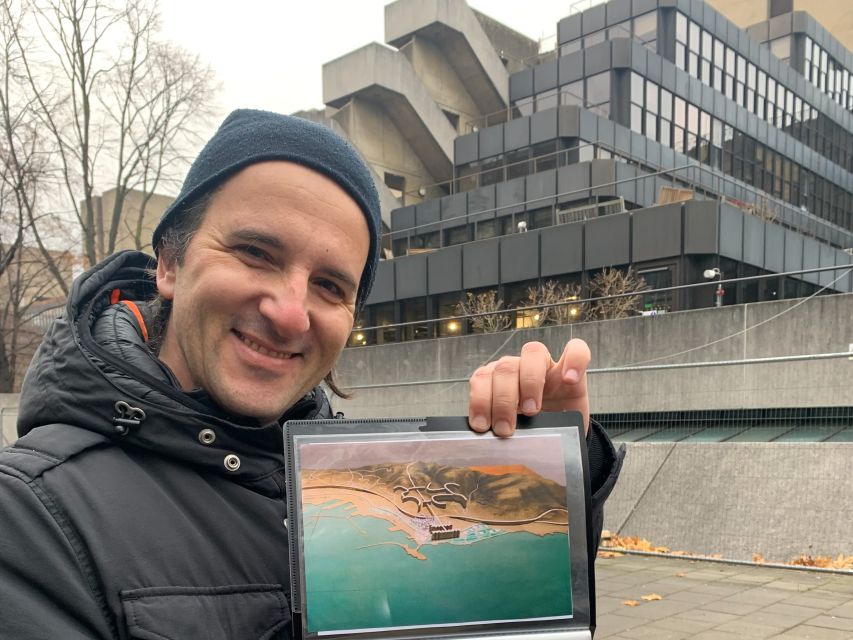
Evan’s approach, based on the information available about the tour, is well suited to this subject. He brings an obvious interest in the built environment and explains the political, economic, and social forces behind the buildings. He also adjusts the conversation to the group, which is useful if you already know your Modernism from your Brutalism or are starting from scratch.
More Walking Tours in London
- London: The Original Jack the Ripper Walking Tour
★ 4.7 · 7,833 reviews - Tour for Muggles The Ultimate Harry Potter Walking Tour in London
★ 5.0 · 4,684 reviews - London Jack The Ripper Guided Walking Tour
★ 5.0 · 3,131 reviews
Meeting at Russell Square and getting into the subject
The tour begins outside Russell Square Underground Station on the Piccadilly Line. This is a practical meeting point in central London, with a clear transport link and easy access to the first part of the walk.
You should arrive ready for a city walk rather than a formal lecture. Wear comfortable shoes, check the weather, and carry a public transport ticket or enough Zone 1 credit for one Tube trip. The walk may be postponed or canceled in poor weather, which is worth considering when you are planning a tightly packed London day.
The group size is limited to six. That makes a real difference on a subject that depends on looking carefully and asking questions. In a large group, a discussion about window patterns, concrete surfaces, or the way a building meets the pavement can become a speech. With six people, it is easier to stop, look, and ask Evan to explain a point.
The tour is in English. It is not suitable for children under 16 or people with mobility impairments. You should also expect a walking pace and urban surfaces rather than a step-free sightseeing experience.
The Institute of Education and the language of Modernism
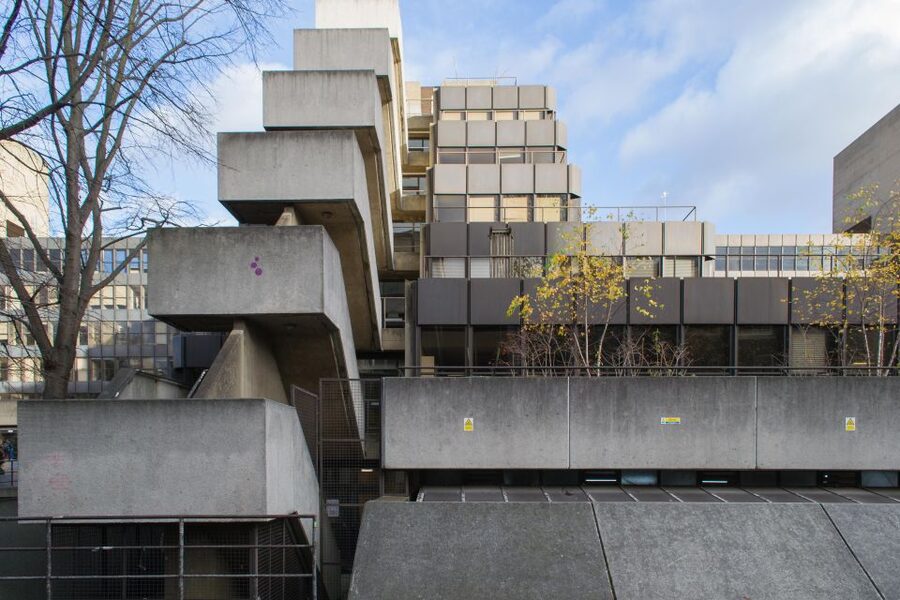
The Institute of Education is one of the named examples on the route. It gives Evan a chance to discuss the relationship between Modernist ideas and institutional buildings.
This is one of the places where the tour’s wider approach becomes useful. You are not simply told that a building is Brutalist because it uses concrete. You can consider its scale, structure, purpose, and place in the city. A university or educational building carries different public ambitions from a private residence or commercial office.
The discussion also helps explain why many Brutalist buildings were controversial from the beginning. Their large forms can dominate older streets. Their exposed materials can weather in ways that people find severe. Yet the same qualities can make them powerful examples of architectural confidence.
Pay attention to details rather than trying to decide instantly if you like the building. Look at how the concrete is divided, how windows are grouped, and how the building frames the pedestrian space around it. This is a photo-friendly part of the experience, but the value is not only visual. You are learning how to read a building.
One useful strength of the tour is its connection between architecture and public life. The buildings are not presented as isolated objects. They are tied to institutions, local authorities, residents, and the changing idea of what central London should be.
The National Theatre and London’s boldest concrete statement
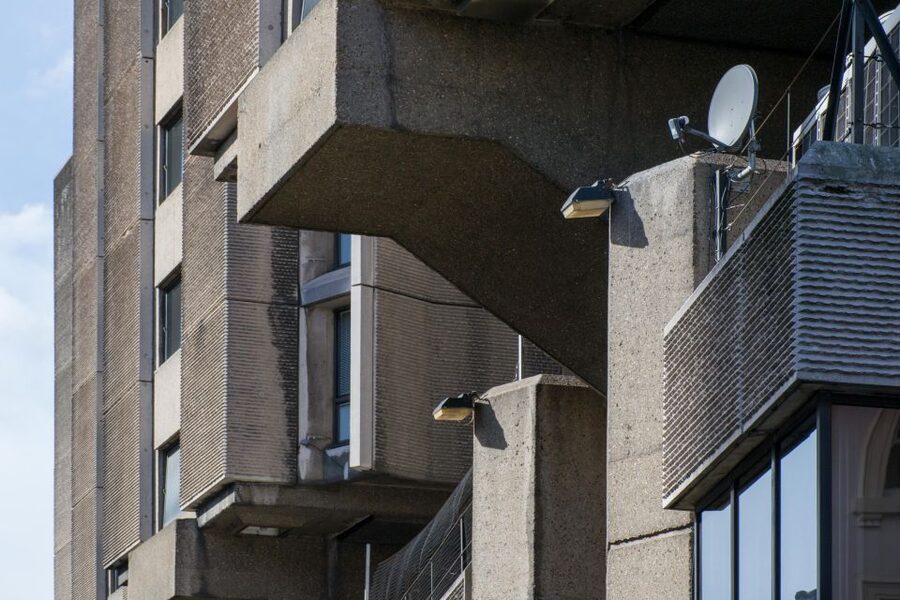
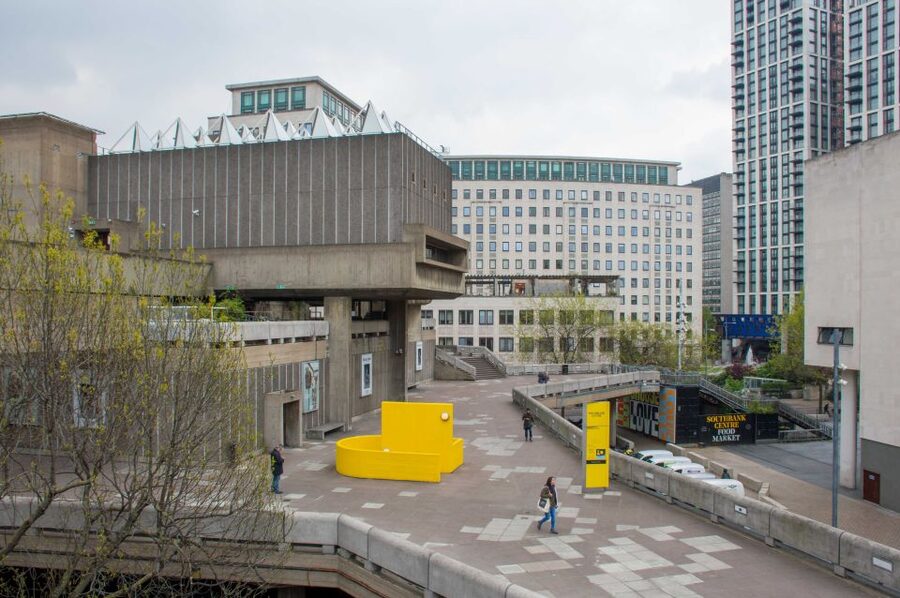
The National Theatre is likely to be the visual high point for many people. It is one of London’s best-known Brutalist buildings and an easy place to understand why the style inspires both affection and resistance.
The building’s broad terraces and layered concrete forms make an excellent subject for photographs. You can capture the strong lines and repeating shapes, but a good guide adds the part a camera cannot show: why this type of cultural building was commissioned, how it was received, and why its future has become part of a wider preservation argument.
The National Theatre also shows how Brutalism can be theatrical without relying on decorative detail. The building’s impact comes from mass, structure, movement, and scale. It asks you to notice how people approach it and how public space is arranged around it.
I would save room in your camera roll here, but do not spend the whole stop taking pictures. The point is to understand why the building looks the way it does. Evan’s explanations about the social, political, and economic setting behind buildings such as the National Theatre are a major reason to choose this tour instead of simply walking past with a guidebook.
The limitation is clear: the tour does not visit interiors. You will study the outside, discuss its design and meaning, and photograph it, but you will not tour the auditorium or internal spaces.
More history walks in London:
- London Small Group Tour of Historical Pubs
★ 5.0 · 10,422 reviews - Soho Music & Historic Pubs Tour
★ 5.0 · 1,993 reviews - London: Historic Pubs of Central London Walking Tour
★ 4.9 · 1,065 reviews - London: Soho Music and Historic Pubs Walking Tour
★ 4.9 · 836 reviews
The Brunswick and the value of looking closely
The Brunswick is another useful stop, especially for the way the tour can shift from broad architectural history to small visual details. Evan has been praised for his eye at this building, and that suggests you should look beyond the main silhouette.
The Brunswick helps show that Brutalism is not only about monumental public buildings. Residential projects raise different questions about daily life, density, communal space, and the compromises involved in building at scale. The relationship between homes, shops, open areas, and concrete forms gives the discussion a more human focus.
This is also where you may see the tour’s balance most clearly. Brutalism can be celebrated as brave design, but the buildings still had to work for the people living or working in them. Their future depends on maintenance, practical use, local opinion, and the cost of preserving or changing them.
One criticism of the experience is worth keeping in mind. A participant wanted more interaction with the buildings as construction projects, including the material choices, engineering compromises, and workarounds involved in building them. If you want a technical architecture course, you may find the treatment too general at some stops. If you want an accessible introduction with useful examples, the balance should work well.
Concrete, engineering, and the post-war city
Concrete is not just a visual feature on this walk. It is one of the central subjects.
You will hear about its use in modern engineering and architecture, including why it became so important during the post-war building period. The tour connects the material to larger changes in Europe and beyond. Global events influenced what London built, how public money was spent, and what architects believed cities needed.
That wider frame is one of the tour’s best features. You are not left with a list of architects and dates. You are encouraged to think about how architecture responds to pressure: a need for housing, education, cultural buildings, transport, or new civic identities.
The conversation also includes key figures in European Modernism. This gives you a route into the ideas behind the buildings, though the tour is not presented as an advanced academic seminar. If you already read widely about Modernism, you may want more precision on individual architects and construction techniques. If you are new to the subject, the historical links should make the buildings easier to understand.
One reviewer found a few factual points too simplified, including explanations about bricked-up windows and the politics of Isaac Hayward. That is a useful warning for specialists: treat the tour as a lively introduction, not the final word on every historical claim. For most people, Evan’s enthusiasm and broad command of the topic should make the walk engaging, but you may want to check finer details later if you are doing serious research.
Preservation, public opinion, and what happens next
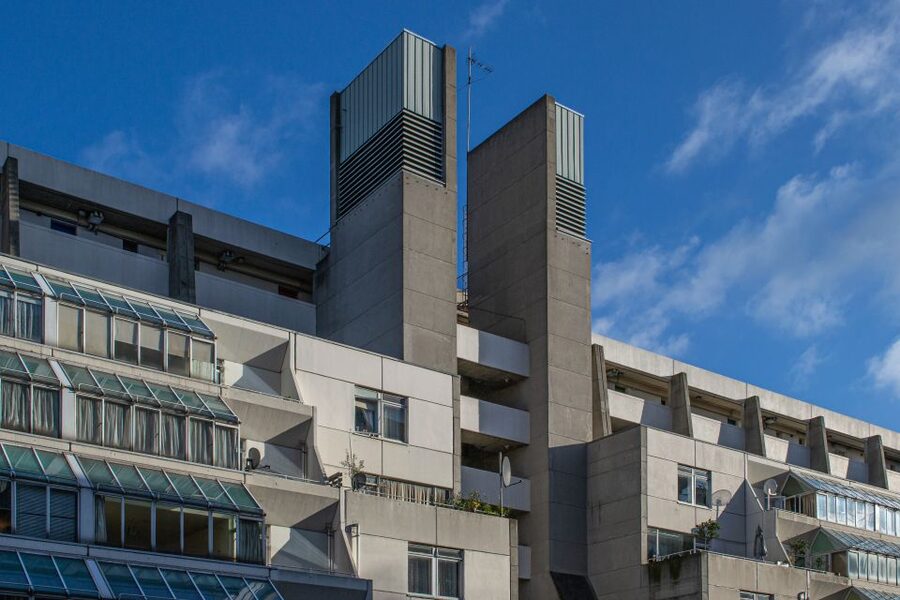
The most useful part of a Brutalist tour may be the discussion about the future. These buildings are not frozen museum pieces. Local authorities, preservation groups, owners, and residents continue to argue about how they should be used, repaired, altered, or protected.
That debate is not simple. Keeping a Brutalist building can protect an important work of architecture, but maintenance can be expensive. Changing it may make the building more useful, but it can also weaken the features that make it significant. Demolishing it may create a new opportunity, but it removes a record of a particular period in London’s development.
You will hear about the tension between affection and rejection. Some people once saw these buildings as symbols of poor planning or failed ideals. Others now regard them as important works that deserve care. The tour lets you consider both views without turning the walk into a sales pitch for concrete.
I especially like this part because it makes the subject current. You are not only looking backward at the 1960s and 1970s. You are thinking about how cities decide what to keep and what to change.
What the 2.5-hour format feels like
Two and a half hours is long enough to build an argument but short enough to fit into a London itinerary. You should expect a focused route through central neighborhoods, with stops for explanation, discussion, and photographs.
The tour uses the Tube once for a short journey. Public transport is not included in the $47 price, so make sure your ticket or contactless payment method covers one Zone 1 trip. That small cost is easy to overlook, but it is the only stated transport expense connected with the activity.
At $47 per person, the price is reasonable for a small group limited to six, especially if you value a guide who can respond to your questions. Several participants found the experience comparable with much more expensive specialist walking tours, and one felt the guide could have charged more. I would not book it simply because it is cheap. I would book it because the subject is specific and the small group gives the discussion room to breathe.
The value drops if you want to enter buildings, see a broad range of London attractions, or move at a very gentle pace. It rises if you are interested in architecture, urban planning, public policy, photography, or the way modern cities make choices about their past.
Who should book this London Brutalist walk?

I would recommend it to adults and older teenagers who already enjoy buildings or want a fresh way to understand central London. It is particularly good for architecture students, photographers, urban planners, design fans, and anyone tired of the usual royal palaces and historic churches.
You do not need a specialist background. Evan’s style is described as informal as well as informative, and the small group allows the conversation to match your level. You can arrive with no knowledge of Brutalism and still follow the main ideas.
I would be more cautious if your main interest is interior design, engineering calculations, or access to private buildings. The tour stays outside, and at least one participant wanted more technical detail about construction and materials.
The strong praise for Evan is consistent: he is described as enthusiastic, personable, adaptable, and deeply interested in the built environment. That matters here because Brutalism can be a dry topic if the guide only lists dates and names. This tour appears to work best as a guided conversation with buildings as the evidence.
Should you book it?
Book this tour if you want to see London through concrete, post-war ambition, and the arguments surrounding modern architecture. The National Theatre, Institute of Education, and Brunswick give you memorable examples, while Evan’s explanations connect them to politics, economics, engineering, and public life.
Skip it if you need interiors, step-free access, a family activity for younger children, or a general introduction to London. For everyone else, the small group, strong guide, focused subject, and $47 price make this a good choice for an alternate morning in central London. Bring comfortable shoes, Zone 1 transport credit, and an open mind about buildings you may have been taught to dislike.
FAQ
Where does the London Brutalist architecture tour begin?
The meeting point is outside Russell Square Underground Station on the Piccadilly Line.
How long does the tour last?
The walking tour lasts 2.5 hours.
What language is the tour in?
The live tour guide speaks English.
Is public transportation included?
No. The tour uses the Tube once for a short journey, so you need enough credit for one Zone 1 trip.
Do you visit the interiors of the buildings?
No. The tour focuses on exterior views and discussions of the buildings.
Can children join the tour?
No. The activity is not suitable for children under 16.
What happens if the weather is bad?
The walk may be postponed or canceled if weather conditions are unfavorable. You can cancel up to 24 hours in advance for a full refund, and the reserve-now, pay-later option is available.
Just added in London
- Royal London Guided Sightseeing Tour and Thames River Cruise★ 4.0 · 31 reviews
- Roman Ruins to Blitz Bombings: A Walking Tour of London’s Fiery History★ 5.0 · 190 reviews
- Roman London Private Walking Tour★ 5.0 · 44 reviews
- Westminster Abbey, Big Ben, Buckingham Guided Tour of London★ 5.0 · 451 reviews
- River Thames Evening Cruise with Sparkling wine and Canapés★ 4.0 · 569 reviews
- Rock and Roll Walking Tour of Soho London★ 4.5 · 64 reviews
- London Private Chauffeur Half-Day or Full-Day Vehicle Rental★ 5.0 · 37 reviews
- Rich people behaving badly★ 5.0 · 47 reviews
Walking Tours, compared.
Underground Vaults Walking Tour in Edinburgh Old Town
Read our review →
Oxford University Walking Tour With University Alumni Guide
Read our review →
Edinburgh Castle: Guided Walking Tour with Entry Ticket
Read our review →
Edinburgh Castle Guided Walking Tour in English
Read our review →
Tour for Muggles The Ultimate Harry Potter Walking Tour in London
Read our review →
University and City Walking Tour with Alumni Guide
Read our review →
Edinburgh Darkside Walking Tour: Mysteries, Murder and Legends
Read our review →
Browse the lists this tour appears in