
Reviewed · HISTORICAL TOURS
Curious Cambridge – The History Tour that’s FUN!!!
Cambridge’s story is far more entertaining than a list of college dates and famous alumni. This 90-minute walking tour links Roman beginnings, medieval streets, university rivalries, scientific breakthroughs, and old student pranks into one lively route. You see the grand college exteriors without paying college admission or spending your day inside chapels and libraries.
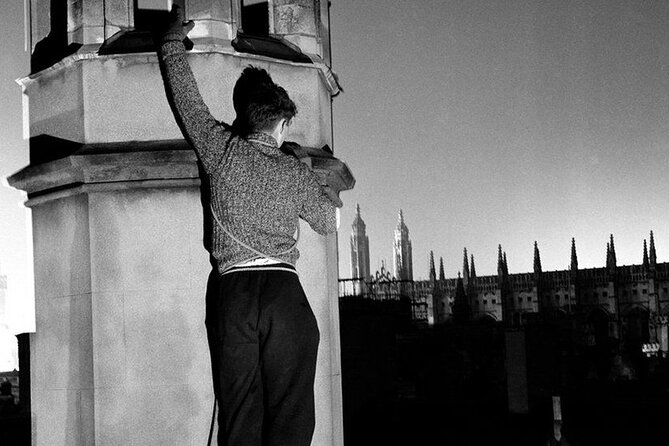
I like two things right away. First, the stories have plenty of odd corners: night climbers, a lane once called Pisspot Lane, and a pub connected with one of science’s biggest discoveries. Second, the guides know how to adjust the pace and subject matter. Peter, Ben, Simon, Chuck, and Chris have each been praised for clear storytelling, humor, and handling mixed-age groups.
The main limitation is simple: you do not enter the colleges. You also need to accept the possibility of a late cancellation if a guide falls ill, as the small company has limited backup. Still, at $27.74 per person, this is a sensible first look at Cambridge if you want context before exploring on your own.
Quick reasons to consider Curious Cambridge
- A 1,000-year story in 90 minutes: The route connects Cambridge’s Roman, Viking, Norman, medieval, university, and scientific past.
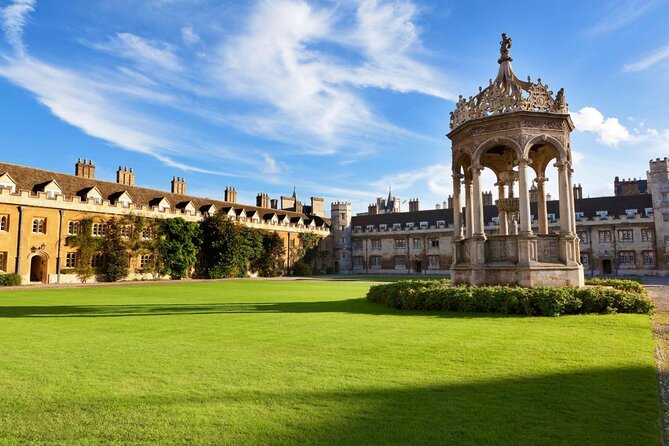
- College views without college entrance fees: You pass Magdalene, St. John’s, Trinity, Trinity Hall, and Gonville and Caius.
- A strong family option: Guides have kept both a 9-year-old and a 15-year-old interested, which is no small feat on a history walk.
- A memorable finish: The tour ends at the Corpus Clock, opposite King’s College, with the famous Chronophage in view.
- Plenty of unusual stories: Expect Newton, night climbers, town-and-gown brawls, Cambridge bells, and the discovery of the structure of DNA.
- Small enough to stay personal: The group limit is 25 people, though the experience can still feel like a group walk at full capacity.
Starting beside Jesus Green and the old port road
The walk begins at Jesus Green Lock House, Cambridge CB4 3AX. This puts you on the northern side of the historic center, near the River Cam and the old route into town. The start is useful because Cambridge’s story begins with movement: people, boats, trade, armies, and students all passed through this part of the city.
The tour is planned around several ten-minute stops, but the guide can shift the order or spend more time on questions. That flexibility matters. If your group is curious about university traditions, the college sections may grow a little longer. If children are along, the guide can keep the talk moving with stories rather than a steady stream of dates.
You should arrive ready for a walking tour rather than a formal lecture. The route uses public streets and college approaches, so comfortable shoes are sensible. The experience is offered in English, and a mobile ticket keeps the entry process simple.
More history walks in Cambridge:
- London Small Group Tour of Historical Pubs
★ 5.0 · 10,422 reviews - A History of Terror – Belfast City Centre Walking Tour
★ 5.0 · 2,883 reviews - Old Town Walking Tour History and Tales in Edinburgh
★ 5.0 · 2,168 reviews
Magdalene College and the route to old Cambridge
The first substantial stop is Magdalene College, seen from Magdalene Street and Bridge. This is not just a pretty college frontage. The street follows an old roadway connected with Cambridge’s former port, when the river was a working route and this side of town had a more practical role.
That setting gives the guide a good chance to explain how Cambridge developed before the university took over the public imagination. You begin to see the city as a place of trade and transport, not simply a collection of famous buildings.
The tour does not take you inside Magdalene College. That is worth knowing before you book. You get the exterior, the street setting, and the historical explanation, then continue on foot.
St. John’s, the Round Church, and the university’s early roots
The stop near St. John’s College brings you toward the Round Church and the early seeds of the university. The church is an especially useful landmark because it helps place the university in a medieval religious setting. Cambridge’s academic story did not begin with grand laboratories or famous mathematicians. It grew from older institutions, churches, and communities of scholars.
St. John’s itself is one of the names that makes many people want to visit Cambridge. On this walk, you see the college from outside rather than touring its courts. I see that as a fair trade for a short introduction, especially if you plan to return later and pay for a college visit with more time to spare.
The guide’s job here is to turn an old street and a college wall into a clear story. Simon has been particularly praised for enthusiasm and storytelling, including with a teenage audience. That kind of delivery helps at stops where the architecture can otherwise blur together.
Trinity College, Newton, and a long-running prank
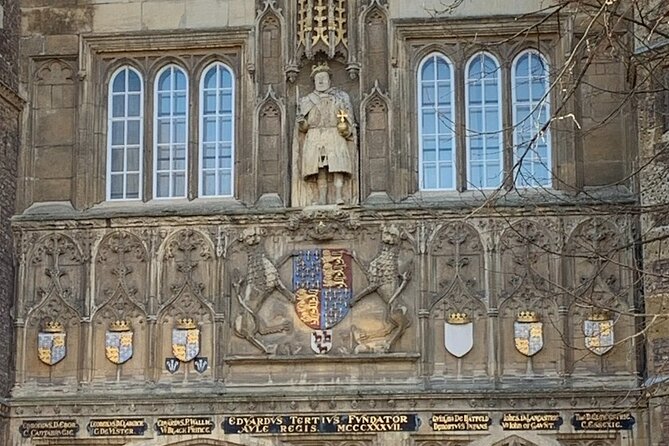
Trinity College is the heavyweight stop on the route. It is described as the wealthiest college in Oxford or Cambridge and is linked with Isaac Newton, one of the university’s most famous figures. Even from outside, the college gives you a sense of the power and money tied to Cambridge’s institutions.
The stop also brings in one of Cambridge’s longest pranks. That is exactly the sort of detail that makes a walking tour useful. You can admire a grand college, hear about a major scientist, and then learn about student mischief in the same few minutes. The contrast keeps the history from turning stiff.
You should not expect a full explanation of Newton’s life or a tour of Trinity’s rooms. The purpose is to give you a sharp, memorable introduction and point out why the college matters. Guides can also explain what you might want to see later if you arrange a separate visit.
A few more half-days in Cambridge worth comparing
- Cambridge University Walking Tour by Alumni™ Kings College Option
★ 5.0 · 2,336 reviews - Cambridge University With Alumni: Optional Kings College Entrance
★ 5.0 · 1,987 reviews - Punting Tour in Cambridge
★ 4.5 · 1,690 reviews - Cambridge: Guided River Cam Punting Tour
★ 4.7 · 1,469 reviews
Trinity Lane and the less polished side of university life

Trinity Lane has an old name that tells you much about medieval street life: Pisspot Lane. The tour uses that detail to move away from polished college images and toward the less tidy reality of the past.
You do not need a grand historical claim here. A street name can reveal how closely people lived, how waste was handled, and how different old Cambridge was from the neat college views seen on postcards. The guide’s humor is useful because this is the sort of fact children remember, and adults tend to repeat later.
The route continues through the university quarter, where the streets can feel narrow and visually busy. A guide helps you read them. Instead of simply passing through, you learn why the lane mattered and how its role changed.
Gonville and Caius College and the night climbers
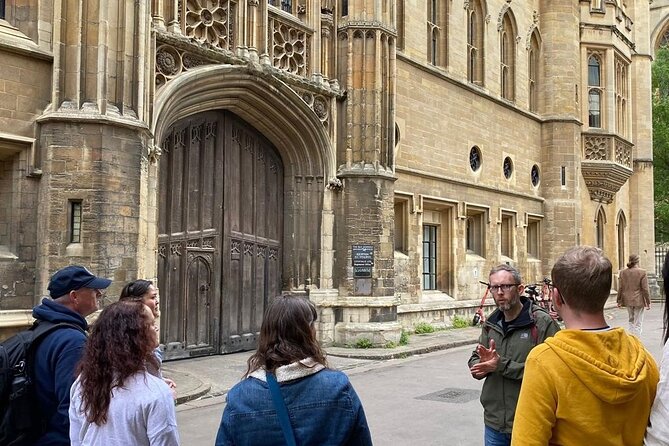
Gonville and Caius College brings two unusual subjects: the famous Nightclimbers and a strange instruction from the college’s founder. These are the details that give the tour its title. You are not only being shown important buildings. You are being shown the habits, dares, rules, and odd traditions that grew around them.
The Nightclimbers story is particularly well suited to a walking tour because it makes the college walls feel like part of student life rather than a static backdrop. The stop also gives the guide room to explain how college traditions can be both serious and playful.
Again, this is an outside view. If your main goal is to see interiors, chapels, libraries, and college courts, you will need a separate plan. If your goal is to understand how Cambridge feels and why its students have such a strong culture of tradition and mischief, this stop earns its place.
Market Square, bells, and town versus gown

Cambridge Market Square is the route’s broad public counterpoint to the colleges. Here, the focus shifts to the market, the famous bell chimes, and the long-running conflict between the town and the gown.
The phrase town and gown refers to tension between local residents and university people. In Cambridge, those clashes could become physical, and the tour includes some memorable punch-ups. That subject helps you see that the university was never separate from the city around it. Students ate, shopped, argued, and sometimes fought in the same streets used by local residents.
The market is also a practical place to pause and get your bearings. The tour does not include purchases or food, but you can note it as a place to return after the walk. The guide connects the market to Cambridge’s working life, which balances the grand college narrative.
This is one of the stops where a good guide makes the difference. Ben has been praised for mixing recent and ancient facts into an easy, gentle walk. That approach suits the market well because it lets you move between old disputes and the living city around you.
St. Bene’t’s Church and the oldest building in Cambridge
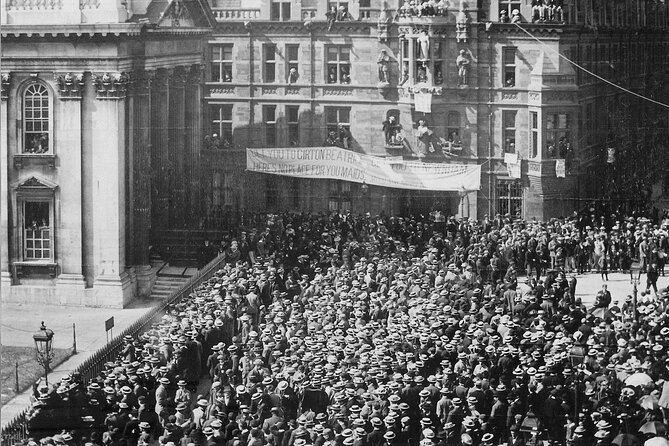
St. Bene’t’s Church on Bene’t Street is one of the key stops. The building is identified as the oldest in Cambridge, and seeing it gives you a concrete link with the city’s early past. The church is not just a backdrop for university history. It reminds you that Cambridge had an established community long before its colleges became famous worldwide.
The tour also points out the laboratory where the secret of life was discovered, along with the pub where the discovery was announced over a pint. This refers to the scientific story surrounding the structure of DNA. The pairing of laboratory and pub makes the subject easy to remember and shows how Cambridge’s scientific life intersects with ordinary city spaces.
The Corpus Clock follows, bringing the route into one of Cambridge’s most recognizable modern landmarks. The clock’s Chronophage figure is strange by design and gives the end of the walk a memorable visual punch. You finish opposite King’s College, so you are well placed to continue sightseeing in the center.
The stop packs in a lot: the oldest building, a major scientific breakthrough, a pub, and the clock. If you enjoy detail, this is a place to ask questions. If you prefer a slow look at each site, the broad itinerary may feel brisk.
Castle Hill and where Cambridge began
Castle Hill is included as the place where Cambridge started. The story reaches back to Roman, Viking, and Norman control, with the bridge described as the last crossing before the sea. This is the point where the tour widens beyond the university and shows the strategic reason for Cambridge’s location.
A hill connected with defense and conquest gives you a different view of the city. Cambridge was not created solely for scholars. It was also a settlement shaped by roads, water, power, and military control.
Castle Hill also breaks up the sequence of college streets. You get a larger sense of the town and its position, rather than moving only between famous institutions. The route’s exact shape can vary because the guide responds to questions and group interest, so you should treat the listed stops as the intended content rather than a rigid performance.
What $27.74 buys you
At $27.74, this tour offers good value if you want a guided orientation to Cambridge. You are paying for a 90-minute route, a live English-speaking guide, historical context, and a selection of college exteriors and city landmarks. You are not paying for college admission, food, transport, or entry to museums.
The value is strongest on a first visit. Cambridge can look easy to understand because many sights sit close together, but the meaning behind them is not always obvious. A guide connects Magdalene’s port history with the university, links the market with town-and-gown conflict, and places the Corpus Clock after a story about Cambridge science.
The price is less attractive if you already know the city well or mainly want interior access. You could walk the streets independently, but you would miss the organized thread and the small facts that make the route stick in your memory.
The group limit is 25. That is small enough for a guide to answer questions, though the experience may feel less intimate when full. The strong ratings, including a 4.8 average from 80 reviews and a 94 percent recommendation rate, point to a reliable format, but they do not remove the practical limits of a short group walk.
Who will enjoy this Cambridge walk
I would choose Curious Cambridge for first-time visitors, families, and anyone who likes history with a comic edge. It is especially useful if you have only part of a day and want to learn which colleges, streets, churches, and landmarks deserve a closer look.
Families should take note of the age range already handled by the guides. One guide kept a 9-year-old interested, while another worked well with a 15-year-old. That does not mean every child will love a walking tour, but the stories give young listeners more to hold onto than dates and architectural labels.
The tour also suits people who want a warm, human introduction rather than an academic lecture. Guides such as Peter, Ben, Simon, Chuck, and Chris have been praised for humor, enthusiasm, and adapting material to the group. If you prefer a silent stroll or a highly formal historical lecture, this may not be your style.
The free partner offers from local tourism businesses are an added benefit, but the details are not specified here. Treat them as a possible bonus, not as part of the core value you are buying.
Practical details before you book
You receive confirmation at booking, and the ticket is mobile. Service animals are allowed, and the tour is near public transportation. Most people can take part, though the information does not specify the walking distance or step-free conditions at every point.
The start is Jesus Green Lock House. The finish is the Corpus Clock at 58 Trumpington Street, opposite King’s College. That end point is convenient for continuing through central Cambridge, visiting nearby sights, or finding a place to eat.
Free cancellation is available up to 24 hours before the start time. Cancellations made later are not refunded, and changes inside that 24-hour window are not accepted. The tour also requires a minimum number of participants.
There has been at least one late cancellation caused by guide illness when no replacement could be arranged. It was treated as unusual, but you should still avoid booking this as the only fixed activity on a tight schedule. If the minimum is not met, you are offered another date or experience, or a full refund.
Should you book Curious Cambridge?
Book it if you want a lively introduction to Cambridge, especially on your first day. The route gives you the city’s main stories quickly, from Roman and Norman beginnings to Newton, DNA, student pranks, market disputes, and the Corpus Clock.
Skip it if entering the colleges is your main goal, since this walk stays outside. Also think twice if your schedule cannot absorb a possible last-minute change, though that appears to be uncommon.
For $27.74, I see this as a strong orientation tour rather than a complete Cambridge visit. It gives you enough context to make the rest of your time in the city more rewarding, and it does so without asking you to treat history like homework.
FAQ
How long does Curious Cambridge last?
The tour lasts approximately 1 hour and 30 minutes.
Where does the tour begin?
It begins at Jesus Green Lock House, Cambridge CB4 3AX, UK.
Where does the tour finish?
It ends at the Corpus Clock at 58 Trumpington Street, opposite King’s College.
Does the tour enter the Cambridge colleges?
No. You see colleges including Magdalene, St. John’s, Trinity, Trinity Hall, and Gonville and Caius from outside. College entry is not included.
Is the tour suitable for children?
Most people can participate, and the guide team has successfully handled family groups that included children aged 9 and 15. The stories and humor make it suitable for families, though individual interests vary.
Can I cancel for a full refund?
Yes. You can cancel at least 24 hours before the local start time for a full refund. Cancellations or changes made less than 24 hours before the start are not refunded or accepted.
Just added in Cambridge
- Walking Tour of Cambridge★ 5.0 · 305 reviews
- Tangential Cambridge: Group Walking Tour of Sights and Highlights★ 5.0 · 79 reviews
- Cambridge University Colleges Guided Punting Tour★ 4.5 · 220 reviews
- Town Food Tour in Saffron Walden★ 5.0 · 32 reviews
- Cambridge University Walking Tour★ 5.0 · 316 reviews
- Rowing experience in Cambridge! No experience required★ 5.0 · 182 reviews
- Fun, Flexible Treasure Hunt Around Cambridge with Cryptic Clues & Hidden Gems★ 5.0 · 142 reviews
- Cambridge University Ghost Tour by Alumni™★ 5.0 · 117 reviews
Historical Tours, compared.
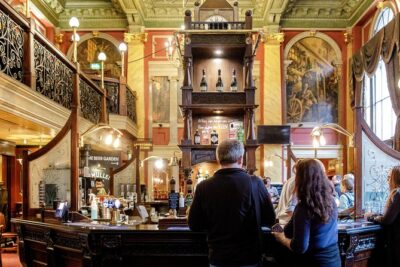
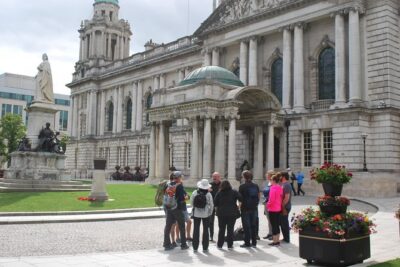
A History of Terror – Belfast City Centre Walking Tour
Read our review →
Old Town Walking Tour History and Tales in Edinburgh
Read our review →
Shadows of York: Ghost Walk and Horrible History.
Read our review →
Multi-Sensory Small-Group Historic Vaults Tour in Edinburgh
Read our review →
Browse the lists this tour appears in