
Reviewed · WALKING TOURS
Crime and Policing London Walking Tour
London’s crime story begins long before modern detective dramas. On this walk, you follow the route from Bow Street’s early police force to the headquarters of the Metropolitan Police, with stops for murders, espionage, riots, Sherlock Holmes, and the role of women in policing.
I like the way the tour uses central London as its classroom, and I like that Francis Mullan brings experience from his own police career. The gentle pace, small maximum group of 20, and chance to examine historic police equipment also make this easier to enjoy than a hurried city walk.
The main drawback is focus. If you want grand interiors or a tour devoted only to famous landmarks, this is not the best match. Much of the experience takes place outside, and the appeal rests on storytelling rather than entry to museums or police buildings.
Key points to know before you book
- Former police officers lead the walk: Francis Mullan is the main guide, with David also leading some departures.
- The route links major central sights: You see Bow Street, Charing Cross, Trafalgar Square, Whitehall, Downing Street, and Scotland Yard.
- Crime stories are mixed with police history: Expect murder cases, espionage, cold cases, wartime policing, and the development of the Metropolitan Police.
- The pace is gentle: The walk lasts about 2 hours and 15 minutes, with refreshment and toilet stops available if needed.
- Historic police items add a hands-on touch: The guide brings real police regalia and equipment for you to examine.
- The tour ends near Westminster: From New Scotland Yard, you are close to Westminster Underground Station, buses, riverboats, pubs, bars, and restaurants.
Why this crime walk feels different from a standard London tour
Many London walks point out the familiar sights and give you a short paragraph about each one. This experience takes the opposite route. The buildings and squares matter, but they are used as settings for stories about how London dealt with crime, disorder, protest, murder, and public safety.
That makes the tour useful for first-time visitors and repeat visitors alike. You see well-known central London, but you are encouraged to look at it through the eyes of police officers, magistrates, investigators, and people caught up in notorious events.
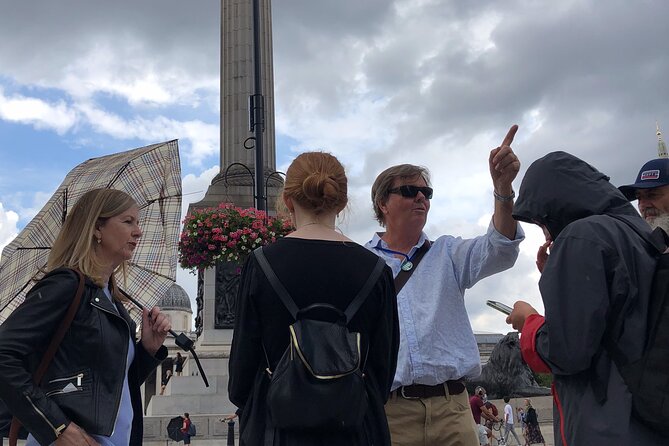
Francis Mullan’s background is a major part of the experience. His own police service lets him explain details that do not usually appear in a guidebook. He also answers questions, so the walk can move beyond its planned subjects when the group wants to compare British policing with systems elsewhere.
David also leads some walks. He is described as able to explain the material clearly and spend time on questions beyond the main route. If you are especially interested in police procedure, the personal exchange may be as useful as the formal stops.
The tone is not simply grim. Crime stories can be unsettling, but the walk also covers policing reforms, women in the police, wartime duties, public demonstrations, and the changing role of the Metropolitan Police. You get a picture of London as a working city, not just a postcard.
More Walking Tours in London
- London: The Original Jack the Ripper Walking Tour
★ 4.7 · 7,833 reviews - Tour for Muggles The Ultimate Harry Potter Walking Tour in London
★ 5.0 · 4,684 reviews - London Jack The Ripper Guided Walking Tour
★ 5.0 · 3,131 reviews
Bow Street and the birth of organized policing
The meeting point is at Covent Garden Underground Ltd on Long Acre. From there, the walk heads to Bow Street, where the famous police station and Magistrates Court form the first major stop.
This is where the Bow Street Runners come in. They were an early form of organized law enforcement, and the tour presents Bow Street as a key place in the development of policing in London. You will not be entering the buildings, but the setting gives the opening story a firm sense of place.
Allow about 10 minutes here. That may sound brief, but it works as an introduction rather than a full lecture. The guide establishes how policing began to develop and why courts and police work became linked in this part of the city.
I find this a strong opening because it gives the later stops some context. Once you understand the older system, the references to Scotland Yard and the Metropolitan Police make more sense.
Aldwych, espionage, and an unsolved murder
The next section takes you into the Aldwych area. Here, the subject turns to one of London’s saddest unsolved murders, along with stories involving international espionage and murder.
This is one of the places where the tour’s mood changes. Bow Street is about institutions and early policing. Aldwych brings you closer to the human cost of crime and the uncertainty that surrounds cases that were never fully solved.
The stop lasts roughly 10 minutes. You should expect a compact account tied to the location rather than a visit inside a crime museum. That format suits the tour’s wider aim: you walk through ordinary streets while learning what happened there and how difficult some investigations could be.
If you prefer a light sightseeing walk, this section may feel serious. If you want the less polished side of London’s past, it is likely to be one of the more memorable stops.
Charing Cross and the blue lamp
At Charing Cross, the guide turns to tales of murder and disorder. You also see one of Europe’s busiest police stations and learn about London’s famous blue lamp.
The blue lamp is a small detail, but it gives the walk a useful visual hook. Police history can become abstract when it is reduced to dates and institutions. A recognizable object connected with police stations helps bring that story into the street.
Charing Cross is also a busy part of central London. You will be surrounded by traffic, pedestrians, and city noise, so you need to stay close to the guide and listen carefully. The walk’s maximum group size of 20 helps, though it is still worth positioning yourself where you can hear.
The stop is planned for about 10 minutes. You get another short story block, then move on rather than lingering in one crowded location.
Same trip, a completely different kind of day:
- London: The London Eye Entry Ticket
★ 4.6 · 35,875 reviews - From London: Harry Potter Warner Bros Studio Tour
★ 4.7 · 26,588 reviews - London: Westminster to Greenwich River Thames Cruise
★ 4.5 · 22,836 reviews - London: Madame Tussauds London
★ 4.6 · 20,915 reviews
A Sherlock Holmes pause on Northumberland Avenue
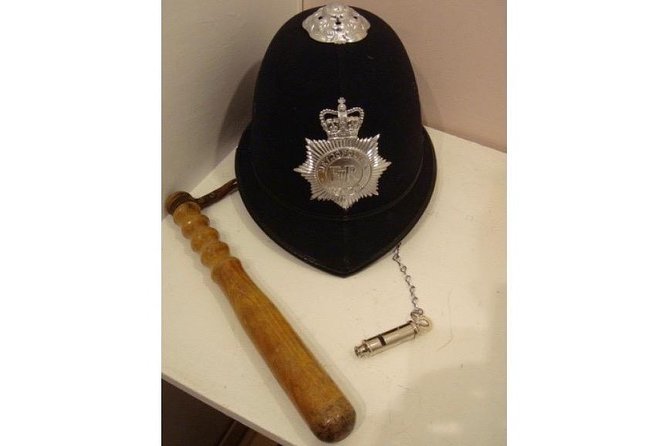
Northumberland Avenue provides one of the more relaxed moments on the route. The tour stops at the Sherlock Holmes Pub, linked to the fictional detective created by Arthur Conan Doyle.
The itinerary allows about 20 minutes here, making it the natural refreshment break. A drink is not listed as included, so plan to pay for anything you order yourself. The stop also connects fictional crime solving with real police work, a useful contrast for anyone who knows London mainly through novels, television, or film.
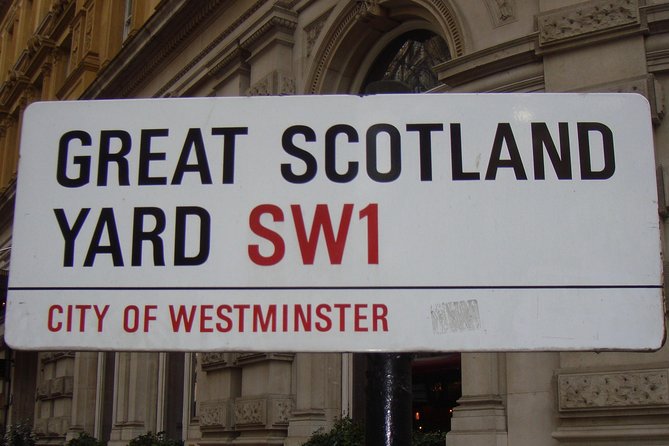
From there, the route crosses toward Great Scotland Yard. This is where the tour explains the creation of London’s police headquarters and the development of modern policing.
I like this combination of pub, fiction, and police history. It prevents the walk from becoming a string of grim case files. It also gives you time to rest before the second half.
Trafalgar Square and the smallest police station
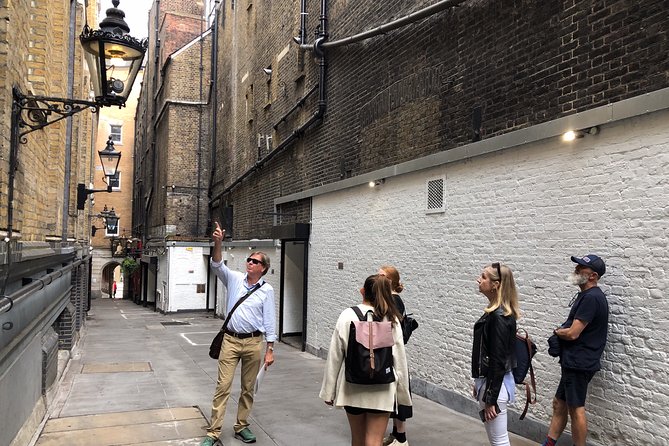
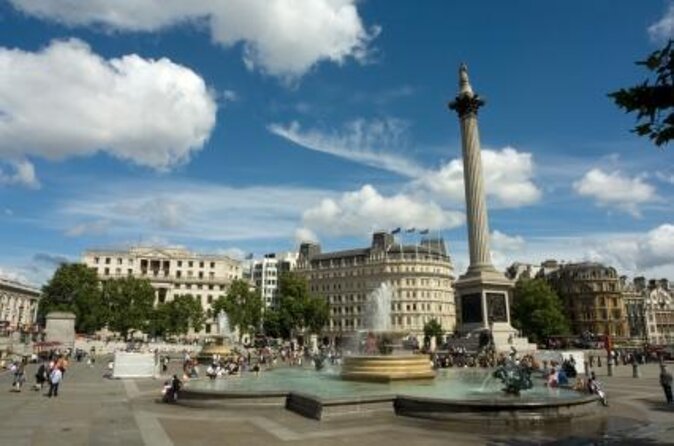
Trafalgar Square is presented as a place of national celebrations, demonstrations, and riots. The guide also points out the world’s smallest police station.
This stop shows that policing is not only about solving crimes after they happen. Large public gatherings demand crowd control, observation, and quick responses. Trafalgar Square has hosted both celebration and conflict, so it is a good place to discuss the public-facing side of police work.
The small police station adds a touch of oddity. It is the kind of detail you might walk past without noticing, even while taking in Nelson’s Column and the open space around it.
The stop lasts about 10 minutes. Since the square can be crowded and exposed to weather, listen for the meeting position and dress for the forecast.
Whitehall, Downing Street, and policing in wartime
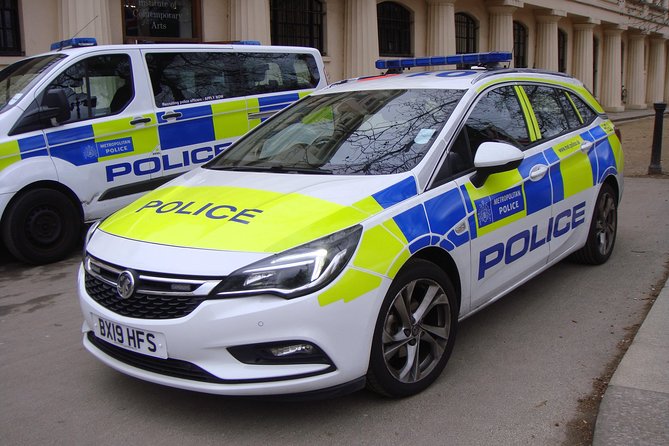
The route continues through Whitehall, the heart of the British government. You see the area around Downing Street and hear about women in policing and the police role during wartime London.
This is a useful expansion of the tour’s subject. Crime walks often concentrate on villains and victims. Here, the story also covers how police work changed as the city faced national emergencies and how women took on a larger role within policing.
Whitehall brings politics into the picture. Police work here is connected not only to local crime but also to government, national security, public events, and wartime duties. The location helps you understand why London policing developed into such a large and varied institution.
Again, the stop is about 10 minutes. You are mainly listening outdoors, so it helps to ask questions while the group is gathered rather than waiting until the guide starts walking.
Great Scotland Yard and the creation of the Metropolitan Police
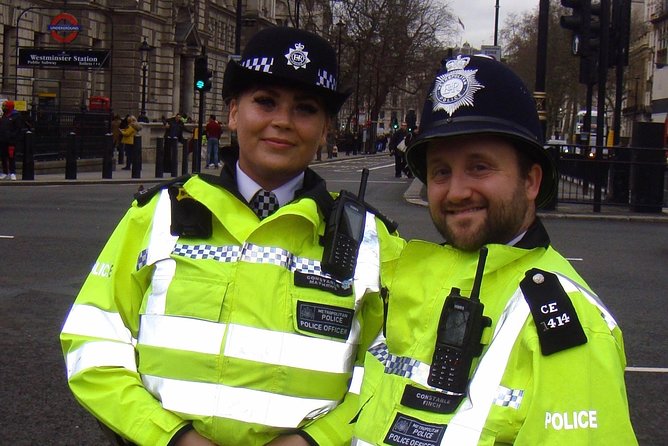
Great Scotland Yard is one of the key moments of the walk. The tour identifies it as the site of London’s first police headquarters and explains how the Metropolitan Police was created.
The name Scotland Yard is familiar around the world, but many people know it only as a label from detective stories. This stop gives the name a physical setting and links it to the real organization behind the legend.
You may notice that the tour approaches Great Scotland Yard more than once in the sequence. In practical terms, that means the subject is woven into the route from Northumberland Avenue and later revisited as a central point in its own right. The second treatment gives the guide room to focus on the headquarters rather than squeeze every detail into the pub stop.
For me, this is the central historical thread of the walk. Bow Street explains earlier policing. Great Scotland Yard shows the move toward the organized Metropolitan Police system.
The Metropolitan Police sign and the final stop
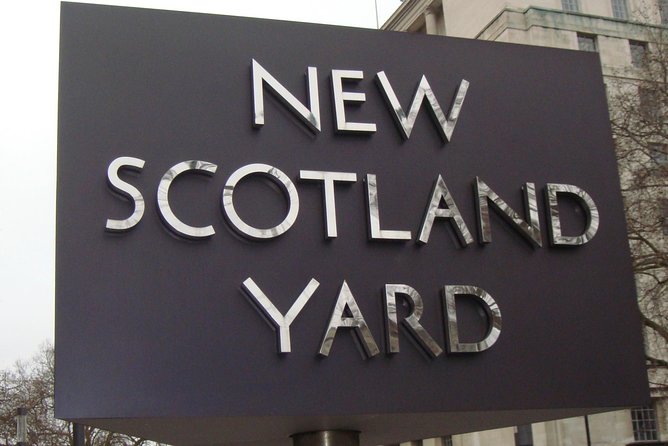
The final section takes you to the Metropolitan Police and its iconic revolving sign. It is a fitting visual ending because the sign is one of the clearest symbols of London policing.
The walk finishes at 35 Victoria Embankment, near New Scotland Yard and Westminster Underground Station. This is practical for the rest of your day. You can continue toward Westminster, use the Tube, catch a bus or riverboat, or find a pub, bar, or restaurant nearby.
One useful feature is the location of the finish. After a crime-focused walk, you are not left in a remote neighborhood with a long transfer ahead. You are close to several major central London sights and transport options.
What the guide adds to the experience
The strongest part of the tour is the guide’s personal connection to policing. Francis Mullan does not simply point at a station and repeat a date. He draws on his career, discusses police work, and answers questions about both historic cases and current cold cases.
That personal angle also helps if you are traveling with someone who is not especially interested in crime. One parent described joining because of a daughter’s interest, then finding the wider London history engaging. The walk works best when it treats policing as a way into the city rather than as a narrow study of criminals.
A retired American law enforcement officer also found the comparison with British policing useful. You do not need a police background to follow the tour, but anyone interested in how different systems work will have plenty to ask.
David brings the same personal approach when he leads. The emphasis is on clear explanations and time for questions, not on rushing through a memorized script.
The supplied police kit and historic regalia add another useful layer. You can examine real items rather than only hearing descriptions. The information does not specify every object, so you should think of this as a short hands-on element, not a full museum display.
Timing, walking comfort, and group size
The experience lasts about 2 hours and 15 minutes and moves at a gentle pace. Comfortable shoes are still a good idea because you are walking between several central London locations.
Refreshment and toilet stops are available if required. The 20-person maximum is small enough to keep the group together without creating the feel of a large city procession.
Weather matters because the tour takes place outside. It can be cancelled in poor weather, with a different date or a full refund offered. London’s weather can also change quickly, so bring suitable layers and shoes with a reasonable grip.
The walk is designed for most people to take part, and service animals are allowed. It is near public transport at both ends, which makes it easy to fit into a larger London day.
Is $48.61 a fair price?
At $48.61 per person, this is not the cheapest way to spend two hours in central London. You are paying for a specialist guide, a planned route, police equipment, and personal stories rather than for admission to a major attraction.
The value is strongest if you would otherwise spend time wandering between these sights without understanding their police connections. The route covers several famous places, and the guide turns them into a connected story. You also finish near Westminster, so the walk can save you from arranging separate transport between sightseeing areas.
The price is less attractive if you expect a museum visit, a dramatic theatrical performance, or access inside police headquarters. The tour is almost entirely an outdoor storytelling experience, and the free admission at each stop does not mean that any indoor attraction entry is included.
For a small group capped at 20, a former police officer as guide, and more than two hours of guided interpretation, I consider the price reasonable for the right audience. It is a specialist walk, not a general London highlights tour.
Who should book this London walk?
I would recommend it to anyone curious about the less polished side of central London. It suits visitors who enjoy true crime, police history, Sherlock Holmes, unsolved cases, espionage, or stories about how cities manage public disorder.
It also fits repeat visitors who have already seen Trafalgar Square, Whitehall, and Westminster but want a new reason to walk through them. Families can enjoy it too, provided younger members are comfortable with serious subjects involving murder and crime.
Police officers, retired officers, and anyone interested in comparing British and American policing may find the guide’s professional background especially useful. You do not need specialist knowledge, though. The explanations are designed for a general audience.
I would skip it if you want a quiet architectural walk, lots of interior visits, or a tour built around royal London. This experience is about stories, police work, and the darker corners of familiar streets.
Should you book it?
Book this tour if you want London explained through real police history rather than only through monuments. Francis Mullan’s experience, David’s clear guidance, the manageable pace, and the central route give it a strong practical case.
Before booking, make sure you are happy spending more than two hours outside and listening to stories that can be grim. If that sounds appealing, the tour gives you a fresh way to see Bow Street, Trafalgar Square, Whitehall, and Scotland Yard, while leaving you near Westminster for the rest of your day.
FAQ
How long does the Crime and Policing London Walking Tour last?
The tour lasts approximately 2 hours and 15 minutes.
What is the price of the tour?
The listed price is $48.61 per person.
Who guides the tour?
Francis Mullan leads the tour, and David also guides some departures. Francis is a former police officer.
Where does the tour begin?
The meeting point is Covent Garden Underground Ltd on Long Acre, London WC2E 9JT.
Where does the tour finish?
The tour ends at 35 Victoria Embankment near New Scotland Yard, close to Westminster Underground Station.
What sights are included on the route?
The route includes Bow Street, the Aldwych area, Charing Cross, Northumberland Avenue, Trafalgar Square, Whitehall, Great Scotland Yard, and the Metropolitan Police sign.
Is a drink at the Sherlock Holmes Pub included?
A stop is made at the Sherlock Holmes Pub, but the tour information does not list drinks as included. You should expect to pay for any drink yourself.
Is the walk physically difficult?
The tour moves at a gentle pace. Comfortable footwear is recommended, and refreshment and toilet stops are available if required.
Are historic police objects included?
Yes. The tour includes police kit and equipment, with an opportunity to examine real historic items of police regalia.
Can I cancel for a full refund?
You can cancel at least 24 hours before the start time for a full refund. Cancellations or changes made less than 24 hours before the start time are not accepted for a refund.
Just added in London
- Royal London Guided Sightseeing Tour and Thames River Cruise★ 4.0 · 31 reviews
- Roman London Private Walking Tour★ 5.0 · 44 reviews
- Westminster Abbey, Big Ben, Buckingham Guided Tour of London★ 5.0 · 451 reviews
- Roman Ruins to Blitz Bombings: A Walking Tour of London’s Fiery History★ 5.0 · 190 reviews
- River Thames Evening Cruise with Sparkling wine and Canapés★ 4.0 · 569 reviews
- Rock and Roll Walking Tour of Soho London★ 4.5 · 64 reviews
- London Private Chauffeur Half-Day or Full-Day Vehicle Rental★ 5.0 · 37 reviews
- Rich people behaving badly★ 5.0 · 47 reviews
Walking Tours, compared.
Underground Vaults Walking Tour in Edinburgh Old Town
Read our review →
Oxford University Walking Tour With University Alumni Guide
Read our review →
Edinburgh Castle: Guided Walking Tour with Entry Ticket
Read our review →
Edinburgh Castle Guided Walking Tour in English
Read our review →
Tour for Muggles The Ultimate Harry Potter Walking Tour in London
Read our review →
University and City Walking Tour with Alumni Guide
Read our review →
Edinburgh Darkside Walking Tour: Mysteries, Murder and Legends
Read our review →
Browse the lists this tour appears in