
Reviewed · CITY TOURS
City & Secrets: Explore London’s Hidden Gems
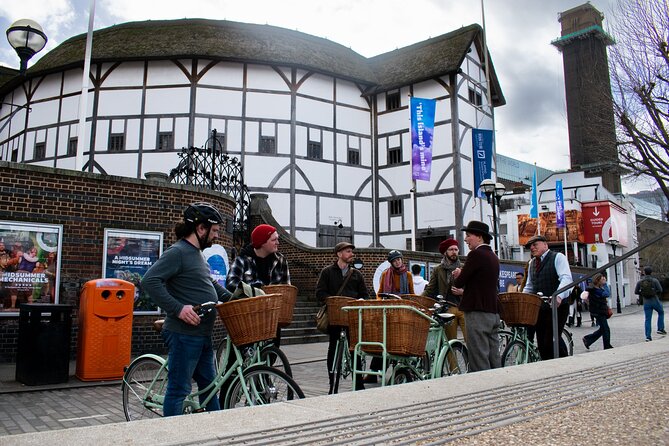
London’s best stories are often found between the famous sights. This four-hour ride from Waterloo links Roman walls, old docks, church ruins, and riverside landmarks while your guide fills in the human stories behind them, from Cockney bells to smugglers and wartime ships.
I like two things right away: you cover a lot of ground without spending the day underground, and the route mixes major sights with quieter corners such as Roupell Street and St. Dunstan in the East. Guides Katie and Stewart are both praised for keeping the ride organized, lively, and full of useful facts.
The main catch is physical. You need moderate fitness, must be at least 13, and should be ready to ride for about four hours in London traffic and changing weather. At $103.35, it is good value if you want a broad first look at the city, but less so if you prefer long visits inside museums and monuments.
Key points about this London bike tour
- Small groups capped at 12 riders: A compact group helps your guide manage crossings, narrow streets, and crowded areas.
- Hand-built British bicycles included: Helmets, tweed caps, and rain ponchos are also available.
- A wide route in four hours: You ride from Waterloo through the City of London, the East End, the old docks, and Bankside.
- Major sights plus lesser-known stops: Tower Bridge and St. Paul’s share the route with Roupell Street, Cable Street, and St. Dunstan in the East.
- Stories give the ride its character: Expect tales of friars, pirates, dock workers, fascists, artists, royalty, and the Great Fire.
- Useful for a first visit: You finish back at the starting point with a better sense of what to revisit during the rest of your stay.
Why the bicycle works so well in central London
London can feel enormous when you move only by Tube or on foot. This ride gives you a practical middle ground. You can cross from Waterloo to the City, continue toward the East End docks, then return along the Thames without losing time to long walks between sights.
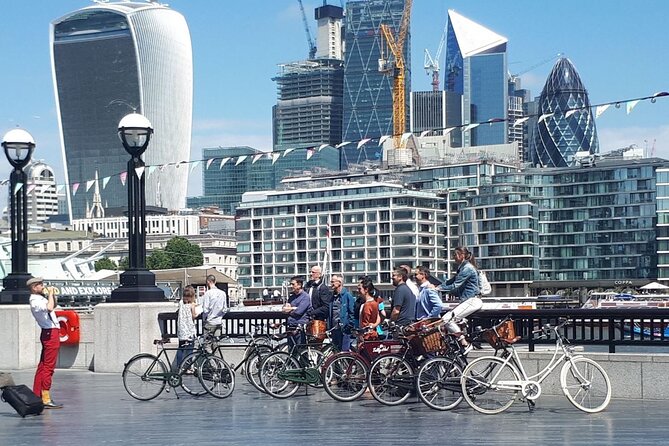
The bicycle also gets you into places that a coach cannot reach. You use backstreets, riverside paths, and narrow lanes, with short stops for stories and photographs. The route is not built around entering every attraction. Instead, it gives you a strong visual tour and enough background to decide where you want to spend more time later.
The group limit matters here. A dozen riders is still a group, but it is far easier to keep together than a large sightseeing procession. A smaller party also helps at busy crossings and crowded landmarks. One especially useful detail from the ride reports is that a group of four made it easier to move through packed areas.
The bikes are included, along with an optional helmet and tweed cap. A rain poncho is available if needed. You do not need to bring snacks or drinks as part of the booking, so plan around that. One rider specifically advised having a substantial breakfast before a midday version of the tour, or arranging food after the ride.
A few more half-days in London worth comparing
- London: The London Eye Entry Ticket
★ 4.6 · 35,875 reviews - From London: Harry Potter Warner Bros Studio Tour
★ 4.7 · 26,588 reviews - London: Westminster to Greenwich River Thames Cruise
★ 4.5 · 22,836 reviews
Roupell Street and the city’s working roots
The first stop, Roupell Street, is a fine opening because it shifts your attention away from grand palaces. Its Georgian houses were built in the 1820s for working people on land reclaimed by John Roupel. The street names once caused confusion for postmen and were later changed.
Look for the old fire insurance plaques on the houses. Before modern public fire services, private firefighters could choose not to protect a building without the right company’s plaque. It is a small detail, but it shows how ordinary London life once worked.
The area nearly burned in 1829 and suffered bombing during the Second World War, yet the streets remain. You also pass the King’s Arms, a Grade II Victorian pub with ten real ales, including local brews. Its earlier lives as an undertaker’s and a magistrates’ court make it more than a place to stop for a drink. It now serves Thai food, though food and drinks are not included.
From there, the ride moves across Blackfriars Bridge. Opened in 1869 by Queen Victoria, it takes its name from the Dominican friars whose monastery once occupied the north end. The support columns are topped with shapes like pulpits, a quiet architectural nod to the friars.
Friars, Shakespeare, and St. Paul’s
At The Cockpit, the guide connects the area to monastic houses and the Dominican community. The stop also carries a Shakespeare link: the playwright bought the gatehouse and lived here. You only spend about five minutes, so treat this as a quick story stop rather than a full visit.
St. Paul’s Cathedral gets the same brief treatment from the outside. You hear how the cathedral’s story reaches back to 604, how the earlier building was destroyed in the Great Fire of 1666, and how Christopher Wren rebuilt it. The cathedral later hosted the wedding of Prince Charles and Lady Diana and Winston Churchill’s funeral, with Wellington and Nelson also buried there.
This is useful context, but you should be clear about what the tour does not provide. The stop is for viewing and explanation, not a cathedral admission or extended interior visit. If you want the dome, galleries, tombs, and memorials, you will need to return on your own.
At St. Mary le Bow, the famous Bow Bells bring the city’s identity into focus. The old saying is that anyone born within their sound is a true Cockney Londoner. It is a quick stop, but it gives you a feel for how London neighborhoods once defined belonging.
The City of London in a few compact stops
Guildhall introduces the City of London’s medieval civic traditions. The guide covers customs that have survived for centuries, some of them unusual by modern standards. Because the stop lasts only around five minutes, you get an orientation rather than a formal tour of the building.
At Mansion House and the Bank of England, you reach one of the highest points in the City. The area has mattered since Roman times, and the guide explains the role of Mansion House as the Lord Mayor’s home. This is a useful pause for understanding London as a financial and political center, not only as a collection of royal sights.
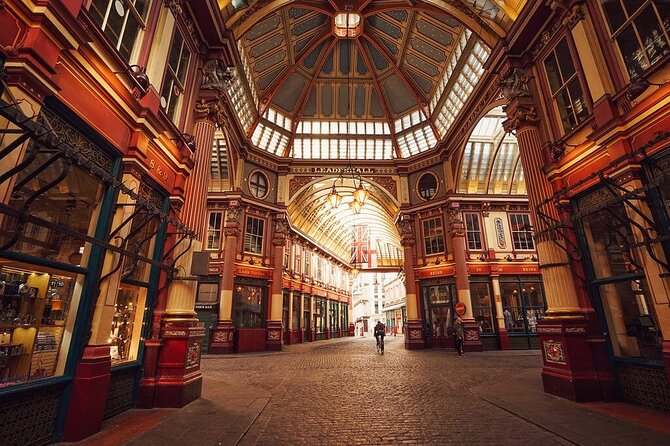
Leadenhall Market is one of the more photogenic stops. The Victorian structure was designed by Sir Horace Jones on ground once occupied by the Roman Forum and Basilica. It also appeared as Diagon Alley and the Leaky Cauldron in the Harry Potter films, giving the market a modern screen connection without hiding its older purpose.
You then see a sharp architectural contrast at Lloyd’s of London. Richard Rogers’ high-tech skyscraper sits near the Cheesegrater and the Gherkin, while St. Andrew Undershaft, a pre-1666 church built when Henry VIII was king, offers a much older neighbor. Few short city tours show London’s architectural time scale so clearly.
London Wall brings you back to the Roman city. Parts of the wall were built around AD 200, and even a short look helps you picture how compact and defended Roman London once was. These stops work best when you listen closely, since much of the history is told rather than displayed.
Same trip, a completely different kind of day:
- London: Madame Tussauds London
★ 4.6 · 20,915 reviews - London: Warner Bros. Studio Tour with Transfers
★ 4.7 · 17,586 reviews - London: Tower Bridge Entry Ticket
★ 4.7 · 15,560 reviews - London: Westminster Abbey Entrance Ticket
★ 4.6 · 11,254 reviews
Cable Street and the old London docks
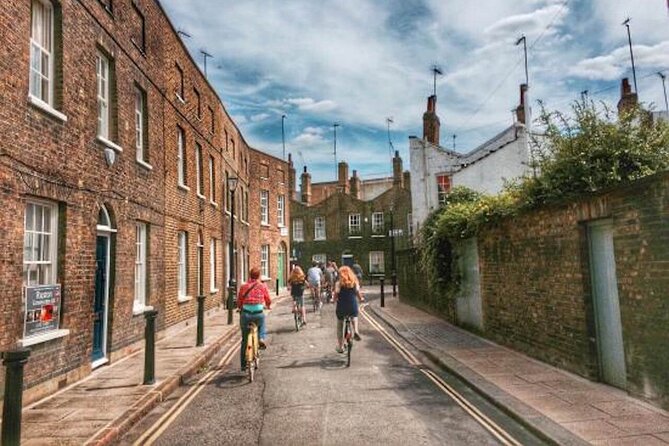
The East End section gives the ride a different mood. At the Cable Street mural, you learn about the 1936 clash between fascists and protesters. The area was then largely Jewish, and the mural, completed in 1983, records that confrontation in bold public art.
The subject can be disturbing. The tour openly includes stories of violence, smuggling, and London’s more sordid past, so this is not a polished royal-history circuit. That honesty is part of its value. You see how politics, migration, work, and conflict shaped the city beyond the postcard sights.
Shadwell Basin shows what happened after London’s docks declined. Once part of one of the world’s busiest dock systems, the area was redeveloped from the 1980s onward. The water and old industrial setting make the history easier to picture, even though the working dock activity is gone.
At Tobacco Dock, old tobacco warehouses and an ornamental canal recall the commercial life of the port. The warehouses have also been redeveloped, so you see both the original function and the newer use of the area.
St. Katharine Docks offers another chapter. Built in 1825, it was the last of London’s docks to open and the first to close, in the 1960s. The site also links back to St. Katherine’s Hospital, founded by Queen Matilda in 1147. These stops help explain why the Thames was once the city’s main working artery.
Tower Bridge, the Tower, and a wartime ship
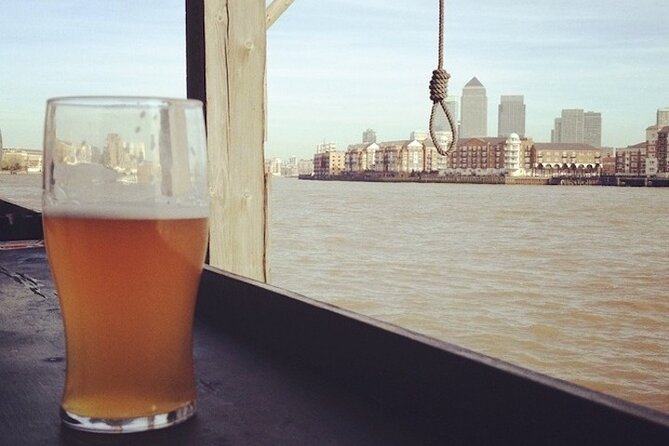
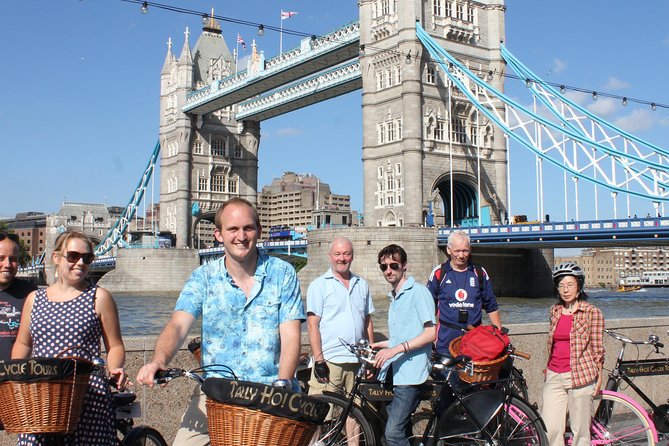
Tower Bridge is the route’s major visual prize. Completed in 1894, it combines a suspension bridge with bascules that lift for tall ships. Sir Horace Jones designed it, and Sir John Wolfe Barry engineered it. You stop for photographs and cross the bridge, but admission to the Tower Bridge Exhibition is not included.
That distinction matters. The bridge itself is part of the ride, while the glass-floored walkway and tower displays require a separate visit. The bascules are raised about 800 times a year, so you might catch that sight on another day, but it is not something the tour can promise.
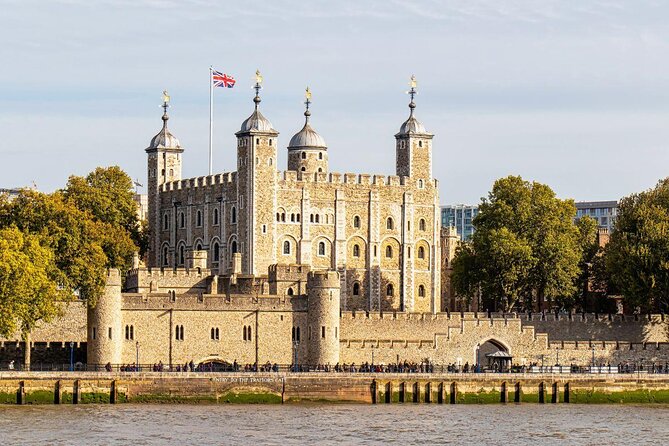
The Tower of London follows. William the Conqueror began it soon after 1066, and the complex later served as a palace, menagerie, observatory, armoury, prison, and execution site. Stories of Traitors’ Gate, Anne Boleyn, Catherine Howard, Thomas More, and other prisoners bring the place to life.
You see the Tower from outside during this tour, with no admission included. If you want the Crown Jewels, ravens, interiors, and full fortress visit, set aside several hours on another day. The bike tour gives you the historical frame, not the complete attraction.
The next major sight is HMS Belfast, the Second World War cruiser built in the same Belfast shipyard as the Titanic. It protected convoys during the war, served in the Korean War, and took part in the D-Day landings on June 6, 1944. Today it is a floating museum, and some interiors also doubled for the Royal Yacht Britannia in The Crown.
Again, you view the ship as part of the route rather than touring inside. That is enough to mark its place on the Thames, but history fans may want to return for the full museum.
City Hall, a ruined church, and the Great Fire
The former City Hall, designed by Norman Foster, provides a modern counterpoint to the older buildings along the river. It is a short viewing stop, useful for seeing how London’s civic architecture changed in the late twentieth and early twenty-first centuries.
St. Dunstan in the East is one of the route’s most peaceful pauses. The original church was destroyed in the Great Fire, then rebuilt by Wren, and later left as a garden ruin. In the middle of the City, it offers a quiet break from traffic, offices, and financial towers.
The Monument to the Great Fire is another quick but memorable sight. It rises 202 feet and marks the 1666 disaster that began at Thomas Farriner’s bakery on Pudding Lane. The odd measurement in the tour story is worth remembering: if the monument were laid on its side, its golden urn would reach the bakery site.
Southwark Bridge, Shakespeare, and Tate Modern
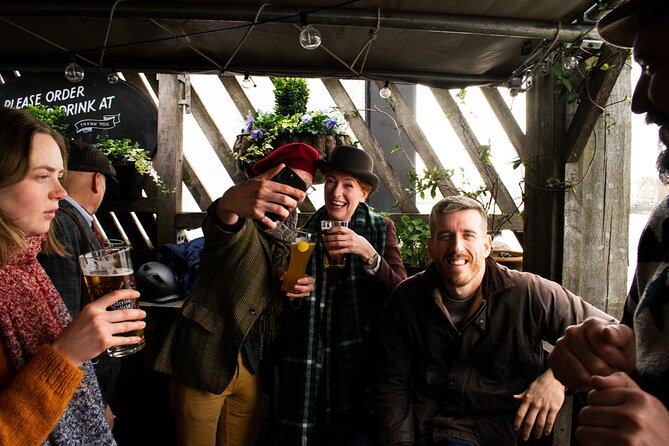
Southwark Bridge gives you a view toward Shakespeare’s Globe, the 1997 reconstruction of the 1599 theatre. The original venue was home to the Lord Chamberlain’s Men and saw the first performances of many Shakespeare plays. You do not attend a performance, but the view helps place the theatre within the old Bankside entertainment district.
The final major stop is Tate Modern. The gallery opened in 2000 inside a former Bankside Power Station, and its brick pyramid extension arrived in 2016. The turbine hall hosts large changing works, and the collection includes artists such as Mondrian, Richter, Rothko, and Picasso.
The tour only allows a short look, so art lovers should return separately. Still, Tate Modern works well as a finish because it brings the route into the present. In four hours, you have moved from Roman defenses and medieval churches to industrial docks and modern art.
Price, timing, and who will get the most from it
At $103.35 per person, this is not a cheap transport option. You are paying for a four-hour guided route, a bicycle, local storytelling, and the efficiency of seeing a large slice of London without arranging several separate stops.
I think the price makes the most sense on your first or second day, when you need a city overview and practical ideas for the rest of your stay. It is also a strong choice if you enjoy history but do not want to spend the entire day inside museums.
The scheduled start is 2:00 pm at 189 Hercules Road, near Waterloo, with the ride returning to the same meeting point. The experience is offered in English, uses mobile tickets, and is generally booked about 18 days ahead, so do not leave it until the last minute if your dates are fixed.
The ride operates in all weather conditions, but poor weather can lead to cancellation, with a new date or full refund offered. Dress for rain and wind rather than trusting the forecast alone. You can cancel for a full refund up to 24 hours before the start time; later cancellations and changes are not accepted.
The strongest practical tip is to eat before you go. There is no included meal, and the route covers a lot of ground. A good breakfast or early lunch will let you focus on the stories instead of counting the minutes until food.
Should you book City & Secrets?
Book it if you want a lively first look at London, like cycling, and value stories that reach beyond the standard royal circuit. The small group, broad route, optional rain gear, and strong guides such as Katie and Stewart make it especially useful for first-time visitors with limited time.
Skip it if you want long interior visits at St. Paul’s, the Tower, Tower Bridge, HMS Belfast, or Tate Modern. Those attractions deserve separate time, and this ride only pauses outside them.
For most reasonably fit riders aged 13 and up, I would book this early in a London stay. It helps you understand the city’s shape, points you toward places worth revisiting, and gives you four hours of movement instead of four hours of Tube stations.
FAQ
Where does the bike tour start?
It starts at 189 Hercules Road, London SE1 7LD, near Waterloo.
What time does the tour begin?
The scheduled start time is 2:00 pm.
How long does the experience last?
It lasts approximately four hours.
Where does the tour finish?
The activity returns to the original meeting point.
What is included in the price?
The price includes a hand-built British bicycle and a local guide. An optional helmet, tweed cap, and rain poncho are also available.
Are food and drinks included?
No. Snacks and drinks are not included.
What age must riders be?
Riders must be at least 13 years old.
Is the tour suitable for every fitness level?
No. You should have a moderate level of physical fitness for the cycling route.
Is the tour offered in English?
Yes. The tour is offered in English.
Can I cancel for a full refund?
Yes. You can cancel at least 24 hours before the local start time for a full refund. If poor weather or the minimum number of riders causes cancellation, you will be offered another date or a full refund.
Just added in London
- Royal London Guided Sightseeing Tour and Thames River Cruise★ 4.0 · 31 reviews
- Roman London Private Walking Tour★ 5.0 · 44 reviews
- Westminster Abbey, Big Ben, Buckingham Guided Tour of London★ 5.0 · 451 reviews
- Roman Ruins to Blitz Bombings: A Walking Tour of London’s Fiery History★ 5.0 · 190 reviews
- River Thames Evening Cruise with Sparkling wine and Canapés★ 4.0 · 569 reviews
- Rock and Roll Walking Tour of Soho London★ 4.5 · 64 reviews
- London Private Chauffeur Half-Day or Full-Day Vehicle Rental★ 5.0 · 37 reviews
- Rich people behaving badly★ 5.0 · 47 reviews
City Tours, compared.
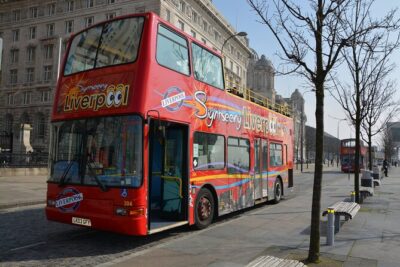
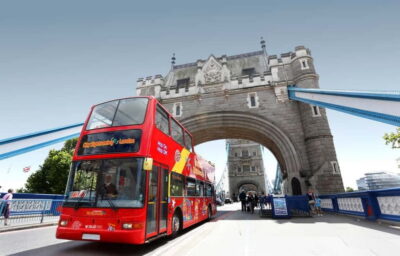
City Sights Hop-On Hop-Off Bus & Bookable Extras
Read our review →
City & Beatles Tour with Live Guide & Live Music
Read our review →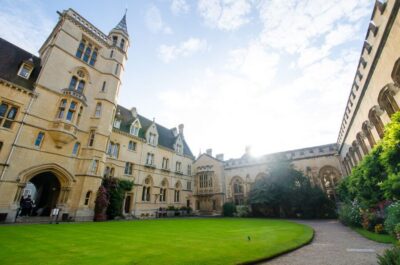
University and City Walking Tour with Alumni Guide
Read our review →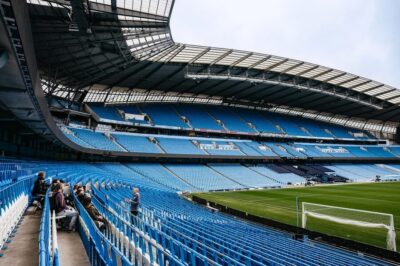
Etihad Stadium: The Manchester City Stadium Tour
Read our review →
Liverpool City Sights Hop On Hop Off City Tour – 24hr Ticket
Read our review →
City and University Tour, including college entry
Read our review →
Browse the lists this tour appears in