Reviewed · LONDON TOURS
Booze, Brothels & the Bard: London’s Bawdy Borough
Southwark’s story is London at its most unruly: brothels outside City control, grim prisons, old inns, theatres, markets, and the ghosts of people who lived on the wrong side of respectability. This two-hour walk links those places into one clear story, from Roman-era vice to Shakespeare and Charles Dickens.
I like the small group limit of 15, which makes it easier to hear the guide and ask questions. I also like the route’s mix of famous sights and easy-to-miss remains, especially the old prison walls, Winchester Palace, and Crossbones Garden. The main drawback is that two hours goes quickly, so many stops receive only about five minutes, and entry to the Globe is not included.
Key points to know before you book
- Southwark’s darker past: Learn why this area became known for prostitution, gambling, drinking, theatres, and other activity kept outside the City of London.
- A two-mile historical walk: The route takes about two hours from Borough Station to Shakespeare’s Globe.
- Fourteen connected stops: The walk includes Marshalsea Prison, Crossbones Garden, Borough Market, Southwark Cathedral, Winchester Palace, the Clink, and more.
- A strong guide makes the difference: Tom Currie has led the tour with a friendly, humorous style and handles questions well.
- A small group setting: Attendance is limited to 15 people, a useful feature on a walking tour with frequent stops.
- Best for adults and older teenagers: Children under 13 are not permitted, and the subject matter includes prostitution, prisons, and public punishment.
Why Southwark earned its bawdy reputation
The Borough and Bankside area sat just beyond the legal reach of the City of London for centuries. That boundary mattered. Activities frowned upon inside the City could operate more freely here, and Southwark became a place for inns, theatres, gambling, drinking, prisons, and prostitution.
The tour uses this setting to explain how geography shaped London life. You are not simply walking past old stones. You are seeing how rules, money, religion, and entertainment created a district with a very different character from the formal City across the river.
The subject is adult in tone, but the walk is not just a string of scandalous anecdotes. You get social history, literary connections, architectural clues, and the remains of places that would be easy to miss without a guide. The bawdy material gives the tour its hook, while the wider story gives it staying power.
A few more half-days in London worth comparing
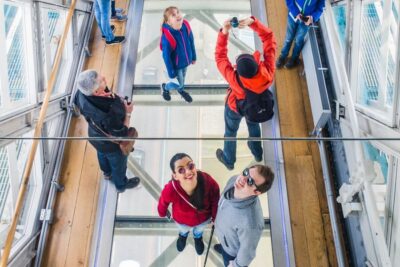
- London: The London Eye Entry Ticket
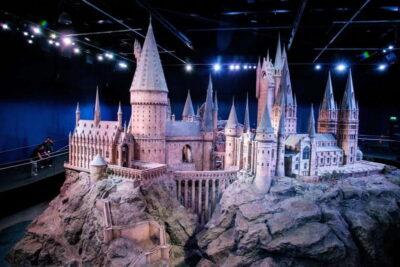
★ 4.6 · 35,875 reviews - From London: Harry Potter Warner Bros Studio Tour
★ 4.7 · 26,588 reviews - London: Westminster to Greenwich River Thames Cruise
★ 4.5 · 22,836 reviews
Starting at Borough Station
Meet just outside the Borough Station exit on Borough High Street. Look for the guide holding an Historic London Tours sign.
This is a sensible starting point because Borough High Street leads directly into the older part of Southwark. You begin close to several key sites, and the route then moves gradually toward London Bridge and Bankside rather than doubling back.
Wear comfortable shoes. Two miles is not a strenuous distance, but you will stop often, stand on pavements, and move through busy areas. The route is compact, though crowded conditions around Borough Market can make walking slower, especially on a Sunday.
Tom Currie has been the guide on many departures. His style is relaxed, friendly, and well paced. He gives the main facts without burying you in dates, then leaves room for questions. That balance matters here because Southwark has a great deal of material, and an overly detailed talk could make the short route feel rushed.
Marshalsea Prison and the world of Charles Dickens
The remains of Marshalsea Prison provide one of the tour’s strongest opening points. The prison was notorious, and its connection with Charles Dickens gives the site a personal literary link.
Dickens’s father was imprisoned for debt at Marshalsea, an experience that helped shape Dickens’s understanding of poverty, debt, and institutional cruelty. The author later used the prison and its world in his writing, most famously in Little Dorrit.
You should not expect a complete prison complex. What survives is limited, which is exactly why the guide’s explanation helps. Without context, the remaining fragments can seem ordinary. With the story attached, they become evidence of how debt could disrupt an entire family’s life.
This is one of the places where the tour does more than point out a famous name. It shows how Southwark affected people who later shaped English literature.
Crossbones Garden and the Winchester Geese
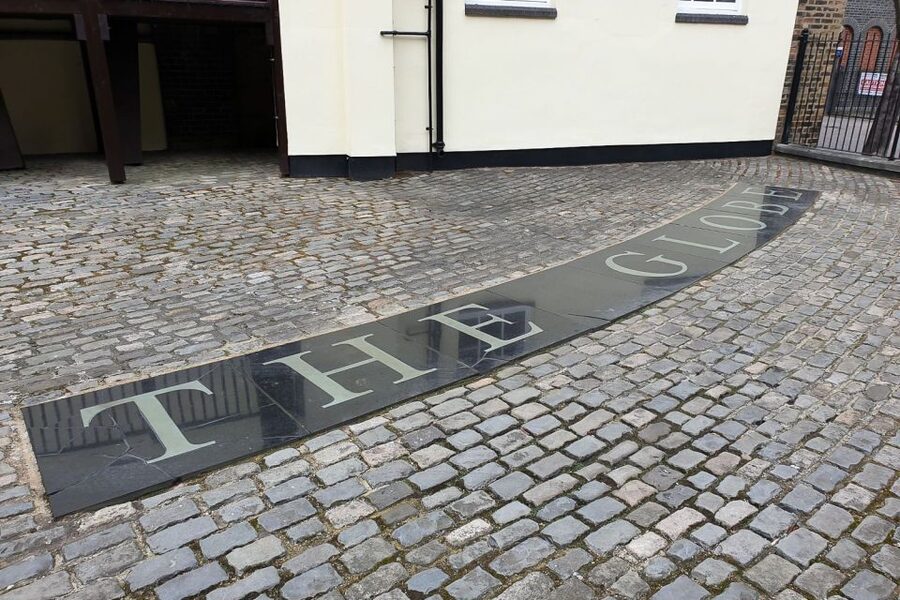
Crossbones Garden is a memorial site linked with the medieval Winchester Geese, the women who worked as prostitutes under the authority of the Bishop of Winchester. The bishop controlled Winchester Palace nearby and had influence over the Southwark area.
The site offers a quieter change of mood after the prison. It helps you consider the people who lived and died on the margins of society, rather than focusing only on the famous men connected with Southwark.
The tour does not treat the subject as a cheap joke. Its title may promise booze and brothels, but the best parts of this walk show the human cost behind those subjects. Crossbones is a good example. It connects prostitution, religion, poverty, and public memory in a small space.
Because the stop is brief, you may want to return afterward if you want more time to look at the memorial.
Same trip, a completely different kind of day:
- London: Madame Tussauds London
★ 4.6 · 20,915 reviews - London: Warner Bros. Studio Tour with Transfers
★ 4.7 · 17,586 reviews - London: Tower Bridge Entry Ticket
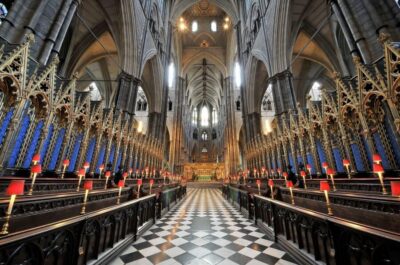
★ 4.7 · 15,560 reviews - London: Westminster Abbey Entrance Ticket
★ 4.6 · 11,254 reviews
The Hop Exchange and the old drinking culture
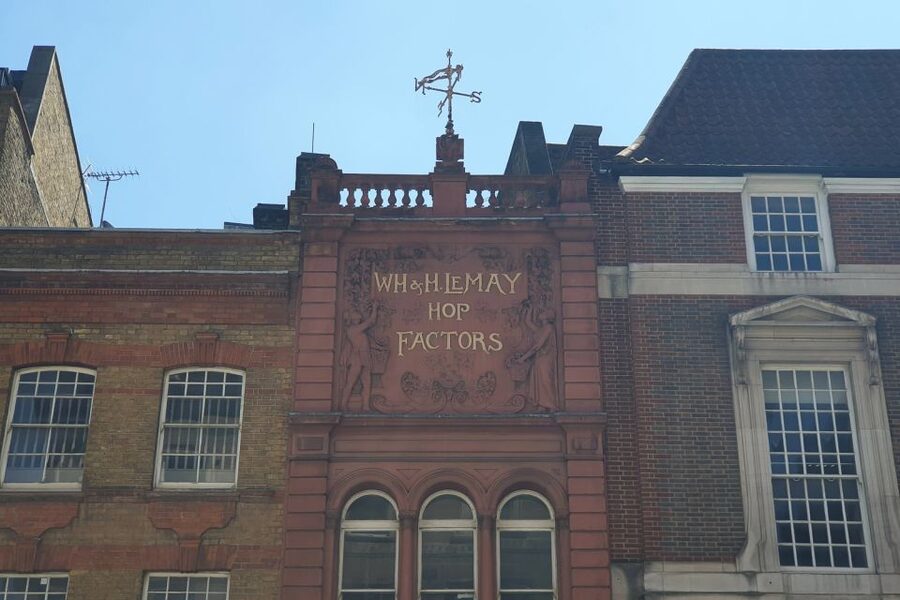
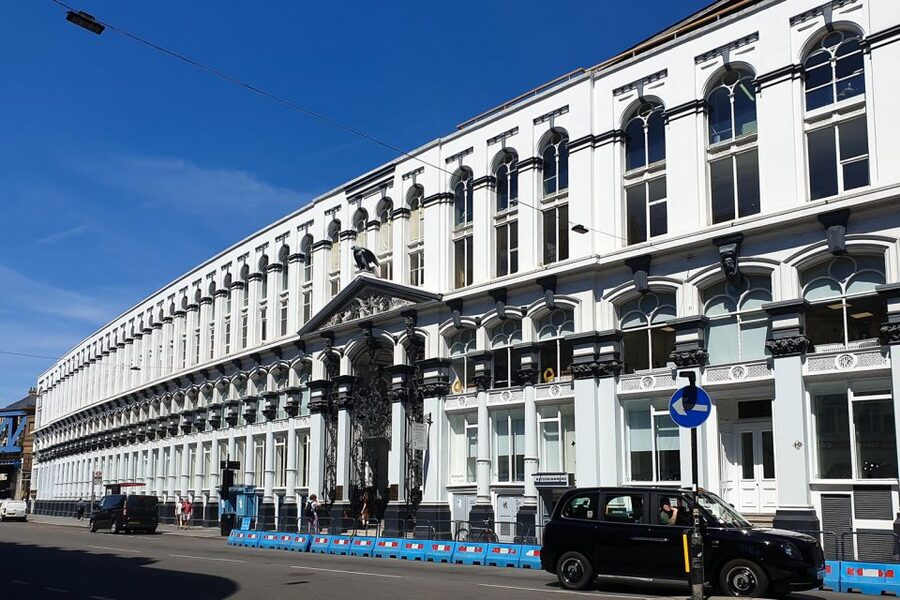
The Hop Exchange introduces the commercial side of Southwark’s drinking past. Hops were central to brewing, and the building reflects the area’s long connection with beer and trade.
This stop helps broaden the meaning of the tour title. Booze was not merely a backdrop for bad behavior. It was part of the local economy, tied to markets, inns, transport, and the people who came into London for work or entertainment.
The guide’s job here is to make sense of a building that might otherwise pass unnoticed. Southwark works best as a walking subject because many of its clues are mixed into modern streets. You get more from the area when someone explains what each building once did.
The George Inn and the road south
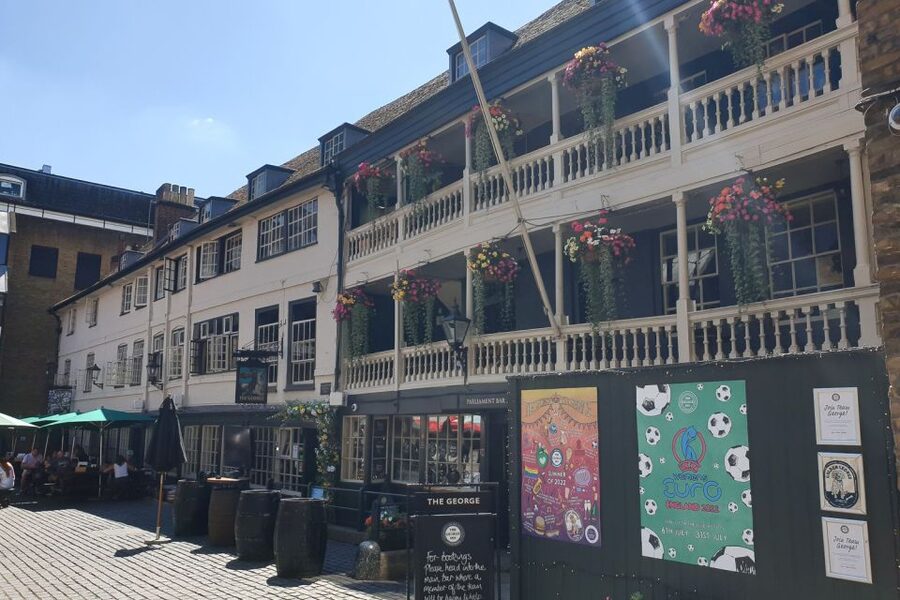
The George Inn is one of the route’s most atmospheric stops. This old coaching inn recalls the days when Borough High Street carried people and goods into London from the south.
The inn also fits neatly into the area’s literary associations. Southwark’s inns served actors, merchants, pilgrims, workers, and people visiting the theatres. You can picture the district as a busy arrival point rather than a quiet historic quarter.
The tour does not turn the George into a stand-alone architectural visit. Instead, it places the building within the movement of people through Southwark. That approach is useful because the neighborhood’s character came from traffic and trade as much as from individual landmarks.
Borough Market, with food and crowds
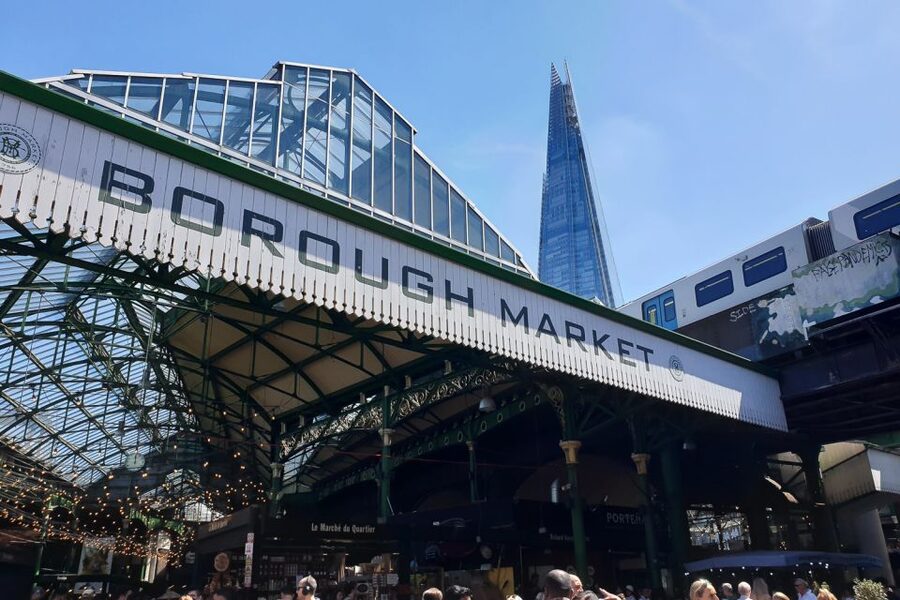
Borough Market is the oldest and largest market on the route, and it provides one of the clearest links between medieval trade and modern London life.
You pass through the market while the guide explains its place in Southwark’s story. This is not a food tour, and you should not expect time to shop or eat during the walk. The market can be crowded, particularly on a Sunday, so stay close to the group and listen for changes in pace.
I like this part because the market is not sealed off as a museum. It is still an active place of trade. You see how a market can preserve the function of an old district while the surrounding city changes around it.
If you want to explore the stalls properly, plan to return after the tour. The walk gives you orientation and context, but not enough free time for a leisurely market visit.
The Old Operating Theatre and Southwark Cathedral
The Old Operating Theatre Museum and Herb Garret brings in the history of medicine. The site recalls a period when surgery was performed in very different conditions from today.
The guide gives a short introduction to the building and its purpose. Since the tour is designed as an exterior walking route with a guide included, do not assume that museum admission is part of your ticket. If this site is a priority, check separately before booking an additional visit.
Southwark Cathedral adds a religious counterpoint to the district’s reputation for vice. The cathedral has more than a thousand years of history, and its presence shows that medieval Southwark was not simply a quarter of brothels and drinking houses.
One useful feature of the route is this contrast. You move from prisons and prostitution to religion, medicine, and trade. That makes the district feel like a real community, with competing institutions and ordinary daily life, rather than a stage set built only around scandal.
The cathedral is worth returning to if you have time. One participant used the guide’s comments as a reason to go inside afterward, which is good advice if you want to see more than the short stop allows.
London Bridge and the route into Bankside
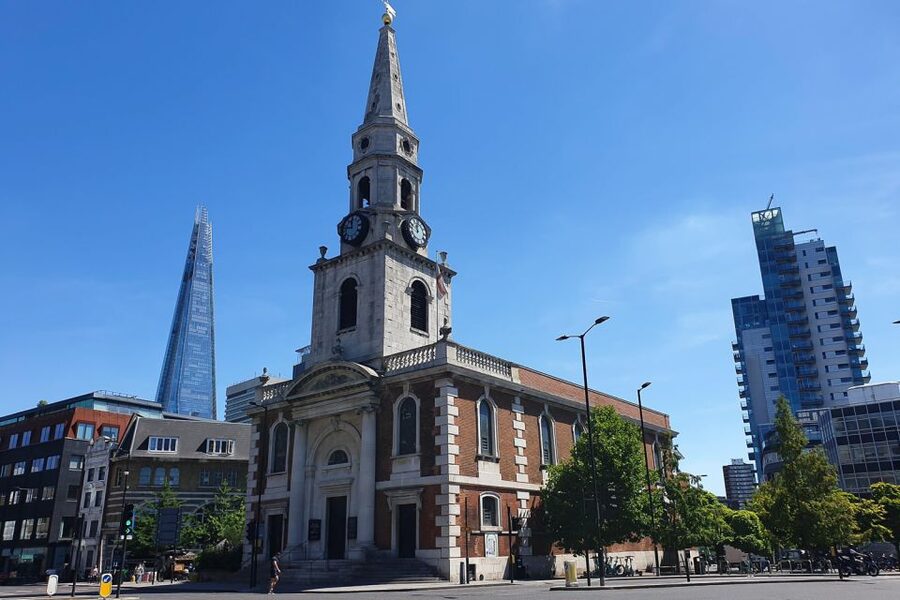
London Bridge links the Borough area to the City of London and helps explain why Southwark developed as a busy gateway. For centuries, people crossing the river passed through this part of town before heading into London proper.
At the bridge, the guide can draw together the route’s main idea: Southwark’s character came partly from its position beside the river and just outside City authority. It was close enough to serve London, but separate enough to host activities the City wanted to control.
The bridge stop is also practical. It gives you a clear sense of direction before the route heads toward Winchester Palace, the Clink, and the Globe sites.
Winchester Palace and the power of the bishop
The remains of Winchester Palace are among the most important medieval traces on the walk. The palace belonged to the Bishop of Winchester, whose authority in Southwark was substantial.
Only part of the palace survives, but the remains hint at the power held by church officials in medieval England. The nearby connection with the Winchester Geese makes this stop especially important. The bishop’s authority was not separate from the area’s sex trade. It was tied to the way Southwark was governed and profited from.
This is a strong example of the tour’s wider purpose. It asks you to look past the simple story of respectable City versus disreputable Borough. The relationship was more tangled. Southwark served London, and powerful people benefited from the activities that gave it a bad name.
The Clink and the prisons of Southwark
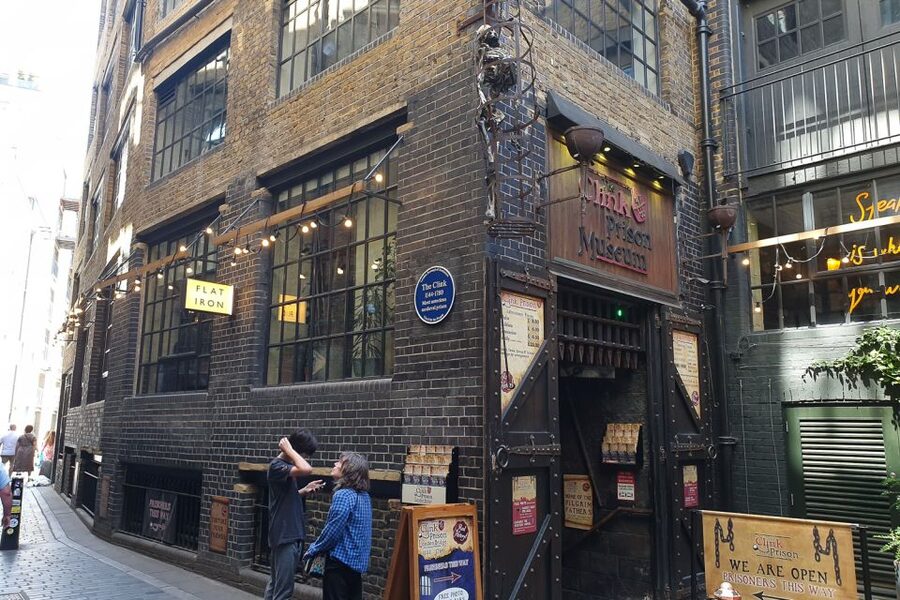
The Clink Prison Museum is the second major prison connection on the route. Along with Marshalsea, it shows how Southwark became associated with confinement, punishment, and rough justice.
You see locations connected with both prisons, but this is still a walking tour rather than a museum visit. Admission to the Clink Prison Museum is not listed as part of the experience, so plan on hearing the history from the pavement unless you arrange a separate ticket.
The short talks work best if you want a broad understanding of the district. If you are fascinated by prisons, you may want to return for an indoor visit, where you can spend more time with displays and objects. The walking tour gives you the setting and the connections between the sites.
Shakespeare’s Globe, old and new
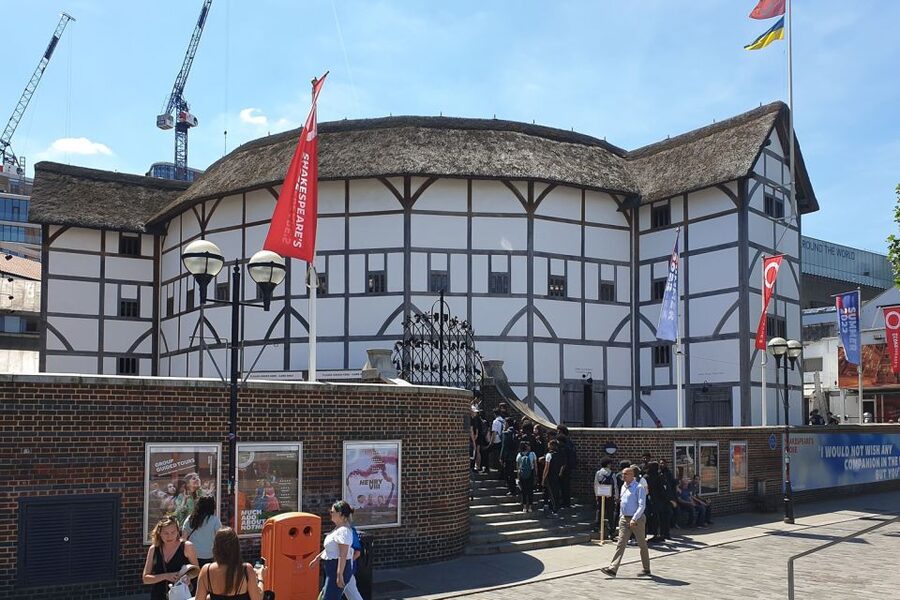
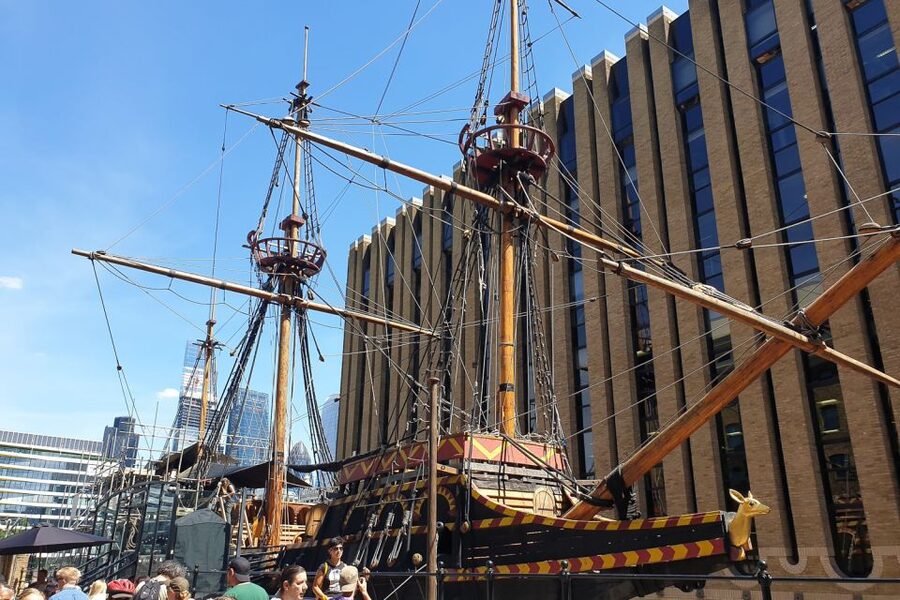
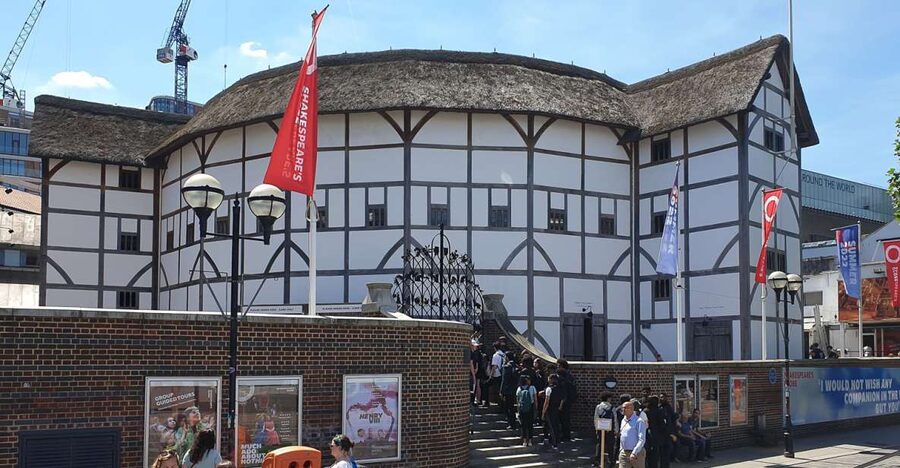
The route ends with one of Southwark’s most famous residents: William Shakespeare. You visit the original site of the Globe Theatre and then see Shakespeare’s Globe, the modern reconstruction near the Thames.
The contrast is useful. The original site connects you to the theatre’s historical location, while the reconstructed Globe shows how modern London has chosen to present that past.
Do not confuse seeing the theatre with taking a Globe tour. Entry is not included, and the walk gives you only a short introduction. One practical option is to book a separate Globe visit if you want the interior, a guided theatre tour, or more time with Shakespeare’s London.
Ending here is convenient. The final point is near the Globe and within reach of London Bridge Station, so you can continue along the river, visit the theatre, or head back into central London.
A two-hour pace and a small group
The tour covers about two miles in two hours. Fourteen listed stops give you a lot of ground, but each location receives roughly five minutes of guided attention.
That pace suits you if you want a broad framework before exploring the area on your own. It is less suitable if you prefer long museum visits, extended photography stops, or detailed architectural study at every site.
The group limit of 15 is a real advantage. You can usually stay near the guide, ask questions, and hear the explanation without the feel of a large coach excursion. Tom Currie’s approach is especially useful for first-time walking tour participants because he keeps the tone informal and welcomes questions.
The route is in English. It is not suitable for children under 13, both because of the subject matter and because the tour is aimed at an older audience.
What the $26 price gives you
At $26 per person, the value comes from the guide and the way the sites are connected. You are paying for two hours of interpretation, not for entry into several attractions.
That distinction matters. The tour includes a live English-speaking guide, but you should budget separately if you want to enter the Globe, the Clink Prison Museum, the Old Operating Theatre Museum, or Southwark Cathedral. The walk itself helps you decide which places deserve a longer visit.
For a first day in Southwark, I think the price is fair. You see a wide range of locations, learn the basic story, and finish beside the Globe. If you already know the area well or prefer to explore at your own pace, you may find the short stops less satisfying.
Bookings can be cancelled up to 24 hours before the start for a full refund, and you can reserve now and pay later. Those options are useful if your London schedule is still shifting.
Who should book this Southwark walk
I would choose this tour if you like social history, literary connections, old buildings, and stories that are a little less polished than the usual royal London narrative.
It suits:
- First-time visitors who want an easy introduction to Borough and Bankside
- Fans of Shakespeare and Charles Dickens
- Adults and older teenagers interested in prisons, prostitution, and medieval London
- Visitors who enjoy short guided stops rather than long indoor visits
- Anyone who wants to understand what lies between London Bridge and the Globe
I would look elsewhere if you want a family-focused walk, a food tour of Borough Market, or a full visit inside the Globe and the museums. You should also avoid booking it with tight timing immediately afterward, since market crowds can slow the group.
Should you book Booze, Brothels & the Bard?
Book it if you want Southwark explained through its less respectable past, with enough Shakespeare, Dickens, religion, trade, and medicine to keep the story from becoming one long joke.
The strongest reasons to go are the compact route, the small group, the range of surviving sites, and the quality of guidance offered by Tom Currie. The main limitation is depth. You will see many places, but you will not spend long inside any of them.
My practical plan would be to take the walk early in your Southwark visit, then return to Borough Market, Southwark Cathedral, the Clink, or Shakespeare’s Globe based on what catches your interest. At $26, the tour works best as a well-organized introduction to a complicated neighborhood, not as a substitute for every museum along the way.
FAQ
Where does the tour begin?
It begins just outside Borough Station on Borough High Street. The guide will be holding an Historic London Tours sign.
Where does the tour end?
The walk ends near Shakespeare’s Globe, close to London Bridge Station.
How long is the tour?
The tour lasts about two hours.
How far do you walk?
The total walking distance is about two miles, or 3.2 kilometers.
What language is the tour in?
The tour is conducted in English with a live English-speaking guide.
Is the Globe Theatre entry included?
No. The walk includes a guided visit to the original Globe site and Shakespeare’s Globe area, but theatre admission is not included.
Can children join the tour?
Children under 13 are not permitted.
How many people can join?
Ticket sales are limited to 15 attendees.
Can I cancel my booking?
Yes. You can cancel up to 24 hours before the tour for a full refund. You can also reserve now and pay later.
Just added in London
- Royal London Guided Sightseeing Tour and Thames River Cruise★ 4.0 · 31 reviews
- Roman London Private Walking Tour★ 5.0 · 44 reviews
- Westminster Abbey, Big Ben, Buckingham Guided Tour of London★ 5.0 · 451 reviews
- Roman Ruins to Blitz Bombings: A Walking Tour of London’s Fiery History★ 5.0 · 190 reviews
- River Thames Evening Cruise with Sparkling wine and Canapés★ 4.0 · 569 reviews
- Rock and Roll Walking Tour of Soho London★ 4.5 · 64 reviews
- London Private Chauffeur Half-Day or Full-Day Vehicle Rental★ 5.0 · 37 reviews
- Rich people behaving badly★ 5.0 · 47 reviews
London Tours, compared.
Westminster to Greenwich River Thames Cruise
Read our review →