
Reviewed · GARDEN TOURS
Barbara Hepworth Museum & Sculpture Garden: entry to site.
Barbara Hepworth’s former home gives you something a gallery cannot: her sculptures remain in the rooms and garden where she lived and worked. You move from archive photographs and career objects to abstract sculpture, paintings, and drawings, then outside among larger works and lush planting. The setting makes her art easier to understand, not just admire.
I like the unchanged home and studio setting, which feels personal rather than polished into a standard exhibition. I also like the garden, where sculpture and planting share the attention. The main drawback is the site’s small scale: there is only one toilet, no café, no refreshment area, and little room for large bags.
Key points at a glance
- Barbara Hepworth’s original home: See the living spaces where selected works are displayed.
- A garden built around sculpture: Larger pieces sit among sub-tropical planting rather than in bare gallery rooms.
- Archive material first: Photographs and objects trace Hepworth’s career before you reach the museum rooms.
- A compact, focused visit: Many people can see the site in about an hour, though your ticket is valid for one day.
- Practical restrictions: Food, drinks, large bags, tripods, flash photography, drones, and professional cameras are not allowed.
- Access by arrangement: Wheelchair access is available through a side-street entrance if arranged ahead of time.
Why the St Ives home matters
Barbara Hepworth is closely linked with modern art in St Ives, but this visit is not simply a room full of famous objects. You enter a place connected to her daily work. That changes the mood. Instead of viewing sculpture as an isolated object on a white plinth, you see it within the rooms and garden that shaped its setting.
The property has been kept close to how it was when Hepworth lived and worked there. For you, that means the experience has a domestic scale. It is not a huge museum where you need half a day just to find the highlights. The rooms are smaller, the number of works is limited, and the visit rewards careful looking.
I find that useful if you are new to Hepworth. You can focus on how form, space, light, and material work together without being buried under a large collection. If you already know her work, the value comes from seeing it in a personal setting and from understanding the relationship between the house, the studios, and the garden.
More Garden Tours in Cornwall:
- London: Kew Gardens Admission Ticket
★ 4.6 · 3,252 reviews - Kew Gardens Entrance Ticket
★ 4.0 · 1,055 reviews - The Kensington Palace Gardens Royal High Tea
★ 4.5 · 934 reviews
Start with the archive and career photographs
Your visit begins in the admission area, where chronological photographs and archive objects provide a short route through Hepworth’s career. This is a good first stop because it gives you a frame for the works upstairs. The photographs help place her art within her life in St Ives without requiring a long guided talk.
Take a few minutes here rather than rushing straight to the museum rooms. The displays are especially helpful if you do not already know the names and periods connected with Hepworth’s work. They also bring another important figure into view, Ben Nicholson, whose connection with Hepworth is part of the story presented at the site.
The archive area is not the largest part of the visit, and you should not expect a full research library or a large collection of documents. Its job is simpler: it gives you a timeline, visual context, and a sense of the artist behind the sculptures. The information is presented in a way that can make the next stage more rewarding.
Upstairs among paintings, drawings, and sculpture
From the admission area, you go upstairs into the museum rooms, located in Hepworth’s former living area. Here you see selected abstract sculptures alongside paintings and drawings. The arrangement makes the work feel connected to the house rather than separated from it.
This is where the visit becomes more than a garden stop. The outdoor works may catch your eye first, but the indoor pieces show the range of Hepworth’s practice. Drawings and paintings offer a quieter way to look at her ideas about shape and balance. The sculptures then give those ideas physical weight and presence.
I recommend slowing down in these rooms. You do not need specialist art training to get something from them. Look at the open spaces, curves, cut-outs, and changing angles. Then compare those features with the information and images you saw downstairs. The compact setting gives you time to make those connections.
The rooms are not designed for large crowds, and the booking information describes the experience as a small group, limited to nine participants. That can make the visit calmer, but it also means you should respect the restrictions on touching exhibits and avoid bringing bulky items that take up space.
The garden is the main visual reward
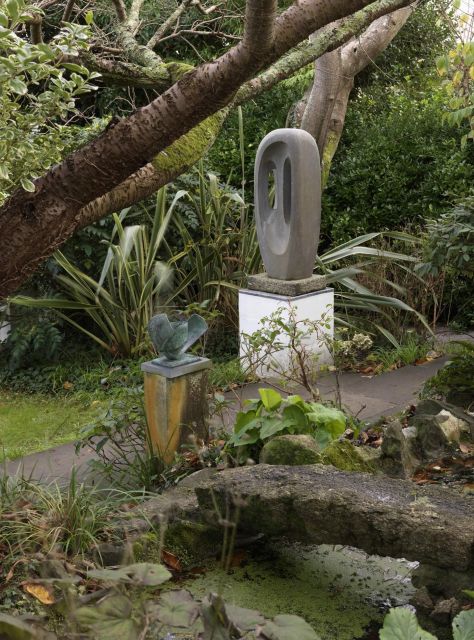
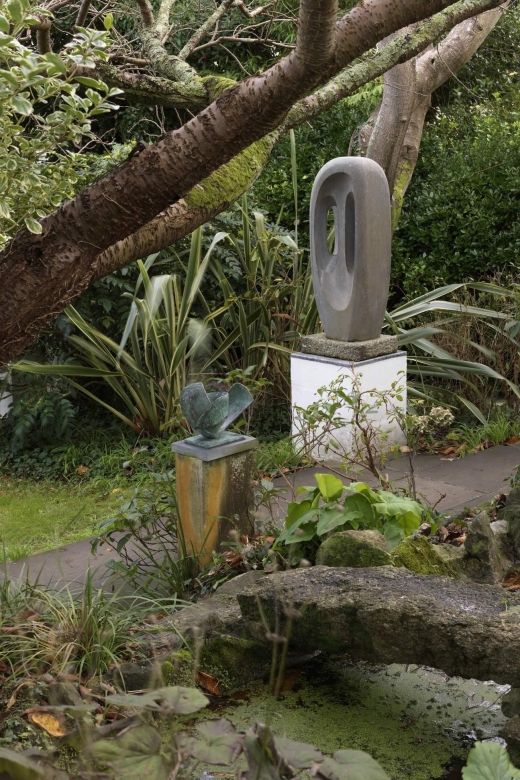
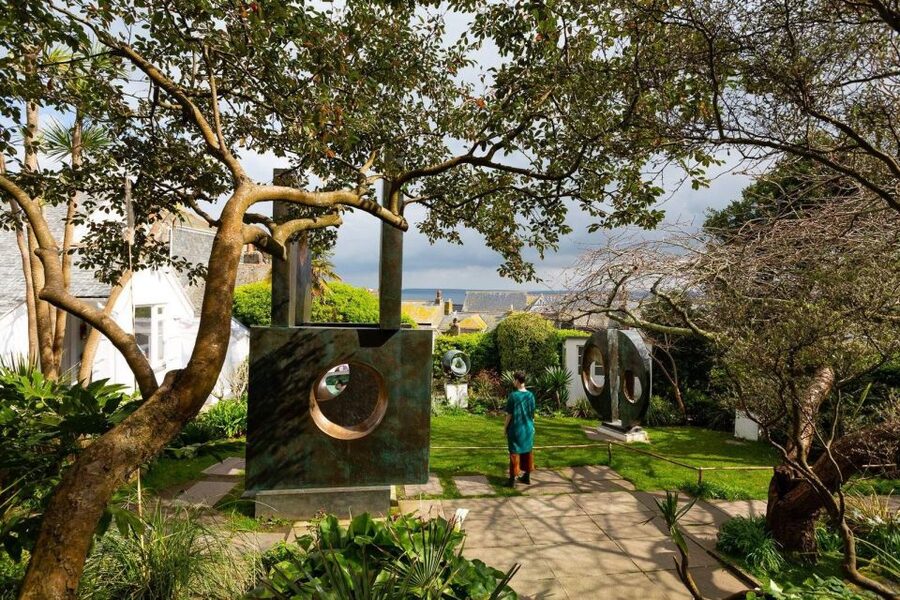
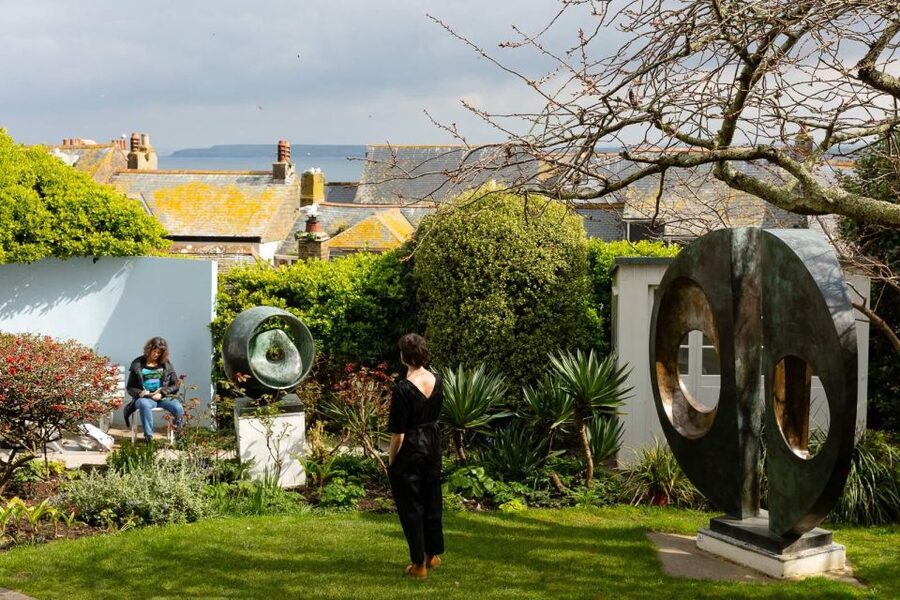
Outside, the visit opens into the sculpture garden. Larger works are placed among sub-tropical planting, and the combination is central to the appeal of the site. The greenery is not just background decoration. It changes how you see the sculpture from one position to the next.
Walk slowly and look at each piece from more than one angle. Outdoor sculpture depends on space, shadow, and distance, so a work that seems restrained beside a path may look quite different from deeper in the garden. The planting also softens the surroundings, giving the sculptures a more private and lived-in setting than a formal public park.
The garden has been praised for the way its planting complements the sculpture. That is a useful way to think about it. You are not visiting a garden first and then finding some art along the way. You are seeing a designed relationship between plants, buildings, open areas, and sculpture.
The garden also gives the visit its strongest sense of place. Hepworth’s work is often associated with clean forms and modern materials, while the planting adds texture and seasonal life. You get a meeting of hard and soft, stillness and growth. It is one reason this experience can appeal even if you are not a committed modern-art follower.
More Museum Tours in Cornwall:
- Liverpool: Liverpool Football Club Museum and Stadium Tour
★ 4.8 · 10,764 reviews - Tower of London and Crown Jewels Exhibition Ticket
★ 4.5 · 6,677 reviews - London: Chelsea Football Club Stadium and Museum Tour
★ 4.8 · 4,576 reviews - Chelsea FC Stadium Tours and Museum
★ 5.0 · 1,908 reviews
Look for the studio views
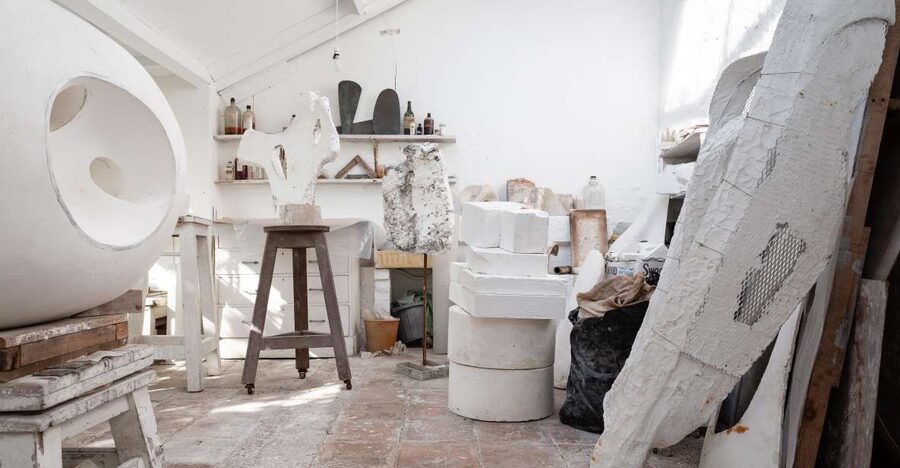
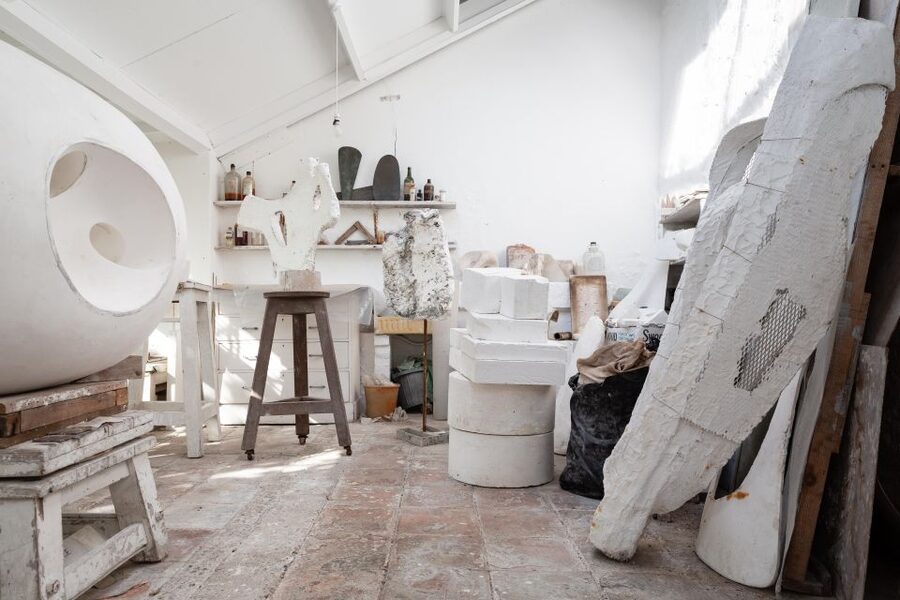
The ticket includes views of Hepworth’s work studios. These are important because they bring you closer to the practical side of sculpture. You can think about the scale of the work, the setting in which it was made, and the link between the working areas and the garden.
The studios are not presented as a separate workshop class, and you should not expect a demonstration or an artist-led session. Their value is visual and atmospheric. They help explain why the property feels different from a normal museum. You are seeing the spaces around the work as well as the finished pieces.
If you are interested in how artists work, give this part proper attention. The archive photographs and studio views together provide more than decoration. They help you picture the process behind the polished forms displayed indoors and outside.
How long should you allow?
The ticket is valid for one day, so you are not forced into a tight timed circuit. A focused visit can take about an hour, based on the amount of time needed to see the home, museum rooms, garden, and studio views. If you like to read every panel and spend time with each sculpture, you can stay longer within the day.
This is best treated as a concentrated cultural stop rather than a full-day attraction by itself. The property is relatively small, and its strength is in the quality of the setting, not the number of rooms or objects. You may finish sooner than you would at a large museum, but that does not mean the visit feels thin.
I would pair it with other time in St Ives rather than plan an entire day around the site alone. The flexible one-day validity helps if you want to fit it around other plans, though the supplied information does not give a set starting time. Check availability when booking.
Is the $13 price good value?
At about $13 per person, entry is reasonable if you care about Hepworth, modern art, historic homes, or gardens. You are paying for access to several connected parts of the property: the original home, archive displays, paintings, drawings, sculptures, garden, and studio views.
The value is strongest when you take time to use the setting. If you only want a quick look at a few famous sculptures, the small collection may feel limited. If you enjoy seeing art in its original working environment, the price covers something more distinctive than a standard exhibition ticket.
There are no café facilities or refreshment services, and the souvenir range is limited. Those omissions keep the visit focused, but they matter if you were hoping to make it a long social stop. Plan to eat and drink elsewhere, and do not count on the site for a substantial shop.
Practical rules that affect your visit
The property keeps a strict approach to protecting the art and preserving the character of the site. Food and drinks are not allowed, and neither are smoking or vaping. You cannot bring large bags, oversize luggage, coolers, bikes, surfboards, skateboards, skates, or mobility scooters.
Photography has limits too. Flash photography, tripods, drones, and professional cameras are not permitted. You also cannot touch the exhibits, climb, feed animals, play speakers, or bring alcohol and drugs. The long list may sound fussy, but most of it is easy to manage if you arrive with only a small personal bag and a phone or ordinary camera.
Red wine is specifically listed among the prohibited items, along with other drinks. Do not plan a garden picnic here. There is also only one toilet on site, so use facilities before arriving if that matters to you.
Unaccompanied minors are not allowed, and party groups, including bachelor and bachelorette groups, are not accepted. Pets are not allowed, although assistance dogs are permitted. These rules make the property better suited to a quiet, attentive visit than a casual group outing.
Wheelchair access and group size
Wheelchair access is available through a side-street entrance, but you need to arrange it ahead of your visit. That advance step matters because the usual entrance route may not be the correct access point. Contact the site before booking or visiting if you need this arrangement.
The experience is described as a small group, limited to nine participants. That is a useful size for a compact house and garden, where crowded rooms could make it hard to see the works. It also means you should not assume you can arrive with a large party and move through together.
There is no stated meeting point because this is entry to the site rather than a walking tour with a guide. You make your own way to the property and enter through the admission area.
Who will enjoy Barbara Hepworth Museum most?
I would recommend this visit to anyone already interested in Barbara Hepworth or modern sculpture. You will get the most from it if you like seeing how art relates to a real place, rather than only viewing objects in a large gallery.
It also suits garden lovers. The sub-tropical planting is a major part of the experience, and the outdoor works gain much of their character from the way they sit among it. You do not need to be an expert in art to enjoy the contrast between sculpture, foliage, rooms, and open air.
Families can visit, but the rules require unaccompanied minors to stay away, and the no-touch policy needs to be clear. This is not a hands-on attraction. It suits older children and adults who can move carefully around the works.
I would be less likely to recommend it to someone seeking a café, a big shop, a large museum collection, or an all-day indoor activity. The property is intentionally compact. Its appeal lies in its sense of place and the close link between Hepworth’s work and her former home.
Should you book it?
Book it if you want to see Barbara Hepworth’s work in the setting where she lived and worked, especially if you value sculpture gardens and historic artist homes. The $13 admission is fair for the combination of archive material, indoor works, studio views, and outdoor sculpture.
Skip it if you need extensive facilities or prefer large museums with dozens of galleries. For everyone else, this is a focused and memorable St Ives stop. Allow around an hour, take time in the garden, arrange wheelchair access in advance if needed, and arrive without food, drinks, large bags, or specialist photography equipment.
The strongest reason to go is simple: the site has not been stripped of its personal character. You see the art, the working setting, and the garden together. That connection is what makes the visit worth your time.
FAQ
How much does entry to the Barbara Hepworth Museum and Sculpture Garden cost?
Entry is listed at $13 per person.
How long is the visit?
The ticket is valid for one day. A focused visit can take about an hour, although you may stay longer to study the archive, indoor works, studios, and garden.
What does the ticket include?
It includes entry to Barbara Hepworth’s original home and garden, archive information and images, abstract sculptures, paintings, drawings, a sub-tropical garden, and views of the work studios.
Is there a café or refreshment area?
No. The site has no café or refreshment facilities, and food and drinks are not allowed inside.
Is the museum wheelchair accessible?
Yes, but wheelchair access uses a side-street entrance and must be arranged ahead of the visit.
Can I take photographs?
Flash photography, tripods, drones, and professional cameras are not allowed. The information provided also asks you not to touch the exhibits.
Can I cancel my booking?
You can cancel up to 24 hours in advance for a full refund. A reserve-now-and-pay-later option is also available.
Just added in Cornwall
- Falmouth: Vibrant Historical Walking Tour (award-winning)★ 4.9 · 75 reviews
- Devon and Cornwall: 5-Day Tour from London★ 4.7 · 115 reviews
- Cornwall: Eden Project Zip Wire Experience★ 5.0 · 80 reviews
- Penzance: Land’s End Boat Tour with Wildlife Guides★ 5.0 · 127 reviews
- Looe: Beyond Paradise TV Locations Tour★ 4.8 · 46 reviews
- Cornwall: Guided Seal Safari by Boat★ 4.7 · 63 reviews
- Surf Lesson★ 5.0 · 349 reviews
- Private Surfing Lesson★ 5.0 · 173 reviews
Garden Tours, compared.


Kensington Palace Gardens Tour with Royal High Tea
Read our review →


Historic City Walking Tour(& Rooftop Garden Access*)
Read our review →Browse the lists this tour appears in