
Reviewed · HISTORICAL TOURS
St Andrews Old Course History Tour, for the Golfer
The best part of this St Andrews tour is the chance to walk across the Old Course fairway and reach the Swilcan Bridge with a guide who has worked as a caddie there. Richard brings the course to life with stories about Old Tom Morris, famous golfing moments, early caddies, and the odd shape of the course itself.
I like the compact 75-minute format, which gives you a useful introduction without taking half your day. I also like the mix of golf history and town history, so even a non-golfer has something to follow. The main caution is the fast delivery: if English is not easy for you, or if you prefer a slow, question-led walk, this may feel rushed.
Key points at a glance
- Former caddie guide: Richard’s first-hand experience adds practical detail to the history and legends.
- A rare course-side walk: You can cross part of the Old Course fairway when play allows.
- Swilcan Bridge photos: Professionally taken photos are included, except on tournament days.
- Golf and town history together: The walk connects St Andrews’ past with the development of the modern game.
- Small shared group: Numbers are capped at 15, giving you a better chance to hear the guide.
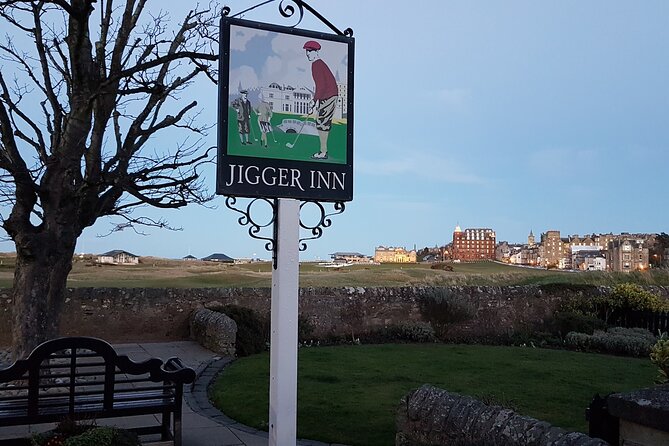
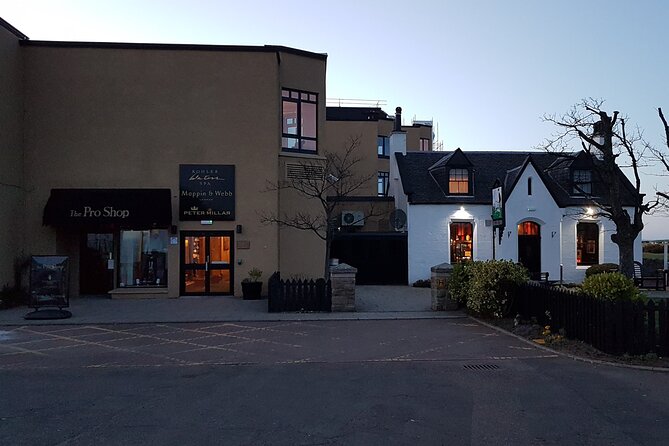
- Short, useful format: The tour takes about 1 hour and 15 minutes, then ends near the Jigger Inn.
Why the Old Course matters beyond golf
You do not need to play golf to understand why St Andrews matters. The Old Course is not simply a famous stretch of grass. It is where the game’s layout, customs, language, and public identity took shape over centuries.
This walk begins with St Andrews itself. You get a quick overview of the town and its early story, leading toward the 1123 Links charter. That opening helps put the golf course in place. The links are not an isolated attraction outside town. They are part of St Andrews’ older civic and coastal story.
The tour then traces golf from early stick-and-ball games in the Low Countries to Edinburgh in 1744, before explaining why St Andrews became known as the Home of Golf. The value here is the connection between places and changes. You are not just given a list of dates. You are shown how the game moved, adapted, and eventually took on the shape you recognize today.
For golfers, this adds context to every hole. For non-golfers, it provides a simple way to understand why the Old Course has such power. You can appreciate the setting, the public roads, the old buildings, and the unusual way daily life and championship golf share the same space.
More history walks in St Andrews:
- St Andrews: Golf Origins and Old Course History Tour
★ 4.7 · 322 reviews - St Andrews: Town, Golf, and Old Course History Tour
★ 4.7 · 162 reviews - St Andrews Tours: Town, Golf and Old Course History
★ 5.0 · 138 reviews
Starting at Hotel du Vin on The Scores
The meeting point is outside Hotel du Vin St Andrews at 40 The Scores. You should arrive early. This is a shared public tour, and it will not wait for late arrivals.
The opening five minutes cover the town’s background before the group moves toward the links. That short introduction is useful because it prevents the tour from becoming a narrow discussion of clubs and tournaments. You begin with St Andrews as a place, then move into the story of golf.
The group can include serious golfers, casual players, and people who simply came along with a golf fan. That mix works well when the guide explains the course clearly. It also means you should not expect a private conversation from the start. The maximum group size is 15, which is small enough for a personal feel but still large enough that you may need to position yourself near Richard to hear every word.
The Links and the origins of the game
The next stop looks at the early development of golf. You hear about stick-and-ball games in the Low Countries, golf in Edinburgh in the 18th century, and the reasons St Andrews became central to the sport.
This part is especially helpful if you know the Old Course only from television. Golf did not arrive fully formed. The number of holes, the design of fairways, the shape of bunkers, and the rules all changed over time. The walk sets up those changes before you reach the course’s most famous spots.
You should expect a brisk delivery here. Richard is praised for his humor and storytelling, but several comments also point to a rapid speaking pace. If you have trouble hearing in an outdoor setting, stay close and let the guide know early. On some tours, earbuds have been provided, which can help the group follow the commentary.
The Royal and Ancient Golf Club
At the Royal and Ancient Golf Club of St Andrews, the focus shifts to how the Old Course helped shape golf itself. This is where stories about fairways, bunkers, old caddies, and course development become more concrete.
You learn about Old Tom Morris, one of the key figures connected with the course, and the old Caddie Shack. The guide also explains how the early course developed instead of assuming that an 18-hole layout was always the standard.
This stop has strong appeal for golfers because it links familiar golf features to their beginnings. A bunker is no longer just an obstacle. A fairway is not simply the strip between the rough. The course’s basic design reflects practical changes made over many years.
The setting also helps. You are not sitting in a museum listening to a lecture. You are walking through the place where these changes became part of the game. The drawback is that the amount of information can feel dense if you are new to golf. Ask a question when there is a natural pause, but do not expect a long stop for every topic.
A few more half-days in St Andrews worth comparing
- St Andrews & the Fishing Villages of Fife Small-Group Day Tour from Edinburgh
★ 4.5 · 1,973 reviews - From Edinburgh: St Andrews and Fishing Villages of Fife Tour
★ 4.7 · 1,071 reviews - St Andrews Must-Sees Daily Walking Tour (11am & 2pm)
★ 5.0 · 478 reviews - Edinburgh: St Andrews & The Fishing Villages of Fife
★ 4.5 · 431 reviews
Grannie Clark’s Wynd and the changing course
Grannie Clark’s Wynd brings you close to the story of how the Old Course grew from fewer holes into the 18-hole course known today. The tour covers the earlier 12-hole and 10-hole arrangements, later development, and important places around the full course.
This is one of the most useful parts for anyone who has watched the Open Championship. You start to understand that the course is not a neat, isolated circuit. Public paths and roads pass through it, and the layout has evolved around the town.
The Open Championship and Dunhill Cup also enter the story here. The guide connects major events with the physical places you are seeing, rather than keeping tournament memories separate from the course itself.
This section can be harder to follow if you are not comfortable with golf terminology. The tour assumes a strong command of English, and translating or slowing the talk afterward is not considered workable. For that reason, I would choose this experience for people who can follow spoken English easily, especially when the guide is outside and facing different parts of the group.
The first and 18th holes near Rusacks
Near Rusacks St Andrews, the walk reaches the famous meeting point of the first and 18th fairways. This is one of the most striking parts of the tour because you can see where a round begins and ends in almost the same area.
The guide discusses the farmers who once used the land, the Rusacks Hotel, the Mannings, and the original first tee and 18th hole. These details show how the course has always been tied to ordinary working life, local buildings, and the town around it.
You also hear how early caddies and women using the area helped prompt Old Tom Morris to create what is described as the world’s first putting green. It is an amusing and memorable example of how the course developed in response to real use, not just abstract design plans.
For a golfer, this is a chance to picture the pressure of standing on the first tee and the relief of approaching the 18th. For everyone else, the attraction is visual. You can watch the rhythm of the course and see how players move through a public setting.
You may not be able to walk every part of the course. Access depends on play, local instructions, and tournament restrictions. The tour gives you a well-placed look, not a full playing round or a behind-the-scenes visit to restricted areas.
The Swilcan Bridge photo stop
The Swilcan Bridge is the tour’s clearest photo moment. It is one of the best-known landmarks in golf, and the guide allows time for photographs there when tournament conditions do not prevent access.
Professional photos are included. That matters because the bridge is a place where you want a proper group or individual picture, not only a hurried phone snapshot. Richard is also known for sharing useful photographs and helping people get good images at the course.
The bridge itself is small, but its meaning is large. Golfers recognize it as the place where generations of champions have posed. Non-golfers still get a strong sense of occasion because it offers a direct connection with the Old Course’s public image.
Do not assume this stop is available on every date. Tournament days, including the Open and Dunhill events, can exclude the Swilcan Bridge photo session. The course may also be busier or less accessible during major events, so check the date carefully before booking if the bridge is your main reason for going.
The Road Hole and the Jigger Inn
The final section takes you toward the Road Hole, the 17th hole, and finishes near the Old Course Jigger Inn. The guide covers memorable moments connected with the 17th green, one of the most famous and difficult places in golf.
Ending here is practical. You can stay in the area for food or drinks by the 17th fairway, though refreshments are not included. One particularly useful tip is to consider the Jigger Inn for fish and chips after the walk. You pay separately, but the location gives you a fitting final view of the course.
The finish also lets you continue at your own pace. The guided portion is short enough to leave room for lunch, a drink, or more time around St Andrews. I prefer this to a tour that ends far from the main attraction and leaves you guessing where to go next.
Keep in mind that the stated end point and the practical finishing area are described around the Road Hole and Jigger Inn, while the Swilcan Bridge is also listed as an end location. In either case, the final part of the experience is on foot and connected with the Old Course, not a return transfer to the starting hotel.
What the $25 price buys you
At $25 per person, this is an inexpensive way to understand the Old Course without paying for a round of golf or arranging a private guide. The price includes a professional local guide and the Swilcan Bridge photos when conditions permit.
The value comes from access and interpretation. You can walk across the fairway in a way that is difficult to arrange as a casual sightseer, and a former caddie can explain details that are easy to miss when you walk alone.
You are not paying for entry to a museum, a meal, or a golf round. The tour uses public outdoor spaces, and much of the area can be visited independently when play is not interrupted. If you are happy to research the course yourself, you could see several locations without booking.
I still think the fee is fair for a first visit. The guide saves you time, organizes the story, points out less obvious locations, and takes or arranges the bridge photos. The value drops if you already know the course well, dislike group walks, or want lengthy individual questions at every stop.
Timing, weather, and walking demands
The advertised duration is about 1 hour and 15 minutes. That is enough for a compact introduction, but not enough for a slow, detailed study of every hole. The pace includes frequent stops, and the route is described as a manageable walk, but you still need moderate physical fitness.
Wear warm, weather-ready clothing. Conditions can change quickly on the links, and one useful piece of advice is to bring an extra layer because it can become very cold when the weather shifts. Comfortable shoes matter more than formal golf clothing.
The tour is not suitable for children under five. It is also not suitable for strollers, walking frames, crutches, or mobility scooters. There is no place to leave those items, and you cannot bring golf clubs or similar equipment along for storage during the walk.
Service animals are allowed, and the meeting point is near public transportation. The tour operates outdoors and requires good weather. If poor weather cancels it, you can receive a different date or a full refund. A minimum number of participants is also required, and a cancellation for that reason brings the same choice of another date or a refund.
Free cancellation is available up to 24 hours before the local start time. Changes or cancellations inside that window are not accepted for a refund.
Who should book this Old Course walk?
I would choose this tour if you have a golfer in your group and want more than a quick photograph outside the clubhouse. It gives the golfer course history and famous locations, while giving non-golfers enough town history, local stories, and scenery to stay interested.
It is also a good fit for history buffs. The course is a living record of how a sport developed, and the walk connects social habits, local land use, famous players, and design changes.
You should think twice if you need a slow, carefully translated tour. Fluent English is essential, and the guide may speak quickly. You should also reconsider if you want a private experience with unlimited questions. The shared group has a maximum of 15, and Richard has a planned story to deliver.
Book early if your dates are fixed. This experience is often reserved about two months ahead, with an average booking lead time of 61 days. That is particularly important if you want a weekend walk, a specific date, or a visit outside tournament restrictions.
Should you book it?
Book it if you want a short, affordable introduction to St Andrews golf with a guide who has worked as a caddie and can connect legends to real places. The Swilcan Bridge photos, the chance to cross the fairway, and the finish near the Jigger Inn make it feel like more than a standard town walk.
Skip it if you already know the Old Course thoroughly, need accessibility equipment, or prefer a quiet self-guided stroll. For most first-time visitors, especially mixed golf and non-golf groups, the balance of history, humor, course access, and price makes this a sensible first step in St Andrews.
FAQ
How long does the St Andrews Old Course History Tour last?
The tour lasts approximately 1 hour and 15 minutes.
Where does the tour begin?
The meeting point is outside Hotel du Vin St Andrews, at 40 The Scores, St Andrews KY16 9AS, United Kingdom.
Where does the tour finish?
The walk finishes around the Road Hole and the Old Course Jigger Inn, near the 17th fairway. You can stay for food or drinks, but refreshments are not included.
Are photos at the Swilcan Bridge included?
Yes. Professionally taken photos at the Swilcan Bridge are included, except on tournament days such as the Open and Dunhill events.
Is the tour suitable for people who do not play golf?
Yes. The tour includes the history of St Andrews, the development of golf, local stories, and course landmarks, so non-golfers can follow the experience. A fluent command of English is essential for all participants.
Can I cancel for a full refund?
You can cancel at least 24 hours before the experience start time for a full refund. Cancellations or changes made less than 24 hours before the start time are not accepted for a refund.
Just added in St Andrews
- From Glasgow: The Kelpies, St Andrews and Fife Adventure★ 4.8 · 75 reviews
- Edinburgh: Stirling, Whisky and St Andrews Tour in Spanish★ 4.6 · 67 reviews
- St Andrews: Top Sights Guided Walking Tour★ 4.7 · 223 reviews
- St Andrews: Golf Origins and Old Course History Tour★ 4.7 · 322 reviews
- St Andrews: Town, Golf, and Old Course History Tour★ 4.7 · 162 reviews
- St Andrews & Cliffs and Dunnottar Castle in Spanish.★ 5.0 · 178 reviews
- Edinburgh: St Andrews & The Fishing Villages of Fife★ 4.5 · 431 reviews
- St Andrews Tours: Town, Golf and Old Course History★ 5.0 · 138 reviews
Historical Tours, compared.
A History of Terror – Belfast City Centre Walking Tour
Read our review →
Old Town Walking Tour History and Tales in Edinburgh
Read our review →
Shadows of York: Ghost Walk and Horrible History.
Read our review →
Multi-Sensory Small-Group Historic Vaults Tour in Edinburgh
Read our review →
Browse the lists this tour appears in