
Reviewed · PHOTOGRAPHY SESSIONS
Private Night Photography Tour in London
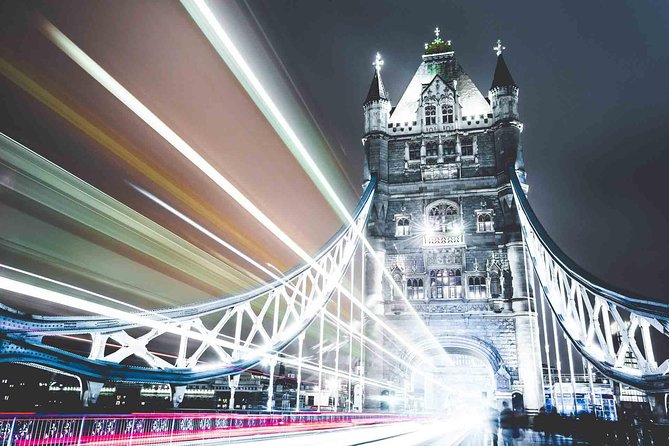
London after dark becomes a photography classroom. On this walking tour, professional photographer David helps you turn the London Eye, St. Paul’s Cathedral, Tower Bridge, car lights, and Thames reflections into strong night images rather than simple snapshots. You’ll work with long exposures, light trails, reflections, and creative effects.
I like that any camera works, from a Canon or other DSLR to an iPhone. I also like the hands-on teaching: David demonstrates settings, then helps you practice them at real viewpoints. The main consideration is your equipment. A tripod is important for many long-exposure shots, but it is not listed as included.
Key points at a glance
- Learn with the camera you already carry: DSLR, mirrorless camera, or smartphone users can take part.
- Practice long exposures in real locations: Capture car light trails, blurred boats, Thames reflections, and illuminated landmarks.
- Follow David’s personal instruction: He helps with camera settings, framing, and creative effects.
- See London’s major night views: The route includes the London Eye, St. Paul’s Cathedral, the City of London, and Tower Bridge.
- Bring a tripod if you can: It gives you more control for sharp, steady long exposures.
- Get useful follow-up material: The photography e-guidebook helps you keep practicing after the walk.
Why London at night works so well for photography
The best thing about this experience is that you are not simply taken to famous sights and told to point your camera at them. You learn how to use movement and light as part of the picture.
A passing car can become a ribbon of red or white light. A boat on the Thames can blur into a soft shape. Water near the river can double the glow of the city. With the right exposure, even a familiar landmark can look fresh.
The tour focuses on night photography, but the skills are useful at any hour. You can learn how small changes to shutter speed, aperture, focus, and exposure affect the final image. One participant discovered that their camera could make multiple-exposure images, while another learned how zooming during a long exposure can create a special effect.
That makes this more than a sightseeing walk with cameras. You are building skills you can use on future trips, at home, and with everyday photos.
More Photo Shoots in London
- London: Private Photoshoot with Video Clip Option
★ 4.8 · 182 reviews - Professional Photoshoot in London Photographer
★ 5.0 · 102 reviews - Private landmarks photoshoot for families and couples
★ 5.0 · 92 reviews
Meeting at Portcullis House
The tour begins at Caffè Nero, Unit B, Portcullis House, 1-2 Bridge Street, London SW1A 2JH. This is near Westminster and the river, giving you a practical starting point for photographing central London after dark.
The listed duration is approximately two hours and 30 minutes, while the description also refers to a three-hour night tour. Allow roughly three hours so you are not rushing to catch another booking afterward.
The experience is described as private, with only your group taking part. One account, however, described a small group of three people and referred to it as a group tour. If having one-to-one instruction is essential to you, confirm the group arrangement before booking.
The walk ends back at the starting point. Food and drinks are not included, so eat beforehand or plan a meal after the tour.
Starting with camera controls and low-light basics
David typically begins with camera controls and technique before the group moves between landmarks. This is a smart approach. Night photography can be frustrating when you are still trying to remember which dial changes shutter speed or where to find manual focus.
You can expect guidance on the basic decisions that shape a night image:
- How long the shutter stays open
- How to keep a landmark sharp
- How to work with available light
- How to capture movement as streaks or blur
- How small setting changes alter the finished photo
- How to frame a familiar sight in a less ordinary way
You do not need to arrive as an experienced photographer. Beginners can learn the fundamentals, while hobbyists can test techniques they have not used before. More experienced photographers may get the most from the creative suggestions and the chance to shoot London from several carefully chosen angles.
The teaching is adapted to the camera in your hands. David has helped people use both an iPhone and a Canon on the same walk. Smartphone users should not feel like second-class photographers here. Modern phones can produce strong night images when you understand their night mode, exposure controls, focus options, and stability needs.
At the same time, advanced camera users should have realistic expectations. David is familiar with many camera brands, but one participant using a Fuji camera found it helpful to know their own menus and controls. If you use a less common or unfamiliar camera, spend a little time learning its basic operation before you arrive.
Stop 1: London Eye and the South Bank lights
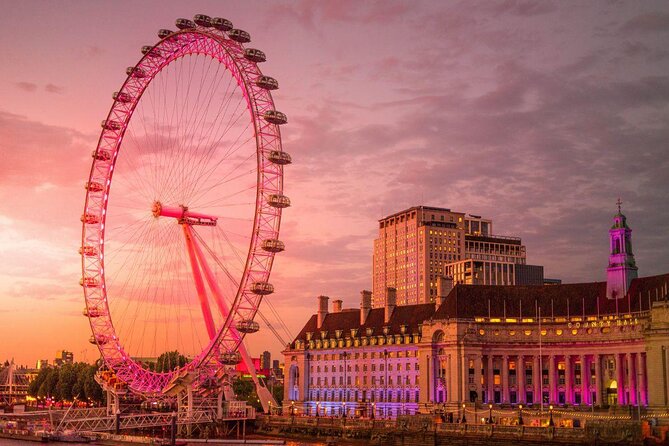
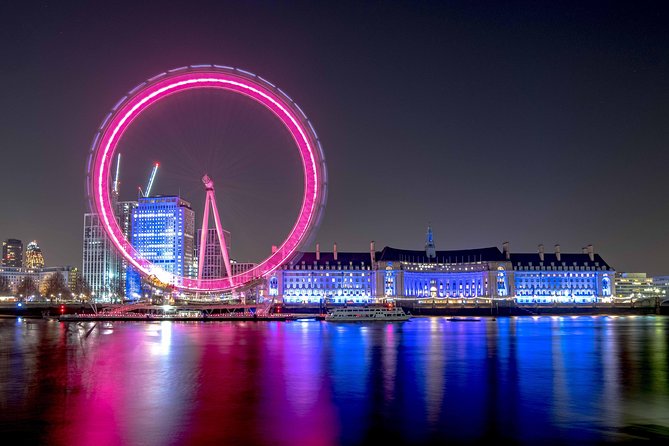
The London Eye is a natural first major subject. Its circular form, bright capsules, and position beside the Thames give you several ways to frame it.
You might make a clean architectural image, use the wheel as a bright shape against the night sky, or experiment with reflections along the river. Long exposures can smooth water and make lights glow. David can help you decide whether the subject should fill the frame or sit within a wider city view.
This is also a useful place to practice stability. A slow shutter speed can produce a sharper image when the camera is held steady, but a tripod gives you far more control. If your phone has a night mode, you can compare its automatic result with a manually controlled exposure.
The London Eye area can offer plenty of visual activity, including passing people and changing light. That can be an advantage if you want energy in the image, but it can also make composition harder. The goal is not always to remove every person or moving object. Sometimes a blurred figure or light trail adds scale and life.
Same trip, a completely different kind of day:
- London: The London Eye Entry Ticket
★ 4.6 · 35,875 reviews - From London: Harry Potter Warner Bros Studio Tour
★ 4.7 · 26,588 reviews - London: Westminster to Greenwich River Thames Cruise
★ 4.5 · 22,836 reviews - London: Madame Tussauds London
★ 4.6 · 20,915 reviews
Stop 2: St. Paul’s Cathedral and controlled long exposures
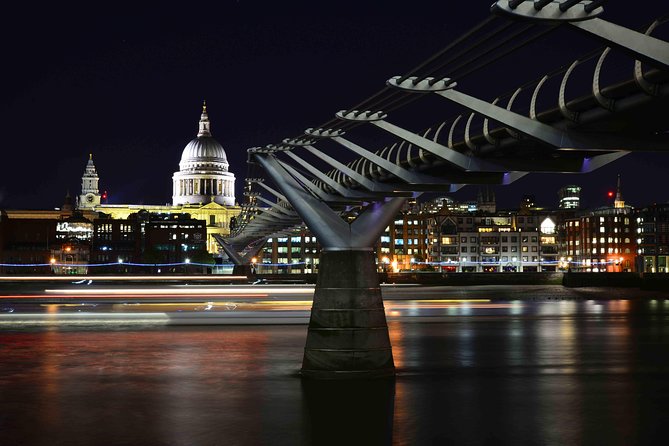
St. Paul’s Cathedral gives the tour a different type of subject. Its dome and classical lines reward careful framing, especially when you are learning how to keep verticals straight and bright areas under control.
Here, the lesson may shift from colorful river light to structure, symmetry, and contrast. You can work on exposing a bright building without losing the darker sky around it. Long exposures may also help you create a calm, polished image when the surrounding scene is darker.
This stop is valuable for learning that night photography is not only about brighter colors. A good image can depend on shape, balance, shadow, and the relationship between the building and the surrounding city.
One practical point: a long exposure requires patience. You may need several attempts before the image feels right. That is where personal guidance helps. David can point out a stronger angle, suggest a camera adjustment, and help you understand why the first attempt did not work.
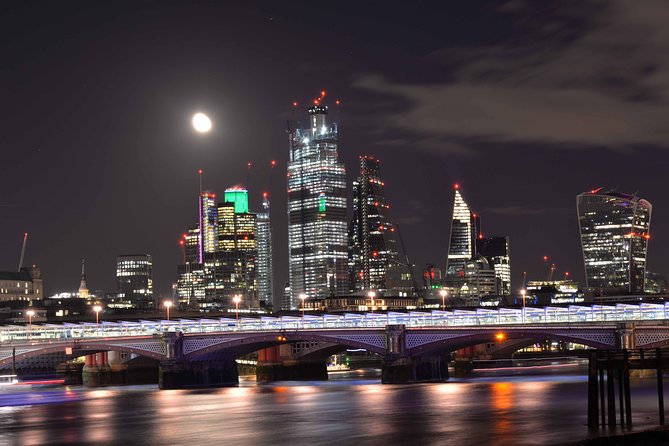
Stop 3: The City of London and creative angles
The City of London section gives you a chance to move beyond the postcard view. The route is designed to include less obvious corners, unusual angles, and tighter compositions rather than only the most familiar viewpoint.
This is where the tour’s creative side becomes most useful. David can help you look for reflections, lines, patterns, light against dark surfaces, and unusual framing. You may also work with multiple exposures or try zooming the lens during a long exposure to create a controlled burst of light.
Those effects are not guaranteed to suit every photograph. They are experiments, and that is part of the point. You learn how a camera can record movement and light in ways your eyes do not see.
If you are mainly interested in photographing landmarks exactly as they appear, this section may feel less direct. If you want to develop your own eye, it can be one of the more rewarding parts of the walk.
Stop 4: Tower Bridge and the Thames
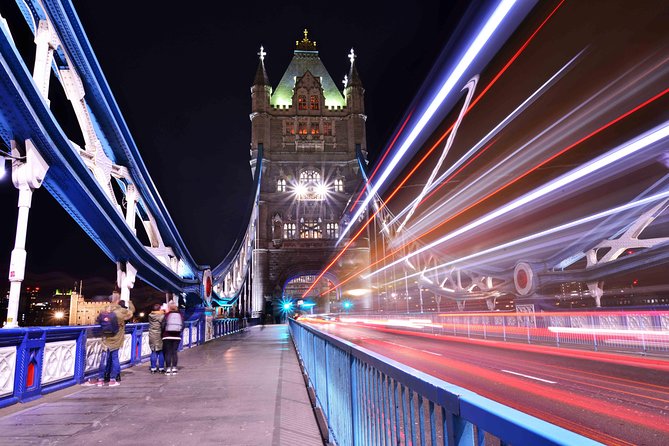
Tower Bridge is the big finish for many photographers. Its towers, suspension cables, traffic, and position over the river give you several strong subjects in one place.
You can frame the bridge as a wide city scene, focus on its illuminated details, or use the Thames to create reflections. Passing boats can become soft streaks during a longer exposure. Traffic can provide light trails that lead the viewer into the frame.
The bridge also gives you a chance to bring several lessons together. You may need to balance a bright structure against a dark sky, keep the camera steady, choose a pleasing composition, and wait for movement to enter the frame at the right moment.
The exact final photographs will depend on the weather, river traffic, available light, and your own equipment. That is normal for night photography. You are learning a method, not being handed a guaranteed set of perfect conditions.
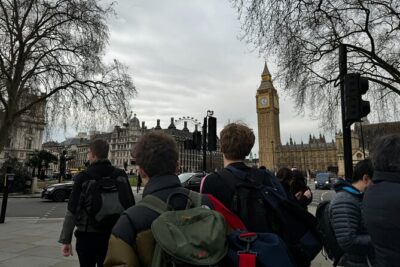
Some participants have also photographed Big Ben and Westminster Abbey during the wider route. The named stops are the London Eye, St. Paul’s Cathedral, the City of London, and Tower Bridge, so treat any additional landmark views as dependent on the evening’s route and timing.
What David adds as a photography guide
David receives the strongest praise for his teaching, patience, and ability to find useful shooting positions. That matters because the value of this tour is tied closely to the guide.
A sightseeing guide can point out a landmark. A photography guide should help you decide what to do with it. David’s role includes suggesting framing, adjusting settings, demonstrating techniques, and helping you get more from your particular camera.
His help extends to smartphones. One participant’s camera battery died during the walk, but the evening continued with an iPhone and a new set of techniques. That is a useful reminder to arrive with a charged battery, but it also shows that you are not stuck if your main camera fails.
The personal attention is another strength. The experience is intended to be private, and several accounts describe David as patient, friendly, and willing to spend time helping with individual problems. If you want a quiet photography lesson rather than a large walking tour, this format should suit you well, provided the group arrangement is clear when you book.
Tripods, batteries, and what to bring
A tripod is the most important practical point. Many of the techniques involve long exposures, and a tripod lets you keep the camera still while the shutter remains open.
A tripod is not included in the stated price. One participant had lost a tripod with checked luggage and was able to use a spare brought by David, but you should not assume a spare will be available. Bring your own if possible, and confirm whether a loaner can be arranged if you cannot travel with one.
You should also bring:
- A fully charged camera or phone
- A spare battery or portable charger if available
- Enough storage space for several attempts
- A lens or phone setting you already understand
- Weather-appropriate clothing
- Comfortable shoes for a walking route
The tour requires a moderate level of physical fitness. The information provided does not specify the exact walking distance, so you should be ready to spend the evening moving between several central London locations.
Rain is possible in London, and one participant received help when the weather changed. Still, bring your own rain protection. Wet streets can create excellent reflections, but rain can also make camera handling and footing more difficult.
What the $164.52 price gets you
At $164.52 per person, this is not the cheapest way to see London at night. You are paying for guided instruction, a planned photography route, and personal help rather than transport or admission to an attraction.
The price makes the most sense if you want to improve your photography. A beginner can leave with a better grasp of exposure and composition. An experienced hobbyist can try night techniques, creative effects, and new viewpoints without spending the evening searching for locations alone.
The value is weaker if you only want a quick set of landmark photos. You can photograph the London Eye, St. Paul’s, and Tower Bridge independently, and the tour does not include food, drinks, attraction tickets, or a stated equipment rental.
Group discounts may improve the cost for families or friends booking together. The tour includes an e-guidebook and tour or group photos, which add useful follow-up value, but the main benefit is the instruction you receive during the walk.
Who should book this night walk
I would recommend it most strongly to:
- Smartphone photographers who want better night images
- Beginners who feel unsure about manual camera controls
- Hobby photographers who want practice with long exposures
- Couples or families looking for a focused private activity
- Visitors who want London landmark photos with a personal lesson
- Photographers who enjoy trying creative effects and unusual framing
You may want to skip it if you dislike walking after dark, do not want to carry a tripod, or only want a standard sightseeing tour. It is also less suitable if you expect a fully private one-to-one lesson but have not confirmed the group size.
The reported rating is 4.9 from 29 reviews, with 97 percent recommending the experience. That is a strong record, though the sample is not huge. The praise focuses repeatedly on David’s patience, camera tips, location choices, and ability to work with both phones and dedicated cameras.
Practical booking details and cancellation
Confirmation is provided at booking. The tour is offered in English, includes mobile ticketing, and ends at the same Caffè Nero meeting point where it begins.
Free cancellation is available when you cancel at least 24 hours before the local start time. Cancellations or changes made less than 24 hours before the start are not refunded or accepted.
Should you book the Private Night Photography Tour?
Book it if you want to learn while you photograph. David’s instruction, the mix of major landmarks and less obvious angles, and the chance to use either a phone or DSLR give this experience a clear purpose.
Before paying, confirm the expected group size and ask about tripod arrangements if you cannot bring your own. If you arrive with a charged device, a little camera familiarity, and an interest in long exposures, the tour offers more lasting value than a simple night sightseeing walk.
FAQ
How long does the night photography tour last?
The tour is listed as approximately two hours and 30 minutes. Its description also refers to a three-hour tour, so you should allow about three hours for the experience.
What landmarks are included?
The named stops are the London Eye, St. Paul’s Cathedral, the City of London, and Tower Bridge. The route may also include views of landmarks such as Big Ben and Westminster Abbey, depending on the evening’s route.
Can I use an iPhone or another smartphone?
Yes. The tour is designed for all types of cameras, and smartphone users can learn techniques for taking stronger night photographs.
Do I need to bring a tripod?
A tripod is strongly useful for the long-exposure techniques taught during the tour, but it is not included. A spare tripod has been available on one occasion, but this should not be assumed. Bring your own or confirm arrangements before the tour.
Is the tour private?
The activity is described as private, with only your group participating. One account described a small group tour, so confirm the expected group size if private instruction is important to you.
What is included in the price?
The price includes the photography tour, a photography e-guidebook, and tour or group photos. Food and drinks are not included unless specifically stated.
More Evening Plans in London
- London: London by Night Sightseeing Open-Top Bus Tour
★ 4.5 · 5,516 reviews - London: River Thames Evening Cruise with Bubbly and Canapés
★ 4.4 · 2,493 reviews - London by Night Bus Tour with Christmas Lights and Live Guide
★ 4.5 · 2,040 reviews - London: Jack the Ripper Evening Walking Tour
★ 4.9 · 1,449 reviews
Just added in London
- Royal London Guided Sightseeing Tour and Thames River Cruise★ 4.0 · 31 reviews
- Westminster Abbey, Big Ben, Buckingham Guided Tour of London★ 5.0 · 451 reviews
- Roman Ruins to Blitz Bombings: A Walking Tour of London’s Fiery History★ 5.0 · 190 reviews
- Roman London Private Walking Tour★ 5.0 · 44 reviews
- River Thames Evening Cruise with Sparkling wine and Canapés★ 4.0 · 569 reviews
- Rock and Roll Walking Tour of Soho London★ 4.5 · 64 reviews
- London Private Chauffeur Half-Day or Full-Day Vehicle Rental★ 5.0 · 37 reviews
- Rich people behaving badly★ 5.0 · 47 reviews
Photography Sessions, compared.
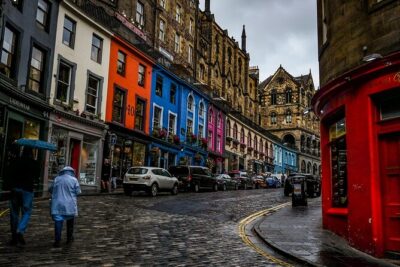
Guided 60-Minute Photography and sightseeing Tour in Edinburgh
Read our review →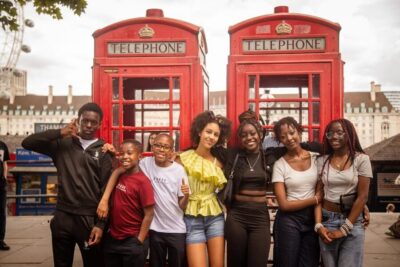
Professional Photoshoot in London Photographer
Read our review →
30 Major London Attractions Walking Tour With Photos
Read our review →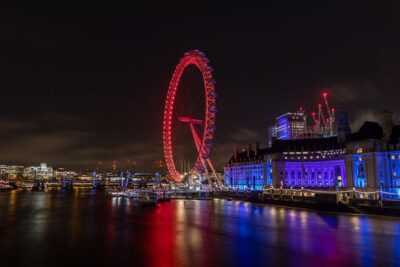
Browse the lists this tour appears in