
Reviewed · JACK THE RIPPER TOURS
Jack the Ripper: Night Murder Mystery Walking Tour in London
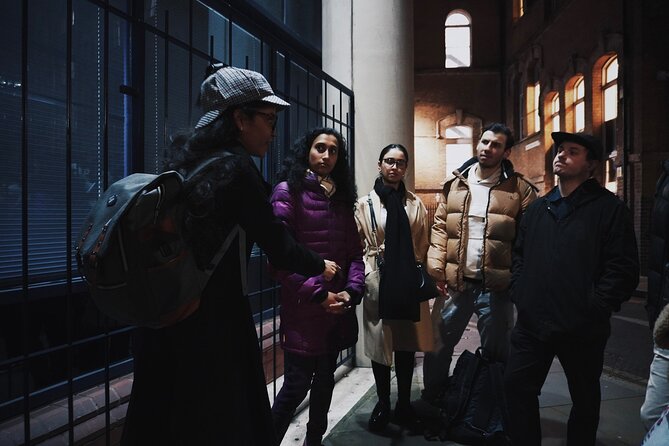
Jack the Ripper’s story feels different after dark. On this two-and-a-half-hour walk through Whitechapel, you move from street to street in the order of the murders, hearing how poverty, overcrowding, and fear shaped Victorian London. The case remains unsolved, but the setting is real, and that gives the evening its pull.
I especially like the focus on the women who were killed, not just the man who became famous. I also like the way the route uses narrow lanes, old streets, and specific clues such as the apron found on Goulston Street. The main drawback is simple: you walk for most of the tour, often without a place to sit, and one visitor found it hard to hear the guide at times.
Key points to know before you book
- Seven Whitechapel locations: Brick Lane, Princelet Street, Puma Court, the Ten Bells, Gunthorpe Street, Goulston Street, and St Botolph without Aldgate.
- Chronological storytelling: The route helps you follow how the case unfolded instead of hearing disconnected tales.
- Victims receive proper attention: The tour puts their lives and circumstances ahead of lurid details.
- Nighttime atmosphere: Darkness, narrow passages, and cool weather add mood, though rain can make the walk tougher.
- Small group size: The maximum is 25 people, which is manageable for a street tour.
- Good value at $22.93: You get about 150 minutes of guiding for less than many major London attractions.
Why this Whitechapel walk works after dark
This is not just a talk about a famous criminal. It is a walk through the East End streets connected with the case, with the guide using the setting to explain what Victorian Whitechapel was like.
The tour begins near St Marys Whitechapel Church Memorial. From there, you move through the area on foot, stopping for about 17 minutes at each listed location. The walking between stops adds up, so the full route takes about two hours and 30 minutes.
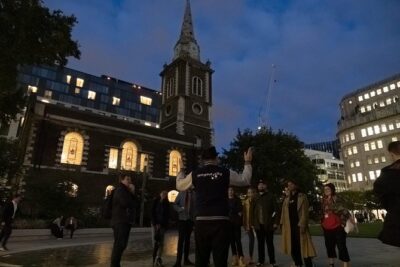
The night setting matters. You might find the streets quieter, darker, and more atmospheric than they would be during the day. That can help you picture the fear and confusion of the period, but it also creates practical concerns. Bring a warm layer, wear shoes suited to city walking, and stay close to the guide when the group moves between stops.
The guide is the key part of the experience. Names praised for strong storytelling and careful presentation include Tyson, Kory, Korey, Hadi, Dougal, Doogle, Kody, Korhan, Anahita, and Lisa. The specific guide depends on the departure, but the best ones do more than recite dates. They explain the buildings, streets, police work, newspaper reports, and social conditions around the murders.
I would not book this expecting a theatrical show with actors or elaborate props. The appeal comes from the streets, the storytelling, and the chance to weigh theories for yourself.
More Escape Rooms in London
- Interactive Jack the Ripper Night Walk: London’s Murder Mystery
★ 5.0 · 171 reviews - Private Escape Room with a Zombie in London
★ 5.0 · 128 reviews - Colombia’s Finest Outdoor Murder Mystery London
★ 5.0 · 122 reviews
Brick Lane reveals the poverty behind the case
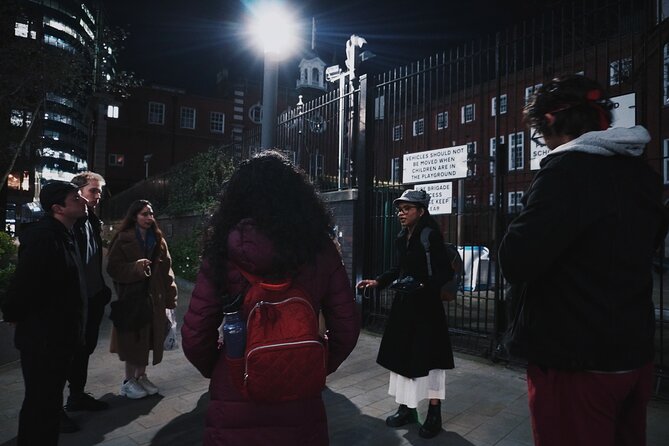
Brick Lane is the first major stop. Today, it is known for food, street art, shops, and nightlife. The tour turns your attention to its earlier role in Victorian slum life.
Here, the guide explains poverty, overcrowding, and desperation. That context is essential because the murders did not happen in an abstract mystery novel. They took place in a crowded district where vulnerable people had few safe options and where poor housing made privacy, policing, and personal security difficult.
This is one of the tour’s strongest choices. Starting with social conditions gives you a better frame for the rest of the evening. You begin to understand the victims as women living under pressure, not simply as names in a crime story.
Brick Lane can be busy, so you may need to keep close while the guide speaks. The stop itself is free, as are all the outdoor locations on the route.
Princelet Street brings the story down to human scale
Princelet Street is narrow and quieter than Brick Lane. The change in mood helps the guide move from broad social conditions to the lives of individual women, including Annie Chapman.
The discussion here looks at the way women lived and the limited choices available to them. That focus keeps the tour from becoming a parade of grisly facts. You hear about the conditions that made women vulnerable, along with the circumstances that shaped their final days.
I like this part because the street gives the story a human scale. You are not simply hearing about a district on a map. You are standing in a close urban space and considering how easily people could be overlooked.
The drawback is that the route offers little chance to rest. You may spend much of the stop standing while the guide talks, then continue walking to the next location.
Puma Court still feels close and enclosed
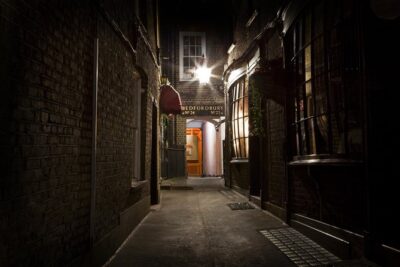
Puma Court is presented as one of the places that has changed very little since the 19th century. Its narrow form makes it easier to understand how someone could disappear from view in a crowded neighborhood.
This stop works best as a visual lesson. You can look at the passage and think about distance, corners, darkness, and limited visibility. The guide uses the location to connect the physical shape of Whitechapel with the uncertainty surrounding the crimes.
Do not expect a preserved murder site in the museum sense. Puma Court is an outdoor street location, and the experience depends on the guide explaining what happened and why the place matters. Still, it is the kind of stop you could not fully appreciate from a book or podcast.
More Walking Tours in London
- London: The Original Jack the Ripper Walking Tour
★ 4.7 · 7,833 reviews - Tour for Muggles The Ultimate Harry Potter Walking Tour in London
★ 5.0 · 4,684 reviews - London Jack The Ripper Guided Walking Tour
★ 5.0 · 3,131 reviews - London: Harry Potter Movies Walking Tour (Kids Go Free)
★ 4.7 · 3,071 reviews
The Ten Bells connects the case to everyday life
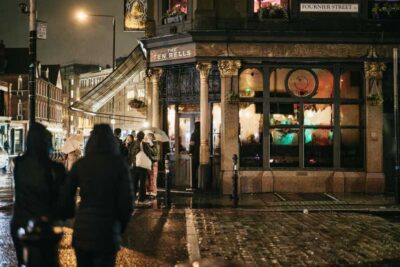
The Ten Bells is one of the most recognizable stops on the route. The pub is closely linked with the case, and several victims are believed to have visited it shortly before their deaths.
The group stops outside to discuss the women’s final hours and the pub’s place in the story. This is a useful point for separating established facts from later folklore. The Ten Bells has become a symbol of the Ripper case, but the guide can help you consider what is known, what is suspected, and what has been repeated over time.
The pub also gives the evening a natural landmark. You can see how an ordinary public house became tied to a dark chapter in London’s past. The tour description presents it as a point where the story wraps up, but the listed walking route continues afterward, so you should expect more stops before the final meeting point.
Gunthorpe Street raises the Martha Tabram question
Gunthorpe Street is linked with the murder of Martha Tabram. Some experts include her among the possible Ripper victims, while others do not. The guide uses this stop to explain why her death remains part of the debate.
This is where the interactive side of the tour becomes clearer. You are not handed one neat answer. Instead, you consider the clues and the reasons for including or excluding Tabram from the victim list.
That uncertainty is part of the appeal for anyone who enjoys mystery. It also makes the tour more honest. Jack the Ripper’s identity is not known, and even the full list of victims is debated. A good guide should show you where the evidence ends and theory begins.
Goulston Street turns one clue into a larger puzzle
Goulston Street is tied to one of the case’s most famous clues: a bloody piece of apron associated with Catherine Eddowes. Nearby, a message was written in chalk, creating controversy that has lasted for generations.
The guide explains how the apron and the chalk writing fed competing theories. The stop gives you a chance to think about the limits of police work in 1888, when investigators had fewer tools and newspapers could shape public fear within hours.
This section is likely to appeal most to true crime fans because it invites you to test theories. Still, the tour does not need to sensationalize the clue. The strongest guides use it to explain evidence, uncertainty, and the way the case grew into a public obsession.
You may want a small flashlight on your phone for walking between stops, although the experience is designed for a mobile ticket and outdoor sightseeing. Keep your phone away during the guide’s main explanations so you can hear the details and avoid falling behind.
St Botolph without Aldgate adds needed social context
St Botolph without Aldgate gives the tour one of its more reflective stops. The church was known as a place where vulnerable women could seek refuge, and the guide uses it to discuss the lack of protection available to women in Victorian London.
This is important because it shifts attention away from the killer. The women connected with the case were not merely characters in a mystery. They lived within a society that offered limited support, poor housing, and few safe choices.
I appreciate this pause in the route. The subject is grim, and a thoughtful guide needs to handle it with care. Hadi was praised for doing exactly that, presenting the material without turning suffering into entertainment. Other guides, including Dougal and Tyson, were also singled out for making the period understandable while keeping the tone respectful.
The route uses order and geography to make sense of the case
The stops are presented in a sequence that follows the murders and related events. That is a major benefit. Many Ripper tours jump between dates, names, and theories until the story becomes hard to follow.
Here, you can watch the case develop as you move across Whitechapel. The route also lets you see how close some locations are to one another. That physical connection can make the timeline easier to grasp than a list of places in a book.
The activity is described as interactive, with the guide asking you to examine clues and consider the mystery. The exact level of participation will depend on the guide and the group, but you should expect discussion rather than a formal game with a stated winner.
The final meeting point is listed at Mitre Square in the City of London. The tour information connects the ending with the death of Mary Jane Kelly, though the case has many disputed details and the route itself includes several locations tied to different victims. Treat the ending as the final point for the walk and the last opportunity to discuss the case.
Guide quality matters more than any single stop
The strongest part of this experience is the guide. Several guides were praised for remembering names, dates, locations, and newspaper details. Korey was noted for using old photographs of the neighborhood, while Kory was praised for adding facts about the buildings and local area.
That extra London context can make a big difference. You get more than a narrow crime lecture. You also learn how the East End looked and functioned, and why the area mattered to the people who lived there.
One guide stayed afterward to discuss theories. That is useful if you want to keep talking once the formal walk ends, but you should not assume every guide will offer the same amount of extra time.
There is one practical weakness to keep in mind. One person found the guide difficult to hear when he looked away while speaking. If you have trouble hearing in a group, position yourself near the front and tell the guide early. A group of up to 25 is not huge, but city traffic and other groups can still make listening difficult.
What $22.93 buys you in London
At $22.93 per person, this is a fairly modest London activity. You are paying for about 150 minutes of guiding, local storytelling, and a carefully arranged route through several parts of Whitechapel. There are no additional admission charges at the listed stops.
The value is best for you if you enjoy walking and want a guided evening rather than a museum visit. You are getting access to a part of London that you might not explore on your own, plus a clear narrative that links the streets together.
Group discounts may be available, which can make the price more appealing for families or friends. The maximum group size is 25, so this is not a private tour. Still, it is small enough to feel more personal than a large coach excursion.
The experience is offered in English. Confirmation arrives at booking, and service animals are allowed. Most people can take part, but the amount of walking and standing makes comfortable footwear important.
Who should book this Whitechapel experience
I would recommend it to you if you enjoy:
- Victorian London and social history
- Unsolved crimes and competing theories
- Guided walks with a strong sense of place
- Nighttime sightseeing
- Storytelling that treats victims with care
- Small-group activities at a moderate price
It is especially good for people who already know the basic story and want to connect it to real streets. It also works for first-time visitors who want an unusual London evening outside the main sights.
I would think twice if you dislike grim subjects, long periods of standing, cold weather, or walking in the rain. One person completed the route during torrential downpours and still enjoyed it, but poor weather can reduce your comfort and make the guide harder to hear.
You can cancel for a full refund if you do so at least 24 hours before the start time. Cancellations or changes within 24 hours are not refunded or accepted.
Should you book this Jack the Ripper tour?
Book it if you want a thoughtful nighttime walk through Whitechapel, with real locations, a clear timeline, and attention to the women affected by the crimes. At $22.93, it offers good value, especially if you want local context instead of a quick supernatural tale.
Skip it if you want a short, seated presentation or a polished theatrical performance. This is a walking tour with a grim subject, uneven streets, and a lot of standing. Choose warm clothes, good shoes, and a place near the guide. If those basics suit you, this is an engaging way to spend an evening in London.
FAQ
How long does the Jack the Ripper walking tour last?
The tour lasts approximately two hours and 30 minutes.
Where does the tour start?
The meeting point is St Marys Whitechapel Church Memorial on Unnamed Road, London E1 1FE, UK.
Where does the tour end?
The listed end point is Mitre Square, London EC3A 5DE, UK.
How many people can join the tour?
The maximum group size is 25 people.
Is the tour offered in English?
Yes. The tour is offered in English.
Can I cancel for a full refund?
Yes. You can receive a full refund if you cancel at least 24 hours before the experience start time. Cancellations made within 24 hours are not refunded.
More Evening Plans in London
- London: London by Night Sightseeing Open-Top Bus Tour
★ 4.5 · 5,516 reviews - London: River Thames Evening Cruise with Bubbly and Canapés
★ 4.4 · 2,493 reviews - London by Night Bus Tour with Christmas Lights and Live Guide
★ 4.5 · 2,040 reviews - London: Jack the Ripper Evening Walking Tour
★ 4.9 · 1,449 reviews
More Jack the Ripper Walks
- London Jack the Ripper Guided Tour with Ripper-Vision
★ 4.5 · 4,840 reviews - London: Jack the Ripper Small Group Tour
★ 4.7 · 3,159 reviews - German Language : Original Jack the Ripper Tour
★ 4.6 · 1,805 reviews - London: Jack the Ripper Walking Tour – Ripper Vision Tours
★ 4.5 · 1,752 reviews
Just added in London
- London Westminster Abbey French Tour with Fast-Track Tickets★ 4.8 · 57 reviews
- Tower of London Tour with Crown Jewels, plus River Cruise★ 4.5 · 54 reviews
- French Language: Original Harry Potter Walking Tour★ 4.6 · 503 reviews
- Changing of the Guard Experience in London★ 4.5 · 113 reviews
- Early Access:Tower of London Opening Ceremony & Royal London★ 4.8 · 49 reviews
- DreamWorks Shrek’s Adventure and London Eye: Combo Ticket★ 4.5 · 150 reviews
- Downton Abbey and Village Small Group Tour from London★ 4.8 · 280 reviews
- From London: Downton Abbey and Village Coach Tour★ 4.8 · 212 reviews
Jack the Ripper Tours, compared.
London Jack the Ripper Guided Tour with Ripper-Vision
Read our review →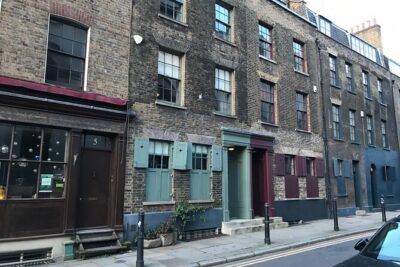
German Language : Original Jack the Ripper Tour
Read our review →
Jack the Ripper Walking Tour – Ripper Vision Tours
Read our review →
Ultimate Jack the Ripper : Guided Tour of London
Read our review →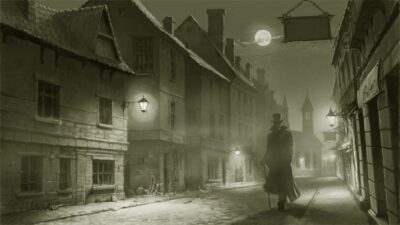
Browse the lists this tour appears in