Reviewed · LONDON TOURS
Handel Hendrix House General Admission
George Frideric Handel and Jimi Hendrix lived next door to each other, but they were separated by two centuries. At Brook Street, you can walk through Handel’s rooms at No. 25, then visit Hendrix’s small flat at No. 23 and see how two very different musicians made London home. The musical contrast is the main attraction.
I like the freedom to arrive during opening hours and explore without being tied to a guide. I also like the chance of hearing a harpsichord, strings, or an opera singer in Handel’s rooms. The main drawback is that live music is not guaranteed, and the museum is closed Monday and Tuesday.
Key points
- Two musicians, one address: See Handel’s home from 1723 to 1759 and Hendrix’s flat from 1968 to 1969.
- Handel wrote Messiah here: Explore the rooms where he composed, rehearsed, performed, and argued with opera singers.
- A recreated Hendrix room: See the main room of the flat as it looked during Hendrix’s London years, with details shaped by Kathy Etchingham.
- Music may be part of your visit: Musicians sometimes rehearse or perform on the harpsichords and other instruments.
- Easy self-guided timing: Admission is valid during opening hours, so you can allow roughly one to two hours at your own pace.
- A useful central London stop: The museum is on Brook Street, with mobile tickets and English-language displays and staff support.
Two musical lives on Brook Street
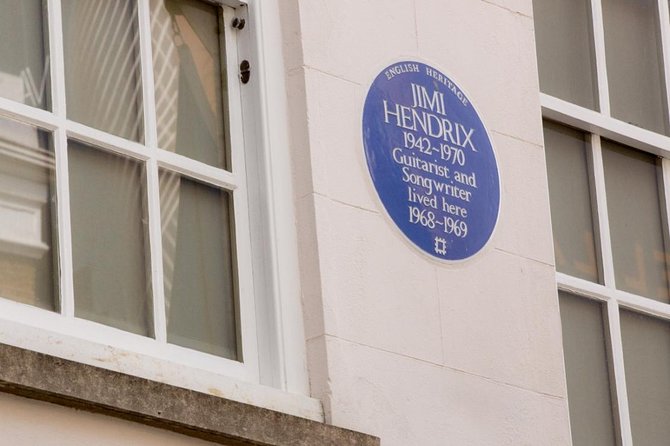
This small museum works because the pairing is so unexpected. Handel occupied the house at 25 Brook Street from 1723 until his death in 1759. Jimi Hendrix lived in the neighboring flat at 23 Brook Street from 1968 to 1969.
Handel was a leading composer of the Baroque age. Hendrix was one of the defining guitarists of the 1960s. Their music, clothes, audiences, and daily lives could hardly be more different, yet both men found a working home in the same short stretch of central London.
You begin with Handel, then move upstairs to Hendrix. That order gives the visit a pleasing rhythm. First comes the older house, with its worn staircase and music rooms. Then comes the smaller, more intimate flat linked to London’s 1960s music scene.
The experience is not a long guided tour with a fixed script. You make your own way to Brook Street, show your mobile ticket, and explore at your own pace. That makes it easy to fit between other central London plans.
A few more half-days in London worth comparing
- London: The London Eye Entry Ticket
★ 4.6 · 35,875 reviews - From London: Harry Potter Warner Bros Studio Tour
★ 4.7 · 26,588 reviews - London: Westminster to Greenwich River Thames Cruise
★ 4.5 · 22,836 reviews
Climbing Handel’s 250-year-old staircase
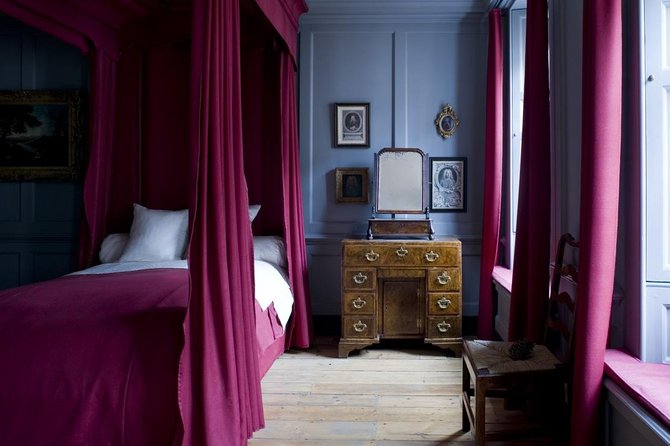
At No. 25, the physical setting does much of the work. You climb a 250-year-old staircase that is notably uneven and wonky. It is not just a route to the exhibits. It gives you a direct sense of the age of the house and the layers of life that have passed through it.
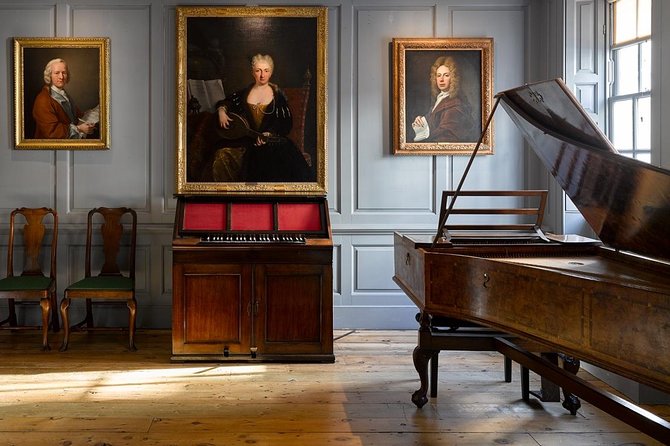
The rooms are restored as music rooms, working spaces, and private rooms. Handel composed, rehearsed, performed, and entertained musical figures here. The setting helps you picture a composer at work rather than treating him as a name on a plaque.
The house includes the rooms connected with Handel’s music making, along with his dressing room and bedroom. His bedroom is especially important because it is where he died. You also encounter the windows associated with his famously forceful temper. Handel reportedly threatened to throw opera singers out when they refused to sing his arias, a useful reminder that the composer was a working professional dealing with difficult performers, not a distant statue from a textbook.
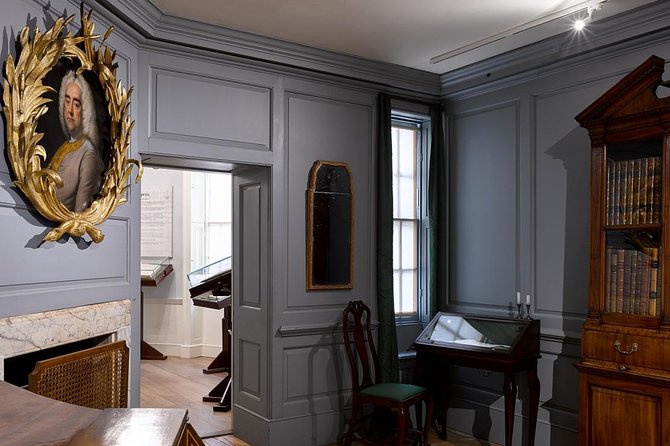
Allow time to look closely at the room arrangement. The value here is not in the number of objects. It is in seeing how a composer’s home also functioned as a rehearsal space, meeting place, and creative workshop.
Where Handel wrote Messiah

The strongest single detail in the Handel section is the connection to Messiah. Handel wrote the famous work in this house, so the rooms have a clear link to one of the best-known pieces of Western music.
That connection becomes more powerful if you know the music before arriving. You do not need to be a classical music specialist, but hearing a familiar chorus or aria in your head can make the small rooms feel much less ordinary.
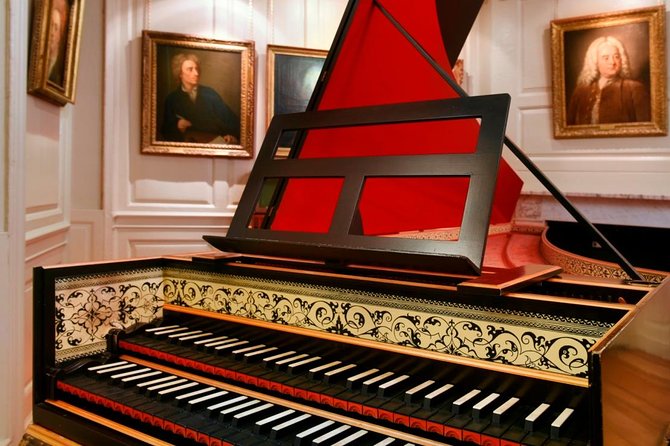
Music is sometimes performed inside the house. Harpsichords may be played, and rehearsals or vocal warmups can take place during opening hours. One particularly memorable visit could include harpsichord and strings, or the sound of an opera singer carrying through the rooms.
Treat this as a possible bonus rather than a scheduled feature. The supplied details do not promise a concert at every visit. If musicians are practicing, sit for a while and listen. It can change the entire tone of the stop, but you should not book solely on the hope of hearing live music.
Temporary displays may also be in place, covering Handel, his work, and people connected with him. The exact material can change, so the permanent rooms remain the dependable core of the visit.
Moving from Baroque London to the 1960s
The change from Handel to Hendrix happens on the third floor, where you enter the flat at No. 23. Hendrix lived there with his girlfriend Kathy Etchingham between 1968 and 1969.
The story here is not only about guitars and fame. Hendrix described the flat as the first place he had truly called home. That gives the room a personal weight that goes beyond a display of famous objects. You are seeing a domestic space connected to the period when London helped make Hendrix internationally known.
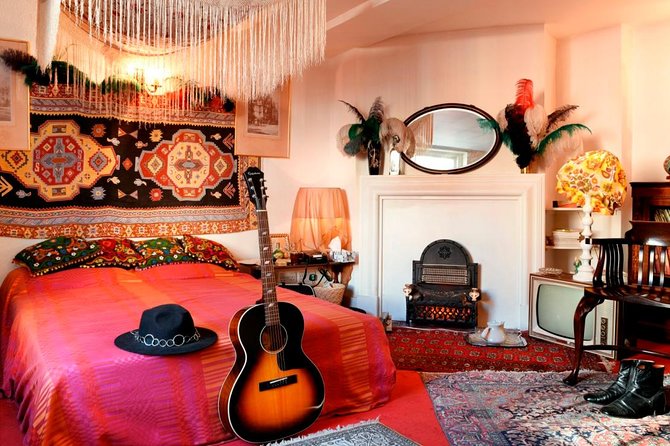
The museum recreates the main room to reflect how Hendrix had it. The room is designed to show how he lived and played, rather than simply placing memorabilia behind glass. Kathy Etchingham helped shape the recreation, which gives the presentation a direct link to someone who shared the flat and knew its daily life.
You will also find material about swinging London, the 1960s city that welcomed Hendrix and helped define his public career. The transition from Handel’s formal music rooms to Hendrix’s period flat is one of the best features of the experience. It shows how the same part of London could support very different kinds of musical life.
Same trip, a completely different kind of day:
- London: Madame Tussauds London
★ 4.6 · 20,915 reviews - London: Warner Bros. Studio Tour with Transfers
★ 4.7 · 17,586 reviews - London: Tower Bridge Entry Ticket
★ 4.7 · 15,560 reviews - London: Westminster Abbey Entrance Ticket
★ 4.6 · 11,254 reviews
The Hendrix displays worth your time
If you are visiting mainly for Hendrix, do not rush through the Handel rooms. The two parts are connected, and the Handel section is more substantial than you might expect from a museum named for both musicians.
In the Hendrix flat, pay attention to the displays about his playing and equipment. The Epiphone acoustic guitar and Roger Mayer’s Octavia are singled out for attention, with explanations of Hendrix’s use of effects and why they mattered to his sound.
Those details are useful because they connect the objects to music. A guitar or effects unit can seem like a collector’s item when displayed alone. Here, the focus is on how Hendrix used such equipment to shape his work.
The main room is the emotional center of the Hendrix section. It is modest in scale, and that is part of the point. You are not entering a grand celebrity mansion. You are entering a home associated with an artist who was still building his place in London’s music scene.
The available information does not specify every item in the flat, so you should expect a focused recreation rather than a large memorabilia collection. If you want a broad, chronological account of Hendrix’s entire career, this is not that. It is a close look at one address and a short but crucial period.
How long to allow and how to plan the visit
The stated duration is about one to two hours. I would allow the full two hours if you care about both musicians, want to read the displays, or happen to find live music in the Handel rooms.
An hour can work if you are nearby and mainly want to see the rooms. It may feel rushed if you stop to listen, speak with staff, and take in both houses properly.
The museum opens Wednesday through Sunday from 10 a.m. to 5 p.m. Last admission is at 4 p.m. The lack of Monday and Tuesday hours matters if you are building a tightly packed London itinerary. Check your day before setting off, especially if you are planning this as a short stop between other visits.
You choose your arrival time during the opening hours. This is more flexible than a timed group walk, but you still need to arrive before the last admission. The mobile ticket is practical for a quick booking and avoids the need to carry a printed voucher.
The average booking lead time is about 18 days. That does not mean you must reserve three weeks ahead, but it suggests that many people arrange this stop in advance. If the museum is important to your schedule, booking ahead is sensible.
What the $19.98 admission buys you
At about $19.98 per person, this is not the cheapest small museum stop in London. Its value depends on your interest in Handel, Hendrix, or the chance to see two preserved musical homes in one visit.
For a music fan, the price is easier to justify because the admission covers both houses and the permanent displays. You are not paying for a short exterior visit. You can spend up to two hours moving through rooms tied directly to composition, performance, domestic life, and equipment.
The possible live music improves the value when it happens. Hearing a harpsichord or an opera singer in Handel’s rooms is a rare kind of setting, but again, it is not included as a guaranteed concert.
For a casual visitor who knows little about either artist, the pairing helps. You do not need to arrive as a Handel expert. Staff can add context, and the displays provide a way into both musicians’ lives. Still, someone who has no interest in music at all may find the admission harder to justify than a larger London museum with broader subject matter.
The small scale is both strength and limitation. You get a focused visit with a strong sense of place, but not a huge collection or a full day of entertainment.
Staff, atmosphere, and the value of conversation

The staff can make a real difference here. Friendly assistance and clear explanations are especially useful in the Handel section, where dates, musical terms, and relationships among 18th-century performers may otherwise feel distant.
The Hendrix room also benefits from staff presence. A staff member or intern may be available to explain the flat, Hendrix’s life there, and the objects connected with his music. Take the opportunity to ask questions if someone is on hand. The available experience details point to staff who enjoy drawing out the links between the rooms and the music.
The atmosphere can change from quiet museum to working music space. A musician practicing in the house, a singer warming up, or the sound of strings can make the visit feel far more immediate.
There is no guarantee of a particular musician, rehearsal, or performance. The safest approach is to plan around the rooms and displays, then treat any music as an unexpected extra.
Who will get the most from this visit
I would recommend this experience most strongly to:
- Hendrix fans who want to see the London flat connected to his early fame.
- Classical music lovers interested in Handel’s working rooms and the origin of Messiah.
- Musicians who enjoy seeing real spaces where composition, rehearsal, and performance took place.
- Visitors who like focused museums rather than large institutions that require half a day.
- Families with older children who can connect with the contrast between Baroque music and 1960s rock.
It also suits a parent and child or two friends with different musical tastes. One person can arrive for Hendrix and find the Handel side more absorbing than expected, while the other can do the reverse.
I would be less likely to recommend it if you need a Monday or Tuesday visit, dislike stairs, or want a large collection of artifacts. The old staircase is part of the experience, but the building is not designed like a modern, spacious museum.
Children must be accompanied by an adult. Service animals are allowed, and most people can take part. The available details do not give a full accessibility assessment, so anyone concerned about the old staircase should contact the provider before booking.
A simple way to fit it into your London day
Because the visit takes one to two hours and has no fixed tour schedule, it works well as a planned stop in central London. Arrive with enough time to see both addresses rather than treating the museum as a quick photo opportunity.
Start with Handel and give yourself time to adjust to the older house. Look at the rooms, the staircase, the bedroom, and any temporary display. If music is being played, pause before moving on.
Then take your time in the Hendrix flat. The change in period is quick and striking, so it helps to consider the rooms side by side. Handel’s home reflects composition and formal performance. Hendrix’s flat reflects a modern musician’s private life and the energy of late-1960s London.
A gift shop is available at the end. Purchases are not included in admission, but it gives you a chance to take home a music-related souvenir if you want one.
Should you book Handel Hendrix House?
Book it if you want a compact, unusual London museum where the building matters as much as the objects. The chance to walk through Handel’s rooms, see where he wrote Messiah, then enter Hendrix’s recreated flat next door is a strong reason to go.
I would especially choose it for a music-centered day, a visit with a musician, or a trip where you want something smaller and more personal than a major museum. The possible live rehearsal or vocal warmup can be memorable, but do not count on it.
At $19.98, the admission is fair for two connected homes and up to two hours of focused material. Just check the Wednesday to Sunday schedule, arrive before 4 p.m., and allow enough time for the Handel section even if Hendrix is your main reason for coming.
FAQ
Where is Handel Hendrix House located?
It is on Brook Street in central London. Handel lived at 25 Brook Street, and Jimi Hendrix lived in the neighboring flat at 23 Brook Street.
How long does the visit take?
You should allow about one to two hours. An hour is possible for a quick visit, while two hours gives you time for both homes, displays, staff conversations, and any music taking place.
What are the opening hours?
The museum is open Wednesday through Sunday from 10 a.m. to 5 p.m. Last admission is at 4 p.m. It is not listed as open on Monday or Tuesday.
Is the ticket mobile?
Yes. A mobile ticket is provided, and the experience is offered in English.
Can I hear live music during the visit?
Musicians sometimes play harpsichords or rehearse in Handel’s rooms, and a singer may be warming up. Live music is possible but is not guaranteed as part of every admission.
Can I cancel for a refund?
You can cancel up to 24 hours before the experience start time for a full refund. Cancellations or changes made less than 24 hours before the start time are not accepted for a refund.
Just added in London
- Royal London Guided Sightseeing Tour and Thames River Cruise★ 4.0 · 31 reviews
- Westminster Abbey, Big Ben, Buckingham Guided Tour of London★ 5.0 · 451 reviews
- Roman Ruins to Blitz Bombings: A Walking Tour of London’s Fiery History★ 5.0 · 190 reviews
- Roman London Private Walking Tour★ 5.0 · 44 reviews
- River Thames Evening Cruise with Sparkling wine and Canapés★ 4.0 · 569 reviews
- Rock and Roll Walking Tour of Soho London★ 4.5 · 64 reviews
- London Private Chauffeur Half-Day or Full-Day Vehicle Rental★ 5.0 · 37 reviews
- Rich people behaving badly★ 5.0 · 47 reviews
London Tours, compared.



Westminster to Greenwich River Thames Cruise
Read our review →