
Reviewed · WALKING TOURS
Winston Churchill & London in World War II Walking Tour
London’s wartime story comes alive on the pavement here, not just behind museum glass. This small-group walk through Westminster links Parliament, the Cenotaph, the Women of World War II monument, and the Churchill War Rooms with the decisions and dangers that shaped Britain during the Blitz.
I like the personal scale, with no more than 15 people, and I like the way the guides use stories rather than simply pointing at grand buildings. Nathan, Jeremy, Francis, Babs, Richard, Martin, and Paul are among the guides praised for their humor, family stories, and clear explanations.
The main drawback is that the walk only visits the Churchill War Rooms from outside. You need a separate entrance ticket if you want to go inside, and the museum’s audio guide is not ideal for everyone. Allow extra time, since the bunker complex can be confusing to exit.
Key points to know before booking
- The route covers Westminster’s wartime landmarks: Walk from Westminster Bridge to Parliament, Whitehall, Horse Guards Parade, and the Churchill War Rooms.
- The group is capped at 15 people: That gives you a better chance to hear the guide and ask questions than on a large coach tour.
- The storytelling is the main attraction: Guides such as Nathan, Jeremy, Francis, and Babs bring in Battle of Britain accounts, family memories, and British humor.
- Churchill War Rooms entry is optional: The walking tour ends outside, and admission is not included unless you choose an option that adds the ticket.
- The walking pace is manageable: The route is described as not strenuous, though you will be outdoors for much of the experience.
- Book ahead for popular dates: This tour is often booked about 37 days before the start date.
Why this Westminster walk works
This is not a general sightseeing stroll with a few wartime facts added on. Its focus is the political center of London during World War II, where government decisions, military planning, public memorials, and national symbolism sit close together.
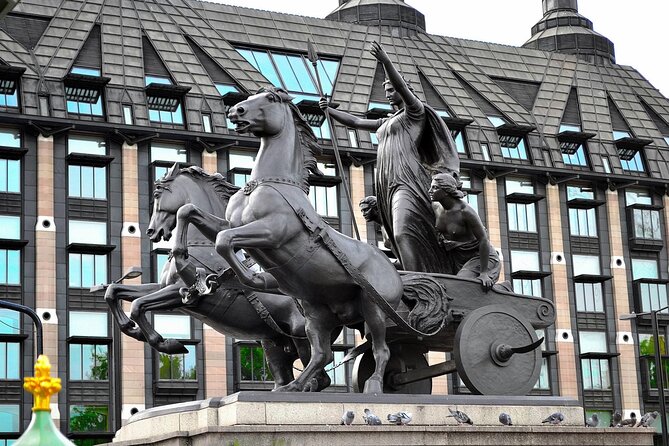
You begin at Boadicea and Her Daughters on Victoria Embankment, near Westminster Bridge. From there, the route moves through a compact part of central London. You see major landmarks that many people photograph quickly, then hear how they fit into the tense years before and during the war.
I like that the route gives you both the grand public story and smaller details. Parliament represents national decision-making. The Cenotaph represents remembrance. The underground War Rooms point to the private machinery of government. Together, they give the walk a clear shape.
The tour is offered in English and led by a local guide. The strongest guide names associated with the experience include Nathan, Jeremy, Francis, Babs, Richard, Martin, and Paul. Individual personalities will vary, but the most praised qualities are easy-to-understand explanations, humor, and a strong command of Churchill and London during the war.
The group limit of 15 matters. Westminster can be noisy, and guides often stop near busy roads or open squares. A smaller party makes it easier to stay together and hear the details. It also makes a question about Churchill, the Blitz, or British politics more likely to receive a proper answer rather than a rushed response.
More Walking Tours in London
- London: The Original Jack the Ripper Walking Tour
★ 4.7 · 7,833 reviews - Tour for Muggles The Ultimate Harry Potter Walking Tour in London
★ 5.0 · 4,684 reviews - London Jack The Ripper Guided Walking Tour
★ 5.0 · 3,131 reviews
Westminster Bridge and the threat from the air
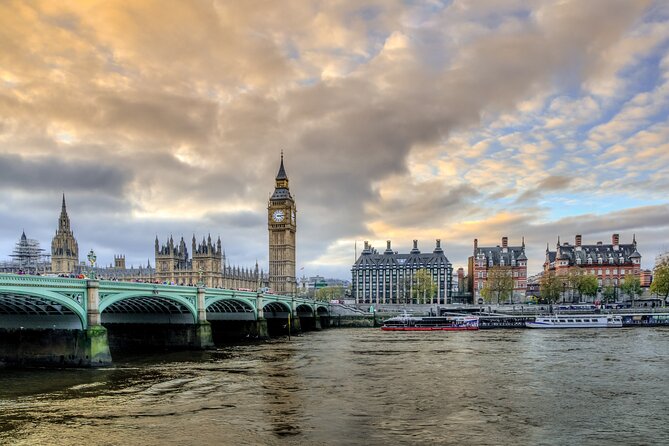
The first stop is Westminster Bridge, painted green to match the Houses of Commons. It is a useful opening point because you immediately face the heart of British government while standing beside the Thames.
The guide discusses the wartime danger around the bridge, including the fact that unexploded World War II bombs are still found in London. That detail gives the city’s wartime past a physical edge. The war is not only a matter of old photographs. Reminders can still appear beneath modern streets and construction sites.
You spend about five minutes here, outside and without an admission charge. This is mainly a briefing stop, so do not expect a long riverside talk. Its value comes from setting the scene before the route turns toward Parliament.
Parliament during the Blitz
At the Houses of Parliament, the guide explains how the center of British government faced the threat from Nazi Germany. The story includes the warning signs before the conflict, the role of Parliament, the silence of Big Ben, and the Luftwaffe aircraft overhead.
The building is visited from outside, and no entrance ticket is included. That is important if you hoped to tour the interior. This experience is about the wartime meaning of the building and the surrounding streets, not an architectural visit inside the Palace of Westminster.
I find this stop useful because it connects Churchill’s speeches and wartime leadership to a real working government. The familiar clock tower can seem almost too polished and ceremonial. Hearing about blackout conditions, bombing, and the decision-making pressure makes the setting feel less like a postcard.
The talk lasts roughly 10 minutes. Expect information rather than a long pause for photographs.
Parliament Square and the idea of democracy
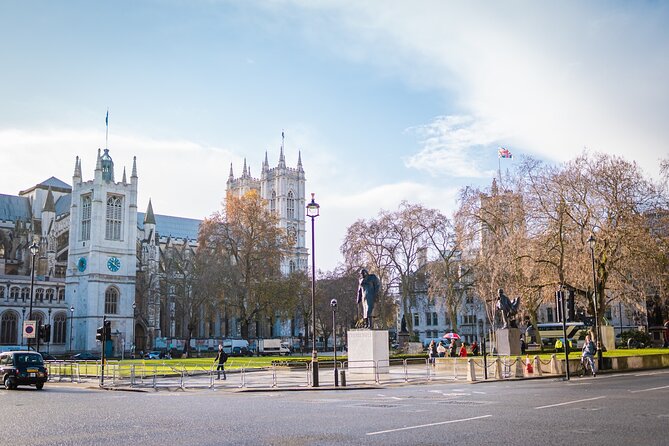
Parliament Square shifts the focus from wartime operations to the values Britain claimed to defend. Its statues include Mahatma Gandhi, Millicent Fawcett, and Abraham Lincoln, along with other political figures.
The guide uses the square to discuss democracy during the dark years of World War II. That gives this stop more purpose than a simple roll call of statues. You are encouraged to think about the contrast between parliamentary government in Britain and the dictatorship threatening Europe.
The stop lasts around 10 minutes and is outside. There is no admission fee. Because the square is open and central, the guide may need to position the group carefully so everyone can hear. A small party helps here.
This is also a good moment to ask questions about Britain’s political response to the war. The tour’s strongest guides are praised for adding context beyond the obvious facts, including how the buildings were used and how the crisis affected ordinary people.
More wartime London tours and war rooms tickets:
- Westminster 3 Hour Walking Tour and Visit of Churchill War Rooms
★ 5.0 · 967 reviews - WW2 London Walking Tour & Churchill War Rooms Entrance Ticket
★ 4.5 · 933 reviews - London: Westminster WW2 Tour & Churchill’s War Rooms Ticket
★ 4.5 · 925 reviews - London in WW2 Walking Tour with Churchill War Rooms Visit
★ 5.0 · 721 reviews
Westminster Abbey and the local effort to save it
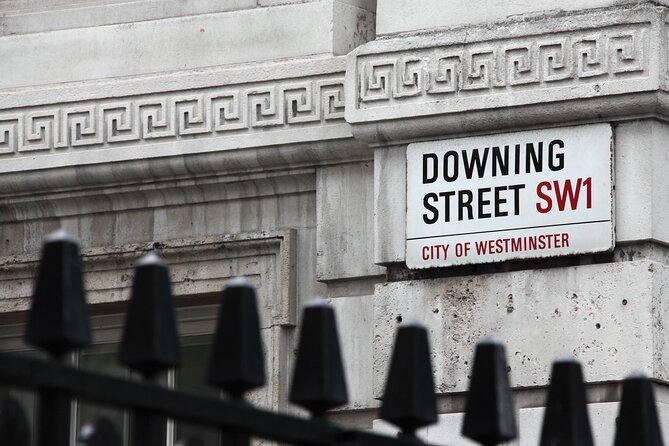
Westminster Abbey is another outside stop. The guide explains its role as a major church and landmark, along with the story of how it survived the Blitz with help from local people.
You will not enter the abbey on this tour. That limitation is worth noting because Westminster Abbey usually demands an entire visit of its own. If you want to see the interior, tombs, chapels, and memorials, you must arrange a separate admission.
The wartime story here adds a human scale. Government leaders and generals dominate many World War II accounts, but buildings also survived because people worked to protect them. The guide’s job is to turn that idea into a short story while keeping the group moving.
Allow about 10 minutes. This is a viewing and storytelling stop, not a full abbey tour.
Whitehall, the Cenotaph, and women’s wartime service
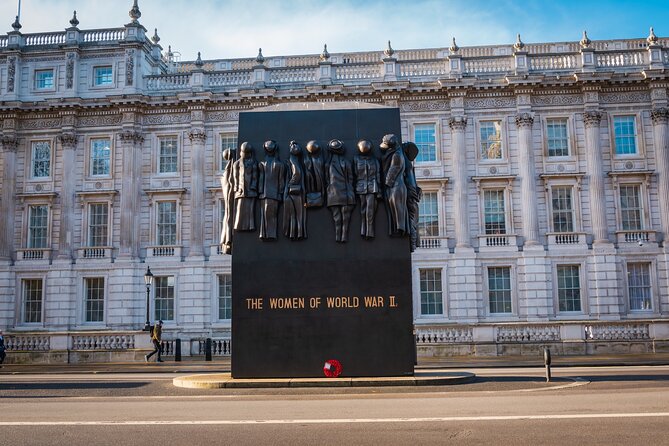
Whitehall is the core of the walk. It housed major government departments, including the Ministry of Defence, and it remains one of the clearest places in London to see how the state operated.
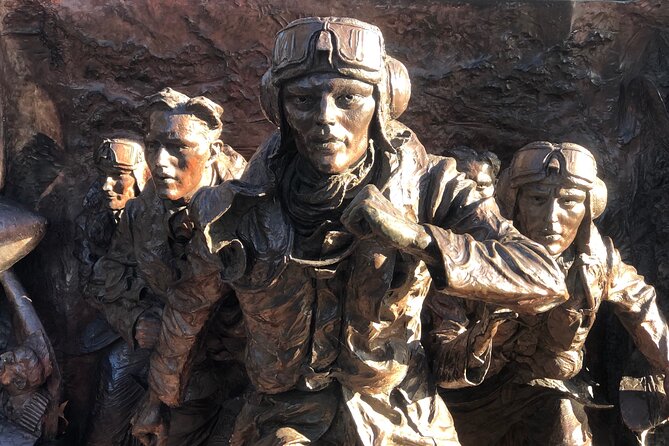
The group stops at the Cenotaph, the national war memorial, and the Women of World War II monument. These memorials broaden the story beyond Churchill and military commanders. You hear about the men and women who served, worked, and died during the conflict.
This is the longest stop at about 20 minutes, and rightly so. The memorials give the guide a chance to discuss sacrifice and public memory rather than rushing from one famous building to the next. I especially like that the women’s monument is included. It helps correct the usual tendency to tell the war mainly through male political and military figures.
This part of the route is free and outdoors. The Cenotaph is also a working memorial, so respectful behavior is essential. You may find traffic and pedestrians nearby, but the walk’s small size helps the group pause without becoming unwieldy.
Horse Guards Parade and a royal backdrop
Horse Guards Parade provides a change of mood. You can see the mounted cavalry of the Queen’s Horseguards and photograph the ceremonial setting associated with the official entrance to Buckingham Palace.
The guide keeps this stop tied to the route rather than treating it as a separate royal tour. It is a good place for photographs and a short break from the heavier wartime material.
The stop lasts about 10 minutes and is free. Mounted guards and ceremonies are not guaranteed to follow a fixed pattern in the information provided, so treat the horses as a possible highlight rather than the sole reason to book.
The location also helps you understand how close the machinery of government, military ceremony, and royal life are in central London. In a few minutes, the route moves from memorials for wartime service to one of the city’s most recognizable ceremonial spaces.
Finishing at the Churchill War Rooms
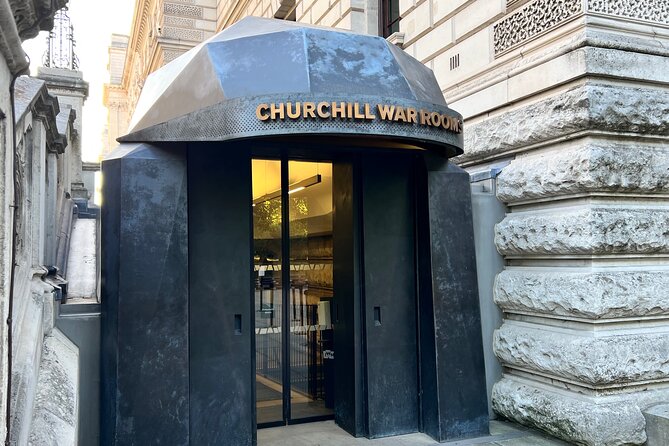
The walk ends outside the Churchill War Rooms on King Charles Street. The underground complex became the center of Britain’s government war effort, where officials worked to respond to the threat of invasion and direct the conflict.
This is the natural finish to the walk. You have just heard about Parliament, Whitehall, and wartime leadership. The War Rooms then offer the chance to see where much of that work happened below ground.
Entry is not included in the standard tour. The experience offers an option to add tickets for convenience, but you should check the exact booking choice before paying. If you arrange admission separately, plan your schedule around the walking tour’s end, which is listed as about 2:30 p.m. for the relevant departure.
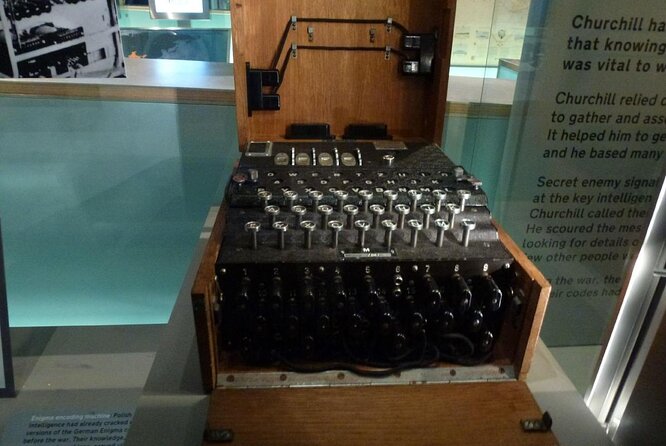
Inside, the museum uses an audio guide. That lets you move at your own pace, which suits people who want to stop and read every display. It may frustrate you if you prefer a live guide and a flowing group explanation. One visitor found the audio format difficult and left before finishing, while others valued being able to spend as much time as they wished.
The rooms can also feel confusing when you are trying to find the exit. Give yourself plenty of time rather than treating the museum as a quick 20-minute add-on. The walking tour prepares you for the setting, but the museum is a separate experience with its own pace.
Price, pace, and practical value
At $38.89 per person, the walking tour is fairly priced for a 90-minute to three-hour guided experience in central London, especially with a maximum group size of 15. The value comes from the guide’s interpretation, not from included admissions.
You are paying for a local English-speaking guide, a planned route, and a focused narrative that connects several important places. You are not paying for Westminster Abbey, the Houses of Parliament, food, drinks, hotel transport, or standard entry to the Churchill War Rooms.
The duration needs a little flexibility. The advertised range is approximately one and a half to three hours, while several accounts describe the walk itself as roughly two hours. Stops, group questions, the guide’s pace, and the chosen departure can affect the timing.
The walk is described as not strenuous, and multiple accounts praise its easy pace. You still need comfortable shoes because the experience takes place outdoors and involves moving between stops. There is no hotel pickup or drop-off, so plan your own route to Victoria Embankment and away from King Charles Street.
The starting point is Boadicea and Her Daughters on Victoria Embankment, London SW1A 2JH. The endpoint is the Churchill War Rooms at King Charles Street, London SW1A 2AQ. The two locations are central and near public transport, but you should arrive at the exact meeting point rather than simply heading toward Westminster Bridge.
Free cancellation is available if you cancel at least 24 hours before the start time. Changes made inside that window are not accepted, and a minimum group size is required for the tour to run.
Who will get the most from this tour?
I would choose this walk if you want a strong introduction to Churchill and wartime Westminster before visiting the War Rooms. It suits first-time visitors who want major London sights with a clear theme, as well as history fans who already know the basic story but want more local detail.
It also works well for families with older children and teenagers. One booking was made for a parent’s husband and teenage sons, who returned eager to keep listening. The mix of famous landmarks, aircraft, political drama, memorials, and military ceremony gives the subject more variety than a museum alone.
The experience can also suit locals. The route may reveal details around familiar buildings that you have never stopped to consider. Several guides bring in stories of Battle of Britain pilots, wartime residents, or family experiences, which can make the material feel personal without turning the tour into a lecture.
I would be cautious if you want a full interior tour of Parliament or Westminster Abbey, since neither is included. I would also think twice if you dislike audio guides, because the War Rooms use one. In that case, book the walking tour for the outdoor history and decide separately if the bunker museum suits you.
Should you book the Churchill and London World War II walk?
Book it if you want story-led sightseeing in a small group and plan to visit the Churchill War Rooms afterward. Nathan, Jeremy, Francis, Babs, Richard, Martin, and Paul are all associated with especially warm praise for clear explanations, humor, and engaging wartime stories.
The walk is not a substitute for entering the War Rooms, Parliament, or Westminster Abbey. It is a well-focused introduction to the streets and buildings around them. At $38.89, it offers good value if you want context, a relaxed pace, and a guide who can turn familiar landmarks into meaningful wartime sites.
Allow extra time for the museum, confirm whether your booking includes its ticket, and arrive ready for an outdoor walk. If that plan fits your day, this is a useful way to place Churchill’s wartime leadership in the setting where it happened.
FAQ
How long does the walking tour last?
The experience lasts approximately 1 hour 30 minutes to 3 hours. Several descriptions place the walk itself at about two hours, with the end noted as around 2:30 p.m. for the relevant departure.
Is entry to the Churchill War Rooms included?
Standard entry is not included. You can choose an option that adds Churchill War Rooms tickets for convenience, or arrange admission separately.
Does the tour enter Westminster Abbey?
No. Westminster Abbey is visited from outside, and admission is not included.
Does the tour enter the Houses of Parliament?
No. The Houses of Parliament are visited from outside, and no admission ticket is included.
Where does the tour start?
The meeting point is Boadicea and Her Daughters on Victoria Embankment, London SW1A 2JH, UK.
Where does the tour end?
The walking tour ends outside the Churchill War Rooms on King Charles Street, London SW1A 2AQ, UK.
How large is the group?
The group is limited to a maximum of 15 people.
What language is the tour offered in?
The tour is offered in English with an English-speaking local guide.
Just added in London
- Royal London Guided Sightseeing Tour and Thames River Cruise★ 4.0 · 31 reviews
- Roman Ruins to Blitz Bombings: A Walking Tour of London’s Fiery History★ 5.0 · 190 reviews
- Roman London Private Walking Tour★ 5.0 · 44 reviews
- Westminster Abbey, Big Ben, Buckingham Guided Tour of London★ 5.0 · 451 reviews
- River Thames Evening Cruise with Sparkling wine and Canapés★ 4.0 · 569 reviews
- Rock and Roll Walking Tour of Soho London★ 4.5 · 64 reviews
- London Private Chauffeur Half-Day or Full-Day Vehicle Rental★ 5.0 · 37 reviews
- Rich people behaving badly★ 5.0 · 47 reviews
Walking Tours, compared.
Underground Vaults Walking Tour in Edinburgh Old Town
Read our review →
Oxford University Walking Tour With University Alumni Guide
Read our review →
Edinburgh Castle: Guided Walking Tour with Entry Ticket
Read our review →
Edinburgh Castle Guided Walking Tour in English
Read our review →
Tour for Muggles The Ultimate Harry Potter Walking Tour in London
Read our review →
University and City Walking Tour with Alumni Guide
Read our review →
Edinburgh Darkside Walking Tour: Mysteries, Murder and Legends
Read our review →
Browse the lists this tour appears in