
Reviewed · DISTILLERY TOURS
Scotch Whisky Tasting – The True Spirit of Scotland
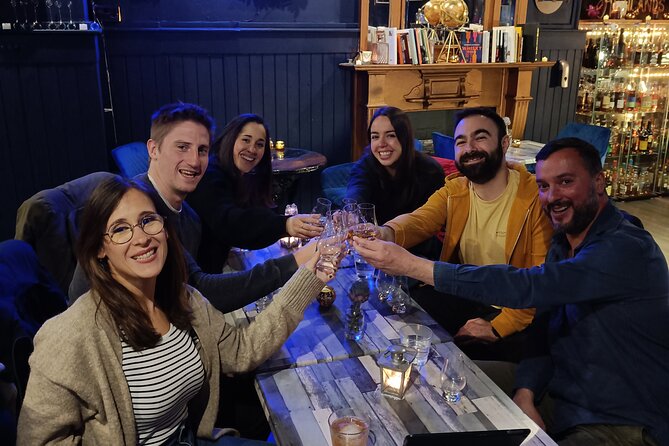
The most interesting part of this Edinburgh tasting is the new make spirit, whisky before it spends time in a barrel. Alongside three single malts, it lets you taste the starting point before oak, age, and time change the drink. Guides such as Marcus, Nick, David, Victoria, Richard, Carlos, and Maria bring the history and tasting lessons to life.
I like the way the tour links whisky to Edinburgh, not just to distilleries far beyond the city. I also like the easy central setting, where you begin at John Knox House and finish back at the meeting point near the Royal Mile. The main consideration is simple: at about 90 minutes, this is an introduction rather than a full distillery visit, and snacks are not included.
Key points at a glance

- Four pours with a useful contrast: Three single malts from Scottish regions plus one unaged new make spirit.
- A tasting lesson, not just a drinking session: Learn how to assess aroma, flavor, style, and regional character.
- A central Edinburgh route: Meet at 43 High Street by John Knox House and walk to a whisky bar nearby.
- History tied to place: The talk covers Scotch’s origins, its Golden Age, and Edinburgh’s role in its rise.
- A welcoming format for beginners: The relaxed setting and question-friendly guides suit people who are new to whisky.
- A small maximum group: The activity allows up to 25 people, although the actual group may be smaller.
Starting at John Knox House on the Royal Mile
The experience begins at 43 High Street, Edinburgh EH1, at the entrance to John Knox House. This is a practical meeting point on the Royal Mile, close to public transportation and easy to reach if you are already exploring Edinburgh’s Old Town.
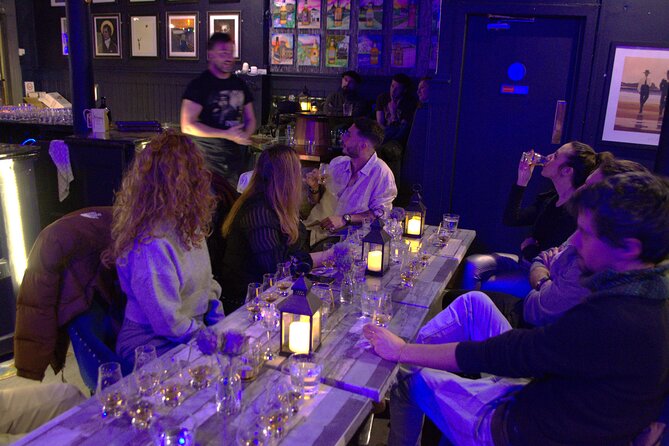
From there, the guide leads the group to a central whisky bar for the tasting. The walk matters because it gives the session a sense of place. You are not simply sitting in a room listening to a lecture about Scotland. You begin among the old streets of Edinburgh, then continue the conversation in a setting made for whisky.
The end point is back at the meeting point. That is useful if you are planning the rest of your day around the Royal Mile. It also means you should not need private transportation, which is not included.
More Distillery Tours in Scotland
- The Scotch Whisky Experience Guided Whisky Tour – An Introduction to Whisky
★ 4.5 · 1,578 reviews - Scotch Whisky Tasting & Stories — Bespoke Whisky Lounge
★ 5.0 · 972 reviews - Visit a Working South Loch Gin Distillery
★ 5.0 · 247 reviews
Four spirits that show where Scotch begins
The core of the tasting is three single malts from regions across Scotland, followed by a new make spirit. The exact bottles are not specified, so you should not book this expecting a named distillery or a fixed whisky menu.
That flexibility can be an advantage. A good guide can use the selected bottles to explain differences in style rather than simply walking you through a brand list. You may learn how location, production choices, maturation, and local traditions affect what appears in the glass.
The new make is especially useful. It is unaged whisky, so it has not yet taken on the color and barrel character associated with mature Scotch. Tasting it beside finished single malts gives you a clearer sense of what time in wood contributes.
For someone new to whisky, four samples are enough to compare without turning the session into a long drinking event. You can pay attention to changes in aroma and flavor from one pour to the next. If you already drink Scotch, the new make adds a point of comparison that many casual tastings skip.
The activity includes the alcoholic drinks, but no snacks. Eat beforehand, especially if you are not used to tasting spirits. The supplied information does not promise a meal or food pairing.
Learning to taste instead of simply taking a sip
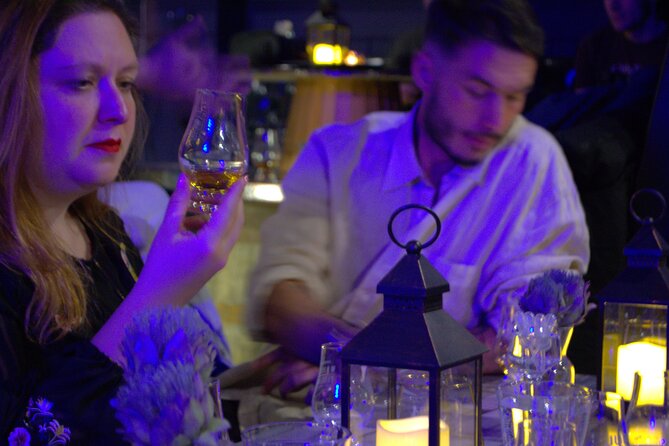
The guide explains how to taste whisky in a more useful way. You will be encouraged to notice differences among the samples and to think about what you smell and taste, rather than deciding only whether you like a particular bottle.
That makes this a good first step for anyone who has found whisky confusing. You do not need to arrive with a trained palate or a favorite distillery. The session is designed to explain the basics in plain terms and help you identify the styles that suit you.
The teaching also appears to be flexible. Several guides are described as adapting their explanations to the group’s questions and previous experience. If you are a beginner, you can ask basic questions without feeling out of place. If you already know some Scotch, you can focus on production, regions, and the finer differences among the pours.
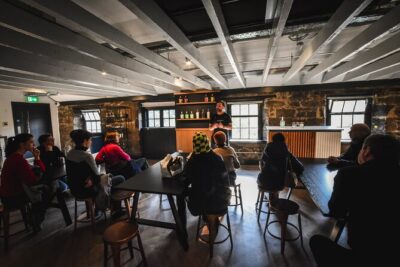
The relaxed bar setting helps here. It is less formal than a classroom and more social than a standard museum display. You can meet other people interested in Scottish whisky, while still having room to ask questions and follow the guide’s presentation.
From early Scotch to Edinburgh’s Golden Age
The history section covers the origins and evolution of Scotch, then moves into the Golden Age of whisky. It also explains Edinburgh’s influence on Scotch’s fame.
That local connection gives the talk more substance than a generic tasting. Edinburgh has long been an important place for whisky trade, drinking culture, and public attention, and the tour connects the city around you with the drink in front of you.
The guide also shares anecdotes about whisky and Scotland. These stories help break up technical information about production and regions. The emphasis is not only on how whisky is made, but also on how it became part of Scottish identity and international culture.
One small point to keep in mind is that the information provided does not promise a particular ghost story or a full walking tour of Old Town. One participant specifically hoped for a ghost story, so if you want folklore, ask the guide about it. The main subject remains Scotch, not Edinburgh’s supernatural tales.
Same trip, a completely different kind of day:
- Peterhead Prison Entry Ticket
★ 5.0 · 679 reviews - Bungee jump from 40 meters in the stunning valley of Killiecrankie, Scotland
★ 5.0 · 500 reviews - Discover Canyoning at Bruar Falls
★ 5.0 · 409 reviews - Stirling Old Town Daily Walking Tour (11am & 2pm)
★ 5.0 · 279 reviews
Comparing Scotland’s whisky regions
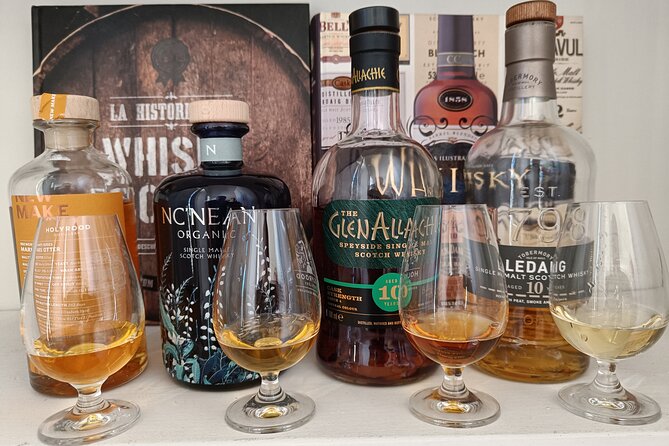
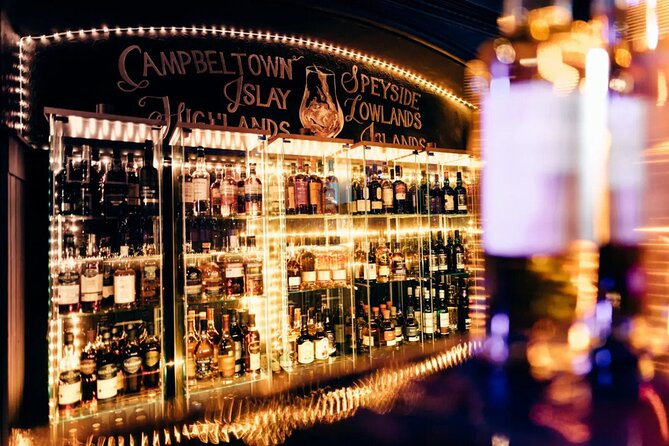
The tasting introduces the five areas of whisky distilling in Scotland and explains why they differ. The samples are selected from regions across the country, giving you a way to connect geography with style.
Do not expect the session to turn regional labels into rigid rules. Whisky can vary from bottle to bottle, even within the same part of Scotland. Still, regional comparisons are a helpful starting point, especially when you are trying to understand why two single malts can taste so different.
The guide’s job is to give you a framework. You might notice that one sample seems lighter, another more forceful, and another shaped by a distinct production or maturation style. The point is not to memorize every regional category. It is to leave with a better sense of what to look for when you order or buy Scotch later.
This is one of the strongest reasons to choose the experience over an ordinary whisky bar visit. At a bar, you may taste one drink without much context. Here, the samples are paired with an explanation of where they fit within Scotland’s wider whisky tradition.
The guides make the difference
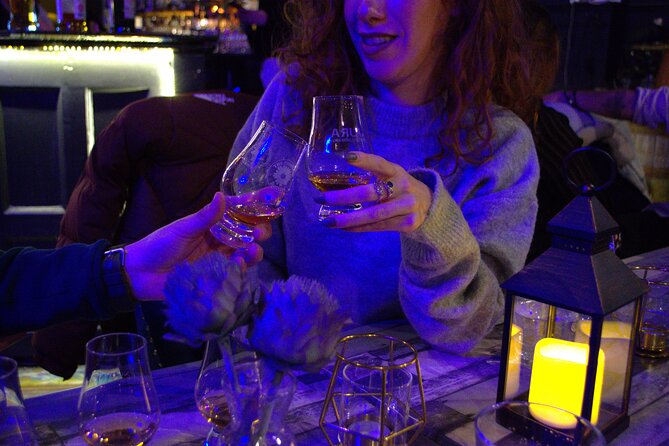
The experience uses local English-speaking guides, and the available guide names include Marcus, Nick, David, Victoria, Richard, Carlos, Maria, Marcos, and Fernando. Your guide is not guaranteed to be one particular person, so you should think of these names as examples of the host team rather than a promise.
The common strength across the hosts is their focus on clear explanation and conversation. Marcus and Marcos are described as especially strong on Scotch history, regional styles, and questions. Nick is associated with a thorough presentation and an easy manner. David is described as making the tasting collaborative, while Victoria is noted for offering information beyond whisky itself.
Richard’s version includes historical details about Edinburgh on the way to the bar. Carlos presents the whisky process, regions, and drinking styles in an entertaining format. Maria is associated with a lively and well-informed session, and Fernando with a useful introduction for people getting started.
You should not read this as a scripted lecture delivered in exactly the same way every time. The experience seems to depend a good deal on the guide’s personality. That is both a strength and a modest uncertainty. A warm host can turn a basic tasting into a memorable hour and a half, while someone hoping for a highly formal spirits course may find the tone more relaxed than expected.
Who gets the best value for $52.73?
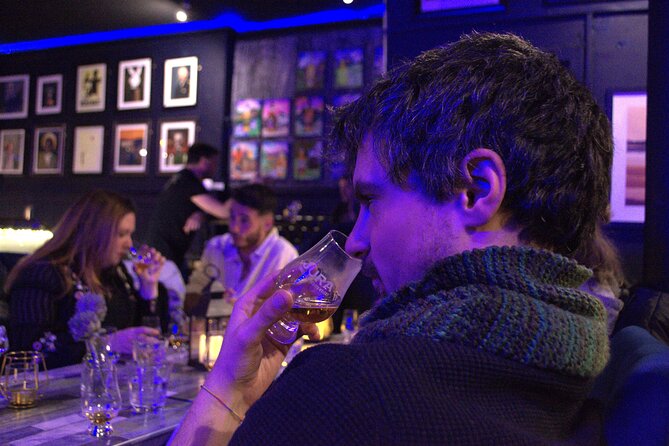
At $52.73 per person, the price is reasonable if you want guided instruction and four pours in central Edinburgh. You are paying for the guide’s time, the whisky, the venue, and the connection between the drinks and Scotland’s history.
The value is strongest for a beginner. Instead of ordering several whiskies at random, you receive an organized comparison and an explanation of what you are drinking. You may also leave with a clearer idea of which Scotch styles to seek out in a shop or bar.
The price is less compelling if your only aim is quantity. This is a 90-minute educational tasting, not an evening of unlimited drinks. Only three single malts and one new make are included, and snacks cost extra if you need food.
I also think the central location adds practical value. You can fit the tasting into a day of Old Town sightseeing without arranging a long trip to a distillery. If you have limited time in Edinburgh, that convenience may matter more than visiting a production site outside the city.
The activity is often booked well ahead, with an average booking time of 38 days. If the date or time matters to you, reserve early rather than assuming you can walk in at the last moment.
Group size, pace, and the bar setting
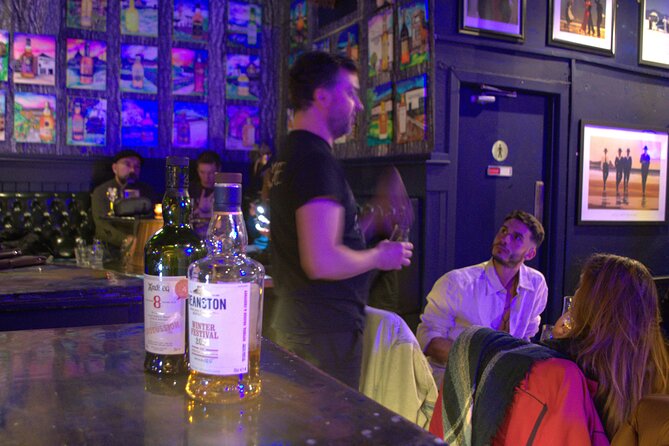
The maximum group size is 25 people. That is not an intimate private tasting, but the group may be smaller. Some sessions have been described as having only four participants, which allows more questions and a more personal exchange with the guide.
A larger group can make the atmosphere more social, but it may limit the amount of individual attention you receive. If you want a private lesson or a guaranteed small group, this may not be the right format.
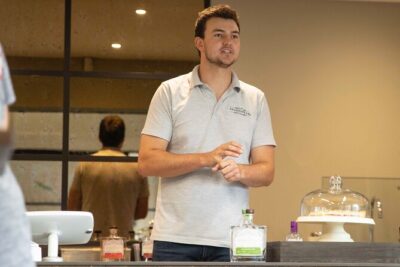
The bar setting keeps the mood low-key. You can expect a social gathering rather than a stiff formal event. That suits couples, solo visitors, and friends who want to learn together.
Because the activity ends back at the meeting point, it is easy to continue nearby afterward. I would still plan your next stop with some care. Four samples may be modest for an experienced whisky drinker, but they are enough to affect your judgment if you drink quickly.
Who should book this tasting?
I would recommend it to:
- First-time whisky drinkers who want a clear introduction.
- People who enjoy history and want to connect Scotch with Edinburgh.
- Couples or friends looking for a short evening activity.
- Visitors who want a central experience without traveling to a distillery.
- Scotch drinkers curious about new make spirit.
- Anyone who prefers a relaxed guide-led session over choosing drinks alone.
You might skip it if you want to see stills, warehouses, or the full whisky-making process at a working distillery. Those details are discussed, but this is a tasting in a central bar, not a production tour.
It may also be a poor fit if you do not drink alcohol. The central activity is sampling four spirits, and there is no stated nonalcoholic alternative.
Practical details before you reserve
The tour lasts about one hour and 30 minutes and is offered in English. Mobile tickets are accepted, and confirmation arrives when you book.
Service animals are allowed, and the meeting point is near public transportation. Private transportation is not included, but the central start and finish make it unnecessary for most people already in Edinburgh.
You can cancel for a full refund up to 24 hours before the start time. Cancellations or changes made less than 24 hours in advance are not accepted for a refund. The activity also requires a minimum number of participants, so if the operator cancels for that reason, you receive the choice of another date or experience, or a full refund.
Should you book the Scotch Whisky Tasting?
Book it if you want a well-paced introduction to Scotch with three single malts, a revealing new make spirit, and a guide who can connect whisky to Edinburgh’s past. The central meeting point, short duration, and relaxed bar make it easy to add to an Old Town itinerary.
I would be especially keen to book this for someone who says they are not a whisky person yet. The tasting gives you room to learn without needing prior knowledge, and the guides can help you work out what you like.
Skip it if you want a full distillery visit, food pairings, or a long list of pours. For most first-time visitors, though, the combination of regional comparison, local history, and approachable instruction makes $52.73 a fair price.
FAQ
Where does the Scotch whisky tasting begin?
It begins at the entrance of John Knox House, at 43 High Street, Edinburgh EH1, UK.
Where does the tasting take place?
The group walks from John Knox House to a central whisky bar in Edinburgh for the tasting.
Where does the activity finish?
The activity ends back at the meeting point at John Knox House.
How long does the experience last?
It lasts approximately one hour and 30 minutes.
How many whiskies are included?
You receive three single malt tastings from regions across Scotland plus one new make spirit, which is unaged whisky.
Is new make spirit aged whisky?
No. New make spirit is unaged whisky, tasted before barrel aging changes its color and character.
Is the guide available in English?
Yes. The experience is offered in English.
Is transportation included?
No. Private transportation is not included. The activity begins and ends in central Edinburgh and is near public transportation.
How many people can join the activity?
The maximum group size is 25 participants.
Can I cancel for a full refund?
Yes. You can cancel at least 24 hours before the start time for a full refund. Changes or cancellations made less than 24 hours before the start time are not accepted for a refund.
More Food Tours in Scotland
- Tranent: Glenkinchie Whisky Distillery Tour and Tasting
★ 4.9 · 41 reviews - London Bridge & Borough Market Food Tour with 7 Authentic Dishes
★ 5.0 · 1,972 reviews - Edinburgh Food Tour with Scotch, Haggis, a Secret Dish & More
★ 5.0 · 1,172 reviews - London Foodie Adventure:More than 10 dishes with Sherpa Food Tour
★ 5.0 · 932 reviews
Just added in Scotland
- From Aberdeen: North East Coastal Trail Small-Group Tour★ 4.8 · 122 reviews
- Tranent: Glenkinchie Whisky Distillery Tour and Tasting★ 4.9 · 41 reviews
- From Aberdeen: Coastal Villages of Aberdeenshire Tour★ 4.9 · 149 reviews
- From Aberdeen: Balmoral Estate & Royal Deeside Tour★ 4.9 · 243 reviews
- Aberdeen City Centre Walking Tour (2pm)★ 5.0 · 217 reviews
- Dunnottar Castle and Royal Deeside Small-Group Tour from Aberdeen★ 5.0 · 196 reviews
- White Water Rafting on the River Tay from Aberfeldy★ 5.0 · 268 reviews
- Boat Seafari Adventure★ 5.0 · 192 reviews
Distillery Tours, compared.

The Scotch Whisky Experience Guided Whisky Tour – An Introduction to Whisky
Read our review →
Edinburgh Food Tour with Scotch, Haggis, a Secret Dish & More
Read our review →
Scotch Whisky Tasting & Stories — Bespoke Whisky Lounge
Read our review →
Bombay Sapphire Gin Distillery Tour and Cocktail
Read our review →
Highland Lochs, Glens & Whisky Day Tour Including Admission
Read our review →
Holyrood Distillery Whisky and Gin Tour & Tasting
Read our review →Browse the lists this tour appears in