
Reviewed · CANTERBURY TOURS
The Canterbury Classic Tour
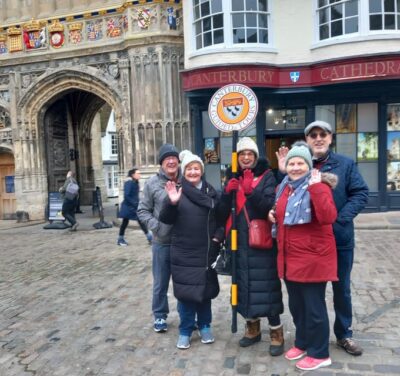
Canterbury’s story is much stranger than a cathedral visit alone suggests. This 90-minute walking tour links Chaucer, Roman ruins, medieval defenses, Christopher Marlowe, Thomas Becket, odd clocks, and even a dove in a pope’s ear. Guide Sam gives the city a lively human voice, with room for questions in a group limited to 10.
I like the small size and the range of subjects. You get the famous names, but also details tucked into streets and buildings, such as a bull’s head, a former prison gate, and clues to how the river was once used. The flat, compact route also makes this an easy way to get your bearings.
The main limitation is simple: this is an outside walking tour, so admission to places such as Westgate Towers Museum and the Roman Museum is not included. You’ll see and discuss the landmarks, but you will need extra time and money if you want to go inside.
Key points to know before booking
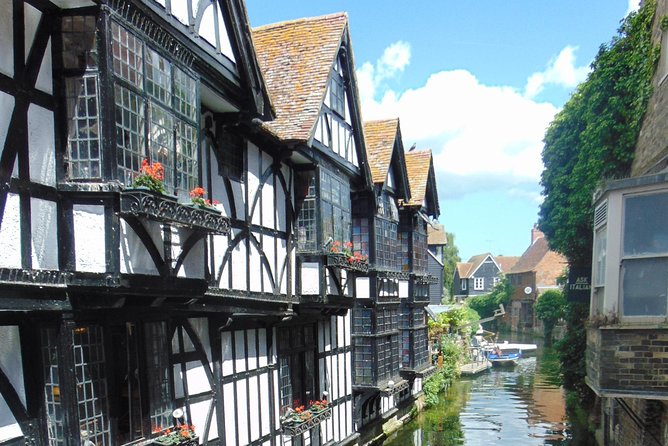
- A compact route with a big historical range: Cover Roman Canterbury, medieval walls, Tudor politics, religious conflict, and modern city life in about an hour and a half.
- Sam is the central draw: Expect a relaxed guide who uses anecdotes, humor, and detailed answers rather than a dry list of dates.
- Small groups make a difference: With no more than 10 people, you can ask questions and hear explanations without fighting through a crowd.
- Look up and look down: The tour calls attention to odd architectural details, quirky sculptures, clocks, coats of arms, and overlooked corners.
- A useful first activity: Start at The Beaney House of Art and Knowledge, then use Sam’s suggestions to plan later visits around Canterbury.
- Good value at $19.44: For a guided introduction to a historic city, the price is modest, especially if you use the tour to shape the rest of your day.
Why Canterbury needs more than a cathedral visit
The cathedral may be Canterbury’s headline attraction, but the city’s character is spread across its streets. A gate can tell you about warfare, a theater can lead to the life of a playwright and spy, and an ordinary shopping area can preserve the outline of a medieval church.
That is the strength of this tour. It does not try to make every stop grand. Instead, it shows you how several centuries sit close together in central Canterbury. You move from Geoffrey Chaucer to Roman archaeology, then from Thomas Becket to a curious clock tower.
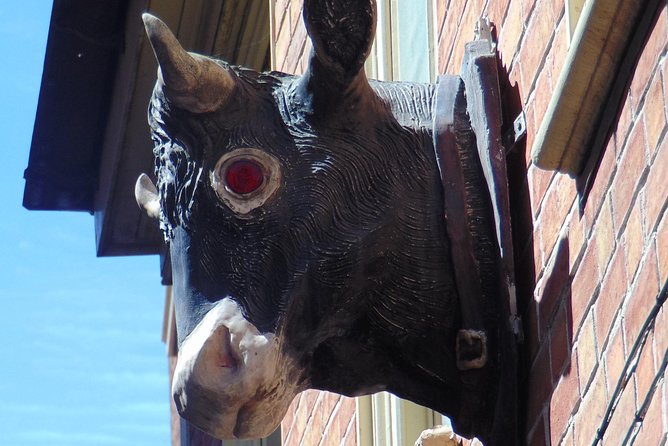
I especially like the way the route mixes major figures with odd small details. The city coat of arms, a bull’s head in Butchery Lane, and a dove flying toward Pope Gregory the Great may sound minor on paper. In person, these details help you look at Canterbury with more curiosity.
The tour also gives you useful context for independent sightseeing. You can decide if you want to return to the museums, explore the cathedral area more closely, or visit The Beaney after the walk. That makes the experience more than a quick list of photo stops.
A few more half-days in Canterbury worth comparing
- Leeds Castle, Cliffs of Dover and Canterbury Day Trip from London with Guided Cathedral Tour
★ 4.5 · 2,820 reviews - From London: White Cliffs of Dover and Canterbury Day Trip
★ 4.6 · 2,623 reviews - London: Canterbury Cathedral, Dover Castle, and White Cliffs
★ 4.6 · 973 reviews
Starting at The Beaney and meeting Chaucer
The tour begins outside The Beaney House of Art and Knowledge at 18 High Street. This is a practical meeting point in the city center, with facilities available before the walk begins.
The first formal stop is the statue of Geoffrey Chaucer. Chaucer wrote The Canterbury Tales, the work most closely tied to the city in English literature. The stop is brief, but it gives you a helpful starting point: Canterbury has long been a destination shaped by stories, pilgrims, writers, and people passing through.
Do not expect a full literary lecture here. The value is in placing Chaucer within the city rather than treating his book as a separate schoolroom subject. You begin to see Canterbury as a place built not only from stone, but also from the tales attached to its streets.
If you arrive early, this is also a sensible area from which to begin exploring on your own. The tour’s central location makes it easy to combine with other city sights before or after the walk.
Westgate Towers and Canterbury’s defensive past
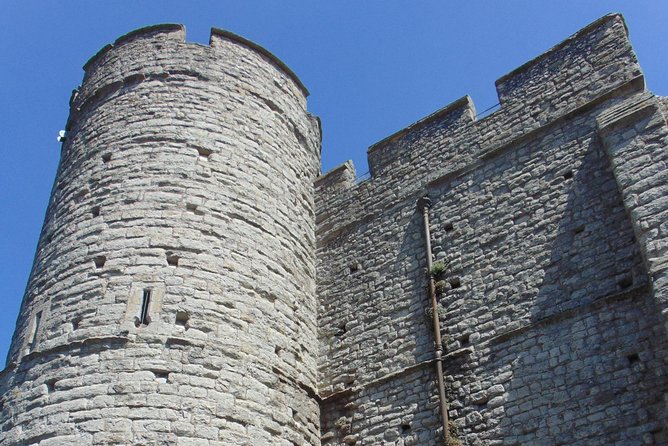
From Chaucer, the route continues to Westgate Towers. This is the largest surviving medieval city gate in the United Kingdom, and its size gives you an immediate sense of Canterbury as a defended settlement.
Sam explains how the gate worked in a period when attack and defense shaped city planning. The stop also includes a story dramatic enough to feel like a short film, which fits the guide’s style: history is presented through events and people, not only construction dates.
The tower museum and viewpoint are not included in the tour price. That is worth noting if you want interior views or time at the top. The guided stop is designed to explain the gate from the route, while a separate visit would let you explore the building at greater length.
This is one of the better places to ask questions. A small group means you can clarify how the gate functioned, what changed over time, or why its location mattered. If you are interested in walls, gates, or military history, you may want to return after the tour.
Christopher Marlowe beyond the theater
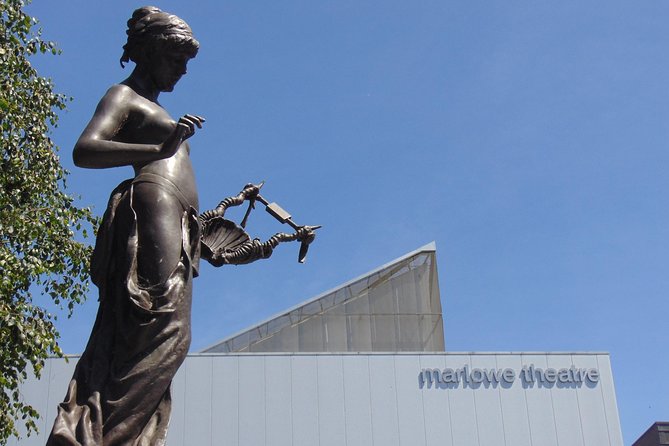
The Marlowe Theatre provides a sharp change of mood. The building itself is modern, but the discussion turns to Christopher Marlowe, the Canterbury-born playwright whose life included spying, conflict, and hard living.
Marlowe is a particularly good subject for this tour because his story links Canterbury to the wider world of Elizabethan England. He was not simply a writer whose plays appeared on a page. His life raises questions about politics, religion, intelligence work, and the risks faced by ambitious people in the period.
You pass the theater rather than enter it, and admission is not included. Still, the stop shows how a modern building can preserve a connection to an older cultural identity. The written word remains part of Canterbury’s public life, just as it was in Chaucer’s time.
This is also a good example of the tour’s broad approach. You are not getting one narrow account of medieval Canterbury. You are moving through literature, architecture, religion, war, and city life without staying too long in any one subject.
Same trip, a completely different kind of day:
- Canterbury Cathedral, Dover Castle & White Cliffs Guided Day Tour from London
★ 4.5 · 837 reviews - From London: Leeds Castle, Canterbury Cathedral & Dover
★ 4.4 · 735 reviews - Canterbury: Walking Tour with Green Badge Guide
★ 4.8 · 709 reviews - Leeds Castle, Canterbury, Dover & Greenwich Boat ride
★ 4.5 · 604 reviews
Christ Church Gate and Tudor surprises
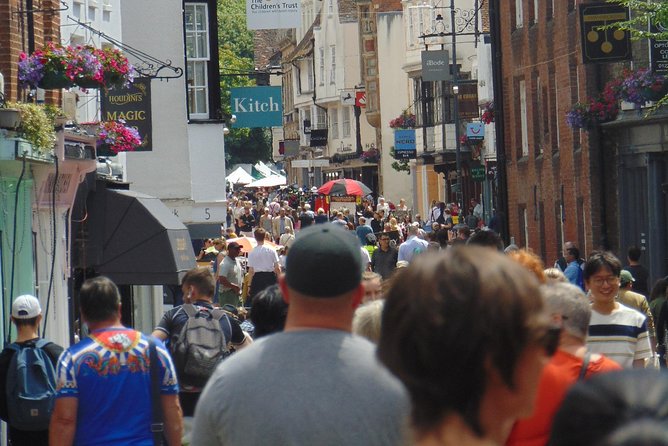
Christ Church Gate brings you back to the cathedral precinct and Tudor history. The gate was completed to commemorate a Tudor prince and his Spanish bride, though not the royal couple you may first assume.
That small twist is typical of the tour. A familiar name or building gets a second look, and the explanation focuses on how the gate changed over time. You learn that historic sites are not frozen in their original form. They are altered, repaired, reinterpreted, and sometimes used in ways their builders never expected.
The stop is short, so think of it as a well-placed introduction rather than a detailed architectural inspection. If the cathedral is on your list, this background will help you understand why the gate matters before you explore the precinct on your own.
The route also passes places connected with pilgrims and religious visitors. The tour does not include cathedral admission, so plan a separate visit if you want to see the interior.
Roman Canterbury and the clues in Butchery Lane
Outside the Canterbury Roman Museum, Sam explains how the Roman city was rediscovered after the Second World War. This gives the stop a useful modern angle. Ancient Canterbury is not only a distant chapter. Its remains were brought back into public awareness through events in the twentieth century.
The museum itself is not included, but the exterior discussion helps you decide if a return visit is worthwhile. If Roman history interests you, this is one of the clearest prompts to spend more time in the area.
Butchery Lane adds some of the tour’s more unusual details. You will hear about Bell Harry Tower at the cathedral, the city coat of arms, and a bull’s head in a place where you might not expect one. These details reward careful looking. They also help you understand why a walking tour can show you more than a guidebook route marked with only major monuments.
One stop mentioned in connection with the wider area is the Buttermarket, including the surprising fact that the river was once used as a sewer. That kind of practical city history is easy to miss when you focus only on grand buildings. It explains how people actually lived, worked, traded, and dealt with unpleasant problems.
Thomas Becket, the city’s defining murder
The stop at St Thomas of Canterbury Roman Catholic Church turns to Thomas Becket, the man most closely tied to Canterbury’s medieval identity. Becket did not come from Canterbury, but his murder transformed the city into a major pilgrimage destination.
Sam tells the full story, including the tension between Becket and King Henry II and the events that led to the killing. The subject can be treated as a solemn religious tale, but it is also a story about power, loyalty, public image, and political fallout.
The stop also includes the place where the knights stayed before killing Becket. That detail brings the event down from royal politics to a particular location in the city. You are not just hearing that a murder happened centuries ago. You are standing near the physical setting linked to the people involved.
The question about Pope Gregory the Great and the dove flying into his ear adds a lighter, stranger note. It is exactly the sort of visual detail that makes a church façade or statue worth a closer look.
Saint George’s Tower and the final clock
The tour ends under Saint George’s Tower at 27 St George’s Street. The former St George’s Church is now part of a shopping area, and the tower’s clock offers a final reminder of the city’s earlier shape.
This is a fitting ending because the route has repeatedly shown old Canterbury inside modern Canterbury. Shops, theaters, traffic, and daily errands now surround buildings that once served religious, defensive, or civic purposes.
Ending here also gives you a useful orientation point. You are still in the central city, close to places where you can continue walking, eat, shop, or return to a museum. Since the tour begins at The Beaney and ends elsewhere, you get a short cross-section of central Canterbury rather than standing in one spot.
The last stop is brief, but do not rush it. The clock tower works best as a visual reminder of the city’s changing use over time.
What Sam’s guiding style adds
Sam is the named guide for this experience, and his approach is a major part of its appeal. He combines facts with stories, legends, architecture, and humor. His style is relaxed and conversational, with an emphasis on answering questions rather than delivering a fixed speech.
That matters in a group of 10 or fewer. You can ask about a building, request more detail about a historical figure, or follow up when a story raises another question. The group size also helps families. Sam has kept children aged 6 and 11 involved, and teenagers have also enjoyed the mix of odd details and dramatic events.
The tour is not just for history specialists. It suits first-time visitors who want an overview, families who need variety, and repeat visitors who want to notice details they missed before. It can also work well for a solo visitor. One evening, the guide continued with the same energy even when only one person attended.
Several specific qualities come through clearly: a good pace, humor, enthusiasm, and strong command of Canterbury’s past. The walk lasts about an hour and a half, long enough to feel substantial without taking over your day.
Price, pace, weather, and practical details
At $19.44 per person, the value is strong if you want a guided introduction rather than a self-guided stroll. You are paying for access to Sam’s explanations and the ability to ask questions, not for museum entry or a long interior visit.
The route is described as flat and compact, and most people can take part. Service animals are allowed, and the tour is near public transportation. Still, you should wear comfortable shoes and dress for changing weather. The walk has gone ahead in freezing and unpredictable conditions, so a waterproof layer is sensible in England.
The mobile ticket keeps the process simple. The tour is offered in English, and confirmation arrives when you book. It is often reserved around 33 days ahead, so booking early makes sense if your schedule is fixed, particularly since the group limit is only 10.
Free cancellation is available up to 24 hours before the start time for a full refund. Changes or cancellations inside that 24-hour window are not accepted for a refund.
Who should book the Canterbury Classic Tour
Book this if you want a lively first look at Canterbury before choosing which places deserve more of your time. It is especially useful if you like stories, buildings, strange details, and local history presented in plain language.
Families should find the variety helpful, and the small group makes it easier to keep children involved. Couples, solo visitors, and short-stay guests also get a lot from the compact route. The tour is a good fit for anyone who wants to understand the city beyond the cathedral.
You may want something else if your main goal is extended time inside museums, a cathedral visit, or a specialist architectural lecture. Those experiences require separate admission and more time.
For most first-time visitors, I would book it early in the stay. You will leave with a map of the city in your head, a list of places worth revisiting, and a better eye for Canterbury’s odd corners. At this price, that is a sensible investment in the rest of your visit.
FAQ
How long is the Canterbury Classic Tour?
The tour lasts approximately 1 hour and 30 minutes.
Where does the tour begin?
It begins outside The Beaney House of Art and Knowledge at 18 High Street, Canterbury CT1 2RA.
Where does the tour finish?
The tour ends beneath Saint George’s Tower at 27 St George’s Street, Canterbury CT1 2LE.
How many people can join the tour?
The group is limited to a maximum of 10 travelers.
Are museum and attraction admissions included?
No. The tour stops outside places including Westgate Towers Museum and the Canterbury Roman Museum, but admission tickets are not included.
Can I cancel for a full refund?
Yes. You can cancel at least 24 hours before the experience start time for a full refund. Cancellations or changes made less than 24 hours before the start time are not accepted for a refund.
Just added in Canterbury
- Private driver tours to Leeds Castle, Canterbury, White Cliffs★ 4.5 · 30 reviews
- Private Tour to Canterbury, Leeds Castle and The White Cliffs of Dover★ 5.0 · 42 reviews
- Leeds Castle Canterbury and Dover Private Tour from London★ 5.0 · 68 reviews
- Canterbury & the White Cliffs of Dover Tour (Small-Group)★ 4.5 · 181 reviews
- Dover & White Cliffs Tour; Canterbury, Coastal Towns & Castles★ 5.0 · 51 reviews
- Dover Shore Excursion:Post-Cruise Tour to London via Canterbury and Leeds Castle★ 4.5 · 62 reviews
- Howletts Day Ticket★ 4.5 · 42 reviews
- Official Canterbury Guided Walking Tour – 14.00 Tour★ 5.0 · 214 reviews
Canterbury Tours, compared.
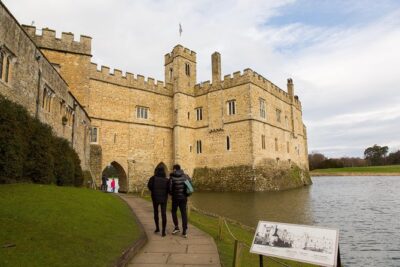
Leeds Castle, Cliffs of Dover and Canterbury Day Trip from London with Guided Cathedral Tour
Read our review →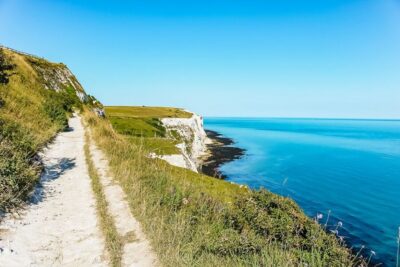
White Cliffs of Dover and Canterbury Day Trip
Read our review →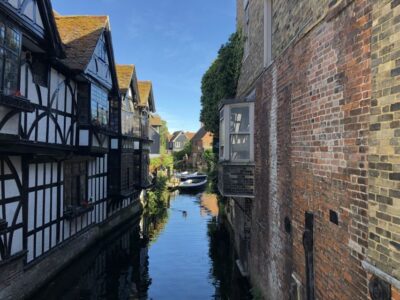
Canterbury Cathedral, Dover Castle, and White Cliffs
Read our review →
Canterbury Cathedral, Dover Castle & White Cliffs Guided Day Tour from London
Read our review →
Leeds Castle, Canterbury, Dover & Greenwich Boat ride
Read our review →
Leeds Castle, Canterbury Cathedral and Cliffs of Dover Day Trip
Read our review →Browse the lists this tour appears in