
Reviewed · WORKSHOPS
Silver Ring Workshop in Kent, England
Turning a plain strip of silver into a ring you can wear home is the heart of this private Canterbury workshop. Annie guides you through sawing, texturing, heating, shaping, soldering, filing, and polishing, so the finished piece is genuinely made by you. I like the hands-on format, and I like that the session is limited to one or two people, keeping the teaching personal. The main catch is that silver materials cost an extra $10 to $30 per ring.
I also like the workshop’s calm pace and its setting in a beautiful old Canterbury building, with coffee or tea included. It suits couples, friends, gift recipients, and solo makers. Just keep your design simple: this is a beginner class, not a signet-ring course or a way to produce elaborate fine jewelry in one morning.
Key points at a glance
- Make the ring yourself: You handle the main stages, from cutting the silver to polishing the finished band.
- Learn from Annie: Instructions are demonstrated clearly, then you repeat each technique on your own ring.
- Plan for extra material costs: The silver is not included in the booking price and costs $10 to $30 per ring.
- A genuinely private class: Only your group takes part, with sessions designed for one or two people.
- A useful Canterbury keepsake: You leave with a wearable ring rather than a souvenir that sits in a drawer.
- Simple designs work best: You can texture, pattern, or stamp the metal, but signet rings are not part of the class.
Starting with a strip of silver at 10am
The workshop begins at 10am at 76 Castle Street in Canterbury. You’ll meet Annie in the studio, talk through basic ring ideas, and measure your finger before taking a seat at the workbench.
That opening conversation matters. You are not simply handed a tool and told to copy a sample. Annie helps you settle on a design that fits the time available and matches your skill level. You can choose to add texture, a pattern, or stamped details, giving the ring a personal mark without making the project too difficult.
You’ll receive an apron and a drink, then begin with the silver itself. The metal may look unpromising at first: a plain strip, not yet shaped into anything special. That is part of the appeal. The work lets you see how much craft sits behind a finished piece of jewelry.
The session normally lasts two to three hours. The advertised time is approximately three hours, but the exact pace depends on how quickly you work and how much help you need. That flexibility is useful for beginners, especially if you want to understand each stage instead of rushing to the final polish.
More hands-on workshops in England:
- London: Traditional English Scone Making and Tea Workshop
★ 5.0 · 702 reviews - Surf Lesson
★ 5.0 · 349 reviews - London: East End Street Art Tour and Spray Painting Workshop
★ 4.8 · 297 reviews
Sawing, stamping, and adding your own mark
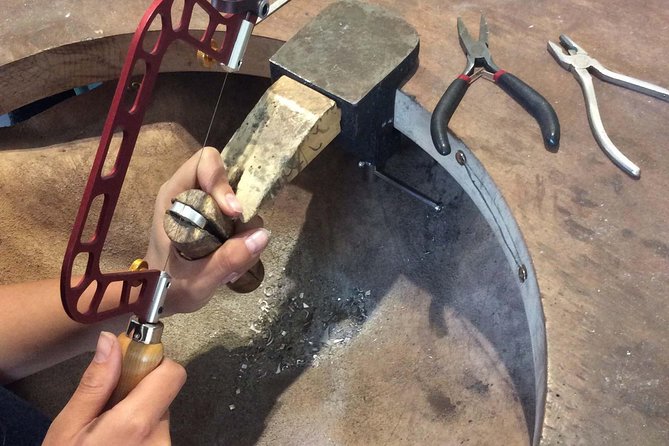
Your first job is to saw the silver to length. This sounds easy, but getting a clean cut and a suitable size takes care. Annie demonstrates the process and then lets you try it yourself.
Next comes the decorative work. You might pattern the surface, add texture, or stamp the metal with simple marks. These small choices are where a basic band becomes your ring. You are not selecting a finished design from a catalog. You are deciding how the surface should look and taking part in the making.
The beginner level is worth keeping in mind. Designs need to stay fairly simple so that you can complete the whole ring in one session. If you have your heart set on a signet ring, a large stone, or a complex sculptural piece, this is not the right class.
For most people, that limit is helpful rather than disappointing. A simple band gives you enough time to learn the tools and still finish with something wearable. It also means you can focus on technique instead of spending the morning trying to solve a complicated design problem.
Using the torch and shaping the band
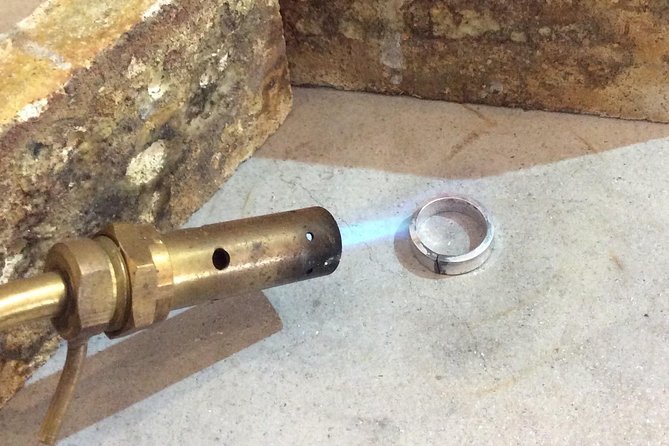
Before the ring can be shaped, the silver needs to be annealed. Annie explains why this is necessary and shows you how to use the torch. You then heat the metal under her guidance so it becomes easier to work.
This is one of the most interesting parts of the class. The torch is not there for show. Heating changes the behavior of the silver and makes the next steps possible. You learn that jewelry making is not just cutting and polishing. It is also about knowing when metal needs to be softened, shaped, or joined.
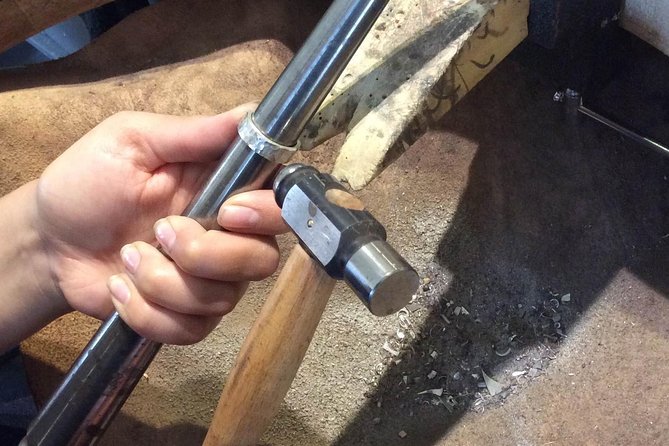
You then forge the ring into a curved form and saw it to the correct size. The work is practical and physical, but the class is designed for beginners. Annie demonstrates each step on her own piece, then you repeat it on yours.
That teaching method is especially useful if you have never handled jewelry tools. You can watch the movement, ask questions, and try it while the process is still fresh. One left-handed participant needed to move to Annie’s workbench for one stage, and the arrangement was handled without fuss. That is a small but useful sign that the workshop can adapt when a technique does not suit your usual working position.
Soldering the join
Once your band is shaped and sized, it is ready to be soldered. Annie explains how the process works before you use the torch to join the two ends.
Soldering is the stage that turns a curved strip into a closed ring. It also requires care. The join has to be positioned correctly, and the heat must be controlled. You get to take part in this step rather than handing the ring over and waiting for the finished result.
The value here is not only the object you take home. You learn why a ring must be aligned, heated, and cleaned before it can look finished. That knowledge changes the way you look at handmade jewelry later. A plain silver band may appear simple, but you will understand that it has passed through several precise stages.
There is also a useful balance between independence and support. Annie lets you do the work, but she is nearby to explain, correct, and encourage. You are not left to guess what to do with a hot tool or a poorly aligned join.
A few more half-days in England worth comparing
- Thorpe Park Admission Ticket
★ 4.0 · 5,915 reviews - Alton Towers Resort 1 Day Admission Ticket
★ 3.5 · 5,501 reviews - Warwick Castle Admission Ticket
★ 4.0 · 2,096 reviews - The Great British Rock and Roll Walking Tour
★ 5.0 · 1,371 reviews
Filing, buffing, and the satisfying final polish
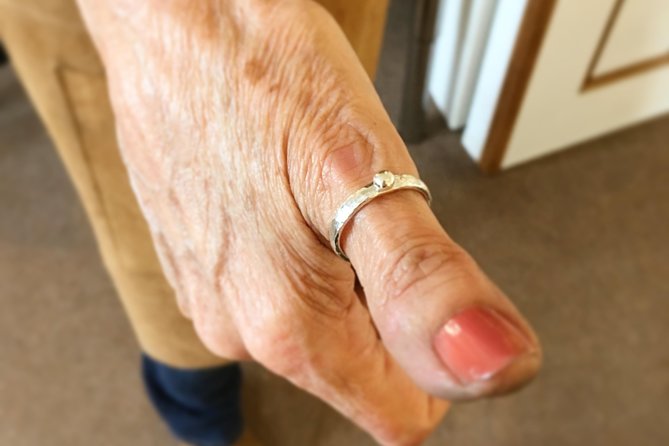
After soldering, the ring will not yet look like a shop-ready piece. You use metal files to clean the join, remove rough edges, and smooth the surface. You can also buff out scratches before polishing the whole ring.
This final section gives the workshop its strongest sense of progress. The object changes from a dull, uneven band into a shiny ring in your hands. You can see the result of every earlier decision, including the texture or stamps you added at the beginning.
I would not underestimate the filing and polishing time. Beginners often expect the torch to be the dramatic part, but finishing work is what makes the ring comfortable and presentable. If you rush it, the join may remain visible or the surface may keep unwanted scratches.
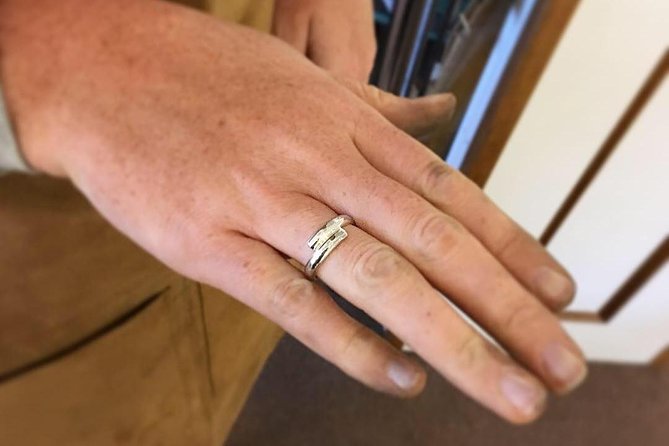
The completed ring is yours to keep and wear home. That makes the workshop more memorable than a standard craft demonstration. You do not simply watch Annie make something. You leave with a piece that carries the marks of your own choices and your own beginner efforts.
Why the private format works
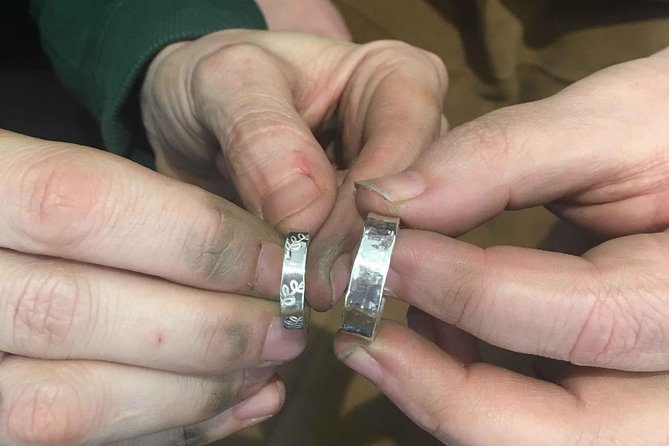
This is a private activity, and only your group takes part. Sessions are intended for one or two people, which makes the class a good fit for a couple, siblings, close friends, or a solo visitor who wants direct help.
The small format also changes the mood. You can ask questions without worrying about holding up a large class. Annie can demonstrate a step again, adjust the pace, or help you solve a small problem with your ring.
Couples have used the class to make rings together for anniversaries, as replacement wedding rings, and even as wedding rings themselves. That is a meaningful use of the workshop, but it also raises a practical point: if the ring is part of a major ceremony, allow plenty of time and be realistic about the beginner-level finish.
The class has also worked well as a Christmas gift or a personal treat. It gives you a shared activity and a physical reminder of the time spent together. If you are looking for a polished professional jewelry course, this is too short. If you want to learn a few core skills and make a simple ring in one morning, the format makes sense.
The setting and the small comforts
The studio is in a beautiful ancient building in the heart of Canterbury, and the gallery setting adds to the character of the morning. You are working in a real creative space rather than a generic classroom.
Coffee and tea are included, along with an apron. These are modest details, but they help the session feel welcoming, especially when you are concentrating on unfamiliar tools. Annie’s friendly, patient approach also matters. Beginners need clear instructions, but they also need room to make small mistakes without feeling foolish.
The studio is easy to find and close to a multistory car park. It is also near public transportation. The meeting point and end point are the same, so you do not need to arrange a separate pickup or find your way across town after the class.
The listed operating days are Thursday through Saturday, from 10am to 1pm. Since the activity is often booked well ahead, with bookings averaging around 80 days in advance, you should plan this one early if your Canterbury visit has fixed dates.
What the $131.95 price really covers
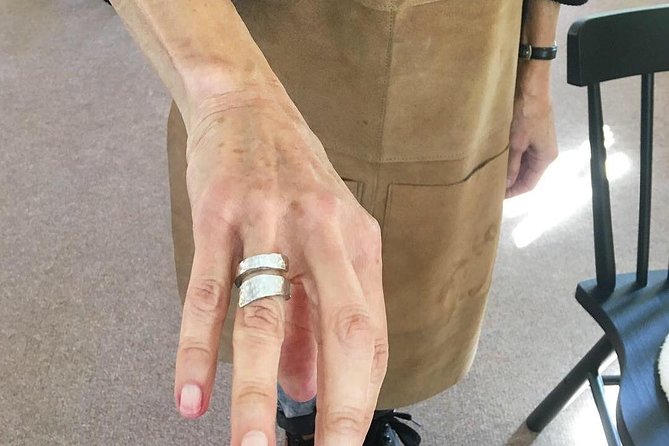
The booking price is $131.95 per person, but that is not the complete cost. Silver materials are charged separately at the end, with a minimum of $10 and a typical range up to $30 per ring depending on the finished weight.
That puts the likely total at roughly $141.95 to $161.95 per person. The final material price depends on what you make, so you should not treat the extra charge as a surprise or assume that every design costs the same.
The price covers a private, guided session lasting about two to three hours, use of the studio and tools, an apron, and coffee or tea. You also receive instruction in several separate skills: measuring, sawing, texturing, annealing, torch work, forging, soldering, filing, buffing, and polishing.
I see the value in the price if you care about the making process and want a personal keepsake. You are paying for teaching time and access to a working jewelry studio, not just for the raw silver. If your only goal is to buy the cheapest plain band, a jewelry shop will be more efficient.
The material fee is also reasonable to consider in context. Once you understand how many stages go into producing a ring, the cost of handmade jewelry makes more sense. The workshop gives you a short but useful look at that work.
Who will enjoy this workshop most
I would recommend it to:
- Couples marking an anniversary or making symbolic rings together
- Friends or siblings looking for a shared creative morning
- Solo visitors who enjoy practical crafts and want a personal souvenir
- Beginners who like learning by doing
- Anyone who values a simple object with a story behind it
You should think twice if you dislike close manual work, want a complex ring design, or expect a fully professional finish without any beginner marks. The workshop is friendly and well supported, but you still have to saw, heat, shape, solder, file, and polish the metal yourself.
Most people can take part, and service animals are allowed. The activity is offered in English. Confirmation is sent within 48 hours of booking, subject to availability.
Free cancellation is available up to 24 hours before the start time for a full refund. Changes or cancellations inside that 24-hour window are not accepted for a refund, so keep the local start time in mind when making plans.
Should you book the Canterbury ring workshop?
Book it if you want more than a souvenir and like the idea of wearing something you made from the first cut to the final polish. Annie’s patient instruction, the private format, and the chance to use real silversmithing techniques make this a strong choice for a special morning in Canterbury.
The best reason to book is the sense of ownership. You choose the surface details, shape the band, help solder it, and finish it yourself. The extra materials charge and simple design limit are easy to accept if you go in expecting a beginner workshop rather than a full jewelry qualification.
If you need an elaborate ring, prefer to watch rather than work, or have only a short time in Canterbury, choose another activity. For couples, gift recipients, and curious first-time makers, this workshop offers a personal keepsake and a clear lesson in how much work goes into a small piece of silver.
FAQ
Where does the silver ring workshop take place?
The workshop takes place at 76 Castle Street, Canterbury, CT1 2QD, UK.
How long does the workshop last?
Sessions for one or two people last about two to three hours. The activity is scheduled from 10am to 1pm.
What days is the workshop available?
It is offered Thursday through Saturday.
Is the silver included in the booking price?
No. Silver materials cost an additional $10 to $30 per ring, depending on the finished weight. The minimum charge for a basic ring is $10.
What will I learn to do?
You will learn to measure your finger, saw silver to length, add texture or stamped details, anneal and forge the metal, solder the join, file the surface, buff scratches, and polish the finished ring.
Can I make a signet ring?
No. This is a beginner workshop, so ring designs are kept simple and signet rings are not included.
Can I cancel for a full refund?
Yes. You can cancel at least 24 hours before the start time for a full refund. Cancellations or changes made less than 24 hours before the start time are not accepted for a refund.
Just added in England
- British Museum Highlights Private Guided Tour★ 5.0 · 29 reviews
- Heathrow Airport to Southampton Port or Hotel Private Airport Arrival Transfer★ 5.0 · 45 reviews
- Heathrow To Southampton Cruise Port Transfers★ 4.5 · 110 reviews
- Private Guided Tour of the British Museum★ 5.0 · 50 reviews
- British Royal 3 Hour Walking Tour!★ 4.5 · 53 reviews
- British Museum Guided Tour with Priority Timeslots(Small Group)★ 5.0 · 192 reviews
- British Museum In-Depth Private Guided Tour★ 5.0 · 40 reviews
- Explore Biblical Artifacts at the British Museum★ 5.0 · 120 reviews
Workshops, compared.
Traditional English Scone Making and Tea Workshop
Read our review →

East End Street Art Tour and Spray Painting Workshop
Read our review →London Traditional English Scone Making and Tea Workshop
Read our review →


Browse the lists this tour appears in