
Reviewed · WALKING TOURS
A History of Terror – Belfast City Centre Walking Tour
Belfast’s polished shopping streets and lively Cathedral Quarter hide painful memories. This 2.5-hour walking tour connects ordinary city corners with bombings, loss, policing, identity, and the long route toward peace. It is less a sightseeing stroll than a guided lesson in how Belfast became the city you see today.
I like two things right away: the route uses real places rather than a museum room, and the guides bring personal experience to a difficult subject. Guides such as James, Anne, Mylie, Róisín, and Chris have been praised for clear, balanced storytelling. The headsets also help you hear every detail in a group of up to 25 people.
The main consideration is the subject itself. You will spend plenty of time standing and listening, and several stops deal with bombings and deaths. The route is flat and easy, but the material can be sad and emotionally heavy.
Key points to know before booking
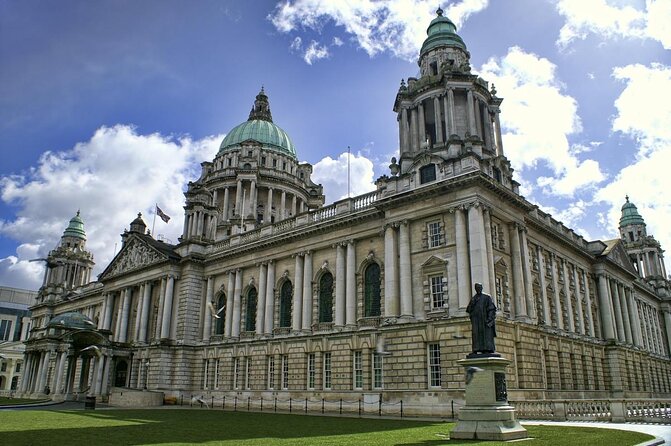
- A city-centre route with a serious purpose: You walk about 1.5 miles from Belfast City Hall to the Beacon of Hope.
- Personal stories matter here: Some guides describe growing up during The Troubles and explain how violence affected daily life.
- The tone is intended to be balanced: The tour covers British and Irish perspectives, unionism and nationalism, policing, and the peace process.
- The Cathedral Quarter is more than nightlife: Its streets and public art become a way to measure how much Belfast has changed.
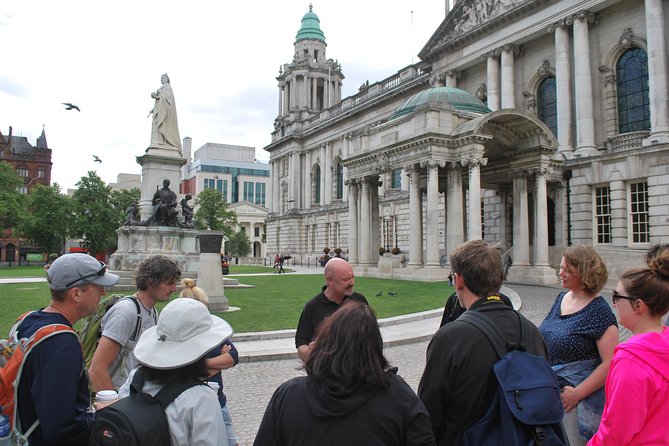
- Headsets make a difference: They help you follow the guide while walking or standing in a group.
- Plan for Northern Irish weather: The tour runs in poor weather unless conditions force cancellation, so bring waterproof clothing.
Why this Belfast walking tour is different
Many city tours give you dates, buildings, and a few famous names. This one asks you to look at familiar streets in a different way. Donegall Place is a shopping area. Castle Lane is a pedestrian street. Ann Street is part of the modern centre. Yet each place carries a story from the years of violence known as The Troubles.
The tour also gives you a basic explanation of the older relationship between Britain and Ireland before moving into the late 1960s. That opening matters. Without it, the later stories can feel like a pile of disconnected attacks and political disputes.
Your guide explains why tensions grew, how the conflict became violent, and how identity shaped daily life. The focus is Belfast, but you also gain useful context for Northern Ireland as a whole.
The tone is serious without being presented as a horror show. The strongest guides name victims, describe ordinary lives, and explain political positions without asking you to take sides. That approach makes the walk useful for first-time visitors and for anyone who knows only a few headlines about the conflict.
More Walking Tours in Belfast
- Belfast Political Tour-Conflicting Stories Walking Tour
★ 4.5 · 459 reviews - Best of Belfast Walking Tour
★ 5.0 · 399 reviews - Walk the Secrets of the Titanic
★ 5.0 · 391 reviews
Starting at Belfast City Hall
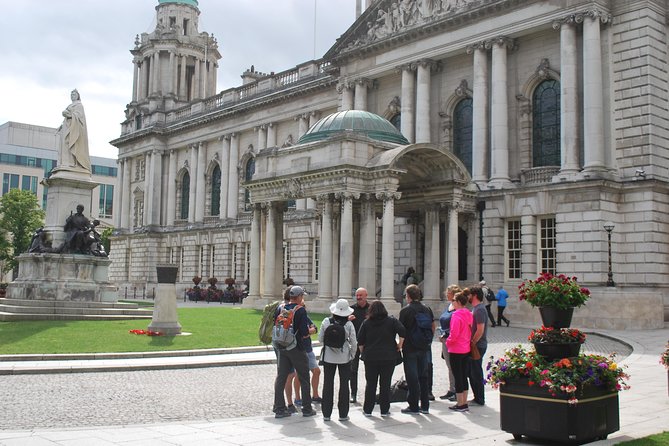
The tour begins at Belfast City Hall at 10:30 am. In the grounds, your guide sets the scene and explains the long British and Irish relationship that shaped Northern Ireland.
This is not just a formal introduction. You get the background needed to understand why the late 1960s brought a sharp rise in tension and violence. The guide discusses the start of The Troubles and prepares you for the personal stories ahead.
Allow about 20 minutes here. You will be outside, standing and listening, so wear shoes that remain comfortable when you are not moving. The city centre is flat, with no hills or steps on this route.
Guides have included James, Anne, Mylie, Róisín, Rory, Chris, Jim, and Rorey. The exact guide can change, but the strongest accounts share a clear pattern: political facts are paired with stories of what it felt like to live through the period.
One useful feature is the intended neutrality. A guide does not simply present one community as right and the other as wrong. You hear about the British and Irish relationship, religious and political divisions, and the views held on both sides. That does not make the subject simple, but it gives you a fairer starting point.
Donegall Place and the Ring of Steel
From City Hall, the route moves toward Donegall Place, now one of Belfast’s main shopping streets. The setting can feel almost ordinary, which is exactly what makes the story unsettling.
Here you hear about a 1971 bomb attack on a nightclub, the deaths and injuries that followed, and the security response known as the Ring of Steel. The guide explains how the city centre changed as authorities tried to control movement and protect public spaces.
This stop lasts around 15 minutes. It is a good example of the tour’s method: you stand in a place you might otherwise hurry through, then learn how violence altered the way people used the city.
The story is not told as distant political history. It is linked to shopping, nightlife, work, and the practical question of how people moved around Belfast. That connection helps you understand that The Troubles affected ordinary routines as much as it affected major political events.
Castle Lane and the daily reality of violence
Castle Lane brings another lesson in how normal-looking streets can carry painful memories. Today it is part of a pedestrian shopping area. During the height of The Troubles, daily life here was shaped by fear, security measures, and the risk of sudden violence.
Your guide explains a major event that remains strongly remembered in Belfast. The value of this stop comes from the detail. You are not simply told that an attack happened. You hear about the effect on people who lived, worked, and shopped nearby.
Expect around 15 minutes here. The route is not physically hard, but the walk includes several pauses where you listen closely. One practical point is worth noting: despite the name walking tour, this experience involves more standing and listening than continuous walking.
If the weather is dry, you may find places to sit near some stops, but you should not count on a seat throughout. A waterproof jacket is a smart choice, and warm layers are useful in winter.
More history walks in Belfast:
- London Small Group Tour of Historical Pubs
★ 5.0 · 10,422 reviews - Old Town Walking Tour History and Tales in Edinburgh
★ 5.0 · 2,168 reviews - Soho Music & Historic Pubs Tour
★ 5.0 · 1,993 reviews - Old Town Historical and Underground Tour
★ 5.0 · 1,574 reviews
The Spirit of Belfast and a turning point in 1971
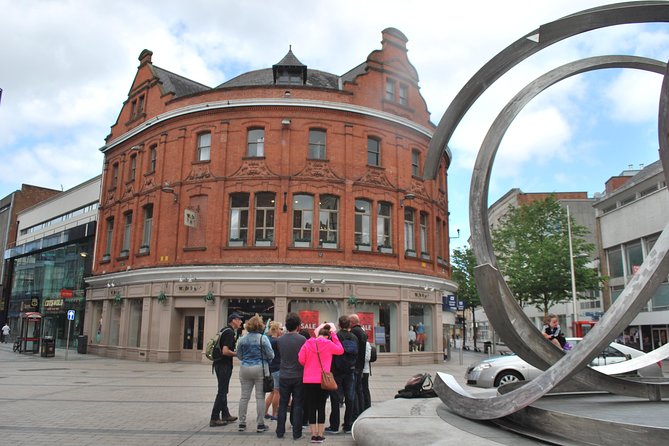
The Spirit of Belfast is a public artwork near the waterfront, known locally by the playful nickname Onion Rings. The sculpture is meant to suggest the resilience of Belfast, but here it also becomes a marker for a much darker story.
Standing near the artwork, the guide explains events that began in a nearby bar in 1971. Those events helped push Northern Ireland into a fast-growing cycle of violence.
This is one of the tour’s strongest contrasts. The sculpture represents endurance and renewal, while the account beside it takes you back to a time when violence was spreading rapidly. You see how Belfast now uses public art and open civic spaces to express a different identity.
The stop takes about 15 minutes. It also gives you a break from the denser political explanation, since the guide links a physical object in the modern city with the human cost of the past.
The Cathedral Quarter, from violence to renewal
The Cathedral Quarter is now Belfast’s cultural and nightlife district, with bars, alleys, street art, and regenerated buildings. You walk through this area while hearing about important events from The Troubles and the first steps toward peace.
I like this part because the setting does not pretend the past never happened. Instead, the present-day streets become evidence of change. The quarter is lively today, but your guide asks you to picture how different the area felt during the worst years of violence.
The guide also begins discussing the path to peace. You are not given a simple overnight transformation. The account shows a gradual move from conflict toward a fragile political settlement and a safer public life.
Expect about 20 minutes here. The street art and nightlife may catch your eye, but the tour keeps its focus on people and politics. If you want plenty of time for photographs, plan to return later. This stop is about listening.
The personal element can be especially effective here. Anne has been praised for describing her experience as a child during The Troubles, while other guides have shared what it meant to grow up in Belfast during those years. These stories make the political events easier to understand without turning the tour into a private memoir.
Ann Street, policing, and the border question
At Ann Street, the subject turns to policing. You stand beside Belfast’s largest police station and learn how Northern Ireland was policed during The Troubles.
The guide explains how policing has changed since the peace agreement, then connects the subject to Brexit and the future of the border. This gives the tour a present-day edge. Belfast’s history is not treated as finished business, and the guide shows why questions about borders, identity, and political power still matter.
This stop takes about 15 minutes. It is one of the more useful parts for anyone who has heard arguments about Northern Ireland but is unclear about the practical issues behind them.
You should expect a balanced presentation rather than a campaign speech. The point is to explain the pressures and possible effects, then let you think through the issue yourself.
Ending at the Beacon of Hope
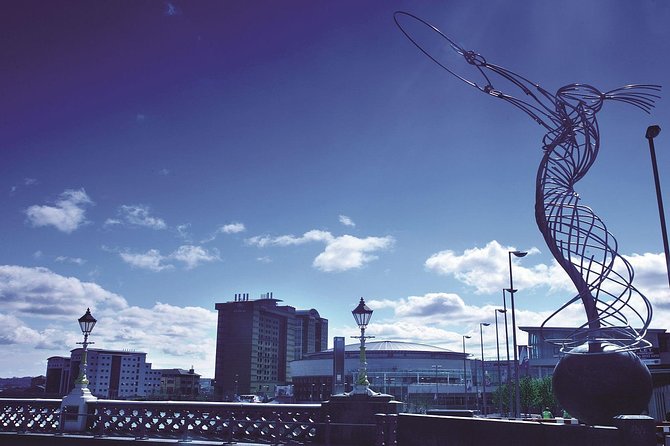
The route ends beside the River Lagan at the Beacon of Hope, also called the Nuala with the Hula statue. Here the guide compares Belfast today with one of the darkest days in its past.
The final discussion covers how peace was achieved, why it remains fragile, and what the future may hold. Ending beside the water and a symbol of resilience gives the walk a more hopeful finish, though the guide does not pretend every political question has been settled.
You spend about 20 minutes here. The tour ends on Oxford Street, about a five-minute walk from City Hall. That makes the route easy to fit into a morning plan. You can continue to another city-centre sight, return to your accommodation, or stop for lunch nearby.
How the guides shape the experience
The guide is the most important part of this tour. The route itself is simple, but the subject requires care, structure, and a steady tone.
James has been praised for making the material clear, friendly, and engaging. Mylie has been noted for combining strong command of the subject with personal warmth, and Anne for bringing first-hand memories of childhood during The Troubles. Róisín has been described as an emotional and passionate storyteller, while Jim has focused on naming victims and giving them a place in the story.
Those details matter because a dry political lecture would not suit this route. You need someone who can explain events clearly, answer the mood of the group, and avoid sensationalism.
There is one practical risk. A single poor experience involved a guide’s speaker failing halfway through the walk, with no backup available. Since the group can reach 25 people, ask the guide to repeat anything you cannot hear. The supplied headsets usually help, but equipment can fail, and standing at the back may make listening harder.
Price, group size, and physical effort
At $36.06 per person, the tour is not the cheapest way to see Belfast, but it offers 2.5 hours with a local guide, headsets, and a focused account of The Troubles. I consider that fair value if you want context rather than a quick orientation walk.
The group can contain up to 25 people. That is small enough to keep the guide nearby, but large enough that you should stay alert when the group crosses streets or gathers at a busy site.
The route covers about 1.5 miles and is completely flat. No hills or steps are involved, and most people can take part. Still, comfortable footwear is useful because the tour includes repeated periods of standing.
The minimum age is 12. That feels sensible given the subject matter. Younger teenagers may follow the historical content, but parents should consider how they will respond to descriptions of bombings, death, and fear.
Weather, timing, and how to prepare
The tour runs in all normal weather conditions. Belfast showers can arrive quickly, so bring a waterproof jacket even if the morning looks promising. Warm clothing is a good idea in winter, especially because the route includes several outdoor stops.
The 10:30 am start works well. You can take the tour early in your Belfast visit, then use the rest of the day to explore places that now make more sense. The walk ends near the waterfront and is only about five minutes from City Hall, so the return is simple.
Service animals are allowed, and the route is near public transport. Confirmation is provided at booking, and free cancellation is available up to 24 hours before the start time. Cancellations made within 24 hours are not refunded, and weather-related cancellation offers either another date or a full refund.
Who should book this experience
I would choose this tour if you want to understand Belfast before visiting places connected with The Troubles. It suits adults, older teenagers, history fans, and anyone who prefers local explanation to a large indoor exhibition.
It is also a good first-day activity. You get your bearings in central Belfast while learning why certain streets and public spaces matter. Afterward, you can explore the city with a better sense of what you are seeing.
I would think twice if you want a light, fast-paced city walk. The material is serious, and you will spend a lot of time listening. You should also choose another activity if you dislike political discussion or prefer not to visit places associated with loss of life.
Should you book the Belfast Troubles walking tour?
Book it if you want a careful, human account of Belfast’s recent past, not just a list of dates. The best guides combine political context with personal memories, explain both sides of the divide, and leave you with a clearer view of the peace process and its limits.
The price is reasonable for the length and focus, and the flat route is manageable. Just prepare for outdoor weather, steady standing, and difficult stories. For a first visit to Belfast, this is one of the more useful ways to understand the city beneath its modern streets.
FAQ
Where does the tour start?
The tour starts in the grounds of Belfast City Hall at Donegall Square North, Belfast BT1 5GS.
Where does the tour end?
It ends at the Beacon of Hope on Oxford Street, Belfast BT1 3NB. From there, it is about a five-minute walk back to City Hall.
What time does the tour begin?
The tour starts at 10:30 am.
How long is the walking route?
The tour lasts about 2 hours and 30 minutes and covers roughly 1.5 miles.
Is the route difficult?
The route is completely flat, with no hills or steps. Comfortable footwear is advised because you will spend time walking and standing.
Is the tour suitable for children?
The minimum age is 12. The subject includes bombings, deaths, political conflict, and personal experiences from The Troubles.
What happens if the weather is poor?
The tour runs in normal poor weather, so bring waterproof and warm clothing. If the experience is canceled because of poor weather, you will be offered another date or a full refund.
Just added in Belfast
- Walk the Secrets of the Titanic★ 5.0 · 391 reviews
- Best of Belfast Walking Tour★ 5.0 · 399 reviews
- Game of Thrones Studio Tour Admission and Transfer from Belfast★ 5.0 · 256 reviews
- Game of Thrones Studio Tour Admission Ticket★ 5.0 · 312 reviews
- Official World Famous Belfast Taxi Tour ™★ 5.0 · 623 reviews
- Famous 1.5 hour Belfast Murals Tour★ 5.0 · 477 reviews
- Belfast Political Tour-Conflicting Stories Walking Tour★ 4.5 · 459 reviews
- From Belfast: Game of Thrones Winterfell Locations Trek★ 5.0 · 501 reviews
Walking Tours, compared.
Underground Vaults Walking Tour in Edinburgh Old Town
Read our review →
Oxford University Walking Tour With University Alumni Guide
Read our review →
Edinburgh Castle: Guided Walking Tour with Entry Ticket
Read our review →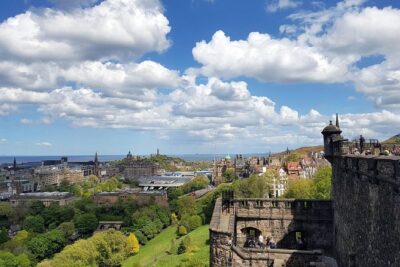
Edinburgh Castle Guided Walking Tour in English
Read our review →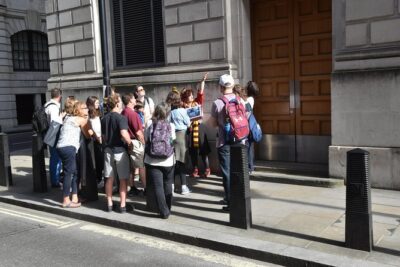
Tour for Muggles The Ultimate Harry Potter Walking Tour in London
Read our review →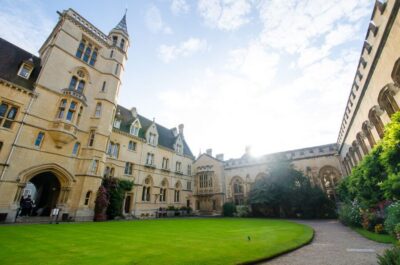
University and City Walking Tour with Alumni Guide
Read our review →
Edinburgh Darkside Walking Tour: Mysteries, Murder and Legends
Read our review →
Browse the lists this tour appears in