
Reviewed · LITERARY TOURS
Jane Austen’s Bath And History Trail
Bath makes a fine stage for Jane Austen, and this walk shows you why. You follow her former homes and the places tied to Regency social life, while also learning how Pulteney Bridge, the Circus, Bath Abbey, and the Roman baths fit together. Ulrich Wenske leads the tour in English or German, with plenty of local history mixed into the Austen material.
I like the route for two reasons. First, it links Austen’s life to actual streets and buildings instead of treating her as an isolated literary figure. Second, it gives you a useful first look at much of central Bath, including the Abbey, Assembly Rooms, thermal springs, and Roman Baths area. The main drawback is the walking: expect about two and a half hours, some uphill sections, and some steps.
Key points to know before booking
- Start at Pulteney Bridge Coffee Shop: Meet at 17 Pulteney Bridge, not at the Jane Austen Centre.
- Austen’s Bath comes with a wider city tour: You also learn about Georgian architecture, Bath Abbey, Roman history, and the thermal springs.
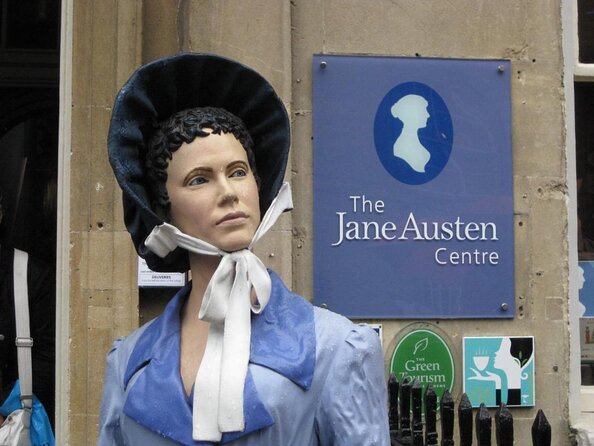
- The Jane Austen Centre entry is limited: The walk includes entry and the bookshop, but its internal tour is extra.
- Museum admission is not included: No. 1 Royal Crescent, the Roman Baths, and other paid interiors cost more.
- Small groups keep it personal: The maximum group size is 10, and some departures may be much smaller.
- Wear proper walking shoes: The route includes uphill walking, steps, and outdoor sightseeing in changeable weather.
Why Austen’s Bath works so well on foot
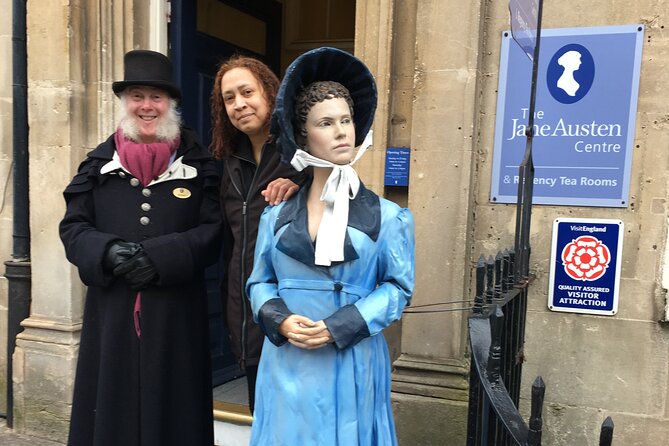
Jane Austen lived in Bath for only a few years, but the city left a clear mark on her work. She stayed at several addresses, including No. 4 Sydney Place and No. 13 in Queen Square, and Bath appears directly in Northanger Abbey and Persuasion.
This tour helps you connect those literary references with the city itself. You see the streets where fashionable society gathered, the buildings that shaped daily life, and the grand settings that Austen could praise, mock, or use as a backdrop for social tension.
Ulrich Wenske brings a broad interest in Bath to the walk. He talks about Austen, but also about the architects, residents, civic history, and changing role of the city. His German accent is noticeable, and one person found it harder to follow him at times, especially when he moved quickly between stops. Most of the experience depends on listening outdoors, so stay close and ask him to repeat anything you miss.
The group limit of 10 is useful here. It is easier to ask questions than on a large city tour, and a small group may feel almost private. One departure had only one participant, while another included a lively exchange of questions and stories. The pace is generally relaxed, but the distance and uneven sections still make comfortable shoes important.
More Literary Tours in Bath:
- Bath: The Jane Austen Centre Ticket
★ 4.4 · 678 reviews - London: Sherlock Holmes-Themed Walking Tour
★ 4.7 · 756 reviews - Shakespeare Distillery Tour – 1pm Ticket
★ 5.0 · 598 reviews
Pulteney Bridge begins the story
The meeting point is the Pulteney Bridge Coffee Shop at 17 Pulteney Bridge. Check the address carefully. The Jane Austen Centre is not the starting point, and confusing the two can mean missing the walk.
Pulteney Bridge was designed in 1769 and is known for its shops lining both sides. Its design recalls Florence’s Ponte Vecchio, making it one of Bath’s most distinctive crossings. From here, the route moves along Argyle Street toward Laura Place and Great Pulteney Street.
This opening section takes about 15 to 20 minutes. You hear about the large town houses along Great Pulteney Street and some of their notable residents from the 18th and 19th centuries. The Holburne Museum of Art is visible from this part of the route, and you can walk toward it while viewing No. 4 Sydney Place.
A plaque on No. 4 marks Jane Austen’s first residence in Bath. You do not enter the house, but seeing the address gives Austen’s time in the city a physical anchor. This is one of the better features of the tour: you are not only told that Austen lived in Bath, you are shown the buildings connected with her.
The Jane Austen Centre and a useful limitation
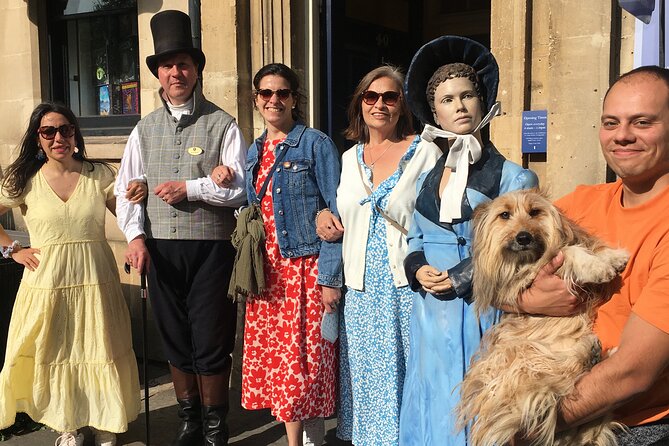
The Jane Austen Centre offers a look at Regency life and examines how Bath affected Austen’s personal life and writing. This tour includes entry to the centre and its bookshop, which is a helpful bonus at the stated price of $40.24.
There is an important distinction. The centre’s own internal tour is not included. You can arrange that separately if you want a fuller museum visit, but the walking tour does not cover that cost or provide its internal guides.
That arrangement works well if you want the city walk first and prefer to decide later how much time to spend indoors. It is less ideal if you expect a full Jane Austen museum experience to be part of the two and a half hours. Think of the centre visit here as an introduction, not a complete museum tour.
No. 1 Royal Crescent shows Bath at its grandest
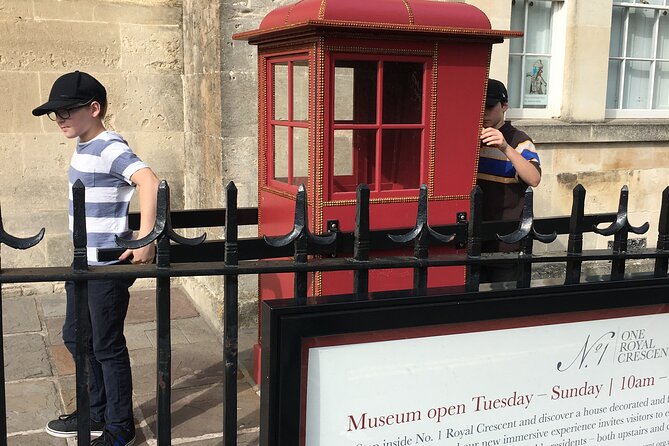
No. 1 Royal Crescent is part of Bath’s most famous architectural scene. The crescent contains 30 terraced houses joined by giant Ionic columns, and it was built in the second half of the 18th century.
From the outside, the scale and order are easy to appreciate. The curved row of buildings presents the polished face of Georgian Bath, where appearance, address, and social rank mattered greatly. Austen’s characters would have understood the meaning of such a setting without needing it explained.
No. 1 is also a museum, furnished to show how one of these grand houses looked inside. Admission is not included, so you need to pay separately if you want to enter. The walking tour explains the building and its place in Bath, but it does not give you the full interior visit.
More history walks in Bath:
- Bath: Local Pubs & Historic Sights Walking Tour (3h)
★ 5.0 · 31 reviews - Bath: Local Pubs & Historic Sights Walking Tour (3h)
★ 4.9 · 29 reviews - London Small Group Tour of Historical Pubs
★ 5.0 · 10,422 reviews - A History of Terror – Belfast City Centre Walking Tour
★ 5.0 · 2,883 reviews
Bath Abbey adds medieval depth
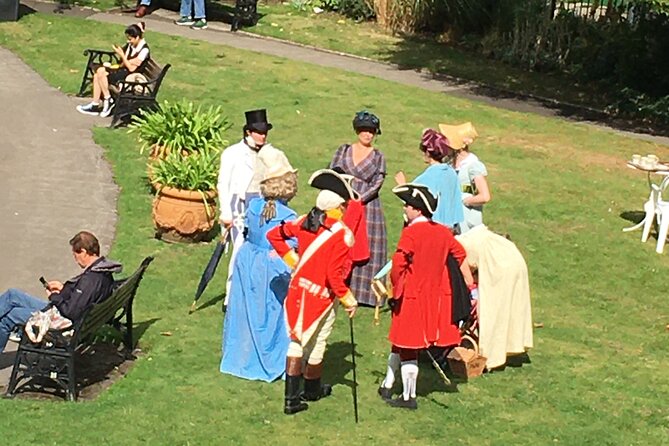
Bath Abbey brings a different era into the tour. The medieval church was begun in the early 12th century, restored under Bishop Oliver King in 1499, and completed under Elizabeth I in 1611.
Ulrich explains the Abbey’s memorials, wall plaques, and long story. The site is also associated with the crowning of Edgar I as the first King of England in 977. You can visit the interior, although the available information does not include admission in the tour price.
This stop helps prevent the experience from becoming a narrow Austen pilgrimage. Bath is not only a Regency city of balls and promenades. Its medieval religious past and later Georgian rebuilding sit close together, and the Abbey makes that layering clear.
Give yourself time to look up and around. The interior details matter here, especially if you enjoy memorials and architectural features rather than only taking a quick photograph outside.
Thermal water connects ancient and modern Bath
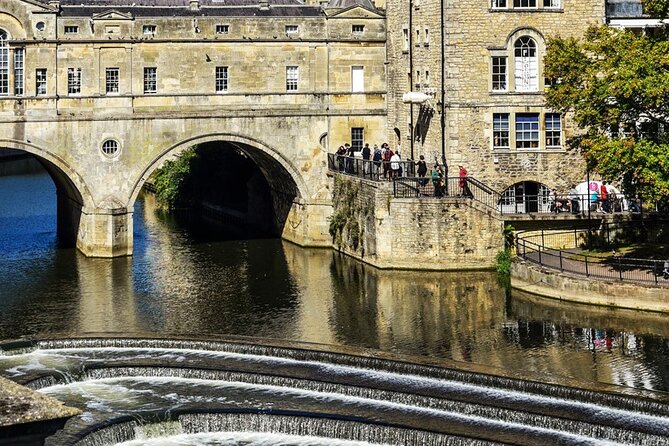
The route also covers Bath’s natural hot springs. The water reaches about 35 degrees Celsius, and the modern bathing experience includes a rooftop pool open in summer and winter. The tour explains the Hetling Spring, Cross Spring, and King’s Spring, whose origins are described as reaching back 10,000 years.
The bathing facility itself is a separate experience, not simply an included stop on this walk. The value of hearing about the springs during the tour is that it gives you context before deciding if you want to visit or bathe later.
This is a good example of the tour’s wider approach. You are not asked to choose between Jane Austen and Bath’s older past. The route shows how the springs shaped the city long before Austen arrived, and how thermal water still forms part of Bath’s identity today.
Queen Square and The Circus explain Georgian design
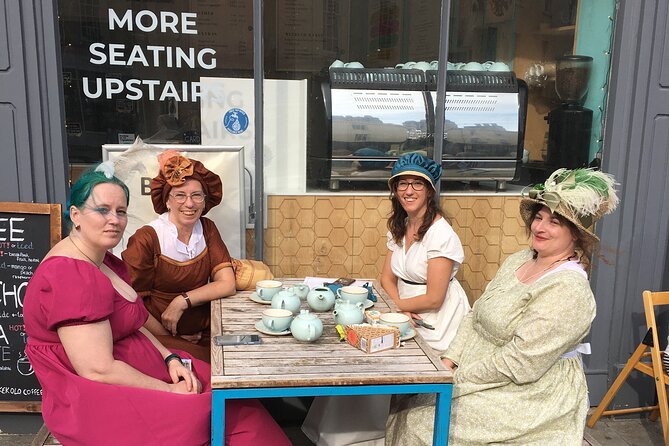
The walk includes the square connected with Austen’s short stay at No. 13 in 1799. That detail is easy to miss when exploring Bath alone, since the city offers so many impressive facades with little obvious information about the people who lived behind them.
The Circus is one of Bath’s great architectural achievements. Work began in 1754, and the design by the John Wood architects drew on prehistoric stone circles as well as the Colosseum in Rome. The circular plan is more than a pleasant arrangement of houses. It reflects the Woods’ grand plans for Bath and their interest in the city’s ancient origins.
The tour spends about 20 minutes here, explaining the unusual layout and the ideas behind it. The central area also has an odd acoustic feature involving the trees, which can be tried during the stop. It is a small, playful moment after the heavier architectural detail.
The Circus is one of the places where the guide’s broader knowledge is especially useful. You learn not just who built it, but why its form was meant to suggest something older and more symbolic than a normal residential square.
Assembly Rooms bring Regency society to life
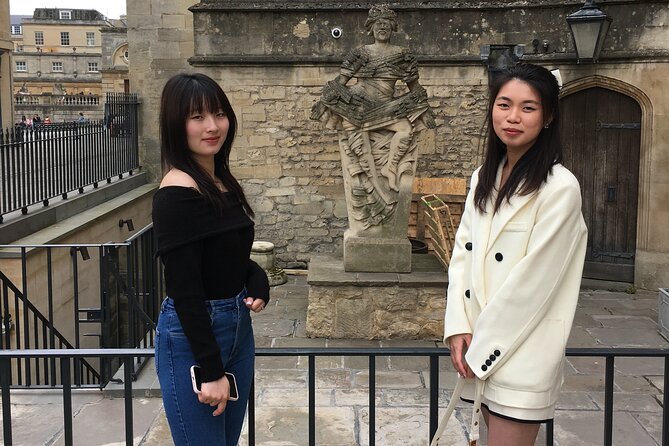
The Assembly Rooms were built for the fashionable public life of Regency Bath. Their ballrooms, octagon, card room, and tea room hosted the social rituals that mattered so much in Austen’s world.
This is where the connection to her novels becomes especially clear. Bath was a place to be seen, make introductions, arrange marriages, exchange gossip, and judge clothing and manners. The rooms were designed for exactly that kind of public social performance.
The tour includes the exterior and an explanation of the building, but admission is not included. If you want to see the rooms inside, plan for a separate visit and extra time.
I like having this stop after the Circus because the two work together. The Circus shows the city’s planned grandeur, while the Assembly Rooms show how people used that setting. You get the buildings and the social purpose behind them.
The Roman Baths and Pump Room finish the city portrait
The route reaches Bath’s most famous ancient site, with the Roman temple of Sulis Minerva and the pools dating from the 1st century AD. The adjoining Pump Room represents Bath’s later Georgian golden age, when fashionable society came to drink the waters, attend balls, and take tea.
In Northanger Abbey, Catherine and Isabella meet at the Pump Room. That literary link gives the site special meaning for Austen readers, but the Roman Baths also deserve attention on their own terms.
The Roman Baths entrance and audio tour are not included. Booking an audio tour separately before or after the walk is recommended in the tour information. If you plan to visit the Baths in detail, you may want to schedule it outside the two and a half hour walking period rather than trying to rush through it.
The route ends back at the meeting point. That makes it practical for continuing your day in Bath, though your legs may appreciate a pause after the final stretch.
What $40.24 gets you
At $40.24 per person, the price is fair if you want a guided orientation to central Bath with a strong Austen focus. You receive about two and a half hours with an English or German speaking guide, a small maximum group of 10, entry to the Jane Austen Centre and its bookshop, and explanations at several major landmarks.
You do not receive admission to No. 1 Royal Crescent, the Roman Baths, the Assembly Rooms, or other museum interiors. Those costs can add up, so include them in your budget if you want to go inside several buildings.
The tour’s value comes mainly from the connections Ulrich makes between places. You could walk past Pulteney Bridge, the Circus, or the Assembly Rooms on your own, but you would miss much of the story about their architects, residents, social role, and links to Austen.
The tour is often booked well ahead, with an average booking point around 40 days in advance. That suggests planning ahead is sensible, especially if your Bath dates are fixed.
Practical advice for a better walk
Meet at the exact Pulteney Bridge Coffee Shop address. Do not use the Jane Austen Centre as your meeting reference.
Wear comfortable shoes and bring water. The route includes a fair amount of walking, some uphill sections, and steps. It is not a rapid march, but the distance is enough to make poor footwear unpleasant.
Keep the weather in mind. The experience requires good weather, and a cancellation caused by poor conditions results in a choice of another date or a full refund. If the walk goes ahead in rain, bring an umbrella and a waterproof layer. Ulrich has continued in poor weather when participants wished to proceed, with shelter or a more limited presentation as possible alternatives.
Free cancellation is available up to 24 hours before the start time. Changes or cancellations inside that period are not accepted for a refund.
This walk suits readers who want a mixture of literature, architecture, and city history. It is less suitable if you want a seated lecture, a fully indoor activity, or a tour devoted only to Jane Austen’s novels.
Should you book Jane Austen’s Bath and History Trail?
Book it if you want to see Austen’s Bath in context rather than simply visit one museum. The route takes you to her former residences, then widens the picture to include Bath Abbey, the springs, the Circus, the Assembly Rooms, and the Roman Baths area.
I would choose it early in a Bath visit because it helps you get your bearings and shows you where to return for longer museum visits. The combination of a small group, direct access to the Jane Austen Centre, and Ulrich’s broad local knowledge gives you good value for the price.
Skip it if you dislike extended walks, need every attraction admission included, or expect a period-costumed guide. Ulrich is an older German guide rather than a costumed performer, and the tour works best when you want conversation, facts, and street-level context.
FAQ
Where does the tour begin?
It begins at the Pulteney Bridge Coffee Shop, 17 Pulteney Bridge, Bath BA2 4AY, UK.
Does the tour start at the Jane Austen Centre?
No. The meeting point is on Pulteney Bridge. The Jane Austen Centre is visited later in the walk.
How long does the tour last?
The tour lasts approximately two hours and 30 minutes.
What language is the tour offered in?
The tour is offered in English or German.
Is admission to the Jane Austen Centre included?
Entry to the centre and a visit to its bookshop are included. The centre’s internal tour guides and internal tour are not included.
Are museum entrance fees included?
No. Entrance fees for museums, including No. 1 Royal Crescent, are not included. Admission to the Roman Baths and other paid interiors is also separate.
How many people can join the tour?
The maximum group size is 10 participants.
What happens if bad weather cancels the tour?
If the experience is canceled because of poor weather, you are offered another date or a full refund.
Just added in Bath
- Bath, Avebury and Lacock Village Small-Group Day Tour from London★ 4.5 · 121 reviews
- Bath Tootbus Hop-on Hop-off Sightseeing Bus Tour★ 4.5 · 247 reviews
- Fun, Flexible Treasure Hunt Around Bath with Cryptic Clues & Hidden Gems★ 5.0 · 208 reviews
- BATH: 2-Hour Bath Walking Tour of Bridgerton Filming Locations★ 5.0 · 99 reviews
- Lacock and Castle Combe – Afternoon Private Tour★ 5.0 · 55 reviews
- Exceptional Bath tour guide making your visit splendidly memorable.★ 4.5 · 69 reviews
- Guided relaxation and sound bath★ 5.0 · 172 reviews
- Glastonbury Tour – Private Tour from Bath★ 5.0 · 31 reviews
Literary Tours, compared.
The Sinister Side of Shakespeare’s Stratford Walking Tour
Read our review →

Shakespeare’s Stratford-upon-Avon Day Trip by Coach
Read our review →Browse the lists this tour appears in