

Reviewed · ROYAL TOURS
London: Royal Hampton Court Guided Tour with Afternoon Tea
Hampton Court Palace is where Tudor drama meets polished royal comfort. You’ll pass through Anne Boleyn’s gatehouse, see Henry VIII’s vast kitchens, admire William III and Mary II’s Fountain Court, and finish with afternoon tea in a period setting. It’s an easy half-day outing about 30 minutes from London, with time left to explore on your own.
I especially like the lively human guide, who adds the small details an audio track often misses, and the full-day palace ticket, which lets you return to the rooms and gardens after tea. Guides such as Tom, Julie, Thomas, and Geraint have been praised for clear explanations, patience, humor, and a knack for finding good photo spots. The main caution is afternoon tea: some sittings have been excellent, while one recent experience found it disappointing.
Key points at a glance

- Start at Hampton Court Station: Your guide meets you at the station entrance, making the trip from London simple to organize.
- See Tudor and Baroque Hampton Court: The route combines Henry VIII’s courtyards and kitchens with Fountain Court, created for William III and Mary II.
- Hear the palace brought to life: Guides including Tom, Julie, Thomas, Geraint, Brandon, and Suzanne have been praised for warm, clear storytelling.
- Afternoon tea is part of the experience: Expect finger sandwiches, pastries, scones, and premium teas, with the venue described as the Tiltyard or The Mitre in the supplied details.
- Keep exploring after tea: Your entry remains valid for the rest of the day, including the palace interiors and 60 acres of gardens.
- Allow more time if you can: The guided portion lasts about two hours, but Hampton Court is large enough to reward a full afternoon.
Why this Hampton Court tour works so well
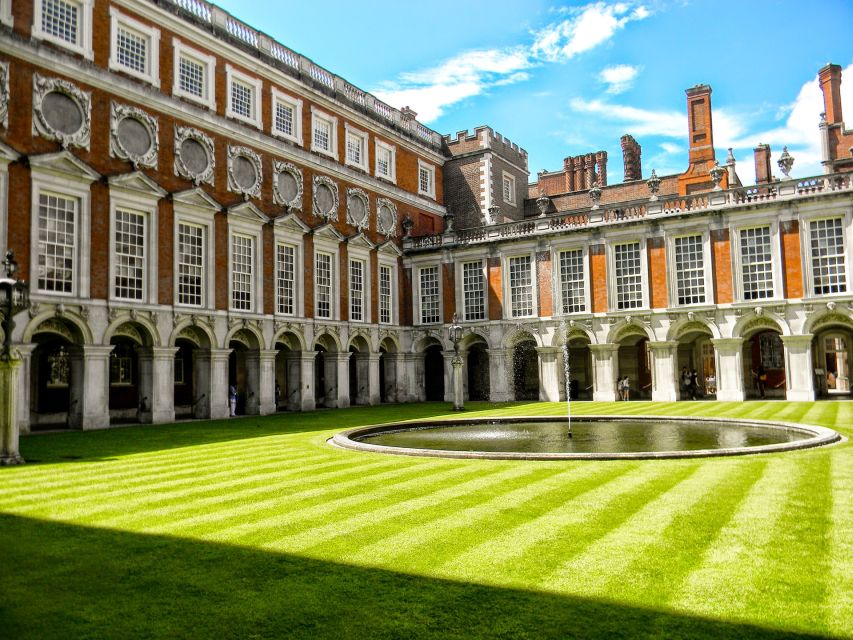
Hampton Court is not a small country house you can skim in an hour. It is a huge royal complex with Tudor courtyards, ceremonial rooms, kitchens, gardens, and later Baroque additions. That size is part of the appeal, but it can also leave first-time visitors unsure where to begin.
This tour gives you a useful first pass. You spend about two hours with an English-speaking guide, then receive afternoon tea and keep your ticket for the rest of the day. I like that arrangement because you get context before exploring alone. Instead of wandering past a doorway and wondering why it matters, you already know who used it and what to watch for.
The experience is listed at $206 per person. That is a serious price for a half-day activity, so the value depends on how much you want three things bundled together: guided interpretation, afternoon tea, and a full-day palace ticket. If you only want entry and a quick look around, buying a regular palace ticket and exploring independently may cost less. If you want a carefully arranged outing from London with a guide and a formal tea break, the package is easier to justify.
More Afternoon Tea in London
- London: Afternoon Tea Cruise on the River Thames
★ 4.4 · 3,274 reviews - London: Afternoon Tea Bus Tour – 1960s Routemaster Bus
★ 4.5 · 2,032 reviews - London: Afternoon Tea Bus with a Glass of Prosecco
★ 4.4 · 1,853 reviews
Meeting your guide at Hampton Court Station
The meeting point is the entrance to Hampton Court Railway Station. This is a practical choice because the station is directly tied to the palace visit, and you do not need to search for a café or street corner in the surrounding area.
Arrive with enough time to identify your guide before the walk begins. The tour is conducted in English, and the supplied information also includes an audio guide in Spanish, Chinese, Dutch, French, German, Japanese, Kannada, Korean, and Russian. That audio support may help when you continue through the palace alone, though the live guided portion itself is in English.
The guided experience lasts roughly two hours, with the entire activity taking about two and a half to three hours. Hampton Court is wheelchair accessible. Pets and oversized luggage are not allowed, so pack lightly and leave large bags elsewhere.
A private group option is available. That may appeal to families or small groups who want more control over the pace and more opportunity to ask questions. The standard experience is still designed to feel personal, and several guides have been praised for keeping groups together even when the palace is crowded.
Cardinal Wolsey’s palace and Henry VIII’s Tudor court
Your guide begins with Cardinal Wolsey, who created Hampton Court and gave it to Henry VIII in 1528. That opening helps explain why the palace feels grand from the first courtyard. This was not a modest retreat. It was meant to impress a king.
The early part of the walk focuses on the Tudor side of Hampton Court. You pass through courtyards that witnessed royal ceremonies, court business, and the personal drama connected with Henry VIII and his wives. The value here is the guide’s ability to connect rooms and events rather than simply name architectural features.
Anne Boleyn’s Gatehouse is one of the most memorable stops. It is tied to the period when Anne lived at Hampton Court before her execution, giving the tour a sharp human focus. Hampton Court can sometimes be reduced to a roll call of wives and marriages, but a good guide adds the political stakes behind those stories.
Guides named Tom, Thomas, Julie, Geraint, Brandon, and Suzanne have all been singled out for making the palace easier to understand. Their strengths vary in style, but the consistent pattern is clear: the best part of this experience is the person leading it. Tom has been praised for patience and for repeating points when asked. Julie has been described as attentive and easy to understand. Geraint has a local connection and a playful style. Suzanne has been praised for making the visit feel like a royal escape.
You should still expect a busy public palace. One group found the rooms crowded, but their guide kept everyone together and maintained a steady route. That matters at Hampton Court, where a distracted moment can leave you separated from your group or facing a wall of school groups and tour parties.
Fountain Court and the palace of William and Mary
The tour then shifts from Tudor Hampton Court to the later palace associated with William III and Mary II. Fountain Court was created by Sir Christopher Wren, and its more formal Baroque design shows how the palace changed over time.
This contrast is one of the strongest reasons to choose a guided visit. You are not seeing one single royal residence frozen in the Tudor period. You are moving through different royal tastes and political eras, from Henry VIII’s imposing court to the ordered grandeur of William and Mary.
Pay attention to the changes in style as you move through the courtyards. The guide can point out details that are easy to miss, including painted faux marble and less obvious passageways. One particularly useful strength of the live tour is this attention to details that do not always appear in a standard room description.
Photography also gets some practical help. One guide was praised for knowing several strong photo locations. That can be useful in a palace where the best angle is not always obvious and where you may have only a short opening between groups.
The route does not claim to cover every room in Hampton Court. That is an important limitation. One person wished the guide had taken the group through the entire palace, but the guided portion is an introduction rather than a complete escorted tour of every interior and garden path. You will need to use your remaining ticket time for that.
More Royal Tours in London
- Buckingham Palace: The State Rooms Entrance Ticket
★ 4.6 · 7,395 reviews - Tower of London and Crown Jewels Exhibition Ticket
★ 4.5 · 6,677 reviews - London: Buckingham Palace & Changing of the Guard Experience
★ 4.3 · 2,971 reviews - London: Changing of The Guard Tour
★ 4.8 · 2,510 reviews
Sunken gardens and Henry VIII’s working kitchens
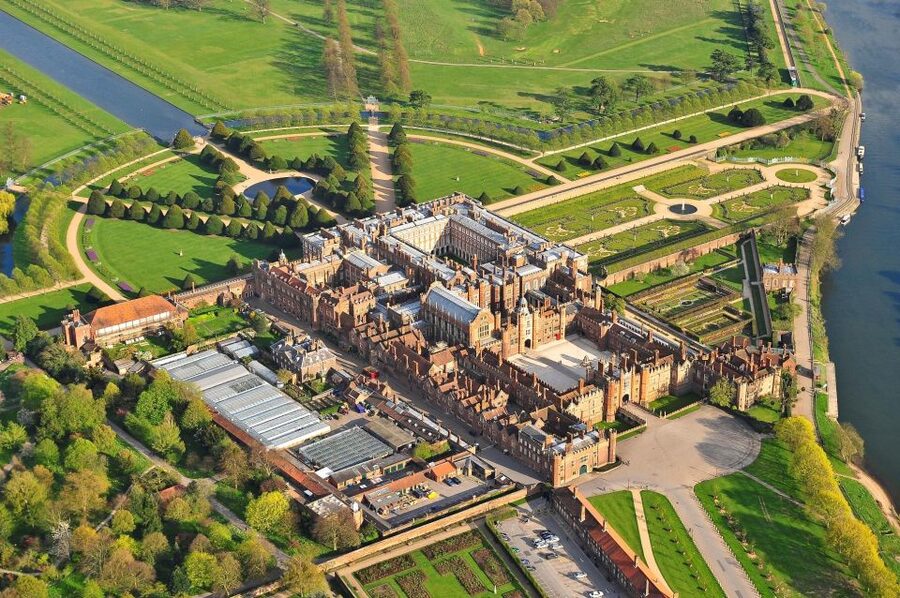
The restored sunken gardens offer a change of pace after the formal courtyards and interiors. They also help you see Hampton Court as a lived-in royal estate, not just a collection of ceremonial rooms.
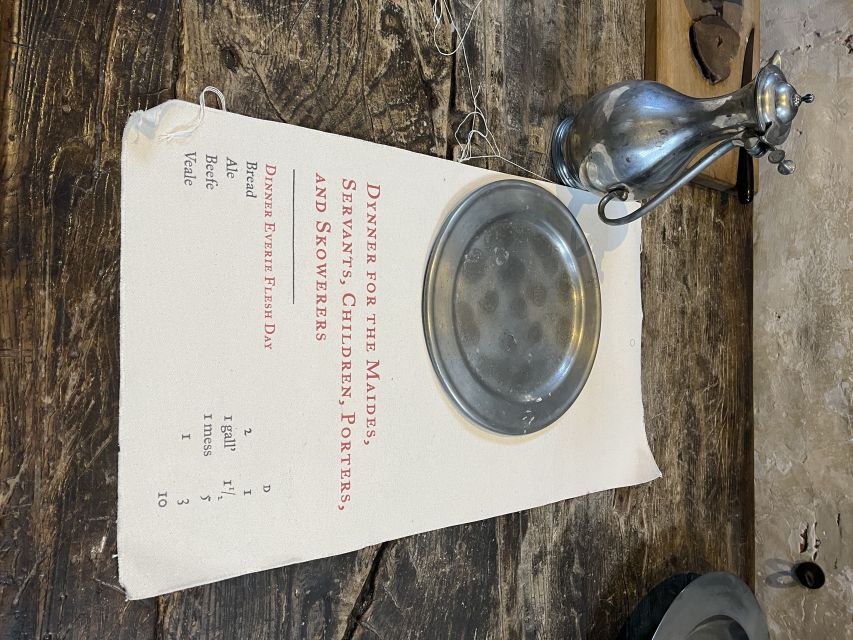
The tour continues to Henry VIII’s vast Tudor kitchens. This is one of the most useful stops for visitors who want more than royal portraits and famous names. The kitchens show the scale of the household and the work required to feed a court.
A guide can turn these spaces into a practical story. Think less about a king sitting at dinner and more about the systems behind that meal: rooms, staff, preparation, service, and the constant movement of people. The kitchens add an everyday layer to the palace, even though the people eating at the end of the process belonged to the highest level of society.
The guided route also gives you a sense of proportion. Hampton Court is large, and the kitchens help explain why. After this stop, the palace feels less like a series of decorated rooms and more like a functioning royal institution.
Afternoon tea at the Tiltyard or The Mitre
The tea is intended to be the relaxed finish to the guided portion. The supplied route takes you to the Tiltyard, originally used for jousting, for afternoon tea. Several detailed experiences identify The Mitre as the tea venue, including one sitting with a table overlooking the river and another described as casually luxurious.
Because the venue details can vary in how they are presented, check the current booking information carefully before you go. Either way, the ceremony is built around a traditional spread:
- Finger sandwiches
- Freshly baked scones
- Pastries and other desserts
- A selection of premium teas
One detailed tea service included five different sandwiches, two scones per person, five desserts, and a good tea selection. That is a substantial serving, not just a small cup and one biscuit. Another group could not finish everything and received boxes for takeaway, which suggests you should arrive ready for a proper meal rather than a light snack.
The tea adds a social element that a normal palace ticket cannot provide. You can talk with your guide about the royal family, the story behind tea in Britain, and the ceremony of afternoon tea. It also gives your feet a break before you return to the palace.
Still, this is the least consistent part of the package. Several tea experiences were described as excellent or high quality, while one person found it extremely underwhelming and suggested using a better provider. That mixed result is worth taking seriously because afternoon tea is a major part of the $206 price.
If the palace and guide are your main priorities, treat the tea as a pleasant extra rather than the entire reason to book. If afternoon tea is the central attraction for you, confirm the venue and menu before paying.
Returning to the palace for independent exploration
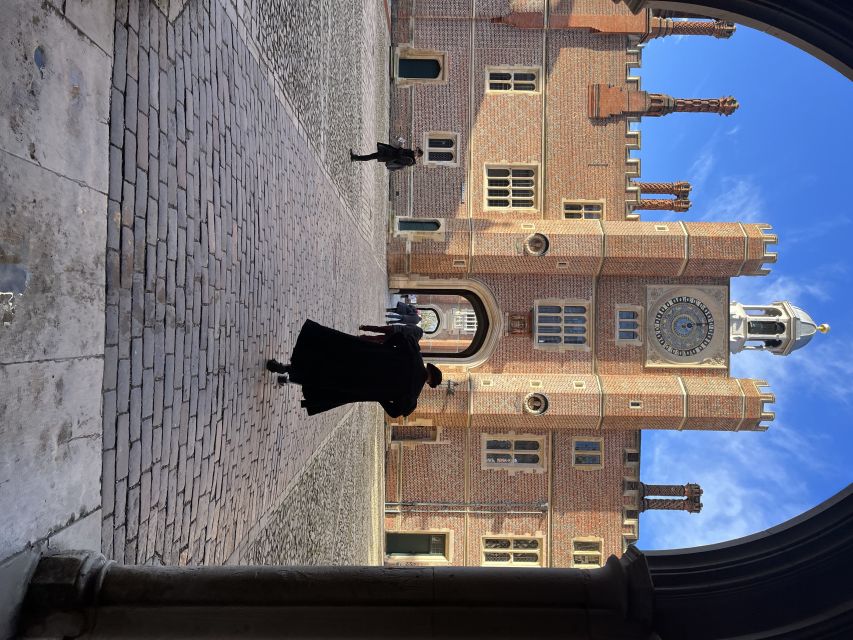
After tea, you can return to Hampton Court Palace using the full-day entry ticket. This is where the package earns much of its practical value. The guided tour gives you a route through key areas, but you are not forced to leave once the tea ends.
Use the extra time for rooms the guide did not cover, a second look at the Tudor interiors, and the gardens. The estate includes 60 acres of outdoor space, so you will not see every corner during the escorted walk.
The gardens are particularly important to your planning. If the weather is pleasant, you may want to spend a good portion of the remaining day outside. If the weather is poor, you can focus on the palace interiors instead. The full-day ticket lets you adjust without buying a second admission.
One useful detail from a previous visit is that a private chapel service temporarily closed the chapel during the guided tour, but the visitor returned later and saw it independently. That is a good example of why the full-day access matters. A closed room or missed section does not necessarily mean you lose it for the day.
Do not judge Hampton Court by the two-hour guided schedule alone. The tour is a framework. The independent time is where you can slow down, revisit a favorite courtyard, or follow your own interest in Tudor politics, royal rooms, architecture, or gardens.
The guides are the heart of the experience
The strongest praise is directed at the guides, not at the logistics. Tom and Thomas are repeatedly associated with clear explanations, friendly delivery, patience, and a strong command of the palace’s stories. Julie has been praised for answering questions fully and for making the visit easy to follow. Geraint brings local knowledge, warmth, and humor. Suzanne and Brandon also received strong praise for bringing the court to life.
That range of names matters because your experience will depend heavily on who leads your group. The common thread is a personal approach rather than a rushed script. One guide waited for a delayed group, while another adjusted explanations and repeated information when asked.
The live guide also solves a problem that audio tours cannot always handle. You can ask why a room matters, pause over an architectural detail, or connect one monarch’s story to another. The optional audio guide remains useful for your independent time, especially if you prefer to explore at your own pace or need one of the listed languages.
Who should book this Hampton Court experience?
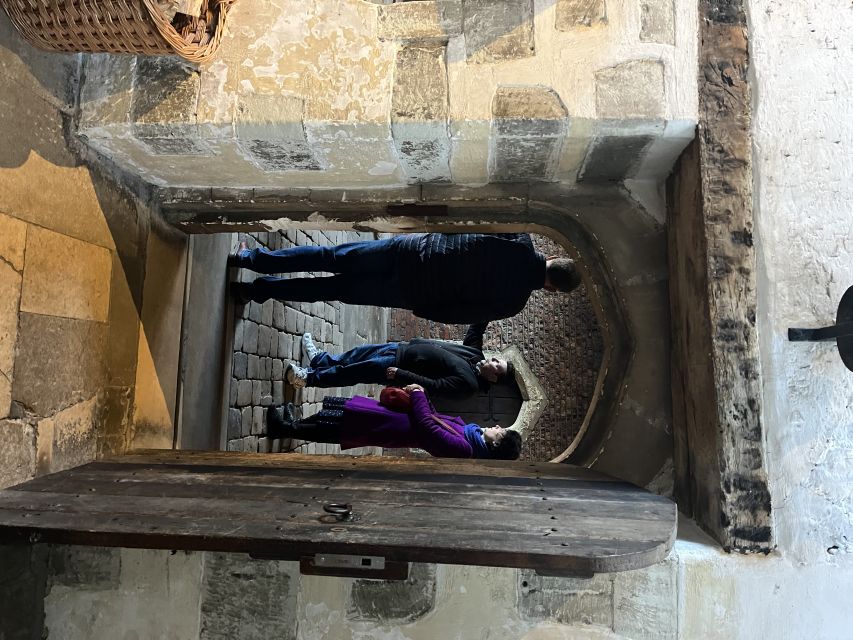
I would recommend this tour to first-time visitors who want a strong introduction without having to plan every step themselves. It also suits people who enjoy history best when it is told through stories, personalities, and small details.
It is a good fit for:
- Couples looking for a polished day trip from London
- Families with older children interested in Tudor royal stories
- Visitors who want afternoon tea without arranging a separate booking
- Anyone who values a live guide over an audio-only visit
- Small groups who may prefer the private option
- People who want time for independent exploration after a guided introduction
It may be less suitable if you want to spend the entire day exploring every room at your own pace from the moment you arrive. The guided route sets the rhythm for the first two hours. It may also disappoint if your main goal is a flawless luxury tea service, since the tea quality has not been entirely consistent.
Practical value, timing, and flexibility
At $206 per person, this is not the budget way to see Hampton Court. You are paying for convenience and interpretation as much as admission. The strongest value comes when you use the ticket for the rest of the day rather than leaving after tea.
The total duration is listed as two and a half to three hours, but the palace ticket is valid for full-day access. Plan your day around the guided portion, then decide how long to stay. The surrounding gardens and palace interiors can easily justify extra time.
Free cancellation is available up to 24 hours before the activity for a full refund, and you can reserve now and pay later. Those terms help if your London plans are still shifting. The tour is wheelchair accessible, but oversized luggage and pets are not permitted.
The trip from central London is short enough to make this a practical half-day outing. The station meeting point removes some of the usual uncertainty, but you should still arrive before the stated start time. A late arrival could mean missing the opening explanation about Wolsey and Henry VIII, which sets up much of what follows.
Should you book it?
Book this experience if you want Hampton Court explained by a warm, capable guide, followed by a traditional tea and plenty of time to explore alone. The palace is large and layered, and the guided introduction makes your later wandering more rewarding.
I would book it particularly for the guide-led storytelling and full-day ticket. I would be more cautious if afternoon tea is your main reason for spending $206, and I would check the current tea venue and menu first.
For the best day, treat the two-hour tour as your orientation, enjoy the tea, then stay on for the palace rooms and gardens. That combination gives you the Tudor drama, the Baroque architecture, and the freedom to set your own pace.
FAQ
Where does the Hampton Court tour begin?
Your guide meets you at the entrance of Hampton Court Railway Station.
How long does the guided tour last?
The guided portion lasts about two hours. The total activity takes approximately two and a half to three hours, while your palace entry remains valid for the rest of the day.
What does the afternoon tea include?
The tea includes finger sandwiches, pastries, freshly baked scones, and a selection of premium teas.
Can I explore Hampton Court Palace after afternoon tea?
Yes. Your full-day entry ticket allows you to return to the palace and continue exploring the interiors and 60 acres of gardens independently.
Is the tour available in languages other than English?
The live tour guide speaks English. An audio guide is listed in Spanish, Chinese, Dutch, French, German, Japanese, Kannada, Korean, and Russian.
Is the experience wheelchair accessible?
Yes, the activity is listed as wheelchair accessible. Pets and oversized luggage are not allowed.
Just added in London
- Royal London Guided Sightseeing Tour and Thames River Cruise★ 4.0 · 31 reviews
- Roman Ruins to Blitz Bombings: A Walking Tour of London’s Fiery History★ 5.0 · 190 reviews
- Roman London Private Walking Tour★ 5.0 · 44 reviews
- Westminster Abbey, Big Ben, Buckingham Guided Tour of London★ 5.0 · 451 reviews
- River Thames Evening Cruise with Sparkling wine and Canapés★ 4.0 · 569 reviews
- Rock and Roll Walking Tour of Soho London★ 4.5 · 64 reviews
- London Private Chauffeur Half-Day or Full-Day Vehicle Rental★ 5.0 · 37 reviews
- Rich people behaving badly★ 5.0 · 47 reviews
Royal Tours, compared.

Stonehenge, Windsor Castle, and Bath from London
Read our review →
Stonehenge, Windsor Castle and Bath with Pub Lunch in Lacock
Read our review →
Buckingham Palace: The State Rooms Entrance Ticket
Read our review →
Tower of London and Crown Jewels Exhibition Ticket
Read our review →
Stonehenge, Windsor Castle and Bath Full Day Guided Tour
Read our review →
Windsor Castle, Stonehenge, and Oxford Day Trip from London
Read our review →
Windsor Castle, Stonehenge & Bath Full-Day Tour
Read our review →Browse the lists this tour appears in