
Reviewed · HISTORICAL TOURS
St Andrews: Golf Origins and Old Course History Tour
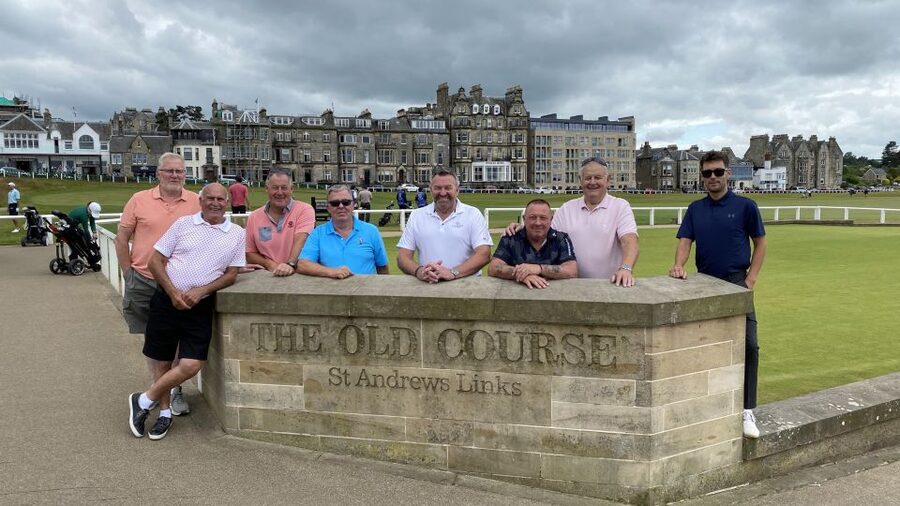
St Andrews’ Old Course is more than a golf course. It is a working piece of sporting history, with the 1st and 18th fairways crossing the town’s edge, the Royal and Ancient Clubhouse framing the opening tee, and the Swilcan Bridge offering the classic photo. This walking tour explains how those familiar features grew into modern golf.
I like the mix of golf history and town stories, and I like that guides such as Richard, a former caddie and local historian, use photos, humor, and firsthand course knowledge. You also get help with pictures at key spots. The main drawback is that the tour moves outdoors across uneven ground and requires fluent English, so it is not a good fit for visitors with walking difficulties or limited English.
Key points to know before you go
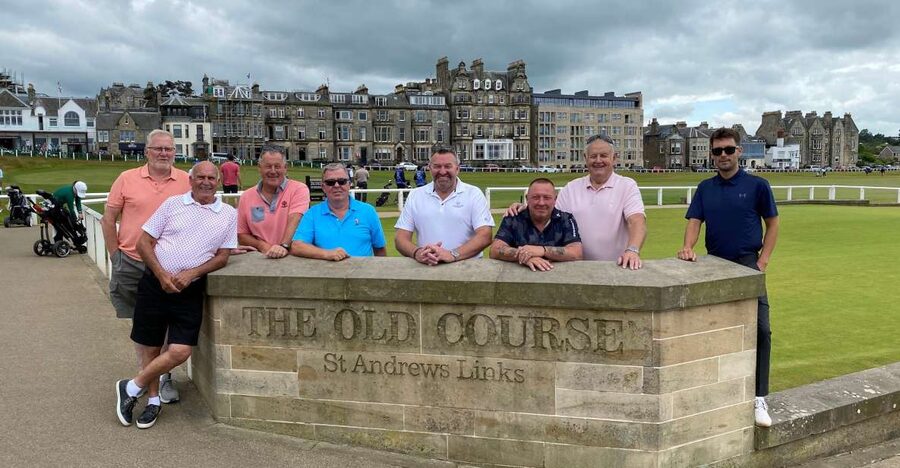
- Walk across the 1st and 18th fairways: You get unusually close to the Old Course and may cross sections of fairway during live play, at your own risk.
- Hear how golf took its modern shape: The guide connects the course layout with the development of the game, the Open, and familiar golfing terms and features.
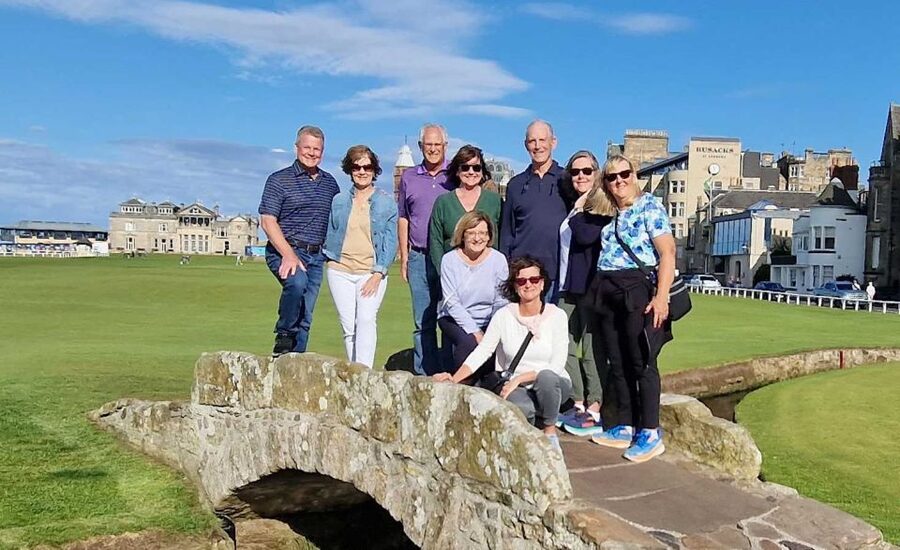
- Finish at the Swilcan Bridge: Tournament days are excluded from the photo stop, but on other days you can pose on this famous landmark.
- Expect a guide-led experience: Richard is often praised for his humor, local knowledge, historic photos, and willingness to take pictures for the group.
- Allow 75 minutes, plus a possible drink afterward: The tour ends at the Jigger Inn, where you can buy refreshments overlooking the 17th fairway.
- Pay $20 for a focused introduction: That is a fair price if you want context and photos rather than a round of golf or entry to an indoor museum.
Why the Old Course makes such a good walking tour
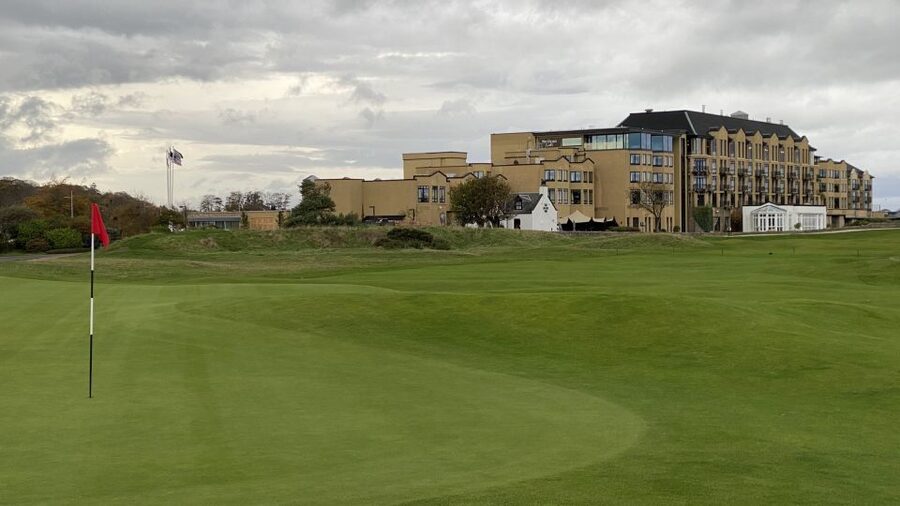
The Old Course can be confusing when you first see it. It is not tucked away behind grand gates or separated from the town by a private resort. Fairways, roads, paths, hotels, shops, and public spaces all meet around it. From a distance, you may see a wide stretch of grass and a few familiar buildings. A guide helps you understand what you are looking at and why it matters.
This tour focuses on the way the course developed over time. You learn how the Old Course shaped important parts of modern golf, rather than simply receiving a list of famous players and tournament winners. That makes the experience useful even if you are not an expert golfer.
I especially like the way the tour connects the course with St Andrews itself. The guide discusses the town’s past, religious importance, and local places as well as golf. One session might explain why the 1st fairway is so flat and why the 18th is more undulating. Another story may link a nearby place to the wider history of the town.
The result is a walking tour with a clear sense of place. You are not just looking at a famous course. You are seeing how golf grew within a real Scottish town.
More history walks in St Andrews:
- St Andrews: Town, Golf, and Old Course History Tour
★ 4.7 · 162 reviews - St Andrews Old Course History Tour, for the Golfer
★ 4.5 · 150 reviews - St Andrews Tours: Town, Golf and Old Course History
★ 5.0 · 138 reviews
Starting outside Hotel du Vin
The meeting point is outside Hotel du Vin at 40 The Scores. This is an easy landmark to find in central St Andrews, but do not arrive at the last second. Tours leave promptly and do not wait for late arrivals.
The opening section sets the scene with wide views across the links land. St Andrews has six golf courses, four of them on links land, so the guide begins with more than the Old Course alone. This gives you a useful picture of how much golf occupies the area and why St Andrews earned its title as the Home of Golf.
The first few minutes may feel slower than the rest of the walk because the guide is laying out the background. One person found the opening quarter-hour a little quiet before the tour picked up. That is worth knowing if you prefer instant action, but the introduction helps make the later stops easier to follow.
Bring comfortable shoes. You will be walking outside, and the tour is not designed for wheelchairs, mobility scooters, walking frames, crutches, or visitors with significant walking difficulties. Baby strollers are also not allowed.
The 1st tee and the Royal and Ancient Clubhouse
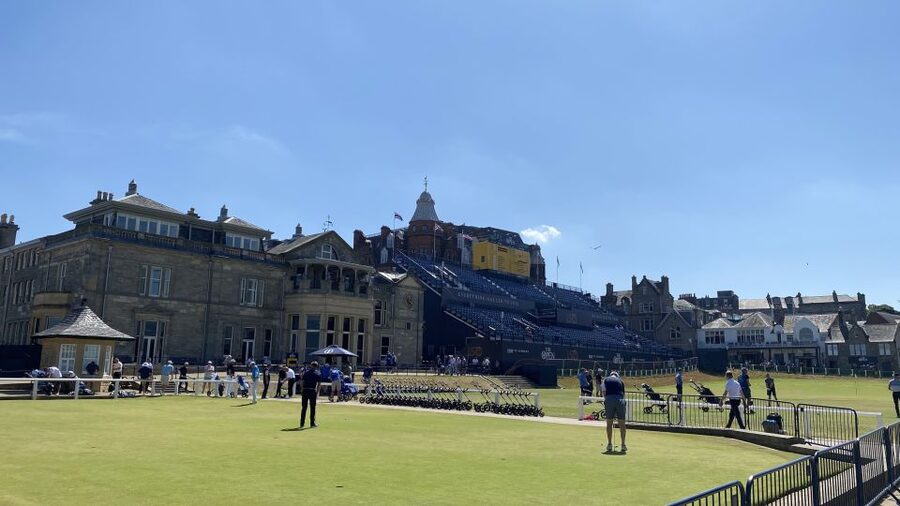
The first tee is one of the best places to understand the Old Course’s public face. The Royal and Ancient Clubhouse provides the backdrop, and the guide explains how the opening stretch of the course fits into the wider story of golf.
This is also a good point for questions. If you want to know about the layout, famous events, or the difference between modern tournament golf and earlier play, this is the time to ask. The strongest guides keep the information moving without turning the walk into a lecture.
Historic photographs add real value here. The guide uses rare images to show how the course and its surroundings changed. One particularly interesting detail concerns the original height of the Swilcan Bridge. Seeing an old image beside the bridge you know today makes the course feel less fixed and more like something that has been altered and adapted over generations.
The guide’s delivery matters. Richard is often singled out for his humor and his ability to explain technical points in plain language. Some visitors found him so entertaining that the 75 minutes passed quickly. One person noted that he spoke quickly, so if you have difficulty hearing English in wind or open space, stay near the guide and ask him to repeat anything important.
Walking the 1st and 18th fairways
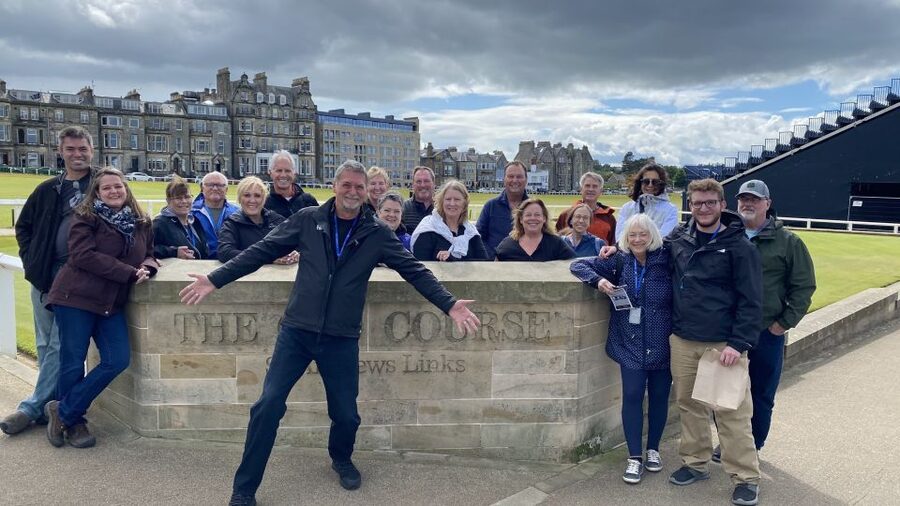
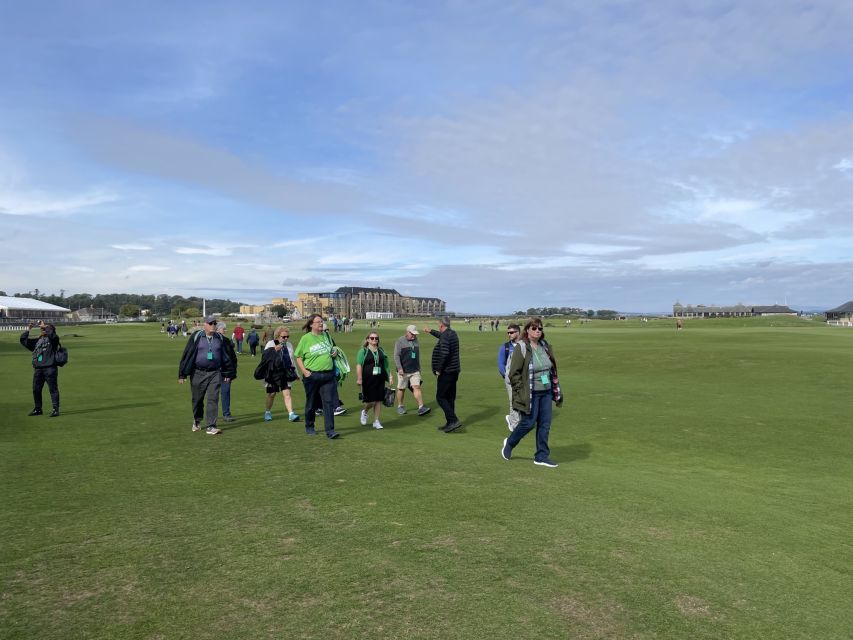
The walk takes in parts of both the 1st and 18th fairways. For many people, this is the most exciting part because you are not merely viewing the Old Course from a roadside. You get to cross sections of ground that have hosted famous rounds and major championships.
There is an important practical warning here. The walk may take place beside or across active golf areas, and you must watch for golf balls during live play. Follow the guide’s directions and keep your eyes open. This is a working course, not a stage set arranged for sightseeing.
The contrast between the two fairways also gives the guide plenty to explain. The 1st is notably flat, while the 18th has more visible undulation than you may expect from photographs. That detail helps you read the course with greater attention. Instead of seeing one large green space, you begin to notice how slopes, routes, buildings, and playing lines affect the game.
The pace is generally comfortable, though this remains a walking experience rather than a seated talk. If you need frequent rests or cannot walk safely over uneven ground, choose a different St Andrews activity.
A few more half-days in St Andrews worth comparing
- St Andrews & the Fishing Villages of Fife Small-Group Day Tour from Edinburgh
★ 4.5 · 1,973 reviews - From Edinburgh: St Andrews and Fishing Villages of Fife Tour
★ 4.7 · 1,071 reviews - St Andrews Must-Sees Daily Walking Tour (11am & 2pm)
★ 5.0 · 478 reviews - Edinburgh: St Andrews & The Fishing Villages of Fife
★ 4.5 · 431 reviews
Road Hole memories and the Old Course’s famous details
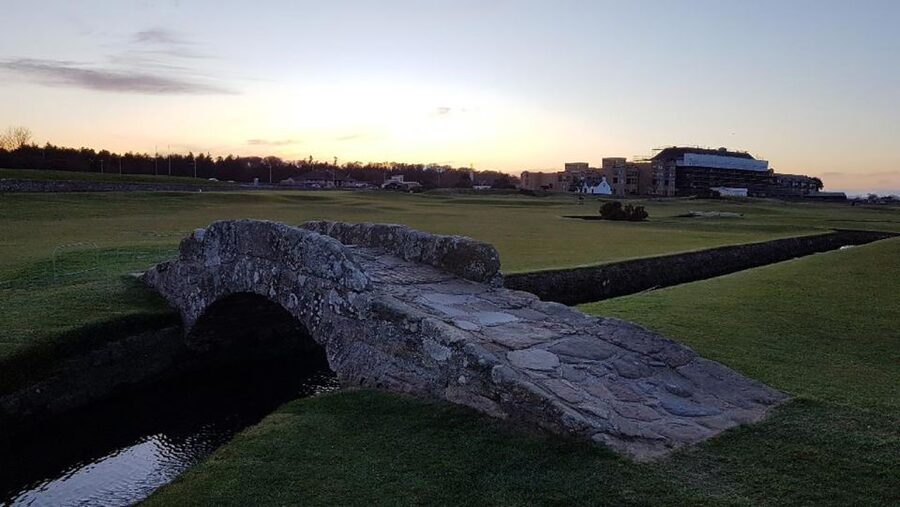
The tour includes memories and stories connected with the Road Hole. You do not need a detailed knowledge of golf to enjoy this section. The guide explains why certain holes and locations became so well known, then connects them with players, tournaments, and the changing rules of the game.
This is where a former caddie’s experience can make a difference. A guide who has worked around the course can explain how people actually move through it and how the holes feel at ground level. Richard’s background as a former caddie gives his stories a practical edge, not just a collection of dates.
You will also hear about figures who helped shape golf and about the Open. The emphasis is on how the sport developed, including the familiar features that now seem permanent. The guide also takes time to correct popular myths about St Andrews and golf.
That myth-busting is useful. Famous places collect legends, and it is easy to repeat a pleasing story without knowing if it is accurate. A local guide can sort out what belongs to documented history, what has been simplified, and what has become part of local storytelling.
The Swilcan Bridge photo stop
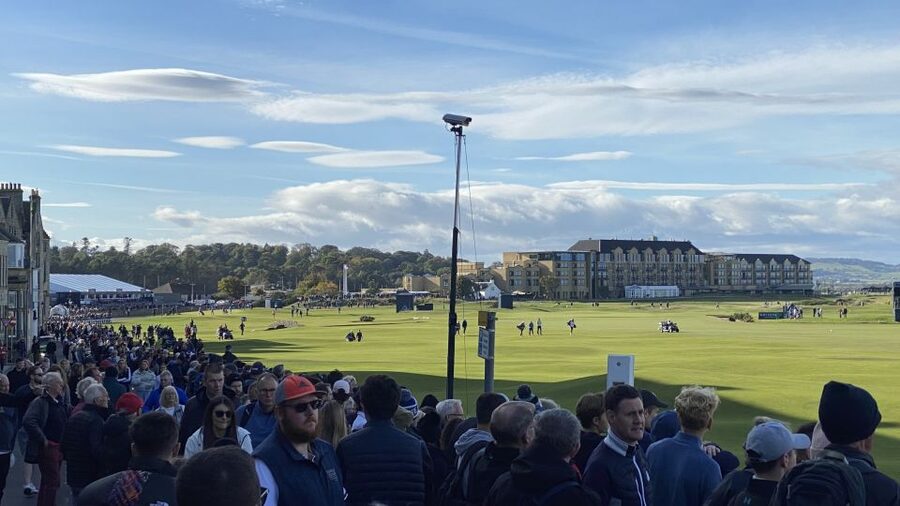
The Swilcan Bridge is the tour’s natural finale. This small stone bridge is one of the most recognizable places in golf, and the guide gives you time to take photographs there. Guides are also willing to take pictures for participants, which is helpful if you are traveling as a couple or family and do not want one person missing from every image.
Historic photos make the stop more interesting than a simple photo opportunity. You can see how the bridge looked in the past, including its original height, and compare that image with the structure in front of you.
The photo stop is not available on tournament days. That limitation matters, especially if your visit lines up with a major event or another busy period. Check the conditions when booking and keep your expectations flexible.
The bridge can also be busy, so patience helps. You may need to wait briefly for a clear photograph, but the guide’s help makes the stop feel organized rather than rushed.
Finishing at the Jigger Inn
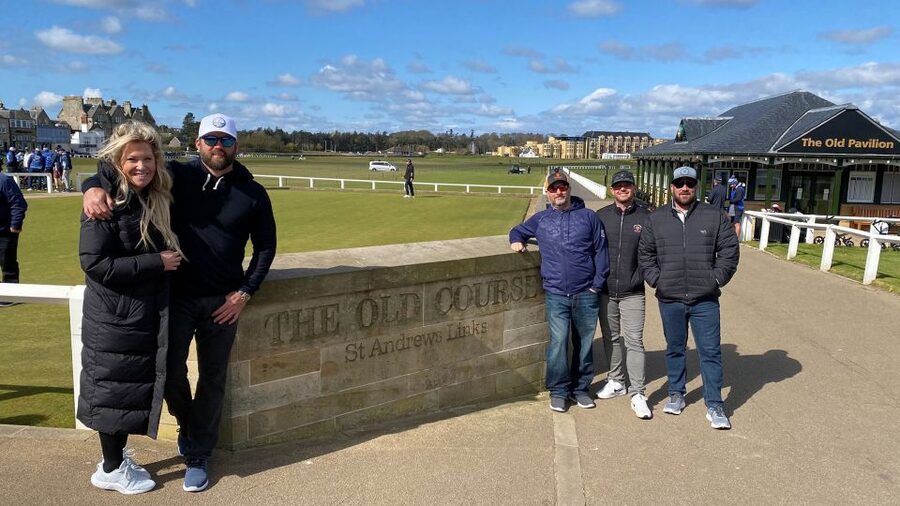
The formal walk finishes at the Jigger Inn, a well-known place beside the Old Course. Refreshments are not included, but you can stop for a drink or something to eat while looking toward the 17th fairway.
I like this ending because it gives you somewhere to continue the conversation. After hearing about the course, you can look back across it with a better sense of what you are seeing. The stop is optional in practical terms, but it makes a pleasant finish if you have time.
Do not assume that a drink is part of the $20 price. The guide provides the walking tour only. Plan to pay separately if you want refreshments.
The Jigger Inn also gives non-golfers an easy way to enjoy the setting. You can follow the stories during the walk, then relax at the finish while the golf fan in your group keeps looking toward the course.
Guide style and the importance of English
This is an English-only experience, and a fluent command of English is essential. The operator specifically warns that slow speech or translation does not work, so you should book only if you can follow a fast-moving spoken tour outdoors.
That requirement is not a minor detail. The value comes from stories, explanations, humor, and answers to questions. If you understand only basic English, you may see the landmarks but miss the point of the walk.
Richard receives especially strong praise for his friendly style, humor, local history, and help with photographs. Other sessions may have a different guide, and one mention identifies Alan as another good historian with a sense of humor. The exact guide cannot be guaranteed, but the experience is built around a local person leading the group on foot.
Children under 16 must be accompanied by an adult. The tour is not suitable for children under five, and it is not suitable for anyone under the influence of alcohol. Disruptive behavior can lead to removal without a refund.
Is $20 good value?
At $20 per person, this is a reasonably priced introduction to the Old Course. You are paying for 75 minutes with a professional local guide, access to views and course areas included in the walk, historic images, and help with photos at major locations.
You are not paying for a round of golf, a club tour, a museum admission, or a guaranteed tournament-day visit. If you want to play the Old Course, this experience does not replace that. It is best understood as a compact history and orientation walk.
The value is strongest for first-time visitors. The Old Course can be visually overwhelming, and a good guide turns scattered landmarks into a story. Golf fans will likely get the most from the course details, but the town history and humor make it worthwhile for companions who do not play.
The price is also low enough to fit easily into a day in St Andrews. I would use it early in your visit, then revisit the course or nearby sights afterward with a better understanding of the layout.
Who should book this walk?
Book it if golf is central to your visit, you want to understand the Old Course rather than simply photograph it, or you enjoy local history told by someone with personal ties to the game. It also suits couples and families who want useful pictures together at the Swilcan Bridge.
You do not need to be an avid golfer. One guide kept a non-golfing participant interested through town stories, local details, and clear explanations. Still, you should be comfortable walking outside and listening to English for 75 minutes.
This is not the right choice if you need step-free access, use mobility equipment, have significant hearing difficulty, or prefer a self-guided visit. It is also a poor fit for very young children.
Practical planning tips for your St Andrews day
Arrive early at Hotel du Vin because the group leaves on time. Wear comfortable shoes and dress for changeable Scottish weather. A light shower does not necessarily spoil the walk, but you will be outside for the full experience.
Keep your camera ready, but do not rely only on a phone held at arm’s length. The guide may take photographs at key stops, including the Swilcan Bridge and areas around the 17th hole. Those pictures can be the best record of your visit.
Stay close enough to hear clearly, especially if it is windy. Since the guide may speak quickly, ask questions or request repetition when needed.
Finally, remember that the course remains active. Watch for golf balls, listen to instructions, and treat the fairways as playing ground rather than a casual public park.
Should you book the Old Course history tour?
I would book this tour if you want a short, affordable way to understand why St Andrews matters to golf. The best parts are the local storytelling, the chance to walk sections of the 1st and 18th fairways, the historic photographs, and the guided Swilcan Bridge photo stop.
Choose it early in your stay, especially if you plan to spend more time around the Old Course afterward. Skip it if walking is difficult, if you cannot follow fluent spoken English, or if you expect to play golf rather than learn about it.
For most golf fans, $20 buys a useful hour and a quarter of context, memorable views, and photographs you would be unlikely to arrange as easily on your own.
FAQ
How long does the St Andrews Old Course history tour last?
The walking tour lasts 75 minutes.
Where does the tour begin?
It begins outside Hotel du Vin at 40 The Scores, St Andrews KY16 9AS, United Kingdom.
Where does the tour finish?
The tour finishes at the Jigger Inn near the Old Course.
Is the Swilcan Bridge photo stop included?
Yes, the tour includes a photo stop at the Swilcan Bridge, except on tournament days.
Can I buy a drink at the end of the tour?
Yes. You can purchase refreshments at the Jigger Inn, but drinks and food are not included in the tour price.
Is the tour suitable for people who do not play golf?
Yes. The guide covers St Andrews history, local places, and the development of golf, so you do not need to be a golfer. The tour still requires fluent English and a reasonable ability to walk.
What language is the tour conducted in?
The tour is conducted in English, and participants need a fluent command of English to follow it.
Can children join the tour?
Children under five are not permitted. Children under 16 must be accompanied by an adult.
Is the tour suitable for wheelchair users or people with walking aids?
No. The tour is not suitable for wheelchair users or people with mobility impairments, crutches, walking frames, mobility scooters, or other walking difficulties.
Just added in St Andrews
- From Glasgow: The Kelpies, St Andrews and Fife Adventure★ 4.8 · 75 reviews
- Edinburgh: Stirling, Whisky and St Andrews Tour in Spanish★ 4.6 · 67 reviews
- St Andrews Tours: Town, Golf and Old Course History★ 5.0 · 138 reviews
- St Andrews Must-Sees Daily Walking Tour (11am & 2pm)★ 5.0 · 478 reviews
- St Andrews Old Course History Tour, for the Golfer★ 4.5 · 150 reviews
- From Glasgow: St Andrews & the Kingdom of Fife Full-Day Tour★ 4.8 · 107 reviews
- Private St Andrews: Home of Golf Old Course Tour★ 4.9 · 113 reviews
- Edinburgh: St Andrews, Dunnottar Castle & Falkland Tour★ 4.7 · 181 reviews
Historical Tours, compared.
A History of Terror – Belfast City Centre Walking Tour
Read our review →
Old Town Walking Tour History and Tales in Edinburgh
Read our review →
Shadows of York: Ghost Walk and Horrible History.
Read our review →
Multi-Sensory Small-Group Historic Vaults Tour in Edinburgh
Read our review →
Browse the lists this tour appears in